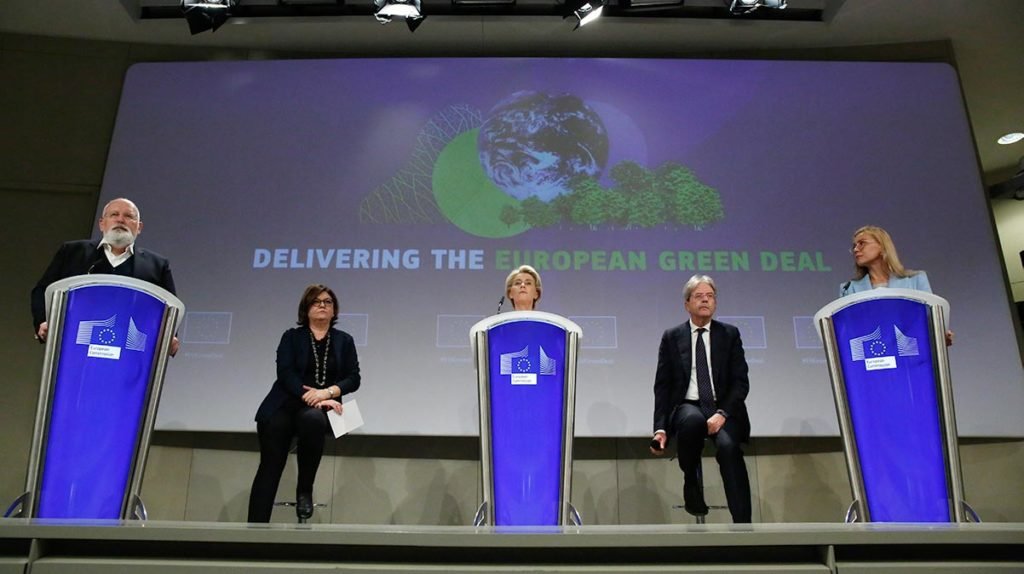
Europe will spend 30% of its total budget on reducing emissions by 50% in the next decade as part of its plan to achieve net-zero emissions by 2050. The Carbon Border Adjustment Mechanism (CBAM) is an essential part of that, putting a carbon price on imports from countries like Australia that do nothing to reduce their own carbon emissions. Economists have joined environmentalists in celebrating the plan as creating a level playing field. “Anyone can get an exemption to the CBAM if they have an equivalent [carbon price] at home,” said energy economist, Sir Dieter Helm. China has criticised the CBAM but, at the same time, is introducing the world’s largest carbon trading scheme. The USA and Canadian governments have proposed similar schemes.
A submission to the Parliamentary Enquiry into the funding of fossil fuel exports shows that one trillion dollars, or 37% of Australian’s superannuation funds, is managed by members of the Responsible Investment Association of Australia, the RIAA, and so is unavailable for investment in fossil fuels, logging and other environmentally harmful activities. The RIAA submission says that 2 out of 3 Australians do not want their investments being used for environmental harm.
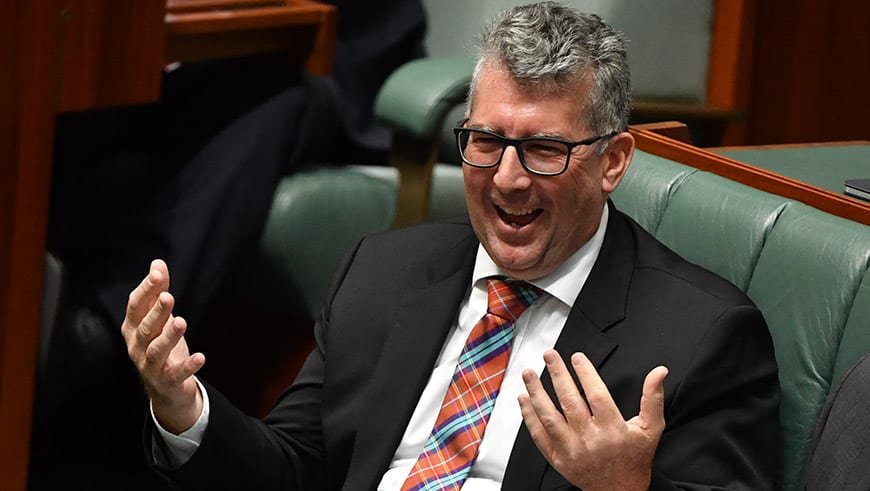
Keith Pitt representing the people of Rockhampton in the Australian Parliament
“It is of great concern to me that a legitimate industry like coal mining, which makes a significant contribution to the national economy and employs thousands of Australians, is being held back by what can only be described as corporate activism.”
Resources Minister Keith Pitt
Last week, Minister Pitt addressed the Australian Petroleum Production and Exploration Association conference in Perth last Wednesday to attack activist groups such as Greepeace. He urged petroleum companies to make submissions to the inquiry to prevent activism that “ignores the fact that resources development in Australia is carried out safely and responsibly and that Australia’s economy was built off the back of the resources sector”.
The terms of the inquiry are to inquire into:
The domestic and foreign investment opportunities and challenges for Australia’s export industries and their associated businesses, arising from changes in prudential standards and practices across banking, insurance and superannuation institutions, in addition to publicly-listed companies, with particular reference to:
The existing and future contribution of Australia’s export industries;
The investment guidance and advice provided by Australia’s financial regulators, including the Australian Prudential Regulation Authority (APRA), the Reserve Bank of Australia (RBA) and the Australian Securities and Investments Commission (ASIC), to banking, insurance and superannuation institutions, and also to publicly-listed companies, in relation to investment in Australia’s export industries;
The approach and motivations of our financial institutions, including banks, insurers and superannuation funds, as well as publicly-listed companies, to their investment in Australia’s export industries;
The consequential impacts of (2) and (3): a) For legitimate. law-abiding businesses connected to Australia’s export industries; b) On regional and rural economies that are reliant on Australia’s export industries. particularly in light of the COVID-19 recession; c) Our national economy. particularly in light of the COVID-19 recession;
The Generator’s Geoff Ebbs puts Professor Ross Garnaut in the Cage to discuss his new book RESET. A blueprint for a green, socially just future for Australia.
Professor Garnaut, outlines the technology solutions he highlighted in his previous book Superpower, noting that the government’s current technology roadmap largely follows his lead. He discusses the value of clean hyrdrogen in building a clean manufacturing and export business.
In the second part of the interview Geoff and Ross discuss his economic measures to ensure that future growth is socially just. The Australian Income Security and the tax on wealth rather than income.
In this segment, the third part of the interview, Geoff asks Professor Garnaut about the differences between Green Growth and deGrowth, the reality of decoupling economic growth from environmental impact and whether we are creating a scientific dystopia in which wilderness is a theme park.
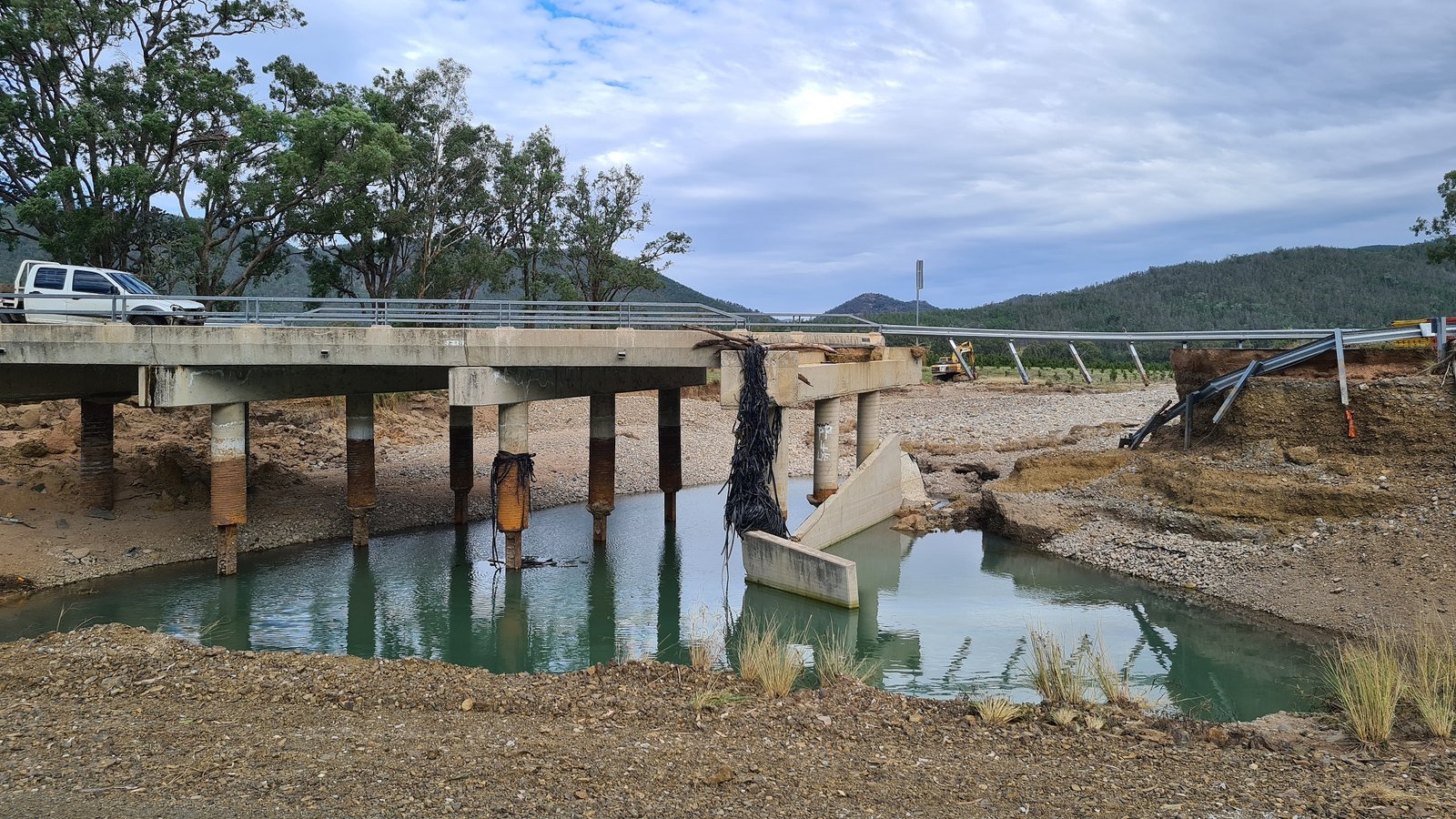
The Equinox flooding of the East Coast of Australia may not have broken the drought but it has filled the border rivers full to overflowing. Geoff Ebbs took a trip along the border of NSW and Queensland the week after Easter, when the rivers had settled down and most roads were passable.
The Bruxner Highway is broken near Bonshaw
He picked up the border near Carney’s Creek on Falls Rd which follows the border Queen Mary’s Fall and then follwed it through the mountains to the Lindsay Highway where it heads around the South Eastern edge of Sundown National Park. That being rugged country, he followed the Severn River, through Stanthorpe and around the north westedn edge of Sundown National Park where it joins the Dumaresq (and the border). Both River and border flows north west to Texas and then west to Goondiwindi. That’s Texas Queensland, in case you haven’t been there.
Along the way he crossed the Condamine a couple of times. The Condamine does not flow along the border, though it rises only a couple of kilometres from it. It runs through Killarney and then north through Warwick before heading West. They both eventually flow into the Darling, but that’s a long way West and another story.
The border follows the ridge separating the Tweed River in NSW from Qld, then the Great Divide until it meets the Dumaresq at the junction of the Dumaresq and Severn River. The pictures above are: Falls Rd near Carney’s Creek x2. The view from Carrs Lookout at the head of the Condamine. Queen Mary’s Falls and Daggs Falls on Spring Creek, only metres from the border but the water flows into the Condamine at Killarney. Criss crossing the border through the hills South West of Killarney, then the Severn North West of Sundown National Park, The Severn at Broadwater in Sundown National Park, The Dumaresq where it meets the Severn and picks up the border, the Dumaresq Valley at Heynes Bridge, a tributary takes out the Bruxner Highway and the Dumaresq at Texas.
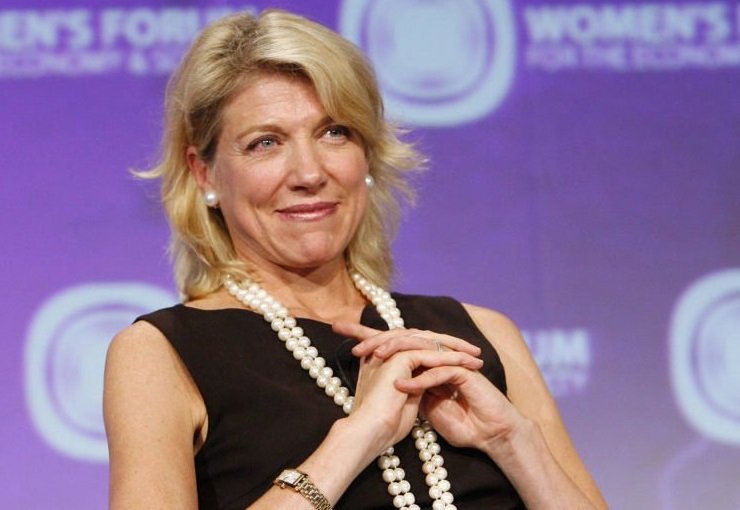
Lyn Forester de Rothschilds is a key player in the Council for Inclusive Capitalism with the Vatican.
The article outlines a key alliance between the world’s richest people and the Vatican to create an “inclusive” capitalism that protects the poor and the planet in line with Pope Francis recent dictates.
It criticises the alliance on a number of levels, primarily for the manner in which global agendas have a habit of entrenching power elites in the name of doing good. It compare Pope Francis global agenda with the twelfth century Crusades and highlights connections between, Lyn Forester de Rothschilds, Jeffrey Epstein and the Clintons.
While Neo Journal’s approach concentrates on these seedy connections and the shadowy reputation of some activities by these global philanthropists, The Generator has concentrated on specific problems – such as the concentration of resources in the Doomsday Project, the arbitrary harshness of Modi’s cashless India, and the underlying role of the very small number of people who actually direct the world’s financial systems.
Regular followers of The Generator know that we are rigorous about checking and providing sources and debunking conspiracy theories. That has occasionally put us at odds with facebook – https://thegenerator.news/china-shuts-the-door-on-facebook/ and https://thegenerator.news/soul-sex-facebook-saga-continues/ but has stood us in good stead when reporting controversial issues.
The future is already here, it just not evenly distributed
My social media feed is full of people desperately wondering
why governments have responded to the spread of CoViD19 caused by the
SARS-CoV-2 virus in a reasonably urgent and coordinated manner over days and
weeks but have actively opposed action on Climate Change over decades.
Of course, the content of one’s feed tells us more about the
person than the world in general, but the question is an important one and has
probably occurred to you.
The general consensus is that the immediate and personal
danger triggers much greater fear than an abstract and distant one. Logically, we
should also blame the well-funded campaign by the coal lobby and the world’s
largest investment banks, and the general resistance to management by government
from the neo-liberal right.
It is important to note that the neo-liberal resistance to government interference has emerged in response to SARS-CoV-2 in the form of statements promoted by Donald Trump “the cure should not be worse than the disease” and the lieutenant-governor of Texas Dan Patrick “I would rather die than see public-health measures damage the economy”. It is also important to note, though, that while this has derailed the attempts to provide a nationwide response in the US, many states have ignored the President and have acted on their own. The neo-liberal control of public-affairs is not complete.
Long term considerations about how we manage global heating and the ensuing climate chaos need to take account of these responses. That learning will guide our efforts to lobby government and loosen the hold of their corporate masters at the same time as we act independently to build resilient and robust communities.
This article examines our actual responses to the existing
threat to support that learning rather than attempting to discern the reasons
why responses to climate chaos have been less than robust. The basis for that
is that we have a rare and unusual social experiment where one single factor
has caused major social change. The different responses around the world allow
us to examine other variables and so separate the observations about
effectiveness of different responses from the arguments about the nature of the
threat. The climate debate has become toxic largely because of the deliberate
fouling of the waters by a well-funded denialist lobby. That distraction has
been removed in the response to the SARS-CoV-2 virus, providing us with a clear
view of many things that have previously seemed confusing.
It is also worth noting that this article assumes that the term “intelligence” is a combination of its meaning in “military intelligence” (notwithstanding its common use as an example of an oxymoron) and its use in the term IQ (intelligence quotient), by which we mean someone’s ability to perceive solutions to problems.
We collect intelligence as a series of data points, which requires context to build knowledge and experience to produce wisdom, so data by itself is not intelligence. But our view of the world is, like Plato’s shadows on the wall of a cave, a crystal ball that captures all that data and holds it for our examination. In that sense, the clarity of that ball, the lack of cracks and fissures such as might be caused by brain damage or trauma, or the cloudiness and lack of clarity that might be caused by drug use, tiredness or dementia mean that intelligence of the IQ type depends on a combination of the completeness of the intelligence of the military category and the clarity of the crystal ball.
This is important because the CoViD 19 pandemic provides us with an enormous, global data set, unclouded by the vagueness of the future and the deliberate obfuscation of facts by a denialist lobby.
Lives versus economy
The underpinning Darwinist ‘survival of the fittest’ ethic implicit in the response of Donald Trump and Dan Patrick is so well embedded in our psyche that when the UK chief scientific adviser Patrick Vallance said on Sky News that “probably 60% of the population would need to be infected to achieve herd immunity” it was widely reported that the UK government had adopted a ‘business as usual’, ‘let it rip’ strategy to save the economy at the cost of tens of thousands of lives.
Radio National’s Dr Norman Swan told Fran Kellly on RNBreakfast early in March that there is a simple trade off between lives and the economy. He said that the US response at that time had been to preserve the economy while, “thankfully”, the Australian government’s response had been to save lives. The echoes of the Climate response boom loudly in my ears as I write … unless that is an impending stroke.
The message has been confused, though.
Keeping schools open is an attempt to preserve the economy. We must keep the economy ticking over to build a bridge to “the other side”. We have not been able to walk away from the mantra that economic growth is the engine that underpins prosperity and we cannot afford to invest in a social safety net, a universal basic income or decent widespread internet because it would harm the economy. The first response was to underwrite banks, give money to airlines (who promptly stood down 80% of their workforce) in a classic neo-liberal injection of money at the big-end of town so that it might ‘trickle down’.
As the sheer weight of scientific evidence, and the deaths of thousands of Europeans, started to sink in we realised that this virus did present a real, immediate and personal threat and that we had to act to manage society in a strong and direct manner and implement strategies that would not only hurt the economy but also be unpopular.
The confusion comes about because of the number of factors at work.
Firstly, if it is a matter of lives versus the economy, then the traditional left right divide drives the political urge to act in particular ways but, apart from loonies like Trump and Patrick, few politicians have the stomach to paraphrase Mao and sacrifice millions of citizens in the name of glory (or the economy).
More subtly, the entire basis of the neo-liberal project and its more recent outcrops like the Koch brothers’ Market Based Management are built on the fiction that the economy is a thing, an entity, that needs protection. Of course, the joint stock company has acted as an entity, spending billions bribing politicians to legislate that fiction to the point where we have all come to believe it, but a fiction it remains. The reason it is so passionately and expensively defended is that it is the mechanism by which the one in ten million people (the one per crore) govern us via their control of the economic system.
The economy, as it is theoretically and ideally presented, is a tool for measuring commercial activity. It is built on the notion of profit and loss and uses the double entry accounting system developed in pre-Mughal India and perfected by the Venetians to manage risk and maximise profit. An ancient chippie once said “the worship of money is the root of all evil” and, though executed for insolence and sedition and misrepresented by the institutions formed in his name, his words ring true today. The neoliberal project conflates money and power as the moral framework for society. When something like the disease CoViD 19 comes along, it presents an unfortunate and inconvenient reminder that nature works in mysterious ways that the ‘economy’ has no means of accounting for.
Again, the echoes of the Climate Wars boom loudly in my ears but this time I don’t think it is an impending stroke I think it is smouldering anger. I could spend pages dissecting the implications of that observation but there is much more to learn from our response to CoViD 19 and so I will move on.
The Hammer and the Dance
The observation that schools were not closed in Singapore, that South Korea had suppressed and contained the virus and that China is going back to work inspired both a groundswell from an observant and intelligent public ‘why can’t we just isolate for a couple of weeks and then get back to normal?’ and letters signed by hundreds of scientists demanding that governments do more.
On 20th March, Tomas Pueyo published in Medium.com an article entitled the Hammer and the Dance analysing in detail the actions taken by various governments and the corresponding infection and mortality rates.
He argues that there is a significant difference between Mitigation and Suppression.
He pointed out that South Korea, Singapore and China had totally locked down infected areas, tested everybody who possibly had come in contact with the disease and so isolated and controlled the outbreak. After hitting it with the ‘hammer’ those societies then went into a dance of returning to work but maintaining rigorous and widespread testing and enforced isolation of ill people and possible carriers.
By March 24, newspapers were reporting on the difference between flattening the curve (Mitigation) and bending the curve (Suppression). Scientists around the word had already penned letters to governments questioning the failure to enact strict isolation regimes but had not found an effective rhetoric to win the debate. ‘Flatten the curve’ was such a powerful rhetorical tool that it was not until ‘Bending the curve’ emerged that it was a publicly digestible argument. Dr Pankah Jain introduced those terms to the Australian public in an opinion piece in the Sydney Morning Herald on March 24, “China achieved it through an unprecedented lockdown, South Korea through widespread testing and contact tracing.”
On March 26th, Dr Norman Swan’s podcast CoronaCast asserted that “we could defeat this virus in six to eight weeks but it would take widespread testing and massive behavioural change.” Australia does not currently have the volume of test kits to test everybody that might have the virus, or the willing cooperation of its population or the security apparatus that would allow the rigorous isolation of all possibly affected people.
There are a number of lessons here for the formation of good climate policy.
The differences between amelioration, mitigation and suppression need to clear, well researched and spelled out.
The direct impact on people’s lives need to be simple and straightforward. “If you want this to be over in weeks instead of months, you will not go out or contact other people, as simple as that.”
The examples of events elsewhere in the world need to be brought home. The vision of Italians in corridors of modern well-equipped hospitals scared Australians in a way similar to that which the Australian bushfires scared the rest of the West. “That could be me.”
The best policy often fails on the inability to implement it. In the absence of sufficient test kits, China used draconian lockdown measures to bide time. South Korea could be more scientific and less ruthless as it is more affluent and has a smaller population.
The long term corrosion of trust in government and promotion of ‘greed is good’ policies makes it impossible for governments to lead. This is related to but not the same as the fact that are politicians are expert in winning elections and amateurs at management.
What about me?
And so we come to the really difficult part of the problem: the villain in the mirror.
Many of us know someone who is out there on the front line, swabbing potential victim’s saliva, packing and delivering food parcels to self-isolated candidates, showering and spongeing the frail, disabled and elderly, but most of us are hiding at home whingeing about the comforts we have had to give up.
I have personally spent a large part of the week chasing and securing payments to me and minimising the payments I will have to make as the lock-down proceeds. Of course, we must secure our own oxygen masks first, it is just that many of us forget to help the person next to us once that good clean air starts to flow.
The tourists still travelling around remote Australia, the hoarders emptying the supermarket shelves, the people who could not bear to cancel that dinner party … they are not the ‘other’, we are all guilty. We all put our interests ahead of the common interests. It is not only instinctual, it is sensible. If you do not apply your own oxygen mask first, you cannot help others.
We all know someone who is more selfish than we are, we see the neighbour’s partying, the family down the road hoarding and setting up for the black market that we pray will never come … ‘I don’t want to buy my toilet paper from “them”.’ Most of us know someone more selfless than we are, more caring, more prepared to risk their own well-being to help the community. Doctors and nurses do that everyday and, so, are our current heroes. Two months ago it was firefighters.
There is a spectrum. It is our task to acknowledge where we are on that spectrum, to look at ourselves squarely and say, ‘I have done everything I can to protect myself, now what can I do to help others?’ If that urge does not well up within you, that’s your business, it is your life, live it as you see fit but, for your own sake, do not start complaining about the privileges you have lost. Maintain your privilege quietly, lest the tide of envy turn to anger and wash up against your door.
What difference do I make?
Perhaps the most significant outcome of this self-examination is that it brings us right back to the opening question about our governments’ responses to global heating and the consequent climate chaos. In a democracy, we get the government we choose. Those choices are limited, stage managed and may only change the puppets but, regardless of the form of governance under which we live, the choices we make ultimately influence the society in which we live.
If we are not prepared to help others, who do we think is going to help us? If we are not prepared to resist tyranny when we see it applied to others we cannot complain when the tyrant tips us onto the street. If we are governed by the survival of the fittest, are you really prepared to get out there and defend your life with tooth and claw?
The answer will be very different depending on the nation you live in, your cultural and moral background. I cannot speak for you or tell you how you should respond.
I can remind you though, that the people you turn to for help when you are in trouble are the people who you should acknowledge as the keepers of your destiny. We call the police when a party turns into a riot, we call the ambulance when a neighbour falls down ill. It is the apparatus of the State that creates the fabric of society and, like it or not, it is the State that holds our destiny. To put our faith in the economy, or our bank account, is short sighted. As Cat Empire put it “there are no credit card advantages on a dead planet.”
The Greeks invented democracy on the basis that the Gods do not rule in our interests. If they exist, they are capricious. To the extent that we can control our own destinies we are the only ones who control our destinies. We make our decisions in the light of the intelligence we have and we are completely responsible for the consequences of those decisions. The blind selection of the Archon by lot using coloured stones was not a popularity contest, it was a lottery. The coloured stones were also used in the same way that we use secret ballots for making choices between two options, but the acceptance of a lottery to choose the first among equals is a fundamental recognition that we are all responsible for our own destinies. If our leader might be any one of us we might pay more attention to good manners and active listening.
This is not a lecture on democracy, it is a reminder that we must put our faith in the institutions we believe in, and so we must individually act to strengthen and preserve those institutions to be the best they can. We invoke this principle in modern safety protocols, Do not walk past a hazard, for example. If we do not take responsibility for the dangers among us, we surrender our well being to those we appoint to look after us. This is at the heart of the divide between the libertarian right and the communal left. The challenge is to provide for both individual freedom and responsibility when we are dependent on a government to protect us from the brutally selfish among us.
When the Black Plague swept through Asia and Europe in the fourteenth century, ordinary people beseeched the gods to spare them and died bemoaning the fact that God had forsaken (or sacrificed) them. By contrast, during the cholera pandemic of the 1850s, people turned to the government to manage the outbreak, provide compensation for the disruption to commerce and to fix the water and sanitation that was discovered by scientists to be the cause of the disease.
We have called for governments to step in and compensate us for lost wages and income, but the government response is muddled because it is torn between protecting the ‘economy’ and the ‘people’. It knows it should but cannot bring itself to exercise the power to banish us all to our homes and test everyone with a sniffle. Our response is muddled because we are torn between protecting our privilege and acting communally.
Both these dilemmas are central to the policies on greenhouse gas emissions.
The dilemma is largely caused by the relationship between affluence and the social contract. The social cooperation required for civilisation to flourish is procured by a contract that we behave properly (communally) and in return get the benefits of cultural, social and economic improvement. As soon as this contract breaks down, we default to the selfish position of looking after ourselves first.
The rapid economic growth of the twentieth century has provided affluence unrivalled in the history of humanity. We each have the luxuries beyond the dreams of ancient kings, we ride in smooth, fast chariots and communicate using polished rocks that send our thoughts to each other through the ether. You could not explain that to a medieval gold smith without invoking magic and alchemy.
That growth has come to an end. It was built on cheap energy, exponential population growth and the ‘democratisation’ of debt. Cheap energy is running out, population growth is killing the environment that sustains us and we cannot personally carry any more debt. We must now take responsibility for our future.
The CoViD 19 pandemic is a window into the future and the way that we individually and communally respond now is the template that we will carry forward to deal with the next challenge and the next challenge and the one after that, as the global systems that support our unsustainable lifestyle fail in the face of increasingly complex challenges.
The future is already here, and this time it is widely distributed.
Postscript
Future is already here it is not just evenly distributed – usually attributed to William Gibson, author of Neuromancer, who is described in 1992 as having said it. I first heard it in 1990 from Bob Metcalfe, the inventor of Ethernet, who was describing the rise of the graphical user interface (the Mac was the only point and click computer at the time) and the potential of the touch screen (then still a laboratory pipe dream). Metcalfe had worked in Xerox PARC where the first point and click interface was built and driven by the first electronic mouse.
The central notion of the quote, though, is older. Marshal McLuhan wrote in 1967, “the future has already happened”. Futurist Alvin Toffler wrote in 1982, “the future has already begun, which is to say that the present has long since begun to grind to a halt”.
The other part of the adage, that the future is not evenly distributed was used by Gibson to explain his prescience and by Metcalfe to point out that the future has to be invented somewhere, by someone, using existing bits and pieces.
Professor Ian Lowe provided the foreword and cover phrase for my 2008 book, Sydney’s Guide to Saving the Planet: “The future is not somewhere we are going, it is something we are creating.” Our engagement with the future is not passive.
If we can imagine a sustainable world, we can prototype it. We can test that prototype on our friends and neighbours. And that is the way in which the future is created.