Category: General news

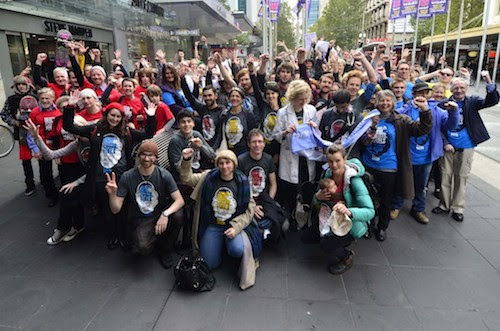
Managing director of Ebono Institute and major sponsor of The Generator, Geoff Ebbs, is running against Kevin Rudd in the seat of Griffith at the next Federal election. By the expression on their faces in this candid shot it looks like a pretty dull campaign. Read on

  • Population and the Queensland Election Kelvin Thomson MP

    Monday, February 2, 2015

    Queensland Government Knocks Over the Witches Hats

    In 2010 I visited Queensland on several occasions to give speeches about rapid population growth, in Brisbane, on the Sunshine Coast, and at the Woodford Folk Festival. I encountered great unhappiness at the impact rapid population growth was having in Brisbane and South-East Queensland, and was not surprised when the Queensland Labor Government was defeated in 2012, although the scale of the defeat was remarkable.
    In many respects the Queensland Government had fallen victim to the same problems that had beset the Victorian Labor Government which was defeated in 2010. But like the Victorian Labor Party the Queensland Labor Party has now pulled off an astonishing turnaround, apparently regaining office in a single term and toppling an elected Premier in the process. Ted Baillieu was replaced by his own party and did not get to contest the election; Campbell Newman lost his seat.

    Political commentators are astonished at this growing political volatility. Kevin Rudd was elected as Prime Minister and replaced by Julia Gillard before the 2010 election. She in turn was replaced by Kevin Rudd before the 2013 election. It is now widely speculated that Tony Abbott, too, will not get to seek re-election as Prime Minister. So what is going on?

    No doubt factors like broken election promises, the 24/7 media cycle, the Global Financial Crisis, and voters choosing State and Federal Governments of different complexions, are having an impact. But one feature of the past decade is regularly overlooked. In 2004 Australia had a net migration program of 100,000. Then in the space of three years it ratcheted up to well over 200,000, where it has stayed. This doubling has given Australia rapid population growth for the past decade – we now have an extra million people every three years. Prime Minister Howard, who introduced this rapid increase, lost his seat at the 2007 election.

    I have become convinced that rapid population growth and political instability go hand in hand. I think of this as the Witches’ Hats theory of government. Think about those Advanced Driving Courses that require drivers to drive in slalom fashion through a set of plastic or rubber orange cones, commonly called witches hats. The driver’s mission is to avoid the hats. If they hit a certain number, they fail the test.

    I think the re-election task of a government has some similarities. It you think of each hat as an area of public policy, such as education, health, housing, transport, aged care etc, if a government mucks up an area of public policy it is akin to hitting one of the witches’ hats. If a government hits a number of hats, ie fails a number of public policy tasks, it is likely to be voted out, just as the driver who hits the hats won’t get their Advanced Driving Qualification.

    Now it seems pretty obvious that if you’re a driver, you are much more likely to avoid the hats if you are travelling at 50 kph, whereas if you’re driving at 100 kph, you’re pretty likely to hit some hats. And if you’re a government you’re much more likely to solve peoples’ problems if you have a population that is growing slowly, rather than one that is growing rapidly.

    The Queensland and Victorian Liberal Governments were elected on the back of public discontent with issues such as planning, public transport, cost of living, housing unaffordability and job insecurity. But as these things had been caused by rapid population growth, and the growth continued, they did not solve those problems, and paid a massive electoral price for it. For example Governments get punished for trying to sell off public assets. They do it to raise money to build new infrastructure, or pay down debts incurred as a result of past infrastructure building. But they would not need so much money, or so much infrastructure, if the population wasn’t growing so fast. The Queensland academic Jane O’Sullivan says that population growth of 2 per cent doubles the infrastructure task compared with that in a stable population.

    It is not only in Australia that rapid population growth drives political instability. It happens right around the world. Governments in the Scandinavian countries with slow population growth are able to solve people’s problems and enjoy considerable political life expectancy. Countries which have high birth rates, like Egypt, Nigeria and the Philippines, have chaos. In the Pacific Islands Samoa has had a relatively stable population, and stable government, for decades, whereas Papua New Guinea and the Solomon Islands have had neither.

    It is not fashionable to focus on our past decade of rapid population growth as a cause of Australia’s political instability and volatility. Some are happier focussing on the alleged personal qualities of our leaders – they heap praise or derision on Anna Bligh, or Tony Abbott, or Campbell Newman, when the fact is that a different leader with the same policies would have led to the same result. Others want to interpret election results through a highly ideological prism, and come unstuck as a consequence of believing too much of their own propaganda.
    It is probably too late for Tony Abbott. But perhaps his successor, or successors, and other political leaders around Australia, might want to ask themselves “do I want to be yet another casualty of our equivalent of the Colosseum, or do I want a respectable time in office, as Prime Ministers and Premiers had as recently as the 80s and 90s?” And if so, isn’t the way to improve my political life expectancy to slow the population car down and focus on solving people’s real life problems?

    Posted by Kelvin Thomson MP at 1:37 PM

  • Climate Change Will Hit Australia the Hardest, Study Says

    Climate Change Will Hit Australia the Hardest, Study Says

    By Oliver Milman, The Guardian

    Australia could be on track for a temperature rise of more than 5°C by the end of the century, outstripping the rate of warming experienced by the rest of the world, unless drastic action is taken to slash greenhouse gas emissions, according to the most comprehensive analysis ever produced of the country’s future climate.

    Australia may be on track for a temperature rise of more than 5°C by the end of the century, outstripping the rate of warming experienced by the rest of the world.
    Credit: Warren/Flickr

    The national science agency CSIRO and the Bureau of Meteorology have released the projections based on 40 global climate models, producing what they said was the most robust picture yet of how Australia’s climate would change.

    The report stated there was “very high confidence” that temperatures would rise across Australia throughout the century, with the average annual temperature set to be up to 1.3°C warmer in 2030 compared with the average experienced between 1986 and 2005.

    Temperature projections for the end of the century depend on how deeply, if at all, greenhouse gas emissions are cut. The world is tracking at the higher emissions scenario, meaning a temperature increase of between 2.8°C and 5.1°C in Australia by 2090.

    According to the report, this “business-as-usual” approach to burning fossil fuels is set to cook Australia more than the rest of the world, which will average a temperature increase of 2.6°C to 4.8°C by 2090.

    Australia’s surface air temperature has already increased 0.9°C since 1910, with the number of extreme heat records outnumbering extreme cool records nearly three to one since 2001.

    Australia experienced its third-warmest year on record in 2014, with 2013 its warmest year on record. The heat experienced in 2013 was “unlikely” to have been caused by natural variability alone, the report stated, with such temperatures now five times more likely due to humans releasing greenhouse gases into the atmosphere.

    A map depicting the median projected changes in temperatures in Australia.
    Credit: CSIRO

    Other findings of the wide-ranging analysis, the first such Australian climate projection made since 2007, included:

    • The interior of Australia is set to warm more rapidly than coastal areas. Alice Springs will experience an average of 83 days a year over 40°C in 2090, up from just 17 in 1995.
    • Melbourne will swelter through an average of 24 days above 35°C by 2090, up from 11 in 1995. Sydney will experience 11 days above 35°C by 2090, an increase from three days in 1995.
    • Australia is on course for a sea level rise of 45 cm to 82 cm by 2090, if emissions are not curbed. The report warned that if the Antarctic ice sheet was to collapse, sea levels would be a further “several tenths of a meter higher by late in the century”.
    • Extreme rainfall events will increase but overall rainfall is expected to drop in southern Australia, apart from Tasmania, during the winter and spring months – by as much as 69 percent by 2090.
    • There will be more extreme droughts, with the length of droughts increasing by between 5 percent and 20 percent, depending on how quickly greenhouse gases are cut.
    • Rising temperatures will result in a “greater number of days with severe fire danger”. Meanwhile, soil moisture will fall by up to 15 percent in southern Australia in the winter months by 2090.
    • Snow cover will decline, with the report stating there was “high confidence that as warming progresses there will be very substantial decreases in snowfall, increase in melt and thus reduced snow cover.”

    These changes are likely to produce some benefits, such as enhanced agriculture in Tasmania and fewer deaths from cold weather. But they will be overshadowed by the negatives, such as rising numbers of deaths from heat waves, water resource challenges, impacts upon agriculture and risks posed to coastal infrastructure by rising seas.

    Some of the most profound transformations are set to take place in the seas that surround Australia, which will warm by a further 2°C to 4°C unless emissions are cut.

    Excess carbon dioxide absorbed by the oceans causes the water’s pH level to drop. This acidification makes it more difficult for corals to form hard reef structures and other creatures such as oysters, clams, lobsters and crabs to develop their shells.

    This phenomenon poses a major risk to ecosystems such as the Great Barrier Reef and is, according to the report, “likely to impact the entire marine ecosystem from plankton at the base to fish at the top.”

    Kevin Hennessy, a principal research scientist at the CSIRO, said it and the Bureau of Meteorology now had a greater confidence than ever in their forecasts of Australia’s climate.

    “We expect land areas to warm faster than ocean areas, and polar regions faster than the tropics,” Hennessy told Guardian Australia.

    Given Australia’s geographical position, that would mean much of the country was expected to warm faster than the global average.

    “Australia will warm faster than the rest of the world,” Hennessy said. “Warming of 4°C to 5°C would have a very significant effect: there would be increases in extremely high temperatures, much less snow, more intense rainfall, more fires and rapid sea level rises.”

    Hennessy said even the internationally agreed limit of 2°C of warming on pre-industrial times would cause severe problems for Australia.

    “That intermediate emissions scenario would have significant effects for Australia,” he said. “Coral reefs are sensitive to even small changes in ocean temperature and a 1°C rise would have severe implications for the Great Barrier Reef and Ningaloo reef.

    “The situation is looking grim for the Great Barrier Reef unless we can significantly reduce greenhouse gas emissions. A 2°C future would be very challenging.”

    Hennessy said Australia should prepare for this altered climate by ensuring hospitals, transport infrastructure, construction codes and fire planning all considered the rising temperatures.

    Cutting emissions would also help head off the worst of climate change, with nations set to convene in Paris later this year for crunch talks aimed at agreeing emissions reductions beyond 2020.

    “Achieving that intermediate, rather than higher, emissions path would require significant reductions in global greenhouse gases,” Hennessy said. “It’s difficult to say what will be achieved, there are a lot of negotiations to come in Paris. We hope there will be an agreement until 2050 at least, but who knows what will happen in the coming decades.”

    Reprinted with permission by The Guardian

    Comments

    Name (required):
    Email (required):
    City/State/Zip:
    Enter the word “climate” in the box below:

    [+] View our comment guidelines.

    Please note: Comment moderation is enabled. Your comment will not appear until reviewed by Climate Central staff. Thank you for your patience.

  • 7 reasons not to miss this Inbox x 350 ORG

    here to enable desktop notifications for Gmail.   Learn more  Hide
    1 of 4
    Web Clip
    Forbes.com: Most popular storiesGoogle Earth Pro Is Now Available For Free14 hours ago

    7 reasons not to miss this

    Inbox
    x

    Charlie Wood – 350.org Australia <350@350.org> Unsubscribe

    7:45 PM (1 hour ago)

    to me

    In just under 2 weeks, people everywhere will come together for Global Divestment Day. Here’s why you should REGISTER NOW to join them:

    1. Divestment is winning

    In just over 2 years, this grassroots movement that started on college campuses has the fossil fuel industry running scared. They’re spending millions trying to counter us. First they laugh at you, then they fight you, then you win. Divestment could just help buy us the time we need to sort the climate crisis once and for all.

    2. Everyone’s talking about it…

    …from the World Bank, the United Nations, Obama, Goldman Sachs, the International Montery Fund, Missy Higgins, your bank, your super fund, your next door neighbour, their kids, their friends – the list goes on.

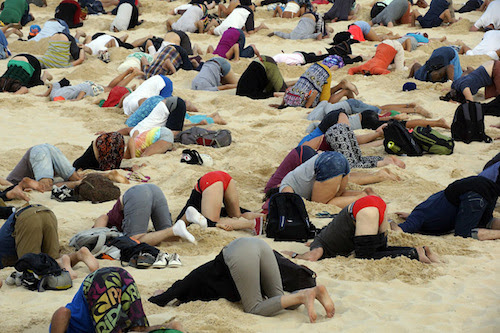
    3. It’s more effective than burying your head in the sand on climate…

    …which is what our Government is doing.

    4. It shows solidarity

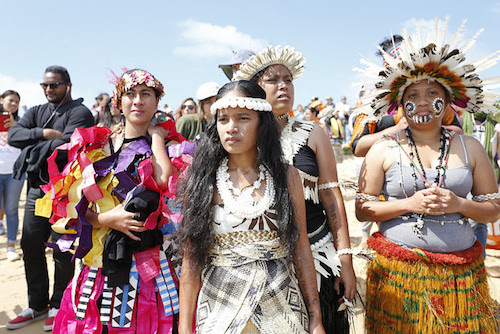
    Around the world, people are already suffering the tragic impacts of dangerous climate change. Pacific Islanders are fighting to keep their homes above water. Farmers are fighting crippling droughts. Our Asian neighbours are fighting increasingly severe and frequent extreme weather events. Divestment is a way for us to stand with these communities and show we wont sit idly by as the fossil fuel industry wrecks their homes, livelihoods and cultures.

    5. Anyone can do it

    We’re all unwittingly supporting the fossil fuel industry – whether it’s via our super, bank or other institutions we’re connected to – each of us can divest and play a powerful role in unlocking the climate deadlock.

    6. It’ll be fun

    Here in Australia, there’ll be performances by Cat Empire’s Felix Riebl, thousand-person fossil fuel break-up rallies, human carbon bubbles, mock drill rig installations and giant human signs. Overseas, there’ll be everything from umbrella parties in the Himalayas, mobilisations in the financial districts of New York and London and creative actions in Burkina Faso.

    7. It’s one of the best chances we’ve got

    The fossil fuel industry has corrupted our political processes, degraded our land and water, divided local communities and now it’s radically altering the atmosphere and the world as we know it. As leaders meet in Paris at the end of 2015, we know they won’t act in accordance with the urgency of the crisis so long as the fossil fuel industry’s power goes unchecked. Divestment can take back this power and speed up the transition to a cleaner, brighter, better future for all.

    So we’ll be seeing you at Global Divestment Day right?

    CLICK HERE TO REGISTER TODAY.

  • This has been the week from hell for Tony Abbott and his Government. Bill Shorten

    Click here to enable desktop notifications for Gmail.   Learn more  Hide
    1 of 20
    Web Clip
    Reuters: Oddly EnoughZimbabwean jailed for nine years for eating python meat11 hours ago

    #Knightmare

    Inbox
    x

    Bill Shorten via sendgrid.info 

    1:42 PM (18 minutes ago)

    to me
    .
    Neville,

    This has been the week from hell for Tony Abbott and his Government.

    Monday
    It all started on Monday when Tony Abbott made his ‘Captain’s Pick’ and awarded Prince Philip a Knight of the Order of Australia. Most of us thought he was joking, but once the laughter subsided, we realised he was serious.

    By night time, Tony Abbott’s Knightmare was just beginning. Worse still, Tony Abbott’s personal fascination with the British Monarchy overshadowed Australia Day and the remarkable achievements of people like Australian of the Year Rosie Batty.

    Tuesday
    The sun rose on Tuesday but the Knightmare continued for Tony Abbott and his Ministers, with the country in open ridicule. The Prime Minister bunkered down while Minister after Minister refused to support his decision.

    Wednesday
    They call Wednesday ‘Hump Day’, and I’m sure by then Tony was wishing the week was over. Rupert Murdoch unfairly made Peta Credlin the scapegoat for her boss’s woeful priorities. Government Ministers were quick to back Ms Credlin but not so quick to back her boss’s judgement.

    Thursday
    You know you’re in trouble as a conservative Prime Minister when even Andrew Bolt thinks you’re a dud. By Thursday, no one was backing in Tony Abbott, not even old mate Andrew. His colleagues were in open mutiny, a new leader was being discussed. But we know no matter who they choose, they’re all from the same Liberal family.

    Friday
    Tony Abbott was happier than Rebecca Black to see the Friday of this week from hell. He visited Colac in Victoria – approx. 1,926 kilometres from Brisbane – to declare his team is performing well because of their ‘captain’, not that he’s a skite of course. He even visited a pub, where the locals were happy* to see him.

    *not so much.

    This week would be funny if it wasn’t so serious. While the Prime Minister is the laughing stock of the country, families are suffering from his increases to cost of living, GP tax, cuts to pensions and plans for $100,000 degrees.

    So rather than keep laughing, help me show we aren’t forgetting the really worrying stuff Tony Abbott and his Ministers are up to.

    Share our graphic on Facebook to help spread the word that we want a Prime Minister who focuses on the issues that matter to Australians?

    Wake up Tony Abbott – look out for Australians, not just yourself and Prince Philip.

    Cheers,
    Bill

    P.S. Also, today our friends in Queensland are going to the polls to try and kick out a rotten Liberal Government. If you know anyone who’s there who isn’t sure how to vote today, don’t stay quiet. Let them bad first term governments can and should be booted out.

  • URGENT: LNP Supreme Court action against GetUp How to vote cards

    Click here to enable desktop notifications for Gmail.   Learn more  Hide
    More

    1 of 20
    Web Clip

    URGENT: LNP Supreme Court action against GetUp

    Inbox
    x

    Sam R – GetUp!

    1:02 PM (2 minutes ago)

    to me
    NEVILLE.

    We need your urgent help.

    Voting has just opened in Queensland, and Campbell Newman’s LNP’s lawyers have applied for a Supreme Court injunction to stop us handing out our how-to-vote cards.

    Right now, hundreds of GetUp volunteers are handing out cards telling people to put the LNP last, but if we lose this Supreme Court action we’ll have to stop.

    We need to fight it, and we have to do it fast. We can only do it if we know we have enough money to fight the injunction in an urgent court action, and fight any appeal that may arise.

    Can you fund our urgent fight in the Supreme Court? https://www.getup.org.au/supremecourt

    If the case doesn’t go ahead or we raise more than we need, we’ll offer you a full refund. If you don’t want a refund we’ll put that money straight into the Reef Legal Fighting Fund.

    It’s still morning in Brisbane, and the majority of voters haven’t yet hit the polls. This is likely to be one of the closest finishes in Queensland history, and having our how-to-vote for the Reef cards could make all the difference.

    This is exactly what it sounds like — a cynical ploy to silence us on election day. It’s a dirty, desperate attempt to cling on to power in an election set to go down to the wire.

    Can you make an urgent donation so we can fight this bushleague play and keep handing out our How-to-vote cards?

  • The John James Newsletter 43

    1 of 20


    Web Clip

    ESPN.com – Hernandez trial, Day 2: Testimony resumes – 1 hour ago

    The John James Newsletter 43

    Inbox x

    John James

    6:07 AM (3 hours ago)

    The John James Newsletter 43
    31 January 2015

    Syria jokeHow can you say that al Qaeda doesn’t have an air force? They have the Israeli air force.
    The Anti-Science Climate Denier CaucusThe 38 climate deniers in the Senate who have publicly misrepresented the science behind global warming have received from the fossil fuel industry received an average of $73,300 each, while the 62 who haven’t denied the science have received an average of $18,400. In the House on average deniers took $273,000 from coal, oil and gas interests while the rest took $80,100.http://thinkprogress.org/climate/2015/01/08/3608427/climate-denier-caucus-114th-congress/
    The Strategy Behind Israel’s Attack on Iran and HizballahIsrael appears to prefer that the Syrian army, Hizballah and Iran remain trapped in an endless struggle against the opposition – whatever their hue – that saps their resources and military strength, leaving Israel to control the playing field. Hizballah, by contrast, has every reason to want to cement its position in southern Syria. Sunni opposition forces now control both the border with the Golan Heights, giving them access to Israel, and with south Lebanon, home to much of Lebanon’s Shia majority and Hizballah’s heartland.http://www.informationclearinghouse.info/article40782.htm
    Syria’s President Speaks: “The War Will End with a Political Solution” We refer to “the West’s quiet retreat from its demands that Syria’s president step down immediately.” Given this shift in the Western attitude, is Assad more open to a negotiated solution to the conflict that leads to a political transition?http://www.foreignaffairs.com/discussions/interviews/syrias-president-speaks
    Analysis of proposed Nicaragua canal To be built by the Chinese in the heart of the Americas with profound long-term political implications.http://www.theguardian.com/world/2015/jan/20/-sp-nicaragua-canal-land-opportunity-fear-route?CMP=ema_565
    Snowden: iPhones Have Secret Spyware That Lets Govt’s Monitor Unsuspecting UsersThe NSA whistleblower’s lawyer says the secret software can be remotely activated to watch the user.http://www.alternet.org/news-amp-politics/snowden-iphones-have-secret-spyware-lets-govts-monitor-unsuspecting-users
    Map: How the flow of foreign fighters to Iraq and Syria has surged since Octoberhttp://www.washingtonpost.com/blogs/worldviews/wp/2015/01/27/map-how-the-flow-of-foreign-fighters-to-iraq-and-syria-has-surged-since-october/

    Iran moves away from US dollar in foreign tradehttp://rt.com/business/225919-iran-switches-from-dollar/
    “Panic in Kiev: Ukrainian Forces Surrender Donbass”The following article appeared briefly on censor.net.ua and was quickly pulled. It succinctly lays out the situation from multiple Russian- and Ukrainian-language sources.http://www.informationcl
    US a dangerous ally: Former Australia PM“Australia effectively ceded to America the ability to decide when Australia goes to war,” said Fraser. He labelled the US a “dangerous ally” as Australia has become progressively more enmeshed in American strategic and military affairs. http://www.informationclearinghouse.info/article40815.htm
    What Syriza’s Victory Means for Greece—and for EuropeThe election was a triumph for anti-austerity politics and a rejection of corruption—the godfather politics, the jobs for votes, the backroom union deals, the bribes under the table, the yards of red tape and, above all, the asphyxiating power of Greece’s oligarchs, who buy politicians by the dozen and feed the population a debilitating diet of pap on their private TV channels.http://www.thenation.com/article/196001/what-syrizas-victory-means-greece-and-europe
    The victory of Syriza ‘bad news for Israel’ Alexis Tsipras, whose party Syriza won general elections in Greece on Sunday, stated last year during a rally in Athens that “the world should make every possible effort so that Israel ends its criminal attack and brutality against Palestinians.”http://ejpress.org/index.php?option=com_content&view=article&id=51403&catid=10
    Ukraine: The Rise of The RightUkraine’s bloody conflict faces a new fight against the rapid rise of far right groups. Filmmaker Ross Kemp saw first-hand how militias, made up of football hooligans and current and former soldiers, are now fighting on the front line. Just a few years ago they were on the fringes of society – shunned for their violent behaviour and xenophobic beliefs – but since the fighting against pro-Russian groups their popularity has grown. http://features.sky.com/ross-kemp-ukraine/

    Military-clad English-speakers caught on camera in Mariupol

    From the port city in eastern Ukraine, under Kiev’s control, there are videos showing armed men in military uniform, who speak English fluently.

    http://rt.com/news/226079-ukraine-foreign-military-mariupol/

    Identified as English

    http://tinyurl.com/me46n4d

    to John