Category: General news

Managing director of Ebono Institute and major sponsor of The Generator, Geoff Ebbs, is running against Kevin Rudd in the seat of Griffith at the next Federal election. By the expression on their faces in this candid shot it looks like a pretty dull campaign. Read on

  • UK floods: deadlock between insurers and government must be broken

    UK floods: deadlock between insurers and government must be broken

    A tax on insurance companies to fund flood defence and extending government care are a fix, if only short term

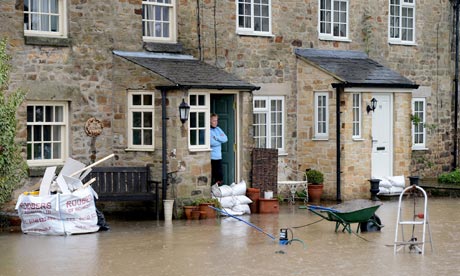
    Floodwaters in Gilling West near Richmond

    Floodwaters in Gilling West near Richmond. Photograph: John Giles/PA

    Severe floods have again pushed the question of environmental protection to the centre of political debate. A disaster for those affected, the floods have arrived just as talks between insurers and the government are on the verge of breakdown. A deal struck in 2000 to enable those living in flood-prone areas to continue to receive insurance expires next year. As yet it shows no signs of renewal. Insurers want guarantees from government that flood protection will be maintained. The government has hinted that the insurers are using the crisis to push for an unfair settlement. About 200,000 homes are at risk. They are the collateral damage of a collision between a government chasing short-term savings and an industry chasing short-term profits.

    Flood defence expenditure has been cut by 25% since 2010, while 294 schemes that should have received funding since then have yet to be started. The costs apparently saved in cuts to flood defences are more than outweighed by the costs of repairing damage afterwards. One estimate already puts the costs of flooding at £1bn a year – four times the Environment Agency’s budget. The coalition’s slash-and-burn austerity measures do nothing to help the economy today – and are shoring up huge problems for the future. Every £1 spent on flood defences has been estimated to save £8 in future.

    If government has been recklessly short-sighted, the insurance companies are little better. The five biggest firms account for half the domestic market between them. The largest, Aviva, had revenues of £50bn last year. Floods are expensive for insurers. But these huge corporations are more than big enough to take the cost. Guarantees on government flood defence spending are, for them, little more than a means to protect profits – a public subsidy for their shareholders. Householders in high-risk areas still lose out, with reports of those attempting to renew their insurance in recent months being quoted hugely inflated prices.

    The combination of the coalition’s mindless commitment to austerity, and the insurance companies’ scrabble for profits is producing a deadlock. Breaking it decisively would require two actions by government. The first is an immediate increase in flood defence spending in affected areas, as recommended by the Pitt review five years ago – briefly implemented, and then abandoned, by Cameron’s government. The coalition’s austerity plans have been a minor disaster, driving the economy back into recession over this year and hampering recovery. Extra expenditure, particularly on crucial infrastructure, is desperately needed. One estimate suggests that £500bn will be required over the next decade to replace creaking infrastructure.

    Second, if the Treasury still insists on meeting its self-defeating spending targets, a tax on the insurance companies should be levied to pay for flood defence. And where insurance companies are threatening to remove cover from households, the government should, in return, extend the provision of its own insurance cover.

    These can only be comparatively short-term measures. Over the longer term, we need to reconfigure how and where our economy operates. There is a clear housing shortage, most especially in the south-east. But of the record low number of new homes being built, up to 16,000 are still constructed on floodplains annually. The costs of this are not borne by private developers, but by homeowners and then (ultimately) the rest of us. Tighter planning controls over floodplain development, allied to a serious effort to shift economic activity and create jobs in lower-risk areas, are both needed to reduce future costs. Muddling through on private provision will not deliver the shift.

  • Blame, responsibility and demand for change following floods

    Blame, responsibility and demand for change following floods

    Posted: 26 Nov 2012 10:13 AM PST

    New research shows that concerns about governmental failure to act effectively and fairly in the aftermath of extreme weather events can affect the degree to which residents are willing to protect themselves.
    You are subscribed to email updates from ScienceDaily: Severe Weather News
    To stop receiving these emails, you may unsubscribe now.
    Email delivery powered
  • 24 hours for Palestine

    24 hours for Palestine

    Inbox
    x

    Dalia Hashad – Avaaz.org
    7:56 PM (47 minutes ago)

    to me
    Dear Avaazers across Australia,

    In 24 hours the UN will vote on whether to recognise a Palestinian state. 1.7 million of us have helped get over 120 countries to back this historic peace initiative! But our Prime Minister plans to abstain from voting, and this is our last chance to support vote for peace in the Middle East — let’s get to 2 million voices for Palestinian freedom!

    In 24 hours, the UN will face a historic vote on Palestinian statehood. But our Prime Minister plans to abstain from voting, and this is our last chance to help put these nations on the road to peace.

    UN recognition of Palestine could help end 40 years of repression and lead to two states — Israel and Palestine — living in peace and security side by side. 1.7 million of us have signed on and helped get over 120 countries to support the bid! Our petition is already being widely covered in the media and delivered through actions like a 4 storey-high flag (at right) in front of key government buildings.

    Heads of state are deciding right now, and it’s time for Australia step up at this historic moment. Click below to help us get to 2 million voices for a freedom and peace that the Palestinian people have not known for a generation:  

    http://www.avaaz.org/en/palestine_worlds_next_nation_aus/?bhPqncb&v=19629

    Palestinian statehood will not bring a resolution to this intractable conflict overnight, but UN recognition will change the dynamics and will begin to unlock the door towards freedom and peace. Across Palestine, people are preparing, with hope and expectation, to reclaim a freedom their generation has never known. Let’s stand with them.

    With hope and determination,

    Dalia, Alice, Jeremy, Marie, Ricken, Aldine, Nick, Pascal, Michelle and the rest of the Avaaz team  

    MORE INFORMATION

    Australia to abstain from Palestinian vote (ABC)
    http://www.abc.net.au/news/2012-11-27/australia-to-abstain-from-palestinian-vote/4395000

    Two-State Solution on the Line (New York Times)
    http://www.nytimes.com/2012/11/26/opinion/global/brundtland-carter-two-state-solution-on-the-line.html

    Palestinian statehood wins European backing (The Guardian)
    http://www.guardian.co.uk/world/2012/nov/19/palestinian-statehood-wins-european-backing

    Palestinian Authority rejects calls to postpone statehood bid (RT)
    http://rt.com/news/abbas-palestine-un-statehood-504/

    Q&A: Palestinian bid for upgraded UN status (BBC)
    http://www.bbc.co.uk/news/world-middle-east-13701636

    Support the Avaaz Community!
    We’re entirely funded by donations and receive no money from governments or corporations. Our dedicated team ensures even the smallest contributions go a long way.


    Avaaz.org is a 17-million-person global campaign network
    that works to ensure that the views and values of the world’s people shape global decision-making. (“Avaaz” means “voice” or “song” in many languages.) Avaaz members live in every nation of the world; our team is spread across 19 countries on 6 continents and operates in 14 languages. Learn about some of Avaaz’s biggest campaigns here, or follow us on Facebook or Twitter.

    You are getting this message because you signed “Save our dying planet!” on 2011-12-08 using the email address nevilleg729@gmail.com.
    To ensure that Avaaz messages reach your inbox, please add avaaz@avaaz.org to your address book. To change your email address, language settings, or other personal information, https://secure.avaaz.org/act/index.php?r=profile&user=6be3e9aa63582c9b1397464fcc49baa9&lang=en, or simply go here to unsubscribe.

    To contact Avaaz, please do not reply to this email. Instead, write to us at www.avaaz.org/en/contact or call us at +1-888-922-8229 (US).

  • Foreign investment costs Aust millions

    Foreign investment costs Aust millions

    AAPNovember 28, 2012, 9:08 pm

    Taxpayers are losing up to hundreds of millions of dollars of Commonwealth tax revenue from foreign investment in domestic agriculture, a senate committee says.

    The Rural and Regional Affairs and Transport References Committee published its interim report on the tax arrangements for foreign investment in agriculture and the limitations of the Foreign Acquisitions and Takeovers Act 1975.

    Committee chair NSW Liberal senator Bill Heffernan said the report into the Foreign Investment Review Board (FIRB) national interest test raised serious concerns of potential huge revenue loss under the current legislation.

    “The evidence heard by the inquiry points to hundreds of millions of dollars of Commonwealth revenue being potentially lost through the current vagaries of present tax laws, coupled with the inadequacy of an out of date Foreign Acquisitions and Takeovers Act 1975,” Senator Heffernan said in a statement on Wednesday.

    “This report touches on a much bigger issue which governments across the world must tackle the redefining of sovereignty and the impact on our national interest.”

    The committee made six recommendations.

    These included the government undertake a review of tax arrangements for foreign investors in agriculture to prevent tax revenue leakage.

    Other recommendations included a review of local tax laws which provide exemptions for `not-for-profit’ activities for foreign entities and taxation laws to be reviewed to boost incentives for Australian investment in agriculture so local companies were not at a disadvantage to foreign entities.

    Also, a review of the Foreign Acquisitions & Takeovers Act 1975 to include a definition of `rural land’ and `urban land’ and for FIRB to effectively review foreign investment in Australia.

    Concerns about foreign investment were raised following the sale of Queensland cotton farm, Cubbie Station, to a joint Chinese-Japanese consortium in late August.

  • UN report into permafrost thaw

    UN report into permafrost thaw

    38 page  pdf report prepared by the UN explining the scientific reports on Permafrost Melt

    for lay people to understand.

  • Bishop’s position is untenable: Albanese

    Bishop’s position is untenable: Albanese

    AAPUpdated November 27, 2012, 3:59 pm

    Federal Labor says Julie Bishop’s position as deputy opposition leader is “untenable” after she accused Prime Minister Julia Gillard of criminal conduct when she was a lawyer in the 1990s.

    Ms Bishop has claimed that Ms Gillard deliberately did not open a file when she helped set up a union slush fund because she wanted to hide the fact it would be used to “siphon” money.

    The association was “unauthorised” and in breach of West Australian laws. Ms Bishop on Tuesday also admitted she met the notorious former Australian Workers’ Union bagman Ralph Blewitt on Friday.

    “The deputy leader of the opposition thinks it’s acceptable to accuse the prime minister of engaging in a criminal act on the basis of her star witness being this self-confessed fraudster and yet no evidence has been produced to back up that claim,” cabinet minister Anthony Albanese told reporters in Canberra.

    “Julie Bishop’s position as deputy leader of the opposition is simply untenable.

    “(Opposition Leader) Tony Abbott either has to back her up 100 per cent or take action and dismiss her.”

    Mr Albanese said Ms Bishop had needed to “put up or shut up”.

    “There are consequences for Ms Bishop’s political situation if it is not backed up.”

    Whether Ms Gillard might take legal action was a matter for the prime minister, Mr Albanese said.

    He also called on Ms Bishop to further explain who instigated Friday’s meeting with Mr Blewitt and if anyone from Mr Abbott’s office was present.

    Ms Bishop showed an “extraordinary lack of judgment” in meeting the former AWU official and making serious accusations without being able to back them up.

    The Labor MP further wants to know “what has brought him (Mr Blewitt) back to Australia” to speak with the police and media.