Category: General news

Managing director of Ebono Institute and major sponsor of The Generator, Geoff Ebbs, is running against Kevin Rudd in the seat of Griffith at the next Federal election. By the expression on their faces in this candid shot it looks like a pretty dull campaign. Read on

  • Steam train fan to petition NSW government

    Steam train fan to petition NSW government

    AAPNovember 25, 2012, 10:53 am

    Steam train enthusiasts have launched a campaign to save the state’s heritage trains amid concerns they are on a NSW government “hit list”.

    Over 1000 people have signed a petition to save the state’s steam trains, campaign organiser, Rail Heritage Australia (NSW) president John Glastonbury says.

    Mr Glastonbury says there are a handful of steam locomotives in NSW and he wants to see them invigorated for tourism and to give members of the public access to an important part of the state’s heritage.

    “The marvels of steam train travel in NSW for thousands of devotees and newcomers may be no more if state government bureaucracy gets its way,” he said.

    He said the government is sitting on a report that came out of a Premier’s Office inquiry six months ago which he believes recommends supporting steam rail.

    “I suspect this report will have some things in it about the way the government in NSW can better support rail heritage,” he told AAP on Sunday.

    “And that this (stream train travel) is valued and needs to be better managed by the government.”

    Mr Glastonbury is among 200 people travelling aboard Steam Locomotive 3016 from Goulburn which will arrive in Sydney at 6pm (AEDT) on Sunday.

    The group will petition the government to release the report and save steam rail, Mr Glastonbury said.

    Comment was being sought from NSW Transport Minister Gladys Berejiklian.

  • Sea level rise (CLIM 012) – Assessment published Nov 2012 …

    Sea level rise (CLIM 012) – Assessment published Nov 2012
    Sea level is not rising uniformly at all locations, with some locations Projections of global mean sealevel rise in the 21st century range between 20 cm and
    www.eea.europa.eu/data-and-maps/indicators/…/assessment

  • Obama under pressure to show Doha he is serious on climate change

    Obama under pressure to show Doha he is serious on climate change

    The climate has been back on Obama’s lips since his re-election, but the Doha conference will show if he is all talk

    Barack Obama

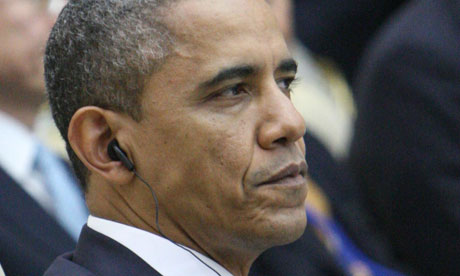
    All eyes will be on Barack Obama and whether he demonstrates commitment to climate change early on at Doha. Photograph: KeystoneUSA-Zuma/Rex Features

    Barack Obama is being pressed for proof of his intent to act on climate change ahead of next week’s United Nations global warming summit in Doha.

    The proof might boil down to just two words: two degrees. An early statement at Doha that America remains committed to the global goal of limiting warming to 2C above pre-industrial levels would be a clear sign.

    Every statement from US diplomats at the Doha negotiations will be closely scrutinised for signs that Obama will indeed make climate change a priority of his second term – and that America remains committed to the global agreement diplomats have been seeking for 20 years.

    Campaigners say Obama’s re-election, superstorm Sandy and New York City mayor Michael Bloomberg’s endorsement – predicated on climate change – put climate change back on the domestic agenda.

    Opinion polls suggest public concern in the US about climate change was rising even before Sandy. Campaigners argue Obama needs to engage on climate, if he wants to safeguard his legacy as president.

    “President Obama’s re-election provides him with an opportunity to seal his legacy as a truly transformative leader, but he needs to address climate change,” said Andrew Steer, president of the World Resources Institute. “I think history will judge any president from now onwards not to have succeeded if he doesn’t really grapple with this issue seriously.”

    Early indications are that Obama will spend more time on climate change than in his first term. He invoked “the destructive power of a warming planet” in his re-election speech. He told reporters he would make climate change a personal mission of his second term. At his first White House press conference, Obama spoke of starting a national conversation about climate risks, and building a bipartisan consensus for action.

    But the president also made clear the economy remained his number one focus.

    At Doha, negotiators will be looking for signs of how Obama plans to put his climate mission in action.

    Hardened climate observers will be watching whether Todd Stern, the state department climate envoy, reaffirms America’s commitment to the climate platform reached in Durban last year – including a core goal of limiting warming to 2C.

    Some campaigners fear America is backing off from that promise, following a speech at Dartmouth University earlier this year in which Stern said signing on to the 2C goal was unrealistic for some countries.

    “It makes perfect sense on paper. The trouble is it ignores the classic lesson that politics – including international politics – is the art of the possible,” Stern said in the speech. “If countries are told that, in order to reach a global goal, they must accept targets their leadership sees as contrary to their core interest in growth and development those countries are likely to say no.”

    The talk, with its suggestion of a retreat from the Durban platform, caused enormous concern among campaign groups.

    Jennifer Morgan of WRI said in the reporters’ conference call she would be watching to see whether America continued to back away from the goal, or whether it was back on side.

    Stern has not been giving interviews prior to the Doha talks.

    The larger question, however, is how Obama intends to use his authority to act on climate in his second term – even if Congress remains opposed to additional regulations.

    Obama committed America to a 17% cut in emissions this decade from 2005 levels. That was seen as too weak in most of the world, but efforts for economy-wide action collapsed in the Senate in 2010.

    Republicans in Congress then fought to undercut the authority of the Environmental Protection Agency. But Obama did manage to steer $90bn towards green investment in the economy recovery plan, and set new 54.5mpg fuel efficiency standards.

    Even after Obama’s re-election, the House of Representatives is still controlled by Republicans, including a heavy contingent from the Tea Party conservatives who discount the very existence of climate change and oppose government intervention in the economy.

    But campaign groups in the US are hoping the Environmental Protection Agency steps up – by finalising a rule approved in March that would put severe limits on the construction of new power plants. Campaigners are also looking to the EPA to bring in new rules on existing coal-fired plants.

    “We recognise there are constraints on the president – in no small part from Congress – but the electorate wants action on climate change before superstorm Sandy becomes business as usual,” Janet Redman, co-director of the Sustainable Energy and Economy Network said in a statement. “There are measures we can take now. We can join European countries and agree to tax financial transactions, which could raise hundreds of billions of dollars for climate programmes and other public goods. And we can promote the Green Climate Fund as the main channel for public finance to support low-carbon and climate-resilient sustainable development priorities of countries and communities most impacted by climate change.”

  • Climate change evident across Europe, confirming urgent need for adaptation

    Climate change evident across Europe, confirming urgent need for adaptation

    Posted: 23 Nov 2012 06:21 AM PST

    Climate change is affecting all regions in Europe, causing a wide range of impacts on society and the environment. Further impacts are expected in the future, potentially causing high damage costs, according to the latest assessment.

    Norway’s oil industry working in extreme conditions

    Posted: 23 Nov 2012 06:21 AM PST

    The northward shift of Norway’s oil industry means it must adjust to temperatures down to -30°C, storms, sleet and snow, and drift ice. And to the blackest night.
    You are subscribed to email updates from ScienceDaily: Severe Weather News
    To stop receiving these emails, you may unsubscribe now.
    Email delivery powered
  • Slow pace of carbon cuts brings catastrophic climate change closer: UN

    Slow pace of carbon cuts brings catastrophic climate change closer: UN

    The gap between the carbon emission cuts pledged and the cuts scientists say are needed has widened, report warns

    Extreme weather : Drought in  Spain's Canary island of Gran Canaria

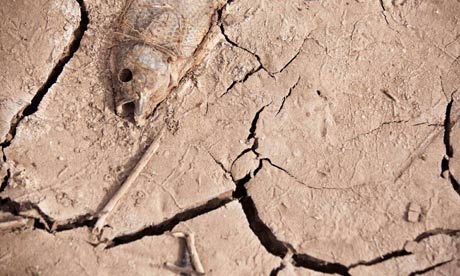
    A dead fish on the bed of a reservoir on the drought-stricken island of Gran Canaria. Europe is already feeling the effects of climate change. Photograph: Borja Suarez/Reuters

    The world is straying further away from commitments to combat climate change, bringing the prospect of catastrophic global warming a step closer, a UN report said on Wednesday. The warning came as nearly 200 governments prepare to meet in Qatar for international climate negotiations starting next Monday.

    The gap between what world governments have committed to by way of cuts in greenhouse gases and the cuts that scientists say are necessary has widened, but in order to stave off dangerous levels of global warming, it should have narrowed. There is now one-fifth more carbon in the atmosphere than there was in 2000, and there are few signs of global emissions falling, according to the new report from the United Nations Environment Programme (Unep).

    The warning of increasing emissions came as fresh evidence was published showing the last decade was the warmest on record for Europe. The European Environment Agency (EEA) said all parts of the region had been affected, with higher rainfall in northern Europe and a drying out in the south, bringing flooding to northern countries including the UK, and droughts to the Mediterranean.

    According to the United Nations report, drawing on research from more than 50 scientists, the widening gap between countries’ plans and scientific estimates means that governments must step up their ambitions as a matter of urgency to avoid even worse effects from warming. “The transition to a low-carbon, inclusive green economy is happening far too slowly and the opportunity for meeting [scientific advice on emissions targets] is narrowing annually,” said Achim Steiner, executive director of Unep.

    The explicit goal of international policy is to prevent global warming of more than 2C above pre-industrial levels, which scientists say is the limit of safety beyond which climate change is likely to become irreversible and catastrophic. That goal that has been roughly translated as a concentration of carbon in the atmosphere of no more than 450 parts per million. To meet this, governments would have to ensure that no more than 44 gigatonnes (Gt) of carbon dioxide equivalent (CO2e) is emitted per year by 2020. The UN’s latest research, published on Wednesday as the Emissions Gap Report 2012, shows that on current trends, emissions by 2020 will be 58 Gt CO2e.

    This gap between the cuts needed and the cuts planned brings the prospect of dangerous levels of climate change – entailing more extreme weather including floods, droughts and fiercer storms, such as those witnessed this year – much closer.

    Even if countries manage to change direction in time and meet the emissions-cutting targets they have committed to in the past three years, the gap will still be large – about 8 Gt by 2020. To meet scientific advice, countries would have to agree to much bigger curbs on emissions than they have yet done – and there is little chance of that happening at the next round of annual climate negotiations, which begin on Monday in Doha, Qatar. At the fortnight-long talks, ministers are expected to set out a few more details of how they will work towards their agreed plan of drawing up a new global climate change treaty by 2015, to come into effect from 2020.

    Despite the slow pace of progress, Steiner said there was still a chance for the world to obey scientific advice. He said: “Bridging the gap remains do-able with existing technologies and policies.” He said many of the measures governments were undertaking, from investments in renewable energy to public transport and higher energy efficiency standards for buildings, were yet to bear fruit, and their effects should start to be seen in the next few years.

    But he warned that countries must avoid being “locked in” to high-carbon infrastructure – power stations and buildings constructed today will still be in operation and spewing out carbon decades from now, and that will be unsustainable. It would be cheaper to make sure that all such infrastructure is low-carbon from the start, than to abandon it or refurbish in years to come.

    Christiana Figueres, the UN’s top climate official, who will head next week’s talks, said: “Time is running out, but the technical means and the policy tools to allow the world to stay below 2C [of warming] are still available to governments and societies.”

    Environmental groups warned that the UN report showed governments were failing. Jennifer Morgan, director of the climate and energy programme at the World Resources Institute, said: “This report is another harsh reminder that the world is simply not moving aggressively enough to tackle the climate challenge. The gap is growing and carbon dioxide levels continue to rise, yet the current pledges and commitments by countries remain sorely inadequate. We are already seeing how climate change – with more extreme weather events, rising seas and more droughts – is taking its toll on people, property and our economy. Without a rapid change in direction, the world is headed more and more firmly down a path to even more severe changes that will be felt around the globe.”

    In Europe, the EEA said land temperatures in the decade from 2002 to 2011 were 1.3C warmer than the pre-industrial average. Europe could be between 2.5C and 4C warmer from 2050, according to projections. The study found heat waves have increased in frequency and length, while river droughts have been more severe and frequent in southern Europe. Glaciers in the Alps have lost about two-thirds of their volume since 1850.

    Prof Jacqueline McGlade, executive director of the EEA, said: “Climate change is a reality around the world, and the extent and speed of change is becoming ever more evident. This means that every part of the economy, including households, needs to adapt as well as reduce emissions.”

  • Cardinal George Pell ‘showed little empathy for victims, inquiry hears

    Cardinal George Pell ‘showed little empathy for victims, inquiry hears

    3
    George Pell

    Cardinal George Pell, Catholic Archbishop of Sydney Source: The Sunday Telegraph

    AUSTRALIA’S most senior Catholic showed a “sociopathic lack of empathy” in dealing with victims raped by clergy, an inquiry heard yesterday.

    Cardinal George Pell, the Archbishop of Sydney, had tried to compel victims into silence when confronted with evidence of wrongdoing by parish priests when he was the Archbishop of Melbourne, the Victorian parliamentary inquiry into child sexual abuse was told.

    Anthony Foster recalled meeting Cardinal Pell to discuss a priest who had repeatedly raped two of his daughters when they were at primary school.

    He told the inquiry that Cardinal Pell said: “If you don’t like what we’re doing, take us to court,” and did not appear distressed by the incidents.

    “In our interactions with the now-Cardinal Archbishop Pell, we experienced a sociopathic lack of empathy, typifying the attitude and responses of the church hierarchy,” Mr Foster said.

    Meanwhile the detective whose claims of a church cover-up of child sex abuse led to the announcement of the federal royal commission is seeking special whistleblower legislation protection from threats.

    NSW Detective Chief Inspector Peter Fox said yesterday he and his wife had received hate mail and other threats.

    His lawyer last week wrote to Police Commissioner Andrew Scipione seeking his support for Insp Fox to be registered as a whistleblower under the Public Interest Disclosures Act.