Category: General news

Managing director of Ebono Institute and major sponsor of The Generator, Geoff Ebbs, is running against Kevin Rudd in the seat of Griffith at the next Federal election. By the expression on their faces in this candid shot it looks like a pretty dull campaign. Read on

  • The evolution of end-member continental waters: The origin of acidity in southern Western Australia,” by Kathleen Benison and Brenda Bowen.

    1 June 2015
    GSA Release No. 15-40
    Contact:
    Kea Giles
    Managing Editor,
    GSA Communications
    +1-303-357-1057
    kgiles@geosociety.org
    Shallow acid saline water in Gneiss Lake, near Grass Patch in Western Australia
    Shallow acid saline water in Gneiss Lake, near Grass Patch in Western Australia, is an example of end-member continental brines. Orange iron oxide staining and white halite and gypsum precipitate on Precambrian quartzite gravel in lake. Photo taken in January 2008, when lake water was undergoing evapo-concentration and had pH 2.0 and salinity 28% total dissolved solids. Photo by Kathleen Benison. See “The evolution of end-member continental waters: The origin of acidity in southern Western Australia,” by Kathleen Benison and Brenda Bowen.
    Ausgeolbasic Licensed under CC BY-SA 3.0 via Wikimedia Commons

    Basic geological units of Australia, after Addario et al., created in Arcinfo GIS from pblic domain geological mapping data, GFDL free use. Dark brown: Craton.

    Bookmark and Share

    Acid Saline Groundwaters and Lakes of Southern Western Australia

    Boulder, Colorado, USA –The “wheat belt” and “gold fields” of southern Western Australia are associated with a regional acid saline groundwater system. Groundwaters hosted in the Yilgarn Craton there have pH levels as low as 2.4 and salinities as high as 28%, which have greatly affected bedrock and subsurface sediments. This is manifested above ground as hundreds of shallow, ephemeral acid saline lakes.

    In the June issue of GSA Today, Kathleen Benison of West Virginia University and Brenda Bowen of the University of Utah write that the limited volume of groundwater, in combination with its acidity, salinity, and high concentrations of some metals, make southern Western Australia a difficult place for human habitation.

    The overarching question addressed by this study is “How did the extreme acidity form here?” The authors discuss the combination of processes that make up these shallow lakes and the groundwater that feeds them, which is not only dependent upon the host rock lithology, mineralogy, climate, weathering, organisms, and time, but also on mining and agriculture in the region.

    Benison and Bowen write, “In the twentieth century both agriculture and mining had local influence on acid brine groundwater. A government-sponsored effort to turn the semi-arid eucalypt forests of inland southern Western Australia to crop and ranchland promoted the deforestation of the ‘wheat belt’ region. With fewer trees to soak up the acid saline groundwater, the water table rose. Ranchers realized that cattle and sheep did not thrive with acid brines. Farmers found the only successful crops were grown high above the water table and irrigated with desalinized seawater piped a distance of hundreds of kilometers.”

    Mining efforts have also used desalinized seawater pipelines. Both mining and agriculture import fresher water to the groundwater system and may be responsible for changing the volume of groundwater slightly, as well as potentially causing dissolution of some subsurface halite and other chemical sediments, and, perhaps in turn, increasing groundwater salinity.

    Looking forward at further research areas, the authors write, “Extreme acid brine environments similar to those in southern Western Australia have been recognized on Earth and Mars. In particular, some mid-Permian continental environments hosted extremely acid saline lakes and groundwaters that deposited redbeds and evaporites. The temporal and geographic extent of these Permian acid brine settings, and their relationship to Permian climate change and the end Permian mass extinction, are open scientific questions. Understanding the origin, evolution, and maintenance of modern natural acid brine environments may lead to more informed paleoenvironmental, paleoclimatic, and paleobiological interpretations about ancient acid brines.

    ARTICLE
    The evolution of end-member continental waters: The origin of acidity in southern Western Australia
    Kathleen C. Benison, Dept. of Geology and Geography, West Virginia University, Morgantown, West Virginia 26506-6300, USA, kathleen.benison@mail.wvu.edu; and Brenda B. Bowen, Dept. of Geology and Geophysics, Global Change and Sustainability Center, University of Utah, Salt Lake City, Utah 84112, USA. GSA Today, v. 25, no. 6, http://dx.doi.org/10.1130/GSATG231A.1.

    GSA Today articles are open access online; for a print copy, please contact Kea Giles at the address above. Please discuss articles of interest with the authors before publishing stories on their work, and please make reference to GSA Today in articles published.

  • Hallelujah! Pope Francis is taking on climate change Footprint Network News

    Click here to enable desktop notifications for Gmail.   Learn more  Hide
    More

    3 of 9

    Hallelujah! Pope Francis is taking on climate change

    Inbox
    x

    Global Footprint Network footprints@footprintnetwork.org via mail184.atl171.mcdlv.net 

    3:06 PM (46 minutes ago)

    to me
     

    Ecological Footprint Image Blue Footprint Network News
    Issue 43, June 18, 2015

    Pope Francis is taking on climate change

    The encyclical from Pope Francis this week marks yet another significant milestone in our planet’s march toward a global climate change agreement in Paris this December. The fact that the leader to more than 1 billion Catholics—roughly 14 percent of the world’s population—is urging action on climate change is undeniable evidence of growing support for an agreement that even global warming naysayers cannot refute.

    In the 192-page draft circulating this week, Pope Francis openly blames global warming in part on “a model of development based on … fossil fuels” and calls for more renewable energy development instead, according to a Washington Post translation. Indeed, at 55 percent of the world’s Ecological Footprint, the carbon Footprint is the single largest driver of our planet’s ecological overshoot, which occurs when humanity’s demand on nature exceeds what nature can regenerate. Fortunately, many countries who already have submitted proposals for the climate talks in December are proposing major reductions in carbon emissions, though the International Energy Agency suggested this week they would not be enough to curb climate change.

    In keeping with the name he took—St. Francis of Assisi, the patron saint of the environment who dedicated his life to the poor—the pope also notes how modern development has hurt not only the environment but also the poor. “The poor and the Earth are shouting,” he eloquently writes.

    It is heartening to see the Pope recognizes that ecological and social “approaches” must work together, the very premise of our latest work in rural communities in India that documents how greater resource security fuels lasting human development. This work confirms Pope Francis’ message: Development that undermines nature ultimately leaves the poor in a more vulnerable position. Pope Francis concludes: “Today we can’t avoid stating that a true ecological approach must always become a social approach, integrating justice in the debate around environment, so that we listen to the cry of Earth as much as we listen to the one of the poor.”

    He further notes the “disproportionate effects of climate change on poor populations, whose ‘livelihoods depend heavily on nature reserves,’” according to a Huffington Post translation. We couldn’t agree with these points more, which is why we advocate development that improves the conditions of humans as well as enhancing the natural capital those communities depend on.

    Even before its official release Thursday, Pope Francis’ historic encyclical—the the first of its kind dedicated to the environment—seems to be accomplishing his intended goal: “In this encyclical,” he writes, “I intend especially to engage in a dialogue with everyone about our common home.”

    We applaud Pope Francis for helping to fuel this global dialogue and noting that protecting the Earth should “unite the whole human family.” To that we can only say, Amen.

    Save the Date: Earth Overshoot Day 2015
    Fun Fact: The pope knows much can happen in only seven days (Genesis 2:2), and so we wondered, how much would the world’s population need to reduce carbon emissions in order to move Earth Overshoot Day back on the calendar by seven days? We determined with a 5 percent cut in carbon dioxide emissions, we could move back Earth Overshoot Day a full week.

    As a reminder, Earth Overshoot Day marks the approximate date when the world’s human population has used up all the nature that Earth can regenerate in a year. This year, Earth Overshoot Day will fall on August 13.

    Want to become an Earth Overshoot Day partner or host an event? Contact Amanda Diep at amanda.diep@footprintnetwork.org.

    In the News
    BBC News recently asked, How many Earths do we need?, in both a radio segment and online magazine article featuring our work. The BBC called Global Footprint Network President Mathis Wackernagel for an interview after a listener named Oscar in the United Kingdom asked about the origin of this statistic: If everyone on the planet consumed as much as the average American, we would need four planets to sustain itself. “It’s a fairly well-respected number used by an assortment of academics and environmental organizations,” notes BBC reporter Charlotte McDonald in the radio segment. Her detailed magazine piece includes this chart highlighting the Footprints of several countries:

    To learn about the Ecological Footprint of other countries, download our free Public Data Package.


    About Global Footprint Network
    Our mission is to promote a sustainable economy by advancing the Ecological Footprint, a measurement tool that makes the reality of planetary limits relevant to decision-makers.
  • The Reef, threatened piece by piece, you can help, NEVILLE

    Click here to enable desktop notifications for Gmail.   Learn more  Hide
    1 of 7

    The Reef, threatened piece by piece, you can help, NEVILLE

    Inbox
    x

    Richard Leck, WWF-Australia noreply@act.wwf.org.au via server8839.e-activist.com 

    5:02 PM (2 hours ago)

    to me
    Reef image

    Dear NEVILLE,

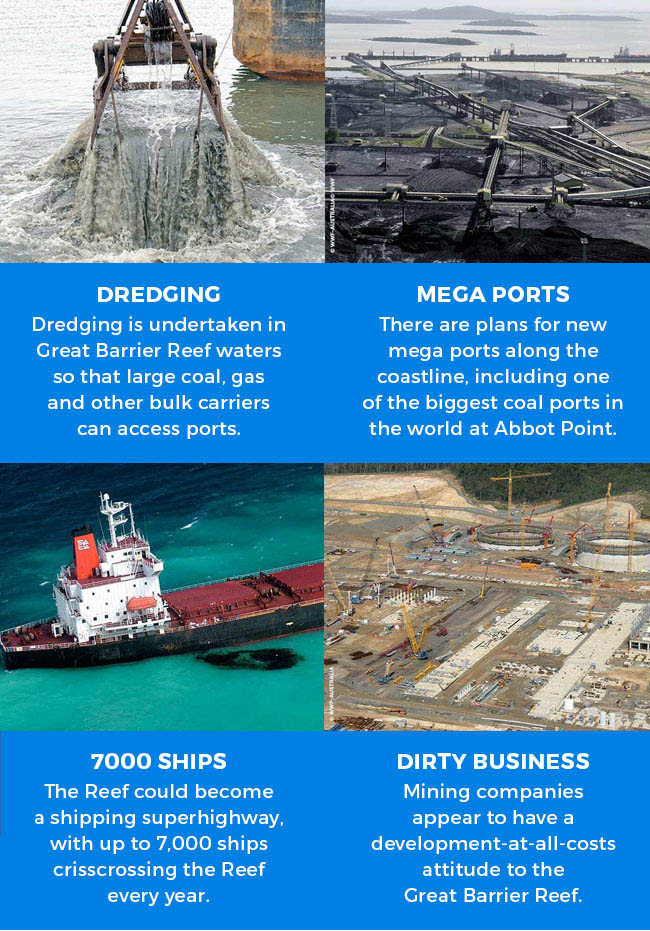
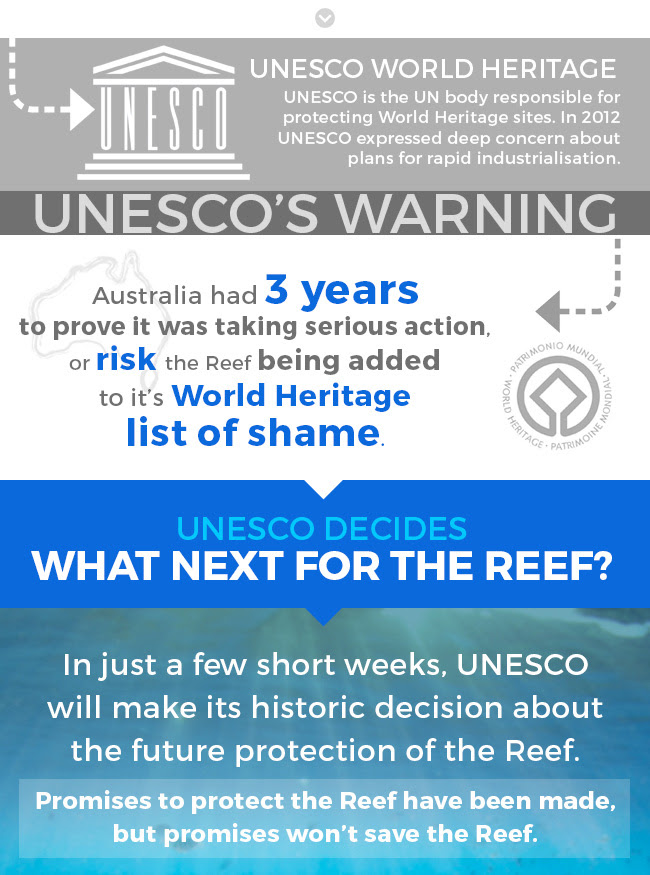
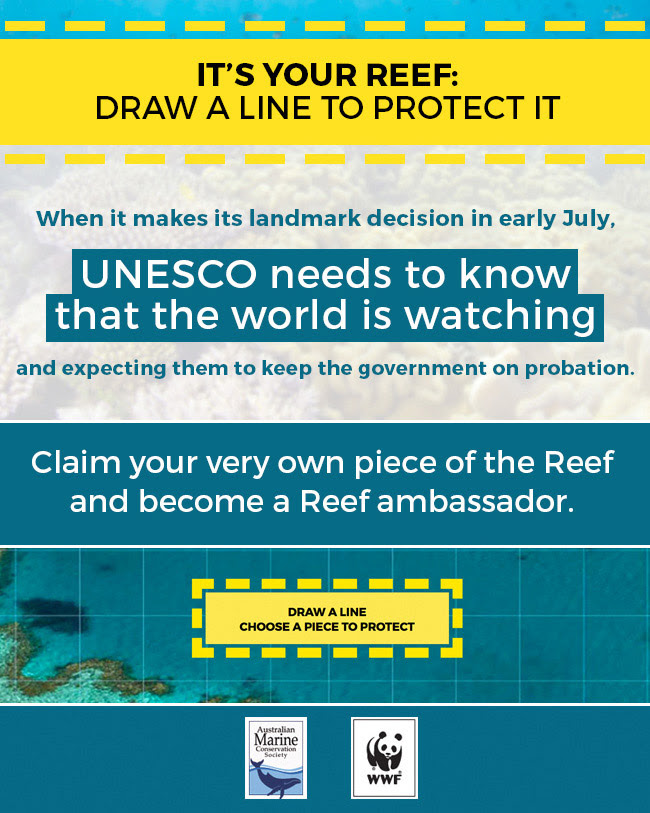
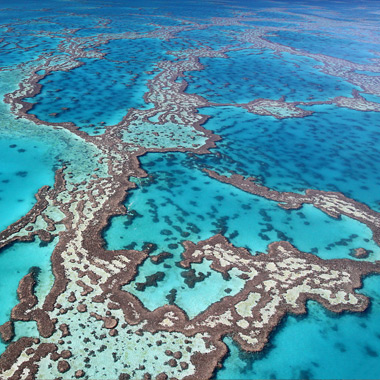
    Check out this infographic we’ve put together to explain what’s happening to the Reef right now and how we need you to stand up for it.

    Click here: http://reef.wwf.org.au to take action immediately

    Thanks for all that you’re doing,

    Richard Leck
    Great Barrier Reef Campaigner
    WWF- Australia

  • Replacing Hazelwood is urgent, but who pays for the jobs transition?

    More

    6 of 30

    climate code red

    Inbox
    x

    Climate Code Red <noreply+feedproxy@google.com>

    6:24 PM (43 minutes ago)

    to me

    climate code red


    Replacing Hazelwood is urgent, but who pays for the jobs transition?

    Posted: 16 Jun 2015 09:35 PM PDT

    by David Spratt

    Download report

    Replacing Hazelwood coal power station is a must: it is old, unsafe and dirty. Based on emissions intensity, it is the third-dirtiest coal power station in the world and the dirtiest in Australia, releasing around 16 million tonnes of greenhouse gases annually, almost three per cent of total Australian greenhouse emissions.

    The Hazelwood majority owner, Engie owns the third-most polluting coal-power station fleet in the world. The full – health and carbon pollution – social costs of Hazelwood totalling $900 million per year  are borne by the community, rather than the plant’s owners.

    Expanding renewable energy requires coal-generating capacity to be removed from the market because oversupply is crowding out and preventing new investment. The Australian energy market operator says there are about eight gigawatts of surplus generating capacity across the national market, equivalent to five Hazelwood power stations.  This includes up to 2.2 gigawatts of brown coal generation that is no longer required in Victoria in 2015, which is greater than Hazelwood’s capacity.

    Power companies have been lobbying government for capacity to be reduced, and senior Victorian energy department bureaucrats are aware of  the need to close coal power stations in order to roll out renewables.

    The Victorian Government says it is committed to being a leader on climate change. Closing down excess coal generation is a key test of the government’s climate credentials. Coal-fired power stations are the world’s largest source of planet-warming carbon dioxide emissions. Victoria cannot make the necessary emissions reductions without addressing the operations of Hazelwood and/or Yallourn power stations.

    A steady stream of local jobs can be created in the Latrobe Valley with the rehabilitation of mines and decommissioning of plant, which will require a significant workforce stretching well over a decade. The Latrobe Valley needs a strong jobs package and an economic transition plan and new industries because the move from coal to clean wind and solar renewable energy is now both urgent and inevitable.

    But how is the transition to be organised and financed?  These issues are addressed in a Climate Action Moreland report “Replace Hazelwood Primer” released yesterday. The report includes a survey of mine repatriation issues, which will also be a focus of the re-convened inquiry into the 2014 Hazelwood/Morwell fire which lasted 45 days and had profound short- and long-term impacts on the health of people in the region.

    The report also looks at a method of financing new industries in the Latrobe Valley. This chapter is reproduced here.

    Funding the jobs transition in the Latrobe Valley

    From 2016, a steady flow of income from the electricity sector of around $100 million per year is available to fund new jobs and industries in the Latrobe Valley.  Here’s how.

    As an inducement to Alcoa to establish an aluminium smelter at Portland, the Victorian Government in 1984 offered a large subsidy on electricity prices to run for 30 years, from the opening of the smelter in 1986 till 2016.

    This superseded an older deal that had run since 1962. The discount was up to 50 per cent on prices available to other industrial users. The two smelters at Portland and near Geelong were using up to 25 per cent of Victoria’s power production. The Geelong refinery has already closed, and the deal expires next year.

    The subsidy was pegged to the world price of aluminium: the weaker the price, the greater the subsidy. The value of the deal is secret, but has been estimated to have cost Victorians $4.5 billion.

    Since the privatisation of the State Electricity Commission (SECV) in 1998, the deal has been financed by a land tax levy on the electricity distributors’ property under transmission lines. “The Age” reported in 2009 that:

    Coupled with special levies and taxes on electricity consumers, imposed by the Kennett and Bracks governments to cover the subsidies, the public bill for the contracts by 2016 would be closer to $6 billion.

    There are also reports that the deal cost $1.022 billion in subsidies in the period 1986-1995, and $915.8 million from 1997 to 2006.

    In March 2010, Loy Yang A power station signed a contract to supply electricity to power the Portland aluminium smelters until 2036.

    In 2014, Fairfax business editor Mathew Dunkley wrote that:

    a useful starting point for the calculation would be the $100 million a year the government levies on the land under power lines to help pay the state’s liability to the global aluminium giant. Treasurer Michael O’Brien confirmed this in a statement, saying the average subsidy in the past three years was $90 million.

    After privatisation, the deal was administered by the corporate shell of the SECV. In October 2013, the “Australian Financial Review” reported that Victorian State Government accounts for 2012-13 showed:

    the government pocketed $350 million from the SECV as a special dividend. The SECV is a corporate shell that largely administers the state’s electricity contracts with Alcoa. This dividend stemmed from the SECV’s trading activities and was quietly banked against the 2012-13 financial year when the 2013-14 budget was announced in May.

    Since the SECV’s only significant role is collecting revenue, and paying, for the Alcoa deal, it seems in some years the profit was banked by the government. At the very least, this is a clear precedent for SECV revenues in excess of costs being passed back into the State budget.

    Union sources say that the wages bill at Hazelwood is just over $100million a year. The evidence above suggests that the revenue-raising measures associated with the Alcoa subsidy are around the same amount.

    When the Alcoa subsidy ends in 2016, there is a perfect opportunity for the monies of $100 million a year to be switched to new job and industry-creation initiatives in the Latrobe Valley as brown-coal generating capacity is reduced.

  • Welcome to our plan for our movement, voted by you GET UP

    Hi NEVILLE!

    Stars

    Welcome to our plan
    for our movement,
    voted by you

    Told us your vision on a different email? Thanks for having your say! Make sure you check your other email for a link to your personalised report.

    Did you know there are 3,000 GetUp members near Leura?

    In the area, there’s also been:

    3 climate rallies

    40 election volunteers

    3 election booths

    In total there are 320,200 members in NSW

    Join our social media community!

  • GetUp Experts in Health, Medicine and Nursing

    2193

    experts in


    Health, Medicine
    & Nursing

    GetUp Experts in Social Services

    1672

    experts in


    Social Services
    & Welfare

    GetUp Experts in Education Policy

    1867

    experts in


    Education Policy

    GGetUp Experts in Refugee and Asylum Seeker Issues

    650

    experts in


    Refugee & Asylum
    Seeker Issues

    GetUp Experts in Media and Journalism

    867

    experts in


    Media & Journalism

    GETUP MEMBERS

    are an extended network of experts

    GetUp Experts in Renewables

    989

    experts in


    Renewables

    GetUp Experts in Superannuation

    333

    experts in


    Superannuation
    & Taxation

    GetUp Experts in Economic Policy

    482

    experts in


    Economic Policy

    GetUp Experts in Immigration Law

    202

    experts in


    Immigration Law
    & Admin

    GetUp Experts in Environmental Sciences

    1567

    experts in


    Environmental
    Science & Climate

    GetUp Experts in Indigenous Affairs

    743

    experts in


    Indigenous Affairs

    1

    Climate Change & Renewables

    23% of votes

    Action on Climate Change
    Action on Asylum Seekers and Refugees
    2

    Asylum Seekers & Refugees

    13% of votes

    3

    Coal Seam
    Gas

    11.1% of votes

    Action on Coal Seam Gas

    *
    Action on the Great Barrier Reef
    4

    Great
    Barrier
    Reef

    10.7% of votes

    5

    A Fair
    Democracy

    8.7% of votes

    Action on a Fair Democracy

    What’s next for the issues our movement cares about most:

    • Climate Change & Renewables
    • Climate Change & Renewables

      23.0% of the votes | #1 issue

    WHAT’S NEXT

    GetUp is at the forefront of building a people-powered movement to drive the transition to a clean energy future. When you said you wanted us to make climate change our number one issue – we listened. In fact we have restructured our organisation to prioritise our campaigns for climate justice and clean energy. We’re investing in a crack team to work with you to build the consumer power to shift markets and the electoral power to shift politics. We’re also working to prevent the expansion of harmful fossil fuel industries in areas like the Galilee Basin, and we’ll be looking for more opportunities to keep fossil fuels in the ground where they belong.


    By year’s end we’ll have switched 50,000 people through our Better Power campaign, helping members divest more than $100 million of their money from dirty power companies like AGL, Origin and EnergyAustralia and putting economic pressure on them to change their polluting ways. Divesting is quickly becoming one of the most powerful ways of getting the attention of big business, and we’ll be using our consumer power to put financial pressure on big banks to stop investing in the fossil fuel industry. By this time next year, we’ll have supported tens of thousands of GetUp members to connect with their friends, family, neighbours and workmates to put all politicians on notice. At the next election, we will do everything we can to ensure whomever forms government knows we will take nothing less than serious action to combat the issue that defines our moment in history.

    WHAT GETUP MEMBERS HAVE ACHIEVED:

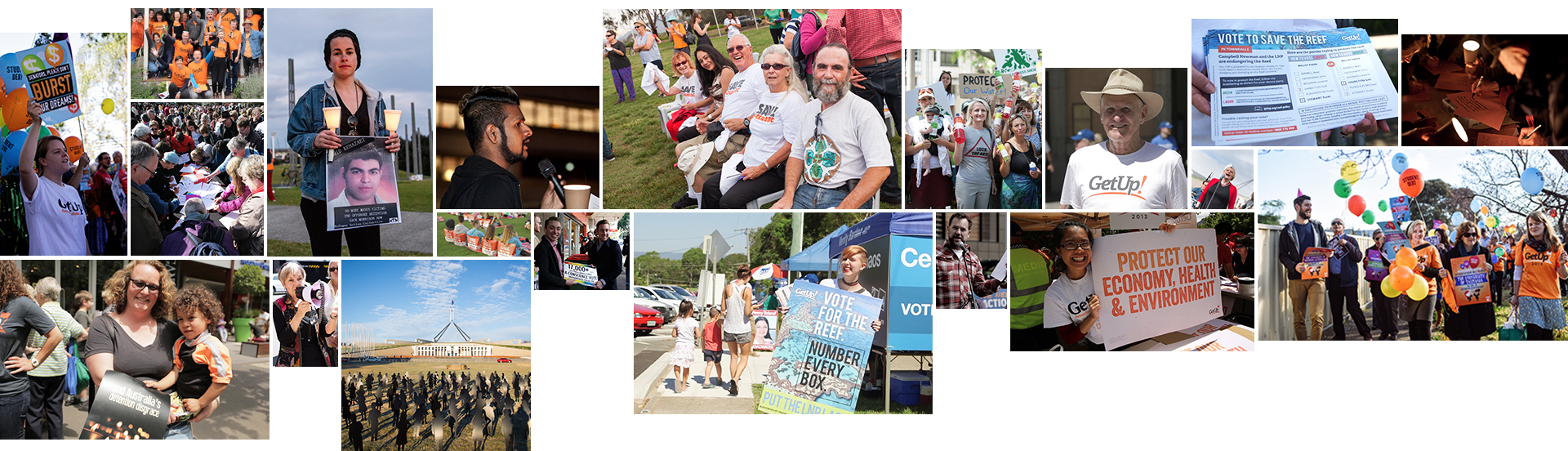
    GetUp members never waiver from the big challenges. Tackling climate change and building a clean economy remains your number one priority. Together we’ve focused on creating political and economic power that can drive the changes the science demands. In the 2014 Victorian State Election hundreds of GetUp members joined our friends at Environment Victoria to make clean energy a vote deciding issue by door knocking our neighbours, hosting candidate forums and writing letters to local media. At the fast-tracked 2015 Queensland State Election we turbocharged the reef campaign with thousands of GetUp members turning out on election day to let people know how they could vote to save the reef.

    We’ve also helped more than 11,000 people switch from dirty power providers to those backed by renewable energy, sending a clear message to the government and dirty power companies that we’re ready to support clean energy. Just this month we’ve partnered with the Lock the Gate Alliance to hit the ground in key coal seam gas hot spots like the Northern Rivers, supporting residents in their fight against unsafe gas mining in their communities.

    GetUp members have offered to
    do amazing things to amplify our power

    GetUp Members will present to local community groups

    2354

    members


    would present to local community groups on GetUp campaigns

    GetUp Members will meet with their MP

    5001

    members


    are interested in meeting with their MP to talk about issues

    GetUp Members will make phonecalls

    1611

    members


    can make phonecalls to other members for GetUp events

    GetUp Members will appeaer in ads

    3598

    members


    are happy to appear in online, billboard or TV ads

    GetUp Members will visit their neighbours

    2122

    members


    offered to visit their neighbours and speak about a campaign

    GetUp Members will volunteer for a campaign

    5887

    members


    would volunteer for a campaign in their local area

    GetUp Members will join a Facebook group

    5873

    members


    would join a localised Facebook group to co-ordinate with other members

    GetUp Members will volunteer to run a local stall

    2495

    members


    could volunteer to run a local stall for GetUp

    GetUp Members will use their power to divest

    16,978

    members


    want to use their consumer power to divest from unethical companies

    GetUp Members will start a local campaigna

    1920

    members


    are interested in starting a local campaign

    GetUp Volunteers

    We’ve seen an unprecedented number of attacks on issues and values close to the heart of our movement in recent months. Our movement has learnt the lesson that it’s not enough to win once – we need to win these fights for good. Unfortunately, we’ve seen victories taken away from us from the price on carbon pollution to live animal exports and children locked up in detention. We have to cement these wins, and to do that we have to scale up our capacity dramatically.

    That’s just what we’re doing.

    In the past two years, GetUp has almost tripled its staff. We’ve invested in more offline organisers to the point that we now have more people working on climate change – GetUp members’ consistent #1 issue – than the total staff we had two years ago.

    We’ve shown that you don’t need a political party to be relevant or impactful. And that despite real and growing pressures on our time and household budgets, huge numbers of Australians can and will fight for the greater good in countless ways, if only given a compelling opportunity. GetUp members aren’t just about signing petitions, they’ve shown they want to do the actions that have the most impact.

    We’ve shown that petitions are how we start a campaign, not how we end one. When we started our renewable energy campaign, it was by signing petitions and writing submissions. Then GetUp members started rallying in the streets. Next we began funding really great ads, and members escalated again to switching our power suppliers en masse. Most recently, we included ‘how to vote’ cards in QLD that doubled the amount of preference flow between pro-renewables progressive parties and helped change that election result.

    That’s how we’ll win progressive change and cement it in.

    I can promise you that in the months leading up to the next election our movement is going to be far bigger and more organised than ever. Our organisers are growing power in battleground marginal electorates around the country.

    At the same time we have also begun flexing our consumer power: 11,000 of us have already switched millions of dollars away from the dirty big three power companies to those that actively support renewables. And members are saying loud and clear we want to build on that success.

    As we look to the months and year ahead, we want to take a moment to thank you for what you’ve made possible. Whether it’s signing petitions, funding a great tactic, attending events or the 10,000+ members chipping in on a regular basis to build our long-strategy and capacity – thank you, for all that you do.

    Here’s to the next chapter.

    Sam Mclean, National Director Sam McleanNational Director

  • Together, we can end abuse Sarah Hanson Young

    Click here to enable desktop notifications for Gmail.   Learn more  Hide
    More

    1 of 10

    Together, we can end abuse

    Inbox
    x

    Sarah Hanson-Young <sarah@sarahhansonyoung.com>

    7:28 PM (35 minutes ago)

    to me
    Dear Neville —
    Today I was handed a petition by the Refugee Action Coalition with an overwhelming 65,000 signatures calling for the immediate closure of Manus Island and Nauru detention camps.

    This afternoon, I tabled these signatures in Parliament.

    shy_brian_petition_small.jpg

    I want to thank all of you who took the time to put your name to this cause. Your opposition to these camps of cruelty has been recorded permanently in Hansard for future generations to see.

    From the Forgotten Children Report compiled by the Human Rights Commissioner, and testimony provided at the current parliamentary inquiry into abuse claims on Nauru, we have learned of increasing cases of horrific child abuse, the mental and physical harm caused by prolonged detention and the depravity caused by inhumane living conditions.

    We know it is morally wrong, costly, and severely damages Australia’s international reputation.

    We cannot guarantee the safety of asylum seekers on Manus Island and Nauru, and the more we learn about the conditions of these camps, the more apparent it is that they are untenable and must be shut down.

    By speaking out about Australia’s shameful actions, you have contributed towards a more hopeful future.

    It’s time for the Government and all members of Parliament to take note and listen.

    Thank you once again for signing this petition, we couldn’t have done this without your contribution.

    Yours in hope,

    Sarah Hanson-Young
    http://www.sarahhansonyoung.com/