Category: General news

Managing director of Ebono Institute and major sponsor of The Generator, Geoff Ebbs, is running against Kevin Rudd in the seat of Griffith at the next Federal election. By the expression on their faces in this candid shot it looks like a pretty dull campaign. Read on

  • The business case for climate talks in Paris Global Footprint Network footprints

    ere to enable desktop notifications for Gmail.   Learn more  Hide
    1 of 15

    The business case for climate talks in Paris; Ontario biodiversity; Designing a Sustainable Japan

    Inbox
    x

    Global Footprint Network footprints@footprintnetwork.org via mail139.wdc02.mcdlv.net 

    4:47 PM (12 minutes ago)

    to me
     

    Ecological Footprint Image Green Footprint Network News

    Issue 42, May 21, 2015

    The business case for climate talks in Paris

    Six months before United Nations (U.N.) climate treaty talks are to unfold in Paris, thousands of business, finance and political leaders are gathering this week in the French capital to “show that low carbon makes good business sense – and a strong global deal means a smart economy.” Convened by The Climate Group, Climate Week Paris features more than 25 high-level events. Tuesday, Global Footprint Network CEO Susan Burns introduced risk metrics and methodology from our ERISC (Environmental Risk in Sovereign Credit) research program to the participants of a full-day event titled “The financial sector and climate change—measuring climate performance and carbon risk.” The event was hosted by ERISC partner la Caisse des Dépôts.

    Burns participated in a panel titled “Sovereign Credit Risks: Integrating Climate, Carbon and Natural Resource Risks,” which also featured Patrice Cochelin from Standard & Poor’s and Rodolphe Bocquet from Beyond Ratings. Others presenting at the event included representatives from Moody’s, Standard & Poor’s, FTSE, MSCI, Mercer, Carbon Tracker, the U.N. Environment Programme Finance Initiative (UNEP FI) and the World Resources Institute.

    The fact that climate change is an increasingly prominent issue on the agenda of institutional investors and banks is an encouraging trend. In March 2015, more than 266 investors with over $20 trillion in assets under management had implemented some form of climate change strategy, according to event organizers. However, a survey by the Asset Owners Disclosure Project found that nearly half of the top 500 global asset owners did nothing to protect investments under their stewardship from the threat of climate change.

    “The bond market has traditionally been an overlooked portion of the market when it comes to environmental risk, although it totals $41 trillion,” Burns noted. “But interest is growing in looking at decarbonization and climate change in this asset class as well.”

    Beyond the societal challenge of transitioning to a low-carbon economy, the finance industry is growing aware of the potential associated financial risks, including stranded assets, such as coal, oil and gas operations, amid mounting pressures to become less reliant on fossil fuels. As the need for metrics and models to measure country risk exposure in this new environment is heating up, Global Footprint Network has been taking research on stranded assets a step further by analyzing which other sectors (in addition to fossil fuel extraction) may be exposed to climate change.

    More News from Our Finance Initiative
    Global Footprint Network researchers have been busy refining our ERISC (Environmental Risk in Sovereign Credit) methodology through a second phase of research, which focuses on the exposure of countries to food price shocks. Along with UNEP FI, we will be organizing one final workshop in June with our technical partner Cambridge Econometrics and our seven partners in the finance industry—Standard & Poor’s, HSBC, European Investment Bank, Caisse des Dépôts in France, Colonial First State in Australia, KfW in Germany and Kempen in the Netherlands—before starting to draft a final report on the methodology to launch this fall.

    In the meantime, Global Footprint Network CEO Susan Burns gave a preview of our work in a short briefing at the end of the Ceres Conference in San Francisco May 14 that included opening remarks by Zoe Knight, head of the Climate Change Centre of Excellence at HSBC, one of our ERISC partners.

    Policy Analyst Martin Halle also will be discussing our country risk research on July 1 at the fifth RICA (Responsible Investment Corporate Access) Zurich Conference, hosted by the SIX Swiss Exchange. Halle will be participating in a morning panel titled “Carbon emissions and other Environmental, Social and Government (ESG) Key Performance Indicators (KPIs) influencing business strategy.”

    Global Footprint Network in the News
    Our benefit-cost methodology for capital investment projects, called Net Present Value Plus (NPV+), is gaining media traction. The business magazine Fast Company recently published an informative article with this crystal-clear teaser: “NPV+ is a method of accounting that allows for environmental and social factors, so you know what things actually cost.”

    Like Governing magazine before it, Fast Company made much of the fact that former Maryland Governor and potential presidential contender Martin O’Malley is an enthusiastic supporter. “We are experiencing a shift in which we measure government not by its input, but by the benefit each service provides to communities. New tools like NPV+ enabled this transition and help make the economic case for sustainable choices in our budget decisions,” O’Malley wrote in an email to Fast Company.

    Ecological Footprint in Action
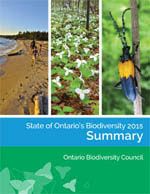
    The Ontario Ministry of Natural Resources and Forestry has turned to the Ecological Footprint as a natural resources accounting framework to build its biodiversity conservation strategy. The ministry asked Global Footprint Network to contribute to the second State of Ontario’s Biodiversity report by providing a technical time-trend analysis on the Ecological Footprint and Biocapacity of the Canadian Province, comparing data for 2005 and 2010.

    Released this week at a special event held during the 2015 Ontario Biodiversity Summit in Niagara Falls, State of Ontario’s Biodiversity 2015 is designed to help the province’s decision-makers and residents understand the current state of Ontario’s biodiversity, the pressures that threaten it and the level of action underway to advance biodiversity conservation. We look forward to seeing what policies Ontario adopts to push that agenda forward.

    From Our Partner Network
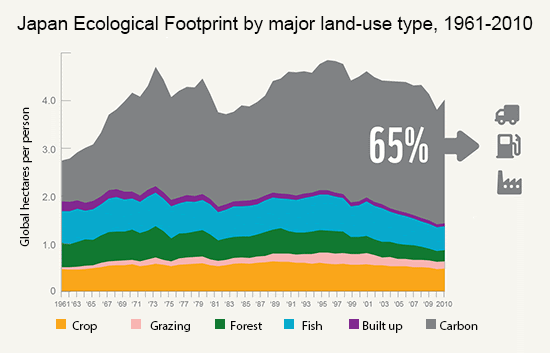
    In collaboration with WWF Japan, Global Footprint Network recently released an eye-catching informational brochure that underscores the role individual behavior change can play in reducing the Ecological Footprint. For instance, almost 70 percent of Japan’s Ecological Footprint comes from daily activities. If food waste was eliminated, the country’s food Footprint could be reduced by 25 percent. The carbon Footprint accounts for 65 percent of Japan’s total Ecological Footprint. Breaking down the Ecological Footprint by components provides guidance on how to more effectively manage ecological resources, whether it is through national policies (for instance related to energy to reduce the carbon Footprint) or lifestyle choices at a local or household level. Be sure to take a look at the brochure, The Ecological Footprint for Sustainable Living in Japan.

    From Our Blog
    May 15 was the International Day of Families, a day marked annually by the U.N. General Assembly to “increase knowledge of the social, economic and demographic processes affecting families.” This year’s focus was gender equality, which we believe is directly linked to women’s empowerment through increased access to education and income-generation opportunities. Poverty aid programs have long understood that empowering women is the best available lever anywhere to lift families out of poverty. It is also a sure path toward smaller families. “Healthy and smaller families are core to creating a world that works for everyone,” says Susan Burns, CEO of Global Footprint Network. “We cannot ignore population growth if we are truly committed to people having secure lives in a world of finite resources.” Read more.
  • Look at the incredible coral in this video WWF AUSTRALIA

    k here to enable desktop notifications for Gmail.   Learn more  Hide
    Something’s not right.
    We’re having trouble connecting to Google. We’ll keep trying…
    Errors: 101
    More

    Look at the incredible coral in this video

    Inbox
    x

    Louise Matthiesson, WWF-Australia noreply@act.wwf.org.au via server8839.e-activist.com 

    1:46 PM (8 minutes ago)

    to me
    Under water coral, Great Barrier Reef  © Troy Mayne

    Dear NEVILLE,

    Sometimes I’m floored by the sheer size of the opponents we’re up against.

    Massive mining interests want to see ports expanded alongside the Reef – and it falls to ordinary Australians to draw a line and say we won’t stand for it. What gives me strength is that what we’re protecting is some of the most beautiful life on the planet.  Once you’ve seen it – you want to save it.

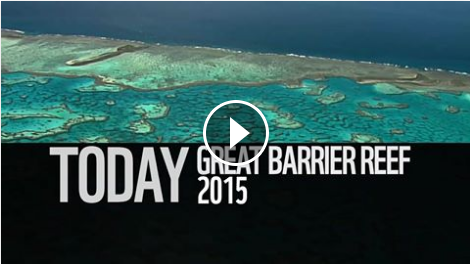
    Check out this new video we’ve put together that shows the stark contrast between what we’re trying to save, and what the threats to the Reef look like.

    LINKTOVIDEO

    Help us get this video seen by as many people as possible – we need them all to see this, then join our campaign at wwf.org.au/reef.

    If thousands more people sign, it’ll give our combined voice the strength we need to make sure the World Heritage Committee makes a decision that demands protection for the Reef in 6 weeks time.

    Click here to see the video – and then share it, and ask your friends to sign the petition too.

    Thanks for your help,

    Louise Matthiesson
    Great Barrier Reef Campaigner
    WWF-Australia

  • Revealed: The truth behind Peabody’s campaign to rebrand coal as a poverty cure

    Click here to enable desktop notifications for Gmail.   Learn more  Hide
    Something’s not right.
    We’re having trouble connecting to Google. We’ll keep trying…
    Errors: 101
    More

    3 of 26

    Revealed: The truth behind Peabody’s campaign to rebrand coal as a poverty cure

    Inbox
    x

    Alan Rusbridger <info@mail.theguardian.com> Unsubscribe

    11:55 PM (9 hours ago)

    to me
    Can’t see this email? View in browser
    Dear NEVILLE,

    Next in our series of investigative pieces is a story about another company the Gates Foundation is invested in, “The truth behind Peabody’s campaign to rebrand coal as a poverty cure.”

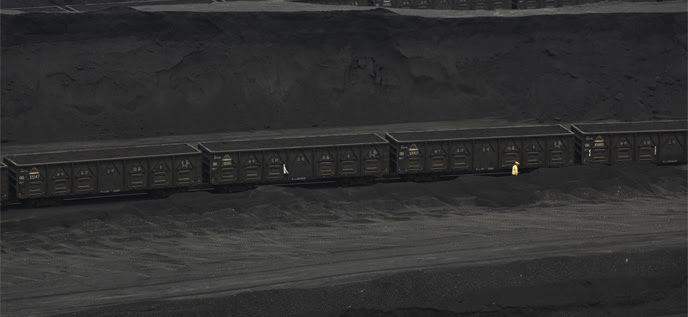
    The world’s largest privately-held coal company has a long history of attacking climate science. Now it is working to change the conversation from a climate crisis to one of global poverty – with coal as the solution. It even pushed coal as part of the solution to the ebola crisis last year.

    Please reshare the Guardian’s Facebook post, which includes a link to the Keep it in the Ground campaign. Or retweet @GuardianEco.

    Should @gatesfoundation stay invested in a company that health experts say exploited ebola crisis? http://t.co/uuZIMaocJt #keepitintheground

    — Guardian Environment (@guardianeco) May 20, 2015

  • Climate change and the shire’s assets

    Wednesday May 20, 2015

    News

    Larger / SmallerNight Mode
    Climate change and the shire’s assets
    May 19, 2015, 2:05 p.m.

    Climate change, sea level rise (SLR) and tidal inundation have the potential to impact private and public land and assets within the shire with key farmland, unsettled low-lying floodplain areas around Mylestom, and the Urunga Industrial precinct being just a few areas named in a council report.
    See your ad here
    Waterfront properties along the Kalang River at Urunga are susceptible to rising sea levels and tidal inundatuion

    Waterfront properties along the Kalang River at Urunga are susceptible to rising sea levels and tidal inundatuion

    Tabled and adopted at last month’s council meeting, the Bellingen Shire Estuary Inundation Mapping Study looked at the affect of future coastal hazards as a result of climate change. Named in the document were key local areas and assets including:

    – flood-plain areas of Fernmount;

    – a number of rural, residential and primary production properties in the townships of Mylestom, Repton, Raleigh, Urunga, Brierfield, and Bellingen

    – waterfront properties along the Kalang River at Urunga, in particular properties at the Urunga Industrial precinct, Urunga Heads Holiday Park, Urunga Scouts, the Urunga Golf Course / tennis courts and waterfront properties in the immediate vicinity lagoon and Urunga Lagoon;

    – some rural, residential properties located on Newry Island; some major and minor roads in the townships of Mylestom, Repton, Raleigh, Urunga, Newry Island, Brierfield, Fernmount and Bellingen;

    – the Raleigh Waste Management Centre;

    – the sewer and stormwater services at Raleigh, Bellingen and Urunga; and

    – part of the North Coast Railway and Pacific Highway.
    See your ad here

    The study, which complements the Belllingen Shire Coastal Zone Management Plan, comes hot-on-the-heels of new research by CSIRO claiming sea levels are rising faster than previously thought and that Mid North Coast councils should not to cave-in to landholder who are concerned about property values.

    “If we fail to mitigate our emissions, sea level rise will be up to a metre by the end of the century and coastal councils, coastal planners, do need to take this into account,” CSIRO fellow and co-author, John Church, said.

    “We need to think about what are the total implications, not just the short-term implications. Councils and coastal societies will have liabilities if they choose to ignore sea level rise into the future”.

    Mr Church’s sentiments have received support from PRD nationwide managing director, Tony Brasier who said governments have launched a host of sustainability and environmental policies and this has implications for residential and commercial housing.

    “If governments and the key players in the building and construction industry keep climate change front of mind in their master plans … the loss in median house values in these areas would, in most cases, far outweigh the costs associated with better ‘weather proofing’ of the dwellings,” Mr Brasier said.

    “If the (building) industry is to successfully adapt to environmental anomalies attributed to climate change, the methods taken can’t be implemented by pockets of individuals operating in isolation, but has to become a social responsibility, where regions have tailored plans specific to the relationship between people, housing and the wider community in their particular area”.

    In addition, Mr Brasier said buyers and investors using modelling to check out the impact of natural disasters on housing and property and he offered some advice for mitigation against possible global warming affects.

    “Customers are increasingly investigating whether a property is in an area that has previously encountered issues with destructive weather events,” Mr Brasier said.

    “The increased home content and building insurance costs as part of home maintenance and affordability concerns is also being more widely considered.

    “Looking to the future, developers servicing social housing requirements must account for weather-related health risks by incorporating thoughtful urban greening strategies into master-planned communities, using appropriate building materials to withstand extreme climatic events and installing insulation to lessen the impact of temperature fluctuations. These actions will not only protect the residents from the elements, but will go some way to preserving the value of the properties for owners and investors”.

  • Revealed: Meet the oil world’s most secretive operator Inbox x

    Click here to enable desktop notifications for Gmail.   Learn more  Hide
    More

    1 of 20

    Revealed: Meet the oil world’s most secretive operator

    Inbox
    x

    Alan Rusbridger <info@mail.theguardian.com> Unsubscribe

    7:34 PM (49 minutes ago)

    to me
    Can’t see this email? View in browser
    Dear NEVILLE,

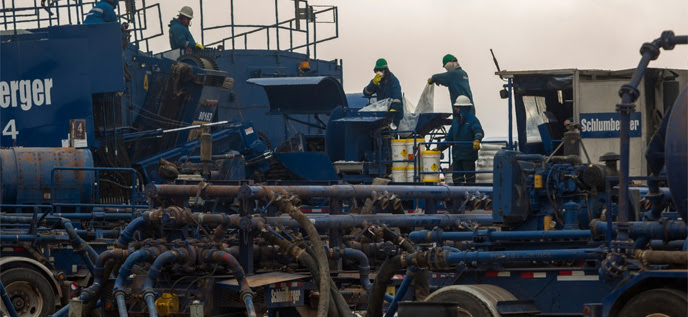
    Next in our Keep it in the Ground investigative series is a story about Schlumberger, a company with a huge £114m investment from the Wellcome Trust. The Gates Foundation Trust also holds a shareholding of more than $3m in the company.

    Schlumberger is ubiquitous in fossil fuel operations across the world, has more staff than Google, turns over more than Goldman Sachs, and is worth more than McDonald’s – yet you won’t have heard of it. Meet the oil world’s most secretive operator.

    Please help us hold the foundations accountable. Share on Facebook, or retweet @guardian below.

    The oil firm that makes $48bn a year – and you’ve probably never even heard of it #keepitintheground http://t.co/9q31bIblQ8

    — The Guardian (@guardian) May 18, 2015


    Retweet @guardian


    Thank you,

    Alan Rusbridger, Editor in chief of the Guardian

  • Without help, they’ll die within days. Graeme, Amnesty International Australia

    1 of 8

    Without help, they’ll die.

    Inbox
    x

    Graeme, Amnesty International Australia <actioncentre@amnesty.org.au> Unsubscribe

    1:04 PM (5 minutes ago)

    to me
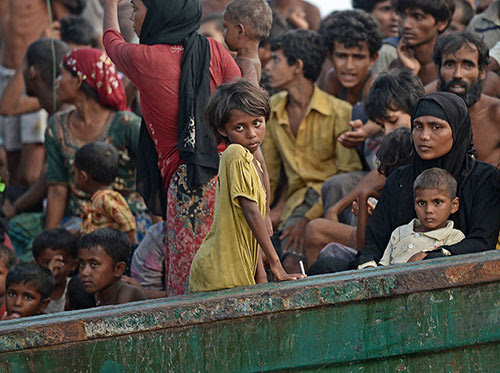
    Thousands of people face death, stranded in boats off the coast of South East Asia.

    Tell the governments of the region, they must save the lives of these people.


    Dear Neville,
    This is happening right now, on our doorstep.
    Up to 8,000 men, women and children are stranded at sea off the coasts of Thailand, Malaysia and Indonesia.
    Without help, they’ll die within days.
    We know that many of those stranded in boats, desperately in need of rescue, are Rohingya people — a persecuted ethnic minority from Myanmar and Bangladesh.
    The Rohingya are stateless with no citizenship rights. Because of this, they’re frequently victims of human trafficking. Wherever they go, they face discrimination, violence and hardship.
    It’s no wonder they flee.
    Yet Thai, Indonesian and Malaysian authorities continue to defy international human rights law by refusing to rescue people in trouble. In some cases, they’re pushing boats back into the sea. 
    For those on board, this is a death sentence.
    Many in the boats have been at sea for more than two months and urgently need food, water and medical care.
    Rohingya people are survivors. They’ve been forced from their homes, suffered abominable conditions in camps and braved treacherous journeys across the sea to reach safety.
    Their lives now rest in our hands.
    That’s why we’re issuing a global call for action. As a movement of 7 million people, Amnesty supporters have the power to pressure the governments of the region to do the right thing and save these people’s lives.
    In hope,
    Graeme McGregor
    Refugee Campaign Coordinator
    Amnesty International Australia
    PS. The governments our our region have a choice: save the lives of 8,000 people or watch them die. Call on decision makers to step up search and rescue efforts before it’s too late.