Category: The war that will not end in our lifetimes
US Secretary of State told a group of journalists when the United States invaded Iraq, “this will be a war that will not end in your lifetimes.” The vision of the project for the New American Century which backed George W Bush’s bid for presidency, is that the United States will control the world economy, by controlling the world’s oil supplies. The backing of independence movements in Georgia and Chechnya has deprived Russia of the gateway to Middle Eastern oil, and prevented it building a planned pipeline to China. Combined with manouvers in Afghanistan, Iraq and Israel, it is clear that this plan is being put into effect. The news stories in this category track the progress of this project and the impact it is having on the world economy and hence, your daily life.
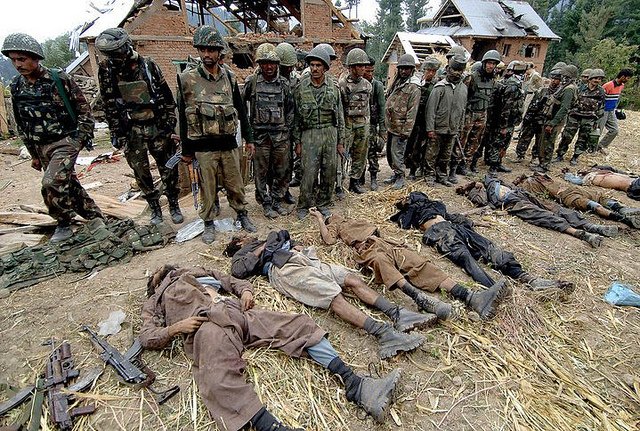
KashmirGlobal photograph of corpses killed in border war
Kashmir is mired in lockdown with strict curfews keeping residents in their homes without the use of telephones and internet as the ongoing territorial dispute between India and Pakistan escalates.
India’s home minister has accused Pakistan of being a terrorist state and Pakistan’s defense minister has threatened to use nuclear weapons. India has also threatened to revoke the 56 year old Indus Water Treaty that governs the sharing of water from the Indus River that flows through Kashmir.
Water is an increasingly scarce resource in the region as water tables fall due to pumping of ground water and Himalayan ice disappears.
/glacial-melt-threatens-2billion/
Why the India-Pakistan War Over Water Is So Dangerous
As New Delhi and Islamabad trade nuclear threats and deadly attacks, a brewing war over shared water resources threatens to turn up the violence.
How to Stop Kashmir from Spiraling into All-Out War
Kashmir has again become the venue for a confrontation between India and Pakistan. Seeking to restore order, the authorities in Kashmir instituted curfews, shut down newspapers, internet and cellphone services.
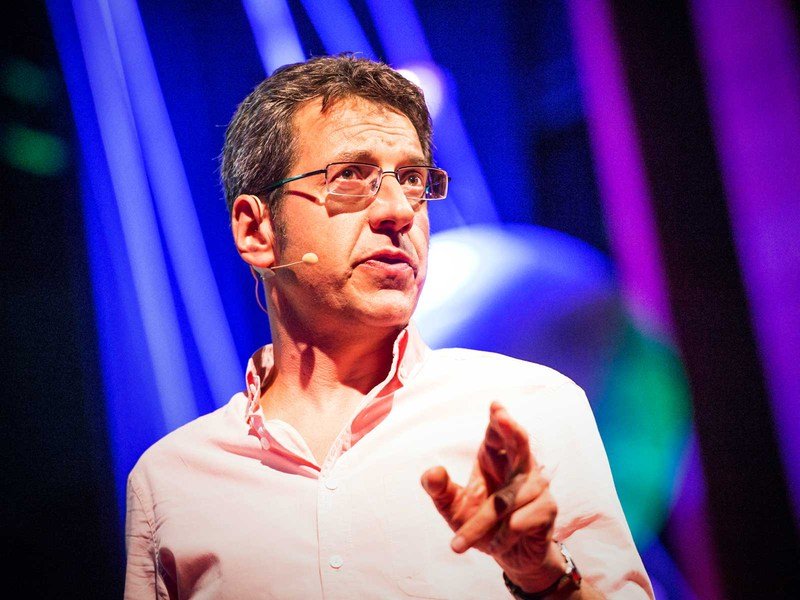
The Comprehensive Economic and Trade Agreement, abbreviated as CETA, has attracted broad criticism this week following an impassioned piece by George Monbiot in the UK Guardian.
The treaty is promoted by its Canadian and EU backers as a key to opening cross Atlantic trade and therefor increasing wealth. Its critics point out that allowing global corporations to sue governments whenever government policy threatens their projected profits, it effectively hands over control of policy to the private sector.
Monbiot describes this as the end of governing in the interests of the people. In other words, the end of democracy as we understand it.
Many existing trade agreements include such clauses. Canada has paid $170 million in compensation to American corporations under the first seven years of the North American Free Trade Agreement and Mexico $240 million.
One “Trade Treaty” after another – and we have to stop them all
Corporate lobbyists and their captive governments try to wear down our resistance with one trade treaty after another.
* A private corporate tribunal has supremacy over sovereign government legislation. For example, the tribunal could fine an elected government whose legislation, environmental protection and other social policies would reduce corporation profits.
* Similar in the banking sector, monetary policy would be dictated by Wall Street
* Agriculture policy would have been dictated, especially with regard to GMOs and ag-subsidies. Monsanto and the like would have had free access and no government could pass legislation prohibiting genetically modified seeds.
* Standards for health and nutrition would be limited so they do not reduce profits.
* Labor laws would be weakened to US standards which have virtually no protection for workers.
CETA treaty is equivalent to the land treaties illiterate African chiefs were induced to sign in the 19th Century.
The Comprehensive Economic and Trade Agreement (CETA) allows any corporation to sue governments. It threatens to tear down laws protecting us from exploitation and prevent parliaments. Like TTIP, CETA threatens to lock in privatisation, making renationalisation or attempts by cities to take control of failing public services impossible. Like TTIP, it uses a broad definition of investment and expropriation to allow corporations to sue governments when they believe their “future anticipated profits” might be threatened by new laws.
Intellectual Property Rights And Free Trade Agreements
a group of highly concentrated transnational corporations in the knowledge industries such as pharmaceuticals, high-tech, and entertainment pack so much lobbying clout that they can convince the governments of the industrialized world to bully developing countries to “harmonize” their copyright, patent and trademarks laws into a global intellectual property regime.
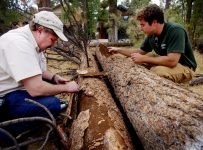
Beetles following a warming climate have infested Californian forests killing 66 nillion trees
Global efforts at reforestation are accelerating, gollowing commitments made in the Paris Agreement of November last year.
Volunteers in India smashed a world record by planting 49.3 million tree saplings on July 11. Last year, volunteers in Ecuador planted 647,250 trees from 200 species in one day. In 2014, Men of the Trees planted 100,450 trees in Perth, Australia in a single hour.
Richard Houghton, a senior scientist with the Woods Hole Research Center in the US, though, warns that the impacts may not be as effective as predicted.
“In general, [reforestation] is all good in the sense that trees, as they grow, take carbon out of the atmosphere,” he said. Complications occur when forests shade the snow, absorbing sunlight and adding to warming, or when reforestation is used as a carbon offset for extracting fossil fuels or cutting down old forests.
Climate chaos itself threatens forests with increasing fire damage and attacks by exotic insects moving into forests as the climate warms.
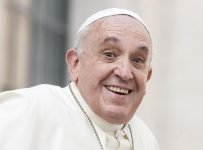
Pope Francis is unpopular with the institutional hierarchy
The Catholic Herald this week openly criticized Pope Francis’ statements that we must not equate Terrorism with Islam.
It is the most recent in a series of high profile criticisms of the Pope by Catholic commentators. Pope Francis told reporters last week that we must not mention terrorism by Islamists without reference to Christian terrorism. He also said, “Terrorism is the work of fundamentalists. All religions have their fundamentalist sects.”
He noted that Christianity and Islam share the same notion of conquest, and blamed imperial and colonial interference in the Middle East for the current unrest.
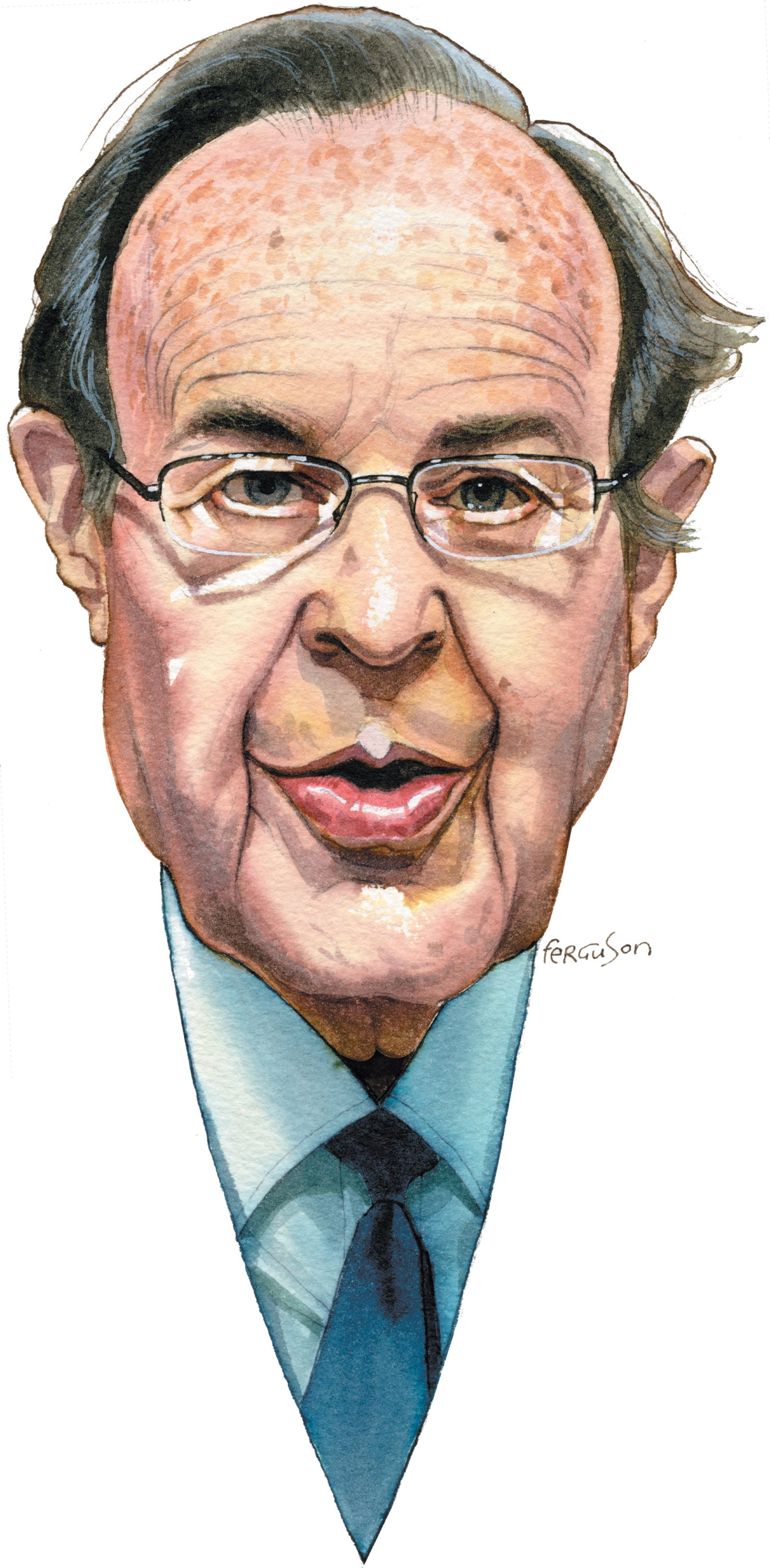
New York Review of books illustration of William Perry by James Ferguson
The risk of nuclear war is now the greatest it has ever been according to William Perry, US Secretary of Defense twenty years ago and weapons systems manufacturer before that. In a new book released this month, he says that The US and Russian governments have torn up the treaties that helped stabilize the world in the eighties and nineties. The US has supported the eastward expansion of NATO, both nations have built smaller tactical nuclear warheads that fall outside existing nuclear agreements and the USA has withdrawn from the Anti-Ballistic Missile (ABM) Treaty and started deploying weapons along NATOs new eastern border. The result, according to Perry, is that we face the huge risk of a nuclear war that could destroy civilisation.
London is an island in the British Isles, celebrating Brexit with gin, tonic and champagne, while Scotland and Ireland plan to Leave the United Kingdon to Remain in Europe. The working class that feed London are in revolt.
Others have predicted (a decade ago) the fall of the nation-state and the rise of the city state to replace it. City states are easier to defend than nations and they breed innovation and nurture trade.
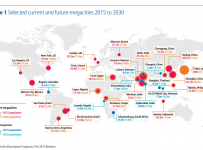
Magacities will shape the economy of the 21st Century
The world’s mega cities have economies larger than most nations and are the hubs of commerce that fuel the globalisation that disenfranchises the working and middle classes that support Western democracy.
In these megacities, life is cheap, slavery is rife and global commerce is not always top of everyone’s mind.
To survive, these cities must maintain their food, water and energy supplies and sufficient infrastructure to remain connected to their sources of revenue.
Theory has it that these Cities will battle directly with the mercenary armies of global corporations to demarcate the ungoverned spaces between them.
BrExit brings this future one step closer to realisation.
I repeat: London is an island in a hostile United Kingdom. Scotland and Wales will vote to Leave the UK so they can Remain in the EU.
By the time that is untangled Wales will join a plethora of other subnations that enjoy ersatz independence until a new overlord decides they are worth incorporating and taxing.
In this, Crimea is two steps ahead. Russia will not hesitate to reincorporate the near, loose pieces as Europe falls apart.
China will continue its imperial project in Africa and the securing of its new silk road(s). It will bring the US to its knees financially with a gold backed currency and its trillions of dollars in US bonds.
Thus the nation state may collapse, but the Imperial project is not dead. The major change as a result of BrExit is that the corporations of the West will be forced to recentre themselves in Asia and South America as the military ambitions of the US implode with its southern border. This means lots of failed states or independent states in previously fairly orderly Western enclaves: The Caribbean, the Mediterranean, the Pacific.
While the realities of this power shift sink in for the West, huge opportunities exist in South America and South East Asia. Neither are directly in the path of clashing empires and are largely sheltered from the fall out across the North Atlantic.
South America is poised for greatness but is crippled by internal chaos (largely due to US interference).
India has no choice but to lock in the coastal connections to its West and expand its trade with South East Asia. South East Asia still reels from a century of geopolitical chess (largely due to US interference) and has a major opportunity to bounce back. Indonesia is the third most populous nation in the world and remains vigorously expansionary.
We must re-read and reappraise the work of Sayyid Qutb to understand the impact of Islamism on these events. We must also understand the realities of Peak Oil and Climate Change.
We are heading for the rapids and it pays to understand the rivers that feed this cataract.