1 of 5
 Ad850% + Investment Returns – the-best-investments-today.com – Invest In Alternative Investments. Huge Profits. Free Top-Pick Guide!
|
Rain-Making and Benefunder

|
||||||||||||||||
Add your news
You can add news from your networks or groups through the website by becoming an author. Simply register as a member of the Generator, and then email Giovanni asking to become an author. He will then work with you to integrate your content into the site as effectively as possible.
Listen to the Generator News online
The Generator news service publishes articles on sustainable development, agriculture and energy as well as observations on current affairs. The news service is used on the weekly radio show, The Generator, as well as by a number of monthly and quarterly magazines. A podcast of the Generator news is also available.
As well as Giovanni’s articles it picks up the most pertinent articles from a range of other news services. You can publish the news feed on your website using RSS, free of charge.
|
Ad850% + Investment Returns – the-best-investments-today.com – Invest In Alternative Investments. Huge Profits. Free Top-Pick Guide!
|
Rain-Making and Benefunder
|
||||||||||||||||
Local Solar Discounts
Sponsor a Post
Buy Ads
Important Media
Contact Planetsave
PlanetSave logo
Green Your Life
Science
Energy
Humor
Living Off The Grid — Good Idea?
October 19th, 2014 by Zachary Shahan
off grid homeLiving off the grid has great appeal to a lot of people. It sounds idyllic. You are no longer dependent on broader society (well, at least not for electricity). You no longer send your money to a greedy monopoly month after month. You largely rely on the clean electricity generated by your rooftop solar panels or a big wind turbine. It clearly has some benefits, but it it’s not all peaches and cream. Living off the grid also comes with considerable downsides.
In a time when “the sharing economy” is all the rage, you’d think we’d actually have more enthusiasm for our ultimate system of sharing — the electric grid. Through a massive amount of sharing, we’re all able to use electricity just when we need it, and at a discount. “A discount?!,” you ask in exclamation. Well, yeah, electric utilities may be monopolies making massive profits, but we are still benefiting from the efficiency of this smart system.
Not hooked into the electric grid, if we only relied on our own solar panels or wind turbine, we’d also need expensive backup batteries or an even more expensive (and super dirty) diesel generator in order to have electricity whenever we wanted it. Over on CleanTechnica, our comment moderator has been living off the grid for decades, and he is one of the biggest proponents of the grid that I know. He lives far off the grid in Northern California, and the nearest utility was going to charge him hundreds of thousands of dollars to extend the grid to his home. So, he bought solar panels and batteries instead. But the combined system isn’t super cheap (yet). Furthermore, when it’s overcast for a long time, he has to run a diesel generator.
On-Grid Solar or Wind
When you have solar and you are on the electric grid, the grid is essentially your battery. If you have excess electricity, you send it into the grid (and often get compensated for that). If you don’t have enough electricity from your solar power system, you can use electricity from the grid. The grid electricity + infrastructure is a massive shared system. Much less backup power is needed, as there’s a diverse range of electricity sources feeding electricity into the grid from many regions and demand also varies, so you need electricity when someone else doesn’t, allowing the two of you to share an electricity generator. There’s a grid manager in place who is ensuring (or trying to ensure) that electricity supply and demand always match, so that the grid doesn’t go down and leave you without electricity.
rooftop solar installation
Microgrids
There is one “off-grid” option that I think does make sense. However, it’s not truly off the grid, but is its own small grid. As the subheading states, I’m talking about microgrids. Microgrids are expected to rise in both the developed as well as developing world in the coming years. They offer many of the benefits of a large, centralized grid, but result in greater overall grid security. Also, they allow communities (or even neighborhoods) to together produce the key benefits of the grid but move away from a monopolistic utility.
With low-cost rooftop solar power and battery costs dropping off a cliff as well, a high penetration of rooftop solar panels combined with cheap electricity from wind turbines and some backup energy storage can provide all that is needed for a relatively small community to form its own microgrid. In that way, you can cut yourself off from the monopolistic practices of a larger grid while still benefiting from shared electricity generation and storage technologies.
On a recent trip to Germany, I actually visited a grid-independent village there. It may actually be the only grid-independent village in the developed world. You may think this came at a high cost, but it actually came at some huge financial savings, and the financial savings were reportedly what drove the villagers to go off the grid. From an article (linked above) that I wrote over on CleanTechnica:
To finance the biogas system, the villagers took a loan of 1.3 million euros for a 10-year period, which is now 6 years over. That actually results in Feldheim having the cheapest electricity in all of Germany. The Feldheim villagers pay ~17.4 euro cents per kWh, while the average across Germany is ~28 euro cents per kWh. If you look at the situation about 20 years out, Feldheim villagers will likely be paying ~half the national average.
Rather than relying on solar, Feldheim relied on wind power and biogas (with a minimal amount of biomass — sustainably forested wood burning), since they much better fit the village’s natural resources.
Feldheim-wind-turbines-art-pinwheels
Feldheim-wind-turbines-art
I think we’ll see strong growth in the microgrid market in the years to come, but in the developed world, that would also rely on a shift in thinking and regulations, so we’ll have to wait to see how far that goes.
Extreme Circumstances
Of course, there are extreme circumstances where living off the grid makes sense. Small islands, or land-locked “islands” that the grid cannot easily reach, are obvious examples. In some cases, it doesn’t make sense to extend the grid or create a microgrid in your location.
island solar home
Also, if your electricity provider is hiking up electricity prices so much and not rewarding rooftop solar power installations, then it could be cheaper to go solar and get your own batteries and move off the grid. Of course, you also need to live in a region with enough winter sun that that makes sense. There are places in the world, such as regions of Australia, where this seems to be where things are headed… if they aren’t there already.
Wrapping Up
Living off the grid sounds nice, and it is the most logical solution in some extreme circumstances, but I do think the electricity grid is an efficient, practical, valuable solution. I think the electricity grid is in the process of changing a lot, and part of that will be breaking it out into more and more microgrids, but I don’t think the grid is going away, and it shouldn’t. If you are considering going off the grid, just be sure to give it some holistic thought. Don’t do it out of prejudice, and don’t do it without doing the math first!
This is part of a series on “The Changing Grid.” Check in again soon for more stories in this series.
Image Credits: Solar home in Germany by Zachary Shahan | Planetsave (CC BY-SA 4.0 license); Rooftop solar installation via Shutterstock; Wind turbine art in Feldheim, Germany, by Zachary Shahan | CleanTechnica (CC BY-SA 4.0 license); Solar home on island via Shutterstock (copyrighted)
Keep up to date with all the most interesting green news on the planet by subscribing to our (free) Planetsave newsletter.
By Sara Dickon
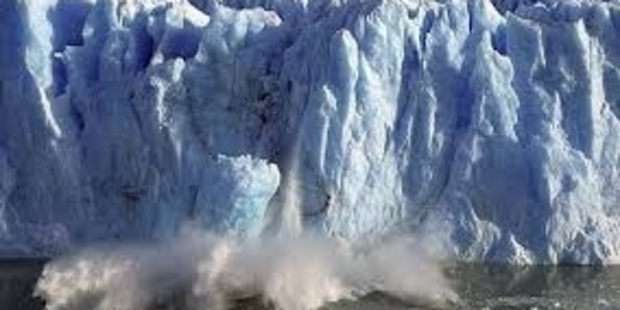
The Ministry for the Environment in New Zealand has published a list of challenges that will result from climate change impacts. As the wind and rain bang around outside, I thought I would list them for you:
1. Higher temperatures: there is likely to be an increase in demand for air-conditioning systems in summer; and conversely a reduction in demand for winter heating.
2. Flooding: more river flooding, and flash flooding from urban drainage.
3. Water Resources: Water demand will be heightened during hot, dry summers.
4. Health: higher levels of mortality related to summer heat, and reduction in winter mortality.
5. Biodiversity: Warmer weather would favour conditions for increased growth of forests and vegetation, but also competition from exotic species as well as the spread of disease and pests.
6. Build environment: Increased heat may reduce comfort in domestic, commercial and public buildings, with business disruption.
7. Transport: Damaged elements of transport infrastructure such as buckled railway lines.
8. Business and finance: Difficulties in obtaining insurance for weather risks.
The Business Insider has published a list of devastating effects of climate change, as the precursor to the next International Climate Change Meeting, set in Paris next year. Some of these are as follows:
1. Climate change will be insanely expensive. Asset destruction, forced relocations, droughts, extinctions will all add up in costs to the global economy.
2. Hundreds of millions of people may be displaced by 2050, and 98 per cent of all displacement in 2012 was related to climate and weather-related events.
3. An additional 8 per cent of the world population will experience water scarcity by 2100.
4. Storms could become up to 11 per cent more intense and 20 per cent wetter by 2100.
5. Global wheat and maize yields are already beginning to decline due to reduced rainfall and higher temperatures, and this is predicted to continue.
6. Some small island nations could be destroyed by sea level rise.
7. 100 per cent of reefs may be at risk of extinction by 2050. Most sea temperatures have risen between 1 and 2.5C.
8. Increasing droughts will make the driest regions even drier.
9. Some reptile species could turn mostly female due to warmer temperatures, leading to extinction.
10. Many countries are losing glaciers, their main dry season water source.
11. Equatorial regions and parts of the Antarctic will see up to a 50 per cent decrease in their fisheries.
12. Some animals are shrinking. About 55 million years ago when the Earth was at its warmest, many animals such as the horse, got smaller. Studies have shown that animals, such as polar bears and reptiles, have started shrinking now.
13. An additional 20 million children will go hungry by 2050 from extreme weather events.
None of this is good news, and it is taking place right now. Everyone needs to exert pressure on governments to join attempts to reduce the severity of climate change. This is a matter of extreme urgency.
Sara Dickon is a founder member of Sustainable Whanganui; and committee member of UNANZ and NCWNZ.
|
AdHigh Investment Returns – the-best-investments-today.com – Alternative Investments. Recession Proof. Get Free Top Pick Guide Now!
|
The Warriors have risen to stop coal ships
Dear Friend, There’s some days that leave you changed for a lifetime. Friday was one of those. The 350 Pacific Climate Warriors paddled out into the Port of Newcastle, followed by hundreds of Australians and came head to head with gigantic coal ships. It truly was David versus Goliath. Here’s how it looked:
(Image: Mike Bowers/The Guardian) (Image: Reuters) (Image: Jeff Tan Photography)The courage of the Pacific Warriors was on full display as they came face to face with the fossil fuel industry which is threatening their homes. Using hand carved canoes the Warriors, along with dozens of Australians in kayaks, were able to prevent 10 scheduled ships from passing through the Newcastle coal port. But most importantly, the Warriors stood tall and their message was heard loud and clear: they are not drowning, they are fighting. The action continues this week, and you can hear the story first hand from the Pacific Warriors this week – at one of the speaking events: in Perth, Brisbane, Sydney, Canberra and Melbourne. For the hundreds of people who joined the Warriors, we thank you. As the Warriors continue their journey, help us tell their courageous story – share the Warrior’s story with your friends and ask them to stand with the Warriors. The Warriors will continue to fight, but they can not do it alone. Thank you for your support Aaron Packard on behalf of the Pacific Climate Warriors and the 350.org team P.S. Did you see Divestment Day on the weekend? On Saturday, thousands of Australians stood up with the Pacific Warriors and moved their money out of banks that are supporting fossil fuels. Watch the video of the day or check out these photos. Stay tuned, in February we are going to take Divestment Day global.
(Image: Jeff Tan Photography) |
|||||||||||
|
AdCommercial Solar Power – www.naturalsolar.com.au – 12 Year Installation Warranty Commercial Solar Experts Free Quote
|
Daily update:
|
||||||||||||||||||||||||||||||||||||||||||
|
Ad850% + Investment Returns – the-best-investments-today.com – Invest In Alternative Investments. Huge Profits. Free Top-Pick Guide!
|
The Good, The Baird, The Ugly

NEVILLE –
As early as tomorrow the NSW upper house could pass some game-changing anti-corruption reforms put forward by the Baird Government that could help limit the influence of big money. But wrapped inside that tonic is a bitter poison pill. Under Premier Baird’s proposals, political parties could spend up to $18,600,000 on an election. Anyone who is not a politician – including non-profit organisations like GetUp, Amnesty, environment groups, unions, and think-tanks – are capped to just $250,000. If these proposals get through politicians will get to spend 73 times more than people who band together to take collective action. It’s still possible to get the good reforms we want, and strip out this provision that quiets the voices of those outside the political system, by getting it changed in the upper house. The parties could meet as early as this evening to set their positions. Labor is set to oppose the new disproportionate spending cap. We also hear that the Shooters, Fishers Party and the Greens are leaning against it, which is enough to get it out – but they’re not there yet. Expenditure limits for political parties are good policy. The idea is to limit the amount parties can spend, so they have less need to fundraise huge sums and be tempted by corruption to raise them. It makes sense to introduce similar limits on other organisations too, to prevent them from becoming an alternative channel for big money to flood politics – but setting a cap of 1% as much as parties goes too far. Politics is too important to be left to politicians. Despite what they may think, elections are not just about them. And the ability of outside groups, and everyday Australians, to participate fully in elections is an important check on the politics as usual of our system – helping to “keep the bastards honest”. https://www.getup.org.au/CollectiveAction We want everyone to have a chance to have their say, even if they don’t feel inspired to do so through existing political parties. Help get the reforms we need, without the poison pill of disproportionate spending caps. Thanks PS – You might be asking ‘isn’t it important to limit the power of lobby groups – like those for pokies, coal or other special interests – and stop them taking over?’ Yes. It absolutely is. The main way that should be done is to cap how much a person, or organisation can give to a political party and third parties. In NSW there is already a cap on how much a person, business or other organisation can give to ‘third party organisations’. It’s $2000. A system structured like this can strike a balance between allowing people to participate, and protecting us against corruption. A millionaire cannot donate millions but millions of Australians can donate relatively small amounts. PPS – A real reform that would make a difference is requiring third parties to only spend money in elections which has been given to them explicitly for that purpose. The mining lobby could only spend $1000 campaigning in the election if a donor gave them $1000 to do so (rather than the CEO of the mining lobby deciding). A union could only spend a $1000 campaigning in an election if one of their members asked them to do (rather than the union leader deciding what to do with members’ money). That sort of reform would actually do something to take power away from a powerful few and put it back in the hands of ordinary citizens.UGLY |
|||||||||||