

Category: News

Add your news
You can add news from your networks or groups through the website by becoming an author. Simply register as a member of the Generator, and then email Giovanni asking to become an author. He will then work with you to integrate your content into the site as effectively as possible.
Listen to the Generator News online

 
The Generator news service publishes articles on sustainable development, agriculture and energy as well as observations on current affairs. The news service is used on the weekly radio show, The Generator, as well as by a number of monthly and quarterly magazines. A podcast of the Generator news is also available.
As well as Giovanni’s articles it picks up the most pertinent articles from a range of other news services. You can publish the news feed on your website using RSS, free of charge.
 

Gulf of Mexico oilspill spreads all the way to Capitol Hill

admin /2 May, 2010

Gulf of Mexico oilspill spreads all the way to Capitol Hill

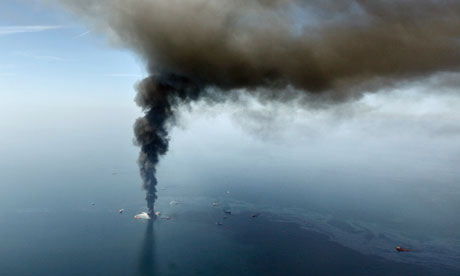
The Deepwater Horizon oil disaster has killed people, harmed the environment, and has severely damaged BP as a company


Deepwater Horizon oil rig fire

The Deepwater Horizon rig burns in the Gulf of Mexico. The damage it has done includes BP’s reputation as a company, and its share prices. Photograph: Gerald Herbert/AP

The fact that 11 people are presumed dead should have made it obvious that the disaster in the Gulf of Mexico represented a threat to the reputation of BP. It was only today, however, a week after the accident, that the penny dropped in the City: BP‘s share price fell 6.5%, an enormous fall for a £100bn company.

There are lessons for Rudd in our forgotten election

admin /30 April, 2010

There are lessons for Rudd in our forgotten election

April 30, 2010

Is there a medical condition leading governments to develop a contagion brought on by dealing with an obstructionist Senate? It’s a kind of Senatophobia, closely related to the stagnation or clotting of the government’s bloodstream.

The Rudd people have been thoroughly spooked by the Senate, aka ”unrepresentative swill” (Paul Keating), ”dinosaurs” (Gough Whitlam) and other choice epithets besides.

Anything contentious – which in the opposition’s eyes is just about everything – is being shelved, dodged or sunk, either because there was never much belief in it in the first place or in the hope one day nirvana will arrive and the government will have a majority in the red chamber.

Rudd retreats on web filter legislation

admin /30 April, 2010

Rudd retreats on web filter legislation


KEVIN Rudd has put another election promise on the backburner with his controversial internet filtering legislation set to be shelved until after the next election.

A spokeswoman for Communications Minister Stephen Conroy said yesterday the legislation would not be introduced next month’s or the June sittings of parliament.

With parliament not sitting again until the last week of August, the laws are unlikely to be passed before the election.

Labor promised before the last election it would force internet service providers to block access to illegal content such as child pornography and X-rated images.

But the US government, Google and free speech advocates have said any efforts to censor the internet would slow download speeds, stop the free flow of information and be ineffective.

Poor political skills doomed Rudd’s climate policy

admin /30 April, 2010

Poor political skills doomed Rudd’s climate policy


KEVIN Rudd’s principal answer to climate change, an emissions trading scheme, was doomed to failure because Labor’s approach put symbolism before substance and politics before policy.

At various stages in Labor’s policy development, flaws have been incorporated that ensured the Carbon Pollution Reduction Scheme would not succeed practically or economically.

The scheme has not just failed politically but has cost the credibility of the Prime Minister and of his government.

Rudd has oversimplified the answer to climate change for public consumption and concentrated on empty symbols, short-term political gains and grand international accords. The decision to dump the CPRS – and that is what it is, despite talk of extending its implementation to 2013 – is the culmination of a series of tactical and strategic errors. These include exaggerating what could be done, playing down the economic cost, over-politicising the process, failing to systematically explain what was involved and then suddenly capitulating.

Senior Labor figures recognise that if the CPRS is revived the approach will have to be very different. For three years the ratification of the Kyoto Protocol and the introduction of a market-based ETS have been the foundation stones and political weapons in Rudd’s campaign against the Coalition and climate change sceptics.

His strategy has been to divide and defeat the Coalition on the issue, use it as a central re-election theme and demonstrate his commitment to real reform and the “greatest moral and economic challenge” we face.

Everything was on his side, including public opinion, media coverage, fears about climate catastrophes, environmentalists, climate change scientists, the UN, the international isolation of Australia and the US and even a large part of the Coalition.

Not dealing with climate and not dealing with the Greens

admin /30 April, 2010


Not dealing with climate and not dealing with the Greens

By focusing on negotiations with the Coalition, the government lost momentum and opportunities, writes Rob Chalmers

28 April 2010


Above: Greens leader Bob Brown.
Photo: mugley/ Flickr


WHAT is it about the Greens that Labor so dislikes? Prior to the Tasmanian elections Labor premier David Bartlett assured voters he would not be doing a deal with them under any circumstances. In the event, Labor formed a minority government with two Green cabinet ministers. Had it not been for the Greens and the movements they represent, it’s likely that in Tasmania alone Lake Pedder would have disappeared, the Gordon below Franklin would have been dammed and the Gunns pulp mill development would have gone unchallenged. That aside, on so many issues – climate change, industrial relations, welfare, foreign relations and economic matters, for example – the Greens are closer to Labor than Labor is to the Coalition.

Federally, Green preferences boost federal Labor’s two-party preferred vote at every election. In 2007 Labor’s primary vote, at 43.3 per cent, was only 1.3 per cent higher than the Coalition’s. But with Green preferences the two-party-preferred outcome – 52.7 per cent for Labor and 47.3 per cent for the Coalition – put Labor into office. Despite this, the Rudd government goes first to the Coalition to negotiate Senate deals.

Bob Brown is not everyone’s cup of tea. But no one can doubt his achievement in boosting the Greens to the third political force in Australian politics. Mr Rudd is not impressed; despite a number of polite requests since last July, he won’t even meet with Senator Brown.

The Great Moral Backflip of Our Time

admin /29 April, 2010

climate policy

28 Apr 2010

The Great Moral Backflip Of Our Time

Penny Wong


The decision to delay the introduction of its emissions trading scheme until 2013 is the Government’s most serious betrayal of voters yet, writes Ben Eltham

Another day, another broken promise.

Last week it was childcare centres and the final death of the home insulation stimulus. Both announcements were wheeled out apologetically by junior ministers. Both times, the Government made little effort to defend its decision (perhaps wisely, in the case of the home insulation debacle).

This week’s broken promise is much, much bigger. The decision to delay the introduction of the Carbon Pollution Reduction Scheme  until at least 2013 means Labor no longer has a credible policy on climate change — “the great moral challenge of our generation”, according to the Prime Minister.

Those words have already come back to haunt him. And so they should.

Climate change was not some minor election promise thrown out in the heat of the campaign. It was a centrepiece of Labor’s 2007 election platform. It was Kevin Rudd as opposition leader who commissioned Ross Garnaut to begin work on fashioning Labor’s climate change policy.

Strong action on climate was a key plank in Labor’s campaign material and its election ads. Remember the TV commercial depicting a sleeping John Howard? “Now he’s finally said Australia needs an emissions scheme, but he won’t set targets until after the election,” the ad proclaimed. Now that he’s in government, neither will Kevin Rudd.

This backflip is staggering, even for those of us who have come to expect policy timidity from the Rudd Government.