

Palm oil power plants become burning issue thanks to UK’s crazy ‘green’ policy
Palm oil power plants become burning issue thanks to UK’s crazy ‘green’ policy
Newport power station plans have devastating consequences that reach far beyond south Wales
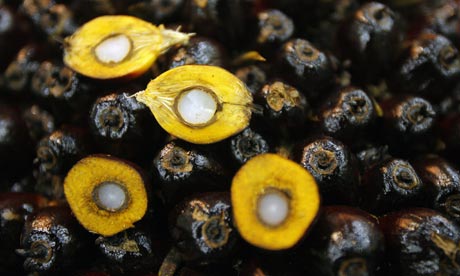
Palm kernels, used to make palm oil. Photo: Tengku Bahar/AFP/Getty
This is a story about the maddest energy scheme the world has seen since Ferdinand Marcos built a nuclear power station on a geological faultline. As I write, councillors in Newport, south Wales, are sitting down to decide whether or not to approve a new power station that burns vegetable oil. It’s one of several being considered in the UK. These plans owe their existence solely to government policy.
Global oil reserves and fossil fuel consumption
Global oil reserves and fossil fuel consumption
The world is showing no sign of weaning itself off fossil fuels: in the 28-year span covered by the BP data below, worldwide reserves of oil fell only twice – in 1998 and 2008
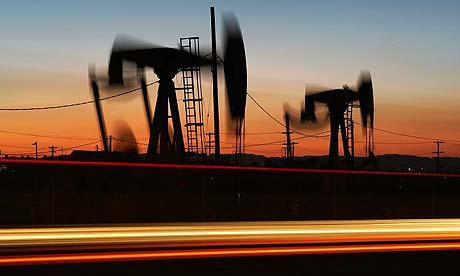
Have we passed peak oil? Photograph: David McNew/Getty images
Oil has been the world’s fossil fuel of choice since the late 1960s and our taste for it doesn’t seem likely to diminish in the short term. Oil companies are still keen to secure any undiscovered reserves while continuing to be a powerful lobbying presence.
You may think that with pressing concerns over peak oil and global warming, the world would be slowly weaning itself off the energy-rich liquid. But in the 28-year span covered by the BP data below, worldwide reserves fell only twice – in 1998, and a decade later in 2008.
What we urgently need need is a new mindset on climate change
What we urgently need is a new mindset on climate change
Worsening climate change means the world is facing ‘a global health catastrophe’ that will hit the poorest people on earth the hardest, the British Medical Journal and the Lancet warn today. In an unusual move, the two journals simultaneously publish the same editorial calling for dramatic changes in policy and behaviour to greatly reduce carbon emissions. We reproduce it with the journals’ kind permission.
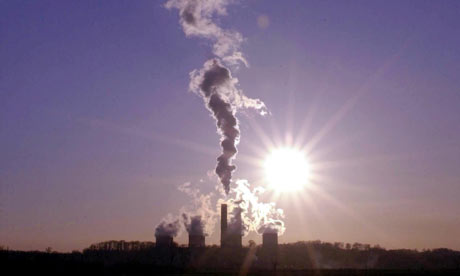
Reducing carbon dioxide emissions is the key to keep temperatures under control. Photograph: Haydn West/PA
Expectations are running high for the United Nations climate change conference in Copenhagen this December. But will we get the global commitment for radical cuts in carbon dioxide emissions that the world so urgently needs?
World Bank warns 2C rise will cripple development efforts
World Bank warns 2C rise will cripple development efforts
The World Bank yesterday issued its clearest warning to date that development efforts in poorer nations will be derailed without a huge increase in funding for climate change mitigation and adaptation efforts. From BusinessGreen.com, part of the Guardian Environment Network
- guardian.co.uk, Wednesday 16 September 2009 11.08 BST
- Article history
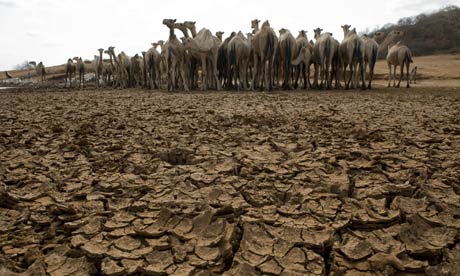
One of the main water sources outside Moyale in Kenya runs dry. Photograph: Sarah Elliott/EPA
The World Bank yesterday issued its clearest warning to date that development efforts in poorer nations will be derailed without a huge increase in funding for climate change mitigation and adaptation efforts.
The Bank’s annual World Development Report warns that even if the G8 group of industrialised nations achieves its target of limiting global warming to two degrees above pre-industrial levels, the increase in global average temperatures will still result in shrinking levels of GDP for many African and Asian countries.
Ocean surfaces have warmest summer on record, US report finds
Ocean surfaces have warmest summer on record, US report finds
• El Niño contributed largely to rise in temperatures
• Average temperatures rose to 16.9C
- guardian.co.uk, Wednesday 16 September 2009 21.02 BST
- Article history
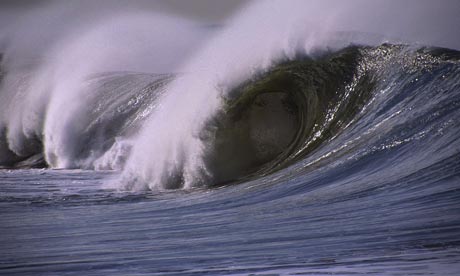
Breaking waves in the Pacific Ocean. Photograph: David Pu’u/Corbis
The world’s ocean surfaces had their warmest summer temperatures on record, the US national climatic data centre said today.
Climate change has been steadily raising the earth’s average temperature in recent decades, but climatologists expected additional warming this year and next due to the influence of El Niño.
Ocean surface temperatures were the warmest for any August since record keeping began in 1880. For the June to August summer months, average ocean surface temperatures rose to 16.9C (62.5F), which is 1.04F above the 20th century average, said the report from the climate centre, which is a branch of the National Oceanic and Atmospheric Administration.
The world’s combined average land and ocean surface temperatures were the second warmest on record for August, and the third warmest for the summer months.
US planning to weaken Copenhagen climate deal, Europe warns
US planning to weaken Copenhagen climate deal, Europe warns
Exclusive: Key differences between the US and Europe could undermine a new worldwide treaty on global warming to replace Kyoto, sources say
- guardian.co.uk, Tuesday 15 September 2009 17.54 BST
- Article history
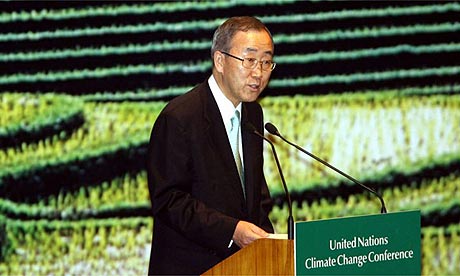
Ban Ki-moon speaks at the Bali climate change conference in 2007. The UN secretary general told the Guardian on Monday that negotiations ahead of Copenhagen had stalled and need to ‘get moving’. Photograph: Adek Berry/AFP
Europe has clashed with the US Obama administration over climate change in a potentially damaging split that comes ahead of crucial political negotiations on a new global deal to regulate greenhouse gas emissions.