Category: Uncategorized

  • 2 degrees hotter not an acceptable climate target but a disaster, say leading scientists

    Press ? for Keyboard Shortcuts.

    climate code red

    Climate Code Red

    To Me
    Today at 8:12 PM

    climate code red


    2 degrees hotter not an acceptable climate target but a disaster, say leading scientists

    Posted: 02 Dec 2013 04:37 PM PST

    Countries round the world have pledged to try and limit the average global temperature rise to 2°C above pre-industrial figures. That’s way too high and would threaten major dislocations for civilization say a group of prominent scientists.
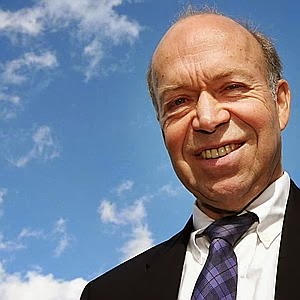
    Lead author James Hansen

    by Tim Radford, Climate News Network

    Governments have set the wrong target to limit climate change. The goal at present – to limit global warming to a maximum of 2°C higher than the average for most of human history – “would have consequences that can be described as disastrous”, say 18 scientists in a review paper in the journal PLOS One.

    With a 2°C increase, “sea level rise of several meters could be expected,” they say.  Increased climate extremes, already apparent at 0.8°C warming, would be more severe. Coral reefs and associated species, already stressed with current conditions, would be decimated by increased acidification, temperature and sea level rise.
    The paper’s lead author is James Hansen, now at Columbia University, New York, and the former NASA scientist who in 1988 put global warming on the world’s front pages by telling a US government committee that “It’s time to stop waffling so much and say the evidence is pretty strong that the greenhouse effect is here.”

    Hansen’s fellow authors include the economist Jeffrey Sachs of Columbia University and the biologist Camille Parmesan, of the University of Plymouth in the UK and the University of Texas at Austin, USA.

    Their argument is that humanity and nature – “the modern world as we know it” – is adapted to what scientists call the Holocene climate that has existed for more than 10,000 years since the end of the Ice Age, the beginnings of agriculture and the first settlement of the cities.

    Warming of 1°C relative to 1880–1920 keeps global temperature close to the Holocene range, but warming of 2°C, could cause “major dislocations for civilization.”

    The scientists study, uncompromisingly entitled “Assessing ‘dangerous climate change’: required reduction of carbon emissions to protect young people, future generations and nature” differs from many such climate analyses because it sets out its argument with remarkable directness and clarity, and serves as a useful briefing document for anyone – politicians, journalists and lay audiences – anxious to better understand the machinery of climate, and the forces that seem to be about to dictate climate change.

    Its critics will point out that it is also remarkably short on the usual circumlocutions, caveats, disclaimers and equivocations that tend to characterise most scientific papers. Hansen and his co-authors are however quite open about the major areas of uncertainty: their implicit argument is that if the worst outcomes turn out to be true, the consequences for humankind could be catastrophic.

    The scientists case is that most political debate addresses the questions of reducing greenhouse gas emissions, but does not and perhaps cannot factor in the all potentially dangerous unknowns – the slow feedbacks that will follow the thawing of the Arctic, the release of frozen reserves of methane and carbon dioxide in the permafrost, and the melting of polar ice into the oceans. They point out that 170 nations have agreed on the need to limit fossil fuel emissions to avoid dangerous human-made climate change.

    “However the stark reality is that global emissions have accelerated, and new efforts are underway to massively expand fossil fuel extractions by drilling to increasing ocean depths and into the Arctic, squeezing oil from tar sands and tar shale, hydro-fracking to expand extraction of natural gas, developing exploitation of methane hydrates and mining of coal via mountain-top removal and mechanised long wall-mining.”

    The scientists argue that swift and drastic action to limit global greenhouse gas emissions and contain warming to around 1°C would have two useful consequences. One is that it would not be far from the climate variations experienced as normal during the last 10,000 years, and secondly that it would make it more likely that the biosphere, and the soil, would be able to sequester a substantial proportion of the carbon dioxide released by human industrial civilisation.

    Trees are, in essence, captive carbon dioxide. But the warmer the world becomes, the more likely it is that existing forests – the Amazon, for example – will start to release more CO2 than they absorb, making the planet progressively even warmer.

    “Although there is merit in simply chronicling what is happening, there is still opportunity for humanity to exercise free will,” says Hansen.

  • A summer of real direct action started last night!

    Why this ad?
    Saving Electricity At Homewww.clickenergy.com.au – 9% Off Your Power Bill For A Year. No Lock In Contracts. Sign Up Now.

    A summer of real direct action started last night!

    Inbox
    x
    Josh Creaser – 350.org Australia josh.creaser@350.org.au via list.350.org
    5:50 PM (4 hours ago)

    to me

    Dear friend,

    “Australia has seen brutal summer heat in recent years; now it’s time to turn up the heat on those responsible – the out-of-control fossil fuel industry”, – Bill McKibben

    Right around Australia, individuals like you are stepping up to show Tony Abbott what a real direct action plan on climate change looks like.

    Already hundreds of people have pledged to take on the fossil fuel industry this summer and beyond. Yesterday, we projected their images on to the heart of the industry lobby – the Minerals Council of Australia headquarters – to launch our Summer Heat campaign and to demonstrate the diverse and inspiring movement that is building to halt fossil fuel expansion in Australia.

    Like and share these photo highlights from the day and our campaign launch video

    The fossil fuel industry plans to triple Australia’s coal and gas exports. Mines such as those proposed in the Galilee Basin and at Maules Creek will lead to more pollution, higher sea levels and more extreme weather events such as the recent bushfires in New South Wales and the typhoon in the Philippines.

    That’s why, with the Abbott Government failing to lead, we’ll be taking our own direct action. As the temperature rises over Summer, people from communities right across Australia will be stepping up campaigns to target the industry and their radical plans.

    We aren’t a movement of radical activists. We are mothers and fathers, grandparents, church leaders, lawyers, teachers, nurses and students. We are a community standing up to a radical industry that is trashing our future.

    Join the movement today and let’s get going with our summer of real direct action! There’s already plenty of actions registered, and there’s more on the way – sign up and we’ll keep you posted!

    In solidarity,

    Josh, Charlie, Aaron, Blair and Simon, and the rest of the Summer Heat team

    P.S. Check out our blog about the launch and this message of support from

    Felix Riebl of the Cat Empire

  • “Managing Transparency” Monbiot

    Why this ad?
    Solar Systems from $5,999EnergyAustralia.com.au/SolarSaver – 3.5Kw System W/ European Inverter & Bonus 5+5 Year Warranty. Call Now!

    Monbiot.com

    Inbox
    x
    George Monbiot news@monbiot.com via google.com
    6:14 PM (56 minutes ago)

    to me

    Monbiot.com


    “Managing Transparency”

    Posted: 02 Dec 2013 12:42 PM PST

    Politicians and officials are desperately seeking to justify their transatlantic assault on democracy.
    By George Monbiot, published in the Guardian 3rd December 2013

    Panic spreads through the European Commission like ferrets in a rabbit warren. Its plans to create a single market incorporating Europe and the United States, progressing so nicely when hardly anyone knew, have been blown wide open. All over Europe people are asking why this is happening; why we were not consulted; for whom it is being done.

    They have good reason to ask. The Commission insists that its Transatlantic Trade and Investment Partnership should include a toxic mechanism called investor-state dispute settlement. Where this has been forced into other trade agreements, it has allowed big corporations to sue governments before secretive arbitration panels composed of corporate lawyers, which bypass domestic courts and override the will of parliaments(1).

    This mechanism could threaten almost any means by which governments might seek to defend their citizens or protect the natural world. Already it is being used by mining companies to sue governments trying to keep them out of protected areas(2,3); by banks fighting financial regulation(4); by a nuclear company contesting Germany’s decision to switch off atomic power(5). After a big political fight we’ve now been promised plain packaging for cigarettes. But it could be nixed by an offshore arbitration panel. The tobacco company Philip Morris is currently suing Australia through the same mechanism in another treaty(6).

    No longer able to keep this process quiet, the European Commission has instead devised a strategy for lying to us. A few days ago an internal document was leaked(7). This reveals that a “dedicated communications operation” is being “coordinated across the Commission”. It involves, to use the EC’s chilling phrase, the “management of stakeholders, social media and transparency.” Managing transparency should be adopted as its motto.

    The message is that the trade deal is about “delivering growth and jobs” and will not “undermine regulation and existing levels of protection in areas like health, safety and the environment”. Just one problem: it’s not true.

    From the outset, the Transatlantic Trade and Investment Partnership has been driven by corporations and their lobby groups, who boast of being able to “co-write” it(8,9). Persistant digging by the Corporate Europe Observatory reveals that the commission has held eight meetings on the issue with civil society groups, and 119 with corporations and their lobby groups(10). Unlike the civil society meetings, these have taken place behind closed doors and have not been disclosed online.

    Though the Commission now tells the public that it will protect “the state’s right to regulate”(11), this isn’t the message the corporations have been hearing. In an interview last week, Stuart Eizenstat, co-chair of the Transatlantic Business Council, instrumental in driving the process, was asked whether companies whose products had been banned by regulators would be able to sue(12). Yes. “If a suit like that was brought and was successful, it would mean that the country banning the product would have to pay compensation to the industry involved or let the product in.” Would that apply to the European ban on chicken carcasses washed with chlorine, a controversial practice permitted in the US? “That’s one example where it might.”

    What the Commission and its member governments fail to explain is why we need offshore arbitration at all. It insists that domestic courts “might be biased or lack independence”(13), but which courts is it talking about? It won’t say. Last month, while trying to defend the treaty, the British minister Kenneth Clarke said something revealing:

    “Investor protection is a standard part of free-trade agreements – it was designed to support businesses investing in countries where the rule of law is unpredictable, to say the least.”(14) So what is it doing in an EU-US deal? Why are we using measures designed to protect corporate interests in failed states in countries with a functioning judicial system? Perhaps it’s because functioning courts are less useful to corporations than opaque and injust arbitration by corporate lawyers.

    As for the Commission’s claim that the trade deal will produce growth and jobs, this is also likely to be false. Barack Obama promised that the US-Korea Free Trade Agreement would increase US exports by $10bn. They immediately fell by $3.5bn(15). The 70,000 jobs it would deliver? Er, 40,000 were lost. Bill Clinton promised that the North American Free Trade Agreement would create 200,000 new jobs for the US; 680,000 went down the pan(16,17). As the commentator Glyn Moody says, “the benefits are slight and illusory, while the risks are very real.”(18)

    So where are our elected representatives? Fast asleep. Labour MEPs, now frantically trying to keep investor-state dispute mechanisms out of the agreement, are the  exception(19); the rest are in Neverland. The LibDem MEP Sir Graham Watson wrote in his newsletter, before dismissing the idea, “I am told that columnists on The Guardian and The Independent claim it will hugely advantage US multinational companies to the detriment of Europe.”(20) We said no such thing, as he would know had he read the articles, rather than idiotically relying on hearsay. The treaty is likely to advantage the corporations of both the US and the EU, while disadvantaging their people. It presents a danger to democracy and public protection throughout the trading area.

    Caroline Lucas, one of the few MPs who remains interested in the sovereignty of parliament, has published an early day motion on the issue(21). It has so far been signed by only seven MPs. For the government, Kenneth Clarke argues that to ignore the potential economic gains of the trade agreement “in favour of blowing up a controversy around one small part of the negotiations, known as investor protection, seems to me positively Scrooge-like.”(22)

    Quite right too. Overriding our laws, stripping away our rights, making parliament redundant: these are trivial and irrelevant beside the issue of how much money could be made. Don’t worry your little heads about it.

    www.monbiot.com

    References:

    1. http://democracyctr.org/wp/wp-content/uploads/2013/05/Under_The_Radar_English_Final.pdf
    2. http://action.sumofus.org/a/mining-costarica/

    3. http://democracyctr.org/wp/wp-content/uploads/2013/05/Under_The_Radar_English_Final.pdf

    4. http://corporateeurope.org/trade/2013/06/transatlantic-corporate-bill-rights

    5. http://www.tni.org/briefing/nuclear-phase-out-put-test

    6. http://www.mccabecentre.org/focus-areas/tobacco/philip-morris-asia-challenge

    7. http://corporateeurope.org/trade/2013/11/leaked-european-commission-pr-strategy-communicating-ttip

    8. http://corporateeurope.org/sites/default/files/businesseurope-uschamber-paper.pdf

    9. http://www.nytimes.com/2013/10/09/business/international/european-officials-consulted-business-leaders-on-trade-pact-with-us.html?partner=rss&emc=rss&smid=tw-nytimesworld%20&_r=0

    10. http://corporateeurope.org/trade/2013/09/european-commission-preparing-eu-us-trade-talks-119-meetings-industry-lobbyists

    11. http://trade.ec.europa.eu/doclib/docs/2013/november/tradoc_151916.pdf

    12. http://www.br.de/fernsehen/das-erste/sendungen/report-muenchen/interview-stuart-eizenstat-100.html

    13. http://trade.ec.europa.eu/doclib/docs/2013/october/tradoc_151790.pdf

    14. http://www.theguardian.com/commentisfree/2013/nov/11/eu-us-trade-deal-transatlantic-trade-and-investment-partnership-democracy

    15. http://www.epi.org/publication/trade-pacts-korus-trans-pacific-partnership/

    16. http://www.epi.org/publication/trade-pacts-korus-trans-pacific-partnership/

    17. Paul Krugman has explained the simple economic rules which make this happen: http://krugman.blogs.nytimes.com/2010/12/06/trade-does-not-equal-jobs/

    18. By email. You can read Glyn Moody’s posts on the issue here: http://blogs.computerworlduk.com/open-enterprise/

    19. http://www.theguardian.com/commentisfree/2013/nov/06/david-cameron-eu-us-trade-deal-investor-state-dispute-settlement

    20. http://www.grahamwatsonmep.org.uk/index.php?option=com_content&view=article&id=1653&catid=8&Itemid=159

    21. http://www.parliament.uk/edm/2013-14/793

    22. http://www.theguardian.com/commentisfree/2013/nov/11/eu-us-trade-deal-transatlantic-trade-and-investment-partnership-

  • Millionaires Graeme Wood, Jan Cameron to turn former Gunns woodchip mill into tourist attraction

    By Michael Atkin

    Updated 51 minutes ago

    Two Australian millionaires will transform a key Tasmanian woodchip mill into a major tourist attraction, in a blow to the State Government and the forestry industry.

    The Triabunna mill was sold to Wotif.com co-founder Graeme Wood and Kathmandu clothing brand founder Jan Cameron in 2011 for $10 million. Both are passionate environmentalists.

    The forestry industry and the State Government have been desperate for the site to re-open, but Mr Wood has confirmed to 7.30 that will not be happening.

    Environmental Protection Authority approval for the site to operate lapsed in May and it has now entered a rehabilitation phase.

    The multi-purpose development will be known as Spring Bay Mill and will seek to boost tourism on the island, which is facing a faltering economy.

    “I think it is time to move on. I’m interested in the future, I’m interested in economic development [and] Tasmania needs it badly,” Mr Wood said.

    “I see this as the most effective way of achieving that.”

    Mr Wood and Ms Cameron had maintained the site, formerly owned by timber giant Gunns, would be re-opened to forestry, even putting the running of the mill out to tender.

    But Mr Wood is unapologetic about keeping it closed.

    “We never got one tender that made economic sense and the reason for that was wood-chipping makes less and less sense internationally,” he said.

    The value of woodchip exports fell by over 40 per cent in the past five years.

    Shutting key infrastructure ‘ludicrous’

    But James Neville Smith, who runs Neville Smith Timbers, a major player in the Tasmanian forestry industry, is not impressed.

    “The whole of Tasmania should be disappointed about that decision,” Mr Smith said.

    “The proposition that that infrastructure is shut and will remain shut is ludicrous.”

    He challenged Mr Wood’s claim that the woodchip mill would not make money.

    “If you chose to operate that site right now it would be a good business, but people do weird things,” he said.

    If you chose to operate that site right now it would be a good business, but people do weird things.

    James Neville Smith


    “That would allow the state commercial body Forestry Tasmania to generate significant revenue that has otherwise been lost because they have to cart the wood to the north of the state.”

    But Mr Wood is unfazed by the criticism, deriding it as “last-century thinking”.

    He gave 7.30 an exclusive tour of the 43-hectare site to flesh-out his radically different vision. It is wide-ranging, including accommodation, artistic performances, a culinary school and farm stays.

    He believes the tourism development needed a fresh start with a new name.

    “Spring Bay Mill just has a nice ring to it,” he said.

    “We’re not wanting to deny the forest history. I mean history is history.

    “We’d like to incorporate as much of the existing infrastructure into the site as we can.”

    Location, scenery represents ‘untapped potential’

    Triabunna’s prime location is a major feature of the development. The key attraction is Maria Island national park, a former convict settlement and home to a disease-free population of Tasmanian devils.

    “Triabunna’s fascinating because it is on the mid-point of the East Coast, an hour from Hobart airport,” Mr Wood said.

    The whole East Coast, if you drive the whole length, it’s got pristine features: clear water, clear air, magnificent scenery.

    Graeme Wood


    “The whole East Coast, if you drive the whole length, it’s got pristine features: clear water, clear air, magnificent scenery. It’s untapped potential for me.”

    But tourists have not been heading there in great numbers: just 12,000 travel to Maria Island each year.

    Mr Wood is confident he can succeed where the tourism industry has failed.

    “When you look at the natural beauty of this place, I’d have to say not enough people know about it,” he said.

    “The tourism industry here hasn’t been coherent enough, bold enough.”

    Link with MONA could provide ‘leg-up’

    The first public performance at the site will be in January in a cavernous rusted tin shed that was previously used to store equipment.

    The performance is a joint production with David Walsh’s MONA FOMA music festival.

    “The Australian Chamber Orchestra string quartet, plus a couple of friends, are going to come and perform here,” Mr Wood said.

    It is a strategic move to get involved with the Museum of Old and New Art (MONA), which is known for its unique events and art that focuses heavily on the themes of sex and death.

    MONA has also changed the type of tourism the state is known for.

    “800,000 people go there (to MONA) in a year,” Mr Wood said.

    “If 10 per cent of those can come here and experience some weird industrial stuff going on here as well as all of the other tourist attractions, that’s not a bad leg-up.”

    The Spring Bay Mill development is in its infancy, with no development approvals, a need for new investors and no estimates on the number of jobs it will create.

    “We don’t have a really solid business plan,” Mr Wood said.

    “We’ve got a lot concepts that we want to try. Some will win, some will lose. But I take gambles all the time. That’s the business that I’m in.”


  • The largest corporate power grab you’ve never heard of

    The largest corporate power grab you’ve never heard of

    Charlie Wood – 350.org Australia

    To Me
    Dec 1 at 3:12 PM

    Friends,

    Heard of the Trans Pacific Partnership (TPP)?

    It’s a highly secretive and expansive free trade agreement between twelve countries — including the United States, Canada, Mexico, New Zealand and Australia — that could undermine our democracy. Leaked text reveals that the TPP would empower corporations to directly sue governments over laws and policies that corporate power alleges reduce their profits. Legislation designed to address climate change, curb fossil fuel expansion and reduce air pollution could all be subject to attack as a result of the TPP.

    Next weekend ministers are meeting in Singapore to sign the deal, but public outrage has some governments reconsidering their support for the agreement. In Australia, New Zealand, USA, Peru, Malaysia, Vietnam and Singapore, citizens have taken to the streets in protest. Last year, 130 members of US Congress voiced their concerns. Opposition is growing stronger, and people-power has been waking up our leaders.

    Let’s amplify the voices of those fighting this dirty deal and push governments on the fence to withdraw their support:

    Click here to tell governments to reject the Trans Pacific Partnership.

    Check this infographic to get a sense of how threatening the TPP is:

    (If you can’t see the infographic above, make sure to click “Turn on Images” in your email program. Here are some instructions if you’re not sure how. Or, just click here to view the infographic in your web browser.)

    Approved in its current form, the TPP would throw a massive spanner in all of our divestment work. Any multinational fossil fuel company could sue governments over laws which curb fossil fuel investment and expansion, such as policies to limit investment in fossil fuel companies, legislation to reduce air pollution and carbon pricing.

    But this is just one component of the deal. Other parts could criminalize internet use, undermine workers’ and human rights, manipulate copyright laws, restrict government regulation of food labelling and adversely impact subsidised healthcare.

    There’s a lot at stake, but we can stop this. To stand up to this corporate takeover, we need to come together and make our voices heard:

    Sign our petition to show the negotiating governments how widespread opposition to this deal is.

    The movement we are building locally, nationally and globally to wind back fossil fuels and reign in a safe climate future is growing by the day, and the industry is getting scared of the uncertainty ahead. The TPP is a symptom of this fear – a massive bid to overthrow any restrictions we might throw at them. And we will not let their fear threaten our democracy — or our future.

    Onwards,