Category: Uncategorized

  • History of Australian bushfires: interactive | News …

  • Victoria First’s Inaugural Meeting Speech KELVIN THOMSON MP

    ———- Forwarded message ———-
    From: Thomson, Kelvin (MP) <Kelvin.Thomson.MP@aph.gov.au>
    Date: Mon, Dec 2, 2013 at 12:19 PM
    Subject: Victoria First’s Inaugural Meeting Speech
    To: “Thomson, Kelvin (MP)” <Kelvin.Thomson.MP@aph.gov.au>
    Cc: “Hamilton, Tim (K. Thomson, MP)” <Tim.Hamilton@aph.gov.au>

    Dear All,
    Thank you to everyone who attended the first meeting of Victoria First. I was greatly encouraged by the attendance and the enthusiasm of all concerned, and by the generosity of those who became members.
    For those who were unable to attend please see the following speech on Youtube from the launch.
    Regards,
    Kelvin Thomson
    Click here to Reply, Reply to all, or Forward
    Why this ad?Ads –
    Now From $5999 W/ European Inverter Bonus 5+5 Year Warranty. Call Now!
    0.02 GB (0%) of 15 GB used
    ©2013 Google – Terms & Privacy
    Last account activity: 23 minutes ago

    Details

    People (7)
    Thomson, Kelvin (MP)
    kelvin.thomson.mp@aph.gov.au
    Show details
    Ads
    Windows 7 Driver Download

    Windows 7 Drivers Latest Download. Microsoft Certified. (Recommended)
    $4990 5kW Solar System

    5kW solar system for $4990 Limited time – NSW, QLD only
    Cheap Energy Bill

    9% Off Your Power Bill For A Year. No Lock In Contracts. Sign Up Now.
    Genealogy Research

    Billions of Historical Records. All Digitized & Easily Searchable.
  • Climate change is increasing the intensity of extreme weather events

    Climate change is increasing the intensity of extreme weather events

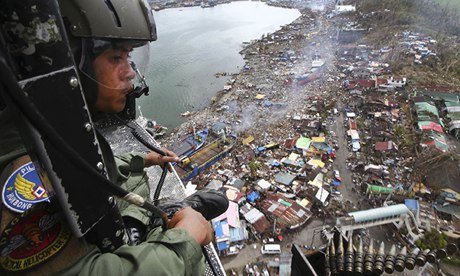
    Far from being isolated, the Philippines typhoon Haiyan followed other extraordinary meteorological events that are becoming more frequent and increasingly severe
    A Philippine Air Force crewman looks out over the typhoon Haiyan-ravaged city of Tacloban

    A Philippine Air Force crewman looks out from his helicopter over the typhoon Haiyan-ravaged city of Tacloban. Photograph: Dita Alangkara/AP

    Three weeks ago the most powerful typhoon ever recorded to hit land destroyed parts of the Philippines. The devastation has been catastrophic, flattening homes, schools and hospitals and leaving thousands dead and 5.5 million children affected.

    Unicef has worked in the Philippines since 1948 and experienced staff returning from the worst affected areas such as Leyte are reporting having never seen anything like this – not even after the Asian tsunami on Boxing day almost a decade ago. They have seen hundreds of kilometres of coconut groves literally blown away by 300kph winds. A coconut tree takes 12 years to grow, so this is a decade of livelihoods wiped out in a single storm.

    I am incredibly concerned about the children who are without a doubt the most vulnerable right now. But as the immediate shock of the typhoon news reports begin to fade from people’s memories we need to address with energy and decision the true facts behind the intensity of the Philippines typhoon.

    If the Philippines typhoon was an isolated incident, it would be a meteorological phenomenon, but the real worry is that far from being isolated, these events are both frequent and increasingly severe. This typhoon comes on top of other extraordinary meteorological events that have occurred recently; unprecedented floods caused by a cyclone in Sardinia last week; unprecedented typhoons in the United States a few weeks ago; unprecedented rains that caused the Pakistan floods in August and last year.

    We can not turn a blind eye to the stark reality; the reality that is climate change. Leaving aside the appalling individual tragedies that have occurred we must see that these are flashes of the future. Climate change is contributing to these events becoming more intense.

    Hazards only become disasters when a population or society’s capacity to cope within existing resources is overwhelmed. In such a situation, children, especially the hardest to reach, are always the most vulnerable. Disasters put children at greater risk of death, exposure to disease and trauma, and disruption to their education and social development.

    As disasters intensify with increasing impacts of climate change, there must be an expansion of adaptation and resilience programmes in vulnerable countries to protect children from risk. Unicef’s disaster risk reduction programmes implement simple measures like early warning systems which can mean the difference between life and death. These programmes work – the Indian state of Orissa’s disaster preparedness plan implemented last month undoubtedly saved lives as nearly a million people were evacuated when a cyclone was known to be heading towards the eastern coastal region.

    Last weekend the UN climate change talks ended in Warsaw. The Philippines disaster should have sent an urgent message demanding bold action to protect children from disasters like these and delivered plans for how we can effectively rebuild when the worst happens, but the lack of energy has left me speechless. I can not believe we are not yet gripping this issue with the urgency that is needed and unless we do that, what you see isn’t going to be one event that shocks and saddens us but an event that is repeated and repeated and repeated.

    I’m not saying that human beings alone are causing global warming, they’re not. The Earth is going through one of its warming cycles, but there is no doubt, none whatsoever, that human beings are adding to that and adding to that in a dangerous and ultimately fatal way. Unless we begin to take this seriously, according to experts, climate related disasters could affect 375 million people every year by 2015, up from 263 million in 2010.

    Children in developing countries like the Philippines are the hardest hit, despite being the least responsible for causing climate change. Climate change is no longer a murky forecast of an abstract and distant future, it is already a reality which will tamper with the lives of our very own children.

    Our government must keep its promise to fund simple risk-reduction measures that can protect children when disasters strike. Development and resilience programmes should not be planned in silo. There’s no point in aid helping Philippines to develop when these successes can so easily be wiped out by weather-related disasters.

    As for the humanitarian response in the wake of the typhoon, the UK public has responded with extraordinary generosity, donating £4m in just three weeks to Unicef’s Philippines appeal. Let’s help the children suffering the most right now in the Philippines and also raise our voices against such atrocities happening again.

    • Lord Ashdown is Unicef UK’s president. Donations to Unicef’s typhoon Haiyan fund can be made online

  • Elucidating Heavy Precipitation Events

    Science News

    … from universities, journals, and other research organizations

    Elucidating Heavy Precipitation Events

    Nov. 29, 2013 — It is difficult to forecast heavy precipitation events accurately and reliably. The quality of these forecasts is affected by two processes whose relative importance has now been quantified by a team at the Laboratoire d’Aérologie (CNRS / Université Toulouse III-Paul Sabatier). The researchers have shown that these processes should be taken into account in low wind speed events. Their findings should help forecast these events, which repeatedly cause significant damage, especially in south-eastern France. They are first published online the November 28, 2013 in the Quarterly Journal of the Royal Meteorological Society.


    Share This:

    Nearly every autumn, the countries of the Mediterranean Basin are stricken by heavy rainfall and flash floods, which endanger populations and can cause significant property damage. South-eastern France is frequently affected by these events, caused by the interaction between topography and the still warm and moisture-laden air masses from the Mediterranean Sea. Weather forecasters are able to predict these events and issue weather warnings. However, simulating their evolution on different time scales remains difficult, just like forecasting the strength and location of precipitation, the two parameters that broadly determine the extent of flooding.

    Researchers from CNRS and Université Toulouse III-Paul Sabatier at the Laboratoire d’Aérologie investigated two phenomena that play a key role in meteorology: the microphysics of hydrometeors (rain, snow and ice pellets)[1] and atmospheric turbulence. The aim was to determine the relative effect of these two processes on forecast sensitivity. To do this, the scientists looked at five heavy rainfall episodes that took place between September 2010 and November 2011 in south-eastern France and for which measured data was available. For each event, ensemble simulations were carried out using the Meso-NH[2] atmospheric research model, giving more or less importance to each of the two processes.

    Two main results emerged. For high wind speed events, precipitation is scarcely affected by the perturbations introduced. It is therefore unnecessary to take account of these two processes to improve heavy precipitation forecasting. In this case, it is the interaction with the topography that determines the onset of precipitation. However, when wind speed is low, both the intensity of precipitation and its location (upstream of the topography) are far more sensitive to these two processes. In this case, the microphysics of hydrometeors and atmospheric turbulence need to be better represented so as to improve forecast sensitivity.

    These results suggest that in low wind speed situations, errors related to the representation of microphysical and turbulent processes make a significant contribution to the total error in the forecasting system. Taking greater account of these errors would improve heavy precipitation forecasting when wind speed is low. The study was also used to test a methodology that may be implemented as part of the HyMeX[3] international research program, launched in 2010 for a period of ten years and coordinated by Météo-France and CNRS.

    Share this story on Facebook, Twitter, and Google:

    Other social bookmarking and sharing tools:

    |

    Story Source:

    The above story is based on materials provided by CNRS (Délégation Paris Michel-Ange).

    Note: Materials may be edited for content and length. For further information, please contact the source cited above.


    Journal Reference:

    1. A. Hally, E. Richard, S. Fresnay, D. Lambert. Ensemble simulations with perturbed physical parametrizations: Pre-HyMeX case studies. Quarterly Journal of the Royal Meteorological Society, 2013; DOI: 10.1002/qj.2257

    APA

    MLA

    CNRS (Délégation Paris Michel-Ange) (2013, November 29). Elucidating heavy precipitation events. ScienceDaily. Retrieved November 30, 2013, from http://www.sciencedaily.com­ /releases/2013/11/131129101903.htm?utm_source=feedburner&utm_medium=email&utm_campaign=Feed%3A+sciencedaily%2Fearth_climate%2Fsevere_weather+%28ScienceDaily%3A+Earth+%26+Climate+News+–+Severe+Weather%29

    Note: If no author is given, the source is cited instead.

    Search ScienceDaily

    Number of stories in archives: 147,670

    Find with keyword(s):
    Enter a keyword or phrase to search ScienceDaily’s archives for related news topics,
    the latest news stories, reference articles, science videos, images, and books.

    Recommend ScienceDaily on Facebook, Twitter, and Google:

    Other social bookmarking and sharing services:

    |
    Interested in ad-free access? If you’d like to read ScienceDaily without ads, let us know!

    Social Networks


    Follow ScienceDaily on Facebook, Twitter,
    and Google:

    Recommend ScienceDaily on Facebook, Twitter, and Google +1:

    Other social bookmarking and sharing tools:

    |

    Science Video News


    Perfect Weather Predictions

    Meteorologists have markedly increased the accuracy of their forecasts in the last twenty years. Advances in radar and satellite technology have. …  > full story

    Strange Science News

    Free Subscriptions

    … from ScienceDaily

    Get the latest science news with our free email newsletters, updated daily and weekly. Or view hourly updated newsfeeds in your RSS reader:

    Feedback

    … we want to hear from you!

    Tell us what you think of ScienceDaily — we welcome both positive and negative comments. Have any problems using the site? Questions?


  • How will Australia cope with the housing demands of a doubled population?

    How will Australia cope with the housing demands of a doubled population?

    By Cameron Kusher
    Friday, 29 November 2013

    The Australian Bureau of Statistics (ABS) released national population projections earlier this week.  The data looks at the projected growth in the national population from 2012 through to 2101 and the data provides a fascinating insight into the potential future of Australia over the coming years and decades.

    The projections look at three different scenarios which can be read about here.  For the purposes of this post we are utilising ‘Series B’ or the medium level projections.  Based on this series, Australia’s population was estimated to be 22,721,995 persons in 2012, by 2101 the population is projected to be 136% higher at 53,564,333 persons.  Under this scenario we would see the national population from 2012 having doubled by 2071.  Keep in mind Australia was first settled by Europeans in 1788 so it took 224 years to get to the 2012 population and it projected to double in just 59 years.Projections are also provided at a state and capital city level from 2012 through to 2061, at which time the national population is projected to be 41,513,375.

    state by state

    The above table details the estimated population as at June 2012 and the percentage of the national population across each state and compares it to the same projected data for 2061 as well as showing the average annual growth rate over the period.  At a state level, the proportion of the national population is projected to fall in New South Wales, South Australia, Tasmania and Northern Territory.  The proportion is projected to remain static in Victoria and rise across Queensland, Western Australia and the Australian Capital Territory.  Western Australia (2.0%), Queensland (1.5%) and the Australian Capital Territory (1.4%) are projected to record the greatest average annual rate of population growth while Tasmania (0.2%), South Australia (0.7%) and New South Wales (0.9%) are projected to record the lowest growth rate.

    Of course these are just population projections and are no way set in stone however, it does seem inevitable that the population of the country will expand substantially (even based on the low series of assumptions) over time.  The big question remains where and how will we house all of these additional citizens? Based on the data provided in the release it seems that a significant majority of the population will continue to live within our capital cities.

    cap city by cap city

    The above table details the estimated population as at June 2012 and the percentage of each state’s population across each capital city and compares it to the same projected data for 2061 as well as showing the average annual growth rate over the period.

    There are quite a few interesting points to take from these long-term projections.  Firstly, by 2061 Sydney will no longer be the nation’s most populous city and Brisbane will no longer be the nation’s third most populous city.  Melbourne will overtake Sydney as the most populous city in 2053 and Perth will overtake Brisbane as the third most populous city in 2028.

    The proportion of Australian’s living within a capital city is already quite high at 66.1% however, this is projected to increase to 73.4% by 2061.  Think about that, out of a projected population of 41.5 million, almost three out of every four Australians will live in a capital city.  If we focus on the four most populous capital cities, 57.3% of Australians currently live in Sydney, Melbourne, Brisbane or Perth.  Based on the population projections, by 2061 65.8% of the total national population will live in Sydney, Melbourne, Brisbane and Perth.

    Should this scenario actually come to fruition it will create significant challenges for each of these cities.  Obviously housing is a challenge which immediately comes to mind, how and where these people can be housed and what it would mean for property values.  Over time the capital city areas do expand however, for a city such as Sydney that is surrounded by water and national parks the scope to expand is quite limited. No wonder the inner city areas are undergoing such rapid densification.

    Elsewhere you can continue to grow the urban sprawl but there must be a consideration around how people travel around the city and commute to their jobs.  Transport infrastructure is typically already insufficient, without appropriate investment levels how much worse would it be by 2061?  Of course, for some, purchasing a home in a capital city is already out of reach; how do governments ensure that a greater number and proportion of capital city residents doesn’t just lead to further escalation of property values?

    Of course these figures are in no way set in stone however, it does appear that the country’s population will continue to grow which will pose myriad challenges.  In my opinion the greatest concern is the projection of a greater centralisation of the population to our capital cities and more pointedly the four most populous cities.

    As mentioned, in each of these cities there are already affordability barriers for certain home buyer cohorts and investment in transport infrastructure has not been sufficient.  In my opinion we should be looking to a decentralisation of the population rather than encouraging more and more people to the capital city.  Not only do regional markets tend to have lower house values, in many instances they offer a superior lifestyle than that which is available within our major capital cities.

    The biggest challenge of course is employment in regional areas however, with the advent of high speed internet and major infrastructure projects such as the National Broadband Network (NBN) we will hopefully see the nature of work change with more telecommuting taking place and less focus on physically being located within an office.

    Alternatively, many businesses do not necessarily need to be located within a major capital city.  Perhaps governments could incentivise major businesses to locate their headquarters or major offices outside of Sydney, Melbourne, Brisbane or Perth.


    Cameron Kusher is senior research analyst at RP Data.