Category: Uncategorized

  • Turn Down the Heat: Climate Extremes, Regional Impacts, and the Case for Resilience

    This page in:
    • English

    Turn Down the Heat: Climate Extremes, Regional Impacts, and the Case for Resilience

    Report Highlights
    • This report, part II in a series, looks at likely impacts of 2°C and 4°C warming across three vulnerable regions.
    • It describes risks to agriculture and livelihoods in Sub-Saharan Africa, the rise in sea-level and devastation to coastal areas likely in South East Asia, and water extremes facing South Asia.
    • Turn Down the Heat warns that poor coastal urban communities are among the most vulnerable to climate change.

    In the report Turn Down the Heat: Climate Extremes, Regional Impacts, and the Case for Resilience, launched in June 2013, scientists look at the likely impacts on three vulnerable regions if the world continues on its current trajectory and warms by 2 degrees Celsius over pre-industrial times by mid-century and continues to become 4°C warmer by 2100.

    The report looks across Sub-Saharan Africa, South Asia, and South East Asia, revealing how rising global temperatures are increasingly threatening the health and livelihoods of their most vulnerable populations. It builds on the previous report in the series, Turn Down the Heat: Why a 4°C World Must Be Avoided, that concluded the world likely will warm by 4°C  by the end of the century.

    The latest report in the series describes the risks to agriculture and food security in sub-Saharan Africa; rise in sea-level, bleaching of coral reefs, and devastation of coastal areas in South East Asia; and fluctuating rain patterns and food production impacts in South Asia. The report, prepared by the Potsdam Institute of Climate Research and Climate Analytics, synthesizes the current peer-reviewed literature and supplements it with computer modeling, finding that future impacts across the regions are potentially devastating.

    To learn more, click the links below.

    Launch Event

    Reuters Newsmaker: A Conversation with World Bank Group President Jim Yong Kim (Transcript of the event)

    Report

    Turn Down the Heat: Climate Extremes, Regional Impacts, and the Case for Resilience (Also available on social reading channels: Issuu, Scribd, and Open Knowledge Repository)

    Executive Summary in English, Arabic, Chinese, French, Russian, and Spanish

    President Jim Kim’s Op-ed originally published in Washington Post:

    Op-Ed: Ending Poverty Includes Tackling Climate Change – English, Spanish, French, Russian, Japanese, Chinese

    Press Releases

    Global Press Release: Warmer World Will Keep Millions of People Trapped in Poverty, Says New Report

    World Bank Flash: Turn Down the Heat II: Climate Extremes, Regional Impacts, and the Case for Resilience:

    Regional Press Release (East Asia): Warmer World Threatens Livelihoods in South East Asia

    Regional Press Release (South Asia): Warming Climate to Hit South Asia Hard with Extreme Heat, Floods & Disease

    Country Press Release (Bangladesh): Warming Climate to Hit Bangladesh Hard with Sea Level Rise, More Floods and Cyclones

    Country Press Release (India): Warming Climate in India to Pose Significant Risk to Agriculture, Water Resources, Health

    Country Press Release (Maldives): Concerted Efforts Needed to Support Maldives Adapt to Climate Change, World Bank Report Findings Indicate

    Country Press Release (Nepal): Warming Climate to Hit South Asia Hard with Extreme Heat, Floods & Disease

    Country Press Release (Pakistan): Warming Climate to Hit South Asia Hard with Extreme Heat, Floods & Disease

    Feature Stories:

    What Climate Change Means for Africa, Asia and the Coastal Poor

    New Report Finds India’s Food Security, Water Resources and Health at Risk From Warming Climate

    Climate Resilience and Low-Carbon Growth Critical for Nigeria’s Economic Future

    To the Brink: Climate Change Will Increase Frequency and Severity of Disasters, Stress Food and Energy Production in South Asia

    Infographic

    What Climate Change Means for Africa and Asia

    Multimedia

    Climate Change in Africa Will Hit the Poor the Hardest

    World Bank: Warmer World Will Trap Millions in Poverty – Interview with President Jim Yong Kim

    Regional Vice President for South Asia Discusses Climate Change Impacts on the Region

    Blogs

    We Must Confront Climate Change to End Poverty

    New Climate Report Emphasizes Urgency

    Why a 4-Degrees World Won’t Cause Just One Water Crisis

    Filipinos, How are You Adapting to Climate Change? You Ask, We Answer

  • Ozone pact helped cool the planet

    Ozone pact helped cool the planet

    Monday, 11 November 2013
    AFP

    One expert says the cooling benefits from the Montreal Protocol 'are going to be short-lived' (iStockphoto: david_addimage)

    One expert says the cooling benefits from the Montreal Protocol ‘are going to be short-lived’ (iStockphoto: david_addimage)

    A slowdown in global warming that climate sceptics cite in favour of their cause was partly induced by one of the world’s most successful environment treaties, a study has found.

    The UN’s Montreal Protocol, designed to phase out industrial gases that destroy Earth’s protective ozone layer, coincidentally applied a small brake to the planet’s warming, it says.

    Without this treaty, Earth’s surface temperature would be roughly 0.1°C higher today, according to its authors.

    “Paradoxically, the recent decrease in warming, presented by global warming sceptics as proof that humankind cannot affect the climate system, is shown to have a direct human origin,” according to the paper, published in the journal Nature Geoscience.

    Signed in 1987 and implemented in 1989, the Montreal Protocol committed signatories to scrapping a group of chlorine- and bromine-containing chemicals.

    Used in aerosol sprays, solvents and refrigerants, these substances destroy ozone molecules in the stratosphere that filter out cancer-causing ultraviolet light.

    Some of the chemicals also happen to be hefty greenhouse gases, with a powerful ability to trap the Sun’s heat.

    So their phase-out, which began to hit its stride in the 1990s, was also a small but perceptible gain in the fight against climate change, the scientists write.

    From 1998 to 2012, Earth’s mean global temperature rose by an average of 0.05°C per decade, a benchmark measure of warming.

    This is far less than the average decadal increase over half a century of 0.12°C, and is out of sync with the ever-rising curve of greenhouse-gas emissions.

    As a result, sceptics claim the 15-year “Pause” as proof that climate change has natural causes, showing that green calls to reduce fossil-fuel emissions are flawed or a scam.

    The paper, led by Francisco Estrada, an atmospheric physicist at the Autonomous National University of Mexico, is a statistical comparison of carbon emissions and warming during the 20th century.

    Overall, temperatures rose last century by 0.8°C.

    Cooling and warming

    Two World Wars contributed to cooling, as did the Great Depression – massively so. From 1929 to 1932, annual emissions of carbon dioxide (CO2) fell by 26 per cent.

    It took until 1937 for CO2 emissions to return to their pre-1929 levels. The cooling effect took some time to kick in, but it lasted until the middle of the century.

    The post-World War II boom led to a surge in emissions that, from 1960, began to be perceived in a clear signature of sustained warming, according to the investigation.

    The paper said that the “Pause” may also be attributable, but in a far smaller way, to changes in rice farming in Asia, a generator of the potent greenhouse gas methane.

    In a comment on the study, Alex Sen Gupta, of the Climate Change Research Centre at the University of New South Wales in Australia, says the cooling benefits from the Montreal Protocol “are going to be short-lived.”

    “In the end, the continuing rise in other greenhouse gases, particularly carbon dioxide, will keep temperatures marching upwards.”

    In September, the UN’s paramount group of climate experts scoffed at the “Pause,” essentially calling it a non-issue.

    They said the period of 1998-2012 was far too short to give a long-term view of climate trends.

    They also hinted at selective bias, noting that the period began with a strong El Niño, a heat-linked weather phenomenon, thus making following years seem cooler by comparison.


  • a level change

    Satellites trace sea level change

    Scientists have reviewed almost two decades of satellite data to build a new map showing the trend in sea levels. Globally, the oceans are rising, but there have been major regional differences over the period.

    Sea rises

    Jonathan Amos By Jonathan Amos Science correspondent, BBC News

    A major reassessment of 18 years of satellite observations has provided a new, more detailed view of sea-level change around the world.

    Incorporating the data from a number of spacecraft, the study re-affirms that ocean waters globally are rising by just over 3mm/yr.

    But that figure, according to the reassessment, hides some very big regional differences – up and down.

    The Philippine Sea, for example, has seen increases in excess of 10mm/yr.

    Continue reading the main story

    Earth’s oceans

    Ocean and Southeast US
    • 71% of the Earth’s surface is covered in salt water, divided into principal oceans and smaller seas
    • The Pacific, Atlantic, Indian, Southern, and Arctic Oceans are collectively known as the World Ocean
    • The World Ocean is the largest confirmed surface ocean on all observable planets

    Source:BBC Science

    Part of that signal reflects the great fluctuation in winds and sea-surface temperature across the Pacific Ocean known as the El Nino/La Nina-Southern Oscillation.

    “The trend map is really a way of looking at average field changes over the 20 years,” explained Steven Nerem of the University of Colorado, US.

    “The places where you see high trends probably won’t have high trends in another 20 years.

    “A lot of this is decadal variability that will average out over the longer time series, which is why we need more missions to understand where this variability is.”

    Paolo Cipollini from the UK’s National Oceanography Centre added: “Many of the features in the trend map indicate changes in heat storage and correspond to long-term variations in the ocean currents.”

    This is evident if you look for some of the well-established mass movements of water – such as the Gulf Stream arching across the North Atlantic from the eastern US, or the Kuroshio Extension reaching out from Japan into the Pacific.

    Surface bounceThe map was unveiled in Venice, Italy, at a symposium marking “20 Years of Progress in Radar Altimetry“.

    The research will help scientists to tease out the scale of the various contributions to long-term sea-level rise and understand better the annual and inter-annual changes that can occur.

    Currently, the most significant contributions are identified as being the expansion of the world’s oceans due to their absorbing more heat, and the melt water coming from eroded glaciers and ice sheets.

    A key quest is to identify to what extent sea-level rise may be accelerating and to pull out any long-term oscillations in ocean behaviour that could confuse that signal.

    Jason-2 The Jason satellite series is a benchmark for this field of study

    The study was completed as part of the Climate Change Initiative (CCI) agreed by European Space Agency (Esa) member states at their ministerial meeting in 2008.

    The CCI seeks to deliver long-term observations on a large set of “essential climate variables” – sea-level change being one of the most important indicators of global change.

    Measuring ocean surface shape from satellites has a relatively short history.

    Routine observations began with Europe’s ERS-1 spacecraft in 1991, and this has subsequently been followed up by a series of international missions.

    The benchmark today is arguably Jason/Poseidon – a cooperative venture between the US and Europe (principally France).

    Now in its third incarnation, the Jason satellite circles the globe making a topographic map of 95% of the Earth’s ice-free oceans every 10 days.

    To do this, it uses a radar altimeter, which constantly bounces microwave pulses off the sea surface.

    By timing how long the signal takes to make the return trip, the instrument can determine sea-surface height.

    But to get a full picture, Jason’s data needs to be tied into that from satellites which view parts of the world it cannot see, and also mapped on to tide gauge information. Although these coastal stations cannot provide the same global view as space-borne instruments, they capture much longer trends. Some gauge stations have unbroken records going back more than 200 years.

    More detailAnother important tool introduced recently is the gravity satellite – specifically, the two US Grace spacecraft. This duo can weigh the amount of ice held in Antarctica and Greenland, and the quantity of water stored on the continents. They have provided new insights into the scale of melting at the poles, and the impact of changes in precipitation that can move huge volumes of water from the ocean to the land.

    Esa recently lost its flagship Earth observation satellite, Envisat, after 10 years of unbroken data-gathering.

    The spacecraft and its altimeter stopped operating without warning in April, underlining the need for several instruments to be maintained in orbit at the same time.

    A replacement altimeter should launch on the Sentinel-3 spacecraft at the end of 2014. A continuity satellite for the present Jason is also expected to go up within months of the Sentinel.

    Other types of altimeter are being built, as well. In December this year, France and India should launch their Saral platform. This will carry a high frequency (Ka band) altimeter that should capture better the changes occurring very close to coastlines – detail which is beyond the reach of microwave observations.

    “The key challenge in the coming years is to ensure we keep acquiring altimetry data, that we are able to calibrate it and that we can ensure its quality,” said Maurice Borgeaud from Esa’s Earth Observation Science, Applications and Future Technologies Department.

    “Also, we need to tackle the new domains of radar altimetry. Coastal altimetry has been mentioned – also what you can do to measure water levels in rivers and lakes. Again, the old generation of radar altimeters were not designed to do this; the latest generation will be.”

    Modern sea level monitoring station The modern tide gauge is now a highly sophisticated tool. Coastal instruments have recorded sea level change at some locations for more than 200 years

    Jonathan.Amos-INTERNET@bbc.co.uk and follow me on Twitter: @BBCAmos

    More on This Story

    Related Stories

    The BBC is not responsible for the conte

  • Shared memory and the licensing of hate

    Shared memory and the licensing of hate

    Updated 2 hours 23 minutes ago

    The historical significance of Kristallnacht cannot be doubted. It marked the escalation of Nazi hatred of Jews into systematic violence. It also serves as a powerful cautionary tale as we debate the racial vilification provisions in the Race Discrimination Act, writes Tim Soutphommasane.

    A few weeks ago I had the honour to meet Gerty Jellinek. Gerty is one of the volunteer guides at the Sydney Jewish Museum. Every Friday, Gerty tells visitors her story of survival. Now in her eighties, Gerty grew up in Vienna. She told me that for a number of years a man had boarded with her family in their home. On 13 March 1938, when Nazi Germany annexed Austria, the boarder appeared in the corridor dressed in brown-shirted, storm trooper uniform. During the years he had lived in Gerty’s family home, the boarder had been a member of the SA (Sturmabteilung, or “assault division”).

    It was only a few months later that Kristallnacht took place. We all know what began that night of November 9. Across Germany and Austria, Jews became the targets of an orgy of violence. Families were attacked in their homes. Hundreds of synagogues were destroyed. Thousands of businesses were looted. Cemeteries were desecrated. Beginning on that night, thousands of Jewish men would be arrested and transferred to concentration camps.

    What happened 75 years ago was fateful – the shattered glass across central Europe represented not just the destruction of Jewish life, but also the shattering of civilized society. One British correspondent in Berlin, Hugh Greene (who would later become Director-General of the BBC), observed the events with nauseous disbelief. As Greene put it,

    Racial hatred and hysteria seemed to have taken complete hold of otherwise decent people. I saw fashionably dressed women clapping their hands and screaming with glee, while respectable middle-class mothers held up their babies to see the “fun”.

    These were the scenes that a twelve-year-old Gerty saw in Vienna, where the pogrom against Jews was complete. Nearly all of Vienna’s 94 synagogues and prayer houses were destroyed. As Gerty recalled to me, Jewish women in Vienna were made to scrub the pavements on the city’s streets – a ritual of torment and humiliation.

    There are some things that require us to care and to remember. Members of a civilized society should not ignore crimes against humanity. They certainly should not revel in the lamentations of other human beings.

    Shared memory can have a universal ring, too. Earlier this year, the Berliner Philharmoniker gave its first performance of A Child of Our Time, an oratorio by Michael Tippett. The composition of A Child of Our Time began in 1939. Tippett, an English composer and a committed pacifist, was deeply shaken by the violence against Jews on Kristallnacht and the trial of Herschel Grynspan – whose shooting of German diplomat Ernst von Rath was used by Nazis as a pretext for the pogrom.

    The oratorio has been described as “something Handel might have written had he lived in the age of Auschwitz”. Its themes closely track what happened on Kristallnacht, and the role of Grynspan in its eruption. Tippett’s piece tells the story of a “general state of oppression in our time” and a “young man’s attempt to seek justice [with] catastrophic consequences”. Reflecting later on his oratorio, Tippett would write that “the growing violence springing out of divisions of nation, race, religion, status, colour, or even just rich and poor is possibly the deepest present threat to the social fabric of all human society”. For Tippett, there was clearly a universal import to the Night of Broken Glass.

    Kristallnacht illustrated the power of words in the mounting anti-Semitism of the time.

    The historical significance of Kristallnacht cannot be doubted. It marked the escalation of Nazi hatred of Jews into systematic violence. It illustrated the power of words in the mounting anti-Semitism of the time. It demonstrated what can happen when authorities give people permission to conduct violence. It was the opening act of the Holocaust.

    The chronology of events shows that Kristallnacht occurred after Grynspan’s shooting of von Rath in Paris. Nazi Germany would use it as an excuse to call for demonstrations against Jews in retribution. Propaganda Minister Joseph Goebbels declared that “insofar as they erupt spontaneously”, such demonstrations “are not to be hampered”.

    What resulted was orchestrated violence across Germany and Austria.

    Such a pattern of authorisation would be repeated in other episodes of genocide during the twentieth century.

    In Cambodia, it was Pol Pot’s call for class hatred against educated officials, businessmen, teachers and city-dwellers that preceded the murder of 25 per cent of the Cambodian national population.

    In Rwanda, the butchering of 800,000 people began when a radio station incited Hutus to wage a final war of extermination against the Tutsi. Genocide doesn’t begin with violence – it indeed begins with words.

    And it also begins with indifference. What was perhaps most consequential with Kristallnacht was that it was met with such little opposition, both inside Germany and Austria, and from outside. The event confirmed that passivity emboldens the perpetrators of evil: it gives licence to hate; it desensitizes people to the further degradation of others.

    This needn’t mean that indifference transforms otherwise upright or good people into menacing agents of evil. Over the decades, prompted by the arguments of Hannah Arendt, we have come to accept that evil may assume much more banal forms. As Arendt reminds us, “The sad truth is that most evil is done by people who never made their minds up to be or do evil at all.” When it comes to the worst of crimes against humanity, the problem is that normal people commit them.

    We can take from all of this the following. Context and circumstance matter. Moral judgements seldom appear in absolute form. And none of us is ever exempt from human deficiency.

    The evidence supports this. Experiments in social psychology reveal how small changes in situational context can affect our moral responses.

    In one famous experiment, the psychologist Philip Zimbardo took a group of healthy young men to a makeshift prison in the basement of a university laboratory. He assigned one half to act as prisoners and the other half to act as guards. Zimbardo appointed himself prison superintendent. He gave the guards instructions that they should refrain from physical torture.

    Within two days, the student guards had set about inflicting upon prisoners punishments: verbal abuse, sleep deprivation, hours spent in stress positions. Prisoners were forced to repeat physical and mental exercises. Within even this controlled, benign prison environment, the guards grew sadistic. Some prisoners broke into hysteria; others broke into hives. A cycle of degradation had been unleashed.

    Here is Zimbardo’s conclusion:

    Any deed that any human being has ever committed, however horrible, is possible for any of us – under the right or wrong situational circumstances. That knowledge does not excuse evil; rather, it democratises it, sharing its blame among ordinary actors rather than declaring it the province only of deviants and despots – of Them but not Us.

    It is a dangerous thing, then, to throw around the language of evil. To call someone evil, after all, is to cast a judgment upon someone’s soul. But calling someone’s actions evil is another thing. This may be one way to avoid moral laziness: focus on the action rather than the agent.

    Such matters bear upon the question of race in contemporary Australia. We see regularly from our public debates that levelling the charge of racism isn’t to be done lightly. Frequently, those who are alleged to have said or done something will respond – or someone will respond on their behalf – with indignation. To be called racist, they will say, involves a condemnation of moral character that goes well beyond censuring any ignorance.

    In my view, it is important that we not be sheepish about condemning bad behaviour when we see it. Something needn’t be violent or maliciously directed in order to count as racism. Racism, as we know, begins with words. And it needn’t be about a doctrinal belief in racial superiority. More often than not, it is about the prejudice born of ethnic stereotypes.

    But while acts of racism may sometimes be unintentional, they always have consequences. Racism is as much about impact as it is about intention; it is about the impact of actions on the standing that someone enjoys as a member of society.

    In Australia, it is the federal Racial Discrimination Act, which writes into our laws that everyone can participate in the life of the nation as an equal. But the Act is more than just an instrument for guaranteeing equal opportunity. It is also a statement about racial tolerance in a multicultural society – that we regard civility as a cardinal value, and social cohesion as an absolute necessity.

    Where people have fallen foul of section 18C in the courts, it has involved racial vilification of a standard that goes well beyond trivial name-calling.


    Since 1995, the provisions of the Racial Discrimination Act have included protections against racial vilification, through sections 18C and 18D. Section 18C makes it unlawful for someone to do an act that is reasonably likely “to offend, insult, humiliate or intimidate” someone on the grounds of their race or ethnicity. Reflecting the fundamental importance of freedom of speech, section 18D ensures that artistic works, scientific debate, and fair comment on a matter of public interest are exempt from being in breach of the Act – provided that something is said or done reasonably and in good faith.

    As many of you know, the federal government has said that it wishes to change the racial vilification provisions of the Act. Namely, it wishes that the Act no longer makes it unlawful to offend or insult someone on the grounds of race.

    There will be debate about this issue in the coming months. That is how it should be. As citizens in a liberal democracy, we should be able to conduct robust discussions and arguments. If there are to be limits on what we can say, they should have good justifications.

    But free speech has never been an absolute value. In practice, free speech has never been entirely unrestricted. We have many laws that limit our freedom of speech: for example, laws concerning defamation, laws concerning advertising, laws concerning obscenity, laws concerning fraud, laws concerning public order, laws concerning national security.

    We should ask a number of questions. Would a change to the law leave people with adequate protections against racial vilification? Would a change have the effect of encouraging people to think that they can harass and vilify others on the grounds of race with impunity? What would be the overall impact on our human rights and freedoms?

    Any debate should also pay attention to the manner in which the current racial vilification provisions actually operate. Often it is forgotten that section 18D explicitly protects the fundamental value of free speech. Often it is thought that the operation of section 18C serves only to protect hurt feelings and personal sensitivities.

    Yet the courts have interpreted the law during the past two decades in a consistent manner. Section 18C consists of an objective test: unlawful acts are those that are proven reasonably likely, in all the circumstances, to cause harm. It doesn’t apply to “mere slights” but only to acts that involve “profound and serious effects”. Where people have fallen foul of section 18C in the courts, it has involved racial vilification of a standard that goes well beyond trivial name-calling.

    Certainly, in the complaints that reach the Australian Human Rights Commission, it is clear that the current legislation provides redress to people who have been subjected to withering and degrading racial abuse. In what follows, I should warn you that I will be using actual language used in our complaints that may offend.

    In recent times, the Commission has conciliated a complaint made about a police officer who was alleged to have called Aboriginal bus passengers “you f***ing hairy monkeys”. Another complaint involved a website inciting people to yell at Asians, “You Gook F**k Off to China”, and encouraging people “to express their anger physically by laying the Gooks out”. Another case involved a man of Jewish ethnic origin putting forward a complaint about a video sharing site on the internet: the website included content in the form of people offering money to kill Jewish people.

    These are just some examples of the ugliness that the law in practice serves to combat. Indeed, the Racial Discrimination Act provides important protections against racial hatred. The apparent anti-Semitic attack in Bondi just over two weeks ago provides a sad reminder of why sections 18C and 18D were introduced to the Act during the 1990s. As many of you know, there was determination at the time that stopping racial violence required legislative action against racial vilification – it required action aimed at the roots of racial violence.

    As we commemorate 75 years after Kristallnacht, we naturally reflect on what it may tell us today. For members of Sydney’s Jewish community, as for members of Jewish communities everywhere, the Night of Broken Glass is an episode of common and shared memory. It is part of the story of what is your community of memory.

    It is also important, I believe, that Kristallnacht be the subject of shared memory for all of us. The reason is simple: a crime against humanity anywhere is a crime against humanity everywhere. And the lessons of Kristallnacht are profound and universal. Let us never be complacent about human frailty. Let us never underestimate our capacity to do evil. Let us never licence hatred, for we can never know its bounds.

    This is an edited version of a speech delivered on the on the 75th anniversary commemoration of Kristallnacht at the Great Synagogue, Sydney, November 10, 2013.

    Dr Tim Soutphommasane is the federal Race Discrimination Commissioner. He tweets at @timsout. View

  • Typhoon Haiyan: thousands feared dead in Philippines

    Typhoon Haiyan: thousands feared dead in Philippines

    Death toll still unknown as path of destruction leaves many parts of the Philippines inaccessible to government and aid officials

    Link to video: Philippines typhoon Haiyan: scale of devastation emergesAt least 1,200 people have been killed and whole cities flattened after Typhoon Haiyan raced through the Philippines, leaving a trail of destruction that officials have compared to the aftermath of the 2004 tsunami.

    The super-typhoon – considered the strongest recorded storm to ever hit land – made landfall on Samar and Leyte islands in the eastern Visayas at about 4.40am on Friday local time, with winds up to 315km/h (195mph) tearing roofs off buildings, turning roads into rivers full of debris and knocking out electricity pylons.

    With many provinces left without power or telecommunications, and airports in the hardest-hit areas, such as Tacloban in Leyte province, in tatters, experts say it is still impossible to know the full extent of the storm’s damage – or deliver badly needed aid.

    Roughly 12 hours after the 600km (370-mile)-wide Haiyan blew west towards Vietnam, where it is expected to make landfall early Sunday, officials and aid workers are only now beginning to piece together details on the number of dead and injured.

    The Philippine Red Cross estimates that more than 1,000 people were killed in Tacloban alone, where bodies have been found “piled up around the roads” and in churches – with government figures showing that more than 4 million have been directly affected. The World Food Programme has mobilised some $2m (£1.25m) in aid and aims to deliver 40 tonnes of fortified biscuits to victims within the next few days.

    Satellite images show normally green patches of vegetation ripped up into brown squares of debris in Tacloban, where local TV channel GMA broadcast images of huge storm surges, flattened buildings and families traipsing through flooded streets with their possessions held high above the water.

    The head of the UN Disaster Assessment Co-ordination Team, Sebastian Rhodes Stampa, described “destruction on a massive scale” in the city of 220,000 and said: “The last time I saw something of this scale was in the aftermath of the Indian Ocean tsunami. There are cars thrown like tumbleweed and the streets are strewn with debris.”

    Al-Jazeera correspondent Jamela Alindogan was trapped in her hotel as the eye of the storm passed overhead and ripped the roof off the building. Evoking scenes of chaos as badly hurt victims wandered the streets without medicine, food or water, and doctors at the local hospital attended to the wounded in the dark without electricity or candlelight, she said: “There is no food, not even in the hotels, and there’s no water. The situation is really very desperate.”

    Other sources told of victims trying to climb out from under rubble to find assistance, and mobs rampaging through the streets looking for food, water or medicine, and looting electrical goods and groceries from malls. “Almost all the houses were destroyed,” said Major Rey Balido of the Philippines national disaster agency. “Only a few are left standing.”

    Relatives of those living in the typhoon’s path have had no news from their loved ones and are nervously waiting until power is restored to the area. “I spoke to my mother just a few hours before the typhoon made landfall in my city, Tacloban,” said taxi driver Sherwin Martinata, 32, in the capital, Manila. “She was saying she was all right but now I have no idea if my family is safe. There is no power, no phones. I can’t get through at all. I’m worried, but I’m powerless.”

    Those living in the hardest-hit areas, such as the eastern Visayas, are among the poorest in the Philippines, say aid agencies, who warn that there will be little to no savings for many of the victims to fall back on – putting an already vulnerable population at even greater risk of future food and job insecurity.

    On Bohol island – where a 7.3-magnitude earthquake toppled colonial-era churches and killed some 200 people last month – residents were successfully evacuated ahead of the storm and as a result many lives were probably saved, said Mathias Eick of the European commission’s humanitarian aid department (Echo). However, because the island’s main power supply comes from neighbouring Leyte, residents are still without electricity or water.

    In Tacloban, where many residents live along the coast, the sheer force of the storm was just too much for the buildings to withstand, with evacuation centres such as stadiums and churches later collapsing. “The sheer magnitude and scale of the disaster sort of overpowered all the contingency measures, and we’re fearing that we’ll be finding more dead bodies in those evacuation centres themselves,” said Alwynn Javier of Christian Aid.

    Without information on the ground or access to hard-hit areas, aid agencies have been stuck, not knowing how much aid is needed or which areas need it most.

    “The only information we have been able to get so far is from the UN and some from the news,” said Javier. “We should have good ground reach, but are really impeded by this lack of access because even our partners on the ground have been hit themselves.”

    Officials and rescue workers hope that Sunday will see concerted efforts by authorities to set up command centres and rescue groups, which will in turn help bring supplies to those who need them most. But gaining access to those areas will prove hard, said Richard Gordon of the Philippine Red Cross, who added that without bulldozers or tractors to clear paths, volunteers will have to bring cutting equipment to clear uprooted trees and debris.

    The Philippines sees roughly 20 typhoons every year, with some more devastating than others. Last year’s Typhoon Bopha killed more than 1,100 people and caused over $1bn in damage.

    Haiyan – the 25th typhoon to hit the Philippines this year – is expected to make landfall in several provinces in central Vietnam with winds around 220km/h (137mph). More than 450,000 troops have been deployed, as well as 12 planes, 356 ships and thousands of vehicles, in order to mobilise supplies, with more than 300,000 people evacuated in Da Nang and Quang Ngai provinces.

    “It may be the strongest storm to hit Vietnam in history,” said Vietnam’s director of the Central Hydro-Meteorological Forecasting Centre in Bui Minh Tang. Coastal areas should expect to see waves as high as 5-8 meters (16-26ft) and a wind radius up to 500km wide, officials warned.

    Daily email

    close

    Get the Guardian’s daily Australia email

    Our editors’ picks for the day’s top news and commentary delivered to your inbox every weekday.

    Sign up for the daily email

    Today’s best video

  • Reviving nuclear power debates is a distraction. We need to use less energy

    Reviving nuclear power debates is a distraction. We need to use less energy

    The documentary Pandora’s Promise presents an environmentalist case for nuclear power. But why has the world has not turned to it as a solution? It’s a matter of economics
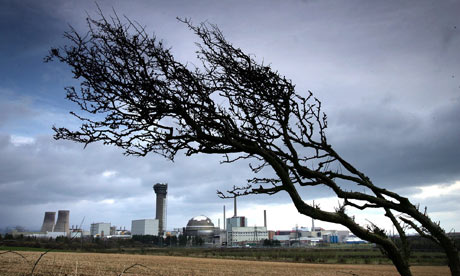
    GBR: Sellafield Nuclear Plant In West Cumbria
    Sellafield nuclear power plant in West Cumbria. Photograph: Christopher Furlong/Getty Images

    There’s been a lot of buzz recently about a new film by controversialist documentary-maker, Robert Stone. Pandora’s Promise presents an environmentalist case for nuclear power, argued by a number of recent converts including Mark Lynas and George Monbiot. These converts have reached the conclusion that the dangers of global warming outweigh the health risks of nuclear power which have been exaggerated by opponents (including, in the past, themselves).

    The film spends a fair bit of time mocking this view, as represented by Dr Helen Caldicott, who apparently claimed more than a million deaths had resulted from the Chernobyl disaster (more conservatives estimates range from 4,000 to 500,000). It is correctly argued that the health damage associated with coal-fired electricity (disregarding those arising from climate change) far outweighs that of nuclear power, at least during the operational lifetime of power plants.

    The only surprising thing about this film is the release date. The makers and participants are apparently unaware that the rest of the world had this debate 10 to 15 years ago, and that, for the most part, the advocates of nuclear power were victorious. Environmentalists largely abandoned anti-nuclear campaigns and focused their energy on attempts to reduce the use of fossil fuels, and promote energy efficiency and renewable energy sources. While most environmentalists remained sceptical of, or opposed to, nuclear power, the end of active opposition paved the way for a range of pro-nuclear policy initiatives.

    In the years after the signing of the Kyoto protocol, most major countries, including the US, UK, Japan, China and India adopted or reinforced policies supporting nuclear power. Some European countries, notably including Austria and Germany, went the other way. Even in Europe, however, the long-stalled industry was revived with the start of construction on new plants in France and Finland.

    The really big developments were in the US. The Energy Policy Act of 2005, passed with bipartisan support and building on earlier initiatives of the Bush Administration, offered the nuclear power industry a range of incentives and subsidies that the developers of wind and solar power could only dream of. It includes authorising cost-overrun support of up to $2bn total for up to six new nuclear power plants, the extension of the Price-Anderson Nuclear Industries Indemnity Act through 2025, and huge loan guarantees. The shift in policy attitudes was widely acclaimed as heralding a “nuclear renaissance”, with dozens of new plants being announced in the US and many more worldwide.

    So, why, a decade later, must a film like Pandora’s Promise campaign in favour of nuclear power? The answer is that the nuclear “renaissance” turned out to be more like a return to the nuclear dark ages of the 1980s and 1990s.

    Most of the new plants announced with such enthusiasm have been cancelled or deferred indefinitely. Those that have commenced construction have run over time and over budget, exactly as happened in the last big nuclear boom of the 1970s. The poster child is the Olkiluoto plant in Finland, originally announced in 2000, with a completion date of 2009 and a cost of 3bn euros. The current estimated completion date is 2015, and the cost has blown out to 8.5bn. A French plant with a similar design is having the same problems .

    In the US, only four new plants are being built, all at existing sites, and all behind time and over budget. It seems unlikely that any new projects will be undertaken much before 2020. Innovative ideas like small modular reactors are being explored, but any substantial application is decades away. The situation appears somewhat better in China and India, although past experience with construction projects in these countries has raised safety concerns. And even in these countries, targets for nuclear power expansion are being scaled back while those for renewable energy are being increased.

    So, the fact that the world has not turned to nuclear power as a solution to climate change is a matter of economics. In the absence of a substantial carbon price, nuclear energy can’t compete with coal and other fossil fuels. In the presence of a carbon price, it can’t compete with wind and solar photovoltaics. The only real hope is that, if coal-fired generation is reduced drastically enough, always-on nuclear power will be a more attractive alternative than variable sources like solar and wind power. However, much of the current demand for “baseload” power is an artifact of pricing systems designed for coal, and may disappear as prices become more cost-reflective.

    To put the point more sharply, if we are convinced by the arguments of Pandora’s Promise, what would the makers of the film have us do? Stop protesting against nuclear power? Most of us did so decades ago. Abandon restrictions on uranium mining and export? The Australian government has done so already, with barely a peep of protest. The only remaining restrictions on exports to India relate to concerns about nuclear weapons proliferation, not nuclear energy, and seem likely to be dropped in any case. Give nuclear power a level playing field to compete against renewables? In the US at least, nuclear power is already treated more favourably than alternatives, leaving aside the massive subsidies already handed out in the 20th century. The same is true in many other countries that have sought, with limited success, to promote a nuclear renaissance.

    Having done all of these things, the unfortunate facts are unchanged. The problem of climate change is not going away, and, in the absence of massive subsidies, no one is going to build nuclear power plants on a scale sufficient to make much of a difference. To address the problem of climate change, we need to use less energy, use it more efficiently and generate it more sustainably. Reviving 20th century debates about nuclear