Category: Uncategorized

  • Climate experts to enviros: “The time has come” to embrace nuclear power

     Even Dr. James Hansen is suggesting Nukes to counter Climate Change.
    Tuesday, Nov 5, 2013 04:17 AM +1100

    Climate experts to enviros: “The time has come” to embrace nuclear power

    Wind and solar power alone won’t do enough to counter climate change, say four top climate scientists

    Topics: Nuclear Power, renewable energy, Climate Change, greenhouse gasses, Oil and Gas, fossil fuels, Wind energy, Solar Power, , ,

    Climate experts to enviros: Nuclear reactors at Plant Vogtle, in Waynesboro, Ga.(Credit: AP/Mary Ann Chastain)

    In an ideal world, we’d move steadily away from fossil fuels to renewable energy, like wind and solar, while neatly avoiding messy alternatives like natural gas and nuclear power. But according to four top U.S. scientists, renewable energy won’t be enough to head off the rapidly advancing reality of climate change. Despite the scary things you may be hearing about it, they said, nuclear power is a solution, and it needs to be taken seriously.

    The letter, signed by James Hansen, a former top NASA scientist; Ken Caldeira, of the Carnegie Institution; Kerry Emanuel, of the Massachusetts Institute of Technology; and Tom Wigley, of the University of Adelaide in Australia — all of whom, according to the AP, “have played a key role in alerting the public to the dangers of climate change” – was sent to leading environmental groups and leaders around the world. Advocating for the development of safe nuclear power, they wrote:

    We appreciate your organization’s concern about global warming, and your advocacy of renewable energy. But continued opposition to nuclear power threatens humanity’s ability to avoid dangerous climate change.

    …Renewables like wind and solar and biomass will certainly play roles in a future energy economy, but those energy sources cannot scale up fast enough to deliver cheap and reliable power at the scale the global economy requires. While it may be theoretically possible to stabilize the climate without nuclear power, in the real world there is no credible path to climate stabilization that does not include a substantial role for nuclear power.

    Using a bit less tact, Hansen told the AP: “They’re cheating themselves if they keep believing this fiction that all we need” is wind and solar.

    The experts also took pains to address concerns over nuclear safety — something that’s been a particular sticking point for nuclear power in the wake of the disaster at Fukushima:


    advertisement

    We understand that today’s nuclear plants are far from perfect. Fortunately, passive safety systems and other advances can make new plants much safer. And modern nuclear technology can reduce proliferation risks and solve the waste disposal problem by burning current waste and using fuel more efficiently. Innovation and economies of scale can make new power plants even cheaper than existing plants. Regardless of these advantages, nuclear needs to be encouraged based on its societal benefits.

    Quantitative analyses show that the risks associated with the expanded use of nuclear energy are orders of magnitude smaller than the risks associated with fossil fuels. No energy system is without downsides. We ask only that energy system decisions be based on facts, and not on emotions and biases that do not apply to 21st century nuclear technology.

    Lindsay Abrams Lindsay Abrams is an assistant editor at Salon, focusing on all things sustainability. Follow her on

  • Typhoon Haiyan: what really alarms Filipinos is the rich world ignoring climate change

    Typhoon Haiyan: what really alarms Filipinos is the rich world ignoring climate change

    As Haiyan batters the Phillipines, the political elites at the UN climate talks will again leave poor countries to go it alone
    Philippines Haiyan

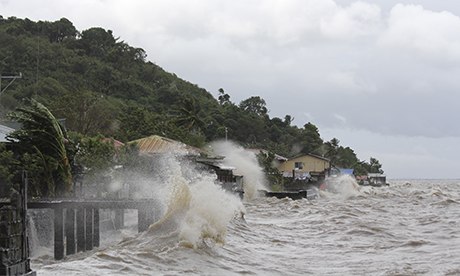
    Super-typhoon Haiyan, an equivalent category 5 hurricane, hits the coastal area of Laguna de Bay. Photograph: Herman Lumanog/ Herman Lumanog/Demotix/Corbis

    I met Naderev Saño last year in Doha, when the world’s governments were meeting for the annual UN climate talks. The chief negotiator of the Filipino delegation was distraught. Typhoon Bopha, a category five “super-typhoon” with 175mph winds (282km/h) had just ripped through the island of Mindanao. It was the 16th major storm of the year, hundreds of thousands of people had lost their homes and more than 1,000 had died. Saño and his team knew well the places where it had hit the hardest.

    “Each destructive typhoon season costs us 2% of our GDP, and the reconstruction costs a further 2%, which means we lose nearly 5% of our economy every year to storms. We have received no climate finance to adapt or to prepare ourselves for typhoons and other extreme weather we are now experiencing. We have not seen any money from the rich countries to help us to adapt … We cannot go on like this. It cannot be a way of life that we end up running always from storms,” he said. He later told the assembly: “Climate change negotiations cannot be based on the way we currently measure progress. It is a clear sign of planetary and economic and environmental dysfunction … The whole world, especially developing countries struggling to address poverty and achieve social and human development, confronts these same realities.

    “I speak on behalf of 100 million Filipinos, not as a leader of my delegation, but as a Filipino …” At this point he broke down.

    Saño was uncontactable today, because phone lines to Manila were down, but he was thought to be on his way to Warsaw for the UN talks, which resume on Monday. This time, with uncanny timing, his country has been battered by the even stronger super-typhoon Haiyan, one of the most powerful ever recorded anywhere – 25 miles (40km) wide and reaching astonishing speeds of possibly 200mph (322km/h).

    We don’t yet know the death toll or damage done, but we do know that the strength of tropical storms such as Haiyan or Bopha is linked to sea temperature. As the oceans warm with climate change, there is extra energy in the system. Storms may not be increasing in frequency but Pacific ocean waters are warming faster than expected, and there is a broad scientific consensus that typhoons are now increasing in strength.

    Typhoon Haiyan, like Bopha, will be seen widely in developing countries as a taste of what is to come, along with rising sea levels and water shortages. But what alarms the governments of vulnerable countries the most is that they believe rich countries have lost the political will to address climate change at the speed needed to avoid catastrophic change in years to come.

    From being top of the global political agenda just four years ago, climate change is now barely mentioned by the political elites in London or Washington, Tokyo or Paris. Australia is not even sending a junior minister to Warsaw. The host, Poland, will be using the meeting to celebrate its coal industry. The pitifully small pledges of money made by rich countries to help countries such as the Philippines or Bangladesh to adapt to climate change have barely materialised. Meanwhile, fossil fuel subsidies are running at more than $500bn (£311bn) a year, and vested commercial interests are increasingly influencing the talks.

    As the magnitude of the adverse impacts of human-induced climate change becomes apparent, the most vulnerable countries say they have no option but to go it alone. The good news is that places such as Bangladesh, Nepal, the small island states of the Pacific and Caribbean, and many African nations, are all starting to adapt their farming, fishing and cities.

    But coping with major storms, as well as sea level rise and water shortages, is expected to cost poor countriues trillions of dollars, which they do not have. “Time is running out,” Saño told the world last year. “Please, let this year be remembered as the year the world found the courage to take responsibility for the future we want. I ask of all of us here, if not us, then who? If not now, then when? If not here, then where?”

  • Is Climate Change Worth the Existential Fuss?

    Is Climate Change Worth the Existential Fuss?

    0


    Global warming is one of the greatest issues of the 21st century. It is behind numerous ecological issues, both locally and internationally. It manifests through an array of environmental damages including sea-level rise, changing seasonal weather patterns, and increasing severity of extreme weather events. So far, that may sound like a doom laden, existential prep talk from your squeamish biology teacher in 6th form. But as an abstract process that has not even begun to take its full swing, is climate change actually worth all the attention/melodramatic anxiety it is given? Let me show you why it is:

    1. Humans Are Causing Global Warming

    95% of climate science papers now agree that global warming is man-made. The Intergovernmental Panel on Climate Change (IPCC) says that the majority of global warming since the mid-20th century is due to humans. Arctic evidence underlines this too: Although the changes in the tilt of the Earth’s axis cause climatic cooling, the 20th century is the only period in the past 200,000 years during which aquatic indicators showed increased warming.

    2. Fossil Fuel Barons Try to Disprove It

    If Earth were a dying patient, the fossil fuel industry would be the lunatic doctor refusing her imminent death. Indeed, CO2 is responsible for the majority of global greenhouse gas emissions, the key mechanism of global warming. Many accusations have been made against fossil fuel lobbies and oil industry advocates for trying to debunk scientific findings on global warming. But they have vested interests in hiding their blatant mistreatment of Planet Earth. These stakeholders are deliberately deceitful: they know that anthropogenic climate change is real, but they will tell public the opposite so it is misled into being sceptical of climate findings. And even more – they will not stop trying to sell you their lie until they find a more lucrative resource.

    3. We Have No Planet B

    This is simple logic: because we only have one planet, we need to care for it. If technological and scientific progress is to truly benefit humanity, it cannot be allowed to harm nature more than it improves it. It will be very long before we discover a second inhabitable planet, so we had better start taking care of the one we have right now.

    4. The Most Vulnerable States are More Affected

    Since many developing countries particularly in sub-Saharan Africa have built their economies on climate-sensitive agriculture, they will be more adversely affected by global warming. According to Steger, an academic, they will face “increased illnesses, escalating death rates, and crumbling infrastructure.” Whereas coastal areas and small island states everywhere will be affected by rising sea levels and storms, richer countries like the Netherlands are better equipped than poorer countries to adapt. If those in the developed world who create a disproportionate amount of emissions don’t curb them, poorer countries will pay the price more harshly.

    5. Greater Poverty and Resource Wars

    Strong environmental stress provokes greater unemployment and childhood malnutrition through lower yields on food output. The agricultural sector is often unable to adapt to environmental pressure, and higher temperatures render unfeasible the production of certain foods. Although availability of arable land may increase in regions of high latitude, this will be largely compensated by losses in tropical and sub-tropical regions such as Latin South America, Africa, Europe, and India. Not to forget, expanding agriculture to feed a booming human population may even aggravate climate change. It also aggravates ethnic strife, poverty, and resource wars and can be an inter-state security threat in developing countries. Some argue that climate change will uncover the incompetency of rogue states and other non-accountable states to deal with such issues that infuriate millions of vulnerable people. What would happen if that occurred in every rogue state? Let’s not go there.

    6. Depends on Individual Action

    While the growth in greenhouse gases can be attributed more greatly to multinational corporations and businesses, it is also furthered by individual citizens. To tackle climate change, no policy can be the wondrous magical potion – individuals must contribute in their everyday lifestyles. In fact, turning off just one 60-watt incandescent bulb that would otherwise burn eight hours a day can save about 1,000 pounds of carbon dioxide over the lifetime of the bulb. There’s no magic bullet solution, but there are piecemeal remedies, where we can all do our part.

    7. Questions The Survival of The Human Race

    If climate change is one of the greatest challenges to ever face humanity, it is because it has the ability to wipe our species off the face of the Earth. Global warming — a term we so often dismiss as merely sensationalist and exaggerated lark — threatens our very existence on Planet Earth. No other issue apart from the threat of nuclear war  has had as much potential for an irreversible planetary catastrophe.

    So the next time you discuss climate change, do not buy into the “climate porn” of skeptical prejudices and newspapers trying to display contradictory views. The consensus gap between climate scientists and the misled public must be closed. Because trust me, if not today, one day we will inevitably realise – the existential fuss was worth it.

    Is Climate Change Worth the Existential Fuss? Image

    For information, see:

    http://earthobservatory.nasa.gov/Features/GlobalWarming/page6.php

    http://www.bbc.co.uk/news/science-environment-24292615

    http://news.bbc.co.uk/1/shared/bsp/hi/pdfs/27_09_13_ipccsummary.pdf

    http://www.buffalo.edu/news/releases/2009/10/10567.html

    http://www.onlyoneplanet.com/Suzuki_quote.htm

    http://www.epa.gov/climatechange/impacts-adaptation/international.html

    http://www.sciencecodex.com/water_scarcity_will_create_global_security_concerns

    http://theconsensusproject.com/


  • Prime Minister Tony Abbott axes expert advice on firearms, infant formula, high-speed rail, housing, insurance and animal welfare

    Prime Minister Tony Abbott axes expert advice on firearms, infant formula, high-speed rail, housing, insurance and animal welfare

    • Phillip Hudson
    • Herald Sun
    • November 07, 2013 6:47PM

    Your Friends’ Activity

    NEW! Discover news with your friends. Give it a try.
    To get going, simply connect with your favourite social network:

    Facebook
    Abbott swings axe on expert advice

    Prime Minister Tony Abbott is ditching several advisory bodies. Source: News Limited

    THE Abbott Government is to axe expert advice on firearms, infant formula, high-speed rail, housing, insurance and animal welfare.

    Prime Minister Tony Abbott risks a community backlash but he said some of the 21 groups being abolished had “outlived their original purpose” and it was part of his pledge to cut bureaucracy and red tape.

    The Commonwealth Firearms Advisory Council, formed in 2010, evolved from a group set up to advise John Howard after the Port Arthur shooting and his historic crackdown on guns.

    Its seven members advise the government on a wide range of gun issues and include former police firearms specialists, gun dealers and sporting shooters.

    Mr Abbott has dumped it amid growing concern about gun crime.

    The PM said the government will still get advice from a broad range of sources including industry, community groups, government departments and other advisory councils.

    Typhoon Haiyan

    Ship of shame in asylum stand-off

    Some of the advisory groups being abolished have existed for nearly 25 years, while some were created in the past 12 months.

    The advisory panel on the Marketing in Australia of Infant Formula was established in 1992.

    The High Speed Rail Advisory Group was formed earlier this year and includes former Deputy PM and Nationals leader Tim Fischer. It is being axed because the Abbott Government is not keen on high-speed rail.

    “Many of these non-statutory bodies have outlived their original purpose or are not focused on the government’s policy priorities,” Mr Abbott said.

    “As a result, their work is best carried out by the relevant government departments or agencies.”

    Mr Abbott is scrapping the Australian Animals Welfare Advisory committee created when he was in Cabinet in 2005.

    Others to go include the National Housing Supply Council and the Insurance Reform Advisory Group set up by Bill Shorten after the 2011 floods in Victoria and Queensland.

    Expert advice groups on positive ageing, maritime workforce development, inter-country Adoption and Corporate Wrongdoing are also being chopped.

    Mr Abbott said the activities of these bodies “are no longer needed or can be managed within existing departmental resources”.

    He said this would deliver more efficient and effective government.

    Mr Abbott also said Cabinet submissions will now require regulatory impact statements that set out the cost of red tape.

    “Regulation won’t be the default position for government and will only be imposed where

  • ht: Food waste, Australia’s coal and rediscovered toad

    Why this ad?
    Get 3 Solar QuotesSolar-Power-Australia.com.au – Compare 3 Solar Installers. Save Time & Money Now!

    Green Light: Food waste, Australia’s coal and rediscovered toad

    Inbox
    x
    The Guardian <info@mail.theguardian.com>
    12:29 AM (9 hours ago)

    to me

    Having trouble viewing this email?
    The Guardian home
    • Green Light email banner

    Green news roundup: Food waste, Australia’s coal and rediscovered toad

    The week’s top environment news stories and green events

    If you’re not already receiving this roundup, sign up here to get the briefing delivered to your inbox

    Food waste produce to be composted

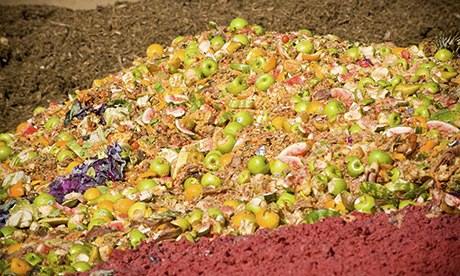
    The average UK household wastes the equivalent of six meals per week. Photograph: Alamy

    Environment news

    Food waste report shows UK families throw away 24 meals a month
    Nick Clegg says he won’t allow government U-turn on environment
    Climate change talks: no minister to represent Australia
    Fossil fuel subsidies killing UK’s low-carbon future
    • Major palm oil companies accused of breaking ethical promises
    CO2 levels hit record high

    On the blogs

    Alpha coal mine QueenslandThe whopping climate change footprint of two Australian coalmining projects
    Why do we still waste so much food at home?
    China’s air pollution blamed for 8-year-old’s lung-cancer
    Abundant fossil fuels leave clean energy out in the cold | Damian Kahya
    Leaked IPCC report links climate change to global food scarcity
    Virginia governor’s race shows global warming science denial is a losing political stance

    Multimedia

    Polar bears fight for survival as sea ice meltsPolar bears fight for survival as sea ice melts – video
    Letters from the Arctic 30 reveal life behind bars – video
    Autumn colours at Westonbirt Arboretum – in pictures
    The week in wildlife – in pictures

    Best of the web

    Bill de Blasio at a rally to help keep Long Island College Hospital open. Polls show De Blasio leading his opponent with historic margins.Bill de Blasio’s biggest challenge is climate change | Ben Adler
    Warsaw climate talks warned time is running out to close ’emissions gap’
    China’s dam boom is an assault on its great rivers

    …And finally

    The Costa Rican Variable Harlequin Toad (Atelopus varius) 
Harlequin toad rediscovery raises hope for deadly fungus survivors
    Scientists hopeful of finding other amphibian species presumed to have been

  • If you weren’t needed, we wouldn’t ask AUSTRALIA AND 350 ORG

    2 of 29
    Why this ad?
    Landscape Garden Edgingwww.kwikkerb.net.au/Garden-Edging – Make Your Garden Look Amazing. Call Us For Free Onsite Quote!

    If you weren’t needed, we wouldn’t ask

    Inbox
    x
    Blair Palese, 350.org Australia <australia@350.org>
    4:43 PM (18 minutes ago)

    to me
    Images are not displayed. Display images below – Always display images from australia@350.org

    Dear friend,

    This e-mail is going to be a little long. But stick with us. It’s an important one.

    Earlier this year, the planet lurched past 400 parts per million of CO2 — for the first time in human civilisation. That’s dangerously beyond the safe limit of 350 ppm – the number that scientists tell us is essential for a safe climate. Yet as we begin to create dangerous “new normals”, our politicians continue to ignore the facts. Tony Abbott is powering ahead with his plans to repeal the carbon price and introduce his laughable ‘direct action’ plan.

    The moment has come – the moment to ask you to do important, challenging and powerful things. Last year Australia experienced an ‘Angry Summer’. Temperature records were smashed nationwide. And with the 12 months leading up to this September being Australia’s hottest on record, we can expect Summer 2013-14 to be one of extremes too.

    This year we want to make it politically hot as well. That means we need you, out on the frontline. We need to show up and speak out. We need you to show Tony Abbott and the fossil fuel industry what direct action is really all about.

    Pledge now to help us ramp up the fight against the coal and gas industry this summer.

    Around the country, communities are fighting on the front lines of Australia’s coal and gas expansion. In New South Wales, the Maules Creek community is determined to stop Whitehaven’s plans to start a massive mine in the Leard State Forest. In WA, gas mining in the Kimberley and Midwest wildflower country is being fought at every turn.

    In Queensland, the fight over the Galilee Basin, which would involve nine new massive coal mines, is heating up. If the Galilee Basin is opened up for exploitation, the impact will be global. Just six or seven places on earth have concentrated stores of carbon as large as the Galilee’s. Unless the carbon within them remains in the ground, catastrophic climate change is a certainty.

    We have never confronted such a dramatic and dangerous expansion of fossil fuel extraction. It is time not only to challenge these projects individually, but to challenge this extreme expansion in a united effort. We need to fight it at every turn.

    We’re calling this next phase of the fight “Summer Heat.” Over Summer 2013-14, from Northern Queensland to the South West of WA, we’ll be delivering the message that it’s time to stop the reckless expansion of the fossil fuel industry in Australia. And that means it’s time to stand up – peacefully but firmly — to the industry that is wrecking our climate, and our future.

    Pledge now to stand up to the coal and gas industry.

    We believe that mass action can breathe life into even the most hardened political fights, and so these actions will aim to unite thousands of people — perhaps sometimes on the other side of the law.

    For those on the front lines these fights are often, understandably, about the local immediate impacts. And now all of us together need to add the weight of our anger and hope as well. It’s one big fight for our future. Front-line communities need and deserve reinforcements, pouring in to help the people who have been carrying these struggles as they begin to impact upon us all.

    This movement isn’t made up of professional protesters. For the most part, it’s students, teachers, retirees, civil servants, farmers, businesspeople, fisher folk, artists, religious ministers. It’s about the people whose homes were demolished by the floods in Queensland or the fires in New South Wales.

    We’ll be facing up against some powerful opposition. Mining magnates such as Clive Palmer and Gina Rinehart will do anything to make a profit, even at the expense of our planet. And with Tony Abbott as Prime Minister the fossil fuel industry has right of way. We can’t outspend them, but we have other currencies to work in: community, passion, creativity, spirit. And sometimes we will have to put our bodies on the line – like the climate movement in the United States has over recent years to halt the Keystone XL pipeline.

    Here’s how it works.

    1. First, sign the pledge. This is a pledge to say that you will stand up to the fossil fuel industry and say ‘your time is up’. You can make this statement even stronger by sending in your photo with your pledge as a show of defiance against an industry determined to wreck our planet. Once you’ve signed the pledge, we’ll connect you to events in your area.
    2. Second, check out this list of actions planned so far. More will be added in the weeks ahead as we work with our friends in the movement. Find the one nearest you and be there when the time comes.
    3. If you’re prepared, add your own action, and we’ll support you to get it up and going.
    4. Finally, update your facebook profile picture to show your solidarity for those fighting on the frontline.

    This is the fight of the decade and we need you on board.

    Let’s make summer 2013-14 an historic show of solidarity not just with the Australians who suffer most from the coal and gas industries, but with the people across the planet whose lives are at risk as the world warms — and indeed with the planet itself, beleaguered but still so worth fighting for.

    If you weren’t needed, we wouldn’t ask. But in a fight as big as this, we are all needed, now more than ever.

    In solidarity,

    Blair, Aaron, Charlie, Josh, Simon, Katie, Alana, Claire, Sarah, Lexy, Isaac, Lily and the rest of the 350 Australia team


    350.org is building a global movement to solve the climate crisis. Connect with us on Facebook and Twitter, and sign up for email alerts. You can help power our work by getting involved locally, sharing your story, and donating here. To