Category: Uncategorized

  • Ocean acidification

    Why this ad?
    Study Biology Onlinewww.une.edu.au/Biology – Study a Science degree anywhere, anytime with UNE. Start Feb 2014

    Ocean acidification

    Inbox
    x
    Ocean acidification oaiccproject@gmail.com via google.com
    1:04 AM (8 hours ago)

    to me

    Sea Change – Can sea life adapt? (text and video)

    Posted: 04 Nov 2013 05:26 AM PST

    SANTA BARBARA, Calif. — The violet bottom-dwelling, prickle-backed spheres wriggling in the tank in Gretchen Hofmann’s lab aren’t really known for their speed.

    But these lowly sea urchins adapt so quickly they’re helping answer a question that’s key to understanding ocean acidification:

    As fossil-fuel emissions disrupt marine life, will evolution come to the rescue?

    Like Darwin’s finches or Great Britain’s peppered moths, these hedgehogs of the sea increasingly embody nature’s stunning capacity for resilience.


    A number of plants and animals threatened by souring seas, including some mussels, abalone, rock oysters, plankton and even a few fish, appear likely — at least at first — to adjust or evolve. But few seem as wired as these saltwater pincushions to come through the next several decades unscathed.

    Yet work with urchins, as well as other species, suggests that acidification sooner or later may still push these and other marine organisms beyond what they can tolerate.

    “Evolution can happen, and it can happen quickly,” said Hofmann, a marine biologist at the University of California, Santa Barbara (UCSB), who has studied urchins for years. “But concerns about extinctions are very real and very valid. Biology can bend, but eventually it will break.”

    The oceans are absorbing a quarter of the carbon dioxide emitted by burning coal, oil and natural gas. That, researchers say, is causing sea chemistry to change faster than it has for tens of millions of years.

    Which plants and animals can accommodate these more corrosive seas — and for how long — will depend on many factors, from where they live to their population sizes to the depth of stress they face from other forces, such as warming temperatures and pollution. Survival will vary species by species. Not everything will make it.

    “This kind of change is not free; evolution is not a gentle sport,” said Stephen Palumbi, an evolutionary ecologist at Stanford University, who also works extensively with urchins. “When evolution happens, it’s because the unfit are dying. It’s pretty brutal.”

    And that’s when things work well.

    ‘Terrifying’ research

    In the late 2000s, commercial urchin fisherman Bruce Steele feared things would not go so well. And for good reason.

    Urchins graze on algae, drive out kelp and are eaten by sea otters, sunflower stars and humans. Steele, a scuba diver, had made his living since the 1970s scooping the spiny delicacies off the seafloor to sell to sushi restaurants as uni.

    But when he read a research paper about acidification, he saw right away what it could mean for his business — and for the ocean he loved.

    “When you start knocking out the very bottom of the food chain, it’s incredibly terrifying,” Steele said. “But that’s what the research is showing us.”

    Increasing CO2 not only makes oceans more corrosive, it reduces carbonate ions, which everything from scallops to crabs, coral and sea urchins need to build shells or skeletons.

    So Steele dialed up Hofmann, his local university expert on spiky echinoderms.

    “She thought it was a crank call or something, because … I don’t know,” Steele said. “I guess people figure a sea urchin diver’s not going to be reading a whole bunch of science.”

    Hofmann dismissed Steele at first, but quickly called back and started investigating his concerns. She exposed sea urchin larvae to high-CO2 water and made a troubling discovery: Their bodies often got smaller.

    “Overall, their body size really matters in how well they swim and how much food they get,” Hofmann said. “So if you’re smaller, it’s really bad news if you’re a baby sea urchin in the water.”

    But Hofmann noticed something else, too: Some larvae didn’t change at all.

    “When we started raising our babies in the lab, we saw that some of them shrank,” Hofmann said. “But, in fact, some of them didn’t. There were some in there that didn’t respond the same way.”

    Hofmann knew enough about genetics to know that distinction might prove important.

    Signs of evolution

    In the century after Charles Darwin returned from the Galapagos carrying birds with different-shaped beaks, these finches came to represent the power of natural selection. As the birds expanded to areas with new foods, variations in their genetic code allowed new traits to emerge.

    Such selection can be simple, elegant and fast. In Manchester, England, a common tree moth evolved from mostly speckled ivory to black in just decades. Soot from the Industrial Revolution had killed lichen and darkened local trees, which scientists believe allowed birds to more readily pick off the lighter insects. Once pollution was controlled, the tree trunks grew light again, and ivory-colored moths returned to dominance.

    Hofmann suspected variations in urchin DNA left some predisposed to handle acidified seas. Nature, quite by accident, had been preparing a long time for this very moment.

    It was all about the water. Water chemistry close to shore is rarely static. Ocean CO2 can vary with the time of day or the tides, when plants suck up CO2 to grow, or when animals die and decay.

    The change is more pronounced in Northern California and the Pacific Northwest. When heavy winds blow along shore, deep, cold water that naturally holds more CO2 suddenly wells up from the bottom and gets drawn toward the beach. That means some West Coast urchins have spent millions of years being exposed to high-CO2 waters.

    In fact, upwelling is part of the reason Northwest oyster larvae were among the world’s first-known victims of acidification. Because the water already was near the extreme edge of what oyster larvae can tolerate, when man-made acidification spiked it higher, that wiped out billions of shellfish.

    So Hofmann and a colleague, UCSB evolutionary biologist Morgan Kelly, mated “wimpy” Southern California sea urchins — those experiencing less CO2 exposure — with hardier males from northern upwelling zones.

    The result: northern animals passed on genes more resistant to acidified water.

    “The progeny, the babies — the kids — of that father were much better at maintaining the size of their body and not succumbing to the stress of high-CO2 water,” Hofmann said.

    At the same time, Palumbi and other Stanford researchers reared urchins in water from Southern California and from high-CO2 zones in Oregon. They found the frequency of some gene sequences shifted in response to growing up under higher CO2.

    Urchins, in both cases, were showing they could evolve.

    “It was really kind of surprising, and a little bit on the hopeful side,” Hofmann said.

    The very upwelling phenomenon that makes the Northwest an acidification hot spot could actually help some species get through it.

    But which ones? And for how long?

    “The truth is we don’t know,” Palumbi said. “The experiments don’t tell us how long it will take for them to reach their limit. And it doesn’t tell us the price they’ll pay.”

    ‘Against guardrails’

    Animals affected by elevated CO2 don’t always need to adapt. Sometimes new environmental stressors trigger a change in the way they or their offspring use the genes they have.

    For example, baby clownfish born to parents reared in high-CO2 water seem to survive just fine, while juvenile clownfish simply placed in high-CO2 water die more often.

    Parents produce kids that survive better in the environment they’re going to face, said Australian scientist Gabrielle Miller, at James Cook University, who has studied this phenomenon. “But it’s not a change in genetic makeup. It’s not evolution.”

    There are, however, signs that some fish, too, might evolve in response to acidification. Scientist Philip Munday, also at James Cook University, recently exposed wild damselfish to CO2 levels expected in coming decades. That water fouled up behavior for half the animals, leading many to die prematurely.

    But, importantly, half the fish didn’t seem to change at all, and they survived as well as normal, healthy fish. Does that mean that some of these Great Barrier Reef fish were genetically predisposed to dealing with higher CO2? It’s too soon to say.

    “For some organisms, especially short-lived species, there is considerable opportunity for adaptation,” Munday said.

    But evolution does have limits. When scientists breed mice for size, they get bigger over successive generations until reaching a point where they can get no larger. So what happens if the driver of all this change is an environmental cue that just keeps worsening?

    Not every species can adapt enough. And not all of those that can will do so at the same speed, even if they live in similarly variable environments, such as areas near shore.

    When Kelly, in Santa Barbara, exposed a microscopic species of tide-pool plankton to higher temperatures expected in coming years, she found these copepods lived in such an isolated environment they lacked genetic capacity to adapt much at all.

    When Jennifer Sunday, at Simon Fraser University in Vancouver, B.C., studied mussels, she found that they, like urchins, are exposed to wild swings in sea chemistry. But evidence suggested these fast-growing mussels would still take far longer than slow-growing, long-lived urchins to adapt to rising CO2.

    And that pace can matter a great deal.

    While adaptation is under way, many creatures may die, which can shrink populations — sometimes substantially. The question is, how many individuals can each species afford to lose?

    That’s one reason scientists believe that organisms with enormous populations, like urchins, have the best shot.

    “Our results are less likely to apply to species that live in less variable environments — for instance, open-ocean fish,” Kelly said. “And our results are less likely to apply to species with small population sizes.”

    Three other issues, however, remain concerning for those trying to predict the marine world’s future. For starters, acidification and ocean warming will occur simultaneously.

    “What happens if the individuals best able to tolerate high temperatures are the least tolerant to high CO2?” Munday asked. “That could slow adaptation for either of those traits.”

    Meanwhile, in 40 or 50 years, CO2 in places like the Northwest will reach extremes even hardy animals like urchins have never experienced in their history. Scientists aren’t certain adaptation will keep up.

    “Eventually we’re going to push things up against the guardrails of their tolerances and, pretty soon, they’re going to go right over the cliff,” Hofmann said. “That’s what’s worrisome.”

    Lastly, all these changes will take place at once, potentially leading many populations to struggle as their food — and their predators — do the same. It’s tough to predict how that could upend relationships in the sea.

    “The bottom line is we can’t count on adaptation to erase the effects of ocean acidification,” said Kelly. “It’s just not a panacea.”

    But Palumbi, at Stanford, said it could buy the world time to address the problem.

    “Frankly, it seems to me that we need to use that extra time,” he said.


  • Populate and perish warns federal Labor MP Kelvin Thomson as he sets up Victoria

    Populate and perish, warns federal Labor MP Kelvin Thomson as he sets up Victoria First

    • November 03, 2013
    Populate and perish, warns federal MP

    Kelvin Thompson wants immigration to be slashed on environmental and urban amenity grounds. Source: News Limited

    A CONTROVERSIAL federal Labor MP is launching a grassroots group to fight high ­population growth and overdevelopment.

    Melbourne MP Kelvin Thomson said he was setting up Victoria First “to safeguard and enhance Victoria’s way of life”.

    Mr Thomson, who was parliamentary secretary for trade in the previous Labor government, wants immigration to be slashed on environmental and urban amenity grounds.

    Following Labor’s election loss in September, he attacked the party’s poor political management and said the trend “to leave everything to a messiah leads to poor decisions”.

    Mr Thomson, the MHR for Wills in the city’s inner north, opted to return to the backbench in Opposition so he would not be gagged for speaking his mind.

    Victoria First, to be officially launched next month, is a not-for-profit NGO.

    “It will fight to halt rapid population growth, overdevelopment, reduce traffic congestion, stop the increasing cost of council rates … and seek to protect Victoria’s unique animals and plants,” said Mr Thomson’s flyer.

    Among the group’s policies is net annual migration to be cut from 190,000 to 70,000 and a halt to ­Melbourne’s population growth.

    “To safeguard Victoria’s way of life, its backyards, its open spaces, its room to move, room to breathe, room to live,” said a policy document.

    Mary Drost, from residents’ lobby Planning Backlash, said she would attend the inaugural meeting on December 1 but is yet to commit to the group.

    “More and more people are realising that our problem is too many people, we are running out of space for everything,” she said.

    But Migration Council Australia CEO Carla Wilshire said a sudden cut to our migration would cripple the economy.

    “Our migration program is designed to serve our national interests. It is a planned program that is carefully managed to address our ageing population and our skills shortages,” she said.

    “I think we should be championing migration as one of Australia’s greatest assets.”

    john.masanauskas@news.com.au

  • Green groups explore legal action to halt massive Queensland coal mine

    Green groups explore legal action to halt massive Queensland coal mine

    Environmentalists claim Kevin’s Corner mine will damage groundwater supplies and contribute to climate change

    Alpha coal mine Queensland
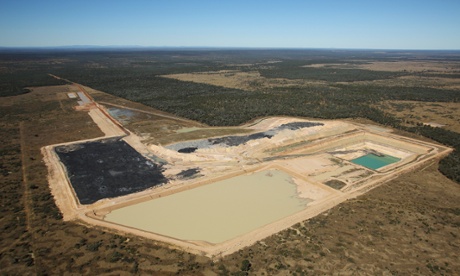
    The Alpha Coal project in central Queensland. Green groups are threatening legal action action to prevent the nearby Kevin’s Corner mine from going ahead. Photograph: Andrew Quilty/AAP

    Environmentalists have threatened legal action to halt what is set to be Australia’s largest coal mine, claiming the federal government has overturned long-standing conservation principles by approving it.

    The Kevin’s Corner mine has been approved by Greg Hunt, the federal environment minister, however, the approval is subject to more than 70 conditions.

    Some of these conditions are designed to protect threatened species such as the black-throated finch, red goshawk and yakka skink.

    Indian resources firm GVK, which will operate the mine, is also required to submit a water monitoring and management plan, which will help “establish baseline data for water quality”. This study will have to be peer reviewed and approved by Hunt.

    GVK said the mine, located near the Queensland town of Alpha, is expected to last for at least 30 years, producing up to 30m tonnes of thermal coal a year for export. Mining magnate Gina Rinehart’s Hancock Prospecting sold its stake in the project in 2011.

    Carbon emissions from coal mined at Kevin’s Corner are estimated at 58m tonnes a year – more than the entire annual emissions of Denmark. Construction is set to start in 2015, with the first coal mined in 2018.

    GVK said in a statement: “In a timely and considered decision, the minister finely balanced the protection of environment with the need for economic investment and job creation.”

    But opponents of the mine claim Hunt’s approval fails to protect the region’s groundwater and may be challenged in the courts.

    Drew Hutton, president of anti-mining group Lock the Gate, told Guardian Australia: “We will certainly be reviewing our legal options on this. We are bitterly disappointed because this mine will have an enormous impact on the Great Artesian Basin.

    “This has stood the whole approval system on its head. Once upon the time you had to show the impacts in order to get approval, but now you get approval and then work out exactly what damage it’ll do to the environment. We no longer have the precautionary principle in place in the whole approvals process.”

    Hutton said Hunt’s decision showed that the government is disregarding the new “water trigger” provision in federal environment legislation, which demands that the environment minister assess any project that could impact water quality.

    A coalition of six environmental and community groups are already waging a legal battle against the Rinehart part-owned Alpha coal mine, which would adjoin Kevin’s Corner.

    Derec Davies, from one of the community groups, the Coast and Country Association of Queensland, told Guardian Australia that an objection to Kevin’s Corner has already been lodged.

    “We see these two as brother and sister mines, with the technical assessments done together,” he said. “We would urge the government to wait on this new mine until the Alpha court case is finished, otherwise they could be wasting everyone’s time.

    “We want the government to be provided with the best information to make the right decision and it’s clear the proponents haven’t done their homework, on groundwater and how they will mitigate the impact on climate change.

    “Similar to Alpha, we believe their modelling on several issues is incorrect. We want more assessment and for the concerns of the community and farmers to be recognised.”

    The Kevin’s Corner and Alpha coal mines are two of a series of developments planned for the coal-rich Galilee basin area of central Queensland.

    The mines will, if completed, transport coal to the coast, where they will be shipped for export markets, primarily in China and India. Several port expansions are planned to facilitate this, although BHP has pulled out of one project amid concerns that Queensland already has a surplus of port capacity.

    On Friday, a federal government strategic analysis of the Great Barrier Reef called for a more holistic approach to the health of the ecosystem by considering the overall impact of coastline development.

    The report also stated that climate change was “the most serious long-term risk” facing the reef.

    “Even a two degree celsius rise would be a very dangerous level of warming for coral reef ecosystems, including the Great Barrier Reef, and the people who derive benefits them,” it stated. “To ensure the reef remains a coral-dominated system, the latest science indicates global average temperature rise would have to be limited to 1.2 degrees celsius”

    Lock the Gate’s Hutton said the government’s approach to approving massive coal mines runs contrary to this warning.

    “It’s bordering on hypocrisy, really,” he said. “The Abbott government says it still recognises the link to climate change and the need to reduce greenhouse gases. They are prepared to make feel-good statements about the reef but not the hard decisions about resource development.”

    Hunt’s office has been contacted for comment.

  • Australian Electoral Commissioner apologises over WA Senate vote and says he expects legal challenge

    Updated 20 minutes ago

    The Australian Electoral Commissioner has apologised “unreservedly” to Western Australian voters for the state’s botched Senate election.

    Commissioner Ed Killesteyn says he has no choice but to announce the result of the recount today, despite the near-certainty that it will be the subject of an immediate legal challenge by Labor and Clive Palmer.

    The recount – triggered when the original vote resulted in just a 14-vote margin – descended into farce last week when the Australian Electoral Commission confirmed that nearly 1,400 ballot papers had gone missing.

    Mr Killesteyn says the gravity of the situation is not lost on him.


    “Nearly 1,400 Western Australian electors have had their Senate [votes] disenfranchised and I apologise unreservedly to those electors,” he told Radio National this morning.

    “This is really now a matter that has to be dealt with in the courts.

    WA Senate recount results

    1. David Johnston – Liberal Party
    2. Joe Bullock – Australian Labor Party
    3. Michaelia Cash – Liberal Party
    4. Linda Reynolds – Liberal Party
    5. Wayne Dropulich – Australian Sports Party
    6. Scott Ludlam – Greens


    “I’m obligated to declare the result, irrespective of the fact that these ballots are missing. Legally, I just have no other choice.”

    Today’s announcement will give the final two Senate spots to the Greens’ Scott Ludlam and the Australian Sports Party’s Wayne Dropulich, with Labor’s Louise Pratt and the Palmer United Party’s (PUP) Dio Wang missing out.

    The Palmer United Party will challenge the recount, as will Labor’s Senator Pratt.

    This morning Mr Killesteyn dismissed claims by PUP leader Clive Palmer that the counting process had been corrupt, saying he had absolute “confidence” in his officers and their integrity.

    Constitutional expert Professor Anne Twomey says the AEC itself is likely to petition the High Court to get any re-run of the ballot completed before next July.


    “If it has doubts about the outcome, even if those doubts arise from errors that seem to have been made within the Commission perhaps in relation to these votes going missing, well it needs to be back on the front foot ensuring confidence in the system,” she said.

    “I think that’s one of the reasons it would take this sort of action.”

    Professor Twomey says a fresh election could be open to new candidates.

    “Unless the court finds some kind of over-riding requirement that this being a replacement election for the earlier one you need to have the same candidates, etc, unless it did that … it would be effectively open slather and anyone could nominate,” she said.

    The new Senate does not sit until July next year, so any new election could take place in February or March next year.

    At the weekend, Federal Infrastructure Minister Warren Truss said this new election should be held sooner rather than later.

    Any new campaign in Western Australia would be an interesting contest between newly endorsed Prime Minister Tony Abbott and newly elected Opposition Leader Bill Shorten.


    Topics: government-and-politics, elections, wa

    First posted 2 hours 30 minutes ago

  • The Passivhaus’s fabric-first approach to energy efficiency

    The Passivhaus’s fabric-first approach to energy efficiency

    The building does the work, from super-high insulation to absolute air-tightness and harvesting the sun’s energy through windows

    Justine Hutton and her children at their Passivhaus in Oldham

    Justine Hutton and her children at their Passivhaus in Oldham Photograph: Christopher Thomond for the Guardian

    It may sound – and sometimes look – like a facility for pacifying particularly violent criminals, but Passivhaus is in fact the gold standard for ultra-low energy homes, which is enjoying increasing popularity as heating bills continue to rise at astronomical rates. Developed in Germany in the early 90s by Bo Adamson and Wolfgang Feist, the Passivhaus Standard is based on a set of principles that mean homes should be able to remain at a comfortable ambient temperature of around 20C with a minimal amount of heating or cooling.

    It is a “fabric-first” approach to energy efficiency, meaning the building does the work, rather than relying on bolt-on renewable energy devices, like solar panels and ground-source heat-pumps. Based on the tenets of super-high insulation, absolute air-tightness, and harvesting the sun’s energy through south-facing windows, passive houses aim to keep as much heat inside the home as possible.

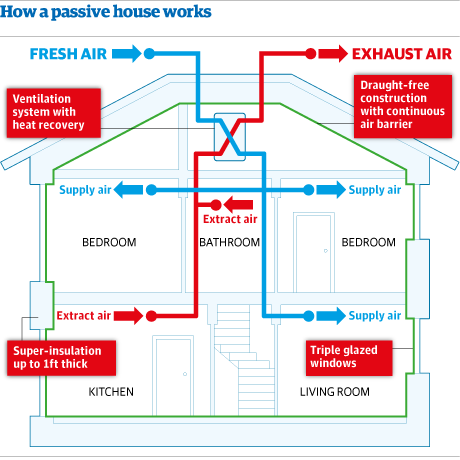
    They also rely on a box, usually kept in the loft: the MVHR, or mechanical ventilation heat recovery unit, a heat-exchange system that uses air from warmer rooms in the house to heat fresh air coming in.

    “There are a lot of myths around Passivhaus, like you can’t open the windows and people will suffocate if the MVHR breaks down,” says Kym Mead, director of Passivhaus at the Building Research Establishment. “It’s all nonsense – you can live in it like a normal house. It’s based on the idea of harvesting the heat that comes from occupants and their devices, like TVs, computers, cookers and showers.”

    Diagram of how a passive house worksThe first Passivhaus homes, built in a suburb of Darmstadt in 1991, look a little like a portable classroom block, a clunky aesthetic which these ultra-low energy houses have struggled to shake off since. But standards are improving as more architects take up the challenge, and some housing associations are taking the lead, with the incentive of keeping bills down.

    There are around 40,000 passive homes worldwide, with 150 in the UK, and the standard is also being applied to schools and offices – as well as an Antarctic research station.

    But many remain sceptical that Passivhaus certification, which requires it to be tested by a registered inspector, is a distracting box-ticking exercise.

    “Everyone wants a low-energy home, but people focus on accreditation criteria and lose sight of the bigger picture,” says architect Piers Taylor said: “It’s a one-size-fits-all approach, which can make you blind to the specifics of making each home appropriate to its context. A house should be simple, and allowed to breathe naturally.”

    Art Weekly
    • Bauhaus Bauhaus – Modernist Architecture and Design
      Join Mike Hope on this tour with visits to Erfurt, Weimar and the Bauhaus Museum, Dessau and its Bauhaus Museum and Masters’ House and Berlin’s Bauhaus Archive, delving deeper into the ideologies of ‘total’ works of art and art education
  • What’s Going On With The WA Senate Count Antony Green

    « Reform Options for the South Australian Legislative Council | Main

    November 03, 2013

    What’s Going On With The WA Senate Counct

    The last few days have been eventful in politics with the revelation of ballot papers missing in the WA Senate Count.

    The news broke on Thursday on the first day on an electoral law conference I was attending in Brisbane. I was one of several attendees who spent parts of Thursday and Friday on the phone trying to explain what was happening.

    Now on the weekend I’m attending a conference in Canberra on the 2013 election, so again I’ve been a bit constrained on trying to publish on the result.

    However, while I have time, here are a few comments on the WA result.

    The closeness of the WA result came about because of a critical choke-point early in the count. The Australian Christians and the Shooters and Fishers were on 1.75% at a critical count, with the Shooters and Fishers ahead by 14 votes.

    The Shooters and Fisher’s 14 vote lead resulted in the Australian Christians being excluded, and as a consequence the final two seats were won by the Palmer United Party and Labor.

    On the re-count, around 500 votes previously considered informal were found to be formal. There was also the now well publicised missing 1,375 ballot papers, of which 1,255 were above the line ticket votes.

    With these changes, the critical choke-point saw a change with the Australian Christians leading by 12 votes and the Shooters and Fishers excluded. With different preferences tickets now being distributed, the final two seats were won on the re-count by the Australian Sports Party and the Greens.

    However, it appears that the missing votes disadvantaged the Shooters and Fishers. If you include the original polling place results for the missing votes, then the Shooters might have just finished ahead, something that would have changed the result again.

    But we can’t know that because the votes are not available for re-counting. Which is why the whole matter is going to the courts.

    One question I have been asked is why the AEC has declared the result if it knows there is a problem?

    The answer is simple. The electoral act specifies that Court of Disputed Returns challenge cannot begin until a result is declared. Having spent the last week trying to locate the missing ballot papers, the AEC had little choice but to declare the result so that the Court of Disputed Returns process could begin.

    Another question I have been asked is why can’t the original votes now be used in the count?

    The answer is again legal. If the AEC decides to re-count votes, it has to use the re-count figures. It is not allowed to mix and match the counts. The Court of Disputed Returns might choose to do so, but the AEC cannot.

    Yet they Court may not, because if the old tally is included, the result could again change but the result be so narrow that any possible error could have invalidated the result. Any errors in the missing votes, any multiple votes, any voting irregularities could be seen as critical in such a key result.

    With such a close result, the Court may rule it has no confidence in deciding the result on the available ballot papers and order a new election.

    The Court will have to expedite a hearing and decision on this. There is still time to conduct a re-election for Senators to take their seats on 1 July, but that means holding the election by the latest in early May.

    The election would go through exactly the same procedures as a general election. Writs would be issued, a 33 day campaign would follow, a polling day would be held followed by a count. Unless the High Court surprisingly decided differently, new nominations would be called for. Unless the High Court ruled that the roll as at 7 September be used, there would be a new close of rolls.

    New nominations would almost certainly see a huge increase in the number of candidates. Once again we would see intricate preference deals.

    Would all six seats be up for re-election? Perhaps the Labor and Liberal Parties might argue the three elected Liberal candidates and first elected Labor candidate should not have to face re-election.

    However, the Roberts Woods case in the 1980s and Heather Hill case in the 1990s shows the High Court accepts the election is for six Senators elected together. You can’t break the elected candidates into groups.

    Any election for two Senators would deliver a fourth seat to the Liberal Party so every other party would argue against a two vacancy election.

    So there is much at stake in the looming Court of Disputed Returns decision. The last disputed case was in 2007 and heard by a single Federal Court justice, no constitutional issues being in play, as occurred previously when single High Court justices sat as the Court.

    It may be that in considering the WA appeal, the Court will sit in full to consider parts of the case because some constitutional matters may need to be considered in addition to simpler legal issues concerning the Electoral Act.

    The court will be forced into trying to choose between deciding the result based on a count with known errors, or letting the electorate re-decide for itself.

    It promising to be an interesting case, and if a re-election is held, and even more interesting election with vital importance given it will affect the future balance of power for the Senate.