Category: Uncategorized

  • NBN’s new leader may be in a takeover mood

    NBN’s new leader may be in a takeover mood

    By ABC’s Alan Kohler

    Updated Wed 30 Oct 2013, 2:18pm AEDT

    NBN head honcho Ziggy Switkowski will have to negotiate with the company he used to run for the use of its copper network – and the evidence suggests might be looking to buy it outright, writes Alan Kohler.

    The NBN has the potential to significantly transform not only the Australian telecommunications industry, but the social and economic landscape of our country.

    Together, we are delivering a nation-building project and we should all be very proud of that.

    – Ziggy Switkowski, NBN executive chairman, in a memo to staff yesterday.

    Ziggy Switkowski was an interesting choice to take over the NBN. Telstra basically sacked him nine years ago for having too ambitious a growth strategy; his troop-rallying words in the staff memo yesterday suggest that he’s not short of ambition for the new telecommunications company that he’s now in charge of either.

    Specifically, he is not a simply a project manager or builder and it’s hard to imagine him handing the project over to Telstra. Under the new “technology-agnostic philosophy”, as he put it in the memo, he will have to work with Telstra to get access to its copper access network, but that’s probably as far as it will go.

    The annual report tabled yesterday makes it clear that NBN Co is in the process of becoming Australia’s new Telstra, and nothing has happened since the election to change that.

    In her chair’s message, the former chair Siobhan McKenna described NBN Co as “an established telecommunications company“. It now has shareholder equity of $5.2 billion, assets of $5.5 billion and made a bit of revenue – $17 million. A total of 70,100 premises have been “activated” – about half with fibre and half with satellite and wireless.

    Ziggy Switkowski is executive chairman, so he is CEO as well. He reports to himself, and thence to the shareholder ministers, Malcolm Turnbull and Mathias Cormann.

    He has commissioned a strategic review from the NBN Co’s head of “strategy and transformation”, JB Rousselot, with no “no go” areas and a demanding deadline – the first week of December. It will form the basis of the NBN’s 2014-17 corporate plan.

    Presumably Rousselot’s review will set out the basis for the relationship that Ziggy Switkowski’s NBN will have with Telstra.

    The current relationship, worked out over nearly two years of backbreaking negotiations, involves NBN Co renting access to Telstra’s ducts and pipes to lay its fibre, and paying Telstra compensation as copper is switched off.

    The new “technology-agnostic” plan is to use some of that copper for access rather than switch it off.

    By the way, it’s possible that technology agnosticism will mean only a small amount of copper. It could mean as little as from the street to the side of the building.

    Now it’s possible that the new negotiation will be quite simple: for the same money NBN can buy each bit of the copper rather than switch it off. Why would Telstra care? It won’t be using it any more. Maybe it was going to be sold for scrap, so it will charge NBN the scrap value.

    Maintenance will be the issue: someone has to do it. I might be wrong, but I’d say Ziggy Switkowski will want NBN Co to do it, not Telstra, either on contract or as part of a joint venture. Too messy. More likely the review will recommend, and he will accept, that NBN Co operates and maintains the entire network – fibre and copper.

    So then the question will be: how and when to do it? The current plan is for cash payments with a net present value of $11 billion to dribble out to Telstra over about ten years as ducts are rented and copper switched off.

    Ownership of the copper could also transfer gradually, in sections, but the maintenance operation might be more complicated. The advantages of scale probably mean the whole thing needs to be treated as a whole.

    It might be better, in fact, for the NBN Co to simply acquire Telstra’s entire copper network and wholesale division immediately, rather than gradually. That way the NBN Co could organise the copper and fibre rollout as it saw fit.

    After all, Telstra is being structurally separated as part of this project, something that Malcolm Turnbull reaffirmed in his pre-election broadband policy. The wholesale division must move to separate ownership, and that might best be done by selling the whole thing to the bloke who used to run it – Ziggy Switkowski.

    And he certainly showed during his time at Telstra that he was up for big, ambitious acquisitions.

    And finally the Government appears to be in the mood for big capital injections to Government-owned enterprises, having just handed over $8.8 billion to the Reserve Bank, blaming the previous Government for the need for it. That would just about do it.

    Alan Kohler is Editor in Chief of Business Spectator and Eureka Report, as well as host of Inside

  • The Climate Change Authority report doesn’t tell us the half of it

    The Climate Change Authority report doesn’t tell us the half of it

    The CCA says that carbon emissions must be cut by 25% to stop the planet warming by 2°C. That’s still far less than the minimum necessary

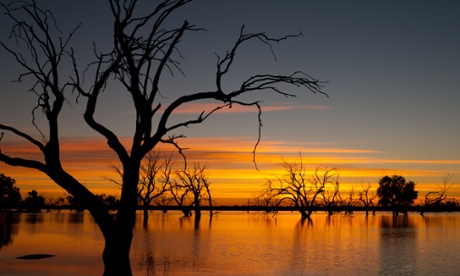
    Sunrise over Lake Pinaroo in Sturt National Park, outback Australia.
    Sunrise over Lake Pinaroo in Sturt National Park, outback Australia. Photograph: Ashley Whitworth/Alamy

    With the reality of a rapidly degrading climate coming home to people around Australia in the form of ever more extreme weather, it’s vital that we have the broadest possible debate about how fast and deep to cut the pollution that is driving it.

    The Climate Change Authority fulfilled a hugely important role on Wednesday by smashing the comfortable agreement between Labor, Liberals and most commentators that we don’t need to talk about how much to cut our climate-changing carbon emissions. The Lib-Lab agreement around 5% cuts has turned the political debate into an unedifying spat over how we meet that target, a debate which the CCA has broken open today, calling 5% “not credible”.

    The CCA is one of the most important innovations that Christine Milne and the Greens brought to the multi-party Climate Change Committee. Disagreement over how much and how fast to cut emissions was the central sticking point in those negotiations (and, by the way, the reason why the carbon pricing scheme starts with a fixed price period, or “carbon tax” – to allow time for further investigation and debate around targets before starting the trading scheme). Consequently, the proposal to establish a truly independent, science-based arbiter to recommend targets and budgets became the path to compromise.

    It is both disappointing and problematic, then, that, as so often happens with these bodies, the CCA has allowed its view of the “politically acceptable” boundaries of 5-25% cuts to colour its recommendations. By performing this “preemptive buckle”, the CCA unfortunately damages the debate, narrowing its terms and shutting off the options for the deeper cuts that are necessary.

    We must recognise the critical contribution to the debate of the CCA’s dismissal of 5% cuts as “inadequate” and “not credible”. That 5% is labelled “inconsistent with action toward the 2°C goal”, out of step with “the scale and pace of international action” and “likely to increase future costs” is important. But these arguments also show up the weakness of the recommended targets and trajectories.

    The CCA presents two “options” for emissions trajectories: 15% below 2000 levels by 2020 matched with 35-50% by 2030, and 25% below 2000 levels by 2020 with 40%-50% cuts by 2030.

    Let’s compare this with a report from the highly respected global analysts Ecofys (commissioned by WWF and released earlier this week), concluding that, for Australia to contribute our fair share to the kind of global emissions cuts necessary to give us a decent chance of staying below 2°C warming, we need to deliver 27-34% cuts by 2020, 82-101% by 2030 and 98-106% by 2050. In other words, far from being the outlier, 25% cuts by 2020 are below the minimum requirement. Beyond that, we essentially need to be net carbon neutral as a nation in two decades. This is hardly the first report to come to this conclusion.

    The CCA’s 15% and 25% targets both clearly fail their own test of consistency “with action toward the 2°C goal”. In addition, the CCA’s 2020-2030 trajectories fail their own articulation of the need to cut faster sooner in order to reduce costs. Ecofys makes the mathematically obvious point that, since it is total carbon budgets which are the critical factor, the less we cut pollution now, the steeper we need to cut in the longer term. The CCA agrees, but then suggests matching weaker 2020 targets with weaker 2030 targets.

    Of course, selection of targets and trajectories is not just a matter of science but also of geopolitics. And this is where we come to the CCA’s question of “the scale and pace of international action”. It is hard to escape the conclusion that the CCA’s recommended targets are based on the numbers currently on the table at international negotiations. The problem with that approach is that report after report has demonstrated that the numbers on the table are patently insufficient to prevent catastrophic destabilisation of the climate.

    We know that we need a circuit breaker in international talks in order to get deeper and faster cuts on the table. China and India are already offering proportionally and historically more than they quite reasonably believe rich nations like Australia are offering. The only way Australia can contribute to global agreement is to ditch not just our 5% target, but also our 15 and 25% targets, and agree to move rapidly to net carbon neutrality as part of serious global emergency action.

    Now I understand and recognise the irony and difficulty of making these points in the first weeks of an Abbott government. But, as Senator Wong has pointed out, climate change hasn’t stopped simply because Tony Abbott was elected. We need to keep debating climate action in Australia in the context of global reality. It is vital for that debate that we have the conversation about 5% being inadequate, but the science and the geopolitics are clear: far steeper targets are required in order for Australia to play any reasonable role in the global effort to keep warming to less than 2°C.

    I say all this not in any way to belittle the efforts of the CCA. They are, of course, hardly the first institution to go down this path. Much of the debate within the environment movement over recent years has been between those who campaign for what the science demands and those who work for what they think might be achievable.

    This is the fundamental question: what is it about our political culture, our democratic institutions, that makes us consciously and subconsciously limit our debate to what we think might be achievable, even when we know that to be insufficient?

    And, more fundamentally still: can we avoid the looming catastrophe without breaking open those limits?

    The need for truly independent, truly science-based advice is greater than ever. That is why it is so disappointing that the CCA’s actions today have provided one important service but another equally important disservice.

  • Extreme Weather Events In Europe: Preparing For Climate Change Adaptation

    Home

    Support Us

    Submission Policy

    Popularise CC

    Join News Letter

    CounterSolutions

    CounterImages

    CounterVideos

    Editor’s Picks

    Press Releases

    Action Alert

    Feed Burner

    Read CC In Your
    Own Language

    Bradley Manning

    India Burning

    Mumbai Terror

    Financial Crisis

    Iraq

    AfPak War

    Peak Oil

    Globalisation

    Localism

    Alternative Energy

    Climate Change

    US Imperialism

    US Elections

    Palestine

    Latin America

    Communalism

    Gender/Feminism

    Dalit

    Humanrights

    Economy

    India-pakistan

    Kashmir

    Environment

    Book Review

    Gujarat Pogrom

    Kandhamal Violence

    Arts/Culture

    India Elections

    Archives

    Links

    About Us

    Disclaimer

    Fair Use Notice

    Contact Us

    Subscribe To Our
    News Letter

    Name:
    E-mail:

    Search Our Archive


    Our Site

    Web


    Extreme Weather Events In Europe: Preparing For Climate Change Adaptation

    By Norwegian Meteorological Institute

    27 October, 2013
    Dnva.no

    This study arises from the concern that changes in weather patterns will be one of the principal effects of climate change and with these will come extreme weather. This is of considerable consequence in Europe as it impacts on the vulnerability of communities across the continent and exposes them to environmental risks. It is now widely recognised that failures in international efforts to agree on the action necessary to limit global climate change mean that adaptation to its consequences is necessary and unavoidable (Solomon et al., 2007).

    The changes anticipated in the occurrence and character of extreme weather events are, in many cases, the dominant factor in designing adaptation measures.

    Policy communities within the EU have begun to consider appropriate responses to these changes and an EU adaptation strategy is under active development and implementation. There are also sectoral EU initiatives, for example on water shortages and heat waves, and, at a regional level, on planning for floods and storms.

    The basic and unavoidable challenge for decision makers is to find workable and cost-effective solutions when faced with increased probabilities of very costly adverse impacts. Information about the nature and scale of these changes is essential to guide decisions on appropriate solutions.

    Agenda-setting for climate change and adaptation has to take place in a social or/and political setting. Scientific information about temporal changes in the probability distributions of extreme weather events over Europe, the main focus of this report, is important for informing the social and political processes that it is hoped will lead to adequate climate-change adaptation measures in Europe.

    This report is focused on providing a working-level assessment of the current state of the quantitative understanding of relevant extreme weather phenomena and their impacts.

    Given the current state of scientific knowledge and the requirement to deliver a timely input to policy processes, the scope of this report is inevitably limited and it does not set out to provide a comprehensive coverage of all extreme weather phenomena and impacts in the EU. However, there are crucial aspects of additional risk and uncertainty from extreme weather that are highly relevant to the work of EU policy makers and we aim to cover them in this report.

    The report has been prepared by a Working Group sponsored by the Norwegian Academy of Science and Letters under the chairmanship of Professor Øystein Hov. EASAC has collaborated on this work and published a condensed version of the report as part of its work on climate change and public policy issues which can be found on www.easac.eu

    The objective of the present document is to provide a handy tool for policy makers to whom the background science may not be immediately accessible. The report starts with a description of the way in which extreme weather phenomena are characterised, in particular through the use of statistics. Subsequent chapters then describe the state of knowledge about the key extreme weather phenomena, the impacts they have and some of the broad approaches that have been taken, within sectors and at different geographic scales, to reduce these impacts through adaptation measures. In a final chapter we consider the particular case of adaptation within European agriculture. The report concludes with a summary of major findings and some broad recommendations for strengthening the information available for decision makers in Europe.

    Executive Summary

    The current position:recent changes in extreme weather patterns

    1. The Earth’s climate has changed in the past due to geophysical factors, including the oscillation of its axis as it travels round the sun. Over recent years, however, human activity has been the cause of more profound and rapid change. Since the industrial and agricultural revolutions, the use of fossil fuels as energy sources, together with intensive agriculture and deforestation, have led to an increase in atmospheric carbon dioxide (CO2) and methane (CH4) levels which are now higher than at any time in the last 800 000 years. This will have a profound effect on the Earth’s climate, which will warm as a result.

    2. Meteorological and climatological measurements of climatic change in Europe show that intense precipitation has become more severe and more frequent, with complex variability in the sense of a non-uniform spatial pattern. However, the lack of a clear large-scale pattern can be expected when dealing with extremes, as the number of events is small and they take place at irregular intervals and with irregular intensity.

    3. Winter rainfall has decreased over Southern Europe and the Middle East, and has increased further north. The latter increase is caused by a pole-ward shift of the North Atlantic storm track and a weakening of the Mediterranean storm track. Short and isolated rain events have been regrouped into prolonged wet spells.

    4. Some recent changes in the pattern of weather extremes have been considerable: in some parts of Europe, observed trends to more and longer heat waves and fewer extremely cold days and nights have been observed. Since the 1960s, the mean heat wave intensity, length and number across the Eastern Mediterranean region have increased by a factor of five or more. These findings suggest that the heat wave characteristics in this region have increased at higher rates than previously reported (Kuglitsch et al., 2010).

    5. Increasing summer dryness has been observed in Central and Southern Europe since the 1950s, but no consistent trend is found over the rest of Europe. In a study of river flows in Europe by Stahl et al. (2010), a regionally coherent picture of annual stream-flow trends emerged, with negative trends in southern and eastern regions, and generally positive trends elsewhere – especially in northern latitudes – suggesting that the observed dryness is reflected in the state of rivers.

    6. The risk of and vulnerability to floods have increased over many areas in Europe, due to a range of climatic and non-climatic impacts, whose relative importance is sitespecific. Flood damage has increased substantially, however observations alone do not provide conclusive and general proof as to how climate change affects flood frequency. An ubiquitous increase in flood maxima is not evident.

    7. The insurance industry reports a pronounced increase in the number of weather-related events, which have caused significant losses, for example, wind-storms and floods globally and, to a somewhat lesser degree, in Europe. There is still insufficient knowledge about the extent to which these changes can be found in wind and precipitation observations and whether they are driven by global warming. Some of the hazard-driven increases of loss events may have been masked by human prevention measures, in particular in the case of flood loss data, as these can be influenced much more by preventive measures than wind-storm losses.

    8. In some regions, low-lying coastal zones are considered to be particularly vulnerable to climate change, especially through sea-level rise, changes in wave climate and in storminess. In Portugal, one of the European countries most affected by coastal erosion, the shoreline is retreating at an annual average of as much as 9 m in places, mainly as a result of weakening of river sediment supplies due to dams and embankments. However, the question of past trends in storm number and intensities is still open. More North European wind storms are seen when the state of the North Atlantic Oscillation (NAO) is in a positive phase, but the causes determining the phase of the NAO are still unclear.

    The outlook

    1. The main tool for providing insights into possible climate futures is computer modelling. Using modelling studies with other inputs, some of the likely trends for the future can be seen. In particular, a consensus is emerging about the likely future pattern of extreme weather events in Europe. Heat waves are very likely to become more frequent, with increased duration and intensity, while the number of cold spells and frost days are likely to decrease. Fewer cold extremes are expected, but occasional intense cold spells will still occur, even in the second half of the 21st century. Southern Europe and the Mediterranean Region may expect a combination of a reduction in annual precipitation and an increase in average temperatures. Summer dryness is expected to further increase in Central and Southern Europe during the 21st century, leading to an enhanced risk of drought, longer dry spells, and larger soil moisture deficits.

    2. Climate model simulations also suggest more frequent droughts throughout Europe, although flash and urban floods triggered by local intense precipitation events are also likely to be more frequent. Other likely consequences of climate change include decreased annual river flow in Southern Europe and increased water stress in regions that are already vulnerable to reductions in water resources.

    3. Studies suggest higher precipitation intensity for Northern Europe and increased dry-spell lengths for Southern Europe. High intensity and extreme precipitation are expected to become more frequent within the next 70 years. The increased frequency is estimated to be larger for more extreme events, but will vary considerably from region to region. The seasonality and structure of precipitation is expected to change.

    4. It is currently not possible to devise a scientifically sound procedure for redefining design floods used, for example, in planning for food defence (for example, 100- year floods) due to the large range of possible outcomes. For now, adjusting design floods using a climate-change factor is recommended, but flood-risk reduction strategies should be reviewed on regular basis, taking new information into account.

    5. Climate model simulations indicate an increase in windstorm risk over Northwestern Europe, leading to higher storm damage when there is no adaptation. Over Southern Europe, severe wind storms are projected to decline. Economic impacts of extreme weather events

    1. Much of the information about the economic impacts of extreme weather events comes from data on insured losses compiled by the insurance industry such as that held by the Munich Re company in its NatCatSERVICE, comprising about 30 000 data sets of individual loss events caused by natural hazards. This analysis shows that, in general, the frequency of weather-related loss events has increased significantly at a global level, in contrast with losses from geophysical hazards such as earthquakes or tsunamis, which have shown only a slight increase.

    2. In Europe the increase in losses from extreme weather events has been about 60 % since the 1980s. This is low compared with the number of loss events suffered in other continents, which, in the case of North America, are now 3.5 times the number of the early 1980s. Of the loss events registered in the NatCatSERVICE database, the great majority, 91 %, are from extreme weather and, of these, 75 % are from storms and floods.

    3. The pattern of loss events varies across Europe, with larger numbers in the United Kingdom and West-Central Europe and lower numbers in Scandinavia and Northern Europe. In Southern Europe, heat waves, droughts and wildfires are the most numerous events, whereas in Western and Central Europe floods and storms predominate.

    4. The economic loss burden has been considerable, with an estimated loss of € 415 billion (€ 415×109) since 1980 (2010 values). The most costly hazards have been storms and floods, amounting to a combined total of almost € 300 billion.

    5. Weather events have also been responsible for considerable loss of life in Europe, estimated at around 140 000 lives lost since 1980. The largest impacts on life have come from heat waves such as those in Central Europe in 2003.

    Adaptation strategies: responses to changes in extreme weather

    1. At the European level, climate-change adaptation is part of the strategies for improving the resilience of specific sectors, such as health and transport, reflecting the expected impacts of climate change on them. It is expected that the severity of climate change will be greatest in the Southern and Mediterranean parts of Europe and that there will be particular problems in some specific geographical areas including mountain areas, coastal zones and islands. Agriculture, fisheries, human health, water resources, biodiversity and ecosystems and physical infrastructure, including transport and energy are expected to be particularly affected.

    2. Much of the adaptation action required in the EU will be carried out by individual Member States. The European Environment Agency (EEA) is collaborating with the European Commission (EC) to establish a European climate adaptation platform (Climate-Adapt), which aims to support Member States in the development of National Climate Change Adaptation Plans.

    3. Some adaptation measures will require action at a European level, including where there are shared resources such as sea-basins and rivers or geographic features such as mountain ranges that cross national borders. There will also be a particular requirement for EU action where sectors or resources have strong EU integration, for example, agriculture and fisheries; water, biodiversity and transport; and energy networks.

    4. For many of the adaptation measures that will require EU-level action, some are sector-specific requiring the general improvement of storm resilience in electricity networks. Some have regional and cross-sectoral implications such as flood-risk management along the courses of the great rivers of Europe with implications for
    agriculture and for physical infrastructure.

    5. The current EU strategy rests on information sharing and integrating adaptation into EU policies.

    Conclusions

    1. A regional European pattern in recent trends in extreme weather and their impacts has been discerned. Some of the extreme weather phenomena associated with climate change are increasing in frequency and intensity within Europe. In some cases the impacts of these changes have had a significant effect on societies and economies throughout Europe, although at very different scales in different regions.

    2. There is an observed trend to more and longer heat waves and fewer extremely cold days and nights in some parts of Europe. In the past, estimates of changes have suggested that they are modest, but a recent re-analysis of data showed that, since the 1960s, the mean heatwave intensity, length and number across the Eastern Mediterranean region had increased by a factor of five or more (Box 3.1). It is expected that the trends towards longer and more intense heat waves will continue with further climate change.

    3. Increasing summer dryness, which is associated with drought, has been observed in Central and Southern Europe since the 1950s, but no consistent trend has been found over the rest of Europe. For some areas, notably Central and Southern Europe and parts of Northwestern Europe, it is expected that this trend will continue with global warming.

    4. Extreme precipitation, often associated with floods and damage to infrastructure and crops, appears to be increasing in severity and frequency.

    5. Climatic and non-climatic factors such as human settlement have increased flood-risk vulnerability over many areas. Flood damage and the number of large floods have increased substantially in Europe, however a ubiquitous increase in observed records of annual flood maxima is not evident.

    6. Projections for the future indicate increases in flood risk over much of Europe. However, the projections are uncertain, partly because information about the future evolution of precipitation is uncertain but also because of confounding non-climatic factors.

    7. The question of past trends in storm numbers and intensities is still open. More North European wind storms are seen when the state of the NAO is in a positive phase, but the causes that determine the phase of the NAO are still unclear.

    8. In some regions, low-lying coastal zones are considered to be particularly vulnerable to climate change, especially through sea level rise, changes in wave climate and in storminess.

    9. Insurance industry data clearly show that the number of loss-relevant weather extremes has increased significantly globally and to a smaller, but still relevant, degree in Europe. There is increasing evidence that at least part of these increases is driven by global warming. Some of the hazard-driven increases in loss events may even have been moderated by human activities through loss prevention measures.

    10. Human factors play a part in moderating the impactsof heat waves. Extreme heat has had a considerable impact on human health in Europe with significant mortality, notably during the heat waves of 2003 and 2010. However, in many parts of Southern Europe, heat waves of a similar scale occur frequently for years without the same level of impact.

    11. For many crops in Europe, weather extremes are the major factor in climate-change impacts on production. An increased frequency of extreme weather events is likely to be unfavourable for crop production, horticulture and forestry.

    Recommendations

    It is recommended that science-driven climate services need to be developed on national and regional levels in Europe. As the societal risk related to climate change is significant, research into the processes and drivers of the climate system need to intensify, with a particular emphasis on manifestations that carry the largest risk to humans and society. These manifestations are related to the extremes of the weather-parameter probability distributions, rather than on their mean. Climate services should evolve in an interactive way with the public and private user communities in order to devise effective adaptation measures and to:

    • provide easy access to relevant meteorological and hydrological observations, climate projections and climate products, with climate adaptation as the main focus;

    • facilitate the production of clear information about national/regional climate;

    • provide updated information on historical, current and future climate trends;

    • facilitate and disseminate relevant quality-controlled analyses of the present climate and projections of climate change to governments, counties, municipalities, business interests and research. When there are events that focus attention on impacts of extreme weather events, individual efforts to assimilate the lessons learned into planning should be encouraged. The use of real-world indicators, such as recurring problematic conditions and external expertise where municipalities or organisations are involved in relevant research projects, should also be encouraged as ways of raising the local profile of climate-change adaptation.

  • Bushfires: Coalition deploys straw man against burning issue of climate change

    Bushfires: Coalition deploys straw man against burning issue of climate change

    Government is desperate to keep bushfires and climate change apart for fear its emissions reduction policy will be found wanting

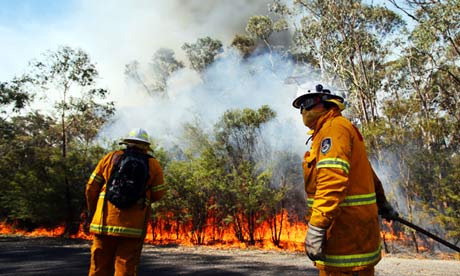
    Bushfires in New South Wales
    Firefighters on duty in NSW this week. Photograph: REX/Sam Mooy/Newspix

    The Abbott government is desperately constructing a straw man to help it fight the potentially big political problem of rising public concern about climate change and scrutiny of its Direct Action policy.

    The straw man is the contention that anyone making a perfectly reasonable and scientifically justifiable point – that climate change is likely to cause a higher prevalence of the weather conditions that pose a bushfire risk – has actually been making the unreasonable and scientifically unjustifiable point that climate change has caused a particular fire.

    And once the straw man contention has been ridiculed, the Coalition quickly skips over the justifiable connection and contends that fires are “part of the Australian experience” and that nothing different is happening.

    The straw man was wielded most recently against the executive secretary of the United Nations framework convention on climate change, Christiana Figueres, who said in an interview with CNN there was “absolutely” a link between climate change and bushfires.

    She did not say that climate change causes bushfires. She did say climate change causes increasing heatwaves – in other words, bushfire weather.

    After Tony Abbott airily dismissed Figueres as “talking through her hat”, the environmnent minister, Greg Hunt, wielded the straw man defence against the UN executive in this interview on the BBC.

    Hunt said he had spoken to Figueres and “she indicated clearly and strongly that she was not saying that these bushfires were caused by climate change … She felt that that had been misrepresented.”

    Whatever she said to Hunt, she wasn’t backing away from the idea of a connection between climate change and bushfire weather in a statement she subsequently issued, in which she said: “The IPCC’s conclusions are that unless deep and decisive action is taken to reduce greenhouse gas emissions the world will experience more extreme and more frequent weather events over the coming decades.

    “In its earlier fourth assessment report released in 2007 the IPCC stated that: ‘Climate change is known to alter the likelihood of increased wildfire sizes and frequencies … while also inducing stress on trees that indirectly exacerbate disturbances. This suggests an increasing likelihood of more prevalent fire disturbances, as has recently been observed.’”

    But Hunt moved quickly from the straw man defence to the nothing-different-to-see-here “Australian experience” argument.

    “The point we are all making is that Australia has since European settlement had a history of bushfires … That is the Australian experience,” he explained.

    There is a very good reason the Coalition wants to stamp out any link in the popular debate between climate change and an increased prevalence of bushfire weather.

    They remember all too well the way concerns about weather events in 2006 and 2007 forced the then Howard government to take action on climate change that it otherwise probably would not have.

    As Howard wrote in his autobiography Lazarus Rising, “in the space of several weeks, commencing in October 2006, four separate events came together to push the climate change concerns of the Australian community to higher levels than ever before. In Victoria the bushfire season started early; the drought affecting large areas of eastern Australia lingered on … from outside Australia came the contributions of Al Gore … and Sir Nicholas Stern.

    “These four events coincided and dramatically increased the focus on global warming in Australia … I concluded that the government would need to shift its position on climate change.”

    This was apparently primarily a political consideration, since Howard says later in his book that he is “an agnostic rather than a sceptic on climate change, instinctively I doubt many of the more alarming predictions”.

    The Abbott government says it accepts climate change is real and that its Direct Action policy is the best way for Australia to reduce emissions by the minimum target of 5%.

    Despite extreme doubts being raised about that policy by economists, scientists and many experts, the Coalition has so far managed to avoid much public scrutiny of it. But in government, particularly if public concern was rising because of a confluence of events like those that confronted Howard, that scrutiny will intensify.

    And scientists have an inconvenient habit of not being diverted by “straw man” arguments.

    After interviewing Hunt, the BBC spoke to Professor Roger Jones from Victoria University, who took the same history of disastrous Australian bushfires Abbott had listed to make his “it’s all part of the Australian experience” argument and pointed out how many years had elapsed between them.

    “Twenty-nine years, 14, 11, nine, six, four … you might detect a pattern in that in that the gap between the fires is getting shorter,” he noted.

  • Connecting the dots can turn the table on denialist prime minister

    Connecting the dots can turn the table on denialist prime minister

    Posted: 26 Oct 2013 04:28 PM PDT

    by David Spratt, first published at The Guardian and RenewEconomy

    It’s hard to imagine that one tweet from Australian Greens deputy leader Adam Bandt could change the terms of the climate change policy debate in Australia. But it has.

    View PDF of how the story evolved

    On 17 October, as fierce, out-of-season bush fires erupted around Sydney and destroyed 200 houses after the hottest year on record in Australia, Bandt tweeted that Australia would experience more terrible climate impacts if newly-elected conservative prime minister Tony Abbott got his way and abandoned the carbon pricing and renewable energy legislation enacted by the Labor government in 2010.

    The previous day, Bandt had written in The Guardian that: “Faced with the biggest ever threat to Australia’s way of life (bush fires), Tony Abbott is failing in the first duty of a prime minister which is to protect the Australian people.” This struck a chord with many people and launched a long overdue, but until now suppressed, public discussion about the relationship between a hotter and more extreme climate and worsening disasters.

    A taboo had been broken, and amidst intense debate the dam wall broke.

    Support for this necessary conversation came from everywhere: climate action advocacy groups, Labor backbenchers Kelvin Thompson and Doug Cameron, senior political commentators, scientists and editorial writers. Lenore Taylor observed that “policymakers can no longer credibly look away.” UN climate chief Christiana Figueres told CNN that the Abbott government would pay a heavy political and economic price for going backwards on climate action.

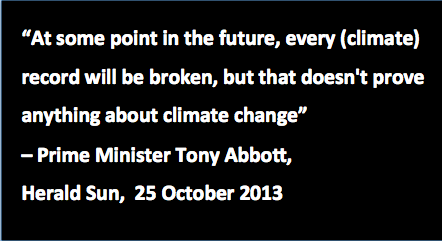
    For three years, Abbott has dominated the public climate debate with a relentless negative campaign on Labor’s carbon tax, a fig leaf for his long-term climate denialism that “the science isn’t settled”, is “highly contentious” and “not yet proven”, that “it’s cooling” and “it hasn’t warmed since 1998” and there’s “no correlation between carbon dioxide and temperature”.

    Now accused of “failing to protect his people”, Abbott refused to respond for days, and instead headed off for duty with his local volunteer fire brigade. But shouldn’t the Prime Minister be leading the country, not his local fire brigade, at a time of emergency? For the first time in years, the prime minister was no longer on the front foot in the climate policy discussion.

    That climate change would load the dice in favour of more intense disasters is well established. Fire researchers in 2007 estimated that climate change would result in a two-to-fourfold increase in extreme fire days. Between 1973-2010, Melbourne and Adelaide recorded a 49% increases in their cumulative annual Forest Fire Danger Index. And in February 2009 Victoria’s Black Saturday bushfires killed 173 people, injured 414, destroyed 2,029 homes, and cost $4.4 billion in damage. The fire index was an unprecedented 190 on a zero-to-100 scale. Yet the possible impact of climate change on the days’ events and planning for the future was excluded from the subsequent royal commission’s terms of reference.

    This week the NSW fire commissioner spoke of “unparalleled conditions” and “a whole new ball game”. Conservative NSW premier Barry O’Farrell, when asked asked if climate change made disastrous events such as the NSW fires more likely, replied: ”Well, clearly, I think that’s the science.”

    Now the taboo has been broken, what does in mean for the debate in Australia as prime minister Abbott prepares to trash Labor’s legislation?

    Labor and the climate advocacy movement made a strategic mistake in 2010 by trying to sell the climate legislation as about “clean energy futures” and “saying yes” without talking about how climate change would affect people’s lives. It was all about selling good news and not mentioning bad news, selling an answer without elaborating the question. Public support went down.

    “Climate change is a choice
    between increasing harm, or
    acting to restore safety.”

    Climate change is a choice between increasing harm, or acting to restore safety. All the studies on health and safety promotion — smoking, obesity, drink driving, HIV, workplace safety — show same thing. Be honest about the problem and tell it like it is; show a better alternative, the benefits of changing behaviour; and finally demonstrate an efficacious path, the “you can do it” actions that the person or society is empowered to take to move from fear to success.

    The debate which has erupted over extreme climate events has important lessons for all those urging more, not less, action on climate change. The story should be about people in Australia and not distant places, about now and not just the distant future, about connecting the dots between extreme events and global warming. It is a story about record heat and bush fires, about how family and friends will live in a hotter and more extreme world, about how a retreating coastline will affect where we live and work, a story about health and well-being, about increasing food and water insecurity, and the more difficult life that children and grandchildren will face. This makes climate action a values issue, the choice between increasing climate harm and climate safety.

    Australian per capita income is the highest in the world, yet we are less happy than citizens in austerity-riven Spain. Society’s pace of change is creating new fears and insecurities as people struggle to keep up. They fear for the future in which their children will live. Hyper-consumption is being driven by anxiety — fear of being left behind, of being “unfashionable” in the broad meaning of the term — and an increasing sense of self-entitlement.

    Sociologist Zygmunt Bauman says that “human vulnerability and uncertainty is the foundation of all political power”. Abbott understood the politics of fear in his tearing down of the Labor government.

    Can he now be stopped by constructing a narrative that recognises reasonable fear and provides a clear path to climate safety, rather than increasing personal and planetary insecurity? Can John Howard’s and Tony Abbott’s “battlers” become safe-climate champions?

    You are subscribed to email updates from Climate Code Red
    To stop receiving these emails, you may unsubscribe now.
    Email delivery powered by Google
    Google Inc., 20 West Kinzie, Chicago IL USA 60610
  • Judicial Inquiry into pink batts scheme Oct. 27, 2013, 12:16 p.m.

    Sunday October 27, 2013
    Larger / SmallerNight Mode

    Judicial Inquiry into pink batts scheme

    Oct. 27, 2013, 12:16 p.m.
    • Prime Minister Tony Abbott and Joe Hockey. Photo: Dominic LorrimerPrime Minister Tony Abbott and Joe Hockey. Photo: Dominic Lorrimer

    Treasurer Joe Hockey has added to calls for a judicial inquiry into the home insulation fiasco to include witnesses from the senior ranks of the first Rudd Government, including Kevin Rudd himself.

    Mr Hockey said on Sunday that no one should be immune from giving evidence about the so-called pink batts scheme in which four young men died.

    “I don’t think anyone should be excluded from providing full and frank and honest evidence in front of a judicial inquiry,” he said.

    According to reports, the draft terms of reference for the inquiry call for a full explanation of the then government’s decisions about the $2.8 billion program, and if any steps could have been taken to avoid the deaths of four young insulation installers.

    Mitchell Sweeney, Marcus Wilson, Matthew Fuller and Rueben Barnes died between 2009 and 2010 while working on jobs funded by the capital spending program at the height of the global financial crisis.

    “The judicial commission is to be conducted in such a manner as to enable the families of the deceased tradesmen and all others who have suffered loss and damage (to get) the maximum transparency and access to information disclosed by the evidence before it,” the terms of reference say.

    The ten terms of reference include:

    – The process and basis of government decisions while establishing the program, including risk assessment and risk management;

    – Whether the death of the four men could have been avoided;

    – What if any advice or undertakings given by the government to the industry were inaccurate or deficient, and;

    – What steps the government should have taken to avoid the tragedies.

    If Mr Rudd is called it is almost certain that his then environment minister Peter Garrett will also be called to give evidence and former senator Mark Arbib who was parliamentary secretary to the minister and worked on designing and delivering the program.

    The inquiry, which could pave the way for compensation claims by the families of the dead men, is due to be finalised by June 30 next year.

    Three Queensland businesses were prosecuted for workplace health and safety breaches as a result of the pink batts tragedies and a NSW gave evidence before a NSW coroner’s inquest.

    A spokeswoman for Mr Rudd said he had no comment.