Category: Uncategorized

  • The new IPCC climate change report makes deniers overheat

    The new IPCC climate change report makes deniers overheat

    As their erroneous efforts to discredit the ‘Hockey Stick’ curve reveal, sceptics are tying themselves in knots to maintain denial

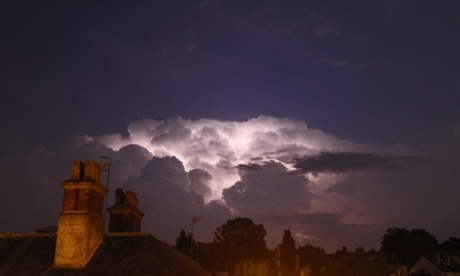
    Storm clouds gathered over Tunbridge Wells in Kent last night, breaking the heatwave across parts of the UK in spectacular style.

    The fifth IPCC report express confidence that climate change is causing various forms of extreme weather. Photograph: Jason Reeve/Demotix/Corbis

    It happens every six years or so: the Intergovernmental Panel on Climate Change (IPCC) publishes its assessment of the current state of scientific understanding regarding human-caused climate change. That assessment is based on contributions from thousands of experts around the world through an exhaustive review of the peer-reviewed scientific literature and a rigorous, several-years-long review process.

    Meanwhile, in the lead-up to publication, fossil-fuel industry front groups and their paid advocates gear up to attack and malign the report, and to mislead and confuse the public about its sobering message. So, in the weeks leading up to the release of the IPCC Fifth Assessment scientific report, professional climate change deniers and their willing abettors and enablers have done their best to distort what the report actually says about the genuine scientific evidence and the reality of the climate change threat.

    This time, however, climate change deniers seem divided in their preferred contrarian narrative. Some would have us believe that the IPCC has downgraded the strength of the evidence and the degree of threat. Career fossil fuel-industry apologist Bjorn Lomborg, in Rupert Murdoch’s the Australian, wrote on 16 September:

    UN’s mild climate change message will be lost in alarmist translation.

    On the other hand, serial climate disinformer Judith Curry, in a commentary for the same outlet five days later, announced:

    Consensus distorts the climate picture.

    So, make up your mind, critics: is it a “mild message” or a “distorted picture”? Consistency, they might well respond, is simply the “hobgoblin of little minds”, after all – but in reality, that’s only if you ignore the foolishness.

    Indeed, claims that members of the IPCC have downgraded their scientific confidence have been plentiful among the usual purveyors of climate change misinformation: Fox News, the editorial pages of the Wall Street Journal and various conservative tabloids in the United States, Canada, Germany and Australia. Fox News even sought to mislead its viewers with a bait-and-switch, focusing attention instead on a deceptive, similarly named report that calls itself the Nongovernmental International Panel on Climate Change (NIPCC), which simply regurgitates standard shopworn denialist myths and erroneous talking points. That non-peer-reviewed report was published by the discredited industry front group known as the Heartland Institute in the lead-up to the publication of the actual IPCC report, presumably to divert attention from the actual scientific evidence.

    In reality, the IPCC has strengthened the degree of certainty that fossil fuel burning and other human activities are responsible for the warming of the globe seen over the past half-century, raising their confidence from “very likely” in the previous report to “extremely likely” in the current one. The IPCC expresses similar levels of certainty that the Earth is experiencing the impacts of that warming in the form of melting ice, rising global sea levels and various forms of extreme weather.

    What about the converse claim, promoted by critics, that the IPCC has exaggerated the evidence?

    Well, if anything, the opposite appears closer to the truth. In many respects, the IPCC has been overly conservative in its assessment of the science. The new report, for example, slightly reduces the lower end of the estimated uncertainty range for a quantity know as the equilibrium climate sensitivity – the amount of warming scientists expect in response to a doubling of carbon dioxide (CO2) concentrations relative to preindustrial levels (concentrations that will be seen mid-century, given business-as-usual emissions).

    The IPCC reports a likely range of 1.5C to 4.5C (roughly 3F to 8F) for this quantity, the lower end having been dropped from 2.0C in the fourth IPCC assessment. The lowering is based on one narrow line of evidence: the slowing of surface warming during the past decade.

    Yet, there are numerous explanations of the slowing of warming (unaccounted for effects of volcanic eruptions and natural variability in the amount of heat buried in the ocean) that do not imply a lower sensitivity of the climate to greenhouse gases. Moreover, other lines of evidence contradict an equilibrium climate sensitivity lower than 2C. It is incompatible, for example, with paleoclimate evidence from the past ice age, or the conditions that prevailed during the time of the dinosaurs. (See this piece I co-authored earlier this year for the Australian Broadcasting Corporation, for a more detailed discussion of the matter.)

    The IPCC’s treatment of global sea-level rise is similarly conservative – arguably, overly so. The report gives an upper limit of roughly 1m (3ft) of sea-level rise by the end of the century under business-as-usual carbon emissions. However, there is credible peer-reviewed scientific work, based on so-called “semi-empirical” approaches that predict nearly twice that amount – that is, nearly 6ft (2m) of global sea-level rise this century. These latter approaches are given short thrift in the new IPCC report; instead, the authors of the relevant chapter favor dynamical modeling approaches that have their own potential shortcomings (underestimating, for example, the potential contribution of ice-sheet melting to sea-level rise this century).

    As some readers may know, the conclusion that modern warming is unique in a long-term context came to prominence with the temperature reconstruction that my co-authors and I published in the late 1990s. The resulting “Hockey Stick” curve, which demonstrates that the modern warming spike is without precedent for at least the past 1,000 years, took on iconic significance when it was prominently displayed in the “summary for policy-makers” of the 2001 Third IPCC Assessment report. Thus, the “Hockey Stick” curve, as I describe in my recent book, The Hockey Stick and the Climate Wars, became a focal point of the attacks by industry-funded climate change deniers.

    So, it might not come as a surprise that one of the most egregious misrepresentations of the IPCC’s latest report involves the Hockey Stick and conclusions about the uniqueness of modern warming.

    An urban legend seems to be circulating around the echo chamber of climate change denial, including contrarian blogs and fringe rightwing news sites. The claim is that the IPCC has “dropped” or “trashed” the Hockey Stick conclusion regarding the unprecedented nature of recent warmth.
    A good rule of thumb is that the more insistent climate change deniers are about any particular talking-point, the greater the likelihood is that the opposite of what they are claiming actually holds. The IPCC has, in fact, actually strengthened its conclusions regarding the exceptional nature of modern warmth in the new report. A highlighted box in the “summary for policy-makers” states the following (emphasis mine):

    In the northern Hemisphere, the period 1983-2012 was likely the warmest 30-year period of the last 1,400 years (medium confidence).

    The original 1999 Hockey Stick study (and the 2001 Third IPCC Assessment report) concluded that recent northern hemisphere average warmth was likely unprecedented for only the past 1,000 years. The 2007 IPCC Fourth Assessment extended that conclusion back further, over the past 1,300 years (and it raised the confidence to “very likely” for the past 400 years). The new, Fifth IPCC Assessment has now extended the conclusion back over the past 1,400 years. By any honest reading, the IPCC has thus now substantially strengthened and extended the original 1999 Hockey Stick conclusions.

    Only in the “up is down, black is white” bizarro world of climate change denial could one pretend that the IPCC has failed to confirm the original Hockey Stick conclusions, let alone contradict them.

    The stronger conclusions in the new IPCC report result from the fact that there is now a veritable hockey league of reconstructions that not only confirm, but extend, the original Hockey Stick conclusions. This recent RealClimate piece summarizes some of the relevant recent work in this area, including a study published by the international PAGES 2k team in the journal Nature Geoscience just months ago. This team of 78 regional experts from more than 60 institutions representing 24 countries, working with the most extensive paleoclimate data set yet, produced the most comprehensive northern hemisphere temperature reconstruction to date. One would be hard-pressed, however, to distinguish their new series from the decade-and-a-half-old Hockey Stick reconstruction of Mann, Bradley and Hughes.

    Conclusions about unprecedented recent warmth apply to the average temperature over the northern hemisphere. Individual regions typically depart substantially from the average. Thus, while most regions were cooler than present during the medieval era, some were as warm, or potentially even warmer, than the late 20th-century average. These regional anomalies result from changes in atmospheric wind patterns associated with phenomena such as El Niño and the so-called North Atlantic Oscillation.

    Colleagues and I, quoting from the abstract of our own article in the journal Science a few years ago (emphasis mine), stated:

    Global temperatures are known to have varied over the past 1,500 years, but the spatial patterns have remained poorly defined. We used a global climate proxy network to reconstruct surface-temperature patterns over this interval. The medieval period [AD 950-1250] is found to display warmth that matches or exceeds that of the past decade in some regions, but which falls well below recent levels globally.

    These conclusions from our own recent work are accurately represented by the associated discussion in the “summary for policy-makers” of the new IPCC report (emphasis mine):

    Continental-scale surface-temperature reconstructions show, with high confidence, multidecadal periods during the Medieval Climate Anomaly (year 950-1250) that were, in some regions, as warm as in the late 20th century. These regional warm periods did not occur as coherently across regions as the warming in the late 20th century (high confidence).

    However, never underestimate the inventiveness of climate change deniers. Where there’s a will, there is, indeed, a way: a meme now circulating throughout the denialosphere is that the IPCC’s conclusions about regional warmth contradict our findings, despite the fact that those conclusions are substantially based on our findings.

    One could be excused for wondering if climate change deniers have lost all sense of irony.

    The most egregious example of this latest contortion of logic found its way into the purportedly “mainstream” Daily Mail, courtesy of columnist David Rose, who admittedly has a bit of a reputation for misrepresenting climate scientists and climate science. Rose wrote in his column on 14 September:

    As recently as October 2012, in an earlier draft of this report, the IPCC was adamant that the world is warmer than at any time for at least 1,300 years. Their new inclusion of the “Medieval Warm Period” – long before the Industrial Revolution and its associated fossil-fuel burning – is a concession that its earlier statement is highly questionable.

    The most charitable interpretation is that Rose simply didn’t actually read or even skim the final draft of the report, despite writing about it at length. For, if he had, he would be aware that the final draft of the report comes to the strongest conclusion yet about the unprecedented nature of recent warmth, extending the original Hockey Stick conclusion farther back than ever before – to the last 1,400 years.

    Moreover, he would be aware that the existence of regional medieval warmth rivaling that of the late 20th century does not contradict that conclusion. Indeed, it is the regional heterogeneity of that warmth, as established in ours and other studies, that leads the IPCC report to conclude that current levels of hemispheric average warmth are unprecedented for at least 1,400 years.

    The lesson here, perhaps, is that no misrepresentation or smear is too egregious for professional climate change deniers. No doubt, we will continue to see misdirection, cherry-picking, half-truths and outright falsehoods from them in the months ahead as the various IPCC working groups report their conclusions.

    Don’t be fooled by the smoke and mirrors and the Rube Goldberg contraptions. The true take-home message of the latest IPCC report is crystal clear: climate change is real and caused by humans, and it continues unabated. We will see far more dangerous and potentially irreversible impacts in the decades ahead if we do not choose to reduce global carbon emissions. There has never been a greater urgency to act than there is now.

    The latest IPCC report is simply an exclamation mark on that already-clear conclusion.

    • This article was originally published by Livescience.com and is

  • House Republicans Clueless On How To Avert Government Shutdown

    I have no understanding of US politics, but this sounds very serious to me. Could be our equivalent of a double dissolution through the blocking of supply. It is hoped they can sort this out.

    House Republicans Clueless On How To Avert Government Shutdown

    Posted: 09/27/2013 7:01 pm EDT

    house republicans government shutdown
    54
    54
    7
    1667
    Get Politics Newsletters:

    WASHINGTON — If Americans aren’t sure whether Congress can head off a shutdown of the government in the next three days, they’re not alone. The Republican-led House of Representatives didn’t know whether it was possible either, as of Friday evening.

    The Senate has passed a bill that keeps federal employees on the job until Nov. 15 — but strips the House GOP’s attempt to defund the Affordable Care Act. It’s now the lower chamber’s turn to deal with the legislation.

    That has presented House Speaker John Boehner (R-Ohio) with one of the toughest quandaries of his reign since the showdown over the country’s debt in 2011.

    A large portion of his conference remains committed to dismantling President Barack Obama’s signature health care law, but on Friday members were having a hard time agreeing on exactly which pill they could use to poison the law that would also stand a chance of getting swallowed by the Senate.

    Part of the problem is that many of the tea party-aligned members see a government shutdown as a better choice than letting Obamacare take root.

    “I don’t want to shut the government down, but I’d prefer to stop this law,” said Richard Hudson (R-N.C.).

    “If there is a price to be paid for this, we will recover from a government shutdown, whether it’s a day, a week or two weeks … something will get resolved, we’ll recover from that as a country,” said Rep. Steve King (R-Iowa). “It’s a temporary inconvenience for a lot of people. But if Obamacare is ever implemented, we will never recover from that as a nation. We can never be a free people again.”

    On the other hand, many GOP lawmakers see throwing a monkey wrench into the gears of government as political suicide.

    “A lot of Americans are going to get hurt in a situation like that. You put people out of work. You inconvenience millions — tens of millions — of other Americans. You raise doubt about your ability to function,” said Rep. Tom Cole (R-Okla.), deputy whip of the House.

    “I don’t think that a government shutdown is ever the right answer. Politically, I think anybody who thinks it’s not high-risk is just not playing with a full deck,” Cole added. “It’s extraordinarily high-risk, and for not much gain.”

    Cole said tea party members in the Senate, such as Sens. Ted Cruz (R-Texas) and Mike Lee (R-Utah), had their chance to defund Obamacare with the original bill the House sent over. But now they’ll have to settle for less.

    “We gave our guys in the Senate an opportunity. We gave them what they asked for, or at least some of them asked for, in the defunding measure, and it looks like they weren’t able to get that done,” he said. “So now maybe we look at something else that’s much more difficult for Democrats to turn down.”

    Cole and nearly all of the House GOP conference do want to send something back to the Senate that whacks Obamacare, and they were busy rifling through their medicine cabinet Friday, hoping to find just the right dose that would force a few Democrats in the Senate to go along. Among the ideas were ending a tax on medical devices, barring the federal government from contributing to congressional health insurance plans, and delaying the law or parts of it for a year.

    The choice is especially fraught. If the House passes a measure that pleases the tea party, Democrats will not go along. If the House passes a token swipe at Obamacare, Cruz and company will not go along.

    Democrats and the president have declared they will not let funding for the government — or the approaching need to raise the country’s borrowing limit — be held hostage to anything. It would be tough to pry even red-state Democrats out of that lockstep.

    “To be absolutely clear, we are going to accept nothing that relates to Obamacare,” Senate Majority Leader Harry Reid (D-Nev.) reaffirmed in a press conference Friday.

    But if the House GOP jab at Obamacare is too lame, it might not pass muster with Cruz and Lee, who have staked out positions demanding the defunding of the health care law.

    “I have said for a long time that I do not intend to vote for any continuing resolution that funds Obamacare,” Cruz told reporters after the Senate passed its bill.

    If any single senator objects to something in a bill, he or she can tie it up for days, as Cruz and Lee did with the measure passed Friday. The only way for a measure to pass before the clock runs out just after midnight on Monday is for senators to unanimously agree to expedite the process.

    Boehner does have one option that would guarantee the government keeps humming, but carries potentially severe consequences for him personally: simply putting the Senate’s bill on the floor. If just 17 Republicans decide not to roll the dice on shutting down the government, the bill would pass with unanimous Democratic support. The drama would be over for the country — for at least the next six weeks — but not for Boehner.

    “I think it would be devastating to the speaker’s support in the conference,” said Hudson, the North Carolina congressman.

    That leaves Boehner trying to thread the legislative needle.

    House Republicans were expected to meet on Saturday to map out a plan.

    “I’ve talked to the speaker and the majority leader, and they’re on different paths of trying to talk to members and see where they are,” Hudson said. “We haven’t

  • U.N. Climate Panel Endorses Ceiling on Global Emissions

    Environment

    U.N. Climate Panel Endorses Ceiling on Global Emissions

    Jonathan Nackstrand/Agence France-Presse — Getty Images

    Ban Ki-moon, the secretary general, addressed the United Nations’ Intergovernmental Panel on Climate Change on Friday.

    By
    Published: September 27, 2013 486 Comments
    • Facebook
    • Twitter
    • Google+
    • Save
    • E-mail
    • Share
    • Print
    • Reprints

    STOCKHOLM — The world’s top climate scientists on Friday formally embraced an upper limit on greenhouse gases for the first time, establishing a target level at which humanity must stop spewing them into the atmosphere or face irreversible climatic changes. They warned that the target is likely to be exceeded in a matter of decades unless steps are taken soon to reduce emissions.

    Related

    Temperature Rising

    Articles in this series focus on the central arguments in the climate debate and examine the evidence for global warming and its consequences.

    Multimedia

    Readers’ Comments

    Unveiling the latest United Nations assessment of climate science, the experts cited a litany of changes that were already under way, warned that they were likely to accelerate and expressed virtual certainty that human activity is the main cause. “Climate change is the greatest challenge of our time,” said Thomas F. Stocker, co-chairman of the Intergovernmental Panel on Climate Change, the United Nations-sponsored group of scientists that produced the report. “In short, it threatens our planet, our only home.”

    The panel, in issuing its most definitive assessment yet of the risks of human-caused warming, hoped to give impetus to international negotiations toward a new climate treaty, which have languished in recent years in a swamp of technical and political disputes. The group made clear that time was not on the planet’s side if emissions continued unchecked.

    “Human influence has been detected in warming of the atmosphere and the ocean, in changes in the global water cycle, in reductions in snow and ice, in global mean sea level rise, and in changes in some climate extremes,” the report said. “It is extremely likely that human influence has been the dominant cause of the observed warming since the mid-20th century.”

    The new report is a 36-page summary for world leaders of a 900-page report that is to be released next week on the physical science of climate change. That will be followed by additional reports in 2014 on the most likely impacts and on possible steps to limit the damage. A draft of the summary leaked last month, and the final version did not change greatly, though it was edited for clarity.

    Going well beyond its four previous analyses of the emissions problem, the panel endorsed a “carbon budget” for humanity — a limit on the amount of the primary greenhouse gas, carbon dioxide, that can be produced by industrial activities and the clearing of forests. No more than one trillion metric tons of carbon could be burned and the resulting gases released into the atmosphere, the panel found, if planetary warming is to be kept below 3.6 degrees Fahrenheit (2 degrees Celsius) above the level of preindustrial times. That temperature is a target above which scientists believe the most dangerous effects of climate change would begin to occur.

    Just over a half-trillion tons have already been burned since the beginning of the Industrial Revolution, and at the rate energy consumption is growing, the trillionth ton will be burned sometime around 2040, according to calculations by Myles R. Allen, a scientist at the University of Oxford and one of the authors of the new report. More than three trillion tons of carbon are still left in the ground as fossil fuels.

    Once the trillion-ton budget is exhausted, companies that wanted to keep burning fossil fuels would have to come up with ways to capture carbon dioxide and store it underground. In the United States, the Obama administration is moving forward with rules that would essentially require such technology, which is likely to be costly, for any future coal-burning power plants; the president’s Republican opponents have accused him of waging a “war on coal.”

    The Intergovernmental Panel on Climate Change is a worldwide committee of hundreds of scientists that issues major reports every five or six years, advising governments on the latest knowledge on climate change.

    The group has now issued five major reports since 1990, each of them finding greater certainty that the world is warming and greater likelihood that human activity is the chief cause. The new report finds a 95 to 100 percent chance that most of the warming of recent decades is human-caused, up from the 90 to 100 percent chance cited in the last report, in 2007.

    But the new document also acknowledges that climate science still contains uncertainties, including the likely magnitude of the warming for a given level of emissions, the rate at which the ocean will rise, and the likelihood that plants and animals will be driven to extinction. The scientists emphasized, however, that those uncertainties cut in both directions and the only way to limit the risk is to limit emissions.

    Climate-skeptic organizations assailed the new report as alarmist even before it was published.

    The Heartland Institute, a Chicago organization, issued a document last week saying that any additional global warming would likely be limited to a few tenths of a degree and that this “would not represent a climate crisis.”

    One issue much cited by the climate doubters is the slowdown in global warming that has occurred over the past 15 years. The report acknowledged that it was not fully understood, but said such pauses had occurred in the past and the natural variability of climate was a likely explanation.

    “People think that global warming means every year is going to be warmer than the year before,” said Gerald A. Meehl, an American scientist who helped write the report. “It’s more like a stair-step kind of thing.”

    Climate scientists not involved in writing the new report said the authors had made a series of cautious choices in their assessment of the scientific evidence. Regarding sea level rise, for instance, they gave the first firm estimates ever contained in an intergovernmental panel report, declaring that if emissions continued at a rapid pace, the rise by the end of the 21st century could be as much as three feet. They threw out a string of published papers suggesting a worst-case rise closer to five feet.

    Similarly, the authors went out of their way to include recent papers suggesting that the earth might be less sensitive to carbon dioxide emissions than previously thought, even though serious questions have been raised about the validity of those estimates.

    The new report lowered the bottom end of the range of potential warming that could be expected to occur over the long term if the carbon dioxide level in the atmosphere were to double, reversing a decision that the panel made in the last report and restoring a scientific consensus that had prevailed from 1979 to 2007. Six years ago, that range was reported as 3.6 to 8.1 degrees Fahrenheit; the new range is 2.7 to 8.1 degrees.

    In Washington, President Obama’s science adviser, John P. Holdren, cited increased scientific confidence “that the kinds of harm already being experienced from climate change will continue to worsen unless and until comprehensive and vigorous action to reduce emissions is undertaken worldwide.”

    Ban Ki-moon, the United Nations secretary general, spoke to delegates at the meeting on Friday by video link, declaring his intention to call a meeting of heads of state in 2014 to push such a treaty forward. The last such meeting, in Copenhagen in 2009, ended in disarray.

  • Worst impacts of climate change still avoidable if we act now

    Press Release

    Worst impacts of climate change still avoidable if we act now

    Canada NewsWire

    VANCOUVER, Sept. 27, 2013

    David Suzuki Foundation calls on Canadians to support climate action in response to latest assessment report from the Intergovernmental Panel on Climate Change

    VANCOUVER, Sept. 27, 2013 /CNW/ – Scientists are more certain than ever that human activity — in particular the burning of fossil fuels and deforestation — is causing climate change, according to the First Installment of the Fifth Assessment Report from the Intergovernmental Panel on Climate Change (IPCC). The report confirms that by contributing to droughts, flooding, severe weather events and ocean acidification, the impacts of global warming are already being felt around the world.

    The David Suzuki Foundation is calling on all Canadians to support action on climate change as the report also shows it is possible to prevent the most serious risks of climate change, but the window of opportunity is closing and the response needs to be more urgent and far-reaching.

    “This year in Canada, we experienced numerous extreme weather events, such as the floods in Calgary and Toronto,” said David Suzuki Foundation science and policy manager Ian Bruce. “This shows how vulnerable our communities are if climate change is allowed to intensify. The IPCC report suggests that if we continue with business as usual in terms of rising carbon emissions, we will become even more vulnerable. But the report says we still have a choice; we can act to reverse the trend in emissions growth.”

    “If you were 95 per cent certain your house was at risk of catching fire, and if there was something you could do to prevent it, you would do it,” Bruce said.

    The latest IPCC scenarios show temperatures could rise from 0.3 Celsius to almost five degrees this century, with the outcome largely dependent on how much action is taken to reduce emissions. The current rising global emission trajectory, mainly from overuse of fossil fuels, is dangerous as this is more likely to cause more dramatic temperature increases (at the upper temperature range) and extreme weather events in the future. The global average temperature has already risen almost one degree Celsius since the start of the 20th century (since 1901).

    “This may not seem like much, but it is,” Bruce said. “Keep in mind that there is only a five degree difference between the Ice Age and our current climate, which can be likened to Goldilocks conditions — just right for human habitation, not too hot and not too cold.”

    “Our parents’ generation didn’t know about the risk of global warming and climate change, but we do,” Bruce said. “It’s unfair to leave this problem to our children and grandchildren to deal with the dire consequences.”

    Background on the IPCC Fifth Assessment Report

    The IPCC produces the most comprehensive scientific reports about climate change globally, based on the greatest consensus of international scientists. The IPCC was awarded the Nobel Peace Prize in 2007. On September 27 (for the summary) and September 30 (for the full report), 2013, the first of four installments of the Fifth Assessment Report by the Intergovernmental Panel on Climate Change are being released from Stockholm. The report collates current understanding of how the world’s natural systems that support human life are changing and will continue to change as a result of the unprecedented amounts of carbon pollution being released into the atmosphere. The previous assessment, the Fourth Assessment Report, was released in 2007 and sparked serious global debate on climate change action. This first installment of the Fifth Report is on the physical science of climate change. Subsequent installments of the Fifth Report will be released over the coming year. They assess the best available research worldwide on climate impacts (second installment) and mitigation strategies (third installment), followed by a synthesis report bringing together the three chapters.

    The summary for policy-makers report was released today and the full report will be released on Monday.

    For IPCC media release and report:
    http://www.ipcc.ch/

    David Suzuki Foundation media backgrounder is available here:
    http://www.davidsuzuki.org/media/news/downloads/DSF_IPCC_WG1_Backgrounder.pdf

  • Two Key IPCC Report Facts: Sea Level Rise, Warming Hiatus

    Two Key IPCC Report Facts: Sea Level Rise, Warming Hiatus

    Editorial Note: EarthTechling is running special expanded coverage today of the new UN climate report and its implications. To read the latest from us and our editorial partners, go here.

    Among the pages of dense, scientific language in Friday’s latest U.N. Intergovernmental Panel on Climate Change report are two key areas that deserve special attention: sea level rise and a recent slowdown in global warming.

    The new report incorporates new information on the melting of Greenland and Antarctica, data that had prevented the Nobel Prize-winning panel from making confident projections of sea level rise in its previous reports.

    Global average sea level projections based on scenarios of greenhouse gas concentrations.
    Credit: IPCC Working Group I.

    Meanwhile, the slowdown in the rate of warming in recent years has attracted the attention of skeptics of manmade climate change, who argue that climate computer models failed to anticipate the slowdown, which they say calls into question longer-term projections of a warming climate.

    By significantly raising the projected rates and amounts of sea level rise through 2100, the IPCC is sounding alarms for coastal cities worldwide, many of which are already being forced to adapt to increased flooding. The devastation wrought byHurricane Sandy in New York in 2012 drove home the lethal combination of long-term sea level rise and extreme weather events, and the IPCC’s projections show that urban planners have a major challenge.

    For example, a recent study on coastal flooding of the world’s largest coastal cities found that Hong Kong has $60.7 billion sitting at or below the 100-year flood level. That study found that if no actions are taken to boost Hong Kong’s flood defenses, coastal flooding could put $140 billion in infrastructure at-risk if sea levels rise by 15.8 inches.

    Sea level rise is one of the most visible effects of climate change, and the report found that sea levels are increasing more rapidly than in previous decades. During the 1901-2010 period, the report said, global averaged sea level rise was 0.07 inches per year, which accelerated to .13 inches per year between 1993 and 2010.

    The IPCC’s four scenarios of the amount of greenhouse gases in the atmosphere through 2100 all show faster rates of sea level rise compared to that observed during 1971-2010, the report said.

    The new report projects that global mean sea level rise for 2081-2100 will likely be in the range of 10.2 to 32 inches, depending on greenhouse gas emissions. However, the report notes, as other studies have found, that local amounts of sea level rise could be much higher in some coastal areas.

    The scenario with the highest amounts of greenhouse gases in the atmosphere shows a mean sea level rise range between 21 and 38.2 inches, which would be devastating for many highly populated coastal cities at or near current sea levels.

    Rising sea levels can combine with extreme weather events to flood coastal infrastructure, as occurred during Hurricane Sandy in 2012 at the Hoboken, N.J., transit station.
    Credit: Port Authority of New York and New Jersey.

    The sea level rise projections in the report’s Summary for Policymakers were higher than those contained in the draft document before it underwent government review. They were also much higher than the projections in the 2007 report, which projected a global mean sea level rise of 7.1 to 23.2 inches by 2100, but it did not include the influence of rapid melting of the Greenland ice sheet as well as portions of Antarctica because not enough information was known at the time.

    Because of the long atmospheric lifetime of CO2, with about 15 to 40 percent of emitted CO2 remaining in the atmosphere longer than 1,000 years, as well as the lag in the ocean’s response to warming, Friday’s IPCC report said that sea levels would likely increase for centuries beyond 2100 and global average air temperatures would remain at elevated levels as well. This notion of the “irreversibility” of global warming on human timescales underscores the need to begin making emissions reductions in the near-term, scientists and policy makers said.

    Warming Slowdown and Climate Sensitivity

    The report also addressed the controversial recent slowdown in the rate of global warming, noting that the report states that the rate of warming over the past 15 years is about 0.09°F per decade, which is smaller than the trend since 1951, which is about 0.21°F per decade.

    The report said that natural climate variability, such as volcanic eruptions, solar cycles, and “redistribution of heat within the ocean” are the most likely causes of the short-term hiatus in warming. “Trends based on short records are very sensitive to the beginning and end dates and do not, in general, reflect long-term climate trends,” the report said.

    At a press conference, authors of the report cautioned against concluding that climate models can’t project global temperature change, since many of them accurately capture the longer-term climate record. The report itself said that climate models are “not expected to reproduce the timing of internal variability” in the climate system.

    Thomas Stocker, co-lead author of Working Group I and a climate scientist at the University of Bern in Switzerland, said there have not been sufficient studies examining the causes of the hiatus that would have allowed the report’s authors to make more conclusive statements.

    “There is not a lot of published literature that allows us to delve deeper at the required depth of this emerging scientific question,” he said. Stocker said another 20 years without much warming, along with continued high emissions of greenhouse gases, would be required before serious questions about the accuracy of climate models would be raised.

    “This question (of the warming slowdown and model projections) will certainly also be looked at by the scientists in the coming years,” Stocker said. “It is not concluded with our assessment but I think we have made an important first step to put some numbers on the table.”

    Most of the extra heat being put into the climate system by greenhouse gases is going into the oceans, accounting for more than 90 percent of the energy accumulated between 1971-2010, the report found. In recent years, deep ocean heat content, particularly in the Southern Ocean, has increased rapidly even while global air temperatures have slowed their rate of increase.

    Increase in the heat content of the upper ocean since the 1940s.
    Credit: IPCC Working Group I.

    “That doesn’t mean that the ocean saves us from global warming,” Stocker said. “It means that there would be much more powerful (shorter-term) global warming if it wasn’t for the ocean”

    Scientists said the ocean heat content would yield further increases in global temperatures in the coming years, as the heat slowly percolates through the ocean layers and enters the atmosphere.

    The report found a major jump in the total manmade contribution of energy to the climate system — with a 43 percent increase between the estimate in 2005 and the estimate for 2011, the report found. That is due to continued growth in greenhouse gas emissions and lowered estimates of the cooling influences of aerosols, such as dust and particulate matter in the atmosphere.

    Like previous IPCC reports, the draft also contains a range for the “equilibrium climate sensitivity,” which is essentially an estimate of how much warming would occur if the amount of CO2 in the atmosphere were to double.

    The draft shows a likely climate sensitivity range of 2.7°F to 8.1°F, down from the 2007 IPCC report that pegged it at a “likely” range of 3.6°F to 8.1°F.

    Climate scientists said the slight change is insignificant, and in no way indicates that climate change is likely to be less severe than previously projected, as many skeptics have argued.

    “For those who want to focus on the scientific question marks, that is their right do so,” said Michel Jarraud, the secretary general of the World Meteorological Organization, in a press release. “But today we need to focus on the fundamentals and on the actions. Otherwise the risks we run will get higher with every year.”

    climate-centralEditor’s Note: EarthTechling is proud to repost this article courtesy of Climate Central. Author credit goes to Andrew Freedman.

    Posted on September 27th, 2013 · Comment

    Tags , ,

    Posted in Green Living

  • Asylum seekers drown as boat capsizes off Java; Customs ship to offload separate rescued group

    Asylum seekers drown as boat capsizes off Java; Customs ship to offload separate rescued group

    By Indonesia correspondent George Roberts, staff

    Updated 20 minutes ago

    As many as 50 people are feared dead after a boat loaded with asylum seekers sank off the south coast of west Java.

    Indonesian rescue authorities, speaking on the basis of information provided by local police, say 22 bodies and 25 survivors have been found.

    As many as 30 are still feared missing and without the capability to search at night, or in big seas, there was little hope of them being found before day break.


    Rescue operations were then hindered this morning due to big seas.

    The boat sank in big waves off Argabinta, a remote area of coast off the Cianjur region of west Java.

    The survivors were taken to a local Islamic school, or pesantren, for shelter but it is expected they will be moved to an immigration detention facility today.

    The dead bodies were to be taken to a local health centre but it is too small to house them.

    The tragedy comes as a diplomatic row continues to simmer over Australia’s plans to turn back asylum boats.

    Meanwhile, Australian authorities are set to return a second group of asylum seekers to Indonesia today after rescuing them at sea.

    The Australian Customs ship, ACV Triton, had been given permission to enter Indonesian waters to offload 31 rescued asylum seekers.

    It will be the second time in two days that Australian rescue authorities have returned asylum seekers to Indonesia.

    The Australian Maritime Safety Authority (AMSA) told its Indonesian equivalent Basarnas the “preference is for a transfer at sea” to Indonesian authorities.

    Navy hands group to Indonesian rescue crew


    The earlier group of 44 asylum seekers and two crew members were on a boat which issued a distress call 40 nautical miles off Java on Thursday morning.

    Suyatno, the head of operations at the Jakarta office of Indonesia’s rescue agency Basarnas, says his agency did not have the capability to reach the boat.

    The Australian Navy intercepted the vessel and then advised Basarnas that it would drop the asylum seekers off.

    In the early hours of Friday morning an Indonesian rescue crew met a Navy ship off the coast of Java and the asylum seekers were handed over.

    It is understood the handover took place just outside the 12 nautical mile limit of Indonesian territorial waters.

    Suyatno says he does not know why Australia did not take the asylum seekers to Christmas Island.

    One of the boat’s crew members, Azam, says the boat was not broken, despite passengers calling Australia to be rescued.

    He says the Navy set fire to the boat at sea.

    ‘Deafening silence’ from Australian government

    Federal Finance Minister Mathias Cormann says the latest asylum seeker boat tragedy off Indonesia highlights the need to stop boats trying to reach Australia.

    Senator Cormann told Sky News that it was always distressing when people died at sea and that the Coalition is working with Indonesia to stop that happening.

    “Now we do have operation sovereign borders underway, we are working very constructively with the Indonesian government and it’s very important our efforts with the Indonesian government are going to be successful,” he said.

    Prime Minister Tony Abbott heads to Jakarta on Monday in what will be his first overseas trip since the election, but Mr Cormann says asylum seeker policy should not be the defining issue in the relationship.

    “I’m confident that while this is one issue that, of course, we have to continue to deal with constructively, that all of the other very important parts of the relationship – in particular our trade relationship – will be appropriately high profile,” he said

    Earlier today, the ABC’s political reporter in Canberra, Andrew Green, said the news of the drowning and of a second attempt to return asylum seekers to Indonesia had been met with a “deafening silence” from the Australian Government and participating agencies.

    The Government, whether it be the Prime Minister, the Immigration Minister or the Home Affairs Minister or the Defence Minister, somebody should be providing a briefing to the Australian people today.

    Acting Opposition leader Chris Bowen


    The Government was seen to be sticking by its policy of not commenting on the operational details of any intercepts at sea under Operation Sovereign Borders.

    The next opportunity to question the Immigration Minister and his Commander will be at their scheduled briefing on Monday, frustrating efforts to accurately report on any operations by the Australian Navy off Java, Mr Green says.

    “There has been deafening silence from the major agencies as well as the immigration office,” he said.

    “All the agencies involved, Customs and immigration have been asked to refer all questions to the Immigration Minister’s office.

    “But (Immigration Minister) Scott Morrison is on his way back from Papua New Guinea, and his office has been unavailable for comment.

    “At this stage it is frustrating to get any kind of information about Australian involvement.”

    The acting Opposition leader, Chris Bowen, says the Government needs to inform the public about the latest asylum seeker rescues at sea.

    “The Government, whether it be the Prime Minister, the Immigration Minister or the Home Affairs Minister or the Defence Minister, somebody should be providing a briefing to the Australian people today,” he said.

    “This can’t wait for Mr Morrison’s weekly briefing, these updates should be provided as and when the Government can.”

    Meanwhile, the ABC has learned that the three-star general in charge of operation borders had taken temporary leave and that Defence Force vice chief, Air Marshal Mark Binskin, has stepped in temporarily to oversee Operation Sovereign Borders.

    Operations hint at new tougher approach under Tony Abbott

    Interceptions of this kind, where Australian authorities hand asylum seekers back to Indonesian authorities after being asked to assist in their rescue, only happened once during the six years of the last Labor government.

    On all other occasions when asylum seekers have been intercepted by Australian authorities, they have been taken to Christmas Island.

    The ABC’s Parliament House bureau chief Greg Jennett said yesterday that while the first rescue did not strictly qualify as a boat “turnback”, it hinted at a new and tougher approach by Australia.

    He says it could also establish a precedent with Indonesia whereby any call for Australian help with rescues or intercepts comes with a condition that the passengers will be handed back.

    But the public may never know if such protocols exist.