Category: Uncategorized

  • Australia waits for a $64 billion wind and solar boom

    Australia waits for a $64 billion wind and solar boom

    By on 26 September 2013
    Print Friendly

    Investment bank Citi says there is a $64 billion market opportunity for solar and wind energy installations in Australia, which it says rates as the most attractive market for solar in the world based on costs.

    A report by Citi into the global investment opportunity for renewables says $5.6 trillion of wind and solar energy could be invested around the world without added costs for extra infrastructure or back-up – which it describes as its “sensible investment” scenario, or its near term opportunity.

    Its estimate for Australia suggests that up to 12GW of solar (an investment of $26 billion) could be absorbed into the Australian grid without added costs, and up to 16GW of wind ($38 billion).

    Australia currently has about 2.6GW of solar and just under 3GW of wind capacity. Citi’s estimate is based on a 20 per cent “sensible wind penetration” – which is a global average. It notes that some economies will comfortably absorb 30 per cent with little added cost.

    This graph below highlights how Citi sees the “sensible” investment opportunity around the world. “Certain countries such as Japan, Australia, Latin America and the US are better positioned to participate in this investment wave while in other countries such as Italy and Germany the renewables boom should be largely over,” it says.

    Screen Shot 2013-09-25 at 9.18.08 PM

    Solar in Australia rates highly because it can compete “behind the meter”, or with residential prices, and because of ability of utility scale solar to displace expensive gas peakers during the day-time. Wind is less attractive in Australia compared to other countries because it has to compete with relatively low-cost wholesale prices, and does not necessarily produce at peak time.

    Citi notes that in Australia, households are facing the choice between (a) buying electricity from the socket at a rate of $30ct/kWh or (b) producing solar electricity at a cost of $18.5ct/kWh. “By installing solar panels a household would save $11.5ct for every kWh consumed from solar,” it says.

    This graph below shows how Australia compares with other countries in terms of investment opportunities.

    Citi solar wind opportunity

     
  • Tapping a valuable resource or invading the environment? Research examines the start of fracking in Ohio

    Tapping a valuable resource or invading the environment? Research examines the start of fracking in Ohio

    Posted By News On September 25, 2013 – 2:30pm
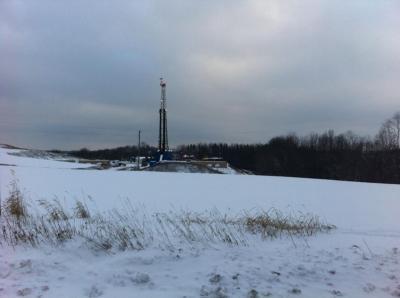
    Tapping a valuable resource or invading the environment? Research examines the start of fracking in OhioA new study is examining methane and other components in groundwater wells, in advance of drilling for shale gas that’s expected over the next several years in an Ohio region. Amy Townsend-Small, a University of Cincinnati assistant professor of geology, will present on the study on Sept. 27, at the 10th Applied Isotope Geochemistry Conference in Budapest, Hungary.

    The team of UC researchers spent a year doing periodic testing of groundwater wells in Carroll County, Ohio, a section of Ohio that sits along the shale-rich Pennsylvania-West Virginia borders. The study analyzed 25 groundwater wells at varying distances from proposed fracking sites in the rural, Appalachian, Utica Shale region of Carroll County. Because the region is so rural, the majority of the population relies on groundwater wells for their water supply.

    “This is a major area for shale gas drilling in Ohio, and one reason is because shales in the area are thought to have a good amount of liquid fuel as well as natural gas,” says Townsend-Small.

    The researchers are currently analyzing samples from groundwater wells over a one-year period, with water samples drawn every three-to-four months.

    The samples are being analyzed for concentrations of methane as well as hydrocarbons – a carcinogenic compound – and salt, which is pulled up in the fracking water mixture from the shales, which are actually ancient ocean sediments.

    “We’re examining changes over time resulting from fracking, and since this is just beginning in Ohio, we have the opportunity to make some baseline assessments,” says Townsend-Small.

    At an international forum, preliminary research out of the University of Cincinnati examines groundwater resources near hydraulic fracturing operations in the Buckeye State.

    (Photo Credit: Amy Townsend-Small)

    Hydraulic fracturing, or fracking, involves using millions of gallons of water mixed with sand and chemicals to break up organic-rich shale to release natural gas resources.

    Proponents say fracking promises a future in lower energy prices, cleaner energy and additional jobs amid a frail economy. Opponents raise concerns about the practice leading to increased methane gas levels (known as the greenhouse gas) and other contamination – resulting from spillover of fracking wastewater – of groundwater in shale-rich regions.

    Townsend-Small explains that some groundwater wells naturally hold a certain level of methane due to the decomposition of organic matter. It’s not toxic in drinking water, but high levels can result in explosion. The study includes measurements of stable isotopes, which can indicate whether methane is derived from natural organic matter decomposition or from fossil fuels.

    Other chemicals in fracking wastewater are toxic and dangerous for drinking water. Future UC research includes measurements of some of these compounds, as fracking progresses in the region.

    The U.S. Energy Information Administration reported this summer that natural gas reserve additions in 2011 ranked as the second-largest annual increase since 1977, with hydraulic fracturing adding to increased oil and gas reserves.

    The Ohio Department of Natural Resources reports that 882 sites in the state of Ohio have been awarded permits for fracking. In Carroll County, 327 sites have been awarded permits and 236 have been drilled.


    Post new comment

    The content of this field is kept private and will not be shown publicly.

    • Allowed HTML tags: <em> <strong> <cite><p><br><i><b><center><ul><li><div><html5:figure><html5:figcaption>
    • Lines and paragraphs break automatically.

    More information about formatting options

    CAPTCHA
    Sorry, we know you’re not a spambot, but they’re out there
  • Australia could be left with no policy on climate change

    Australia could be left with no policy on climate change

    New Senate likely to wave through carbon tax repeal but minor parties are sceptical of the Coalition’s Direct Action plan

    Beta
    Tony Abbott

    Tony Abbott may be forced to make major policy concessions to win support for Direct Action. Photograph: Lukas Coch/AAP

    Australia could be left without any policy to combat climate change with a new Senate likely to wave through the repeal of Labor’s carbon tax but sceptical of the Coalition government’s alternative $3.2bn Direct Action plan unless Tony Abbott makes major policy concessions.

    Labor and the Greens remain determined to block the carbon tax repeal in the existing Senate, which sits until next July, but after that the Coalition appears likely to get the necessary six of eight independent and minor-party votes that will hold the balance of power in the new Senate.

    But winning the necessary six votes in favour of Direct Action – which offers competitive government grants to reduce greenhouse emissions – could be much more difficult.

    The Liberal Democratic party’s David Leyonhjelm, set to win a Senate seat in NSW, told Guardian Australia he was “agnostic” about the science of global warming but “even if it is eventually confirmed government spending in Australia will not make the slightest bit of difference”.

    He said he would be voting for the carbon tax repeal and against Direct Action “unless the government offers some very significant concession that will make a big difference to the economy, for example lowering the company tax rate from 30% to 25%, or making a big reduction in the personal income tax rate, or possibly abandoning the alcopops tax and both of the last two increases in tobacco tax.”

    The government has already delayed a return to a budget surplus and any of the LDP’s tax propositions would blow a large hole in government revenue.

    Family First’s Bob Day, set to take a seat in South Australia, said his party did not accept the science of global warming and would vote for the repeal and against Direct Action.

    Clive Palmer
    , whose Palmer United party candidate in Tasmania, Jacqui Lambie, has been confirmed as the party’s second senator – the party may win a third spot in Western Australia – said his senators would vote for the repeal but his party “needed more information” on Direct Action.

    But the mining magnate, who is waiting for federal government environmental approval for his $8bn coalmine, rail and port project in Queensland’s Galilee basin, added: “The evidence shows 97% of carbon emissions are natural and 3% are human so we probably need to look at what is happening in nature.”

    The DLP senator John Madigan has said he will vote for the repeal but he is concerned about the burden Direct Action puts on taxpayers. During the election campaign he proposed an entirely different approach.

    “Instead of imposing a tax we should instead have a penalties scheme, whereby a company must, for example, reduce pollutants from 100% to, say, 75% within a defined time period, which is then broken down into yearly reduction targets,” Madigan said.

    “If that company fails to adhere to its annual target it must pay a financial penalty that would come straight out of its back pocket, not the consumer’s.”

    The South Australian independent senator Nick Xenophon has said he won’t vote for the carbon tax repeal until the Coalition agrees to change Direct Action to incorporate the intensity-based emissions trading scheme proposed by Frontier Economics.

    The Motoring Enthusiasts party’s likely Victorian senator, Ricky Muir, is declining to comment on policy until he has more information.

    And if the PUP does win its third Senate seat in Western Australia, where the battle for the final Senate spot is between it, Labor and the Sport party, the prime minister will need the mining magnate’s three votes to achieve the necessary six out of eight votes on every piece of legislation, unless he decides to negotiate with Labor or the Greens.

    The Coalition is likely to have 33 seats in the new Senate, meaning it will need six of the likely eight crossbench votes to achieve the 39 votes needed to pass legislation in the 76-seat Senate.

    Leyonhjelm said he was opposed to Abbott’s planned “green army” to do environmental cleanups while working for the dole and to the carbon farming initiative – a Labor policy the Coalition intends to continue and expand – which he said was just a scheme to “pay farmers to plant trees they can’t cut down for 100 years”.

    Abbott has said the carbon tax repeal will be his first piece of legislation when parliament resumes. He vowed to call a double dissolution election if it was blocked in the Senate.

    But with a more friendly Senate just months away it is much more likely he will wait until next after July to remove Labor’s tax – a move the power industry says means household power bills are unlikely to come down until July 2015.

    Daily email

    close

    Get the Australian politics email

    All the latest developments and analysis from the campaign trail, delivered to you every weekday.

  • 40 Percent of Food in the US Never Gets Eaten

    skip to main content

    Perrin Ireland’s Blog

    40 Percent of Food in the US Never Gets Eaten

    Perrin Ireland

    Posted September 20, 2013 in Health and the Environment, Living Sustainably, The Media and the Environment

    Tags:
    , , , ,

    Originally published at Scientific American Blogs. 

    My second round of inquiry into The Dating Game report by NRDC, which explains how the food dating system drives food waste in America, was with two authors of the report itself- Emily Broad Lieb, who directs the Harvard Law School Food Law and Policy Clinic, an expert on the legal system that contributes to this situation, and Dana Gunders, NRDC’s resident scientist on food waste.

    My chat with Emily Leib:

    Emily_Broad_Leib.png

    What is the Harvard Law School Food Law and Policy Clinic, and how did the Clinic become involved in this report?

    The Clinic is an experiential learning program in which law students are able to engage in practical, hands-on training working with real world clients to impact food laws and policies.

    Our work on expiration dates started as a project addressing the needs of our client, Doug Rauch, who was looking to start a new model of  food store that would sell food that was still good but might otherwise go to waste. After conducting some research for him on all of the state laws regarding food expiration date labeling, we realized that the system was in major need of an overhaul and we thought this was a great way to use the clinic’s energies. This is an area where the legal system, rather than improving a social issue, is actually at fault for creating more food waste and reduced consumer safety.

    The first thing that stood out to me in looking at the report is that the food labeling system is described as “confused.” Why would you say that is?

    The system most definitely is confused! It is such a mess that it is hard to even call it a “system.” Since there is an absence of regulation at the federal level, states have stepped into the void and are regulating food labeling in a range of different ways.

    We had trouble finding any two states that had the same rules. As an example, New York does not require dates on any foods and does not regulate the sale of foods after dates that are voluntarily placed, but the six neighboring states all have requirements that certain foods are labeled and/or regulate sale of foods after those dates. The very fact that states are so inconsistent with one another shows that these dates have nothing to do with food safety, because food safety outcomes are not varying from state to state based on these date labeling laws.

    Yet all of this confusion is hidden from consumers, so that it appears as a “system” to consumers and they treat date labels as if they are meaningful. Most people we talk to are shocked to find out that the terms used are undefined, that there are no rules about how dates are set, and that the labels are so inconsistently regulated.

    When I see a “sell by” date on a package, what does that actually mean?

    “Sell by” generally is a date that is intended for manufacturers to communicate to retailers so that retailers will know when something needs to be sold by so that it still has shelf life for the consumers, and otherwise should be rotated off the shelves. But because there is no set legal definition of this term, this is not always the case. In fact, some states treat “sell by” as if it is the same as “use by” and “best before”. But in general, I think consumers can look at sell by and know that this is intended as a stock rotation date and that foods are still safe and fresh for a few days after that date.

    What about ‘use by’ or ‘best by’ dates? What is the difference between those two categories?

    Again, since these dates are not defined, there is no set meaning for these terms. And in the US, there is no consistent difference between the two – they are often used interchangeably. In other countries, like in the EU, “use by” is linked with safety, and “best before” with quality, but this is not necessarily the case in the US.

    The report focuses on how the labeling system ends up inadvertently creating food waste, but you also reference how under-regulation of the food labeling system also causes food safety issues. Can you explain that?

    The main issue is that consumers not only rely on food dates as a reason for tossing food that is still perfectly edible and safe, but they also seem to believe that all foods will be safe prior to the expiration dates, so they will continue to eat food that has actually been stored or handled unsafely. So the overreliance on dates and the misunderstanding of dates as safety indicators causes problems on both ends.

    How could federal regulations of food labeling be improved?

    After conducting all of this state and industry research, as well as looking at the impacts on consumers, I’m convinced that improving and standardizing the inconsistent and ineffective system of date labels would help consumers maximize their food budgets, reduce food and resource waste, and improve food safety. In my mind, the most straightforward way to do this is using federal regulation. This is not to say that industry could not do a lot of good with voluntary changes, but because there is such a range of state laws regarding date labels and they are so different from one another, there are actually some limitations on what changes industry can make. So unless the really strict states change their rules or until the federal government steps in to create uniform rules, industry action can be a great first step but may not be able to get us to the best system. That said, because I assume it costs a lot for companies to keep up with all the state laws (many of which are still changing – four states passed new expiration date laws in 2012), I think there are also benefits to industry in terms of reduced administrative costs if they have a uniform law.

    How has this work affected you personally?

    Starting to do work in this area has completely changed my household’s consumption habits – we spend much more time looking into the best ways to store food so it lasts longer and we never throw food away on any “expiration” date unless it looks or smells bad or we know we have had it for longer than we should. We have only had good experiences doing this – we are saving food and saving money!

    ~~~

    My chat with Dana Gunders, NRDC’s project scientist on food and agriculture:

    Dana_Gunders.png

    What got you interested in this report to begin with?

    The report stems from a larger report we worked on, the Wasted Report, where we looked at the drivers and extent of food waste across the country. We landed on expiration dates as one topic that’s driving food waste, and a system that’s not really serving consumers or industry at all.

    I’m interested in this idea that it’s not serving consumers or industry. Can you tell me more about that?

    Consumers are interpreting these dates to mean that food is unsafe to eat, or that there’s some safety implication behind the dates, whereas in fact the dates are really about quality. They’re thinking it’s an objective, rational system, whereas in fact there’s a great amount of subjectivity to the whole thing. Not too long ago, I went into a Trader Joe’s store and took a look at the milk section. All the milk is Trader Joe’s branded, and on the same type of milk, between the gallon and half gallon, there were two different types of dates. Fat free milk, with half gallon and quart, the same product had different information- one was a Best By date and one had no letters on it. Same exact product and totally different dating system.

    There’s confusion in the industry as well- the lack of standardization is causing industry money. There’s a report put out by the industry in 2003 where they estimate there’s $900 million worth of product not being sold because of expiration date. Some portion of that they attribute to lack of standardization.

    A former CEO of a grocery chain told me a story that they were buying the same meats as the competitor across the street, but their store was putting the date three days out, whereas the competitor was putting it as five days out. They thought they were making the product seem fresher that way, but when they started interviewing people they found they were going across the street to purchase meat, because they were assuming that with five days out it had more time left and was therefore fresher. They changed it and all was well. But that’s how arbitrary some of these dates can be.

    What are the environmental implications for this kind of food waste?

    Across the country, about 40% of food never gets eaten. When you think about the fact that in the US, 80% of our fresh water consumption, over half of our land area, and 10% of our energy budget goes to putting food on our tables. If we’re not eating that food, that’s a terrible use of those resources. In the UK, a study of British households showed that in homes, 20% of the waste that is really avoidable was coming from confusion over expiration dates. Our estimate is very back of the envelope, but if we apply that in the US, households could be spending between $275 and $455 dollars a year as a family unit on food that they’re throwing out prematurely.

    What are NRDC’s recommendations to improve this situation?

    The bottom  line is that we would like to see a less confusing and more standardized system of dates. 91% of people reported throwing food away out of concern for its safety on the sell by date, at least occasionally–and that’s the date manufacturers are using to guarantee to the store the product will have shelf life left after it’s purchased. (From an industry report called the US Grocery Shopper Trends 2011, by Food Marketing Institute- the major trade association for food retailers.) Our first recommendation is to hide that sell by information and replace it with a date that is more helpful for consumers, so they don’t throw their food away on that date thinking it’s bad.

    Our second recommendation is to have a consumer-facing dating system that’s much more clear in what it’s trying to convey. There should be a clear distinction as to whether it’s a quality date or a safety date, and perhaps more transparency as to how that date was arrived at.

    If it’s a safety message, then let’s use those words. Let’s say, “Unsafe to eat after.” If it’s about peak quality, then let’s use words that clearly convey that. Maybe we should use something like “Maximum freshness before” or “Peak quality before”.

    If I want my food to be as good as it can be, should I still pay attention to the sell by date?

    That date is the manufacturer’s suggestion for when it’s at its very peak quality. What does it mean to not be at its peak quality? It depends on which product. If you think about a box of Mac N Cheese that has a date of March 2015- what’s going to happen if you eat that in May 2015? You probably won’t be able to tell the difference.

    ~~~

    This is Part 2 of a two-part series. See Part 1 here: Dr. Ted Labuza on Slime, Bombs, and

  • Global Warming About to Claim Three Quarters of a Billion People

    Global Warming About to Claim Three Quarters of a Billion People

    Wednesday, 25 September 2013 14:57 By The Daily Take, The Thom Hartmann Program | Op-Ed

    Glacier.A glacier in the Himalayas. (Photo: Karunakar Rayker / Flickr)Three quarters of a billion people is a lot of people.

    And that’s how many people, within the next 22 years, will almost certainly run low on water – a necessity of life – in just the regions whose rivers are supplied with water from the glaciers in the Himalayas.

    To put that in perspective, 750 million people is more than twice the current population of United States. It’s about the population of all of Europe. In the year 1900 there were only 500 million people on the entire planet. Seven hundred fifty million people is a lot of people.

    The IPCC – the international body of scientists analyzing global climate change – is releasing its new report in stages over the next week and this early piece was reported on by the Financial Times on Monday. Under the headline “Climate Change Chief Sounds Alert on Himalayan Glaciers,” the opening sentence of the article by Pilita Clark summarizes a very tightly:

    “The glaciers of the Himalayas are melting so fast they will affect the water supplies of a population twice that of the US within 22 years, the head of the world’s leading authority on climate change has warned.”

    And that’s just the Himalayas and the rivers flow out of their glaciers toward South Asian regions including India, Pakistan, Nepal, Bhutan, and China. There are similar glaciers along the mountain ranges of western South America that supply water to other hundreds of millions of people – they are all at risk, too. We’re even seen it here in the United States, with last year’s drought in the West. Glaciers are changing in Europe, and the regions of Tanzania supplied by the famous “Snows Of Kilimanjaro,” are drying up in ways that are creating serious drought problems for the people in those parts of Africa.

    Contrary to what the front groups funded by the fossil fuel industry would have you believe, climate change doesn’t just mean the winters are milder. Or the plants have more carbon dioxide.

    It means that hundreds of millions of people will be displaced, will starve, and will die. It means wars. It means famines. It means raging forest fires and the death of grasslands. It means the acidification of our oceans and the destruction of our ocean ecosystems. It means that we stand on the edge of tipping points that hurtle humanity toward extinction.

    Yes, extinction.

    There have been five mass extinctions in the history of the Earth, times when more than half of all life died and all the top predators – animals like us – vanished or nearly finished. All of these mass extinctions were provoked by geologically-sudden global warming.

    And now we are driving a similar process by burning fossil fuels.

    People around the world are already dying from global climate change. Wars are already being fought because of climate change. The Earth is changing before our very eyes.

    There are solutions, ranging from a carbon tax to rapid transitions into alternative energy. We need to be pursuing them now.

    The debate is long over. The world is waking up.

    And the fossil fuel Industry is being shown for what it is – fossils promoting fossils, intellectual frauds and greedheads.

    It’s time to move from the energy forms of the 19th century into the modern, clean, nonpolluting energies currently available in the 21st-century. Now.

    This article was first published on Truthout and any reprint or reproduction on any other website must acknowledge Truthout as the original site of publication.

  • World won’t cool without geoengineering, warns report

    This will promote much spirited debate

    World won’t cool without geoengineering, warns report

    Global warming is irreversible without massive geoengineering of the atmosphere’s chemistry. This stark warning comes from the draft summary of the latest climate assessment by the Intergovernmental Panel on Climate Change.

    Delegates from national governments are discussing the draft this week, prior to its release on Friday morning.

    According to one of its lead authors, and the latest draft seen by New Scientist, the report will say: “CO2-induced warming is projected to remain approximately constant for many centuries following a complete cessation of emission. A large fraction of climate change is thus irreversible on a human timescale, except if net anthropogenic CO2 emissions were strongly negative over a sustained period.”

    In other words, even if all the world ran on carbon-free energy and deforestation ceased, the only way of lowering temperatures would be to devise a scheme for sucking hundreds of billions of tonnes of carbon dioxide out of the atmosphere.

    Much of this week’s report, the fifth assessment of the IPCC working group on the physical science of climate change, will reaffirm the findings of the previous four assessments, published regularly since 1990.

    It will point out that to limit global warming to 2 °C will require cumulative CO2 emissions from all human sources since the start of the industrial revolution to be kept below about a trillion tonnes of carbon. So far, we have emitted about half this. Current emissions are around 10.5 billion tonnes of carbon annually, and rising.

    Since the last assessment, published in 2007Speaker, the IPCC has almost doubled its estimate of the maximum sea-level rise likely in the coming century to about 1 metre. They also conclude that it is now “virtually certain” that sea levels will continue to rise for many centuries, even if warming ceases, due to the delayed effects of thermal expansion of warming oceans and melting ice sheets.

    The draft report says the available evidence now suggests that above a certain threshold of warming, the Greenland ice sheet will almost disappear within approximately 1000 years, which will result in 7 metres of global sea-level rise. It estimates that the threshold may lie between 1 °C and 4 °C of warming, but is not confident of this figure.


    Have your say

    Only subscribers may leave comments on this article. Please log in.

    Only personal subscribers may leave comments on this article

    Subscribe now to comment.

    All comments should respect the New Scientist House Rules. If you think a particular comment breaks these rules then please use the “Report” link in that comment to report it to us.

    If you are having a technical problem posting a comment, please contact technical support.