Category: Uncategorized

  • $250k in 24 hours! The Climate Council gets off to a flyer

    $250k in 24 hours! The Climate Council gets off to a flyer

    Inbox
    x
    Cameron Neil via CommunityRun camneil76@gmail.com via controlshiftlabs.com
    6:22 PM (39 minutes ago)

    to me

    Hi everyone

    It has been an amazing day for our new citizen-funded Climate Council!

    Because of people like you, like us, The Climate Council has already raised $250,000 in less than 24 hours – half way to its goal of $500,000 for the week. You can see the update and message of thanks from The Climate Council here: http://youtu.be/M5_Sd17Tkkk and check out the website here http://www.climatecouncil.org.au/.

    The support has been truly inspiring! In addition to the 4,300 of you who have signed this petition, The Climate Council now has almost 20,000 likes on Facebook, 4,154 followers on Twitter, was trending on Twitter this morning, had its twitter account suspended because it grew so fast, had their site crash because of so much traffic, and has been generating a huge amount of media interest all day!

    I encourage all of you, having signed our petition here, to head over to The Climate Council’s website, if you haven’t already, and both sign up as a supporter, and donate some cash.

    For those of you who want to contribute skills or time, you can go here and register your interest: https://docs.google.com/forms/d/1nqhDf-Yj_2xoqf2wYSiG0Koz5OfGpVRsk7rb2e68sXg/viewform?edit_requested=true

    I’ve had quite a few emails from people about wanting to make monthly and tax deductible contributions to The Climate Council – what I have done is made a donation today, through the website, with an expectation that once they have their initial funding and are up and running, The Climate Council will let us know how to set up ongoing monthly contributions. They may not be able to offer tax deductibility – again, that will have to be something they explore after getting themselves re-established with our help.

    Finally, amidst a sea of media today (I’ve done a few radio interviews, hopefully doing our collective voices justice), we did get a shout out in a Guardian Australia article here: http://www.theguardian.com/environment/2013/sep/24/climate-council-faces-titanic-struggle?CMP=soc_567.

    Thank you all for your support!

    Cameron

    ps some of you have been asking – I have no affiliation or role with The Climate Council.

    You received this email because you signed the petition ‘We’ve done it! Your ‘citizen-funded Climate Commission’ = the new Climate Council!’. If you don’t want to receive emails from the ‘We’ve done it! Your ‘citizen-funded Climate Commission’ = the new Climate Council!’ campaign in the future, please unsubscribe.

    YouTube – Videos from this email
  • Climate Council faces ‘titanic struggle’, says Tim Flannery

    Climate Council faces ‘titanic struggle’, says Tim Flannery

    Donors to reborn climate body include ‘James of NSW’ who gave first $15, and former Defence Force chief Chris Barrie

    Tim Flannery in the studio
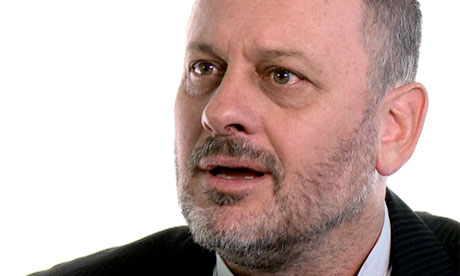
    Tim Flannery says the council will act ‘largely in the same way as the commission’. Photograph: guardian.co.uk

    Tim Flannery has said that Australia is set for a “titanic struggle” over how to deal with the challenge of climate change, as he revealed further details on how his “Obama-style” funded Climate Council will operate.

    Flannery, who last week lost his job as the head of the Climate Commission after the government axed its funding, announced the resurrection of the body on Tuesday morning under the new guise of the Climate Council.

    The council will act “largely in the same way as the commission” according to Flannery, with a remit to inform the public of the impact of climate change. Instead of government funding, the organisation will be supported with donations from the public, with each of the former climate commissioners working pro bono.

    The first donation came at midnight last night, a sum of $15 from “James of NSW”, Flannery said, with a further 1,000 donations since then. Nearly 4,000 people have signed a petition calling for the work of the Climate Commission to continue.

    Details have not been released of other donors, although former Defence Force chief Chris Barrie has confirmed he has provided funds, calling the work of the commission “fantastic”.

    Flannery said: “We’ll be raising money Obama-style, via small donations made online from ordinary Australians, although in my view they are extraordinary Australians. They are the ones who have stepped up and recognised the need and sacrificed just a bit to ensure the job gets done.

    “We’ve been blown away by people’s generosity and we hope more and more people will join that move to donate and ensure the message remains strong.

    “We [the former climate commissioners] agree that without an informed public, Australia is unlikely to make the decisions to safeguard us against a dangerous climate.

    “This work is really important to me, personally. When you look at the business-as-usual projections for climate change, I can tell you the outcome looks horrific. I’m filled with horror at the thought of those young Australians facing that dismal future. In fact, it is utterly unacceptable.”

    Flannery added: “Make no mistake, we are in the middle of a titanic struggle. Indeed, the fight for a clean and safe future is reaching its peak. We can, and indeed the science tells us we must, in the next few decades shift decisively away from fossil fuels and to a clean energy technology.

    “Resistance and disinformation keep growing. This isn’t a time for giving up; rather it’s time for determination, for standing up for what’s right.”

    Flannery said the Climate Council will be apolitical and “fiercely independent”. Its first work, to be conducted by former climate commissioners Lesley Hughes and Will Steffen, will be distilling the message of the upcoming IPCC climate change reports.

    Greg Hunt, the environment minister, said that the rebirth of the commission as the Climate Council vindicated the government’s decision to scrap the body.

    “That’s how democracy should work,” he told the ABC. “If people want to invest in those with a particular view, they have a right and a freedom to do that, and our job is to make sure that we deal with the core scientific agencies, that we protect the taxpayers’ funds.

    “The fact that this can be done at the private level shows that taxpayers’ funds were not required from the outset.”

    The government predicts it will save $580,000 this year and $1.6m in future years from ditching the Climate Commission. The work of providing analysis of climate change will be shared among the Department of Environment, the Bureau of Meteorology and the CSIRO.

    Green light

    close

    Sign up for the Green light email

    The most important environment stories each week including data, opinion pieces and guides.

    Sign up for the Green light email

  • Dr David’s Suzuki’s Speech

    If you’re watching #qanda and want more David Suzuki, we have his 70 min speech from @MelbFestival 2010 right here: http://wheelercentre.com/videos/video/david-suzuki/ …

    Retweeted by x4media
  • Abbott Has Got The Culture War He Wanted

    24 Sep 2013

    Abbott Has Got The Culture War He Wanted

    By Ben Eltham

    Abbott has nixed the Climate Commission and authorised a round of high profile funding cuts and sackings. Progressives are well equipped to fight back – and must, writes Ben Eltham

    So much for a “no surprises government”. The first fortnight of the Abbott Government has been nothing if not full of surprises.

    The biggest surprises haven’t come from Tony Abbott and his ministers themselves, but rather from how quickly they have reignited the culture wars. Whatever the weary protests of those burnt out from the last round of conflict during the Howard era, the culture wars are unmistakably back.

    In part, this is due to the amazingly ideological nature of the new government’s targets: senior public servants, scientists, climate change bodies, public health agencies, academic researchers and the board of the National Broadband Network. The score-settling has been open and unashamed.

    Tim Flannery, for instance, has long been a bête noire for conservatives. Few progressives grasp the figure of hate he has become for right-wing bloggers and agitators. The abolition of the Climate Commission was indeed an election promise, but the fact that the Coalition scheduled it right at the top of their first term agenda tells us how influential the climate sceptics in the Liberal Party have become.

    How did the right react to the news of the Climate Commission’s destruction? Ecstatically. Prominent climate skeptic Jo Nova crowed that “the science-propaganda agency is gone for good.” Andrew Bolt thundered that Greg Hunt should ask Flannery to pay back his salary. “Hunt should instead have asked Flannery how much of his $180,000 a year salary he’d refund after getting so many predictions wrong,” Bolt wrote.

    The war on science is just getting started. Immediately after being sworn in, Abbott sacked three department secretaries, and arranged the retirement of a fourth. Two were key drafters of Labor’s carbon policies: Martin Parkinson and Blair Comley. One was highly respected Immigration Department boss Andrew Metcalfe, whose principled opposition to towing back boats in Senate Estimates marked him for destruction. The Coalition plans to cut $100 million from the Australian Research Council and abolish a string of public health agencies that perform such wasteful functions as publishing health statistics and researching crime.

    Shooting the messenger, or at the very least controlling the message, seems to be a general theme of the new Coalition government.

    Over at Operation Sovereign Borders, new Immigration Minister Scott Morrison has overtly stated he will withhold critical information of boat tow-backs and asylum seeker arrivals, ostensibly for “operational” reasons. Apparently, informing Australian citizens about the arrival of seaborne asylum seekers, as Labor did, is merely helping the people smugglers. This didn’t seem to worry Scott Morrison when he was in opposition: as shadow immigration spokesman, he liked to drive a big truck around marginal seats advertising the number of boats that had turned up on Labor’s watch. Now in government, his conversion from valor to discretion is complete.

    The dismissal of the NBN board by Malcolm Turnbull is another example of the trend. At first blush, Turnbull’s objection seemed like it was payback for Siobhan McKenna and her temerity in pushing on with the legislated functions of the company she chaired. But Turnbull was really attacking the idea of the NBN as a universal provider of telecommunications services. Turnbull’s underlying issue was with the idea of the NBN as a monopoly infrastructure project. That’s incompatible with the Liberal belief that the private sector will always deliver such services more efficiently – the dismal history of Australian telecommunications companies notwithstanding.

    Some on the left have decried the new outbreak of the culture wars, claiming that it distracts from the real issues. Writing in The Guardian, for instance, Jeff Sparrow argued last week that the storm of controversy over Abbott’s blokey cabinet choices played into conservative hands. “If the left doesn’t understand the logic of culture wars,” Sparrow wrote, “we are doomed to be defeated in them.”

    A glance at the way the right sees the coming culture wars shows how wrong Sparrow is. Quite apart from the fact that the gender make-up of the key decision-making body of the land is more than a symbolic issue, the very idea that the symbolic content of politics can somehow be divorced from the material aspects seems mistaken, almost quaint.

    The right understands that symbols are every bit as important as policy details – much more important, in fact. That’s why the Abbott Government and its right-wing cheerleaders are pursuing the climate scientists with such vigour. The right knows that our disintegrating global environment is the largest challenge to the hegemony of capital since Marx. Climate change questions the very fundamentals of neoliberal ideology, including the centrality of economic growth and the idea – explicit in the tenets of monotheistic religions like Christianity – that the natural environment is a resource that exists for the beneficial exploitation of humans.

    Right-wingers know they’ve rejoined battle. They’re itching for a fight they think they can win. A typically grandiloquent article today from Nick Cater, who is leaving The Australian, illustrates the point. “The Left will have to man up if it intends to fight back,” Cater intones, with apparently unconscious paternalism, “for the momentum is running against progressive conformity.” For Cater, “the dismissal of Flannery” signals that Tony Abbott’s government “will not bow to political correctness and has little time for the nanny state.”

    Like it or not, the next three years will see bitter battles over culture, the humanities and science. If the left decides not to fight them, they are battles that will be certainly be lost.

    As it turns out, I think the left will fight. Indeed, the next three years are likely to see a much wider and more effective mobilisation of progressive sentiment than Tony Abbott and the tacticians at Crosby Textor may have bargained for.

    In that respect, this morning’s announcement of the rebirth of the Climate Commission as the crowd-funded and independent Climate Council is a straw in the wind. Only days after its abolition, Flannery and his colleagues at the Commission have reconstituted themselves with the help of a groundswell of community support. As independent analysts, they loom as far more effective critics of Greg Hunt and Tony Abbott’s risible Direct Action policy than they would have been while still formally part of the government.

    The rebirth of the Climate Council could not have occurred with anything like this speed and flexibility in the Howard years. It is a sign that the tools for community opposition to Tony Abbott’s agenda are effective and potentially highly disruptive. Like many a general before him, Abbott may soon realise that getting into a culture war is much easier than getting out.

    PrintPrint

          googleplus
  • Tim Flannery relaunches scrapped Climate Commission as community-funded body

    This newly formed group MUST get all the support we can give !!!!

    Tim Flannery relaunches scrapped Climate Commission as community-funded body

    Updated 53 minutes ago

    A climate science body abolished by the Federal Government has been relaunched as a community-funded organisation.

    The Climate Commission was set up to advise on the science and economics of carbon pricing, but was scrapped by the Government last week.

    The group’s former chief commissioner, Tim Flannery, says thanks to enormous public support, it has been relaunched as the Climate Council.

    “We need a clear, credible and authoritative and independent voice in this area and there has never really been a more critical time for that voice than now,” he said.

    He says the council has raised about $7,000 since donations started at midnight.

    “We had our first donation from James in Perth for $15 at midnight. We’ve been raising $1,000 an hour and that’s through the night,” he said.

    Under the previous government’s model, the Climate Commission cost about $5.4 million over a four-year period.

    But Professor Flannery says the Climate Council should be able to run on a smaller budget.

    Professor Flannery says he and his fellow former commissioners will volunteer their time to get the council started.

    The Climate Institute’s Mark Wooton says a publicly funded body is still needed so scientific work is not unduly influenced by private donors and it can have the ear of government.

    “We need independent voices there that are set outside the processes of outside funders and also the immediacy of government to step forward and hold account perhaps the government at times, but also to be a good communicator of the science,” he said.

    ‘Proof’ taxpayer funds not needed

    Environment Minister Greg Hunt told Lateline that the public support for the Climate Council proves the Government should not have pay for body.

    “That’s the great thing about democracy, it’s a free country and it proves our point that the commission didn’t have to be a taxpayer funded body,” he said.

    Mr Hunt said the Climate Commission never did original research, instead it simply collated research from other scientific agencies like the Bureau of Meteorology.


    But Professor Flannery says that was the whole point of the Climate Commission.

    “We have simply one goal and one objective and we always have, which is to take the science, the economics of climate change and what’s happening internationally in terms of action and present it in a clear and understandable way and authoritative way to the Australian public,” he said.

    He says the Climate Commission was an apolitical organisation and the Climate Council will stay that way as well.

    “Our independence is central to our credibility, so if people do donate, don’t try to influence what we do,” he said.

    Topics: environment, environmental-policy, climate-change, government-and-politics, australia

    First posted 11 hours 15 minutes ago

  • Western Australia home to the country’s fastest growing council regions: Cameron Kusher

    Western Australia home to the country’s fastest growing council regions: Cameron Kusher

    By Cameron Kusher
    Monday, 23 September 2013

    Queensland’s capital city, Brisbane, is the largest municipality in Australia.  There are 1,110,473 people that live in Brisbane, comprising just fewer than 5% of Australia’s population.  The second largest council, which is also in the south-east corner of Queensland, is the Gold Coast where the population is less than half that of Brisbane’s at 526,173 persons.

    In fact, four of the top five council regions (including the entirety of the ACT) are located in south-east Queensland; the other two are Moreton Bay and Sunshine Coast.  These four council regions alone account for slightly more than 10% of the national population.

    Not only is the Brisbane City Council region large in both area and population, it is growing rapidly.  Over the past 10 years the area has increased in population by about 20,200 persons each year or nearly 1,700 new residents every month.

    There are some benefits of having a large council.  The taxation base is larger providing some economy of scale and the urban planning and approval process tends to be much more streamlined.

    Largest LGAs

    The fastest growing council regions:

    Six out of the top ten fastest growing council regions around the country are located across Western Australia and four of them are in the Perth metro area.  The Perth Council has recorded a population growth rate of 125% over the ten years to June 2012 to reach a population of roughly 19,000 residents.  The population growth rate across the Perth council area remains high at 3.7% over the 2011/12 financial year, however, councils like Serpentine-Jarrahdale (+8.1%), Kwinana (+6.6%), Armidale (+5.9%) and Wanneroo (+5.6%) have been outpacing Perth over the most recent 2011/12 period.

    Rapid population growth provides both positive and negative factors for local governments.  The positive is that population growth is stimulatory – more people means a larger tax base and more demand for housing which provides a multiplier effect on the local economy as higher demand for housing translates to more employment, building materials, white goods, home furnishings etc.

    The challenge with rapid population growth is to ensure infrastructure and local amenity keeps pace with the population.  More people means more traffic, a greater requirement for public transport, health care, schooling, retail facilities etc.  Delivering on infrastructure is expensive and is the area where many governments simply fail to deliver.

    Fastest growing LGAS

    The fastest shrinking council regions:

    The regions where population growth is in significant decline can broadly be described as regional areas often associated with agriculture.  Five of the top 10 regions where the population is shrinking the most rapidly are located across Western Australia’s wheat belt.  Camamah (-30.1%), Dalwallinu (-27.8%), Mukinbudin (-27.7%) and Wyalkatchem (-20.6%) are seeing their population dropping from an already low level.

    The trend towards smaller populations across these rural areas is nothing new and is likely to continue as the average population of these areas grows older and younger cohorts move away.  A declining population creates other issues including a lack of social diversity.

    The challenge for many of these areas is to continue providing infrastructure and services across a lower taxation base.  These regions are extremely large in area which compounds the costs involved in servicing the sparse population.

    Largest declines in population

    The councils with the highest population densities:

    Nine of the 10 most densely populated council regions are located within the Sydney metro area.  The most densely populated council is Waverley where there are just over 7,500 residents per square kilometre.  The council includes popular suburbs such as Bondi, Tamarama, Dover Heights, Bronte and the Waverley.  About 80% of Waverly dwellings are units or semi-attached.

    The regions with the highest population density tend to be located very close to the central business districts of each capital city and are of course synonymous with fewer detached homes, more apartments and town houses, efficient public transport systems and wide range of facilities and social options close by.

    highest density LGAs


    Cameron Kusher is senior research analyst at RP Data.