Category: Uncategorized

  • Growth plan targets jobs

    Wednesday September 18, 2013
    Larger / SmallerNight Mode

    Growth plan targets jobs

    By BRENDAN CRABB

    Sept. 16, 2013, 3:53 p.m.

    THE population of the Shellharbour Local Government Area is projected to increase by 23,300 by 2031, and appropriate housing, employment and infrastructure must be established to meet such growth.

    The population of the Illawarra region will reach 353,000 people in 2031 – an increase of 65,000 people – according to the latest projections from the state government.

    In 2011, Shellharbour’s population was 66,050. According to the projections released by the Department of Planning and Infrastructure, a high fertility rate and “old population age profile” are the key drivers of said change in Shellharbour.

    “Our new planning system will for the first time specifically recognise and support long-term strategic planning – helping ensure we have the housing, employment and infrastructure that we need alongside growth,” department acting deputy director-general Andrew Jackson said.

    In the Illawarra by 2031, 18 per cent of the population will be under 15 years of age, 60 per cent will be 15-64 and 22 per cent will be at least 65.

    “The changing make-up of the community will mean the planning system needs to be able to provide a range of housing choices,” Mr Jackson said.

    “Clearly, we will require more accommodation specifically designed for the needs of older people.”

    The government is currently exhibiting its Illawarra Discussion Paper on some of the challenges facing the region and wants public feedback.

    The paper, on exhibition until November 11, identifies the need for an additional 31,300 homes and 24,250 jobs in the Illawarra by 2031.

    The Illawarra Regional Growth Plan, when finalised, aims to lay the groundwork to support the region’s growth.

    The Property Council of Australia recently hosted the NSW Minister for Planning and Infrastructure, Brad Hazzard, who visited Wollongong to provide an overview of the Illawarra Regional Growth discussion paper.

    Illawarra Chapter chair David Laing said since the release of the 2006 Illawarra Regional Strategy, greenfield delivery rates were about 34 per cent lower than the amount required to meet the detached dwelling projections of 760 dwellings per year.

    “The results showed that the government released enough zoned land in this time period but servicing issues and policy impediments have prevented it coming to market as quickly as anticipated,” Mr Laing said.

    “There are however clear signs of life in the region and we need to capture the optimism that is seeing product begin to move to market.”

    Shellharbour councillor and Throsby Greens candidate Peter Moran recently noted the presence of the steelworks, a heavy industrial base and highly skilled workforce meant the Illawarra was well-placed to take advantage of renewable energy infrastructure.

    “To construct the infrastructure to allow that to happen needs a highly skilled, industry savvy workforce – we have an advantage in those,” he said.

    Save today
    • 1.5kW Solar System

      (6 panels)

      Save up to $1,147.

      with solar incentives.

    • 3.0kW Solar System

      (12 panels)

      Save up to $2,294.

      with solar incentives.

    • 5.0kW Solar System

      (20 panels)

      Save up to $3,811.

      with solar incentives.

    Local News

    Mayor retains top job

    MARIANNE Saliba has kept Shellharbour City’s top job for another 12 months, while Paul Rankin has also retained the deputy …

    Monster Action

    Monster Action

    THERE will be monsters everywhere at Albion Park Oval on Saturday night – monster trucks that is!

    Featured News

    Festival goes global

    Festival goes global

    THE inaugural Folk by the Sea Festival will put Kiama on the map locally and globally.

    Finding that first job

    Finding that first job

    AN Albion Park teenage job-seeker believes many people his age take having regular work for granted, making it …

  • French Islands Under Threat from Rising Sea Levels

    Science News

    … from universities, journals, and other research organizations

    French Islands Under Threat from Rising Sea Levels

    Sep. 17, 2013 — By the year 2100, global warming will have caused sea levels to rise by 1 to 3 meters. This will strongly affect islands, their flora, fauna and inhabitants. A team of researchers from the Ecologie, systématique et évolution (CNRS/Université Paris-Sud) laboratory studied the impact of rising sea levels on 1,269 French islands throughout the world. Their model shows that between 5% and 12% of these islands could be totally submerged in the future. On a worldwide scale, they predict that about 300 endemic island species are at risk of extinction, while the habitat of thousands of others will be drastically reduced.


    Share This:

    This research has been published in the journals Global Ecology and Biogeography (August 2013) and Nature Conservation (September 2013).

    The most recent predictions of global warming show that sea levels will rise by between 1 and 3 meters before the end of the century. In some scenarios involving a catastrophic breaking-up of Greenland ice, sea levels are expected to rise by 6 meters. Any such increase will have serious consequences for the populations, flora and fauna of the coastal strip.

    The researchers at the Ecologie, systématique et évolution laboratory first concentrated on the effects rising sea levels would have on French islands. Throughout the world, 2,050 French islands of more than a hectare are likely to have animal and plant communities.

    The scientists compared the terrain contours of 1,269 of these islands with sea level models, taking into account the fact that sea levels will not rise evenly over the Earth’s surface because the sea is not flat: some areas of the ocean will rise higher than others. Results showed that, even if sea levels only rose by one meter, France would lose 6% of its islands (12% in the case of a 3-meter rise). French Polynesia and New Caledonia would be the worst affected: two thirds of the islands that would be submerged are in these archipelagos. There are French islands in all of the world’s oceans, at all latitudes and with many different types of geology and ecology. Extrapolating their results to the 180,000 islands in the world, the scientists believe that the Earth could lose 10,000 to 20,000 islands before 2100.

    The researchers went on to look at the biodiversity loss that could result from sea-level rise, notably in certain biodiversity hotspots such as the Mediterranean, the Philippines and New Caledonia. Twenty percent of the world’s biodiversity is found on islands, including a very large proportion of endemic species.

    The Philippines, Indonesia and the Caribbean are the most vulnerable areas: at least 300 endemic species, mostly plants, are seriously threatened by rising sea levels. Yet even this figure is a conservative estimate, as the researchers only considered species whose distribution areas would be totally submerged by 2100. They did not include the species that would lose 70%, 80% or even 90% of their natural range, nor additional factors such as lateral erosion or centennial tides, which can make large expanses of the coastal strip inhospitable for many species. Neither did they include natural disasters like cyclones.

    This work shows how much of a threat rising sea levels pose to the biodiversity of island ecosystems, highlighting the necessity to take account of the consequences of this unstoppable process in designing policies for the conservation and protection of endangered species.

    Share this story on Facebook, Twitter, and Google:

    Other social bookmarking and sharing tools:


    Story Source:

    The above story is based on materials provided by CNRS (Délégation Paris Michel-Ange), via AlphaGalileo.

    Note: Materials may be edited for content and length. For further information, please contact the source cited above.


    Journal Reference:

    1. Céline Bellard, Camille Leclerc, Franck Courchamp. Impact of sea level rise on the 10 insular biodiversity hotspots. Global Ecology and Biogeography, 2013; DOI: 10.1111/geb.12093

    APA

    MLA

    CNRS (Délégation Paris Michel-Ange) (2013, September 17). French islands under threat from rising sea levels. ScienceDaily. Retrieved September 18, 2013, from http://www.sciencedaily.com­ /releases/2013/09/130917113023.htm?utm_source=feedburner&utm_medium=email&utm_campaign=Feed%3A+sciencedaily%2Fearth_climate%2Fearth_science+%28ScienceDaily%3A+Earth+%26+Climate+News+–+Earth+Science%29

    Note: If no author is given, the source is cited instead.

    Search ScienceDaily

    Number of stories in archives: 143,078

    Find with keyword(s):
    Enter a keyword or phrase to search ScienceDaily’s archives for related news topics,
    the latest news stories, reference articles, science videos, images, and books.

    Recommend ScienceDaily on Facebook, Twitter, and Google:

    Other social bookmarking and sharing services:

    Interested in ad-free access? If you’d like to read ScienceDaily without ads, let us know!

    Social Networks


    Follow ScienceDaily on Facebook, Twitter,
    and Google:

    Recommend ScienceDaily on Facebook, Twitter, and Google +1:

    Other social bookmarking and sharing tools:

    Breaking News

    … from NewsDaily.com

    In Other News …

    Science Video News


    Our Changing Climate

    Geographers have projected temperature increases due to greenhouse gas emissions to reach a not-so-chilling conclusion: climate zones will shift and. …  > full story

    Strange Science News


    Free Subscriptions

    … from ScienceDaily

    Get the latest science news with our free email newsletters, updated daily and weekly. Or view hourly updated newsfeeds in your RSS reader:

    Feedback

    … we want to hear from you!

    Tell us what you think of ScienceDaily — we welcome both positive and negative comments. Have any problems using the site? Questions?


  • Hundreds Missing as Floods Destroy Colorado Homes, Farms

    Hundreds Missing as Floods Destroy Colorado Homes, Farms

    By Amelia Hennighausen – Sep 17, 2013 9:44 AM ET

    Photograph by Dennis Pierce/Colorado Heli-Ops via AP Photo

    Next > < Prev 1 of 18

    Crushing Force

    Massive flooding in Colorado has left as many as eight people dead and hundreds missing. Rain continued to impede rescue efforts on Monday.

    This aerial photo from Sept. 13 shows a raging waterfall destroying a bridge along Highway 34 toward Estes Park, Colorado. Water devastated the Front Range and thousands have been forced to evacuate, with an unconfirmed number of structures destroyed.

    Read more Energy & Sustainability news.

    Advertisement
  • Death Toll From Hurricane Ingrid, Tropical Storm Manuel Rises As Thousands Stranded In Acapulco, Mexico

    Not down to climate change EH !!! pull the other one,

    Death Toll From Hurricane Ingrid, Tropical Storm Manuel Rises As Thousands Stranded In Acapulco, Mexico

    By MICHAEL WEISSENSTEIN 09/17/13 08:37 PM ET EDT AP

    hurricane ingrid death toll
    42
    15
    10
    30
    Get Green Newsletters:

    ACAPULCO, Mexico — The death toll rose to 47 Tuesday from the unusual one-two punch of a tropical storm and a hurricane hitting Mexico at nearly the same time. Authorities scrambled to get help into, and stranded tourists out of, the cutoff resort city of Acapulco.

    With roads blocked by landslides, rockslides, floods and collapsed bridges, Acapulco was cut off from road transport after Tropical Storm Manuel made landfall on Sunday. The terminal at the city’s international airport was flooded, but not the landing strips.

    Emergency flights began arriving in Acapulco to evacuate at least 40,000 mainly Mexican tourists stranded in the resort city where some streets were transformed into raging brown rivers. .

    Interior Secretary Miguel Angel Osorio Chong told the Radio Formula that 27 people had died because of the storm in the Pacific coast state of Guerrero, where Acapulco is located. Osorio Chong said 20 more people died nationwide, many as a result of former hurricane Ingrid, which struck the Gulf coast on Monday. Mexican meteorologists said it was the first time since 1958 that two tropical storms or hurricanes had hit both the country’s coasts within 24 hours.

    While most Acapulco hotels seemed to be operating normally on Tuesday, many outlying neighborhoods were without water or electricity, and floodwaters were knee-deep at the city airport’s check-in counters.

    Federal officials said it could take at least another two days to open the main highway to Acapulco, which was hit by more than 13 landslides from surrounding hills, and to bring food and relief supplies into the city of more than 800,000 people.

    Two of Mexico’s largest airlines, Aeromexico and Interjet, began running flights to and from the still-swamped international airport. Those with tickets got first priority, then families with small children or elderly members, officials said.

    Interjet’s director Luis Jose Garza told Milenio TV that his airline’s first flight was taking 150 passengers back to Mexico City and it hoped to run four to six such flights Tuesday.

    Guerrero state’s government said 40,000 tourists were stuck in the city, but the head of the local chamber of business owners said reports from hotels indicated the number could be as high as 60,000.

    Thousands of stranded tourists lined up outside an air force base north of Acapulco to try to get a seat on one of a handful of planes flying to Mexico City. Many said they’ve been waiting at the base for hours after they were unable to return to Mexico City by road.

    Gavin McLoughlin, 27, a teacher at Mexico City’s Greengates School, said he went to Acapulco on a late night bus Thursday with about 30 other teachers at the school, many of whom are in their 20s.

    “We had no idea of the weather,” the Englishman said. “We knew there was a hurricane on the other side but not this side.”

    They group was staying at the Copacabana Hotel and by Sunday they were unable to leave the hotel because of the rain.

    The main coastal boulevard was open Tuesday and most hotels appeared to have power, water and food. But that was little consolation to those unable to leave Acapulco.

    “It’s probably one of the worst holidays I’ve ever been on,” said David Jefferson Gled, a 28-year-old English teacher at Greengates School. “It wasn’t really a holiday, more of an incarceration.”

    Military officials said there would be 17 flights on Tuesday. Nine planes and five helicopters shuttling back and forth between Mexico City and this air force base.

    The situation was far more serious in the city’s low-income periphery, where steep hills funneled rainwater into neighborhoods of cinderblock houses.

    City officials said about 23,000 homes, mostly on Acapulco’s outskirts, were without electricity and water. Stores were nearly emptied by residents who rushed to stock up on basic goods. Landslides and flooding damaged an unknown number of homes.

    Natividad Gallegos said she returned Monday from shopping to find her house in a poor Acapulco neighborhood buried by a landslide that killed six members of her family, including her two children. “I saw a lot of strangers with picks and shovels, digging where my house used to be,” she said, weeping.

    The coastal town of Coyuca de Benitez and beach resorts further west of Acapulco, including Ixtapa and Zihuatenejo, were cut off after a river washed out a bridge on the main coastal highway.

    Marcela Higuera, who runs a bread stall in the Coyuca market, said the only aid that had arrived so far was a helicopter that rescued stranded flood victims.

    “Flour’s already run out. There isn’t any in Coyuca,” she said, adding that the Coyuca River had swept away the bridge and riverside restaurants, and flooded low-lying neighborhoods. “This is the worst storm that I’ve seen.”

    “There are hundreds of people in shelters and they’re begging for clothes and blankets because everything they have is wet,” Higuera said. “They had to leave without taking anything.”

    Remnants of Manuel continued to drench Mexico further up the Pacific coast and the U.S. National Hurricane Center said it was expected to become a tropical storm by Tuesday night or Wednesday morning near resorts at the tip of the Baja California Peninsula.

    One of the biggest single death tolls was reported in the Gulf Coast state of Veracruz, where 12 people died when a landslide smashed into a bus traveling through the town of Altotonga, about 40 miles (65 kilometers) northwest of the state capital.

    More than 23,000 people fled their homes in Veracruz state due to heavy rains spawned by Ingrid, and 9,000 went to emergency shelters. At least 20 highways and 12 bridges were damaged, the state’s civil protection authority said.

    ____

    Associated Press writers Jose Antonio Rivera in Acapulco and Mark Stevenson and E. Eduardo Castillo in Mexico City contributed to this story.

    Also on HuffPost:

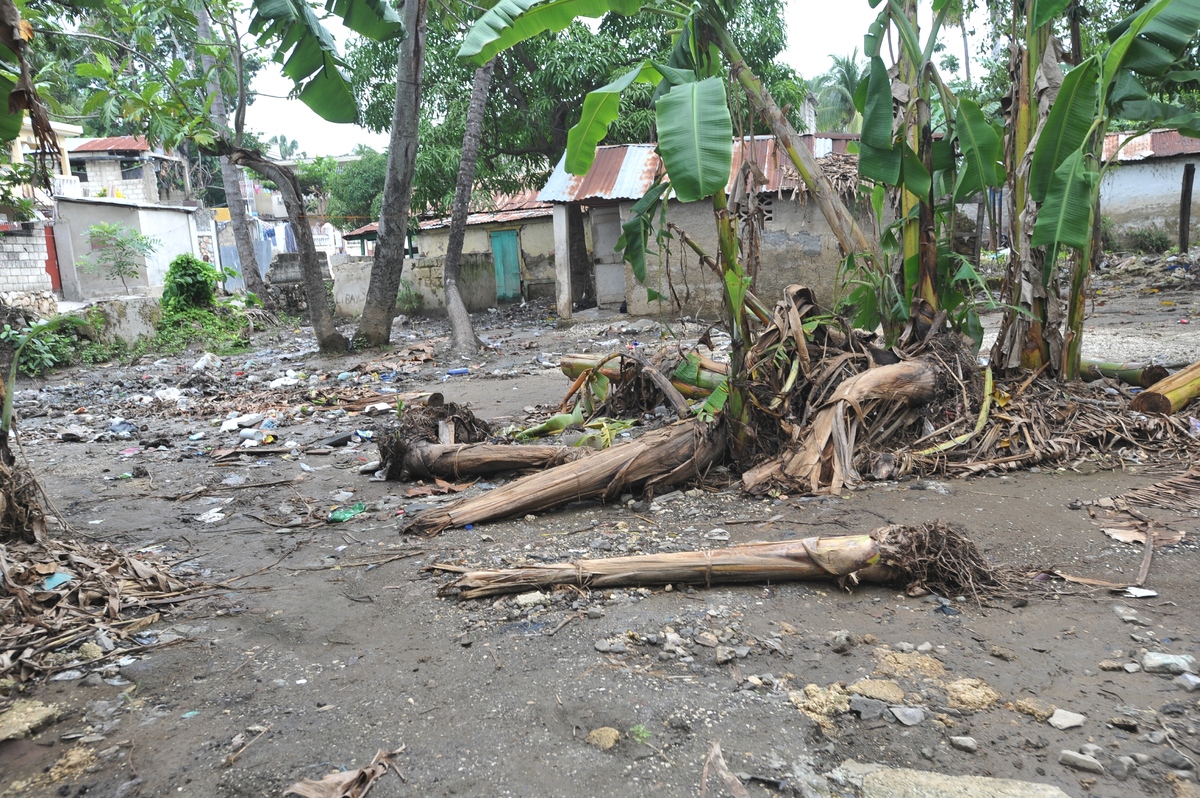
    Hurricane Sandy’s Aftermath In Haiti
    1 of 8
    Getty Images
    • Next
    • Contribute to this Story:
    • Send us a tip
    • Send us a photo or video
    • Suggest a correction
    FOLLOW GREEN
    150k
  • Communism in mining – Liberal Party style

    Communism in mining – Liberal Party style

    The Australian today carries the story ‘Use it or lose it, miners warned by the Coalition’ ,reporting that incoming industry Minister Ian Macfarlane is warning companies that if they put resource extraction projects on hold they could have their retention leases revoked by the government.

    Macfarlane told The Australian: “I want to put the industry on notice that if the deposits are able to be developed they’ve got to be developed”.

    And in terms that will alarm those concerned about climate change he also said: “We’ve got to make sure that every molecule of gas that can come out of the ground does so.”

    Trying to rush resource development projects faster than private sector wishes is dumb economics. There are good reasons for why economic wealth is likely to be maximised over the long term by allowing the private sector to be free to choose which time to progress their project.

    This is an area where market-oriented economists and environmentalists can probably agree, while politicians of both political persuasions will fervently disagree (Labor are similar to the Liberals on this topic).

    Rushing resource projects into production is heavily favoured by politicians because they are typically only around for a short period of time. As they say a week is a long time in politics, and politicians have a preponderance to think within the three-year timeframe between elections. At best a minister might hold their portfolio for six years. By nine years the odds are the electorate will grow tired of you even with a good record.

    Accelerating resource development sounds great to a politician because it means they get to see the the jobs, investment and taxation revenue while they’re still in office. Sure, that might come at the expense of benefits down the track but ‘who cares’ says the politician because they won’t be around.

    The problem is that this may not maximise the cash flows of the resource – not just for mining shareholders, but also for the Australian people who tend to be around for 70-plus years. By allowing companies to make their own decisions about when to develop projects it can actually help the community as a whole because of two reasons related to companies maximising profit:

    1) Companies will generally look to maximise price for the resource. Bringing a project on too soon can lead to oversupply which depresses prices. This flows directly through to the broader Australian community through state government royalties which are often tied to prices. It also hurts Federal Government tax revenues which are tied to profits (although the Coalition wishes to abolish the Minerals Resource Rent Tax, which is a type of profits tax).
    2) Companies will also be focused on minimising costs to construct the project. If you try to bring on too many projects all at the same time you don’t actually improve overall employment, you just end up hitting capacity constraints. This leads to cost inflation which while it might benefit some construction workers’ wages for a period of time, hurts the cost-competitiveness of the rest of the economy and increases the cost of living. It also hurts federal government tax revenue which is tied to company and project profit.

    We’ve already seen that there are limits to how many gas resource projects we can bring online at the same time before we see cost blowouts. The rush of LNG projects in northern WA and Gladstone, Queensland have all experienced serious capacity constraints in construction personnel and capability. In addition we’ve seen how the mining and LNG boom has led to crowding out of other sectors of the economy. Some of these sectors may provide greater longevity of employment and income than a construction boom, but have struggled to survive through its short-term inflationary spike in costs.

    If anything this illustrates that even the private sector tends to rush resource projects too fast. That’s because they are in a competitive situation with other miners, and won’t be thinking to maximise long-term cashflows for the entire Australian resource base. So the last thing we need is governments trying to push them even faster, unless of course we’d like to be charitable to India, China, Japan and Korea by giving them cheaper commodities.

    Studies of human psychology find that people feel a loss of income far more severely than a gain. Also people experience rapidly diminishing returns with further gains in income. For these reasons a steady but maybe slow rise in incomes is far better for people’s sense of welfare than a rapid rise in income followed by a bust.

    Politicians trying to impose their own preferred timetables for resource development is more akin to Soviet Russia than liberal free markets. And it’s equally bad for the Australian community.

    More from Business Spectator

  • Hansen Study: Climate Sensitivity Is High, Burning All Fossil Fuels Would Make Most Of Planet ‘Uninhabitable’ HANSEN

    Hansen Study: Climate Sensitivity Is High, Burning All Fossil Fuels Would Make Most Of Planet ‘Uninhabitable’

    By Joe Romm on September 17, 2013 at 3:46 pm

    scorched earth

    James Hansen, the country’s most prescient climatologist, is out with another must-read paper, “Climate sensitivity, sea level and atmospheric carbon dioxide.” The paper, co-authored by a number of Hansen’s former colleagues at NASA, is an antidote to the rosy scenarios the mainstream media have recently been pushing.

    The key findings are

    • The Earth’s actual sensitivity to a doubling of CO2 levels from preindustrial levels (to 550 ppm) — including slow feedbacks — is likely to be larger than 3–4°C (5.4-7.2°F).
    • Given that we are headed towards a tripling (820 ppm) or quadrupling (1100 ppm) of atmospheric CO2 levels, inaction is untenable.
    • “Burning all fossil fuels” would warm land areas on average about 20°C (36°F) and warm the poles a stunning 30°C (54°F). This “would make most of the planet uninhabitable by humans, thus calling into question strategies that emphasize adaptation to climate change.”

    Burning all or even most fossil fuels would be a true scorched Earth policy.

    Given that James Hansen has been right about global warming for more than 3 decades, his climate warnings need to be taken seriously.

    The article makes two crucial point that so many media reports on climate sensitivity ignore. First, we are headed well past a doubling of CO2 levels. Second, “slow feedbacks, especially change of ice sheet size and atmospheric CO2, amplify the total Earth system sensitivity by an amount that depends on the time scale considered.” We know from recent research that two CO2 feedbacks alone — thawing permafrost and ocean acidification — have been projected to increase total global warming by 2100 as much as 2°F!

    If we stay anywhere near our current emissions path, we face catastrophic levels of warming. Indeed, if we ultimately burn all of fossil fuels, Hansen et al find almost unimaginable consequences:

    Our calculated global warming in this case is 16°C, with warming at the poles approximately 30°C. Calculated warming over land areas averages approximately 20°C. Such temperatures would eliminate grain production in almost all agricultural regions in the world. Increased stratospheric water vapour would diminish the stratospheric ozone layer.

    More ominously, global warming of that magnitude would make most of the planet uninhabitable by humans. The human body generates about 100 W of metabolic heat that must be carried away to maintain a core body temperature near 37°C, which implies that sustained wet bulb temperatures above 35°C can result in lethal hyperthermia. Today, the summer temperature varies widely over the Earth’s surface, but wet bulb temperature is more narrowly confined by the effect of humidity, with the most common value of approximately 26–27°C and the highest approximately of 31°C. A warming of 10–12°C would put most of today’s world population in regions with wet a bulb temperature above 35°C…. Note also that increased heat stress due to warming of the past few decades is already enough to affect health and workplace productivity at low latitudes, where the impact falls most heavily on low- and middle-income countries

    Climate Progress has previously written on the literature projecting a collapse in labor productivity from business as usual global warming. But the scorched Earth would have a vastly smaller carrying capacity than our current one, and avoiding mass starvation would become the primary task of humanity.

    Hansen et al. note that this may not even require burning all of fossil fuels. It could happen on our current emissions path — if the slower (decadal) feedbacks are as strong as some paleoclimate analysis suggests. Back in 2011 we reported on a paleoclimate paper in Science that found we are headed towards CO2 levels in 2100 last seen when the Earth was 29°F (16°C) hotter.

    In that sense, Hansen et al. is a conservative analysis. Their whole paper is worth reading. The authors conclude:

    Most of the remaining fossil fuel carbon is in coal and unconventional oil and gas. Thus, it seems, humanity stands at a fork in the road. As conventional oil and gas are depleted, will we move to carbon-free energy and efficiency—or to unconventional fossil fuels and coal? If fossil fuels were made to pay their costs to society, costs of pollution and climate change, carbon-free alternatives might supplant fossil fuels over a period of decades. However, if governments force the public to bear the external costs and even subsidize fossil fuels, carbon emissions are likely to continue to grow, with deleterious consequences for young people and future generations.

    It seems implausible that humanity will not alter its energy course as consequences of burning all fossil fuels become clearer. Yet strong evidence about the dangers of human-made climate change have so far had little effect. Whether governments continue to be so foolhardy as to allow or encourage development of all fossil fuels may determine the fate of humanity.

    Scorched Earth image via durn.newgrounds.com