Category: Uncategorized

  • NY Times: Did Denier ‘Intimidation Tactics’ Move IPCC To ‘Lowball’ Sea Level Rise And Climate Sensitivity?

    NY Times: Did Denier ‘Intimidation Tactics’ Move IPCC To ‘Lowball’ Sea Level Rise And Climate Sensitivity?

    By Joe Romm on September 10, 2013 at 5:39 pm

    lowThe New York Times has a must-read article on how and why the Intergovernmental Panel on Climate Change “seems to be bending over backward to be scientifically conservative” in its forthcoming assessment.

    Climate Progress has explained many times why the IPCC’s Fifth Assessment Report (AR5) is “an instantly out-of-date snapshot that lowballs future warming because it continues to ignore large parts of the recent literature and omit what it can’t model.” For instance, we have known for years that perhaps the single most important carbon-cycle feedback is the thawing of the northern permafrost. The AR5′s climate models completely ignore it, thereby lowballing likely warming this century.

    The Times explains what the AR5 is doing:

    In one case, we have a lot of mainstream science that says if human society keeps burning fossil fuels with abandon, considerable land ice could melt and the ocean could rise as much as three feet by the year 2100. We have some outlier science that says the problem could be quite a bit worse than that, with a maximum rise exceeding five feet.

    The drafters of the report went with the lower numbers, choosing to treat the outlier science as not very credible.

    In the second case, we have mainstream science that says if the amount of carbon dioxide in the atmosphere doubles, which is well on its way to happening, the long-term rise in the temperature of the earth will be at least 3.6 degrees Fahrenheit, but more likely above 5 degrees. We have outlier science that says the rise could come in well below 3 degrees.

    In this case, the drafters of the report lowered the bottom end in a range of temperatures for how much the earth could warm, treating the outlier science as credible.

    … Is it right to throw out bleeding-edge science in the one case while keeping it in the other?

    I’m not certain that the upper ranges of sea level rise projections are an “outlier.” A good discussion of the recent literature can be found in this January 2013 RealClimate post by Stefan Rahmstorf. His and other research suggests sea level rise could easily be 5 feet if we don’t reverse emissions trends soon.

    Similarly, plenty of recent research supports a higher than expected warming this century — see “Science Stunner (11/12): Observations Support Predictions Of Extreme Warming And Worse Droughts This Century” and, from August, “Ocean Acidification May Amplify Global Warming This Century Up To 0.9°F.”

    The key point is that while many in the media seem to buy into the myth that the IPCC overstates future impacts, the NY Times points out “it is interesting to see that in these two important cases, the panel seems to be bending over backward to be scientifically conservative.” The NYT notes “there are climate scientists not serving on the committee this year” whose “fear is that the intergovernmental panel might be pulling punches.”

    The question, then, is why is the IPCC so conservative, why does it appear to be pulling its punches? True, a certain degree of caution is inherent in science, which is by nature skeptical. That goes double in a consensus-based process where any member country can object to any number. But the Times goes further:

    It turns out that the Nobel Prize, welcome as it might have been back in 2007, served the same function it has for many other scientists who have won it over the years: it painted a fat target on the committee’s back. The group has been subjected to attack in recent years by climate skeptics. The intimidation tactics have included abusive language on blogs, comparisons to the Unabomber, e-mail hacking and even occasional death threats.

    Who could blame the panel if it wound up erring on the side of scientific conservatism? Yet most citizens surely want something else from the group: an unvarnished analysis of the risks they face.

    It would certainly be a shame if the IPCC felt in the least bit cowed by the shameless tactics of the most successful disinformation campaign in history. The IPCC does science no favor by pulling its punches. Future generations are all but certain to suffer through the worst-case scenario — multiple, simultaneous catastrophes — if we keep taking no serious action. They won’t much care why the scientific community pulled its punches, only that they are stuck with the grim consequences for decades if not centuries.

    To its credit, the New York Times doesn’t end its story there:

    To be clear, even if the Intergovernmental Panel on Climate Change ends up sticking with the lowball numbers in these two instances, they are worrisome enough. As best scientists can tell, the question with sea level is not whether it is going to get to three feet and then five feet of increase, but merely whether it will happen in this century or the next.

    Likewise, with temperature, the panel is saying only that the lowball numbers are possible, not that they are likely. In fact, the metric used in the scientific literature, the temperature effect of doubled carbon dioxide, is merely a convenient way of comparing studies. Many people make the mistake of thinking that is how much of a global temperature increase will actually occur.

    At the pace we are going, there is no reason to think that we will stop burning fossil fuels when carbon dioxide doubles. We could be on our way to tripling or quadrupling the amount of that heat-trapping gas in the atmosphere. In that case, experts believe, even an earth that turns out to be somewhat insensitive to carbon dioxide will undergo drastic changes.

    Precisely. Climate Progress and others have been endeavoring to make this point for years.

    In terms of real world warming and its impact on humans, the equilibrium climate sensitivity (ECS) is a mostly theoretical and oversimplified construct. The ECS tells you how much warming you would get IF we started slashing emissions asap and stabilized carbon dioxide concentrations in the air around 550 parts per million (they are currently at 400 ppm, rising over 2 ppm a year, and accelerating) — AND IF there were no slow feedbacks like the defrosting permafrost (or acidification slowing the uptake of carbon by the ocean).

    Obviously, the high estimates are even scarier. So it would be nice to hear an explanation from the drafters of this coming report as to why they made decisions that effectively play up the low-end possibilities. But with the report still officially under wraps, they are not speaking publicly. We are thus left wondering whether it is a matter of pure professional judgment — or whether they have been cowed by the attacks of recent years.

    Even better would be if the IPCC fixed the problem in the final draft.

  • Hand the power of preferences back to the people

    Header PromoThe Drum on ABC News 24

    Hand the power of preferences back to the people

    By ABC’s Antony Green

    Posted 2 hours 52 minutes ago

    The answer to the Senate’s electoral malaise doesn’t lie in punishing minor parties, but rather in handing the power over preferences back to the voters, writes Antony Green.

    The debate over micro-parties and their impact on the 2013 Senate election result has a terrible sense of déjà vu for me.

    Yesterday I dug through my scrapbooks to find past articles by me going back nearly two decades warning about how the loose rules on the registration of political parties, as well as the use of ‘above the line’ group preference ticket voting, would lead to giant ballot papers and distorted election outcomes.

    I first wrote on the subject for the Sydney Morning Herald on February 16, 1995, warning that the then record number of 24 registered parties could produce a ballot paper one metre long for the 1995 NSW Legislative Council election.

    The election resulted in the first example of preference ‘harvesting’ with the election of Alan Corbett from a party called A Better Future for Our Children. Collecting preferences from all the other micro-parties on the ballot paper, he was elected despite polling just 1.28 per cent of the vote and spending only $1,589 on his campaign.

    It was an example noticed by others, especially a certain Glenn Druery, who has come to prominence in recent times, advising micro-parties as the so-called ‘preference whisperer’.

    In 1997, I returned to the issue of preference harvesting for the NSW Legislative Council. In the Sydney Morning Herald on June 10, 1997, I wrote:

    Under current electoral laws, the 1999 election for the NSW Legislative Council could be reduced to political farce. Instead of 21 members elected reflecting the will of the people, the result could be distorted by electoral rorting and voter confusion.

    I went on to warn about the dangers of larger ballot papers and smaller print size, and prophetically wrote:

    The result of the election could be determined by voters incapable of reading the ballot paper, unable to manipulate a ballot paper one metre square, or simple bewildered and unable to find the party they want to vote for.

    I also noted that:

    The current growth in registered parties is clearly about manipulating this process with a string of stalking horse parties with attractive names running to attract votes that can be delivered as preferences to other related minor parties or perhaps to one of the major parties.

    A surge of minor-party registrations in the run-up to the 1999 NSW Legislative Council election saw me return to the topic and warn that:

    Voters will be faced with a farcical ballot paper stacked with stalking-horse parties, the final result owing more to shady backroom deals and the random chance of the draw for ballot positions. The state’s political balance of power may well fall to a bunch of ragtag political fringe dwellers. (Sydney Morning Herald, January 27, 1999)

    I then warned that voters would be forced to manipulate a ballot paper the size of a small tablecloth, a prediction that came true when 264 candidates in 81 groups nominated, the parties and candidates triple decked across a ballot paper one metre wide by 700mm deep.

    On March 11, 1999, as nominations were about to close, I warned that the:

    … 60 or so micro-parties that have mushroomed since the start of the year are organising a complex swap of preferences. To take part, political fringe-dwellers from across the political spectrum have been prepared to ignore ideological differences for their chance at the Holy Grail of election to the Legislative Council. It is like a giant Lotto syndicate, with one or two of the number winning election to a prize job that in eight years delivers more than a million dollars in salary and allowances and gives influence over all government legislation.

    My suggested solution:

    … abolish ticket preferencing, forcing parties to campaign for votes rather than lobby for the preferences of other parties.

    After the close of nominations, I returned to the subject on March 17, 1999, and wrote:

    The man who understands how to use the system best is Glenn Druery of an until now unknown party called People First. His direct flow of preferences, and the secondary flow as intermediary parties are excluded, means his election is almost certain.

    In the end I was wrong about Druery’s election. One of his front parties, the Marijuana Smokers Rights Party, had a favourable ballot draw and polled too well, knocking Druery out and instead electing Malcolm Jones of the Outdoor Recreation Party, who received just 0.2 per cent of the vote.

    Jones’s victory came about thanks to preferences from 22 other parties, including Marijuana Smokers Rights, the Three Day Weekend Party, the Gay and Lesbian Party (which apparently had no gay and lesbian members), Animal Liberation, the Four Wheel Drive Party, the Marine Environment Conservation Party, the Women’s Party/Save the Forests and so on. How complex the preference arrangements were is shown by the fact that eight of the 22 parties that helped elect Jones in fact polled more votes than him.

    After the election I undertook research on how voters reacted to the tablecloth ballot paper by comparing the preferences of below the line voters with the registered above the line preference tickets.

    It was clear that several of the party names were designed to deceive voters, tricking them into voting for a party and then harvesting the preferences and sending them elsewhere.

    • The Marijuana Smokers Rights Party directed preferences to Glenn Druery and Malcolm Jones, but of those who voted below the line for the party, 41 per cent gave preferences to the Greens and 12 per cent to the Australian Democrats.
    • The Gay and Lesbian Party directed its preference ticket to Druery and Jones, but below the line voters directed 33 per cent of preferences to the Greens, 29 per cent to the Australian Democrats and 12 per cent to Labor.
    • The Animal Liberation Party directed its ticket preferences to Malcolm Jones, but 44 per cent of below the line votes flowed to the Greens as preferences.
    • The Marine Environment Conservation Party had ticket preferences to Malcolm Jones but below the line votes flowed 59 per cent to the Greens.
    • The Wilderness Party had ticket preferences for Druery and Jones, but 51 per cent of below the line preferences went to the Greens.
    • The Women’s Party/Save the Forests had ticket preferences to Druery and Jones, but 48 per cent of below the line preferences flowed to the Greens.

    This is clear evidence that people who voted for the party below the line considered them to be environment parties and gave preferences accordingly. However, anyone thinking that way and voting above the line found their preferences effectively stolen and delivered to Glenn Druery and Malcolm Jones.

    Writing in the Sydney Morning Herald on September 11, 1999, I used the experience of the NSW tablecloth ballot paper to warn that exactly the same thing could occur at Senate elections.

    At the time Liberal Senator Helen Coonan was proposing a very high threshold quota to help keep minor parties out of the Senate. This was attracting outright opposition from both Labor and the Australian Democrats, but I warned that defending the existing system also risked political fringe dwellers getting hold of the balance of power.

    I wrote that:

    Ticket voting has led to the profusion of micro-parties. Like-minded parties unable to resolve personal and ideological differences are able to stand multiple candidates and swap preferences. Instead of micro parties being forced to stand behind a single platform with agreed candidates, ticket voting allows internal differences to go unresolved, with the lottery of the electoral system determining who gets elected

    At the time I supported some form of threshold quota as a solution, a proposal that has re-surfaced again in the light of the current Senate result. I wrote:

    Minimum quotas reward minor parties that build support by agreeing on common platforms and candidates, and campaign for votes instead of preferences. Such activities are the training ground in which future Senators will learn the skills to carry out their important role in the house of review.

    I no longer support threshold quotas because it has become more evident that above the line ticket voting is the real cause of parties being elected from low votes. A better solution is to deal with the cause of the problem, not impose an arbitrary threshold.

    If ticket preferencing under the control of parties were retained while imposing a threshold quota, the system would still be rorted. The current system advantages micro-parties set up as fronts for each other. Ticket voting with threshold quotas would advantage micro-parties set up as fronts for the major parties.

    The best way to reform the Senate’s electoral system is to deliver the power over preferences back into the hands of voters, the reform that was introduced in NSW after the farce of the 1999 Legislative Council election.

    I would propose the following measures.

    Tighten the regulation of parties

    Federal law requires only 500 members to register a party, where applying the same standards as NSW would require more than 2,000. NSW also requires that parties be registered 12 months before an election, a provision very much driven by the Labor Party’s shock at the sudden emergence of the No Aircraft Noise Party ahead of the 1995 election.

    A surge of newly registered parties was a feature of the 1999 NSW election and was repeated ahead of the 2013 federal election, helped by micro-parties having some idea of when the election was due to be held. Some delay in party registrations becoming effective will help in weeding out less serious parties.

    Stopping over-lapping party membership is also important. David Leyonhjelm, set to be elected as the Liberal Democrat Senator for NSW, is the registered office of both the Liberal Democrats and the Outdoor Recreation Party (Stop the Greens). Members of his party also seem to be closely associated with the Smokers Rights Party and the Republican Party.

    Political parties should be more heavily regulated as registration brings with it significant advantages. Parties are able to have their names printed on the ballot paper, and have the major advantage of being able to nominate candidates for any contest in the country without the need for local nominators. The Liberal Democrats took advantage of this provision to nominate NSW-based candidates for the Tasmanian Senate election.

    Keep ‘above the line’ voting but abolish between-party preferences

    The NSW reforms changed the meaning of a single ‘1’ above the line. Instead of adopting a ticket of preferences, such a vote became a single vote for the selected parties. No further preferences beyond the party were implied.

    Voters were given a new voting option to number groups above the line. So you could vote ‘1’ Family First and ‘2’ Liberal, and your vote would go to Family First, and if required later, would go to the Liberal Party. Parties can try to influence voters to fill in squares above the line, but they cannot control them.

    The NSW above the line voting system advantages parties that actively campaign, as by distributing how-to-votes with preference recommendations, parties can influence preference flows. Parties that don’t campaign for first preferences lose power to control how their preferences flow.

    This system is appropriate for the NSW Legislative Council where 21 members are elected, but may need some tweaking for the Senate where only six members are elected. In NSW, only 20 per cent of voters have been using the above the line preference option, though the rate has varied by party. Its use would probably increase if introduced for federal elections.

    NSW has had three elections using the new system, but only once have preferences changed the order candidates were elected – that was in 2011 when just enough voters filled in preferences to deprive Pauline Hanson of election to the final seat.

    Deposit laws

    Another increase in deposits may be required. An additional deposit could be introduced for groups wanting to have an above the line voting box.

    Optional below the line preferences

    Even if nothing else changed, a simpler method for below the line voting must be introduced. At the NSW Senate election, voters had two choices: select a single ticket above the line, or give 110 preferences below the line. In the Victorian Legislative Council only five preferences are required for a valid below the line vote, and some similar option must be adopted for the Senate.

    Changes to formulas

    The new above the line voting option is a form of optional preferential voting and will therefore increase the number of exhausted preferences, as will optional preferential voting below the line.

    The formulas for dealing with surplus to quota preferences of elected candidates will need to be changed so that exhausted preferences stay with an elected candidate, while ballot papers with preferences are given greater chance of continuing in the count. There are also other technical aspects of how surplus to quota preferences are dealt with that would need to change.

    No doubt the natural reflex of the larger parties will be to clamp down on the new entrants to politics. You can expect tough party registration laws, big increases in deposits and relatively high threshold quotas to be the first response.

    Punishing minor parties is the wrong approach as it addresses only the symptom of the Senate’s electoral malaise, not its cause. That cause is group ticket voting preferences and the tight control on preferences by political parties both major and minor.

    The real solution is one that hands the power over preferences back to the voters. The Senate should be elected to reflect the will of the electorate, not the arranged deals of a few backroom operators.


  • Skyscraper-sized Waves Recorded Beneath the Ocean

    g Topics pregnancy prostate cancer healthy eating research quantum physics public health

    Skyscraper-sized Waves Recorded Beneath the Ocean

    Sep 10, 2013 01:21 PM EDT
    The deep-sea waves are 800 feet tall, as high as a skyscraper.

    For the first time, scientist have recorded an enormous wave the size of a skyscraper breaking at a key location at the bottom of the South Pacific Ocean. (Photo : Tom Peacock, MIT | Wide Eye Productions)

    For the first time, scientists have recorded an enormous wave the size of a skyscraper breaking at a key location at the bottom of the South Pacific Ocean.

    Researchers from the University of Washington recorded the 800 foot wave breaking at a key bottleneck for ocean circulation where water of different density collides. Such massive underwater waves play a crucial role in long-term climate cycles, transporting heat, carbon, and nutrients around the world. Where and how these waves break is important to global climate as well as ocean circulation, the researchers said.

    Share This Story

    • 0
      inShare

    “Climate models are really sensitive not only to how much turbulence there is in the deep ocean, but to where it is,” said lead author Matthew Alford, an oceanographer in the UW Applied Physics Laboratory. “The primary importance of understanding deep-ocean turbulence is to get the climate models right on long timescales.”

    Alford led an expedition to the Samoan Passage, a narrow channel in the South Pacific Ocean that funnels water flowing from Antarctica. There, dense water around Antarctica sinks deep into the Pacific, eventually surging through a 25-mile gap in the submarine landscape northeast of Samoa.

    “Basically the entire South Pacific flow is blocked by this huge submarine ridge,” Alford said. “The amount of water that’s trying to get northward through this gap is just tremendous — 6 million cubic meters of water per second, or about 35 Amazon Rivers.”

    The surging water that flows through the gap forms giant submarine waves. Using instruments from their research vessel, Alford and his team observed waves breaking about three miles beneath the ocean’s surface. The team’s measurements show that when these giant waves break they produce an mixing effect that’s 1,000 to 10,000 times greater than what occurs in surrounding slow-moving waters.

    “Oceanographers used to talk about the so-called ‘dark mixing’ problem, where they knew that there should be a certain amount of turbulence in the deep ocean, and yet every time they made a measurement they observed a tenth of that,” Alford said. “We found there’s loads and loads of turbulence in the Samoan Passage, and detailed measurements show it’s due to breaking waves.”

    Alford said that the Samoan Passage is important because it mixes so much water, but that deep-sea mixing occurs in waters around the globe, adding that the mixing effect explains why cold water does not permanently pool at the bottom of the ocean.

    With a better understanding deep-ocean mixing, Alford said it could help create better simulations of global ocean currents and identify key positions to place instruments to monitor changes.


  • More than half of Queensland facing high fire danger

    More than half of Queensland facing high fire danger

    ABC Updated September 11, 2013, 11:35 am

    More than half of Queensland faces a very high fire danger, with firefighters on alert as hot and windy conditions affect large parts of the state.

    Peter Varley from the Rural Fire Service (RFS) says areas under threat stretch from the South Australia-Northern Territory border east to Toowoomba.

    Weather bureau spokeswoman Amber Young, meantime, says conditions are dangerous in the state’s west.

    “It will be quite dry and very windy out through those parts and hence the fire dangers will be enhanced,” she said.

    “Expecting temperatures around five to seven degrees [Celsius] above the September average.”

    Mr Varley from the RFS warns that in the current conditions a blaze could start easily.

    “We would ask people to be very vigilant and to be extremely careful with any grinding, welding, that sort of thing that can produce sparks,” he said.

    “Very dry, low humidity and high winds coming in from the west, so that’s a pretty dangerous situation.”

    He said the conditions were caused by a number of factors.

    “It’s caused by the winds from the west that are coming in from the desert areas obviously and then we’ve got very low humidity, so not much moisture in the air and temperatures are up to around 35 degrees,” he said.

    Residents urged to delay burn-offs

    Landholders are being advised to delay burn-offs this week because of the fire risk.

    Residents in inland areas at Mackay, central Queensland, the Wide Bay and Sunshine Coast are being warned to prepare for very high to extreme fire conditions today and tomorrow.

    RFS spokesman Peter Hollier says high temperatures, strong winds and low humidity make for perfect fire conditions and landholders need to be on alert.

    “If they are doing any hazard reduction burning they may want to consider putting that off for a few days until conditions ease,” he said.

    He says any fire that occurs during a heightened fire period is often unpredictable and fast moving and can endanger lives.

    Meanwhile, Brisbane will experience its hottest day in six months, expecting to reach 32 degrees Celsius in the city.

    Ipswich will be even warmer at 33C.

  • You made this happen. Congratulations and thank you. (ADAM BANDT)

    THIS CLEARLY SHOWS THE VALUE OF SOCIAL MEDIA, WHICH HAS BEEN VERY PREVALENT

    IN THIS ELECTION.

    On Sun, Sep 8, 2013 at 1:49 PM, Adam Bandt <info@adambandt.com> wrote:

    Dear Neville 

    We just showed the country what people power can do.

    You made this happen. Congratulations and thank you.

    This is a vote for people power, but this is also a vote that says that the people of Melbourne are sick of a race to the bottom. Elections should be about the best in us. Not the worst in us.

    The people of Melbourne have made it clear that they want to see a positive vision and plan for a clean economy and a caring society.

    Your commitment has kept me going and your hard work has changed politics in this country forever.

    I am so proud of you.

    Adam

    PS. We’ve only just begun. Please share our great news with your family and friends so they can sign up to be part of what we do from now on.

  • Underestimating climate change and underfunding innovation

    We are underestimating climate change and underfunding innovation

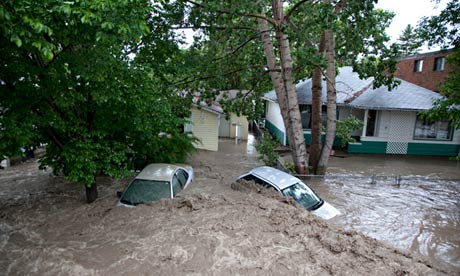
    The destructive power of extreme weather events, such as the Calgary floods, reduces our ability to invent, build and invest

    Calgary floods

    How can we fund our future if we are constantly remediating the destruction caused by extreme weather events? Photograph: Jordan Verlage/AP

    Sustainability has become a race between two kinds of destruction. The destructive power of a changing climate reduces our economic activity and forces us to divert available funds toward remediation and repair, threatening our ability to incubate and fund ‘creative destruction‘, first named by Joseph Schumpeter. Creative destruction replaces the old and unsustainable with new products, services and processes of greater value.

    By destroying what we have already built and forcing us to repair or write off old infrastructure, natural disasters undermine our ability to invest in the future. The increasingly frequent and severe natural disasters that climate change is causing threaten the innovation we so desperately need.

    Climate change makes three demands on the capacity of businesses, governments and individuals to invest scarce resources. First, we must adapt our existing systems to the new climate, adding more robust power and cooling systems, redeveloping almost all of our agricultural processes, building new levees and barrier islands, clearing flood plains of development and resettling affected businesses and families.

    Second, we must be prepared to write off or repair existing assets that will be damaged by storms, heat and drought, even as the insurance industry becomes more restrictive in its underwriting. Third, we must develop new technologies that will reduce and reverse our carbon emissions, a programme critical to our survival as a species. Every extreme weather event that causes damage costing billions to remediate diverts investment dollars away from productivity and into subsistence.

    Calgary

    In late June, sudden storms and a saturated water table overwhelmed two great rivers of southern Alberta, the Bow and the Elbow, flooding the downtown core of Calgary.

    It destroyed homes and businesses, forced the evacuation of tens of thousands and caused an estimated C$5bn in damage. A railway bridge collapsed under the weight of a cargo train, leaving carriages filled with toxic petroleum diluent dangling over the Bow River for nearly 24 hours. The disaster befell Calgary a week before the Stampede rodeo, which brings in C$340m annually.

    For many years, reports and planning documents warned of the potential for extraordinary losses due to flooding. But Calgary has never fully addressed the risks inherent in building a downtown core in a flood plain.

    The negative impact of the floods will be followed by insurance money, new mortgages and government disaster relief flowing into the areas most deeply affected. However, a great deal of value will have been written off, displacing investments in innovation.

    Creative destruction

    In recent years, Calgary has built an infrastructure to promote entrepreneurship. Innovate Calgary is a massive organisation providing assistance to start-ups. Haskayne, the University of Calgary business school, offers an entrepreneurship and innovation concentration. Startup Calgary creates networks among high-tech business founders, and AcceleratorYYC provides incubator services. There’s a group for women entrepreneurs. Together, this infrastructure has produced Canada’s highest number of entrepreneurs per capita.

    Many of these entrepreneurs have been creating greener alternatives, chasing the dream of a better future. They’ve built Twin Hills, a LEED-ND certified “next era” town, based in wetlands preservation and water and energy conservation, good public transit, reliable fibre optics, alternative energy use and entrepreneurial solutions. They have created green roofs and xeriscape garden installations. They are creating employee reward programmes that include green spending accounts. The Southern Alberta Institute of Technology is backing student-led innovations in green building technology.

    As is true almost everywhere, the only limit seems to be funding. There are simply not enough high-risk, high-reward funding sources to bring great ideas to fruition as viable products or companies. And now the increasingly indebted Alberta government and its people must find billions of dollars to help rebuild what has been lost.

    The future

    How can we fund our future if we are constantly remediating the destruction of our existing capital? If we are to reduce destruction of our capital due to climate-change related weather, we must identify and invest in the best new technologies and pursue them until they are viable.

    The problem of extreme weather will only become more dangerous. It has already become commonplace, destroying crops, riverbanks, homes, towns, factories and offices. Insurance providers, whether governments or corporations, are less willing and able to underwrite risks and compensate policy holders.

    Both natural and creative destruction make it clear that material objects – inventions, bridges, dams, early warning systems – are the building blocks of an economy. We must invent, build and invest in the ones that have the most value for our future. We cannot afford to do otherwise.

    This content is brought to you by Guardian Professional. Become GSB member to get more stories like this direct to your inbox

    &lt;div style=”display: none” id=”__document_write_ajax_div-14″&gt;&lt;/div&gt;&lt;SCRIPT language=’JavaScript1.1′ &gt;window[‘__document_write_ajax_callbacks__’][’14’]();&lt;/script&gt; &lt;NOSCRIPT&gt; &lt;A HREF=”http://ad-emea.doubleclick.net/jump/N799.286450.AMNET/B7863990;abr=!ie4;abr=!ie5;sz=300×250;u=xbAAXbk6pU-8rtsjD3rD33lLKgLHF6bFRCRjJus24fnCTIQgpaYl3nATDLiJ8xB4ZxCuqCeSHMmD3ipGOchRYjeAPRoe8SmlrkvQ;dc_ref=http://www.theguardian.com/;dc_ref_truncated=1;ord=1378806951?”&gt; &lt;IMG SRC=”http://ad-emea.doubleclick.net/ad/N799.286450.AMNET/B7863990;abr=!ie4;abr=!ie5;sz=300×250;u=xbAAXbk6pU-8rtsjD3rD33lLKgLHF6bFRCRjJus24fnCTIQgpaYl3nATDLiJ8xB4ZxCuqCeSHMmD3ipGOchRYjeAPRoe8SmlrkvQ;dc_ref=http://www.theguardian.com/;dc_ref_truncated=1;ord=1378806951?” BORDER=0 WIDTH=300 HEIGHT=250 ALT=”Advertisement”&gt;&lt;/A&gt; &lt;/NOSCRIPT&gt;

    • Guardian Small Business Awards

      Recognising SME talent and innovation across seven categories. Showcase your company’s success for a chance to win. Find out more and enter
    • Sustainable business courses

      Practical half-day courses from the Guardian on sustainability communications, brand, collaboration and leadership. Book now.

    About Guardian Professional

    • Guardian Professional Networks

      Guardian Professional Networks are community-focused sites, where we bring together advice, best practice and insight from a wide range of professional communities.

      Some of our specialist hubs within these sites are supported by funding from external companies and organisations. All editorial content is independent of any sponsorship, unless otherwise clearly stated. We make Partner Zones available for sponsors’ own content. Guardian Professional is a division of Guardian News & Media