Future climate change moving “from manageable to catastrophic”
Friday, August 23, 2013
The average American has probably never heard of the Intergovernmental Panel on Climate Change (IPCC), even though it has existed since Ronald Reagan was president and is considered by most climate scientists as providing a kind of gold standard for current climate science knowledge every few years. Its drawback is how extremely conservative it is. Since it operates on a consensus model, all statements require unanimous or near unanimous agreement. Pick any profession. Lawyers, truck drivers, brain surgeons, insurance salesmen, nurses, journalists or anything else you want to name. Then imagine gathering 2,000 of the most highly respected members of…
David Horsey, who drew the above cartoon recently wrote an editorial for the L.A. Times in which he wrote, “Ah, to be a conservative climate change denier. While real scientists must do all the research and engage in heated debates about just how bad things are going to be, the deniers can rest easy in the bliss of willful ignorance.” Horsey, who has won a Pulitzer Prize for his editorial cartoons, focused on the fact that the Intergovernmental Panel on Climate Change has reviewed all the science on climate change and concluded that the world’s oceans could rise three…
Thanks to Bob Baker for this. It really isn’t that hard to know what is true and what isn’t. From kindergarten to junior high to high school to college to graduate school, I cannot recall a lot of confusion or controversy. Within the education departments across the planet a fact is a fact. Two plus two is four. E=Mc2. Redding is really hot in the summer. It is only when politicians and media companies and Anthony Watts get involved that the science becomes distorted and confused. When money and power need the truth to be something it isn’t. And people…
The Greens have used their official campaign launch to appeal to voters for their support, warning of the risk of the Coalition taking control of both houses of parliament.
Christine Milne, who is in the middle of her first federal campaign as party leader, was given a standing ovation after her speech outlining why voters should vote for the Greens.
Senator Milne says if Opposition Leader Tony Abbott wins on September 7, he would only need another three seats in the Senate to gain control of both houses.
“The future demands we keep and amplify a strong Greens voice in the Federal Parliament to ensure the old parties don’t have absolute power,” she said.
“The Greens stand between Tony Abbott and the kind of future that we envisage, caring for people and the environment.Â
“Voting Green is double-value voting: not only does it return the Greens but it stops Tony Abbott getting absolute power in the Federal Parliament.”
The party is under pressure to maintain its influence in Parliament after striking a deal with Labor in 2010 to help it form minority government.
Opinion polls out today show and is on track to win the poll in two weeks’ time.
Milne says refugee policy ‘defining issue of campaign’
Senator Milne sharply criticised Labor for its approach to refugees, telling the crowd that former prime minister Paul Keating’s description of the Opposition as “mean and small” applied equally to the Government.
“The cruelty to refugees by the old parties is the defining issue of this election campaign,” she said.
“That Labor can give up on such basic human principles and human rights in the rush to an election is the clearest evidence yet that they can no longer be trusted to stand up for what matters but will do whatever it takes to claim power.
“Paul Keating yesterday spoke of mean and small. I say his words apply to both the Coalition and Labor on refugee policy.”
Senator Milne cited this week’s damning finding from the United Nations’ humans rights watchdog that Australia inflicted “cruel, inhuman and degrading” treatment on refugees held in detention.
She says the Greens want a full inquiry into Australia’s asylum seeker policies.
“With Australia on the UN Security Council and set to host the G20, this is not just an embarrassment and a horror for the people involved, but it is an international body blow to our global standing,” she said.
“As Australians, we are better than that.
“In the new parliament, the Greens will subject the policies of whoever is elected to the most rigorous and wide ranging Senate inquiry from the legal and constitutional affairs committee, calling on experts from around the world to comment on the legal, moral and global implications of the cruelty inflicted on refugees in the name of Australia.”
New policies on air pollution, rental affordability
Senator Milne used the campaign launch to announce plans for a clean air act to lower pollution and improve public health.
“The Greens are already standing with communities all over Australia to say no to coal seam gas, no to expanded coal seam gas, no to expanded coal mining and yes to the health of our farmlands and our ground water systems,” she said.
“[The act will require] the development of national standards and regulations for air quality, starting with better regulation of air quality from coal mines and coal fired power stations, requiring coal trains that pass through population centres to be covered and driving the installation of an air quality monitoring network capable of providing real-time data on pollution sources.”
She also announced a proposal to extend the Government’s national rental housing affordability scheme.
“We also have the only plan in this election to address housing affordability. When do we hear anything about housing?” she asked.
“The Greens will extend the national rental housing affordability scheme to ensure a further 70,000 dwellings in the next 10 years, 20,000 reserved for students.
“With courage and conviction, we can solve Australia’s housing affordability crisis. We can ensure the basic right to a roof over our heads and make sure that that basic right is extended to everyone.”
Party ‘confident’ of Adam Bandt’s chances in Melbourne
Speaking to media after the launch, Senator Milne said the party was confident Adam Bandt would retain his seat in the House of Representatives.
Mr Bandt says the support he has received in has been good, but he knows it will be a tough fight.
“The feedback I am getting from people is that they are preparing to change their votes,” he said.
“Many of them have in fact already gone out to early voting and voted to change their votes.
“Someone rang me up during the week and said: ‘Thanks for the information that you have sent me about how you will turn Australia into a more caring society and a cleaner economy. You treat voters like adults and you actually put out in front of us a clear plan to set Australia up for the 21st century. And that is not the kind of debate we have been hearing from the old parties’.”
Mr Bandt holds Melbourne on a margin of 6 per cent, but faces a challenge from his Labor opponent in 2010, Cath Bowtell, who is contesting the seat again in this campaign.
What’s the difference between natural gas, liquid natural gas, shale gas, shale oil and methane? An oil and gas glossary
23 Aug 2013, 00:00
Robin Webster
Over the last few weeks, shale gas has shot into the national consciousness – resulting in more discussion on the airwaves about what, exactly, the UK’s energy future is going to look like. But it’s easy to get lost in all the technical terms. Here’s our quick oil and gas glossary to help you sort your coal bed methane from your LNG.
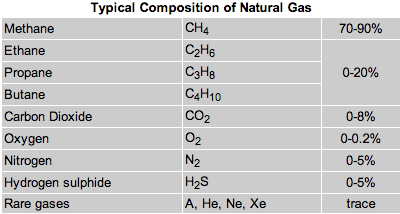
Natural gas: Natural gas is a major energy source around the world, accounting for 21 per cent of the world’s energy supply in 2010. Natural gas is an odourless, colourless gas, largely formed over millions of years underground. It’s made of a variety of compounds (see below), but methane is by far the most significant.
Natural gas is a fossil fuel, releasing greenhouse gases when burnt – but is less climate-polluting than coal, releasing about half of its carbon emissions.
Unconventional gas: Unconventional natural gas is trapped in deep underground rocks that are hard to reach, such as shale rock or coal beds. Recent technological advances have made it possible to get these new sources of energy out of the ground.
Shale gas: Shale gas is extracted from shale rock using fracking, or hydraulic fracturing, of the rock. Shale rock is very common; the BGS estimates it makes up 35 per cent of the world’s surface rocks. It also suggests there are 1,300 trillion cubic feet of shale gas in the north of England.
The application of the fracking process – which has been used in the oil industry since the mid nineteenth century – to shale gas extraction has the potential to bring about a “a sweeping transformation” of the energy system around the world, according to the International Energy Agency, as different countries develop the resource.
Methane: In the shale gas debate, commentators sometimes make a distinction between natural gas and methane. In fact, as the chart above demonstrates, natural gas mostly is methane.
When it’s released directly in the atmosphere – rather than being burnt – methane is a powerful greenhouse gas. It is approximately 25 times more climate-polluting than carbon dioxide over a 100-year timescale. Some academics are worried that methane leaks during the fracking process – so called fugitive emissions – will significantly increase the impact of fracking on the climate.
Liquified Natural gas (LNG): In order to feed the world’s demand for natural gas, the gas needs to be transported from where it’s produced to where it’s going to be consumed. But transporting gas is not that easy. LNG is created by cooling natural gas to -160ºC, creating a clear, colourless and non-toxic liquid, 600 times smaller than natural gas. The biggest exporter of LNG around the world is Qatar, which sends it around the world in enormous tankers.
Shale oil: Fracking can be used to get not just gas out of the rock, but oil. The US-based Energy Information Administration estimates that shale oil represents 10 per cent of the world’s crude oil resources. It’s not clear how much the UK has got. The British Geological Survey is working on a survey of the shale oil resource in the south of the country. But a spokesperson tells Carbon Brief it will be “several if not many months” before the report is produced.
Coal bed methane (CBM): Methane occurs naturally underground within coal reserves. It can be extracted using a variety of techniques. In comparison to shale gas, the amount of gas we might get from CBM seems to be fairly small – maybe around three years of UK natural gas supply, according to the British Geological Survey.
Underground coal gasification (UCG): UCG is an industrial process where coal is converted into gas while it’s still underground. It involves drilling boreholes into the coal seam, injecting water and oxygen, and partially burning the coal underground. UCG has not been carried out in the UK since trials in Derbyshire in the 1950s, but recently there’s been an increased interest in the technology. UCG has the potential to open up large new areas of coal to exploitation – a prospect that has alarmed environmental campaigners.
Climate change is an awkward fit for the conventions and institutions that make up today’s media.
There are a bunch of reasons for this, but the main one is that not much happens. Ecosystems change slowly and incrementally, on time scales much longer than those we’re biologically designed to heed. Climate processes unfold over centuries, millennia, whereas we’re primed to pay attention to what’s happening in front of our noses, or at best within our lifetimes. “The seas rose another .001 feet today” is not a story any editor wants to publish or anyone wants to read.
Climate politics is its own story, of course, and offers some day-to-day developments … but not many. U.S. politics addresses climate rarely, if at all, and when it does the results are, ahem, unenlightening.
All this means that it’s difficult to report on climate change. News editors want to know what’s new, what’s changed, and on climate, not much has. There are no crime scenes, no explosive revelations, no sudden shifts, just … PDFs. Lots and lots of PDFs. Climate change is just puttering along, moving at a pace that won’t mean much over an editor’s career but will profoundly reshape human habitats over centuries.
So it’s not much fun being a climate change reporter. Yet the public badly needs to hear about, and understand, climate change. So if not reporting, then what?
It seems to me what’s needed is more discussion of the meaning of what’s happening, the context, the forces at play, the narratives unfolding. The public — or more importantly, the subset of the public that is engaged, or potentially engaged, with these subjects — needs to learn about concepts, technologies, ways of doing things, ways of thinking about things, that are not familiar.
“Not familiar” is key here. The mainstream media, for all its talk of “objectivity,” is in fact incredibly biased in favor of the status quo, not just status quo powers but status quo narratives and frames. So anyone who’s going to try to help the public understand climate change is inevitably going to be in the position of an outsider. That adds a whole other layer of complications and tactical considerations.
What’s the best way to go about this? What’s the best way to write about climate and related issues?
From the time I first entered this field, I noticed a huge gap between wonks/academics, who release jargon- and chart-filled PDFs, and advocates/polemicists, who release propaganda. (I don’t mean that pejoratively; I just mean it’s explicitly designed to produce political outcomes.) Between those poles there is a large space for analysis, explanation, and argument, delivered by voices who (like wonks) are not forced by institutional commitments to “stay on message,” but who (like advocates) want to reach ordinary people. Independent thinkers and communicators — or, as they were once called, public intellectuals.
That space is well-occupied when it comes to, say, healthcare. Think of Ezra Klein. He’s not a reporter; he’s not writing in the voice from nowhere. He doesn’t pretend not to have values, preferences, and opinions. But his main focus is explanation. He elucidates complicated matters of healthcare policy and politics in ways that average, non-wonk readers can understand. He writes clearly, and fairly. His goal is to grow the pool of healthcare-literate citizens.
That space is much less occupied when it comes to climate. There are lots of wonks and academics, lots of advocates, but very few people who are (successfully) translating the issues so they are digestible by ordinary folk.
Why is that? My lay diagnosis is that most climate communicators originally approached the subject through science, or have scientific or academic backgrounds, or an interest in science writing. Much writing about climate is thus technical and dry; relatedly, most writers and advocates have been (and are) disproportionately obsessed with the “scientific consensus” and arguing with climate deniers. All of this is boring and off-putting to people who don’t approach it with similar scientific training or strong prior opinions about climate (which is most people).
Insofar as I’ve been successful at this — and jebus, you all have said so many nice things in the last few days! — it’s because of my secret formula. Since I’m leaving for a year, I’m going to share it with you. That way you can replicate me while I’m gone.
As I mentioned the other day, my entry into this field was rather idiosyncratic. I wasn’t trained in journalism or science or advocacy. Obviously that left me without the skills imparted by those disciplines (as many people have reminded me over the years), but it also left me without their preconceptions and dysfunctions. Instead, I was trained in academic philosophy, which is all about achieving conceptual clarity and constructing arguments. So when I approached these issues, it was all about breaking them down into their conceptual components, clarifying what the real disputes are, and making the case for my perspective. (Because I have argued in favor of some policies and positions, I often get accused of being an “advocate” or being part of a “team,” but unless you want to spend your life writing dreary, braindead “both sides are wrong, the truth is in the middle” pieces, you just have to live with that.)
Which brings me to my secret formula, which I call the Friend In a Bar principle.
When I write, I imagine that I am with a good friend in a bar. This is an intelligent friend, a generally knowledgeable and well-read friend, but a friend who doesn’t know much about the thing I’m talking about. I am trying to explain to my friend why she should care about this thing (say, discount rates). We’ve had a few drinks, so I’m feeling chatty.
If I were talking to a friend, would I adopt an “objective” tone, listing facts and citing sources in an inverted pyramid? No, that would be boring as hell. My friend doesn’t have to listen to me; it’s up to me to keep her from tuning out. Then again, would I just rant and rave about how long-term discount rates ought to be lower? No, that would be tiresome. There’s nothing worse than listening to someone get all red in the face about something you don’t particularly understand or care about. Would I speak as though I were some kind of Official Expert, standing at a podium and dispensing wisdom? No. My friend wouldn’t put up with that. She knows me too well.
So yeah, instead, I’d just talk to her. Not at her. To her. What I want, really, is to make discount rates interesting to my friend, to explain the context and considerations involved, so that she understands why the argument exists at all, the animating principles behind each side. I want her to see that it matters, that it’s lurking behind a lot of other stuff she already cares about.
I wouldn’t pretend I don’t have an opinion on discount rates, but I’m not looking for disciples, for soldiers in some discount rate army. Mainly what I want is to create someone else who cares about discount rates, so I have someone to talk to!
That’s the secret formula. I recommend it. And I mean really: When you write something, read it aloud and literally imagine yourself saying it to a good friend in a bar. When you speak to someone you know, someone you respect and who knows you, your voice has a kind of natural rhythm and variety. You instinctively know when you’re getting boring, or when you’ve droned on too much about technical stuff, or when you’re getting too pedantic or strident. You will know because, when you read it aloud, you will imagine your friend rolling her eyes.
And yeah, when you’re talking to a friend, you drop the occasional joke or curseword. Because that’s how people talk in real life. Not all Official. Just real.
Is this “journalism”? Hell, I don’t know. It’s not reporting. It’s not quite op-ed writing. It’s more … conversing. That’s what I’ve tried to do: draw people into conversations, enlarge the group of people aware of and engaged in this stuff.
I’m not arrogant enough to think my being gone will have any big impact on the world, but I do know that we need more people in that middle space, not wonking, not polemicizing, just musing and explaining and arguing and conversing. It’s what a healthy democracy looks like. I hope more people come in and occupy that space, and even more, I hope media editors and publishers see the worth in it.
Where will jobs and growth come from after the mining boom? This is the fundamental question facing the next Australian government, whose success will depend to a great extent on how it addresses this question. The resources investment of recent years may well bring additional production and exports…
What is the future of Australian productivity and investment after the mining boom? AAP/Christian Sprogoe
Where will jobs and growth come from after the mining boom? This is the fundamental question facing the next Australian government, whose success will depend to a great extent on how it addresses this question.
The resources investment of recent years may well bring additional production and exports, but it’s becoming clear that the boost to our national income growth from the high commodity prices from Australia’s latest mining boom is coming to an end, revealing a serious and potentially damaging fall in productivity.
What do we need to do to create long-term growth and jobs?
How we got here
Let’s begin at the beginning. We have to ask ourselves, did Australia make the best use of the windfall from the boom that was never supposed to end? The economic gains were unprecedented in their size and impact, and even though temporary, could have prepared us well for a post-boom economy. Prior to the 2007 election, then opposition finance spokesperson Lindsay Tanner complained that the Howard government had been:
…rained with revenue by the minerals boom and it’s wasting far too much of it and it’s not building it for the future.
The incoming Labor government had an opportunity to capitalise on the re-emerging mining boom, driven by demand from China and the region. However, apart from the government’s deft handling of the global financial crisis, which was no small achievement, it is difficult to make the case that Labor did so much better than its predecessor in constructing an economic legacy for a world of knowledge-driven products and services.
As well as being constantly distracted by leadership issues, the government made little headway against the prevailing economic orthodoxy: the misunderstanding of short term business cycle activity as longer term structural change, and the false belief that resources- driven growth had become such a permanent feature of the Australian economy that manufacturing and other sources of growth could safely be abandoned.
Fiona Katauskas
Click to enlarge
Clearly, the global economy is going through major structural change, but this is less about commodity price fluctuations than innovations in technology and business models and the changing patterns of international trade and development.
The problem and continuing challenge is that Australia is not taking as much advantage of these changes as we could. Both business leaders and policy makers have allowed the contribution to growth from trade to mask a steady deterioration in our productivity over the past decade, which will be fully laid bare as the mining boom fades in coming years.
This is nothing new. Australia has seen such booms before, which have ended badly, and their lessons have been widely canvassed. We have also had the benefit of observing the impact of North Sea gas discoveries in the 1970s on Dutch manufacturing, as booming gas revenues drove up the value of the currency, making it much harder for Dutch industries to compete on the international market. It took many years with a laser-like focus on industry and innovation policies to overcome the so-called “Dutch disease” and reconstruct and reposition manufacturing.
Similarly, North Sea oil and gas enabled the UK government of the 1980s to keep itself in office by fuelling a consumption boom with tax cuts. Only gradually was there a realisation that, in the words of J. K. Galbraith, the price of private affluence was public squalor, as schools and hospitals bore the brunt of neglect and key areas of manufacturing were lost, never to return. Ironically, the experience was repeated with the finance sector in the 1990s and 2000s, once more ending badly, with a new government committing to “re-balancing” the economy.
All Australia had to do was learn from the past – and observe the current approach of Norway, which actually learnt something from the experience of other resource rich economies. Norway has taken a public stake in its mammoth oil and gas assets, imposed a 76% resource rent tax, and established a sovereign wealth fund to partially quarantine the exchange rate and provide an income stream for investment in research and innovation.
Beyond the boom, Norway will have given itself the best possible chance to build a competitive knowledge-based economy. Already it is a world leader in productivity performance – we have a lot of catching up to do.
Productivity slowdown
Without a shared understanding of the problem, it’s not easy to come up with a solution to Australia’s productivity slowdown, which has only partly been reversed over the past year and not anywhere near the required scale of improvement.
While economists and policy-makers agree that productivity drives growth, competitiveness and living standards, there is much less agreement on where productivity comes from, and how to measure it – and thus on the policies which contribute to sustainable productivity improvement. The need for productivity improvement has been sharpened by two separate but related problems that have recently received considerable public attention.
The first problem is the impending fall in Australia’s terms of trade from the heights reached during the commodity boom. The unprecedented rise in our terms of trade as a result of increased commodity prices delivered a massive boost to the growth in our national income in the early 2000s – around 15% over a five year period – and has not inaccurately been described as the “gift from China”. Combined with an effective stimulus, the boom helped to shield Australia from the worst of the global financial crisis and make our economy the envy of the world.
However, it also masked the second problem, which is the deterioration of Australia’s productivity performance since the 1990s. While this problem could be safely ignored, and was ignored in the past, as rising terms of trade took up the slack, it is now increasingly exposed as the commodity cycle runs its course. There were warning signs but many policy-makers and commentators mistakenly saw a cyclical event as structural change (see below).
Australia’s Productivity and Income, 1990-2012. ABS
Click to enlarge
Recently I prepared a detailed report with my colleagues Phil Toner and Renu Agarwal for the McKell Institute Understanding Productivity (2012), which explores Australia’s productivity slowdown and the policy measures that are being proposed to address it.
We found that just as the slowdown was previously ignored, it is now misinterpreted and exaggerated to justify measures that may have little or no relevance to our future productivity performance, and which may themselves have contributed to the slowdown.
The report notes that the most common measure of productivity performance is labour productivity, which measures the value of goods made or services provided either by hours worked, or by employed person.
Growth in this kind of productivity slowed in the early years of this century. This was less a result of the waning of the 1990s microeconomic reform agenda than a consequence of the increase in total employment and, at least since the global financial crisis, the decline in output growth.
If his paid parental leave scheme is any guide, Tony Abbott is a ‘big government’ interventionist who is on course for an ongoing battle with his conservative base, writes David Hetherington.
In the era of small target campaigning, it’s rare for Opposition Leaders to have a big signature policy.
For one thing, they’re all too conscious of the fate of Fightback and Medicare Gold. For another, it’s just easier to campaign on bad government policy than to risk scrutiny of detailed, positive policies developed without the resources available to incumbents.
Yet in 2013, in an Opposition campaign in which every other imaginable risk has been neutralised, Tony Abbott has insisted on retaining a signature policy which risks more critical scrutiny than all his other positions combined.
That’s why the Opposition’s paid parental leave (PPL) scheme is fascinating to election tragics: not principally for its policy detail, but because it adds to an emerging picture about the contradictions of Tony Abbott’s leadership and in his brand of conservatism.
Much has been made of the fiscal impacts of the scheme, but its policy objectives and philosophical foundations are equally revealing.
Of course, the most debated contradiction sits squarely within the wider narrative of this campaign: the battle over costings. How much will it cost and who pays for it? If, as Abbott claimed last week, we are facing a “budget emergency”, can we afford a new $5.5b scheme, particularly when we have a workable, but less generous, PPL scheme in place already?
The answer leads immediately to the second contradiction – a 1.5 per cent levy on big business to pay for the scheme while concurrently cutting corporate tax rates.
Confused? We’re only just starting. Abbott conceded this week the levy would only pay for half the scheme, with the balance promised to come from the cessation of the PPL schemes run by Labor and the states. The credibility of this can only be tested with the release of the Coalition’s full costings the day before the election.
There has been a brief kerfuffle about the burden of the scheme falling on shareholders in lost franking tax credits but, in Abbott’s defence, a business levy was always going to be paid for by the shareholders of those businesses. There is longstanding precedent for treating a levy in this way.
More interesting paradoxes emerge from the stated objectives of the policy. Mr Abbott has claimed it will boost the fertility rate, workforce participation and productivity. Yet while it is true that financial support makes it easier for working women to have more babies, it is not clear how participation or productivity will be improved by the policy.
The key participation challenge is to get women back in the workforce after child-raising – rather than before children – which the policy does nothing to address. If anything, its generosity might defer women’s return to work by giving them more savings to stay at home with the baby.
And the productivity benefits claimed in the Coalition’s policy document are directly contingent on higher participation. The experts’ consensus is that PPL will not lift productivity without matching improvements in childcare accessibility and affordability.
In effect, the Coalition’s PPL should be seen less as a participation policy than a much-needed social insurance scheme. Social insurance provides financial support for citizens at important life junctures, and there is no doubt the care of young babies falls in this category.
This is the strongest argument for the increased generosity of the Coalition’s scheme – that we should be supporting mothers as best we can during a challenging and financially draining period.
By contrast, there is no strong argument for making PPL highly regressive, so that it pays high-income women far more than low-income ones as Abbott’s scheme does. It is almost unprecedented for a social insurance scheme to distribute public money in a way that increases inequality by benefiting the wealthy at the cost of the poor. Imagine if Medicare or the pension did this.
Finally, the PPL scheme tells us much about Tony Abbott’s personal political philosophy. In his 2009 book Battlelines, as in his campaign stance on marriage equality, Abbott makes clear that he is a social conservative who believes in government’s right to intervene to sustain traditional institutions. The PPL scheme shows he is willing to use the public purse in these efforts, in this case to support motherhood.
In a real sense, that makes him a ‘big government’ interventionist. And it sets him at odds with many in the conservative movement who believe fervently in ‘small government’ – the right-wing think tanks, the fiscal conservatives, the IR hardliners. These groups despair of the fiscal and policy contradictions inherent in Abbott’s PPL scheme.
Should Abbott win on September 7, as seems likely, these frustrations will be harbingers of the battles ahead between Abbott and his conservative base – on industrial relations, on the GST, and on ‘big government’ schemes like Gonski and the NDIS.
The paradoxes of this prime ministerial aspirant could make for a rollercoaster three years ahead.
David Hetherington is executive director of Per Capita, a progressive think tank. View his full profile here.