Category: Uncategorized

  • Arctic Atmospheric Methane Trends 2013

    Arctic Atmospheric Methane Trends 2013

    It’s been a while since we’ve looked at methane trends in the Arctic atmosphere (just a little under a year in fact).  This important greenhouse gas has been on the rise over the past several decades, though that rise has not been nearly as steady as CO2. What’s worrisome to those who follow methane is the return to higher growth rates of the gas over the past few years.  This chart shows the atmospheric measurement of methane at Point Barrow cover the last 2.5 years:

    Arctic Methane Trends 2013

    What I’ve highlighted here in red are a few interesting features of the methane levels that are worth mentioning.

    First, the horizontal red bar shows the lowest boundary of the yearly methane measured a few weeks ago. Methane always hits a low annual concentration at Point Barrow around the middle of the year, usually in June as part the natural fluctuations.  This year we saw the highest low point ever recorded.  This is significant because it shows the underlying long-term growth rate.  If you compare this year’s low point to last year’s, you get a sense of the upward turn in the atmospheric methane concentrations.

    At the top of this graphic in the large red circle are several “anomalous” readings that were recorded over Barrow last year just about the time that GAC-2012 was hitting.  These are huge outliers, but because there were several of them occurring all about the same time, we can also assume they were valid data in the sense that it was really being recorded properly.  In direct email discussions with staff at Barrow station at the time, they characterized these as “likely” local anthropogenic sources, i.e. outgassing from drilling rigs, etc.  Note the word “likely”.  These samples are sent back to a lab for analysis that can better describe the sources.  My hunch, and again, this is only a hunch, is that GAC-2012 or simply the very low ice levels of last summer or some combination, may have brought up more methane and caused these very high anomalous readings. It is also important to note that all the data points in the graph that are orange have yet to be fully validated– though they are in the vast majority of cases.

    Finally, in the small red circle is one the latest readings from Barrow.  It continues to show the higher long-term upward trend is accelerating and also shows the remainder of 2013 should be interesting to watch, as it will likely show the strong growth rate of methane in the Arctic atmosphere. Though the level will oscillate up and down a bit between now and its annual peak in early 2014, we should monitor the rest of the summer Arctic melt season for the kinds of “anomalies” that we saw last year. I will especially look for a period of anomalously high levels should another large cyclone hit in August or even September when sea ice is at its lowest.

    The bottom line of all this is that methane levels remain an important metric to gauge both current and potential future changes in the Arctic climate, and the trends should be of great concern.

    Addendum by Neven:

    Thanks go out to R. Gates for his update on methane. I’m taking the opportunity to draw attention to this effort to get methane levels back to 1250 ppb, much like the 350 movement is doing for CO2: 1250now.org

    There is also a very cool interactive website that allows one to track methane in the atmosphere everywhere on the planet: Methane Tracker. The site is still in the pre-alpha phase, but when it’s finished, it’ll be announced here in a separate blog post.

    Posted by on July 10, 2013 at 22:49 in Methane | Permalink

    Reblog (0) | | Digg This | Save to del.icio.us | |

  • Arctic melt hits food security in bitter taste of life on a hotter planet

    11 July 2013

    Arctic melt hits food security in bitter taste of life on a hotter planet

    by David Spratt, first published in RenewEconomy

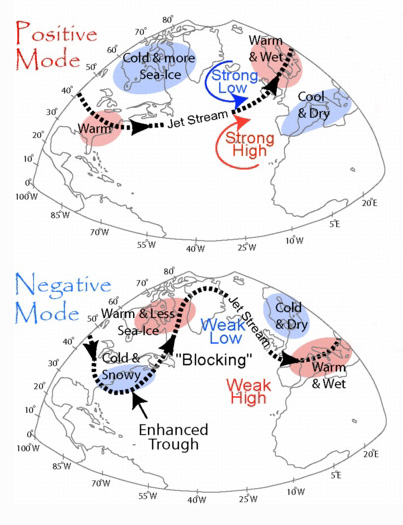
    Arctic melt has pushing the Jet Stream into
    a more meandering, S-shape pattern, dragging
    down and stalling cold and wet conditions
    over Europe

    A wet summer and autumn, followed by a cold winter and spring, in the UK and Ireland have hit wheat and potato production and cattle feed, a foretaste of how climate change can affect food security, even in the developed economies.

    And the culprit in this drama is rapid Arctic melting, which has destabilised the Jet Steam and brought extreme weather – unusual cold, heavy snowfall, record rain and hot spells — to much of northern Europe and North America, and record heat to the Arctic. Following Superstorm Sandy’s battering of the US north-east coast in 2012, flooding in June across central Europe was the worst in 400 years.

    Rapid Arctic melting – sea-ice volume in September 2012 was down by four-fifths compared to the summer average 30 years ago – has help change the Jet Stream, the river of high altitude air that works to separates Arctic weather from that of northern Europe, Russia and Canada, and which governs much northern hemisphere weather.

    The ice loss has added to ocean and atmospheric heat, pushing the Jet Stream into a more meandering, S-shape pattern, dragging down and stalling cold and wet conditions over Europe, and bringing record heat to the Arctic, as was dramatically experienced in Alaska last month.

    Professor Jennifer Francis, of Rutgers Institute of Coastal and Marine Science, says the Arctic-driven changes to the Jet Stream allows “the cold air from the Arctic to plunge much further south. The pattern can be slow to change because the [southern] wave of the jet stream is getting bigger…  so whatever weather you have now is going to stick around”.

    In March, new research found that “the severe loss of summertime Arctic sea ice — attributed to greenhouse warming — appears to enhance Northern Hemisphere jet stream meandering, intensify Arctic air mass invasions toward middle latitudes, and increase the frequency of atmospheric blocking events like the one that steered Hurricane Sandy west into the densely populated New York City area”.

    And a recent study be Liu et al found that “the recent decline of Arctic sea ice has played a critical role in the recent cold and snowy winters” across the northern hemisphere.

    Last September, Francis warned that 2012′s record sea ice melt could lead to a cold winter in the UK and northern Europe. And so it turned out, with farmers copping the consequences:

    WET SUMMER AND AUTUMN: Six out of the last seven summers in the UK (since the record-smashing Arctic melt of 2007) have seen below-average temperatures and sunshine, and above-average rainfall. 2012 was the UK’s second wettest year on record, with autumn rain almost 50% higher than long-term average. In Ireland, twice the average amount of rainfall was recorded in many parts of the country during the three summer months of 2012.  People across the UK and Ireland will readily tell you that “We haven’t had a summer in four or five years”, and unusually, for them, complain of “bitter” and “terrible” winters, with temperatures dropping as low as –18C in Northern Ireland.

    COLD WINTER AND SPRING: “It’s been the longest winter on record in this country. Not since the records began 70 years ago has there been a March as cold as this year’s. It’s been followed by the coldest April in 25 years in some areas of the country,” reported the Irish Examiner on 9 May 2013.  The Irish spring in 2103 was coldest in 62 years across most of country, and dull and windy. Spring in the UK this year was the coldest in 50 years.

    BAD COMBINATION: This combination of events has wrecked farmer’s schedules. Less growth in a dull 2012 summer – combined with water-logged crops and pastures in autumn – reduced yields, and some crops had to be left in the ground.  The spring 2013 growing season, including for apples and pears as well as pasture, started up to six weeks late due to the cold, dull conditions. And waterlogged fields meant that across Ireland cattle were still being kept in their winter sheds in the first week of June, ostensibly a summer month.  The consequences – whilst mild compared to climate-change impacts on vulnerable communities in the developing world from the African Sahel to Asia’s changing monsoons – show how easily the security of food production can be disrupted:

    WHEAT:  In the UK, a wet autumn, hard winter and cold spring has resulted in one of the smallest wheat harvests in a generation, 30% below normal. Britain, generality the third biggest wheat grower in the EU, will be a net importer for the first time in 11 years. Charlotte Garbutt, a senior analyst at the industry-financed Agriculture and Horticulture Development Board says: “Normally we export around 2.5m tonnes of wheat but this year we expect to have to import 2.5m tonnes.”   The latest analysis from the UK  Department for the Environment, Food and Rural Affairs says total farming income decreased by £737million in 2012 to £4.7bn, as farmers faced both crop losses and higher feed costs.

    STOCK LOSSES: Late snowstorms across England, Sotland, Wales and Ireland March 2013, with drifts of up to 5 metres, killed an estimated 40,000 newborn lambs. In ireland’s west, one-quarter more animals died in the first three months of 2013 compared to 2012, with some vets trained to look for suicidal behaviour in farmers.

    POTATO SHORTAGE: A wet autumn and poor season in 2012 prevented many crops being harvested in Ireland. Supermarket price-squeezing has also driven some farmers out of the industry, together resulting in reduced yields of at least 30 per cent in 2012. By spring 2013, potato prices had almost tripled in many parts of Ireland, with supplies exhausted and a reliance on imports from central Europe.

    Limavady farmer, James Wray, told UTV News that said the changing weather in recent weeks had forced the price up: “This year has been a terrible growing season with loads of crops lost and loads of crops not harvested and any crops that have been harvested have produced low yields. There just isn’t any potatoes left in the country, there are no farmers with potatoes left, so whatever potatoes are about, are very, very expensive. If you go to any of the major supermarkets most of their potatoes are coming in from Europe just to bridge the gap.”

    Potato shortages have a particular cultural resonance in Ireland as a consequence of the Irish potato famine of the mid-nineteenth century, which killed a million people and forced another million to emigrate.

    FEED SHORTAGE: In the last week of May (the final week of spring), farmers in Ireland’s west were queuing for hay and silage imports from England, France and Netherland as their winter feed became exhausted and a lack of pasture growth in spring due to cold and overcast conditions, and wet fields, prevented cattle from being moved from their winter sheds.  More than 13000 tonnes of feed was imported, but even so farmer Enda Stenson said local farmers “have neither money nor fodder”. Many had sold down their herds to be able to buy feed for the remainder.

    BEES IN TROUBLE: Bad weather and disease is also threatening honey production, with some beekeepers expecting to produce no honey as bees have been unable to mate and hives are decimated. And bees play a crucial role in pollinating many crops. Jim Donohoe, of the Federation of Irish Beekeepers’ Associations, told the Irish Independent that the problem was weather related: “We’ve had bad summers before, but because of the wind, rain and lack of sunshine, we’ve had serious problems with colonies wanting to swarm, but the queens being unable to mate with drones which refused to fly because there wasn’t calm conditions. This year, we had a delayed winter where bees couldn’t fly. The flowers were delayed coming out, and that crucial period meant bees died from old age. All of this combines to about 50pc of colonies being lost. If we don’t get milder weather, the losses will be closer to 75pc.

    These stories may seem trivial compared to the devastating impact of climate change on global food security and prices, and their political consequences. Writing on Egypt’s new political turmoil, Nafeez Ahmed notes that:

    “Food price hikes have coincided with devastating climate change impacts in the form of extreme weather in key food-basket regions. Since 2010, we have seen droughts and heat-waves in the US, Russia, and China, leading to a dramatic fall in wheat yields, on which Egypt is heavily dependent. The subsequent doubling of global wheat prices – from $157/metric tonne in June 2010 to $326/metric tonne in February 2011 – directly affected millions of Egyptians, who already spend about 40% of their income on food. That helped trigger the events that led to the fall of Hosni Mubarak in 2011, but the same configuration of factors is worsening.”

    And Lester Brown, head of the Earth Policy Institute in Washington, has warned that grain harvests are already shrinking as US, India and China come close to ‘peak water’. He says that 18 countries, together containing half the world’s people, are now over-pumping their underground water tables to the point – known as “peak water” – where they are not replenishing and where harvests are getting smaller each year.

    Together these stories paint a compelling picture of the threat to food security from climate change, not just in the Middle East, Asia and Africa, but in the heart of the

  • Update on coastal erosion ( Rob Oakeshott )

    Update on coastal erosion

    Inbox
    x
    Norris, Garth (R. Oakeshott, MP) <Garth.Norris@aph.gov.au>
    2:17 PM (36 minutes ago)

    to Garth

    Good afternoon,


    Thank you for your continuing interest and advocacy regarding the need for a comprehensive government response to the worsening problem of coastal erosion.


    As part of this continuing campaign, Rob has written to the newly sworn-in Minister for Climate Change, the Hon. Mark Butler MP, alerting him to the work already done by our community and calling on the  government to act on the many reports published over the past four years in relation to this issue. Rob’s letter, attached for your interest, was sent along with an email from Old Bar Beach Sand Replenishment Group President Elaine Pearce asking what had happened to the recommendations that were officially adopted by the government in 2010 from its own report on the Impact of Climate Change on Coastal Communities.


    I will forward a copy of the Minister’s response on Rob’s behalf as soon as it is received.


    Kind regards,

    Garth


    Garth Norris

    Adviser

    Robert Oakeshott – MP for Lyne

    Ph. 6584-2911

    Fax. 6584-2922

    E: garth.norris@aph.gov.au

    W. www.roboakeshott.com


    Coastal_erosion.pdf
    79K   View   Download
  • Green news roundup: Droughts, elephant poachers and tidal power

    Green news roundup: Droughts, elephant poachers and tidal power

    The week’s top environment news stories and green events

    If you’re not already receiving this roundup, sign up here to get the briefing delivered to your inbox

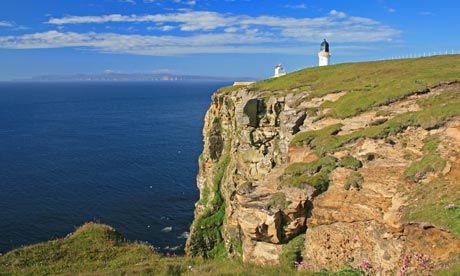
    Pentland firth

    Pentland firth. Photograph: Albaimages / Alamy/Alamy

    Environment news

    Droughts could hit food production in England in 2020s, report warns
    Tidal power from Pentland firth ‘could provide half of Scotland’s electricity’
    Great Barrier Reef’s condition declined from moderate to poor in 2011
    China’s reliance on coal reduces life expectancy by 5.5 years, says study
    Future of UK offshore wind power in ‘serious doubt’
    Biofuels plant opens to become UK’s biggest buyer of wheat

    On the blogs

    African elephants in AustraliaGuns will not win the war against elephant poachers
    George Monbiot: The National Farmers’ Union secures so much public cash yet gives nothing back
    Antarctic krill face unhappy Hollywood ending if fossil fuel emissions keep rising
    Charles Krauthammer’s flat-earther global warming folly
    ‘Wild’ animals in travelling circuses benefit no one
    Tony Abbott’s climate policy is just a figleaf developed by deniers

    Multimedia

    A boy plays on an algae-covered seaside in Qingdao, Shandong provinceThe week in wildlife – in pictures
    How to set up your bicycle like a pro – video
    Hebrides: Islands On The Edge – in pictures
    Chinese beaches overwhelmed by algae – in pictures

    Best of the web

    Australian heatwaves ‘five times more likely due to global warming’
    US has failed to protect marine life, say conservationists
    Stephen Emmott’s population book is unscientific and misanthropic
    Why Obama ditched green jobs from his climate change rhetoric
    2C climate target is half of what is needed, say scientists

    …And finally

    Google hosts fundraiser for climate change denying US senator
    Proceeds of the lunch, priced at $250 to $2,500, will benefit the Republican Jim Inhofe, who calls climate change a ‘hoax’

    • SKY_Guardian_Charity_Awards_190713
    • Button_Public_Services_Awards_Deadline_120713
    • Button_International_Development_Achievement_Award_050813

    You are receiving this email because you are a Green Light subscriber.

    Guardian News & Media Limited – a member of Guardian Media Group PLC. Registered Office: Kings Place, 90 York Way, London, N1 9GU. Registered in England No. 908396

  • James Hansen: Fossil fuel addiction could trigger runaway global warming

    James Hansen: Fossil fuel addiction could trigger runaway global warming

    Without full decarbonisation by 2030, our global emissions pathway guarantees new era of catastrophic climate change

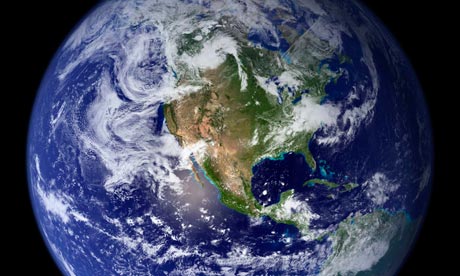
    Nasa image of planet Earth

    Nasa image of planet Earth. Photograph: Ho/Reuters

    The world is currently on course to exploit all its remaining fossil fuel resources, a prospect that would produce a “different, practically uninhabitable planet” by triggering a “low-end runaway greenhouse effect.” This is the conclusion of a new scientific paper by Prof James Hansen, the former head of NASA‘s Goddard Institute for Space Studies and the world’s best known climate scientist.

    The paper due to be published later this month by Philosophical Transactions of the Royal Society A (Phil. Trans. R. Soc. A) focuses less on modelling than on empirical data about correlations between temperature, sea level and CO2 going back up to 66 million years.

    Given that efforts to exploit available fossil fuels continue to accelerate, the paper’s principal finding – that “conceivable levels of human-made climate forcing could yield the low-end runaway greenhouse effect” based on inducing “out-of-control amplifying feedbacks such as ice sheet disintegration and melting of methane hydrates” – is deeply worrying.

    The paper projects that global average temperatures under such a scenario could eventually reach as high as between 16C and 25C over a number of centuries. Such temperatures “would eliminate grain production in almost all agricultural regions in the world”, “diminish the stratospheric ozone layer”, and “make much of the planet uninhabitable by humans.”

    Hansen and his co-authors find that:

    “Estimates of the carbon content of all fossil fuel reservoirs including unconventional fossil fuels such as tar sands, tar shale, and various gas reservoirs that can be tapped with developing technology imply that CO2 conceivably could reach a level as high as 16 times the 1950 atmospheric amount.”

    They calculate that there is “more than enough available fossil fuels” to generate emissions capable of unleashing “amplifying feedbacks” that could trigger a “runaway” greenhouse effect “sustained for centuries.” Even if just a third of potentially available fossil fuel resources were exploited, calculations suggest, this scenario would still be guaranteed, meaning decisions we make this century will determine the fate of generations to come.

    James Hansen ‘We don’t have a leader who is able to grasp [the issue] and say what is really needed. Instead we are trying to continue business as usual,’ said James Hansen in 2009. Photograph: Gareth Fuller/PA”Governments are allowing and encouraging fossil fuel companies to go after every conceivable fuel”, said Hansen, “which is an obtuse policy that ignores the implications for young people, future generations and nature. We could make substantial parts of the Earth uninhabitable.”

    The conclusions of Hansen’s latest paper are stark:

    “Most remaining fossil fuel carbon is in coal and unconventional oil and gas. Thus, it seems, humanity stands at a fork in the road. As conventional oil and gas are depleted, will we move to carbon-free energy and efficiency – or to unconventional fossil fuels and coal?

    … It seems implausible that humanity will not alter its energy course as consequences of burning all fossil fuels become clearer. Yet strong evidence about the dangers of human-made climate change have so far had little effect. Whether governments continue to be so foolhardy as to allow or encourage development of all fossil fuels may determine the fate of humanity.”

    The new paper by James Hansen is just the latest confirming that we are on the verge of crossing a tipping point into catastrophic climate change. Other recent scientific studies show that the current global emissions trajectory could within three years guarantee a 2C rise in global temperatures, in turn triggering irreversible and dangerous amplifying feedbacks.

    According to a scientific paper given at the Geological Society of London last month, climate records from Siberian caves show that temperatures of just 1.5C generate “a tipping point for continuous permafrost to start thawing”, according to lead author Prof Anton Vaks from Oxford University’s Department of Earth Sciences. Conventional climate models suggest that 1.5C is just 10-30 years away.

    Permafrost thawing releases sub-ice undersea methane into the atmosphere – a greenhouse gas twenty times more potent that carbon dioxide. In June, NASA’s new five-year programme to study the Arctic carbon cycle, Carbon in Arctic Reservoirs Vulnerability Experiment (CARVE), declared:

    “If just one percent of the permafrost carbon released over a short time period is methane, it will have the same greenhouse impact as the 99 percent that is released as carbon dioxide.”

    Another paper suggests that conventional climate modelling is too conservative due to not accounting for complex risks and feedbacks within and between ecosystems. The paper published in Nature last Wednesday finds that models used to justify the 2C target as a ‘safe’ limit focus only on temperature rise and fail to account for impacts on the wider climate system such as sea level rise, ocean acidification, and loss of carbon from soils. It concludes that the 2C target is insufficient to avoid dangerous climate change.

    The problem is that our current global emissions trajectory already commits us to a 2C rise anyway. Papers published by the Royal Society in 2011 showed that emissions pledges would still put the world on track for warming anywhere between 2.5C and 5C – and that a failure to deliver these pledges could see global temperatures rise by 7C by 2100. Amongst them, a Met Office study concluded that strong amplifying feedbacks – such as the oceans’ reduced ability to absorb atmospheric carbon dioxide leading to further warming – could see us reach 4C as early as 2060.

    But as Hansen explained in a recent interview:

    “Four degrees of warming would be enough to melt all the ice… you would have a tremendously chaotic situation as you moved away from our current climate towards another one. That’s a different planet. You wouldn’t recognise it… We are on the verge of creating climate chaos if we don’t begin to reduce emissions rapidly.”

    After the last round of climate talks in Doha, a report by Climate Action Tracker concluded that the world is currently on path to see warming of 3C by 2040, triggering the melting of the Greenland ice sheet and Arctic permafrost.

    This was corroborated last month by the International Energy Agency (IEA), which found that even with current climate policies in place, we are locked into a rise of between 2C and 5.3C. Two years ago, the IEA concluded that we had five years left to implement urgent energy reforms after which we would no longer be able to avoid dangerous climate change. We are now three years away from that point-of-no-return.

    To make matters worse, the IEA’s analysis is based on conventional models which do not fully account for amplifying feedbacks such as methane releases from permafrost thawing. The IPCC’s forthcoming Fifth Assessment Report, like its predecessors, will specifically exclude the permafrost carbon feedback from its projections.

    The implication is that policymakers are riding blind – we do not really know how close we are to a tipping point into catastrophe.

    There is a solution. According to Hansen, we need to focus on a maximum target of 1C. “The goal of keeping warming close to 1C is to keep climate close to the Holocene range, thus avoiding any major amplifying feedbacks,” he said.

    “The 1C goal requires rapid phase out of fossil fuel emissions, which would require a rising carbon fee. To continue to burn every fuel that can be found is the opposite approach – they are day and night.”

    Such a rapid fossil fuel phaseout was proposed to the Parliamentary Environment Audit Committee early last year in the form of complete decarbonisation of power by 2030. Unfortunately, the UK bill to that effect was narrowly defeated in the House of Commons last month.

    There is still hope – the bill is currently up for consideration by the House of Lords. If the bill eventually passes, Britain might still play a leading role in heralding the energy revolution that could help save the planet, while saving the nation up to £100 billion.

    Dr Nafeez Ahmed is executive director of the Institute for Policy Research & Development and author of A User’s Guide to the Crisis of Civilisation: And How to Save It among other books. Follow him on Twitter @nafeezahmed
  • Pine Island glacier loss must force another look at sea-level forecasts as giant iceberg is spawned

    climate code red


    Pine Island glacier loss must force another look at sea-level forecasts as giant iceberg is spawned

    Posted: 09 Jul 2013 02:54 PM PDT

    A crack has opened across the full width of the
    PIG ice shelf, spawning a new berg

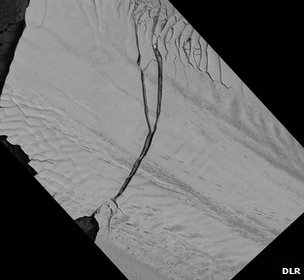
    Update 10 July 2013: Pine Island spawns giant new iceberg as fissure extends full width of glacier

    BBC New reports that, as anticipated for two years (story below), “Pine Island Glacier (PIG), the longest and fastest flowing glacier in the Antarctic, has spawned a huge iceberg… The block measures about 720 square kilometres in area, roughly eight times the size of Manhattan Island in New York.”

    Confirmation that a fissure had spread across the full width of the glacier was confirmed on 8 July with images obtained from the German TerraSAR-X satellite (pictured at right).  The fissure was first observed in October 2011 (image below).
         Of all the Antarctic glaciers, Pine Island is contributing most to sea-level rises. Ted Scambos of the National Snow and Ice Data Center (NSIDC) in Boulder, Colorado told National Geographic in early 2012 that iceberg calving is a normal cycle in which the floating section grows, stresses mount, and an iceberg breaks off, but when the pattern deviates, glaciologists take notice:

    In this case, the crack is forming significantly farther “upstream” than has previously been the case. That “signifies that there are changes in the ice,” Scambos said.
    When “that point of rifting starts to climb upstream, generally you see some acceleration of the glacier.” That means that the ice will flow into the ocean at a faster rate, contributing even more to sea level rise.
    Such an acceleration is of particular concern at the Pine Island Glacier, because, among Antarctic glaciers, it’s “the one that’s contributing the most to sea level rise.”
    In fact, he said, ice flows from that glacier alone account for a quarter to a third of Antarctica’s total contribution to sea level rise.

    Pine Island Glacier’s vast crack, pictured in October 2011.
    View hi-res image.
    Image courtesy NASA/METI/ERSDAC/JAROS

    Update 4 February 2012:  A giant crack in Antarctica’s Pine Island Glacier signals birth of monster iceberg

    National Geographic reports that Antarctica’s fastest-melting glacier is about to lose a chunk of ice larger than all of New York City, with implications for the rate of rise for sea levels. The crevasse (pictured) is 30 kilometres long and up to 80 metres wide, cutting across the floating tongue of the Pine Island Glacier in West Antarctica, and expected to create an iceberg of about 900 square kilometres.
    That is larger than the area of Manhattan, Brooklyn, Queens, Staten Island and the Bronx combined, according to NASA. In Australian terms, it is larger than the Adelaide Metropolitan Region.
    Eric Rignot of NASA’s Jet Propulsion Laboratory says the monster iceberg will be created  “in the coming months for sure.”

    Update 28 June 2011: Columbia University researchers have just reported that “Ocean Currents Speed Melting of Antarctic Ice”. They find that “Stronger ocean currents beneath West Antarctica’s Pine Island Glacier Ice Shelf are eroding the ice from below, speeding the melting of the glacier as a whole, according to a new study in Nature Geoscience. A growing cavity beneath the ice shelf has allowed more warm water to melt the ice, the researchers say—a process that feeds back into the ongoing rise in global sea levels. The glacier is currently sliding into the sea at a clip of four kilometers (2.5 miles) a year, while its ice shelf is melting at about 80 cubic kilometers a year – 50 percent faster than it was in the early 1990s – the paper estimates.”
    For discussion of map/image, see here.

    Post of 24 January 2010:

    New research suggest that just two collapsing West Antarctic glaciers could add another half a metre to sea levels this century

    The Victorian and Queensland governments decisions to stick to an “upper boundary” sea-level rise estimate of 0.8 metres by 2100 (and NSW at 0.9 metre) for planning purposes needs urgent revision, with new modelling showing two West Antarctic glaciers are past their tipping points.
    The 0.8 metre estimate for sea-level rises to 2100 is already obsolete:

    • The Copenhagen climate science congress of March 2009 estimated a sea-level rise of 0.75–1.9 metres by 2100
    • The federal Department of Climate Change’s November 2009 climate update reports estimates of a 0.5–2 metre rise by 2100
    • A study published in the Proceedings of the National Academy of Sciences in December found that global average sea levels are likely to rise by between 75cm and190cm by the end of the century.

    So how far could we reasonably expect sea levels to rise by 2100? As the world’s oceans warm, they expand and sea-levels rise, but how quickly the loss of polar ice sheets will add to the rise is difficult to estimate, principally because ice-sheet and sea-ice dynamics are not sufficiently well understood, and they are subject to non-linear (rapid and unexpected) changes, such as is occurring with sea-ice in the Arctic. The question is no longer whether the Greenland and West Antarctic ice sheets (WAIS) are losing mass (they are!) but if and when they pass tipping points for large, irreversible ice mass loss, and how fast that will occur.
    Recent research by Blancon et. al published in Nature in 2009 examining the paleoclimate record shows sea level rises of 3 metres in 50 years due to the rapid melting of ice sheets 120,000 years ago. Mike Kearney, of the University of Maryland, said it’s “within the realm of possibility” that global warming will trigger a sudden collapse of the West Antarctic ice sheet, which could lead to a rapid increase in sea levels like that predicted by the study.
    Given the catastrophic failure to date of global climate policy-making (Copenhagen outcome =4-degree rise by 2100), big sea level rises are on the way for the sort of temperature increases now on the table. NASA climate science chief James Hansen wrote in New Scientist that:

    Oxygen isotopes in the deep-ocean fossil plankton known as foraminifera reveal that the Earth was last 2°C to 3°C warmer around 3 million years ago, with carbon dioxide levels of perhaps 350 to 450 parts per million. It was a dramatically different planet then, with no Arctic sea-ice in the warm seasons and sea level about 25 meters higher, give or take 10 meters.

    Even more compelling, Professor Eelco Rohling of University of Southampton says:

    Even if we would curb all CO2 emissions today, and stabilise at the modern level (387 parts per million by volume), then our natural relationship suggests that sea level would continue to rise to about 25 metres above the present.

    Then on 13 January this year, New Scientist published this story showing calculations that the Pine Island glacier in the West Antarctic has likely passed its tipping point, with researchers estimating that this one glacier alone could add a quarter of a metre to sea levels by 2100:

    Major Antarctic glacier is ‘past its tipping point’

    A major Antarctic glacier has passed its tipping point, according to a new modelling study. After losing increasing amounts of ice over the past decades, it is poised to collapse in a catastrophe that could raise global sea levels by 24 centimetres.
    Pine Island glacier (PIG) is one of many at the fringes of the West Antarctic ice sheet. In 2004, satellite observations showed that it had started to thin, and that ice was flowing into the Amundsen Sea 25 per cent faster than it had 30 years before.
    Now, the first study to model changes in an ice sheet in three dimensions shows that PIG has probably passed a critical “tipping point” and is irreversibly on track to lose 50 per cent of its ice in as little as 100 years, significantly raising global sea levels.
    The team that carried out the study admits their model can represent only a simplified version of the physics that govern changes in glaciers, but say that if anything, the model is optimistic and PIG will disappear faster than it projects.
    Richard Katz of the University of Oxford and colleagues developed the model to explore whether the retreat of the “grounding line” – the undersea junction at which a floating ice shelf becomes an ice sheet grounded on the sea bed – could cause ice sheets to collapse.
    ….
    The model suggests that within 100 years, PIG’s grounding line could have retreated over 200 kilometres. “Before the retreating grounding line comes to a rest at some unknown point on the inner slope, PIG will have lost 50 per cent of its ice, contributing 24 centimetres to global sea levels,” says Richard Hindmarsh of the British Antarctic Survey, who did not participate in the study.
    This assumes that the grounding line does eventually stabilise, after much of PIG is gone. In reality, PIG could disappear entirely, says Hindmarsh. “If Thwaite’s glacier, which sits alongside PIG, also retreats, PIG’s grounding line could retreat even further back to a second crest, causing sea levels to rise by 52 centimetres.” The model suggests Thwaite’s glacier has also passed its tipping point.

    …. and now comes a new report in Science that an undersea ridge that may have once helped slow the loss of the Pine Island glacier is no longer doing so…

    Antarctic Glacier Off Its Leash

    An unmanned autonomous submarine has discovered a sea-floor ridge that may have been the last hope for stopping the now-accelerating retreat of the Pine Island Glacier, a crumbling keystone of the West Antarctic Ice Sheet, researchers announced at the fall meeting of the American Geophysical Union.
    An unmanned autonomous submarine has discovered a sea-floor ridge that may have been the last hope for stopping the now-accelerating retreat of the Pine Island Glacier, a crumbling keystone of the West Antarctic Ice Sheet. The ridge appears to have once protected the glacier, but no more. The submarine found the glacier floating well off the ridge and warmer, ice-melting water passing over the ridge and farther under the ice. And no survey, underwater or airborne, has found another such glacier-preserving obstacle for the next 250 kilometers landward.
    The Pine Island and adjacent Thwaites glaciers are key to the fate of West Antarctic ice, says glaciologist Richard Alley of Pennsylvania State University, University Park, in an e-mail. And West Antarctica is key to how fast and far sea level will rise in a warming world. “To a policymaker, I suspect that the continuing list of [such] ice-sheet surprises is not reassuring,” he writes.
    At the meeting, glaciologist Adrian Jenkins of the British Antarctic Survey in Cambridge and colleagues described how the instrument-laden Autosub3 cruised for 94 hours along 510 kilometers of track beneath the floating portion of the Pine Island Glacier in January 2009. The sub found a 300-meter-high ridge across the ocean cavity formed by the floating end of the glacier. Deep, warmer water was overtopping the ridge and passing through the gap between floating ice and the ridge top on its way to melting back more of the glacier. That gap has been growing, Jenkins said, perhaps since the 1970s. An aerial photograph from 1973 shows a bump in the ice where the ridge is now known to be, suggesting that the ice was then resting on the ridge and no warmer water could have been getting through.
    Although the last physical obstacle to continued melting and retreat of the Pine Island Glacier has been breached, the ice’s fate remains murky, says glaciologist David Holland of New York University in New York City. That’s because glaciologists aren’t sure what got the glacial retreat started in the first place, he notes. It wasn’t the greenhouse simply warming the ocean, researchers agree. Instead, shifting winds around Antarctica in recent decades may have driven warmer waters up to the ice and dislodged it from its perch on the ridge. But what caused the winds to shift? Global warming? The ozone hole? Random variability? Glaciologists—and policymakers—would like to know.

    … which makes Fred Pearce’s prediction (which we quoted in Climate Code Red two years ago, page 47) look spot on….

    Another vulnerable place on the West Antarctic ice sheet is Pine Island Bay, where two large glaciers, Pine Island and Thwaites, drain about 40 per cent of the ice sheet into the sea. The glaciers are responding to rapid melting of their ice shelves and their rate of fl ow has doubled, whilst the rate of mass loss of ice from their catchment has now tripled. NASA glaciologist Eric Rignot has studied the Pine Island glacier, and his work has led climate writer Fred Pearce to conclude that ‘the glacier is primed for runaway destruction’. Pearce also notes the work of Terry Hughes of the University of Maine, who says that the collapse of the Pine Island and Thwaites glaciers — already the biggest causes of global sea-level rises — could destabilise the whole of the West Antarctic ice sheet. Pearce is also swayed by geologist Richard Alley, who says there is ‘a possibility that the West Antarctic ice sheet could collapse and raise sea levels by 6 yards [5.5 metres]’, this century.

    So much for 0.8 metres being a risk-averse foundation for sea-level rise planning and policy-making.
    And for a fuller discussion on the current research on PIG and recent observations, there is a great overview, Is Pine Island Glacier the Weak Underbelly of the West Antarctic Ice Sheet?” at RealClimate, from November 2009.

    David Spratt
    24 January 2010

    You are subscribed to email updates from Climate Code Red
    To stop receiving these emails, you may unsubscribe now.
    Email delivery powered by Google
    Google Inc., 20 West Kinzie, Chicago IL USA 60610