Category: Uncategorized

  • It’s time to replace the Sydney Harbour Bridge

    It’s time to replace the Sydney Harbour Bridge

    Be first to comment

    Ross Cameron

    Ross Cameron

    When the Sydney Harbour Bridge was built 80 years ago, it joined together what had been a divided city, with almost incalculable social and economic benefits. But now, it has become a liability, writes Ross Cameron.

    My mother texted me last week: “It feels weird to have a son who wants to replace the Sydney Harbour Bridge.”

    Five of my business friends and associates, whose opinion I respect, told me separately, “We love your M4East concept, but leave the bridge out – people won’t cope.”

    Well, boys and girls, I’m really sorry but the Sydney Harbour Bridge has to be replaced. Yes, it is iconic and World Heritage listed, but it is in decay and has been outgrown by the city it serves.

    I must have missed the chemistry lecture that explained, “In the early 20th century, Sydney alchemists invented a form of steel that doesn’t rust or oxidise and will last forever.” Everything you can see is perishing – including the Sydney Harbour Bridge.

    It has to be replaced sometime. Our bridge will not be there in a hundred years – at least not the same steel. Here are the arguments for replacing the bridge now.

    When the bridge was opened, New South Wales had a total car pool of 10,000 and a population of 1 million. This week, over a million cars will pass over the bridge, from a city population of 4.6 million and growing at over 65,000 a year.

    After 80 years of distinguished service, our fair lady is entering her twilight and is now forced beyond its design limits every weekday. It is one of the three most extreme “choke” points on Sydney’s mass transit network (the other two being the Central to Strathfield rail corridor and the M4). Our inability to move people across the harbour holds hostage the rest of Sydney’s transport network.

    Dr John Bradfield selected the design in part because of its ability to later bolt on a second deck of road and rail under the existing suspension platform. (It was also designed, like all well-engineered structures, with a view to its eventual replacement, in a reversal of the method of its assembly.) The NSW Government received a proposal to add the second deck in the late 1990s. The proposal was rejected, because the assay made clear that the ageing span was no longer sound to safely bear the weight of the second tier.

    The bridge is 39,000 tonnes of steel, prefabricated in Scotland and shipped for assembly in parts. It was known as Sydney’s “iron lung” because its erection gave an income to thousands of families during the depression. The whole city filled with hope as the skyline changed, each new section reaching out to eventually close in the centre. Its completion meant that a city divided was at last joined, its social and economic benefits almost defying calculation.

    The 6 million rivets (like buttons on a shirt) were heated in coking coal-fuelled furnaces on the Luna Park site before modern welding techniques (which are more like “stitching”). The rudimentary furnaces allowed differing levels of penetration by steel-damaging nitrogen and ash. Each rivet now has variable load bearing and surface qualities. Some of the “buttons” have started to pop. In March this year, a fastening failure caused a two-square-metre steel panel to shear off the arch – it could easily have fallen onto the carriageway below.

    Roads and Maritime Services made no comment about the extent to which that failure signals ongoing risks from an 80-year-old structure. I understand that reticence – nobody reading this article should panic. But our bridge has “issues”. The fact that the bridge replacement program is not included in the 20-year plan of Infrastructure NSW is a serious omission.

    The bridge could stand for another decade or two and continue to give service but prudent asset maintenance means all of those rivets should now be replaced. Many are covered by external steel panels and buried deep within girders and beams. The metals, dust, paint, salt spray and dirt combine to turn our bridge into a battery, carrying electric currents up and down the arch to accelerate the oxidising and corrosion of steel standing over a body of water. (Vast stretches of rust underneath are visible to the naked eye). Assuming we continue a maximum toll of $4, in one direction only, each car needs to travel over and back 250 times to raise the revenue to replace one rivet.

    Working on the assumption that the people of Sydney are not mature or rational enough to consider replacing the bridge, the NSW Government has developed another plan – a new two-lane rail tunnel crossing. The easy route under the harbour has already been taken by the existing cross harbour tunnel. The only route available to us now is very deep, reaching 80m below sea level. To safely reach that depth, such a tunnel would have to begin as far back as Redfern and climb to St Leonards – still as steep as any mass transit train path in the world. The project is dangerous and difficult and extravagantly expensive – between $8bn and $10bn. The rail tunnel offers no benefit to road users and will still leave us with a vast sinkhole of maintenance cost on the bridge and likely near term replacement (or could it be closed down to commuters with the built form left as a heritage relic? Perhaps with a new bridge somewhere else, competing for sight lines?).

    You can buy a brand new super tanker, 45,000 tonnes of steel, from a Japanese or Korean shipyard, for $80m. We can probably procure a brand new, welded replica of our Sydney Harbour Bridge, with a second deck below, carrying 16 lanes of road and eight lanes of rail, with change out of $300m. We can erect the new structure as a bypass on the western side, de-commission and remove the original, then slide the “son of SHB” across on a bearing foundation, clicking into the old alignment – with minimal commuter disruption.

    We might choose, after public discussion, to make it a few metres wider and taller, with adequate clearance for the super yachts and naval vessels to pass underneath, while preserving the same colour, profile and alignment. We can then spend the savings – where they should be spent – integrating new road and rail capacity desperately needed on either side, including redeveloped stations on the City Circle and between Milsons Point and St Leonards, into a much more functional and resilient mass transit system for Sydney.

    In 1789 Erasmus Darwin – grandfather of Charles – prophesied in poetry a “proud arch” spanning Sydney Harbour – 134 years before the first rivet was forged. John Bradfield cited Darwin’s poem at the opening ceremony. So there is a sense in which the bridge is immortal – it comes to us from before our time, and will go on, adapted to the city it serves, over centuries to come. Each generation can be faithful to the immortal arch, while replacing the molecules that make up its span. We have a duty to our heritage but also to the millions of Australians as yet unborn who will inherit, and must live and move in, the city we leave.

    Ross Cameron is a former federal MP and Macquarie Banker, now Chairman of Towncars.com and AspireSydney infrastructure consortium (in which he has a financial interest). AspireSydney’s Unsolicited Proposal in September 2012 to the NSW Government to evaluate a PPP on a replacement and upgrade of the Sydney Harbour Bridge received no response. View Ross Cameron’s full profile here.

  • ALP leader must be directly elected: Rudd

    ALP leader must be directly elected: Rudd

    AAPUpdated July 8, 2013, 5:18 pm

    Prime Minister Kevin Rudd wants grass-roots members to be able to have a say in directly electing the leader of the parliamentary Labor party.

    Mr Rudd told reporters in Canberra on Monday he had called for a special meeting of the caucus on July 22 to discuss the federal election and party rule changes.

    The key rule change would be enabling the leader of the parliamentary party to be directly elected, with 50 per cent of the vote coming from grass-roots members and 50 per cent from the caucus.

    “This is the most significant reform to the Australian Labor Party in recent history,” Mr Rudd said.

    Mr Rudd said any candidate for the leadership would need the initial backing of 20 per cent of caucus members.

    Other leadership positions such as deputy, House leader and Senate leader, and ministry candidates would be decided by the caucus, he said.

  • Coal Terminal Action Group

    Coal Terminal Action Group via email.nationbuilder.com
    12:04 PM (2 hours ago)

    to me
    Images are not displayed. Display images below – Always display images from hcec@hcec.org.au

    Dear Nevile,

    The Stop T4 campaign now has more than 3,000 supporters, and we’re growing all the time. We’ve sent four campaign updates since last June, asking people to donate so we can monitor air pollution, inviting people to come to the Stop T4 rally and urging folks to write to the Premier and other elected representatives.

    This is a different kind of update. We’re not asking you to do anything for the moment. In fact, we want to thank everyone who has taken action to support the campaign against T4 during recent weeks and months. Thousands of people sent letters to the Premier. Our most recent appeal to fund the ‘coal train signature’ monitoring study raised almost $2,500. Our monitoring will kick off next Monday July 14th in Beresfield and Waratah.

    We thought you’d appreciate hearing the story behind all the recent media about particle pollution from coal wagons. The Australian Rail Track Corporation report on particle pollution from coal trains has been front page news in the Newcastle Herald and Maitland Mercury. It has also been reported in the Sydney Morning Herald, the Age and The Daily Telegraph, on ABC’s Stateline, NBN television and many other places.

    With so much media hype, you may be asking what all this means for community health in Newcastle and other coal-affected communities, and how it impacts on the NSW Government’s plans for T4.

    The Australian Rail Track Corporation (ARTC) is the Commonwealth-owned corporation that manages the transport of coal from Hunter coalmines to Newcastle’s port. The ARTC is licenced to pollute by the NSW Environmental Protection Authority (EPA), and the licence requires them to implement a pollution reduction program (PRP). To comply with this program, ARTC has monitored particle pollution from coal trains twice during the last 18 months.

    In a nutshell:

    1. Experts condemn the ARTC report and recommend that the NSW Government dismiss its conclusions. Months after the monitoring, 15 of the report’s 18 conclusions were re-written the day before it was released.
    2. Within 24 hours of receiving the ‘doctored’ version of the report, EPA Chair Barry Buffier announced that the ARTC would not be required to cover coal wagons.
    3. No peer review was undertaken before the report was released. Scientific research is normally reviewed by two or three independent experts. The EPA asked Dr Luke Knibbs from the University of Queensland to review the study but announced and accepted its findings before receiving his review. Two weeks later, the EPA received Dr Knibbs’ review which identified a “major flaw” in the statistical analysis that is “very likely to obscure” and “underestimate” the reality of particle emissions from coal trains.
    4. Both the ARTC and Katestone say they have done nothing wrong, and simply followed the EPA’s instructions to the letter.

    Having received the leaked report, we called on the NSW Premier to set up a Special Commission of Inquiry. More than 500 people wrote to the Premier supporting an inquiry. So far, Mr O’Farrell hasn’t replied. Instead, the EPA announced on July 3 that they would ask the Chief Scientist of NSW to recommend a statistician to re-examine the ARTC data.

    In our meeting with member for Newcastle Tim Owen this morning. Mr Owen committed to presenting the Premier with your 500 emails supporting an inquiry. We’ll keep you posted on that.

    But this will not get to the heart of the matter. A statistician cannot clear up the question of why the NSW Government received two conflicting versions of the ARTC report. And a statistician cannot advise the Premier whether particle pollution levels along the coal corridor are high enough to warrant covering coal wagons. Fitting lids would cost $10,000 per wagon and reduce particle pollution by up to 99%. The ARTC is determined not to put lids on wagons.

    For these reasons, we feel a government inquiry is the appropriate response. If you haven’t yet, please phone, email or write to the Premier, Environment Minister Robyn Parker or Member for Newcastle Tim Owen to express your concern.

    Keep up to date by ‘liking’ our Facebook page. And feel free to drop us a line, phone or drop by the HCEC office on Parry St any time.

    For a healthy Newcastle,

    James Whelan
    for the Hunter Community Environment Centre
    ph. 02 4962 5316

  • World’s poorest will feel brunt of climate change, warns World Bank

    World’s poorest will feel brunt of climate change, warns World Bank

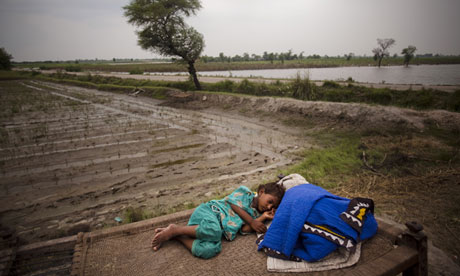
    Droughts, floods, sea-level rises and fiercer storms likely to undermine progress in developing world and hit food supply

    Pakistan floods

    Pakistan says the 2010 floods has affected about 20 million people, many of whom lost homes or livelihoods. Photograph: Warrick Page/Getty Images for UN

    Millions of people around the world are likely to be pushed back into poverty because climate change is undermining economic development in poor countries, the World Bank has warned.

    Droughts, floods, heatwaves, sea-level rises and fiercer storms are likely to accompany increasing global warming and will cause severe hardship in areas that are already poor or were emerging from poverty, the bank said in a report.

    Food shortages will be among the first consequences within just two decades, along with damage to cities from fiercer storms and migration as people try to escape the effects.

    In sub-Saharan Africa, increasing droughts and excessive heat are likely to mean that within about 20 years the staple crop maize will no longer thrive in about 40% of current farmland. In other parts of the region rising temperatures will kill or degrade swaths of the savanna used to graze livestock, according to the report, Turn down the heat: climate extremes, regional impacts and the case for resilience.

    In south-east Asia, events such as the devastating floods in Pakistan in 2010, which affected 20 million people, could become commonplace, while changes to the monsoon could bring severe hardship to Indian farmers.

    Warming of at least 2C (36F) – regarded by scientists as the limit of safety beyond which changes to the climate are likely to become catastrophic and irreversible – is all but inevitable on current levels, and the efforts of governments are limited to trying to prevent temperature rises passing over this threshold. But many parts of the world are already experiencing severe challenges as a result of climate change, according to the World Bank, and this will intensify as temperatures rise.

    Jim Yong Kim, the bank’s president, warned that climate change should not be seen as a future problem that could be put off: “The scientists tell us that if the world warms by 2C – warming which may be reached in 20 to 30 years – that will cause widespread food shortages, unprecedented heatwaves, and more intense cyclones.

    “In the near-term, climate change – which is already unfolding – could batter the slums even more and greatly harm the lives and hopes of individuals and families who have had little hand in raising the Earth’s temperature.”

    The development bank is stepping up its funding for countries to adapt to the effects of climate change, and is calling for rich countries to make greater efforts at cutting greenhouse gas emissions.

    Rachel Kyte, vice president of the World Bank, said it had doubled its aid for adaptation from $2.3bn (£1.47bn) in 2011 to $4.6bn last year, and called for a further doubling. She said the bank was working to tie its disaster aid and climate change adaptation funding closer together.

    Aid from the bank to help poor countries cut their greenhouse gas emissions and pursue environmentally sustainable economic development stands at about $7bn a year, and is backed by about $20bn from regional development banks and other partners.

    The report’s authors used the latest climate science to examine the likely effects of global warming of 2C to 4C on agriculture, water resources, coastal ecosystems and fisheries, and cities, across sub-Saharan Africa, south and south-east Asia.

    Kyte said the effects would be to magnify the problems that developing regions experience. More people would be pushed into slums, with an increased risk of disease. “We are looking at major new initiatives [in] cities; cities need billions of investment in infrastructure, but many developing cities are not really creditworthy,” she said.

    She pointed to Jakarta, where rising sea levels and decades of pumping freshwater from underground sources beneath and around the city were increasing its vulnerability to flooding. Choices would need to be made soon in many cities on how to stem the likely effects, but Kyte warned that the plans must be future-proof, citing Ho Chi Minh City in Vietnam, which has been forced to rethink its flood preparations despite spending $2bn on them.

    Green campaigners emphasised the need to try to avoid 2C of warming, which scientists stay is possible if countries bolster their ambitions to cut greenhouse gas ambitions in the near future.

    Stephanie Tunmore, climate campaigner at Greenpeace International, said: “Fossil fuels are being extracted in burned in the name of development and prosperity, but what they are delivering is the opposite.

    “Some major impacts from climate change are already unavoidable and rich countries must urgently support the poor and vulnerable to adapt. But massive increases in the future costs of adaptation and damage can only be avoided by investing in a clean energy future now.”

    The World Bank has come under fire in the past for funding coal-fired power plants in some developing countries. However, it said the move was the result of old policies and was being phased out.

  • 12,000 people call for logging Bill to be deferred

    12,000 people call for logging Bill to be deferred

    Inbox
    x
    The Wilderness Society
    Last week, the regressive Sustainable Forests Timber Amendment Bill passed th…
    11:15 AM (29 minutes ago)

    Last week, the regressive Sustainable Forests Timber Amendment Bill passed th…
    The Wilderness Society <mail@change.org>
    11:18 AM (26 minutes ago)

    to me

    Last week, the regressive Sustainable Forests Timber Amendment Bill passed the Victorian Parliament.

    You were one of at least 12,000 people who thought this shouldn’t have happened.

    Thanks for signing our petition and sending a strong message to the Napthine government that it’s imprudent to give rogue logging agency VicForests more power than they’ve already got.

    The Wilderness Society raised your concerns with many MPs, arguing that it’s irresponsible to vest in VicForests more power to make decisions about where and when they log, without enough environmental and governmental oversight. And that it’s especially impetuous to do so, while VicForests is in the Supreme Court of Appeal over allegations that they’ve logged the habitat of the state animal emblem, the Fairy (Leadbeater’s) Possum!

    We met with Liberal MPs to explain why we’re concerned about the Bill. None of them tried to convince us that logging in native forests is good, nor that it needs to continue.

    So why did they support the Bill?

    We’re as disappointed as you are that no Liberal MPs stood up to the Nationals on this poor forest management policy.

    New laws allowing for long-term contracts won’t magic up a long-term wood resource.

    In fact, while the Bill was in Parliament, VicForests announced that due to a reduction in wood resource availability (‘cos they’ve overlogged for so many years, and due to the impacts of bushfires), they’re going to reduce their Ash logging by an (inadequate) 25%!

    Despite this, the SFTA Bill was still supported by every Liberal and National MP in the Parliament, bar one.

    On 7 May, when the Bill was before the Upper House, Labor MLC John Lenders said the Opposition believed the Bill is “flawed”. Labor also suggested that because the Auditor-General is currently investigating VicForests, the Bill should be properly considered by a Committee.

    We were heartened that President of the Upper House, Liberal MLC Bruce Atkinson agreed, and called upon the House to support the Bill being considered by a Committee due to his concerns about the “long-term sustainability of the resource”. Sadly, the vote was tied and the Bill proceeded to the Lower House.

    When it was debated there, the House was reminded of the plight of our endangered animal emblem when Opposition Environment Spokesperson Lisa Neville asked whether by passing the Bill, Parliament is “putting at risk the future of our native forests and creatures like the Leadbeater’s possum?”

    In our view, that’s exactly what the Bill does. We remarked that the Bill “would likely secure the extinction of the state’s animal emblem, the Fairy (Leadbeater’s) Possum, and require taxpayers to underwrite contracts to logging companies and paper manufacturers when the state cannot meet wood supply obligations.”

    In his contribution in Parliament, Greens MLC Greg Barber asked “would you invest in VicForests if it were a company listed on the Australian Stock Exchange and you saw that it had had a string of financial losses virtually since its inception and that its entire business was underpinned by, in effect, one customer with a stated position of getting out of the industry the company was in?”

    Here Mr Barber is referring to Australian Paper, manufacturers of Reflex copy paper, who have previously stated they intend be out of native forests by 2017. We believe our forests belong to all Australians, not only to logging and woodchipping companies.

    Write a letter to Australian Paper CEO Jim Henneberry (1) to let him know you’d like to see Australian Paper out of native forests far earlier than 2017, and our forests protected.

    The amazing Knitting Nannas of Toolangi were at Parliament to listen to the debate about the Bill, too.

    “We are aghast that the state government is attempting to ‘stitch-up’ a deal that will see our publicly owned native forests handed over to the industry for infinity logging,” said KNOT spokesperson, Karena Goldfinch.

    We know that Victorians are proud of their environment, and want to see forests protected. 12,000 people can’t be wrong.

    When it comes to the Sustainable Forests Timber Amendments Bill, the Napthine government hasn’t represented you. If your local MP is a member of the Napthine government, do let them know you’re disappointed they passed some very regressive logging laws, without even taking the trouble to defer them until the Auditor-General’s office has completed its investigation into VicForests and logging in Victoria.

    As the lawyers at the Environment Defenders Office say, “native forests are publicly owned, and Government should manage these forests on behalf of the public.”

    Thanks for being proud of your environment, and for standing up for our forests.

    Please keep in touch – because protecting Australia’s forests is crucial for the survival of endangered wildlife, for our way of life, and for the enjoyment and benefit of us all.

    For regular forest updates, sign up at wilderness.org.au. And follow us on Twitter @wilderness_VIC

    For the forests,

    Amelia Young
    Campaigns Manager, the Wilderness Society Victoria

    (1) Send your snail mail to Jim Henneberry, CEO, Australian Paper, Private Bag 87 Mt Waverley 3149 More info visit ethicalpaper.com.au

    This message was sent by The Wilderness Society using the Change.org system. You received this email because you signed a petition started by The Wilderness Society on Change.org: “Defer the Bill that would lock-in long-term native forest logging.” Change.org does not endorse contents of this message.

    View the petition  |  Reply to this message via Change.org

  • North Sea leaks ‘reality check’ for British oil industry, says Greenpeace

    North Sea leaks ‘reality check’ for British oil industry, says Greenpeace

    Environmentalists say industry’s arctic safety case undermined by figures showing 55 pollution incidents in last month

    north sea leaks oil industry

    Facilities operated by Shell, BP and BG were all offenders, according to the Department of Energy and Climate Change. Photograph: Royal Dutch Shell Ho/EPA

    Britain’s offshore rigs and platforms have leaked oil or other chemicals into the North Sea on 55 occasions over the past month alone, challenging claims by the industry that it has a strong safety and environmental record.

    Among the fields to have reported pollution discharges is Piper Alpha, the scene of the world’s worst offshore accident in terms of fatalities when it blew up, killing 167 workers, 25 years ago.

    Facilities operated by Shell, BP and BG were all offenders, according to the latest petroleum operations notices (PON1s) reported to the Department of Energy and Climate Change (DECC).

    Greenpeace said the alarming statistics should act as a reality check for an industry that was trying to persuade the world it should be allowed to drill in the pristine waters of the Arctic.

    “They’re trying to convince the world that they can operate safely in one of the world’s harshest environments, yet they can’t prevent this steady trickle of oil and other polluting chemicals leaking into the relatively safe waters of the North Sea,” said Greenpeace senior climate adviser Charlie Kronick. “This will do little to increase public trust in their ability to drill in the Arctic without damaging this incredibly beautiful and fragile corner of our planet.”

    But the industry itself says the leaks often contain tiny amounts of relatively harmless substances and the reporting system is an example of a good regulation.

    One of the worst offenders in the latest set of DECC figures is Shell, which on 3 June reported lubricant and other chemical discharges from its Brent Bravo and Brent Charlie platforms.

    A Shell spokesman said: “Asset integrity and process safety is Shell’s foremost priority at all times. No spill is acceptable and we work hard both offshore and onshore to minimise risks to maintain a safe working environment for our workforce and reduce any environmental impact on the North Sea.

    “Shell is actively participating in the Step Change in Industry safety initiative, which includes a focus on hydrocarbon spill reduction. The industry has achieved an almost 50% reduction in hydrocarbons leaks during 2012, based on a baseline set in 2009.”

    In 2006, Shell was fined £900,000 after pleading guilty to safety lapses on the Brent B platform following an accident in 2003, when the facility was hit by a gas leak in which two oil workers died.

    BP, which is still fighting criminal charges following the Deepwater Horizon accident of 2010 in the US Gulf, is reported to have had crude leaks off the Paul B Loyd Jnr rig, which was working on the Clair field on 6 June this year. There was also a release of “another” substance from the same drilling unit two days earlier. On 25 May there was discharge on the Marnock field.

    BG had a leak on the Everest North platform on 31 May while Talisman Energy discharged chemicals the day before on the Piper Bravo platform that was built in place of the Piper Alpha structure destroyed by fire in 1988.

    Petroleum operations notices are all reviewed and investigated by an offshore environmental inspector as they are reports of potential breaches of DECC-enforced regulations.

    Some of the discharges are allowable under North Sea rules but most on the latest PON1s monthly data whose status is marked “completed” rather than still “under review” ascribed the source to various mechanical failures.Those incidents that do show how much product was released indicate small amounts but any unintended action is unwelcome at a time when safety and the environment are major concerns of the public.

    Although the PONS1 data seen by the Guardian for the month from 6 May to 6 June show 55 different numbered notices, employers dispute the figures and downplay their significance.

    Mick Borwell, Oil & Gas UK’s environmental issues director, said: “The vast majority of the 103 spills this year [in PON1 reports] are very small operational chemical spills. They have no potential to cause a major accident, so do not compromise the increase in safety standards reported recently including a year on year reduction in combined fatal and major injury rates and in all types of dangerous occurrence and a 48% reduction in hydrocarbon releases over three years.”

    BP and Shell declined to comment. On Monday, BP will appear in court in New Orleans to argue that the huge compensation package agreed last year following the Deepwater Horizon disaster is being abused. Lawyers for BP will claim that large numbers of “fraudulent, excessive or improper claims” are being filed to the victims’ fund, to which BP set aside around $8bn.