Category: Uncategorized

  • A high-throughput system for boron microsublimation and isotope analysis by total evaporation thermal ionization mass spectrometry

    A high-throughput system for boron microsublimation and isotope analysis by total evaporation thermal ionization mass spectrometry

    Published 8 July 2013 Science Leave a Comment
    Tags: , ,

    RATIONALE
    Research on the ocean carbon cycle is vitally important due to the projected impacts of atmospheric CO2 on global temperatures and climate change, but also on ocean chemistry. The direct influence of this CO2 rise on the seawater pH can be evaluated from the boron isotopic composition in biogenic carbonates; however, conscientious laboratory techniques and data treatment are vital in obtaining accurate and precise results. A rapid-throughput boron purification and Total Evaporation Thermal Ionization Mass Spectrometry method was developed for high accuracy and precision boron isotopic analysis for small (ng) sample sizes.

    METHODS
    An improved microsublimation method, in which up to 20 samples can be processed simultaneously under identical temperature conditions, was developed. Several tests have confirmed the viability of this technique. First, seawater and Porites coral samples were processed with H2O2 and the results compared with those obtained using microsublimation; second, the impact of various sublimation times was evaluated; and third, quantitative recovery was assessed using standard addition.

    RESULTS
    Microsublimation provides a valid method for the quantitative recovery and separation of boron from both major elements and organic matter under low-blank conditions. The close agreement of our results with published values validates the accuracy of the measurements. The isotopic ratio for SRM 951a boric acid isotopic standard was 4.0328 ± 0.0054 (2 STD, n = 25). The reproducibility of boron isotopic composition for standards including AE121, IAEA B-1 and an in-house coral standard UM-CP1 was ±0.68‰ (2 STD, n = 15), ±1.12‰ (2 STD, n = 24), and ±1.17‰ (2 STD, n = 14), respectively. The sample sizes were <1 ng for each measurement.

    CONCLUSIONS
    The developed method for preparing and measuring boron isotopic values in a variety of carbonate materials should facilitate the reconstruction of past ocean pH conditions with decadal-scale resolution.


    Liu Y.-W., Aciego S. M., Wanamaker Jr. A. D. & Sell B. K., 2013. A high-throughput system for boron microsublimation and isotope analysis by total evaporation thermal ionization mass spectrometry. Rapid Communications in Mass Spectrometry 27(15): 1705–1714. Article (subscription required).

    Rate this:

  • Morphological changes in branchial mitochondria-rich cells of the teleost Paralichthys olivaceus as a potential indicator of CO2 impacts

    Morphological changes in branchial mitochondria-rich cells of the teleost Paralichthys olivaceus as a potential indicator of CO2 impacts

    Published 8 July 2013 Science Leave a Comment
    Tags: , , , ,

    We studied the morphological and biochemical changes of mitochondria-rich cells (MRCs) of a demersal teleost, Paralichthys olivaceus, during exposure to 0.98, 2.97 and 4.95 kPa pCO2. The apical opening area of MRCs increased 2.2 and 4.1 times by 24 h exposure to 2.97 and 4.95 kPa pCO2, respectively, while the cross-sectional area or density of MRCs did not change. Gill Na+/K+-ATPase activity more than doubled at 72 h and then returned to the pre-exposure level at 168 h in 0.98 kPa pCO2, while it increased 1.7 times at 24 h at 4.95 kPa. These results indicate that the apical opening area of MRCs and the gill Na+/K+-ATPase activity may be used as an indicator of acute (up to 72 h), but not chronic, impacts of high (>1 kPa) seawater CO2 conditions in P. olivacues. Limitations of those parameters as indices of CO2 impacts are discussed.


    Hayashi M., Kikkawa T. & Ishimatsu A., in press. Morphological changes in branchial mitochondria-rich cells of the teleost Paralichthys olivaceus as a potential indicator of CO2 impacts. Marine Pollution Bulletin. Article (subscription required).

    Rate this:

  • Coalition aims to cut red and green tape by $1bn a year

    Coalition aims to cut red and green tape by $1bn a year

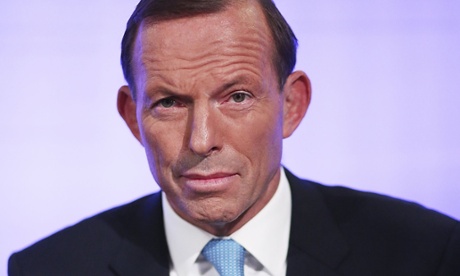
    Tony Abbott also promises a deregulation unit and a one-level environmental approvals process

    Tony Abbott.

    Tony Abbott: ‘Business should not have to run the gauntlet twice.’ Photograph: Stefan Postles/Getty Images

    A Coalition government would tie “red tape” reduction targets to senior public servants’ pay, establish a deregulation unit within the prime minister’s office and hand over most environmental regulation responsibilities to the states.

    The opposition leader, Tony Abbott, announced the Coalition policy relating to productivity and regulation at KPMG’s Sydney offices on Monday.

    In the 28-page document, the Coalition sets a target to reduce “red and green” tape by $1bn a year and will set aside at least two parliamentary sitting days to repeal legislation associated with “counter-productive” regulation.

    A deregulation unit would be set up within the prime minister’s office to give ministers targets to reduce regulation within their units, with pay rises and bonuses for senior public servants being linked in part to the outcomes.

    Examples in the document of regulation a Coalition government would get rid of include repealing the carbon tax and mining tax – policy already announced by the Coalition.

    In a press conference, Abbott emphasised the proposal to create a single process for environmental approvals, abolishing the commonwealth level of approvals and leaving most of the environmental regulation to states.

    “Business should not have to run the gauntlet twice,” he said.

    “Yes, we do expect high environmental standards, but you shouldn’t have to run the gauntlet twice.

    “Once you have demonstrated to one set of officials that you are going to meet high environmental standards, that should be enough.”

    The policy document lists examples of “excessive red and green tape” but does not specifically say it will repeal all of the regulations mentioned.

    In the examples are childcare laws which will require each worker to have an official qualification from next year, and the newly established Australian Charities and Not-for-Profits Commission which was described in the document as duplicating reporting obligations.

    “If we can reduce the burdens on business, we make it easier for them to employ, we make it easier for them to pay the kind of wages that the Australian public are entitled to expect,” Abbott said.

    “That’s our job, to make it easier for the businesses of Australia to get on with their business of producing wealth and producing employment for the Australian people.”

    Daily Email

    close

    Sign up for the Guardian Today

    Our editors’ picks for the day’s top news and commentary delivered to your inbox each morning.

    Sign up for the daily email

    Daily Email

    close

    Get the Guardian’s daily US email

    Our editors’ picks for the day’s top news and commentary delivered to your inbox each morning. Enter your email address to subscribe.

    Sign up now
    Daily Email

    close

    Get the Guardian’s daily Australia email

    Our editors’ picks for the day’s top news and commentary delivered to your inbox every weekday.

    Sign up for the daily email

  • What is the LNP trying to hide? GET-UP

    What is the LNP trying to hide?

    Inbox
    x
    GetUp!
    6:04 PM (1 hour ago)

    to me

    Blocking people voting. Secret Donations. It’s the assault on our democracy no one knows is happening.

    Dear NEVILLE,

    It was a quiet triumph. In the busy weeks before Christmas 2005, then Special Minister of State – little-known Tasmanian Senator Eric Abetz – released new “electoral integrity laws.” They barely registered in the press.

    Just 18 months later, the laws had their effect: approximately 60,500 Australians had their votes discounted because they didn’t meet the new, unadvertised ID provisions1. Another 90,000 tried to enrol to vote, but missed the shorter, one-day deadline2. Prisoners, too, were excluded from voting.

    All up, the laws prevented an estimated 150,000 Australians from voting. Those who were the most likely to miss out were Australians who move house regularly, or don’t have driver licences: the young, the poor and Indigenous people. GetUp members fought back by taking the worst of the laws to the High Court, seeing them declared unconstitutional just in time for the 2010 election.

    Right now, it’s happening again – but this time we can intervene early.

    This week Queensland’s Attorney General Jarrod Bleijie foreshadowed changes that would:

      • Require all voters to meet ID requirements on polling day, making it very difficult for some, particularly the elderly and Indigenous, to vote;
      • Allow unlimited political donations; and
    • Allowing completely secret donations of $12,400 per candidate (it appears donors could even give up to $1.1 million to a party secretly through a loophole, by donating to each of their 89 candidates).3

    Wherever you are in Australia, this is your fight. If this plan becomes law in Queensland, it could become the blueprint for a quiet national offensive on the core of our democracy. State and Federal governments could introduce similarly insidious schemes by simply copying the Queensland model. There are now Coalition governments in nearly every state and territory, and if the Coalition wins the federal election this year, Senator Abetz could be even more powerful than he was before.

    We’re starting with ads this week in Queensland’s most-read paper, The Courier-Mail. Every extra dollar we raise starts a fund for legal challenges, advertising and whatever else it will take to stop this anti-democracy agenda. Can you help?

    http://www.getup.org.au/stand-up-for-democracy

    Queensland Premier Campbell Newman has yet to publicly support the plan. We need to kick off a highly visible public campaign to end this assault on a free and fair democracy before it has a chance to take hold.

    That’s why we’ve created these highly visible, hard-hitting ads. We can show Premier Newman that this isn’t just bad for democracy, it could be toxic for him politically. It’s also about showing every leader – anywhere in Australia – that threatening voter rights and changing regulations to allow vast sums of unaccountable money into our politics will invite a swift and fierce public backlash.

    62% of Indigenous Australians don’t have a drivers licence4, and 13% are estimated never to have had a birth certificate5. Whatever form of ID (photographic or not) becomes mandatory in order to vote, you can bet Indigenous Australians are less likely to have it.

    The Attorney-General’s own discussion paper noted this year:

    “…there is a risk that the requirement would lead to voter confusion. Also, as there is no specific evidence of electoral fraud in this area, introduction of proof of identity requirements could be considered a disproportionate response.”7

    If it’s not about electoral fraud, what is it about?

    Secret donations. Barriers to voting. It’s an assault on our democracy that no one knows is happening.

    Click here to put this ad in The Courier-Mail this week, and sound the alarm. http://www.getup.org.au/stand-up-for-democracy

    Sam, for the team at GetUp

    PS: Queensland’s politicians will already be on the nose with voters this week. They just voted themselves a whopping 41% pay rise, while simultaneously fighting public servants’ right to a 2.2% pay rise. You can’t make this stuff up. Expose this scandal now, and we can stop it in its tracks: click here.

    Notes:

    1 Queensland has lead the country on transparency and donations, with $5,300 limits on donations to parties, and disclosure of all donations above $1,000. Now, the Attorney General wants to eliminate limits on donations, and allow donations of up to $12,400 without disclosure (the federal limit). It appears that if a donor gave $12,4000 to each of a party’s candidates 89 candidates, and to the party itself, they could donate $1,111,600 without disclosing a cent to the public.
    2 Approx. 60,500 voters cast provisional ballots that were discounted because of the changes to ID requirements and address changes. Estimate based on figures from “2007 Election – Provisional Voting Rejections” Peter Brent, The Australian National University A further 89,000 to 169,000 tried to enrol to vote but missed the new one day cutoff period after the election was called; estimate based on number of voters affected by GetUp’s Rowe vs. Electoral Commissioner case in 2010, according to AEC: “Electoral roll management update 17 October 2011”
    3 OSER, Queensland Government, Indigenous Regional Profiles, (Census 2006) Australia, 12 March 2012.
    4“Being Nobody – The Difficulties Faced by Aboriginal Victorians in Obtaining Identification” Joel Orenstein
    5 Information from a presentation by Kevin Kitson, First Assistant Commissioner, Australian Electoral Commission. ‘Engagement with Remote Indigenous Communities to Improve Service Delivery.’ Regional Managers Local Implementation Forum 2012 on 2 May 2012.
    6 “Electoral Reform Discussion Paper,” January 2013. Department of Justice and Attorney General.


    GetUp is an independent, not-for-profit community campaigning group. We use new technology to empower Australians to have their say on important national issues. We receive no political party or government funding, and every campaign we run is entirely supported by voluntary donations. If you’d like to contribute to help fund GetUp’s work, please donate now! If you have trouble with any links in this email, please go directly to www.getup.org.au. To unsubscribe from GetUp, please click here. Authorised by Sam Mclean, Level 2, 104 Commonwealth Street, Surry Hills NSW 2010.

    Reply
    Forward
    Click here to Reply or Forward
  • Shell says Gulf find may hold 100 million barrels

    Shell says Gulf find may hold 100 million barrels

    Posted on July 3, 2013 at 10:32 am by Emily Pickrell in featured, General

    Shell's state-of-the-art Olympus platform is preparing to journey to the deep-water Gulf of Mexico. (Shell)

    Shell’s state-of-the-art Olympus platform is preparing to journey to the deep-water Gulf of Mexico. (Shell)

    A drilling hunch with its roots in the Jurassic period is paying off for Royal Dutch Shell, with a potential 100-million barrel oil find adding to the company’s bounty in the Gulf of Mexico.

    Shell said Wednesday that its Vicksburg exploratory well encountered an estimated 500 feet of net oil pay. The well is five miles from the company’s Appomattox site, where Shell already has found 500 million barrels of potentially recoverable resources.

    “This is a Jurassic-age reservoir that is more than 160 million years old that was deposited as desert dunes and now is sitting beneath the floor of the Gulf of Mexico,” said Mark Shuster, executive vice president of Shell Upstream Americas Exploration.

    Gamers: Energy company hopes video game will help fill jobs

    He said Shell geologists were brainstorming about 15 years ago and came up with the idea of exploring to see whether they could access the Norphlet Play — a prolific onshore formation — in the deep waters of the Gulf of Mexico.

    “No one thought we would be able to find oil in this reservoir in the deep water,” Shuster said. “But we made the first forays into this play, and subsequently, other companies are coming along.”

    Shell bought licenses in 2002 for the area where it drilled the Vicksburg and Appomattox wells.

    It made its first oil discovery at Appomattox in 2009 and now is evaluating strategies for  going forward with development.

    The Vicksburg discovery nearby raises the possibility of connecting the wells to make production more economic, Shuster said.

    He said that the company probably will produce from multiple wells at Appomattox, regardless of further development on Vicksburg discoveries.

    “The reason that Vicksburg is important is that it is another significant discovery and it is adjacent to Appomattox,” Shuster said. “What’s most surprising is that we found a resource base that is in the range of what we had expected, but at the higher end.”

    The Vicksburg well is under nearly 7,500 feet of water and was drilled to a total depth of 26,385 feet, making it one of Shell’s deepest wells in the Gulf — with the attendant challenges of high pressures and well temperatures.

    Study: Deep-water drilling expansion will strain workforce

    But the discoveries have more than proved that the instincts of the geologists 15 years back were right on track.

    “The Norphlet Play is a strong pillar of our portfolio,” Shuster said. “We have been out there since the early 2000s, exploring for oil in these deep plays. We are quite happy — we have had the Appomattox success and now this new Vicksburg success.”

    Shell is operating the Vicksburg well with a 75 percent interest. Nexen, a wholly owned subsidiary of Chinese national oil company CNOOC Ltd., owns the remaining 25 percent interest.

    Transocean’s Deepwater Nautilus rig drilled the Vicksburg well.

    Also on Fuel Fix:

  • Evidence for extensive methane venting on the southeastern U.S. Atlantic margin

    Evidence for extensive methane venting on the southeastern U.S. Atlantic margin

    Posted By News On July 7, 2013 – 5:21pm

    Results reported here by L.L. Brothers and colleagues show the first evidence for widespread seabed methane venting along the southeastern U.S. Atlantic Margin beyond the well-known Blake Ridge Diapir Seep.

    While it was suspected that such seeps existed, there was little direct evidence until now.

    Data collected from recent ship and autonomous underwater vehicle surveys discovered multiple water-column gas plumes (>1000 m height and made up of bubbles). Brothers and colleagues also mapped extensive new chemosynthetic seep communities (communities of biological organisms that directly use methane and/or sulfide for life processes) at the Blake Ridge and Cape Fear Diapirs.

    Flow along these systems is both more dynamic (more active) and more widespread than previously believed.

    L.L. Brothers et al., DOI:10.1130/G34217.1.

    Post new comment

    The content of this field is kept private and will not be shown publicly.

    • Allowed HTML tags: <em> <strong> <cite><p><br><i><b><center><ul><li><div><html5:figure><html5:figcaption>
    • Lines and paragraphs break automatically.

    More information about formatting options

    CAPTCHA
    Sorry, we know you’re not a spambot, but they’re out there