Category: Uncategorized

  • The Culture of Nature (MONBIOT)

    The Culture of Nature

    Posted: 08 Jul 2013 12:27 PM PDT

    The ignorance and philistinism of those who attack nature lovers knows no bounds.


    By George Monbiot, published in the Guardian 9th July 2013

    Two months ago, American canvas weevil was found in the archives of the National Gallery. After ravaging the Metropolitan and Guggenheim collections in the US, it is now working through the gallery’s storage rooms. Hundreds of Old Masters have been destroyed. The curators fear that much of the collection will go the same way.

    The media has greeted this devastation with near-silence. A front-page article in the Guardian’s review section dismissed expressions of love for the paintings being destroyed as “bourgeois escapism”. Those seeking to arrest the spread of canvas weevil were compared to “anti-immigration demagogues [who] claim that foreigners will destroy a unique and distinctive British culture.”

    Inconceivable? You would hope so – and this story is, happily, fictitious. But the responses I’ve mentioned are real, when you swap art for nature.

    Earlier this year, the former energy minister John Hayes described concerns about the rainforests of Malaysia and Indonesia – which, with their tigers, orangutans and thousands of unique species, are being destroyed to grow biofuels – as “bourgeois views”(1). (Coming from a Tory MP, this was magnificent). In the Guardian review on Saturday, Steven Poole took up his call(2). Echoing Mao’s denunciations of pre-revolutionary Chinese culture, he castigated those of us who write about our love of nature as bourgeois and snobbish, and suggested that our concerns about the spread of exotic invasive animals and plants are a form of cryptofascism: “the green version of the English Defence League”.

    Exotic invasive species are a straightforward ecological problem, wearily familiar to anyone trying to protect biodiversity. Some introduced creatures – such as brown hare, little owl, field poppy, corncockle and pheasant’s eye in Britain – do no harm to their new homes, and are cherished and defended by nature lovers. Others, such as cane toads, mink, rats, rhododendron, kudzu vine or tree-killing fungi, can quickly simplify a complex ecosystem, wiping out many of its endemic animals and plants(3). They have characteristics (for example, inedible to any native carnivore or herbivore, omnivorous, light-excluding, toxic) that allow them to tear an ecosystem to shreds. These aren’t cultural constructions. They are biological facts.

    Comparing those who describe this process to racists is the intellectual equivalent of stating that evolution through natural selection is a coded attack on the welfare state, or that the first law of thermodynamics was hatched by green campaigners intent on conserving energy. It is to see the words but not to understand the science they describe. This fallacy – mistaking scientific findings for cultural concepts – was deliciously ripped apart by Alan Sokal’s satirical paper “Transgressing the Boundaries: towards a transformative hermeneutics of quantum gravity”(4,5).

    I see a love for the diversity and richness of nature as an aesthetic and cultural impulse identical to the love of art. It is a form of culture as refined and intense as any other, yet those who profess it tend to be regarded as nerds, not connoisseurs. (That’s true snobbery for you). Steven Poole and people like him position themselves among the philistines: those who see no value in the wonders with which others are enchanted.

    Consider the issue of dry rot in historic buildings. It’s a major problem. Anyone who dismissed the concern of conservators as a form of neofascism would be considered insane. Dry rot is an exotic invasive species: a fungus which, until we introduced it in shipments of timber, lived quietly on pine and yew trees in the Himalayas(6). Unchecked, it could destroy much of our cultural heritage. What’s the difference?

    Why is this Red Guard philistinism directed at those whose hearts are broken by the heedless destruction of the natural world, by people who wouldn’t dream of trivialising the heedless destruction of the Bamiyan buddhas, or the demolition last month of a 4,000-year old pyramid at El Paraiso in Peru?(7)

    I think there may be three reasons. The first is ignorance. A complete absence of cultural understanding would be career death in the media. A complete absence of scientific understanding is no impediment at all, as almost all media outlets are run and dominated by humanities graduates. I think, among some commentators, there’s also a sense that concern for the living planet is a check on human progress, an affront to the view of humanity as deus invictus, the weightless god, floating above the grubby realities of life on earth.

    But most important, perhaps, is an unconscious absorption of the demands of money. Unlike most art, the wonders of nature often stand in the way of attempts to extract resources or to build airports or shopping centres. Corporate attacks on people who love and seek to defend the natural world have seeped into every pore. Culturally hegemonic, the developers’ view finds expression in the most unlikely places.

    So those of us whose love of the natural world is a source of constant joy and constant despair, who wish to immerse ourselves in nature as others immerse themselves in art, who try to defend the marvels which enthrall us, find ourselves labelled – from the Mail to the Guardian – as romantics, escapists and fascists. That, I suppose, is the price of confronting the power of money.

    www.monbiot.com

    References:

    1. http://www.guardian.co.uk/commentisfree/2013/mar/07/bourgeois-john-hayes

    2. http://www.guardian.co.uk/books/2013/jul/06/nature-writing-revival

    3. http://www.guardian.co.uk/commentisfree/cif-green/2010/oct/04/bird-eating-mice-species-introduced

    4. http://www.physics.nyu.edu/faculty/sokal/transgress_v2/transgress_v2_singlefile.html

    5. See also http://www.physics.nyu.edu/faculty/sokal/lingua_franca_v4/lingua_franca_v4.html

    6. Jagjit Singh et al, 1994. The Search for Wild Dry Rot Fungus (Serpula lacrymans) in the Himalayas. Journal of the Institute of Wood Science, Vol.13, no.3, pp.411-412.

    7. http://www.guardian.co.uk/world/2013/jul/04/pyramid-peru-torn-down-el-paraiso

    You are subscribed to email updates from George Monbiot
    To stop receiving these emails, you may unsubscribe now.
    Email delivery powered by
  • Trees: our life savers are dying

    Trees: our life savers are dying

    For centuries we’ve treated forests poorly. Yet we’re only just learning how crucial trees are to our survival

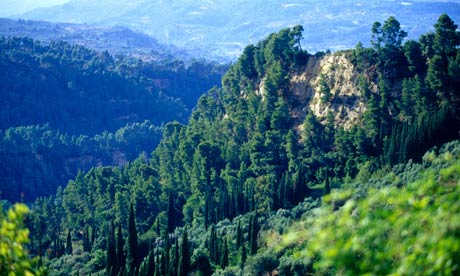
    trees in Arcadia, Peloponnese, Greece

    ‘Scientists admit trees and forests are poorly studied.’ Photograph: Alamy

    Several years ago a few trees in my 15 acres of pine forest in Montana turned from green to a rusty brown, killed by swarms of bark beetles. Four years later virtually all of my centuries-old forest was dead. It wasn’t just the beetles that did in my trees, but much warmer winters here in the Rocky mountains that no longer killed the bugs, allowing them to expand exponentially.

    Since then, as a science journalist for the New York Times, I have written many stories about the dying of the trees – and the news is not good. Many forests across the length and breadth of the Rockies have died in the last decade. Most of the mature forests of British Columbia are gone, from a combination of climate and insects.

    The bristlecone pines of the US – the most ancient trees in the world, with some more than 4,000 years old – will die in the coming years because of a combination of bark beetles and a fungal disease, enabled by a warmer climate. Tree-ring studies on the bristlecone show that the last 50 years are the warmest half century in the last 3,700 years.

    All this is to say that the fungus killing ash trees in Britain is unlikely to be a one-off. Trees across the world are dying. It’s not only the changes brought by a warmer world. We’ve treated the world’s trees poorly for centuries, without regard to ecological principles. We’ve fragmented forests into tiny slivers, and selected out the best genetics again and again with no regard to the fitness of those that remain. Air pollution and soil abuse has taken a toll. And scientists admit trees and forests are poorly studied. “It’s embarrassing how little we know,” a leading redwood expert told me.

    Yet the little that is known indicates trees are essential. They are the planet’s heat shield, cooling temperatures beneath them by 10C and blocking cancer-causing ultraviolet rays. They are robust filters of our air and water, and soak up climate-warming carbon dioxide. Forests slow the runoff of rainfall. Many of the world’s damaging floods are really caused by deforestation.

    These functions are well known. But trees play many other critical roles that we know little about. Katsuhiko Matsunaga, a marine chemist at Hokkaido University in Japan, discovered that as the leaves from trees decompose, humic acid leaches into the ocean and helps fertilise plankton, critical food for many other forms of sea life. Japanese fisherman began an award-winning campaign called Forests Are the Lovers of the Sea, and planted trees along the coasts and rivers that rejuvenated fish and oyster stocks.

    Also in Japan, researchers have long studied what they call “forest bathing“. Hiking through the forest has been shown to reduce stress chemicals in the body and to increase NK or natural killer cells in the immune system, that fight tumours and viruses. Elsewhere researchers have demonstrated that anxiety, depression and even crime are lower in neighbourhoods with trees in the picture.

    Hundreds of different kinds of chemicals are emitted by trees and forests, many beneficial. Taxane from the Pacific yew tree is a powerful anti-cancer drug. Many other tree compounds are proven to be antibacterial, anti-fungal, anti-viral and even to prevent cancer. The active ingredient of aspirin, acetylsalicylic acid, for example, comes from willows. Recommended by doctors to prevent a range of cancers, as well as heart attack and stroke, some believe this chemical in the wild has a medicinal impact on the health of all creatures as it is aerosolised into the air and water, and breathed in and drunk. Yet, it hasn’t been researched.

    Trees are greatly underused as an eco-technology – “working trees” – to make natural systems, as well as the world’s cities and rural areas, more resilient. They are used here in the US to prevent soil erosion and shade crops. In a neat bit of alchemy, trees can be used to clean up the most toxic of wastes, including explosives, solvents and organic wastes, because of a dense community of microbes as thick as a finger around the tree’s roots, a process known as phytoremediation.

    The question is what to plant to withstand the challenges of a changing world to assure a world with trees. In the UK a group called Future Trees Trust is breeding more resilient trees. And a shade-tree farmer from the US named David Milarch, a co-founder of the Archangel Ancient Tree Archive, and whom I have written about, is making copies of some of the world’s oldest and largest trees, from California redwoods to the oaks of Ireland – with proven survivor genetics – to be part of a future forest mix. “These are the supertrees,” he says, “and they have stood the test of time.”

    Before I began this journey I felt planting trees was a feeble response to the planet’s problems. No longer. As the proverb asks: “When is the best time to plant a tree?” Twenty years ago. “The second-best time?” Today.

  • Solar-powered sedan hits Dutch streets

    Solar-powered sedan hits Dutch streets

    By John Upton

    This solar-powered car, Stella, was unveiled Thursday.
    Bart van Overbeeke
    This solar-powered car, Stella, was unveiled Thursday.

    Plug-in electric car? That’s so 2013.

    The electric sedans of the future will also generate their own photovoltaic power.

    That’s the philosophy behind a new class of competition in this year’s World Solar Challenge.

    Since 1987, the challenge has had solar-powered cars racing across the parched Australian outback every couple years. But the solar-powered vehicles that have competed in the challenge, while exciting and innovative, have been anything but consumer-friendly. They have typically carried only an uncomfortable driver in a craft shaped like a sheet of aluminum foil precariously perched over three wheels.

    This year’s challenge, scheduled for October, will push teams to go even further. The new Michelin cruiser class has been created for vehicles that could conceivably be marketed as family sedans. Ten teams have entered, and they will compete against each other for points awarded based on such criteria as practicality, attractiveness, and energy consumption.

    On Thursday, one of the those teams unveiled its entry, taking a car it dubbed Stella to cordoned-off Dutch streets to strut its photovoltaic stuff. And it’s pretty as a pug. Watch:

    The team of 22 Eindhoven University of Technology students behind Stella has vowed to register the car for on-road use, helping to demonstrate its potential commercial viability. From a press release:

    ‘Stella’ is the first ‘energy-positive car’ with room for four people, a trunk, intuitive steering and a range of 600 kilometers.


    By combining aerodynamic design with lightweight materials like carbon and aluminum, a very fuel-efficient car has been designed, which also has ingenious applications like a LED strip and touchscreen that make all the buttons and knobs we know today superfluous. Intuitive driving is enabled by a steering wheel that expands or contracts when you are driving too fast or too slowly. STE will have the car officially certified for road use to prove that this really is a fully-fledged car.

    John Upton is a science fan and green news boffin who tweets, posts articles to Facebook, and blogs about ecology. He welcomes reader questions, tips, and incoherent rants: johnupton@gmail.com.

  • Brooded coral larvae differ in their response to high temperature and elevated pCO2 depending on the day of release

    Brooded coral larvae differ in their response to high temperature and elevated pCO2 depending on the day of release

    Published 8 July 2013 Science Leave a Comment
    Tags: , , , , , , , , ,

    To evaluate the effects of temperature and pCO2 on coral larvae, brooded larvae of Pocillopora damicornis from Nanwan Bay, Taiwan (21°56.179′N, 120°44.85′E), were exposed to ambient (419–470 μatm) and high (604–742 μatm) pCO2 at ~25 and ~29 °C in two experiments conducted in March 2010 and March 2012. Larvae were sampled from four consecutive lunar days (LD) synchronized with spawning following the new moon, incubated in treatments for 24 h, and measured for respiration, maximum photochemical efficiency of PSII (F v/F m), and mortality. The most striking outcome was a strong effect of time (i.e., LD) on larvae performance: respiration was affected by an LD × temperature interaction in 2010 and 2012, as well as an LD × pCO2 × temperature interaction in 2012; F v/F m was affected by LD in 2010 (but not 2012); and mortality was affected by an LD × pCO2 interaction in 2010, and an LD × temperature interaction in 2012. There were no main effects of pCO2 in 2010, but in 2012, high pCO2 depressed metabolic rate and reduced mortality. Therefore, differences in larval performance depended on day of release and resulted in varying susceptibility to future predicted environmental conditions. These results underscore the importance of considering larval brood variation across days when designing experiments. Subtle differences in experimental outcomes between years suggest that transgenerational plasticity in combination with unique histories of exposure to physical conditions can modulate the response of brooded coral larvae to climate change and ocean acidification.


    Cumbo V. R., Edmunds P. J., Wall C. B. & Fan T.-Y., in press. Brooded coral larvae differ in their response to high temperature and elevated pCO2 depending on the day of release. Marine Biology. Article (subscription required).

    Rate this:

  • Arctic Ocean carbon biogeochemistry under climate change and ocean acidification

    Arctic Ocean carbon biogeochemistry under climate change and ocean acidification

    Published 8 July 2013 Science Leave a Comment
    Tags: , , , , , , , , , , , , ,

    Human-induced CO2 emissions to the atmosphere cause climate change and ocean acidification. The strongest indicators of climate change and ocean acidification are expected to be found in the Arctic Ocean (AO). The AO area is small compared to the world ocean, but the global influence of its carbon biogeochemical system with large spatial and temporal variability is considerable and complex. The AO carbon biogeochemical system is also expected to experience feedback in regard to climate change, and to influence the energy flow throughout the Arctic food web. This thesis investigates the carbon biogeochemical system in the AO: present variability; coupling with processes at the low trophic level; and response to future climate and CO2 scenarios. The study combines differing methodological approaches: (i) in-situ observations, (ii) field perturbation experiments, and (iii) ecosystem modeling. The thesis is based on four separate papers. Paper I describes the natural variability of particulate organic carbon and particulate organic nitrogen in a composition of seston and estimates the carbon to nitrogen (C:N) ratio in the AO seston. The paper is based on 3672 in-situ measurements gathered from sources both published and unpublished. The overall C:N ratio in seston was 7.4, which is significantly higher than the classical Redfield ratio of 6.6. A great regional variability in the seston C:N ratio was found. Paper II introduces the inorganic carbonate system around the Svalbard archipelago in the AO, at present and under future climate and CO2 scenarios. This paper is based on results from a coupled physical-biogeochemical ecosystem model forced by SRES A1B scenario, as well as on results of a CO2 perturbation study on the natural community conducted in an Arctic fjord. The results presented in this paper suggest that seawater pCO2 in the area around Svalbard at the end of the 21st century will be 300 μatm higher than at present in the Atlantic influenced region, and 400 μatm higher than at present in the Arctic influenced region. As a result, the waters in the Arctic-influenced region will be undersaturated with respect to aragonite, and waters in the Atlantic-influenced region will be close to the undersaturation state. The modeled summer decrease in seawater pCO2, and the increase in pH and aragonite saturation state are all steeper in the future. This was also observed during an experiment on ocean acidification in natural phytoplankton assemblage, which was perturbed with the projected high levels of seawater pCO2. Paper III is based on results from two model simulations, performed with the coupled physical-biogeochemical ecosystem model forced by SRES A1B scenario, parameterized with the constant C:N ratio and with the pCO2 sensitive C:N ratio. The paper demonstrates that more inorganic carbon could be fixed by autotrophs in the future surface Arctic waters if annual primary production increases in response to the pCO2 sensitive C:N ratio. As a result of higher primary production, and consequently higher export production in case of pCO2 sensitive C:N ratio, more carbon is released below the euphotic zone, which leads to lower pH and aragonite saturation states than in case with the constant C:N ratio. Paper IV is based on the results of the large-scale CO2 perturbation experiment, revealing enhanced carbon fixation by autotrophs at high levels of pCO2 when the phytoplankton assemblage was dominated by a smallsized phytoplankton group. The results of the paper suggest that net community production could enhance if small-sized phytoplankton thrives in the future Arctic Ocean.

    The introduction to the thesis provides a comprehensive overview of the carbonate system and processes controlling it. The AO carbon biogeochemistry is introduced, with its uniqueness and importance for the earth climate system. The findings of the four papers are summarized and future prospects for carbon biogeochemistry research in the AO are discussed.


    Silyakova A., 2013. Arctic Ocean carbon biogeochemistry under climate change and ocean acidification. PhD thesis, University of Bergen, 40 p. Thesis.

    Rate this:

    i
    Rate This
  • Detrimental effects of reduced seawater pH on the early development of the Pacific abalone

    Detrimental effects of reduced seawater pH on the early development of the Pacific abalone

    Published 8 July 2013 Science Leave a Comment
    Tags: , , , , ,

    The hatching process of the Pacific abalone Haliotis discus hannai was prolonged at a pH of 7.6 and pH 7.3, and the embryonic developmental success was reduced. The hatching rate at pH 7.3 was significantly (10.8%) lower than that of the control (pH 8.2). The malformation rates at pH 7.9 and pH 8.2 were less than 20% but were 53.8% and 77.3% at pH 7.6 and pH 7.3, respectively. When newly hatched larvae were incubated for 48 h at pH 7.3, only 2.7% of the larvae settled, while more than 70% of the larvae completed settlement in the other three pH treatments. However, most 24 h old larvae could complete metamorphosis in all four pH treatments. Overall, a 0.3-unit reduction in water pH will produce no negative effect on the early development of the Pacific abalone, but further reduction in pH to the values predicted for seawater by the end of this century will have strong detrimental effects.


    Li J., Jiang Z., Zhang J., Qiu J.-W., Du M., Bian D. & Fang J., in press. Detrimental effects of reduced seawater pH on the early development of the Pacific abalone. Marine Pollution Bulletin. Article (subscription required).

    Rate this:

    i
    Rate This