Category: Uncategorized

  • Union raises fears that Telstra communication pits contain banned pesticide dieldrin

    Union raises fears that Telstra communication pits contain banned pesticide dieldrin

    By science and technology correspondent Jake Sturmer

    Updated 53 minutes ago

    A new threat has emerged for contract workers digging-up communication pits owned by Telstra, with the pits found to possibly contain the deadly banned pesticide dieldrin.

    The Communications Workers Union in Victoria has raised concerns workers could have been exposed to dieldrin that Telstra sprayed on its cables to stop termites.

    The dieldrin link was flagged after recent reports about the disturbance of asbestos in the pits caused widespread concern about the rollout of the National Broadband Network (NBN).

    Dieldrin is banned in most countries and was phased out in Australia in the early 1990s.

    After once being widely used in agriculture and timber products, the toxic chemical has been linked with Parkinson’s disease and can trigger comas.

    The union says it raised concerns about both asbestos and dieldrin with NBN Co at a meeting in August 2010.

    A spokeswoman for Telstra confirmed dieldrin had been used but says it had stopped using the chemical well before the 1990s.

    Experts say dieldrin exposure in telecommunications pits is unlikely to be as harmful as asbestos but they still urge action.

    Professor Malcolm Sim said there could still be a concern about insecticides in the soil.

    “They’re very persistent and as I said they can accumulate in the body and that was the main reason they were phased out,” he said.

    A spokesman for NBN Co referred the ABC back to Telstra and was trying to track down more information.

    Topics: information-and-communication, wireless-communication, occupational-health-and-safety, vic

    First posted 2 hours 19 minutes ago

  • How to destroy the future

    How to destroy the future

    From the Cuban missile crisis to a fossil fuels frenzy, the US is intent on winning the race to disaster

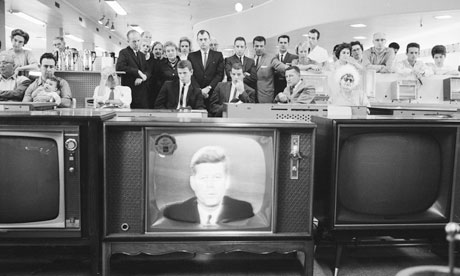
    JFK on the Cuban missile crisis

    ‘What happened in the missile crisis in October 1962 has been prettified to make it look as if acts of courage and thoughtfulness abounded.’ Photograph: Ralph Crane/Time & Life Pictures/Getty Image

    What is the future likely to bring? A reasonable stance might be to try to look at the human species from the outside. So imagine that you’re an extraterrestrial observer who is trying to figure out what’s happening here or, for that matter, imagine you’re an historian 100 years from now – assuming there are any historians 100 years from now, which is not obvious – and you’re looking back at what’s happening today. You’d see something quite remarkable.

    For the first time in the history of the human species, we have clearly developed the capacity to destroy ourselves. That’s been true since 1945. It’s now being finally recognized that there are more long-term processes like environmental destruction leading in the same direction, maybe not to total destruction, but at least to the destruction of the capacity for a decent existence.

    And there are other dangers like pandemics, which have to do with globalization and interaction. So there are processes underway and institutions right in place, like nuclear weapons systems, which could lead to a serious blow to, or maybe the termination of, an organized existence.

    The question is: What are people doing about it? None of this is a secret. It’s all perfectly open. In fact, you have to make an effort not to see it.

    There have been a range of reactions. There are those who are trying hard to do something about these threats, and others who are acting to escalate them. If you look at who they are, this future historian or extraterrestrial observer would see something strange indeed. Trying to mitigate or overcome these threats are the least developed societies, the indigenous populations, or the remnants of them, tribal societies and first nations in Canada. They’re not talking about nuclear war but environmental disaster, and they’re really trying to do something about it.

    In fact, all over the world – Australia, India, South America – there are battles going on, sometimes wars. In India, it’s a major war over direct environmental destruction, with tribal societies trying to resist resource extraction operations that are extremely harmful locally, but also in their general consequences. In societies where indigenous populations have an influence, many are taking a strong stand. The strongest of any country with regard to global warming is in Bolivia, which has an indigenous majority and constitutional requirements that protect the “rights of nature.”

    Ecuador, which also has a large indigenous population, is the only oil exporter I know of where the government is seeking aid to help keep that oil in the ground, instead of producing and exporting it – and the ground is where it ought to be.

    Venezuelan President Hugo Chavez, who died recently and was the object of mockery, insult, and hatred throughout the Western world, attended a session of the U.N. General Assembly a few years ago where he elicited all sorts of ridicule for calling George W. Bush a devil. He also gave a speech there that was quite interesting. Of course, Venezuela is a major oil producer. Oil is practically their whole gross domestic product. In that speech, he warned of the dangers of the overuse of fossil fuels and urged producer and consumer countries to get together and try to work out ways to reduce fossil fuel use. That was pretty amazing on the part of an oil producer. You know, he was part Indian, of indigenous background. Unlike the funny things he did, this aspect of his actions at the U.N. was never even reported.

    So, at one extreme you have indigenous, tribal societies trying to stem the race to disaster. At the other extreme, the richest, most powerful societies in world history, like the United States and Canada, are racing full-speed ahead to destroy the environment as quickly as possible. Unlike Ecuador, and indigenous societies throughout the world, they want to extract every drop of hydrocarbons from the ground with all possible speed.

    Both political parties, President Obama, the media, and the international press seem to be looking forward with great enthusiasm to what they call “a century of energy independence” for the United States. Energy independence is an almost meaningless concept, but put that aside. What they mean is: we’ll have a century in which to maximize the use of fossil fuels and contribute to destroying the world.

    And that’s pretty much the case everywhere. Admittedly, when it comes to alternative energy development, Europe is doing something. Meanwhile, the United States, the richest and most powerful country in world history, is the only nation among perhaps 100 relevant ones that doesn’t have a national policy for restricting the use of fossil fuels, that doesn’t even have renewable energy targets. It’s not because the population doesn’t want it. Americans are pretty close to the international norm in their concern about global warming. It’s institutional structures that block change. Business interests don’t want it and they’re overwhelmingly powerful in determining policy, so you get a big gap between opinion and policy on lots of issues, including this one.

    So that’s what the future historian – if there is one – would see. He might also read today’s scientific journals. Just about every one you open has a more dire prediction than the last.

    The other issue is nuclear war. It’s been known for a long time that if there were to be a first strike by a major power, even with no retaliation, it would probably destroy civilization just because of the nuclear-winter consequences that would follow. You can read about it in the Bulletin of Atomic Scientists. It’s well understood. So the danger has always been a lot worse than we thought it was.

    We’ve just passed the 50th anniversary of the Cuban Missile Crisis, which was called “the most dangerous moment in history” by historian Arthur Schlesinger, President John F. Kennedy’s advisor. Which it was. It was a very close call, and not the only time either. In some ways, however, the worst aspect of these grim events is that the lessons haven’t been learned.

    What happened in the missile crisis in October 1962 has been prettified to make it look as if acts of courage and thoughtfulness abounded. The truth is that the whole episode was almost insane. There was a point, as the missile crisis was reaching its peak, when Soviet Premier Nikita Khrushchev wrote to Kennedy offering to settle it by a public announcement of a withdrawal of Russian missiles from Cuba and U.S. missiles from Turkey. Actually, Kennedy hadn’t even known that the U.S. had missiles in Turkey at the time. They were being withdrawn anyway, because they were being replaced by more lethal Polaris nuclear submarines, which were invulnerable.

    So that was the offer. Kennedy and his advisors considered it – and rejected it. At the time, Kennedy himself was estimating the likelihood of nuclear war at a third to a half. So Kennedy was willing to accept a very high risk of massive destruction in order to establish the principle that we – and only we – have the right to offensive missiles beyond our borders, in fact anywhere we like, no matter what the risk to others – and to ourselves, if matters fall out of control. We have that right, but no one else does.

    Kennedy did, however, accept a secret agreement to withdraw the missiles the U.S. was already withdrawing, as long as it was never made public. Khrushchev, in other words, had to openly withdraw the Russian missiles while the US secretly withdrew its obsolete ones; that is, Khrushchev had to be humiliated and Kennedy had to maintain his macho image. He’s greatly praised for this: courage and coolness under threat, and so on. The horror of his decisions is not even mentioned – try to find it on the record.

    And to add a little more, a couple of months before the crisis blew up the United States had sent missiles with nuclear warheads to Okinawa. These were aimed at China during a period of great regional tension.

    Well, who cares? We have the right to do anything we want anywhere in the world. That was one grim lesson from that era, but there were others to come.

    Ten years after that, in 1973, Secretary of State Henry Kissinger called a high-level nuclear alert. It was his way of warning the Russians not to interfere in the ongoing Israel-Arab war and, in particular, not to interfere after he had informed the Israelis that they could violate a ceasefire the U.S. and Russia had just agreed upon. Fortunately, nothing happened.

    Ten years later, President Ronald Reagan was in office. Soon after he entered the White House, he and his advisors had the Air Force start penetrating Russian air space to try to elicit information about Russian warning systems, Operation Able Archer. Essentially, these were mock attacks. The Russians were uncertain, some high-level officials fearing that this was a step towards a real first strike. Fortunately, they didn’t react, though it was a close call. And it goes on like that.

    At the moment, the nuclear issue is regularly on front pages in the cases of North Korea and Iran. There are ways to deal with these ongoing crises. Maybe they wouldn’t work, but at least you could try. They are, however, not even being considered, not even reported.

    Take the case of Iran, which is considered in the West – not in the Arab world, not in Asia – the gravest threat to world peace. It’s a Western obsession, and it’s interesting to look into the reasons for it, but I’ll put that aside here. Is there a way to deal with the supposed gravest threat to world peace? Actually there are quite a few. One way, a pretty sensible one, was proposed a couple of months ago at a meeting of the non-aligned countries in Tehran. In fact, they were just reiterating a proposal that’s been around for decades, pressed particularly by Egypt, and has been approved by the U.N. General Assembly.

    The proposal is to move toward establishing a nuclear-weapons-free zone in the region. That wouldn’t be the answer to everything, but it would be a pretty significant step forward. And there were ways to proceed. Under U.N. auspices, there was to be an international conference in Finland last December to try to implement plans to move toward this. What happened?

    You won’t read about it in the newspapers because it wasn’t reported – only in specialist journals. In early November, Iran agreed to attend the meeting. A couple of days later Obama cancelled the meeting, saying the time wasn’t right. The European Parliament issued a statement calling for it to continue, as did the Arab states. Nothing resulted. So we’ll move toward ever-harsher sanctions against the Iranian population – it doesn’t hurt the regime – and maybe war. Who knows what will happen?

    In Northeast Asia, it’s the same sort of thing. North Korea may be the craziest country in the world. It’s certainly a good competitor for that title. But it does make sense to try to figure out what’s in the minds of people when they’re acting in crazy ways. Why would they behave the way they do? Just imagine ourselves in their situation. Imagine what it meant in the Korean War years of the early 1950s for your country to be totally leveled, everything destroyed by a huge superpower, which furthermore was gloating about what it was doing. Imagine the imprint that would leave behind.

    Bear in mind that the North Korean leadership is likely to have read the public military journals of this superpower at that time explaining that, since everything else in North Korea had been destroyed, the air force was sent to destroy North Korea’s dams, huge dams that controlled the water supply – a war crime, by the way, for which people were hanged in Nuremberg. And these official journals were talking excitedly about how wonderful it was to see the water pouring down, digging out the valleys, and the Asians scurrying around trying to survive. The journals were exulting in what this meant to those “Asians,” horrors beyond our imagination. It meant the destruction of their rice crop, which in turn meant starvation and death. How magnificent! It’s not in our memory, but it’s in their memory.

    Let’s turn to the present. There’s an interesting recent history. In 1993, Israel and North Korea were moving towards an agreement in which North Korea would stop sending any missiles or military technology to the Middle East and Israel would recognize that country. President Clinton intervened and blocked it. Shortly after that, in retaliation, North Korea carried out a minor missile test. The U.S. and North Korea did then reach a framework agreement in 1994 that halted its nuclear work and was more or less honored by both sides. When George W. Bush came into office, North Korea had maybe one nuclear weapon and verifiably wasn’t producing any more.

    Bush immediately launched his aggressive militarism, threatening North Korea – “axis of evil” and all that – so North Korea got back to work on its nuclear program. By the time Bush left office, they had eight to 10 nuclear weapons and a missile system, another great neocon achievement. In between, other things happened. In 2005, the U.S. and North Korea actually reached an agreement in which North Korea was to end all nuclear weapons and missile development. In return, the West, but mainly the United States, was to provide a light-water reactor for its medical needs and end aggressive statements. They would then form a nonaggression pact and move toward accommodation.

    It was pretty promising, but almost immediately Bush undermined it. He withdrew the offer of the light-water reactor and initiated programs to compel banks to stop handling any North Korean transactions, even perfectly legal ones. The North Koreans reacted by reviving their nuclear weapons program. And that’s the way it’s been going.

    It’s well known. You can read it in straight, mainstream American scholarship. What they say is: it’s a pretty crazy regime, but it’s also following a kind of tit-for-tat policy. You make a hostile gesture and we’ll respond with some crazy gesture of our own. You make an accommodating gesture and we’ll reciprocate in some way.

    Lately, for instance, there have been South Korean-U.S. military exercises on the Korean peninsula which, from the North’s point of view, have got to look threatening. We’d think they were threatening if they were going on in Canada and aimed at us. In the course of these, the most advanced bombers in history, Stealth B-2s and B-52s, are carrying out simulated nuclear bombing attacks right on North Korea’s borders.

    This surely sets off alarm bells from the past. They remember that past, so they’re reacting in a very aggressive, extreme way. Well, what comes to the West from all this is how crazy and how awful the North Korean leaders are. Yes, they are. But that’s hardly the whole story, and this is the way the world is going.

    It’s not that there are no alternatives. The alternatives just aren’t being taken. That’s dangerous. So if you ask what the world is going to look like, it’s not a pretty picture. Unless people do something about it. We always can.

  • ANNOUNCING​: Go Fossil Free Australia 350 org

    ANNOUNCING​: Go Fossil Free Australia

    Inbox
    x
    Aaron Packard – 350.org Australia <aaron@350.org>
    6:18 PM (11 minutes ago)

    to me

    Dear Friend,

    Last night in Sydney we not only did the maths with Bill McKibben to a packed out Seymour Centre, but we began something tremendously important.

    We launched Go Fossil Free Australia – a campaign to divest Australia’s economy from fossil fuels. Check out the campaign by visiting gofossilfree.org/australia

    It’s time to move our money out of fossil fuels and into the clean energy economy. As members, beneficiaries, and customers of super funds, banks, governments, educational and religious institutions, each of us can play a powerful role in divesting Australia’s economy from fossil fuels.

    On Monday night, sitting on the QandA panel with Bill McKibben, both Senator Cory Bernadi and the editor of the Australian Financial Review, Michael Stutchbury called the divestment campaign “Madness”. But yesterday 150 investors and fund managers, hosted at Goldman Sachs listened as Bill laid out our plans for divestment. The mood there was not adversarial, but it was constructive and curious – many investors want to be part of the solution, not the problem. And already there are local groups formed to push local institutions to divest from the fossil fuel industry – the likes of Fossil Free ANU, and Lock the Campus.

    In short, the time for gofossilfree.org/australia is right. There are tools on there to get you started in taking personal action, and joining together with the movement into action. Over the coming months we’ll be adding more tools and resources – but the effectiveness of this campaign is down to you and the people around you. Together we can bring forward a safer climate and a brighter, more renewable future for Australia.

    And now we go onwards with the tour – with a big night in Canberra tonight!

    Onwards!


    Aaron, Charlie, Blair, Tim and everyone else involved.

    PS – Bill says a big HI!


    350.org is building a global movement to solve the climate crisis. Connect with us on Facebook and Twitter, and sign up for email alerts. You can help power our work by getting involved locally, sharing your story, and donating here.To stop receiving emails from 350.org, click here.

  • Academic Simon Chapman finds no evidence that wind turbines cause vibroacoustic disease


    Academic Simon Chapman finds no evidence that wind turbines cause vibroacoustic disease

    Updated 29 minutes ago

    A leading Australian academic says there is no credible evidence to support the theory that wind turbines cause disease.

    Professor Simon Chapman is the lead author of a paper examining a condition known as vibroacoustic disease, which some people say causes adverse medical conditions for people living or working with 10 kilometres of wind turbines.

    The study, published in the Australian and New Zealand Journal of Public Health, examined 35 research papers on vibroacoustic disease, and found that all but one had a first author from the same research group.

    Professor Chapman says the claim that wind turbines cause the disease is based on a single case study of a 12-year-old boy with memory and attention problems at school.

    He says the condition has received virtually no scientific recognition beyond the group of Portuguese researchers who coined the term.


    “The connection has been made from a conference presentation made in Europe some years ago and based on the study of just one person, a young boy whose only symptom was having difficulties at school,” he said.

    “Claims which have been made by anti-wind turbine groups that vibroacoustic disease is caused by wind turbines mysteriously turn out to not even have a single research paper looking at that connection.”

    Professor Chapman says the connection between wind turbines and the disease has gone viral online, but the original study has received virtually no scientific recognition.

    “I think it’s a highly interesting example of motivated science that has simply got out there as a factoid off the leash and is now being repeated by interest groups who are opposed to wind turbines,” he said.

    Action groups say serious medical conditions identified

    But industrial wind action groups say the disease is not a fabrication.

    An Australian group called the Waubra Foundation says the medical conditions identified by people living or working near wind turbines include high blood pressure, sleeping difficulties, depression, and the worsening of existing medical conditions such as diabetes, migraines, tinnitus, and post-traumatic stress disorder.

    The foundation says more than 20 Australian families have abandoned their homes because of serious ill health experienced since turbines commenced operating near their homes.

    Gary Goland from the group Noise Watch Australia says more research needs to be done.

    “I’m a medical researcher involved with physiology for the last 30 years and basically it’s a complex area,” he said.

    “You need to look at the elements that do make the connection and a direct connection and one that is measurable to get a better understanding of what biological effects are happening.

    “To say that there are no health effects of low frequency noise or other noise doesn’t line up with the many publications that are in many journals for a long time indicating that there are health effects.”

    In 2012, clean energy made up 13.5 per cent of the electricity market, with energy derived from the wind powering the equivalent of 1 million homes.

    A senate inquiry report in 2011 recommended more studies be done on the noise impacts of turbines.

    Topics: diseases-and-disorders, health, wind-energy, alternative-energy, environment, australia

    First posted 1 hour 24 minutes ago

    Search ABC News

    Got a news tip?

    If you have inside knowledge of a topic in the news, contact the ABC.

    Editor’s Picks

  • Severe Thunderstorms Will Increase In Frequency As A Result Of Climate Change, Research Finds

    Severe Thunderstorms Will Increase In Frequency As A Result Of Climate Change, Research Finds

    Posted: 04 Jun 2013 02:25 PM PDT

    Severe thunderstorms may increase in frequency as a result of the changing atmospheric conditions that will accompany climate change, new research has found. The recent research and analysis has revealed that the conditions which favor the development of severe thunderstorms will become much more common in the coming years.

     Image Credit: Thunderstorms As Seen From Space via Wikimedia Commons
    Image Credit: Thunderstorms As Seen From Space via Wikimedia Commons

    The severe thunderstorms of the near-future will feature stronger winds than we are accustomed to, but, according to the new analysis, tornado numbers should about stay the same. There is some uncertainty with regards to tornadoes though, we’ll likely just have to wait and see…

    “Climate model simulations suggest that on average, as the surface temperature and moisture increases the conditions for thunderstorms becomes more frequent. Climate change decreases temperature difference between the poles and the equator. This leads to a decrease in vertical wind shear, which is a major factor determining what type of severe weather occurs. These expectations are supported by a majority of the climate model simulations that have looked at the variables.”


    However, the risks of tornadoes and hail “are still open to many questions. The small scale of severe thunderstorms makes it difficult to deal with them with global models. The estimations of their occurrence in the future climate is based on the occurrence of their favorable environments in climate model simulations.”

    “According to latest research the intensity of tornadoes will not increase, therefore incidents like in Oklahoma are not expected to be more frequent than today,” said Harold Brooks, who is one of the most well-known researchers of severe thunderstorms from National Severe Storms Laboratory, USA. “Most of the research on severe thunderstorms and tornadoes in climate change has focused on the USA and it is unclear how well the lessons learned there apply to the rest of the world.”

    Most severe weather incidents in Finland are caused by phenomena related to thunderstorms such as lightning, strong wind gusts, hail and tornadoes. On average one person is killed every second year because of a lightning strike. Thunderstorms can cause also severe damage to the property because of falling trees and strong winds. On average, about 14 cases of tornadoes are reported in Finland annually. Most of them are quite weak but also some significant cases have been reported in history.

    “As climate models are being developed, we are beginning to get more accurate information about the impacts of climate change to severe weather incidents in areas like Finland,” says meteorologist Pauli Jokinen from Finnish Meteorological Institute.

    While “extreme” weather (as compared to what we are used to) is nothing to sneer at, it doesn’t truly compare to the other likely effects of climate change — diminishing agricultural productivity, water scarcity in many regions, large-scale migrations and the spread of disease that often accompanies them, and possible large-scale war/social breakdown.

    Severe Thunderstorms Will Increase In Frequency As A Result Of Climate Change, Research Finds was originally posted on: PlanetSave. To read more from Planetsave, join thousands of others and subscribe to our free RSS feed, follow us on Facebook (also free), follow us on Twitter, or just visit our homepage.

  • Methane leaks could negate climate benefits of US natural gas boom: report

    Methane leaks could negate climate benefits of US natural gas boom: report

    Reduction in carbon emissions triggered by America’s shift from coal to gas is being offset by a sharp rise in methane

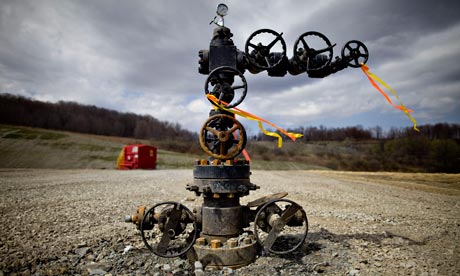
    Shale Gas : A natural gas wellhead near Montrose, Pennsylvania,

    There is also a growing body of evidence that the release of methane gas from well sites and pipelines is far higher than previously thought. Photograph: Daniel Acker/Getty Images

    Methane leaks could undo the climate change benefits of America’s natural gas boom, a new report said on Tuesday.

    The report, produced by the Centre for Climate and Energy Solutions (C2ES), said America’s shift from coal to gas had produced important climate gains.

    Carbon dioxide emissions fell last year to their lowest point since 1994, according to the Department of Energy. Energy-related carbon dioxide emissions were 12% below 2005 levels.

    But the report said those reductions were not enough, on their own, to escape the most catastrophic consequences of climate change.

    They were also being offset by a sharp rise in methane, the most powerful greenhouse gas on a human timescale, that was being released into the atmosphere at well sites, compressor stations and along pipelines.

    Methane is up to 105 times more potent than carbon dioxide as a greenhouse gas on a 20-year timescale.

    “We have to deal with the methane emissions – whether they are large, which I think is unlikely, or whether they are small,” said Eileen Claussen, president of C2ES, a Washington DC thinktank.

    “Natural gas is a big benefit right now, and you can see it in our emissions. But it doesn’t mean that left to our own natural devices it would be a great thing in 2050 because it wouldn’t be – unless you did some form of carbon capture.”

    Claussen was also concerned that cheap natural gas would crowd out wind and solar energy.

    America’s gas boom has posed one of the most divisive in-house issues for environmental groups. The availability of cheap natural gas has retired a number of old, and highly polluting coal-fired powered plants. Natural gas emits half as much carbon dioxide as coal when used to make electricity.

    Some 29% of America’s electricity came from natural gas last year – compared to just 14% a decade ago, the report said. But it comes at a high cost to the local environment, because of the risks to air and water quality posed by hydraulic fracturing.

    There is also a growing body of evidence that the release of methane gas from well sites and pipelines is far higher than previously thought.

    Methane is a far more powerful gas than carbon dioxide, even though it does not persist in the atmosphere for a shorter period.

    The report said natural gas could help wean America off coal and oil. But natural gas was still a fossil fuel, and was not a long-term substitute, it noted. “Substitution of natural gas for other fossil fuels cannot be the sole basis for long-term US efforts to address climate change because natural gas is a fossil fuel and its combustion emits greenhouse gases,” the report said.

    America would have to move towards zero-carbon energy, such as wind, solar and nuclear energy, the report said. The report also urged development of carbon capture technologies.

    It said more research was needed to measure greenhouse gas emissions from methane along the entire natural gas production chain.

    The report adds to growing evidence of the down sides of America’s natural gas boom – beyond the widely reported contamination of local wells by chemicals used in the process of hydraulic fracturing or “fracking”.

    Now a consensus seems to be slowly emerging that methane emissions have to be taken into account when assessing the real climate benefits of the switch to natural gas.

    Dr Michael Webber, the University of Texas researcher who oversaw the report, said natural gas remained a net gain for the climate. “I am hoping that the takeaway is that natural gas is a step in the right direction – but not the final step,” he said.

    Others argued that more ambition was required.

    “It is very much setting the bar too low just comparing it to coal,” said James Bradbury, an analyst at the World Resources Institute. “Half as much carbon dioxide compared to coal is a big improvement, but is it good enough to get us to where we need to go in terms of climate? The answer is no.”

    And some environmentalists and scientists have dismissed the possibility of any climate gains for natural gas because of methane leaks. Anthony Ingraffea, a Cornell University engineer and co-author of one of the first studies flagging up methane leaks from natural gas, said it was a mistake to incorporate natural gas into a climate change plan.

    “It is a wash. It is not enough of a benefit to spend hundreds of millions of dollars to expand natural gas when that money could be put to use in deployment of renewables,” he said.