Tag: Climate chaos

  • We fiddle while the Indus drowns

    We fiddle while the Indus drowns

    Water, water everywhere, and not a drop to drink

    Coleridge, The Ancient Mariner

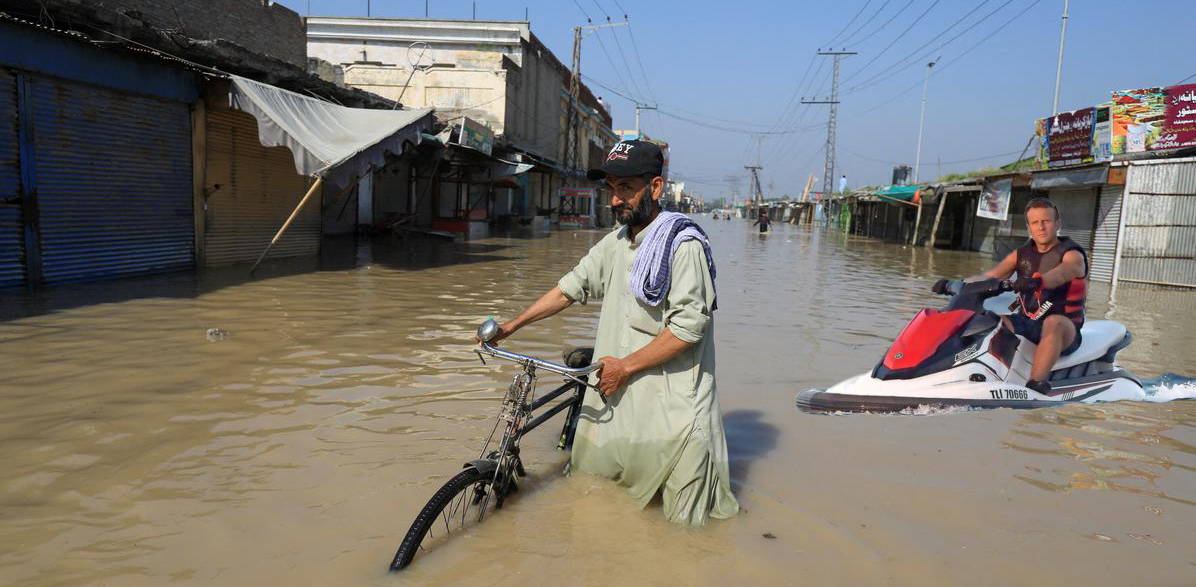
    Predictions that the Global North would cynically turn its back on Climate refugees as drought, heatwaves and floods decimate the population of the Global South this week appear both reasonable and prescient. As I write this in my comfortable home in the pleasant evening of an Australian spring with a belly full of warm soup, 30 million Pakistanis seek shelter from 35 degree heat and 66% humidity without roads, rooves, freshwater or sanitation. The thousand people who have died during 8 weeks of torrential down pour now confront thirst, starvation and disease and, those who survive, a daunting rebuilding operation that affects literally millions of devastated homes, and thousands of kilometres of road. In addition, a sizable fraction of the nation’s infrastructure has been torn asunder as glacial lakes burst out of their mountain strongholds and joined the petalitres of water that has fallen from eight separate monsoon events far into the northern regions of the Indus valley.

    Read the rest at GeoffEbbs.com or hear it on SoundCloud
    Europe fiddles while the Indus drowns
  • Mould moves in

    Mould moves in

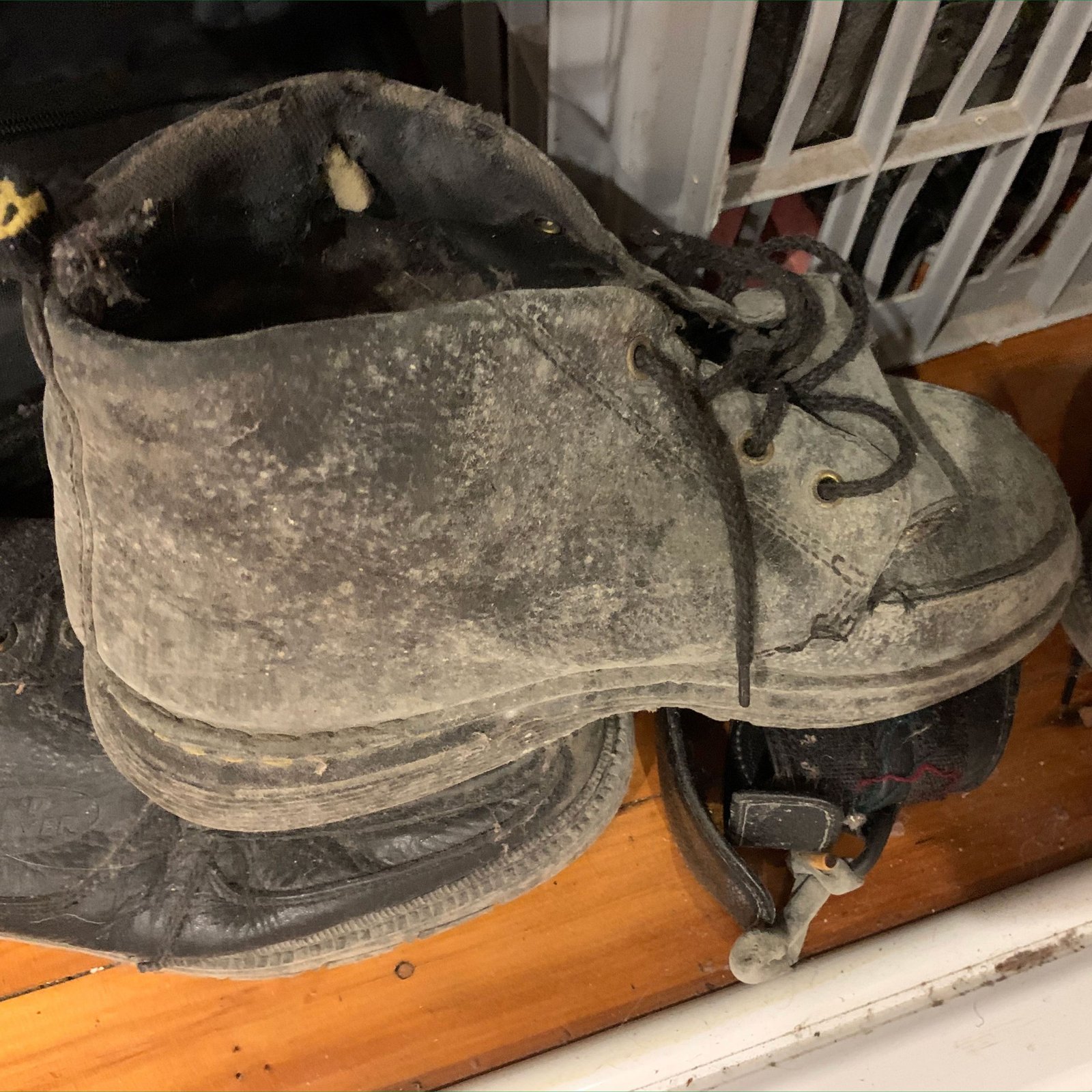
    The big wet has Brisbane renters tearing apart sharehouses, burning leather clothing and scrubbing walls with clove and tea tree oil, mixed with vinegar and warm water in a battle with an unwanted, microbial, housemate; mould.

    Mouldy leather is de rigeur on East Coast Australia this winter

    Christine Schindler wrote in Westender last week “The mould ripened, it invited friends and propagated indiscriminately on brick and wood. An odd smell led to bigger questions, who’s responsible – the landlord or tenant?” Tenants Queensland and the Rental Tenancies Authority conclude that that depends, and the widespread and insistent nature of the problem forces tenants to clean up the effects, even if the landlord is responsible for the causes.

    Schindler’s recipe? “Dry the place out by creating a well-ventilated space, then add a bucket full of sunshine and not a drop of moisture. Unfortunately, Bunnings does not sell these things.”

    Trimmed, with permission, from https://westender.com.au/mould-the-new-housemate/

  • Creeping decarbonisation begs degrowth

    Creeping decarbonisation begs degrowth

    The Institute for Energy Economics and Financial Analysis published a report this week showing that governments are not reducing their use of coal as promised at Paris and, even if they did, it would not be enough to meet the emission reduction promises consistent with 2degrees of warming.

    The graphs outlining the energy descent required to meet the Paris targets are so far removed from the actual projections of governments, it is almost certain that climatic chaos will seriously undermine civilisation.

    From the Production Gap report 2021

    On the other hand, there are indications that the use of coking coal, used to make steel, is beginning to decline as new, cleaner methods of steel production come online. Electric arc furnaces can be used to recycle existing steel and direct reduction processes using hydrogen are moving into production. The decarbonisation of the economy is beginning, but is not happening fast enough, according to the report.

    The real kicker in the conversation, though, is that urgent as greenhouse gas emissions are, they are only one of the existential threats to human life. Biodiversity loss, falling water tables, microplastic pollution, nutrient imbalance and a string of other challenges are just as significant and a lot more difficult to solve. Australia and the US need to reduce our emissions by seven eighths to make the Paris targets, we need to limit our overall consumption by a similar amount to help restore other global systems to balance.

    Carbon tunnel vision ignores the other, urgent existential threats
    https://soundcloud.com/thegeneratornews/carbon-tunnel-vision-and-degrowth
    Listen to the full rave on Soundcloud

    You can read a longer version of this article, based on the on air analysis linked above, at Geoff Ebbs’ blog. Here are links to some of the sources, used to put this together.

    https://productiongap.org/wp-content/uploads/2021/11/PGR2021_web_rev.pdf

    https://iea.blob.core.windows.net/assets/f1d724d4-a753-4336-9f6e-64679fa23bbf/Coal2021.pdf

    https://ylyp.news/75-embrace-embodied-energy/

    https://www.globalreporting.org/about-gri/news-center/cop26-avoiding-carbon-tunnel-vision/

    https://johnmenadue.com/sunday-environmental-round-up-30-january-2022/
  • Landcare groups adapt to climate change

    Landcare groups adapt to climate change

    The long held principle of bush regeneration is that “local is best.” The idea is that restoring the plant communities that existed in an area before the European invasion is the best way to “return” to a stable, natural environment and re-establish biodiversity to support animals and other plants endemic to the area.

    That may no longer be the best rule to work by, according to plant ecologist and researcher, Dr John Dwyer.

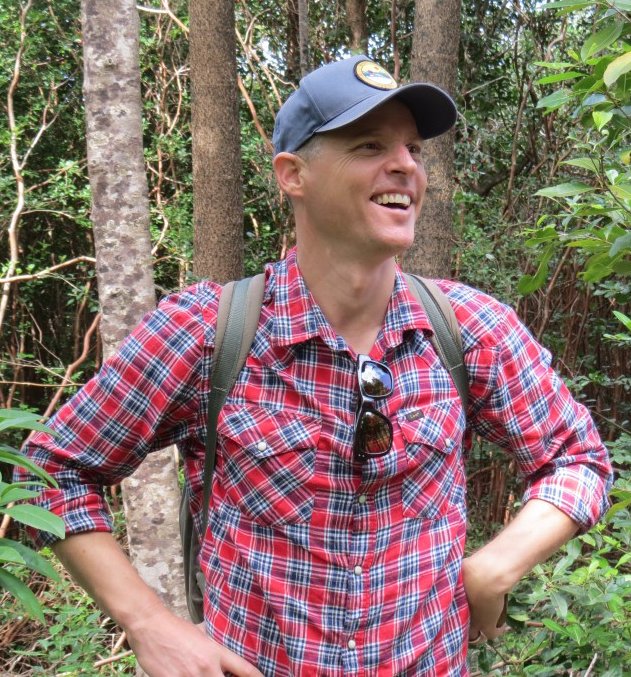
    Dr John Dwyer, in the field.

    He describes his research thus: “In general, I use Australian plant communities, both human-impacted and natural, to provide empirical tests of ecological theory. I am particularly interested in the processes that maintain species diversity and ecosystem function, and how these processes may be altered by human activity and ongoing climate change. I am also interested in natural regrowth vegetation and how it can be used to sequester carbon and enhance biodiversity in fragmented landscapes. Overall, I aim to advance ecological knowledge and inform better management of our unique ecosystems and landscapes.”

    Dr John appeared on EcoRadio with #yourLifeYourPlanet author, Geoff Ebbs, to discuss the implications of climate change on local bush regeneration. He described the multiple impacts of disruption from changes in land use and climate change on plant communities and the ecologies which depend on them.

    “Isolated populations are not as resilient and find it more difficult to adapt and migrate,” he explained. He also pointed out that they are less able to cope with existing diseases and the new diseases that might appear due to human activity and the migration of species in response to a warming climate.

    Listen to the full interview on our SoundCloud site.

    https://soundcloud.com/thegeneratornews/plant-communities-and-climate-change?si=1902d334e01340df99fe58986582fde5


    Geoff Ebbs and Dr John talk through the issues

    Related

  • Climate depends on First Nations people

    Climate depends on First Nations people

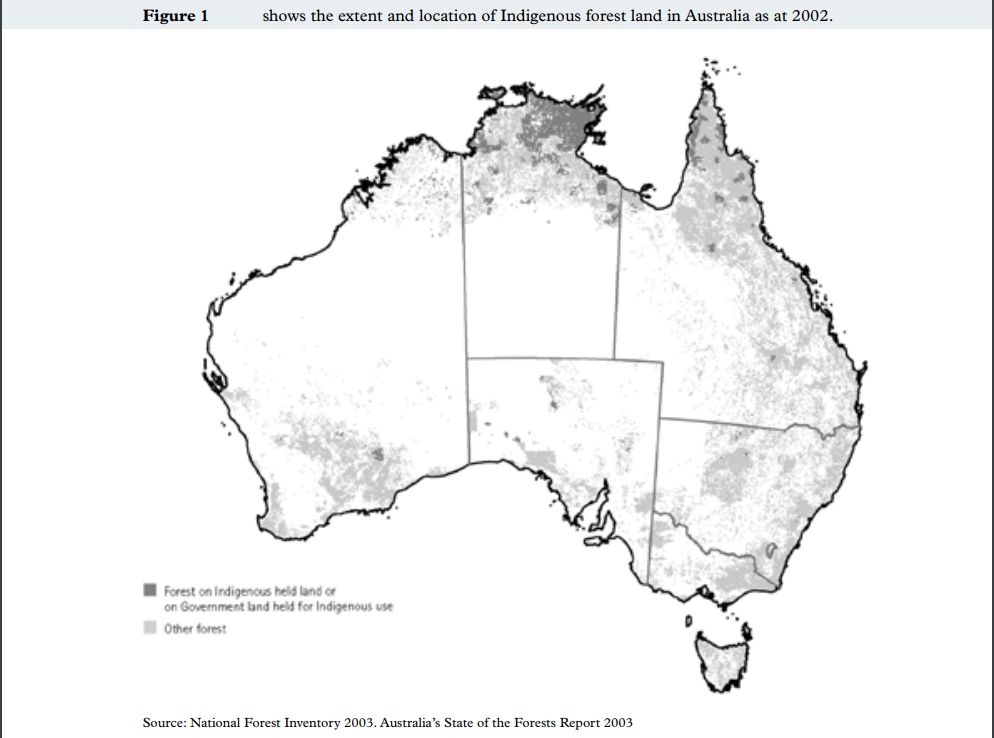
    Australia's national indigenous forestry strategy 2005
    Australia’s national indigenous forestry strategy 2005

    Indigenous forest management is an essential component of the global climate strategy, according to the UN Food and Agriculture Organisation. Senior Forestry officer, David Kaimowitz points out that forests cover one third of the earth’s land surface and must be maintained and nurtured as a living carbon sink, and that process is most effectively and sustainably achieved by working with indigenous people. “Currently, Indigenous Peoples and local communities manage at least 24% of the total above-ground carbon stored in the world’s tropical forests,” he said. A fraction of Australia’s land mass is under indigenous forest management, according to Australia’s national indigenous forestry strategy 2005.

    http://sdg.iisd.org/commentary/guest-articles/indigenous-peoples-must-be-central-to-tackling-the-climate-crisis/

    https://www.awe.gov.au/sites/default/files/sitecollectiondocuments/forestry/australias-forest-policies/nifs_strategy.pdf

  • COP26 ends up with methane agreement

    COP26 ends up with methane agreement

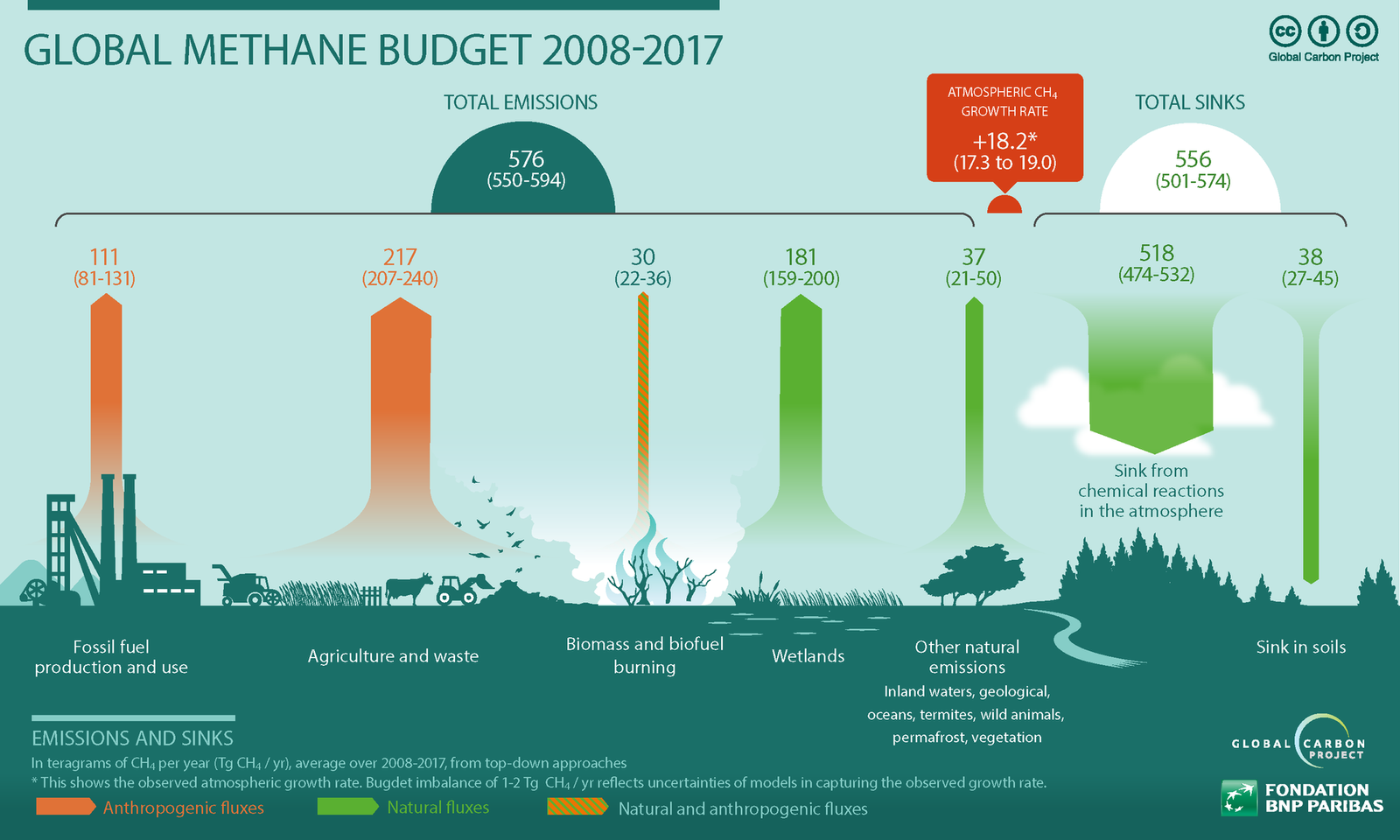
    By The Global Carbon Project – http://www.globalcarbonatlas.org/en/CH4-emissions

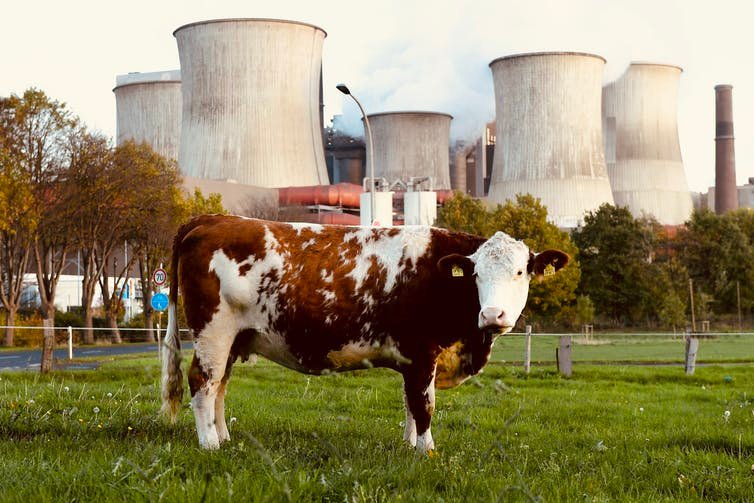
    The European Union and the United States have led a coalition of 103 countries at COP 26 in Glasgow to sign a pledge to reduce methane emissions to 70% of 2020 levels by 2030. The impact is expected to shave 0.2 degrees off the predicted temperature rise in the next decade. Methane is an extremely powerful greenhouse gas and only stays in the atmosphere for years, unlike carbon dioxide which persists for centuries. This makes it a desirable target, though it is notoriously hard to control. Over 40% of methane is emitted by natural processes such as rotting vegetation in swamps. 15% is emitted in agricultural activities, closely followed by fossil fuel production. Australia has not signed up, citing the economic impact on agriculture. 

    https://www.politico.eu/article/cop26-100-countries-reducing-methane-emissions/

    https://www.iea.org/reports/methane-tracker-2020

    http://www.globalcarbonatlas.org/en/CH4-emissions

    https://essd.copernicus.org/articles/12/1561/2020