Author: admin

  • NOAA raises hurricane season prediction despite expected El Niño

    NOAA raises hurricane season prediction despite expected El Niño

    Posted: 10 Aug 2012 10:45 AM PDT

    This year’s Atlantic hurricane season got off to a busy start, with 6 named storms to date, and may have a busy second half, according to the updated hurricane season outlook issued Aug. 9, 2012 by NOAA’s Climate Prediction Center, a division of the National Weather Service. The updated outlook still indicates a 50 percent chance of a near-normal season, but increases the chance of an above-normal season to 35 percent and decreases the chance of a below-normal season to only 15 percent from the initial outlook issued in May.
  • How much nitrogen is fixed in the ocean?

    ScienceDaily: Earth Science News


    Mission discovers record depth for Lophelia coral on Gulf of Mexico energy platforms

    Posted: 10 Aug 2012 10:06 AM PDT

    A team of federal and university scientists on a 10-day expedition in the Gulf of Mexico has discovered Lophelia coral growing deeper than previously seen anywhere in the Gulf. Newly available information on Lophelia’s growth rate and conditions will inform future environmental review and decision-making for the protection of deep-water coral habitats.

    Summer storm spins over Arctic

    Posted: 10 Aug 2012 09:59 AM PDT

    An unusually strong storm formed off the coast of Alaska on August 5 and tracked into the center of the Arctic Ocean, where it slowly dissipated over the next several days. Arctic storms such as this one can have a large impact on the sea ice, causing it to melt rapidly through many mechanisms, such as tearing off large swaths of ice and pushing them to warmer sites, churning the ice and making it slushier, or lifting warmer waters from the depths of the Arctic Ocean.

    How much nitrogen is fixed in the ocean?

    Posted: 10 Aug 2012 08:28 AM PDT

    In order to predict how the Earth’s climate develops scientists have to know which gases and trace elements are naturally bound and released by the ocean and in which quantities. For nitrogen, an essential element for the production of biomass, there are many unanswered questions. Scientists have now published a research study showing that widely applied methods are part of the problem.

    North American freshwater fishes race to extinction: Rate of loss of species exceeds that of terrestrial animals

    Posted: 10 Aug 2012 05:37 AM PDT

    The rate of extinction of freshwater fishes in North America is estimated to be 877 times the historical background rate. Thirty-nine species have gone extinct since the end of the 19th Century. Between 53 and 86 species are likely to have gone extinct by 2050, according to new estimates.
  • NOAA raises hurricane season prediction despite expected El Niño

    NOAA raises hurricane season prediction despite expected El Niño

    Posted: 10 Aug 2012 10:45 AM PDT

    This year’s Atlantic hurricane season got off to a busy start, with 6 named storms to date, and may have a busy second half, according to the updated hurricane season outlook issued Aug. 9, 2012 by NOAA’s Climate Prediction Center, a division of the National Weather Service. The updated outlook still indicates a 50 percent chance of a near-normal season, but increases the chance of an above-normal season to 35 percent and decreases the chance of a below-normal season to only 15 percent from the initial outlook issued in May.

    Summer storm spins over Arctic

    Posted: 10 Aug 2012 09:59 AM PDT

    An unusually strong storm formed off the coast of Alaska on August 5 and tracked into the center of the Arctic Ocean, where it slowly dissipated over the next several days. Arctic storms such as this one can have a large impact on the sea ice, causing it to melt rapidly through many mechanisms, such as tearing off large swaths of ice and pushing them to warmer sites, churning the ice and making it slushier, or lifting warmer waters from the depths of the Arctic Ocean.

    NASA Global Hawk pilots face challenges flying hurricane missions

    Posted: 10 Aug 2012 08:31 AM PDT

    NASA’s Hurricane and Severe Storm Sentinel, or HS3, mission will be a complex one for the pilots flying NASA’s Global Hawk aircraft from the ground. The mission, set to begin this month, will be the first deployment for the unmanned aircraft away from their regular base of operations at the Dryden Flight Research Center on Edwards Air Force Base, Calif. In addition the pilots will be operating the aircraft from two locations on opposite coasts.

  • We must put a price on nature if we are going to save it

    We must put a price on nature if we are going to save it

    Campaigning against economic valuations could inadvertently strengthen the hand of those who believe nature has little or no worth

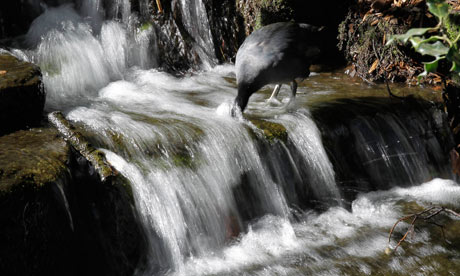
    Value of nature : A bird dips its head into a waterfall at Carshalton Pond in south London

    Putting an economic value on nature will help protect it. Photograph: Sang Tan/AP


    Recent calculations of the economic value of nature and ecosystem services have caused many environmentalists to react negatively. They point to the risk of a progressive “privatisation” and “commodification” of nature, and argue that society should appreciate the intrinsic values of nature – nature for its own sake. Putting a ‘price on nature’ will create more enclosures whereby the public benefits derived from ecosystems will be seized by corporations and other private interests.


    The new discourse about “natural capital” is seen by some as another step towards the degradation of the biosphere. George Monbiot wrote is such terms this week. He argued:


    Rarely will the money to be made by protecting nature match the money to be made by destroying it. Nature offers low rates of return by comparison to other investments. If we allow the discussion to shift from values to value – from love to greed – we cede the natural world to the forces wrecking it.


    But to paint such a one-sided picture is a dangerous game. For decades campaigners have fought for the protection of nature for its own sake, and while there has been notable progress (seen for example in the rapid increase in protected areas worldwide, which will hopefully continue irrespective of purely economic evaluations), the overall trends have not been encouraging.

    The destruction of unprotected forests, loss of soils, depletion of aquifers, extinction of animals and plants and plunder of the oceans has continued apace. It seems that the moral argument has gained insufficient traction, and that in the absence of new frames continuing population and economic growth will cause more damage.

    One source of hope comes from the growing realisation that nature is essential for economic development. The message is clear: without nature the economy is nothing. That penny is beginning to drop in various important places, and could soon lead to a new era of policy-making. One in which ecology and economics go hand in hand, but only if we have the tools to build bridges between these worlds that are so alien to each other. And that is where the economic valuation of nature can come in.

    By appreciating that nature is vital for economics, and has measurable tangible financial values, it is possible to get the attention of people who have at best hitherto regarded nature a supplier of resources, or worse still an economically costly distraction that gets in the way of economic ‘growth’. Making the moral case in the face of such beliefs won’t work. If, on the other hand, such scepticism can be met with economically compelling logic, then we might get a bit further.

    There are of course ecological values (like beauty and the very fact that things exist) that sometimes cannot be assigned financial values, and should be protected by the law, policy and public backing rather than through markets.

    There are certainly dangers that come with financial values being attached to natural systems. These might be seen in how countries choose to reflect the value of ecosystems (like forests) that indigenous people rely on and have ancestral rights over (or should do). Those dangers need to be managed with regulations and other safeguards when, for example, those same forests are deemed as financially valuable in supplying a distant city with water, and when managing that water affect the rights of the people in the forest. There are risks but just outcomes can be secured.

    While I am alarmed at how some environmentalists reject the economic valuation of nature, I am more alarmed still at how such a position can appear similar to those with deeply sceptical views about whether we should protect the environment in the first place. Nigel Lawson, the arch climate change denier, is like many environmentalists dead against putting financial values on nature. He knows well that if this happens then economics would have to change in fundamental ways requiring new government policies, changes to how capital is invested and shifts in consumption patterns. By campaigning against the valuation of ecosystem services, some campaigners could inadvertently strengthen the hand of those who believe nature has little or no value, moral, economic or otherwise.

    And it seems to me there is not a choice here. I have spent the past 25 years campaigning for nature for its own sake, because it is beautiful, because it should exist for its own reasons and because we have no right to destroy it. I have found that not everyone agrees with that though, and while I am trying to convince them, more forests are cleared, oceans polluted and greenhouse gases released.

    We could carry on like this, with ideological purity preserved (on all sides), or we could open a new discourse, one that requires the sceptics to meaningfully engage, and on the field where future environmental battles will be won and lost – the field of economics. After all, it is not most environmentalists who have misunderstood the realities that come with ‘growth’ a finite Earth, but most economists.


    • Tony Juniper’s book on the value of ecosystems for economies, What has Nature ever done for us? will be published in January

  • New battery technology means more power for electric cars

    New battery technology means more power for electric cars

    chevy volt

    New battery technology means electric cars such as Chevrolet’s Volt could have double the range. Source: Getty Images

    A SMALL battery company backed by General Motors is working on breakthrough technology that could power an electric car more than 300km on a single charge in the next two-to-four years, GM’s CEO says.

    Speaking at an employee meeting, CEO Dan Akerson said the company, Newark, California-based Envia Systems, has made a huge breakthrough in the amount of energy a lithium-ion battery can hold.

    GM is sure that the battery will be able to take a car 100 miles (160km) within a couple of years, he said. It could be double that with some luck, he said.

    “I think we’ve got better than a 50-50 chance,” Mr Akerson said, “to develop a car that will go to 200 miles (320km) on a charge,” he said. “That would be a game changer.”

    GM’s current electric car, the Chevrolet Volt, goes about 56km on a charge and has a small petrol motor that generates power to keep the car going after that.

    Few competitors have electric cars with more than 160km of range.

    Can you drift an electric car?

    On a test track in the UK, a battery powered car is pushed past it limits.


    Tesla Motors’ Model S can go up to 480km, but it has a much larger battery and can cost more than twice as much as a Volt. Nissan’s Leaf and Ford’s Focus electric cars both claim ranges of around 160km, but that can vary with temperature, terrain and speed.

    Envia said earlier this year that its next-generation rechargeable lithium-ion cell hit a record high for energy density. The company said the new battery could slash the price of electric vehicles by cutting the battery cost in half.

    GM Ventures LLC, the automaker’s investment arm, put $US7 million ($6.6m) into Envia in January of 2011.

    The GM meeting, which was broadcast on a conference call to employees, lasted about an hour. A participant allowed a reporter from The Associated Press to listen.

    “These little companies come out of nowhere, and they surprise you,” Mr Akerson said in response to a question about GM’s strategy on gas-electric hybrid vehicles.

    Mr Akerson said the company is looking at hybrids, all-electric cars, hydrogen fuel cell vehicles and natural gas vehicles, as well as developing more efficient petroleum-powered engines.

    “We can’t put all of our chips on one bet,” he said. “We’ve got to look at them all.”

  • Drivers of marine biodiversity: Tiny, freeloading clams find the key to evolutionary success

    Drivers of marine biodiversity: Tiny, freeloading clams find the key to evolutionary success

    Posted: 09 Aug 2012 06:03 AM PDT

    What mechanisms control the generation and maintenance of biological diversity on the planet? It’s a central question in evolutionary biology. For land-dwelling organisms such as insects and the flowers they pollinate, it’s clear that interactions between species are one of the main drivers of the evolutionary change that leads to biological diversity.
    You are subscribed to email updates fromScienceDaily: Oceanography News
    To stop receiving these emails, you may unsubscribe now.
    Email delivery powered by Google
    Google Inc., 20 West Kinzie, Chicago IL USA 60610

    Posted: 09 Aug 2012 06:03 AM PDT

    What mechanisms control the generation and maintenance of biological diversity on the planet? It’s a central question in evolutionary biology. For land-dwelling organisms such as insects and the flowers they pollinate, it’s clear that interactions between species are one of the main drivers of the evolutionary change that leads to biological diversity.
    You are subscribed to email updates fromScienceDaily: Oceanography News
    To stop receiving these emails, you may unsubscribe now.
    Email delivery powered by Google
    Google Inc., 20 West Kinzie, Chicago IL USA 60610