Author: admin

  • PRB’s 2012 World Population Data Sheet

    PRB’s 2012 World Population Data Sheet
    New Security Beat
    “The most rapid population growth in many ways [occurs in] the countries that can least afford it,” said Carl Haub in a webinar on July 19 to launch the Population Reference Bureau’s (PRB) 50th annual World Population Data Sheet. This year, the report 
    See all stories on this topic »

  • Global water sustainability flows through natural and human challenges

    Evidence further suggests extra-terrestrial origin of quasicrystals

    Posted: 09 Aug 2012 04:07 PM PDT

    Results from an expedition to far eastern Russia that set out to find the origin of naturally occurring quasicrystals have provided convincing evidence that they arrived on Earth from outer space. Scientists reveal that new, naturally occurring quasicrystal samples have been found in an environment that does not have the extreme terrestrial conditions needed to produce them, therefore strengthening the case that they were brought to Earth by a meteorite. 

    Scientist discovers plate tectonics on Mars

    Posted: 09 Aug 2012 12:58 PM PDT

    For years, many scientists had thought that plate tectonics existed nowhere in our solar system but on Earth. Now, a researcher has discovered that the geological phenomenon, which involves the movement of huge crustal plates beneath a planet’s surface, also exists on Mars.

    New way to track formaldehyde

    Posted: 09 Aug 2012 12:13 PM PDT

    NASA researchers are helping to fill a big gap in scientists’ understanding of how much urban pollution — and more precisely formaldehyde — ultimately winds up in Earth’s upper atmosphere where it can wreak havoc on Earth’s protective ozone layer.

    Researchers combine remote sensing technologies for highly detailed look at coastal change

    Posted: 09 Aug 2012 11:16 AM PDT

    Shifting sands and tides make it difficult to measure accurately the amount of beach that’s available for recreation, development and conservation, but researchers have now combined several remote sensing technologies with historical data to create coastal maps with an unsurpassed level of accuracy.

    1.5 million years of climate history revealed after scientists solve mystery of the deep

    Posted: 09 Aug 2012 11:16 AM PDT

    Scientists have announced a major breakthrough in understanding the Earth’s climate machine by reconstructing highly accurate records of changes in ice volume and deep-ocean temperatures over the last 1.5 million years.

    Global water sustainability flows through natural and human challenges

    Posted: 09 Aug 2012 11:16 AM PDT

    Water’s fate in China mirrors problems across the world: fouled, pushed far from its natural origins, squandered and exploited. Scientists look back at lessons learned in China and management strategies that hold solutions for China — and across the world.
    You are subscribed to email updates fromScienceDaily: Earth Science News
    To stop receiving these emails, you may unsubscribe now.
    Email delivery powered by Google
    Google Inc., 20 West Kinzie, Chicago IL USA 60610
  • Researchers combine remote sensing technologies for highly detailed look at coastal change

    Researchers combine remote sensing technologies for highly detailed look at coastal change

    Posted: 09 Aug 2012 11:16 AM PDT

    Shifting sands and tides make it difficult to measure accurately the amount of beach that’s available for recreation, development and conservation, but researchers have now combined several remote sensing technologies with historical data to create coastal maps with an unsurpassed level of accuracy.
    You are subscribed to email updates fromScienceDaily: Severe Weather News
    To stop receiving these emails, you may unsubscribe now.
    Email delivery powered by Google
    Google Inc., 20 West Kinzie, Chicago IL USA 60610
  • Fukushima disaster paves way for new geothermal plants

    Fukushima disaster paves way for new geothermal plants

    Drive to find alternatives to nuclear power overrides fears that natural hot springs will be damaged by energy development

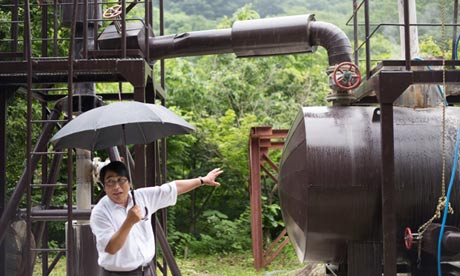
    Kazuya Ikeda explains the future location and logistics of a geothermal plant in Fukushima, Japan

    Kazuya Ikeda explains the future location and logistics of a geothermal plant in Fukushima prefecture, Japan. Photograph: Jeremy Sutton-Hibbert for the Guardian

    Before last year’s triple disaster in north-east Japan, Tsuchiyu Onsen drew tens of thousands of tourists in search of the recuperative qualities of its piping hot spring water.

    Almost 18 months after the nuclear accident at nearby Fukushima Daiichi power plant, that same natural resource is about to turn this spa resort into a trailblazer for the country’s push towards renewable energy.

    By spring 2014, Tsuchiyu, 9 miles (15km) from Fukushima, will be generating 250 kilowatts of electricity – about a quarter of the city’s total needs – at a geothermal plant hidden away in the surrounding mountains.

    The plant will be the first to be built inside a national park, a controversial move that only became possible after the environment ministry recently relaxed regulations on developing protected areas.

    If all goes to plan, the project could not only help the town become self-sufficient in power generation, but revive its role as a tourist destination after visitor numbers plummeted amid lingering fears over radiation. In the past, hot-spring operators have been among the fiercest opponents of geothermal energy, an obvious source of energy given Japan’s huge subterranean reserves of volcanic water.

    Many fear the plants would affect the flow and quality of the water, which is pumped up from the depths and then cooled for the benefit of Japan’s enthusiastic bathers.

    In Tsuchiyu, however, where half a dozen hotels remain closed with earthquake damage, spa owners are among the new geothermal generator’s keenest backers. “The plant won’t affect the water quality or the temperature,” said Kazuya Ikeda, general manager of the Tsuchiyu Onsen Tourist Association. “We have surveyed opinion in the town, and no one has raised any objections.”

    The move also makes economic sense. Under a new feed-in tariff system introduced last month, utilities are required to pay premium prices for renewable energy – 42 yen (34p) per kilowatt for geothermal power.

    “The structure itself will be quite small and unobtrusive,” Ikeda added. “And with the feed-in tariff, we should be able to cover our initial costs in about seven years.”

    The 300m-yen (£2.5m) facility will use water pumped from below ground and combine it with an ammonia-like substance with a lower boiling point than water to propel a turbine.

    Resistance to geothermal power, coupled with the pre-Fukushima faith in nuclear, means that until now Japan has failed to tap into a resource that energy experts believe has huge potential. Its 18 geothermal plants account for 0.2% of electricity output, according to the trade and industry ministry, and no new plants have been built for a decade.

    Scientists believe the sector’s share could rise enormously thanks to the feed-in tariff, new subsidies to fund feasibility studies and test-drilling, and official recognition that nuclear’s heyday has passed.

    According to one estimate, Japan’s gGeothermal capacity could reach 24m kilowatts – the third biggest in the world after the US and Indonesia – compared with less than 550,000 kilowatts now. Tsuchiyu has other compelling reasons to embrace geothermal power. Visitor numbers dropped dramatically after the Fukushima nuclear disaster, and while a recovery is under way, fears of radiation persist, even though recorded levels here pose no health threat.

    Profits from the venture will be used to repair three damaged hotels and rebuild three others that were destroyed in the earthquake.

    In the long term, Ikeda believes Tsuchiyu will become a model for other small towns struggling to find clean and stable sources of energy, while experts debate if nuclear has any role to play in Japan’s future energy mix.

    If the experiment works, it should allay anxiety among other Onsen operators about potential damage to hot-spring water flows – the financial lifeblood of countless similar resorts around Japan.

    Eventually, the geothermal plant will be capable of generating 1,000 kilowatts, according to Ikeda. That is a tiny fraction of the capacity of just one of Fukushima Daiichi’s now crippled reactors. But with opposition to nuclear restarts unlikely to waver, towns such as Tsuchiyu have no choice but to turn to alternatives, he said.

    “If it hadn’t been for the nuclear disaster, we would never have given this project a second thought.”

  • Putting a price on the rivers and rain diminishes us all

    Putting a price on the rivers and rain diminishes us all

    Payments for ‘ecosystem services’ look like the prelude to the greatest privatisation since enclosure

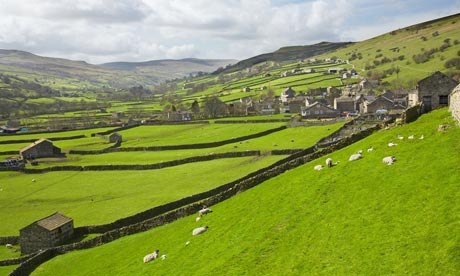
    Gunnerside village Swaledale Yorkshire Dales

    Our rivers and natural resources are to be valued and commodified, a move that will benefit only the rich, argues George Monbiot. Photograph: Alamy

    ‘The first man who, having enclosed a piece of ground, bethought himself of saying ‘This is mine’, and found people simple enough to believe him, was the real founder of civil society. From how many crimes, wars and murders, from how many horrors and misfortunes might not anyone have saved mankind, by pulling up the stakes, or filling up the ditch, and crying to his fellows, ‘Beware of listening to this impostor; you are undone if you once forget that the fruits of the earth belong to us all, and the earth itself to nobody’.”

    Jean Jacques Rousseau would recognise this moment. Now it is not the land his impostors are enclosing, but the rest of the natural world. In many countries, especially the United Kingdom, nature is being valued and commodified so that it can be exchanged for cash.

    The effort began in earnest under the last government. At a cost of £100,000, it commissioned a research company to produce a total annual price for England’s ecosystems. After taking the money, the company reported – with a certain understatement – that this exercise was “theoretically challenging to complete, and considered by some not to be a theoretically sound endeavour”. Some of the services provided by England’s ecosystems, it pointed out, “may in fact be infinite in value”.

    This rare flash of common sense did nothing to discourage the current government from seeking first to put a price on nature, then to create a market in its disposal. The UK now has a natural capital committee, an Ecosystem Markets Task Force and an inspiring new lexicon. We don’t call it nature any more: now the proper term is “natural capital”. Natural processes have become “ecosystem services”, as they exist only to serve us. Hills, forests and river catchments are now “green infrastructure”, while biodiversity and habitats are “asset classes” within an “ecosystem market”. All of them will be assigned a price, all of them will become exchangeable.

    The argument in favour of this approach is coherent and plausible. Business currently treats the natural world as if it is worth nothing. Pricing nature and incorporating that price into the cost of goods and services creates an economic incentive for its protection. It certainly appeals to both business and the self-hating state. The Ecosystem Markets Task Force speaks of “substantial potential growth in nature-related markets – in the order of billions of pounds globally”.

    Commodification, economic growth, financial abstractions, corporate power: aren’t these the processes driving the world’s environmental crisis? Now we are told that to save the biosphere we need more of them.

    Payments for ecosystem services look to me like the prelude to the greatest privatisation since Rousseau’s encloser first made an exclusive claim to the land. The government has already begun describing land owners as the “providers” of ecosystem services, as if they had created the rain and the hills and the rivers and the wildlife that inhabits them. They are to be paid for these services, either by the government or by “users”. It sounds like the plan for the NHS.

    Land ownership since the time of the first impostor has involved the gradual accumulation of exclusive rights, which were seized from commoners. Payments for ecosystem services extend this encroachment by appointing the landlord as the owner and instigator of the wildlife, the water flow, the carbon cycle, the natural processes that were previously deemed to belong to everyone and no one.

    But it doesn’t end there. Once a resource has been commodified, speculators and traders step in. The Ecosystem Markets Task Force now talks of “harnessing City financial expertise to assess the ways that these blended revenue streams and securitisations enhance the ROI [return on investment] of an environmental bond”. This gives you an idea of how far this process has gone – and of the gobbledegook it has begun to generate.

    Already the government is developing the market for trading wildlife, by experimenting with what it calls biodiversity offsets. If a quarry company wants to destroy a rare meadow, for example, it can buy absolution by paying someone to create another somewhere else. The government warns that these offsets should be used only to compensate for “genuinely unavoidable damage” and “must not become a licence to destroy”. But once the principle is established and the market is functioning, for how long do you reckon that line will hold? Nature, under this system, will become as fungible as everything else.

    Like other aspects of neoliberalism, the commodification of nature forestalls democratic choice. No longer will we be able to argue that an ecosystem or a landscape should be protected because it affords us wonder and delight; we’ll be told that its intrinsic value has already been calculated and, doubtless, that it turns out to be worth less than the other uses to which the land could be put. The market has spoken: end of debate.


    All those messy, subjective matters, the motivating forces of democracy, will be resolved in a column of figures. Governments won’t need to regulate; the market will make the decisions that politicians have ducked. But trade is a fickle master, and unresponsive to anyone except those with the money. The costing and sale of nature represents another transfer of power to corporations and the very rich.

    It diminishes us, it diminishes nature. By turning the natural world into a subsidiary of the corporate economy, it reasserts the biblical doctrine of dominion. It slices the biosphere into component commodities: already the government’s task force is talking of “unbundling” ecosystem services, a term borrowed from previous privatisations. This might make financial sense; it makes no ecological sense. The more we learn about the natural world, the more we discover that its functions cannot be safely disaggregated.

    Rarely will the money to be made by protecting nature match the money to be made by destroying it. Nature offers low rates of return by comparison to other investments. If we allow the discussion to shift from values to value – from love to greed – we cede the natural world to the forces wrecking it. Pull up the stakes, fill in the ditch, we’re being conned again.

    Twitter: @GeorgeMonbiot

  • New global warming culprit: Methane emissions jump dramatically during dam drawdowns

    New atmospheric compound tied to climate change, human health

    Posted: 08 Aug 2012 10:27 AM PDT

    Scientists have discovered a surprising new chemical compound in Earth’s atmosphere that reacts with sulfur dioxide to form sulfuric acid, which is known to have significant impacts on climate and health. The new compound, a type of carbonyl oxide, is formed from the reaction of ozone with alkenes, which are a family of hydrocarbons with both natural and human-made sources.

    New global warming culprit: Methane emissions jump dramatically during dam drawdowns

    Posted: 08 Aug 2012 05:14 AM PDT

    Researchers have documented an underappreciated suite of players in global warming: dams, the water reservoirs behind them, and surges of greenhouse gases as water levels go up and down. In separate studies, researchers saw methane levels jump 20- and 36-fold during drawdowns.
    You are subscribed to email updates from ScienceDaily: Earth Science News
    To stop receiving these emails, you may unsubscribe now.
    Email delivery powered by Google
    Google Inc., 20 West Kinzie, Chicago IL USA 60610