Author: Neville

  • KILL MORRISON’S BILL

    1 of 11
    AdDon’t buy CBA, BHP, WOWwww.moneymorning.com.au – Forget blue-chip stocks. Here’s where the big gains are in 2014

    Kill Morrison’s bill

    Inbox
    x

    Alycia – GetUp!

    9:02 PM (16 minutes ago)

    to me
    NEVILLE,

    Last week Immigration Minister Scott Morrison proposed what is perhaps the most draconian assault on refugee law we’ve ever witnessed.

    It’s impossible to overstate just how wide-sweeping and dangerously transformative the implications of Minister Morrison’s proposed Migration and Maritime Powers Legislation Amendment Bill will be if it passes through the Senate.

    The bill has been in the works for a while, so you may have already heard about it and wondered what you can do to stop it. Well, the legislation has been referred to a Senate Committee Inquiry, which will be accepting submissions on the legislation up until this Friday 31 October.

    Click the link below to find out how you can make a submission to place your opposition to this bill on the record. And to find out exactly why we must do everything we can as a movement to ensure it gets knocked down in the Senate.

    Make your submission to the Senate Committee today: http://www.getup.org.au/nsw-block-this-bill

    There is so much wrong with this bill, ethically and legally. If it passes, our rigorous legal system will be jeopardised. The bill seeks to redefine who is considered to be a “refugee” and while the details are still unclear on this is one – it’s certainly not good news for people seeking protection in Australia. If this bill passes, what will it say about us as a nation?

    If Morrison gets his way, it will mean we are a nation content with condemning innocent people to a lifetime of mental health problems and uncertainty. Minister Morrison’s bill seeks to reintroduce three year Temporary Protection Visas (TPVs). TPVs have been widely criticised by mental health experts, as they force people to live in a state of uncertainty and instability – resulting in significant negative mental health impacts.

    If Morrison gets his way, it will mean we’re a nation that no longer believes in the values we subscribed to when we signed the UN Refugee Convention sixty years ago. The most egregious part of this bill will see most references to the UN Refugee Convention removed from Australian law. The UN Refugee Convention has no bearing on Australian law unless our Parliament decides to legislate them as part of domestic law. In short, we might as well withdraw our signature from the Convention altogether.

    There are countless other hidden nasties in this mammoth piece of legislation, which means we simply can not allow this bill to pass. Not only would it significantly reduce the scope for independent oversight of our government’s actions – it could quite literally determine life or death for people seeking protection.

    The good news is we still have some time to stop it. The Senate won’t vote on the bill until the Senate Committee provides their report on the legislation, which is scheduled for 27 November. This report will be influenced by your submissions, and this is your chance to have your voice heard. Minister Morrison has been lobbying hard, he wants to see his bill pushed through before the year’s end – let’s try and make sure he doesn’t get his way.

    There are currently 31 submissions to the Committee. If all of us make a submission opposing the bill, we can make sure that when the Committee reports to the Senate, they will present evidence of overwhelming public opposition to it. Click here to state your opposition to this bill before submissions close this Friday 31 October:

    http://www.getup.org.au/nsw-block-this-bill

    We currently have one month to beat this bill, which Minister Morrison is counting on to give him the power to dodge international and domestic law, and play God with people’s lives.

    Let’s make sure this bill doesn’t cement Australia’s shame, loss of compassion and respect for human rights.

    Let’s knock it down!

    Alycia, Erin, Kelsey and Sally for the GetUp team

  • Renew Economy Daily Updates

    1 of 5
    AdSolar Panel Installationwww.bradfordsolar.com.au – Solar Panel Installation Company Backed By CSR. Get Your Free Quote.

    Daily update: Why energy storage already makes sense in Australia

    Inbox
    x

    Renew Economy editor@reneweconomy.com.au via mail200.atl21.rsgsv.net 

    3:10 PM (43 minutes ago)

    to me
    Why energy storage already makes sense in Australia; Mitsubishi plant to be SA’s biggest solar rooftop array?; 5 NSW towns bid to be country’s first zero net energy towns; Graph of the Day; SunEdison signs 5GW solar deal with India; The 100% renewable city in the US; From cigarettes to renewables; and LEAF in energy supply, demand management system testing.
    Is this email not displaying correctly?
    View it in your browser.
    RenewEconomy Daily News
    The Parkinson Report
    Energy storage is already making financial sense in the Australian market, and it won’t be long until battery storage solutions become a compelling investment for households as well as business customers and network operators.
    SA govt seeks proposals to develop potential 3.6MW solar array for the huge, iconic rooftop of a repurposed car manufacturing plant south of Adelaide.
    Five towns in New England region of NSW have bid to become the first zero net energy towns in Australia. Even Barnaby Joyce is a supporter.
    Led by US and China, global installed utility-scale solar has reached 30.3GW. Australia still lagging well behind.
    US solar company to develop a host of 500 MW mega-solar projects in northwestern state of India as part of government’s clean energy plans.
    Vermont may be best known for maple syrup and Ben & Jerry’s ice cream, but now its largest city can boast another accomplishment.
    The once booming Phillip Morris cigarette plant in North Carolina has been reborn into a facility that churns out batteries for solar and wind farms.
    Nissan to participate with other businesses and government authorities in Japan in testing of new “demand response” energy supply and demand system.
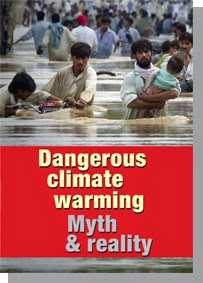
  • Dangerous climate change: Myths and reality (1)

    22 August 2014

    Dangerous climate change: Myths and reality (1)

    First in a 3-part series | Part 2 | Part 3

    by David Spratt

    Download report (16 pages)

    Few would disagree that the world should avoid “dangerous” (or unsafe) climate warming, but what does that term mean? What does climate safety mean? Is climate change already dangerous? Are greenhouse gas levels already too high? This report surveys some recent developments in climate science knowledge as a way of discerning the gaps between myth and reality in climate policy-making.

    Scientific and political reticence

    Amongst advocates for substantial action on climate warming, there is a presumption of agreement on the core climate science knowledge that underlies policy-making, even though differences exist in campaign strategy.

    But the boundaries between science and politics have become blurred in framing both the problem and the solutions. Amongst advocates, advisors and policy-makers there are very different levels of understandings of the core climate science knowledge, how it is changing, what constitutes “danger”, what needs to be done, and at what pace.

    On the science side, the challenge is of a fast-developing discipline in a rapidly changing physical world. There is a concerted and unwarranted global attack on climate scientists and, in Australia, intimidation and fear of job loss generated by the Abbott government’s hostility to science and cuts in climate research funding. As well, there are always uncertainties and unknowns in science, and difficulties in communicating complex understandings in a non-technical manner. Together these factors can produce over-cautiousness in public presentation and scientific reticence.

    In his 2011 climate science update for the Australian Government, Prof. Ross Garnaut gave some “reflections on scholarly reticence”, questioned whether climate research had a conservative “systematic bias”, pointed to “unfortunate delays between discovery and influence in the policy discussion”, and asked “whether the reason why most of the new knowledge confirms the established science or changes it for the worse is scholarly reticence”. Garnaut pointed to a pattern across diverse intellectual fields of research being “not too far away from the mainstream”, but says in the climate field that this “has been associated with understatement of the risks”.

    With masterly restraint, he concluded that we should be “alert to the possibility that the reputable science in future will suggest that it is in Australians’ and humanity’s interests to take much stronger and much more urgent action on climate change than might seem warranted from today’s peer-reviewed published literature. We have to be ready to adjust expectations and policy in response to changes in the wisdom from the mainstream science”  (Garnaut, 2011).

    On the politics side, often insufficient attention is paid to the breadth and depth of published research, and there is a tendency to prioritise perceived political relevance over uncomfortable scientific evidence. Most climate advocacy organisations allocate few resources to critically interrogating the climate research as part of strategy and policy development, and generally fall into a middle-of-the-road advocacy consensus which downplays the warnings from the more forthright scientists whose expert elicitations – on such topics as the stability of ice sheets and sea ice to future sea-level rises – have generally proven more robust than those of their more reticent colleagues.

    A desire amongst advocacy organisations to stick together and present a common mainstream view is understandable, but Garnaut has pointed out the scientific danger, and his observation is just as powerful for climate politics. There is little point in constructing campaign strategies discordant with a fast-changing reality.

    The mainstream representation of climate science as it blurs with politics – in public discourse in Australia, across most civil society sectors, and at the global policy-making level – could reasonably be described as follows:

    • Climate change is not yet dangerous, and two degrees of warming (2°C) is the appropriate focus for policy-making, because 2°C impacts are manageable and big tipping points are unlikely before 2°C.
    • We should plan to mitigate (reduce emissions) for 2°C, but we may fail so we should also plan to adapt to 4°C (which is the likely “business-as-usual” outcome by 2100 if high rates of emission continue).
    • We have a substantial carbon budget left for 2°C, because long-term feedbacks are not materially relevant, and high risks of failure can be accepted because 2°C is a “target” (which can be exceeded) rather than a “cap” (an upper boundary not to be exceeded).
    • Hence, there is time for an orderly, non-disruptive reduction in emissions within the current political and economic paradigm.

    Much of the recent international policy discourse has focused on “what percentage reductions by when and by whom” in emissions would stop warming passing 2°C. In Australia, is it 5% by 2020, or 19%, or a lot more? Till 2030 or 2050? An observer of this discourse would not think that 2°C is other than a reasonable target, and that we have plenty of carbon emissions left for a few decades more. They would certainly not understand that such propositions are dangerous myths. Here’s why.

    Myth 1: Climate change is not yet dangerous

    In 2008 John Holdren, who was then senior advisor to President Barack Obama on science and technology issues, told the Eighth Annual John H. Chafee Memorial Lecture on Science and the Environment: “… the (climate) disruption and its impacts are now growing much more rapidly than almost anybody expected even a few years ago. The result of that, in my view, is that the world is already experiencing ‘dangerous anthropogenic interference in the climate system’ ” (emphasis added) (Holdren, 2008).

    “Dangerous” climate changed is broadly characterised by the Intergovernmental Panel on Climate Change (IPCC) in the “burning embers” diagram as including five “reasons for concern”: risk to unique and threatened systems; risk of extreme weather events; distribution of impacts; aggregate (total economic and ecological) impacts; and risk of large-scale discontinuities (that is, abrupt transitions or “tipping points”). See Figure 1.

    From this perspective, tipping points have already been passed, at less than 1°C of warming, for:

    • The loss of the Amundsen Sea West Antarctic glaciers, and 1–4 metres of sea level rise (Rignot, Mouginot et al., 2014; Joughin, Smith et al., 2014). Dr Malte Meinshausen, advisor to the German government and one of the architects of the IPCC’s Representative Concentration Pathways, calls the evidence published this year of “unstoppable” (Rignot, 2014) deglaciation in West Antarctica “a game changer”, and a “tipping point that none of us thought would pass so quickly”, noting now we are “committed already to a change in coastlines that is unprecedented for us humans” (Breakthrough, 2014).
    • The loss of Arctic sea-ice in summer (Duarte, Lenton et al., 2012; Maslowski, Kinney et al., 2012), which will hasten regional warming, the mobilization of frozen carbon stores, and the deglaciation of Greenland.
    • Numerous ecosystems, which are already severely degraded or in the process of being lost, including the Arctic (Wolf, 2010). In the Arctic, the rate of climate change is now faster than ecosystems can adapt to naturally, and the fate of many Arctic marine ecosystems is clearly connected to that of the sea ice (Duarte, Lenton et al., 2012). In May 2008, Dr Neil Hamilton, who was then director of Arctic programmes for WWF, told a stunned audience (of which I was a member) at the Academy of Science in Canberra that WWF was not trying to preserve the Arctic ecosystem because “it was no longer possible to do so”.

    Many extreme weather events which have been made worse by climate change and variations of the Jet Stream — including Superstorm Sandy, Typhoon Haiyan and extraordinary heat waves in France (2003) and Russia (2010) and associated death tolls of many thousands — are also evidence that climate change is already dangerous.

    The current level of greenhouse gases is around 400 ppm carbon dioxide (parts per million CO2), and 470 ppm carbon dioxide equivalent (CO2e) when other greenhouse gases including methane and nitrous oxide are included. The last time CO2 levels were as high as they are today, humans didn’t exist, and “CO2 values associated with major climate transitions of the past 20 millions years are similar to modern levels” (Tripati, Roberts et al., 2009). In other words, big changes (“transitions”) in significant climate system elements such as ice sheets, sea levels and carbon stores are likely to occur for the current level of CO2. From the study of climate history, we learn that:

    • “During mid-Miocene climatic optimum  [16-14 million years ago] CO2 levels were similar to today, but temperatures were ~3–6C warmer and sea levels 25 to 40 metres higher than at present… When CO2 levels were last similar to modern values (greater than 350 ppmv to 400 pmv), there was little glacial ice on land, or sea ice in the Arctic, and a marine-based ice mass on Antarctica was not viable… Lower levels were necessary for the growth of large ice mass on West Antarctica (~250 to 300 ppmv) and Greenland (~220 to 260 ppmv)” (Tripati, Roberts et al., 2009).
    • “We estimate sea level for the Middle Pliocene epoch [3.0–3.5 million years ago] – a period with near-modern CO2 levels – at 25±5 metres above present, which is validated by independent sea-level data” (Rohling, Grant et al., 2009).
    • Likewise, “during the middle-Pliocene … we find sea level fluctuations of 20-40 metres associated with global temperature variations between today’s temperature and +3°C” (Hansen, Sato et al., 2013).
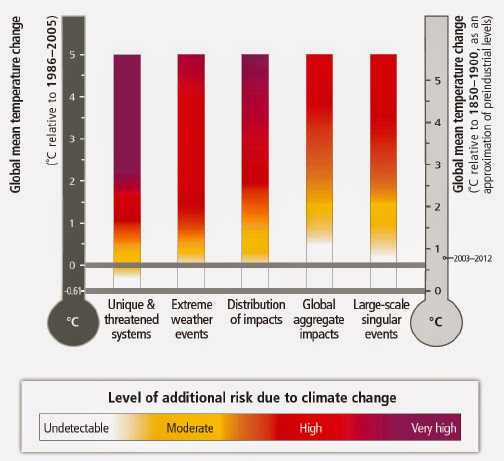
    Figure 1:  The ‘burning embers’ diagram 
from the IPCC’s Fifth Assessment Report illustrates risks for five key areas of concern.  Note that for “Large-scale singular events” (right-hand column) the risk at the current level of warming is assessed as “undetectable”, whereas there is now clear evidence that dangerous tipping points have been already passed for significant elements of 
the climate system.

    Myth 2: Two degrees is an appropriate focus for policy making

    The evidence above indicates that dangerous tipping points have already been passed at the current level of climate warming of 0.8°C, so 2°C of warming is clearly not an appropriate focus for policy making. 2°C is a very unsafe target in any framing of risk. It is more appropriately considered as the boundary between dangerous and very dangerous climate change (Anderson and Bows, 2010). In Australia, 2°C would likely mean, amongst many impacts, the loss of the Great Barrier Reef, the salination of Kakadu, and the loss of the north Queensland tropical rainforests.

    This is consistent with a framework of “planetary boundaries” published in 2009, which “define the safe operating space for humanity with respect to the Earth system and are associated with the planet’s biophysical subsystems or processes” (Rockstrom, Steffen et al., 2009). It proposes a boundary of less than 350 ppm CO2e, compared to the current level of more than 470 ppm CO2e.

    Research also finds that:

    • 1C° of warming over the pre-industrial baseline — which we are now approaching — is hotter than the Holocene maximum (the period of human civilisation up to 1900)  (Marcott, Shakun et al., 2013; Hansen, Kharecha et al., 2013). See Figure 2.
    •  For 2°C of warming, the sea-level rise will likely eventually be measured in the tens of metres (Rohling, Grant et al., 2009).
    • Hansen and Sato (2012), using paleoclimate data rather than models of recent and expected climate change, warn that “goals of limiting human made warming to 2°C and CO2 to 450 ppm are prescriptions for disaster” because significant tipping points – where significant elements of the climate system move from one discrete state to another – will be crossed. As detailed in the next section, numerous tipping points are likely well before 2°C.

    As well, the IPCC considers that the risks to unique and threatened systems, and of extreme weather events, is high at 2°C of warming (see Figure 1).

    Note: References available at PDF download

  • Ebola prevention can succeed with your support F.0.E

    Click here to enable desktop notifications for Gmail.   Learn more  Hide
    2 of 3
    AdHow To Publish eBook?www.e-bookspublishing.com – Learn How eBook Publishing Works. Get A Free eBook Publishing Guide!

    Ebola prevention can succeed with your support

    Spam
    x

    Friends of the Earth International <web@foei.org>

    3:33 AM (14 hours ago)

    to me
    Why is this message in Spam? It’s similar to messages that were detected by our spam filters.  Learn more
    Images are not displayed. Display images below
    ActNow Header
    Dear Friend,We have good news! Friends of the Earth Liberia and their partners have distributed Ebola prevention kits and informational material to more than 1000 households and public facilities. We are happy and proud that so many of our supporters have helped to make this possible!

    Together, we have raised more than 12,000 euro to help Liberian communities stand strong against the virus. But people are still getting sick. And though the international response may be improving it is still inadequate.

    With your contribution to Friends of the Earth Liberia, you will directly benefit community-led efforts to protect people against Ebola. This is life saving work and it needs your support.

    Ebola has killed thousands in Liberia and continues to cripple daily life and push the already fragile health service to the brink of collapse.

    But Friends of the Earth Liberia, their partners and the communities they work with are fighting hard against the Ebola epidemic.

    Friends of the Earth Liberia – a small organization consisting almost exclusively of Liberian staff – is part of the Community Awareness and Support Team (CAST) initiative, who are determined to contribute to ongoing efforts to stabilize the situation by raising awareness about personal hygiene and safety measures, and gathering and distributing key items such as disinfectants and soap to vulnerable communities. Since the launch of the initiative, CAST has delivered Ebola prevention kits to 1,296 households including 90 public facilities. To date the distribution has reached the population of 37 villages in Grand Bassa and Rivercess Counties.

    Your contribution can help this locally driven campaign to prevent the spread of Ebola in vulnerable communities in Liberia. All funds received (100%) will be transferred to Liberia. Please give what you can.
    Already made a donation and want to do more?

    Share this appeal by copy-pasting this text for

    Facebook/Google+/LinkedIn:

    Please support Friends of the Earth Liberia and its partners, who are providing community relief and support in the fight against the deadly Ebola virus http://bit.ly/liberia-appeal

    Twitter:

    Support communities in #Liberia in their fight against the #Ebola virus: http://bit.ly/liberia-appeal @FoLiberia @FoEint


    In solidarity

    Friends of the Earth International

  • UNI FEE DEREGULATION Bill Shorten

    More

    1 of 2
    AdUTAS PhD Degreephd.utas.edu.au – 3-4 Yr. University Of Tasmania PhD. Ranked in the Top 2% in The World!

    Uni fee deregulation

    Inbox
    x

    Bill Shorten via sendgrid.info 

    4:53 PM (10 minutes ago)

    to me
    .

    Neville,
    Tonight, thanks to the support of thousands of people taking a stand against the Americanisation of our universities, our TV ad showing just what the Liberals have planned will air right across the country.

    But this is just the beginning.  To stop Mr Abbott’s $100,000 degrees, we have to do much more. Most importantly, we’ll be relying on your help to make sure all Australians know what’s going on.

    We’ve got a new website and we’ll be out in the community with information and ways everyone can join the campaign.

    The deregulation of university fees is a backwards step which is bad for our kids and bad for the economy.

    We need your voice to help stop $100,000 degrees.

    So please, have a look at nodebtsentence.org and share it far and wide, because an informed community will not allow a future in which our kids have to retire with a HECS debt.

    If you haven’t already seen the ad, you can watch it here and please, share it with your friends and family so they know what Tony Abbott’s Government are planning too.

    A few weeks ago Christopher Pyne boasted in Parliament that no one would hear what Labor thought of their plans for higher education.  Our community jumped to action, donating thousands of dollars to prove him wrong and make sure Australians got to hear the truth.

    With the power of that support behind us we’ve been able to step up our campaign – and there’s more to come.

    Thanks for standing with me on this,

    Bill

  • orlds biggest banks won’t touch it 350 org

    2 of 2
    Ad850% + Investment Returnsthe-best-investments-today.com – Invest In Alternative Investments. Huge Profits. Free Top-Pick Guide!

    The world’s biggest banks won’t touch it

    Inbox
    x

    Charlie Wood – 350.org Australia <charlie@350.org> Unsubscribe

    4:50 PM (6 minutes ago)

    to me

    Dear friend,

    The world’s biggest investment banks are abandoning coal port expansion on the Great Barrier Reef.

    Just this morning – the Wall Street Journal reported that Citibank – one of the largest investment banks in the world – won’t finance the Abbot Point coal port expansion on the Reef.* It also reported that other major US investment banks are distancing themselves from Abbot Point.

    Click here to pitch in for a full page advertisement in The Australian calling on the Big 4 Banks to join international banks in ruling out involvement at Abbot Point.

    This is huge! Abbot Point and its associated mega-mines in the Galilee Basin would wreck the Reef and triple Australia’s emissions, locking us into at least 30 more years of coal-fired power.

    As US banks join European banks like HSBC, Deutsche Bank, the Royal Bank of Scotland and Barclays in ruling out involvement in this damaging project, it’s time for Australia’s Big 4 Banks to join them.

    The CEO’s of Australia’s Big 4 banks have received messages from over 100,000 Australians, asking them to rule out financing for Abbot Point. But still they remain silent, so it’s time to step things up!

    Help us run an ad telling the Big 4 Australian Banks that it’s time to rule out the Abbot Point coal port expansion.

    And if you’re keen to do more and live in Melbourne or Sydney, why not join an event delivering 15,000 messages collected from customers to the Big 4.

    • Melbourne – 8:30am this Friday October 31st. RSVP here.
    • Sydney – 9:30am Friday November 7thRSVP here.

    Together, let’s raise our voices ever louder until Australia’s Big 4 Banks do the right thing for the Reef, our climate and our future by ruling out coal port expansion at Abbot Point.

    Yours with thanks,

    Charlie for 350 Australia

    PS: Watch and share our new video which explains why all Australians should be concerned about coal port expansion on the Great Barrier Reef.

    *Wall Street Journal, Morgan Stanley Balks at Financing Australia Coal Port, 27 October 2014.


    350.org is building a global climate movement.

    Become a sustaining donor to keep this movement strong and growing.