Author: Neville

  • Solar economics: Not even Tony Abbott can kill rooftop PV By Giles Parkinson on 12 May 2014

    Solar economics: Not even Tony Abbott can kill rooftop PV

    By on 12 May 2014
    Print Friendly


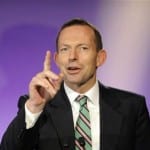
    AAP/Alan Porritt

    As Prime Minister Tony Abbott continues his assault on the nation’s clean energy programs and incentives, one technology that could emerge relatively unscathed (in the medium to long term) is the market for rooftop solar PV – much to the frustration of the incumbent utilities that are pushing the government to try to lock the country into the business models and technologies of the past.

    One of the biggest fears of the Australian solar industry is that the government’s review of the renewable energy target will result in an abrupt cancelling of the federal incentives that support the rooftop solar industry. They say that this could cause the loss of thousands of jobs, and the collapse of many businesses, as customers reassess their short-term commitment to rooftop solar. The industry says that solar will be targeted – despite its political risks – because it is a bigger threat to incumbent utilities than large-scale wind or solar projects.

    The contrast with the political rhetoric in Australia and that of the US – where President Barack Obama has re-installed rooftop solar on the rooftop of the White House (it was removed by Ronald Reagan), and gotten major retail brands to commit to install nearly 1GW of solar – could not be any different.

    There are strong arguments to keep solar incentives – as Alan Pears points out today – including that their removal will simply penalise those less wealthy or in less solar-rich regions, and will serve to protect only coal and gas-fired generators. And it will cause huge disruption to a growing industry.

    But a new analysis by investment bank UBS suggests while a dumping of the solar support mechanisms could slow down the uptake of rooftop solar in the short term in Australia, the impact would not be permanent. Indeed, as its study shows – and as some of the more progressive minds in the energy industry now readily admit – the continued fall in the cost of solar means that over the medium term there is not much the utilities or the government can do to stop growth of rooftop solar PV.

    The UBS report notes that the uptake of rooftop solar PV in Australia – around 3.2GW now sits on more than 1.1 million rooftops – has been consistent in trend terms despite the changes in policy – underpinned by a combination of rapidly rising delivered electricity costs (the network), and firstly by high feed in tariffs and then with falling technology costs.

    UBS policy solar

    Indeed, because of its extraordinarily high retail electricity prices, Australia was one of the first countries in the world to reach what is known as “socket parity” – where the cost of rooftop solar undercuts the cost of grid-sourced electricity.

    The small scale component of the renewable energy target currently accounts for around 29 per cent of the up-front cost of solar panels – although there are variations across different states, as this graph below shows.

    ubs solar capital costs

    But the UBS analysis shows that even with the carbon price repealed, and solar incentives cancelled, rooftop solar still looks compelling to households. That’s because solar power used in the house avoids buying electricity from the grid at a cost of at least $260/MWh and the cost of installing solar is much lower than that.

    UBS subsidies

    Much of the cost is determined by assessing the “discount rate” – roughly equivalent to the time value of money. UBS says if 10 per cent is a reasonable discount rate then rooftop solar presently needs a price of around $140 MWh with subsidy and about $180 MWh with no subsidy to cover its cost of capital.

    (In the US it could be argued that 6 per cent is a reasonable cost of capital, UBS says, but notes that Australia’s cost of capital – like so many other costs – is higher than other countries. If the discount rate is lowered to 7.5 per cent, it reduces the costs in Australia to $100/MWh with subsidy and around $140 with no subsidy).

    “Therefore, if the household can use the solar electricity in the house, it is from a financial point of view a no-brainer decision,” UBS writes.

    “Equally if the solar power is sold back to the grid it’s an equal no-brainer, but of a reverse outcome. From this perspective solar is just a financial arbitrage. Grid delivered electricity relies on the grid delivering “cheap” electricity produced 100s and even 1000s of km away from the point of consumption. Solar costs much more at the generation level but the unit cost of a 1 kW system bears little difference from a 1 GW system, and so it’s perfectly economical to install on the roof of the house and arbitrage away the wires and poles cost.”

    The question is, if the government does remove the remaining solar incentives, what will happen to demand? This graph below provides an indication.

    ubs s curve solar

    According to the UBS data, the current IRR (internal rate of return) is currently around 18 per cent. If this were to continue, something like 50 per cent of households would likely adopt rooftop solar PV. The removal of the SRES would likely drop that IRR to below 10 per cent, a return that would likely mean only around 20 per cent of the market switches.

    “As with any other market though, the marginal new customer may require a higher incentive,” UBS says. “Some people will switch even if there were a net cost because of environmental reasons. Some households and businesses won’t or will be unable to switch at all. In between sit a group that will switch if the financial incentive is sufficient.”

    So UBS estimates – that even with all subsidies removed and a low, and voluntary, feed in tariff in place in some states – the market for rooftop solar will likely remain around 400-500 MW per year. This would be made up of around 100 MW commercial (while expecting this component to grow) and around 300-400 MW of household rooftop PV. It should be noted that for large users of 100MWh or more, the cost of solar makes sense at $140/MWh or less – and PV is about there now ex-subsidy.

    UBS estimates that around 37 per cent of a typical household’s daily electricity consumption occurs when the solar system is operating (see graph below). Therefor, if the household wants to avoid exporting any power to the grid, then the PV system needs to be sized so that peak output is roughly equal to average hourly household consumption.

    “Our numbers suggest that for a household consuming 8 MWh per year (20 kWh per day) the solar system “should” be around 1.5 kW. That’s less than half the average size of new installations today.”

    ubs solar consumption

    UBS says that given a sufficient incentive, households can shift part of their power consumption around during the day, or even within a week.

    “Fridges, typically the largest single source of consumption, obviously have to be on constantly – but washing machines, clothes dryers, swimming pool pumps, solar hot water heating etc. can all have their time of consumption shifted relatively easily. For households not receiving an FIT, there will be a preference to use equipment during the day when solar represents the low cost option.”

    Ultimately, this leads into the question of storage. As we noted in our report on Friday, that could become cost competitive quickly, to the point that the average Australian household may not have to pay more if they disconnect entirely from the grid, as soon as 2018.

    That’s a prospect which is causing enormous disquiet among utilities – scrapping schemes such as the RET, and institutions such as the Clean Energy Finance Corp and the Australian Renewable Energy Agency are just a crude attempt at buying the incumbents more time.

  • Daily update: Tony Abbott still determined to kill renewable energy target

    1 of 1
    Why this ad?
    Shocking New ATO Ruleswww.pursuitofhappiness.com.au – Find out how to stop the govt. from stealing your life savings

    Daily update: Tony Abbott still determined to kill renewable energy target

    Inbox
    x

    Renew Economy editor@reneweconomy.com.au via mail79.wdc01.mcdlv.net

    1:24 PM (59 minutes ago)

    to me
    Abbott still determined to kill RET, Silex, ARENA pull funds for big fish solar project; RET repeal amounts to economic vandalism; RET cut would hit budget; Courts worldwide reject anti-wind experts and their evidence; Oz Technology competition finalists announced; G20 has crucial role in preventing future energy crisis; and a clean energy miracle – my challenge to Bill Gates.
    Is this email not displaying correctly?
    View it in your browser.
    RenewEconomy Daily News
    The Parkinson Report
    A new report from AFR underlines the determination of the Abbott government to kill renewable energy in Australia. This comes as a new report says coal and gas generators will pocket an extra $10bn in profits if the RET is scrapped.
    Silex dumps proposal for 100MW concentrated solar power plant in Mildura, citing uncertainty over RET as one factor. It will now look overseas.
    The Government’s own independent Review Panel finding that the RET helps to reduce power bills for electricity consumers over the medium term.
    Reducing the RET would cost the federal budget about $680 million more to meet Australia’s target of 5% emissions reduction by 2020.
    The EPI just published a full report of my research into anti-wind court cases in the USA, Canada, the British Isles, Australia and New Zealand.
    14 of Australia’s best emerging technology companies have been named as Finalists for the 2014 Australian Technologies Competition.
    The set of rules that govern world energy markets have not kept pace with the transformations in energy markets that are now happening ever more rapidly.
    There are only a few people in the world that could actually generate a true clean energy miracle and Bill Gates is one of them.
  • Tony Abbott still determined to kill renewable energy target

    Tony Abbott still determined to kill renewable energy target

    By on 18 August 2014
    Print Friendly

    Tony Abbott’s Renewable Energy Target review panel appears destined to do what it was created to do – to recommend closure of Australia’s last significant climate and clean energy scheme to new entrants.

    The Australian Financial Review, in a front page report, on Monday confirmed the worst fears of the renewable energy industry when it said that the panel had been “instructed” by Tony Abbott’s to look at ways for the scheme to be folded.

    This is shocking news, because it will bring to an end a $20 billion industry, and cost thousands of jobs, and force household and business bills to soar. It was immediately branded as a “reckless” idea by the Clean Energy Council.

    But it should not be surprising news. The intent of the Abbott government towards renewables was made clear by its refusal – despite a statutory requirement to do so – to commission the Climate Change Authority to conduct the review.

    Instead, it appointed a panel composed of climate skeptics, pro nuclear advocates and fossil fuel lobbyists. The biggest beneficiaries of a decision to close the scheme to new entrants will be the fossil fuel generators, who according to new analysis released on Monday, will see their earnings boosted by up to $10 billion – the big three retailers, AGL Energy, Origin Energy and EnergyAustralia, being the biggest beneficiaries.

    And such a decision will satisfy the right-wing ideologues and deep-lined antipathy to renewable energy within the Abbott government, and its determination to kill the remnants of the Labor/Greens “Clean Energy Future” package The AFR also repeats what has long been suspected, that Environment Minister Greg Hunt – and Industry Minister Ian Macfarlane – have been effectively sidelined from the process, despite the issue crossing into their portfolios.

    tony-abbott-150x150The PM’s office has had carriage of the project since the start, and his intentions have long been clear. The secretarial support has been housed within Abbott’s office – and within reach of his principal business advisors – including climate denier and renewables opponent Maurice Newman, and Abbott’s own energy advisor, former AGL executive Sarah McNamara.

    The AFR suggests that Joe Hockey – who says he finds wind turbines “utterly offensive”, and another noted anti-renewables finance minister Mathias Cormann, are also having a large say in proceedings. Hunt, who has constantly vaunted his ability to influence the outcome, is said by the AFR to be “unhappy”.

    But government insiders who have worked on the RET Review have told RenewEconomy that the intent of the review has always been to cut the current 41,000GWh target to a maximum of 25,000GWh (what might be called a “true” 20 per cent target), and possibly close it to new entrants altogether.

    The tenor of the “consultations” also confirmed this view. The panel members, Dick Warburton and Shirley In’T Veld, the former head of coal generator Verve Energy, have made their climate skeptic views very clear. Economic rationalist Brian Fisher, who has done extensive modeling for parties opposed to the RET, has also not hidden his opposition to the mechanism.

    There were glimmers of hope that the RET could be retained, particularly when the panel’s own modeling dismissed the two major arguments to drop the target – that the target could not be physically met, and that it would be costly to consumers. The ACIL Allen report said there would be no issue meeting the 41,000GWh target, if the policy intent was made clear and soon, and that even based on its own conservative inputs, consumers would be better off in the long term from having more renewables in the grid.

    Instead, the new argument was based around a “transfer of wealth” from the generators to consumers. But even then, the report is believed to have favoured a “scaling back” of the target to 25,000GWh or 27,000GHW – a position said to be favoured by Hunt.

    The report by Jacobs, on behalf of The Climate Institute, Australian Conservation Foundation and WWF-Australia says that the biggest beneficiaries to dumping the RET would be the fossil fuel generators. The Jacobs report suggested $8 billion in additional profits to coal-fired generators out to 2030 and an extra $2 billion to gas generators.

    AGL Energy – presuming it completes the purchase of Macquarie Generation’s 4.6GW of coal generators in NSW – would pocket an extra $2.7 billion, EnergyAustralia would an extra $2 billion boost and Origin Energy a $1 billion boost. All three companies have been active in their opposition to the RET, and to subsidies for small-scale solar in particular.

    Although, the RET Review panel was not due to deliver its final report to Abbott’s office until later July, it was always going to “consult” with draft findings before that delivery. That is when the RET Review panel was instructed to “look more closely” – as the AFR puts it – on the option to close the target to any new entrants, and possibly to await the result of Australian Energy Market Operator estimates which showed no new capacity is needed on the eastern states grid for at least another 10 years. The fossil fuel generators, who are largely responsible for that excess capacity, fear that more renewables means more early closures for ageing coal plants.

    Whether the Abbott government finally agrees with a scale backed target or an effective closure, any changes seem likely to be blocked in the Senate, where the Palmer United Party has promised to side with Labor and the Greens.

    But it matters not. The large-scale renewable energy industry has already ground to a halt. No new projects have reached financial closure since the election of the Abbott government, and the Abbott government knows that even by doing nothing – apart from allowing continued uncertainty – no new projects will come to market.

    Households will also be affected. They have so far contributed $12 billion of the $18 billion invested in renewables over recent years, initially driven by generous feed in tariffs and then as a hedge against rising electricity prices once those tariffs were removed. The government, though, can remove some of those remaining incentives that defray the upfront cost of the system, without needing legislative changes. Industry experts say that could cause the rooftop solar market to fall by one-third or even a half, with the loss of thousands of jobs.

    Meanwhile, state governments – with huge vested interests in state-owned networks and generators – continue to act against renewables. The WA government is even canvassing importing coal from Indonesia rather than develop renewable energy projects at home, while in Queensland, businesses have been hit by a whopping $500-a-day service charge (essentially to read the meter) to dissuade them from installing solar.

    The renewable energy industry – which possibly unwisely sought to negotiate a “compromise deal” with the big three utilities in 2013 – said a move to halt the target would be “devastating” to the industry.

    “Such a move would be reckless, given the government’s own analysis shows slashing the RET would save no money on power bills, yet would devastate billions of dollars of investments made in good faith in renewable energy projects across the country,” acting CEO Kane Thornton said.

    “Hundreds of Australian and international investors have built their businesses based on the strong bipartisanship of this policy which has existed in legislation since 2001.

    “Tearing up this bipartisanship, and the policy itself, would show that the Australian energy sector is clearly not open for business – it would stop industry dead and smash investments that have already been made.”

    Indeed, some international groups such as US solar developer Recurrent Energy have already packed up. Others, including Goldwind and Trina, have warned of the potential fallout, while Australian groups Pacific Hydro and Infigen Energy are directing their efforts overseas.

    The Australian Solar Council echoed the CEC remarks. It is taking its “Save Solar” campaign to marginal electorates, with the first stop at the northern Brisbane seat of Petrie, held by the LNP’s Luke Howarth, in Thursday this week. The ability to make solar a potent political issue – many marginal electorates boast more than 20 per cent solar penetration – appears to be their last resort.

    “Solar saves money, creates jobs and shifts votes. The Abbott Government is about to find out how much Australians love solar and the Renewable Energy Target,” CEO John Grimes said.

  • The US Humanitarian Intervention in Iraq: The Oil and Water Angle

    Sign up | Login with →

    Posted by: Amy Myers Jaffe

    The US Humanitarian Intervention in Iraq: The Oil and Water Angle

    Like it?

    13
    Posted August 15, 2014
    23

    Iraq Crisis

    The success of stated limited U.S. humanitarian goals for the latest intervention in Iraq could hinge on more than the fate of minorities trapped on top of the Mount Sinjar. That is because the Islamic State in Iraq and Syria (ISIS) has taken control of critical water and oil infrastructure including the Mosul Dam.  Flooding from improper management of the Mosul Dam or a purposeful use of the Dam as a weapon, either by releasing a torrent of flood water or cutting off access to water, would cause an unimaginable humanitarian catastrophe. Restoring control of the Dam to unified Iraqi government control is paramount. Water is also a vital component for oil production in southern Iraq, where the fields require water injection to maintain field pressure. A sudden shortage of water for oil production in southern Iraq could both disrupt production and possibly cause permanent damage to reservoirs. Iraq would have difficulty coping with either contingency given violence-related recent evacuation of foreign oil industry personnel.

    That the United States succeeds in helping the Iraqis form a new inclusive government that can work with the US and others in rolling back ISIS, restoring control over the Mosul and other dams, and reintegrating the Kurdish Regional Government (KRG) back into a national unity posture is compelling first and foremost on a humanitarian basis. The Iraqi people have suffered tragically and immeasurably. But beyond the tragic humanitarian crisis, the conflict has also set a particularly dangerous precedent in recent weeks with both ISIS and the Kurds responding to the disorder and conflict by grabbing oil and water assets, perhaps partly out of necessity but also setting the stage for an expansion in violent conflicts over oil and water resources  in a Middle East where many borders are at risk to change permanently.

    The United States, the international community, and citizens in the Middle East all have a vital common  interest in preventing a chaotic world where water and energy throughout the Middle East become pawn to local warring factions trying to rewrite history. The first order for Iraq’s new government, and the US diplomats and military advisors who will assist them, needs to be to settle once and for all how oil revenues will be divided and how oil and gas development will proceed on a national, not regional, basis. I have written extensively in the past why Iraq needs to focus on per capita metrics for regional oil income distribution. Perhaps now the logic of this necessity is more transparent.

    If not managed correctly, the near term geopolitical outcome in Iraq could ultimately set the stage for a new pattern to violence: a potentially devastating struggle for oil and water resources throughout the Middle East. With all due respect to U.S. sensitivities to the particular needs of the KRG, the United States must consider the precedents that might be set when borders are redrawn by force in the Middle East and sub-national groups assert their own localized control over natural resources. Water and oil issues loom large in many locations, not just in Iraq and Syria, but also in Jordan/Israel/Palestine, in Libya, and along the borders of Iraq and Iran with Saudi Arabia and Kuwait.  Saudi Arabia has fortified its northern borders with Iraq with more military hardware and troops, while Iranian forces have moved into positions surrounding the southern Iraqi oil fields, raising the risks of border skirmishes. The militarization of border areas so heavily populated with oil fields and energy transport infrastructure brings with it unique risks, if territory continues to change hands more pervasively.  The emerging oil-water conquest by battle raises the stakes of even limited armed conflict.

    Wars that center on resource infrastructure, such as the long eight year Iraq-Iran war, can have devastating impacts on long term national wealth as well as regional and global energy supply. Iran has never truly restored its heavily war damaged oil and gas sector since war broke out in 1979, and Iraq has only done so with very slow progress. If armed regional players start to see that highly valuable water and oil resource control is up for grabs, the intensification of conflicts could be even more deadly and the long term consequences ever more dire for the region and beyond. And once one party aims to control vital water and fuel sources, others must move defensively to prevent a humanitarian crisis for their own communities. The potential for escalation is high and hard to prevent.

    It is pressing to reverse this dangerous tide of conflict focused on water and energy resources to prevent an acceleration of current trends. Learning to navigate political solutions to equitable division of oil revenue is a vital skill needed desperately in today’s Middle East. It is an advisory role that U.S. has failed to tackle skillfully not only in Iraq but also in Libya. It is a policy area where greed –individual and institutional- has often overwhelmed common sense.

    The U.S. created a role of “oil ambassador” inside the U.S. Department of State but that diplomat has failed to make oil and gas “revenue sharing” conflict resolution a diplomatic priority. If the U.S. is going to have an “energy” diplomat, that person should be charged with the difficult diplomacy of helping leaders forge lasting domestic political pacts on how to share oil revenue equitably across populations and regions and to minimize official corruption in the process in countries that are or could be torn by civil war or sectarian violence. That NATO and the United States have not taken this challenge seriously enough is clearly demonstrated in Libya where what started as a promising beginning for a new elected Libyan government has ended in violent civil conflict driven by lack of agreement over regional oil revenue sharing.

    So far, global oil markets are ignoring the potential risks that could become one consequence of a resumption of a major regional Mideast war that targets oil and gas facilities in the way that happened during the eight year Iraq-Iran war. One reason markets are not rising is that, to date, rising U.S. production has kept pace with output losses that have emerged as production has been disrupted in the region. Citi issued a report today noting that productivity gains in the range of 30% are driving a continued surge in U.S. oil production, with new success out of the Utica shale play. The other reason, traders and analysts admit, is that potential risks are so cataclysmic that they are hard to assess. Notes one Wall Street player, “There is this conflicting assumption is that the economic fallout from a war that caused an oil crisis would be so negative it would simultaneously kill oil demand.”

    Photo Credit: Energy and Crisis in Iraq/shutterstock

  • Why railroads are taking a fresh look at natural gas

    Group Chairman: Mir Javed Rahman
    Editor-in-Chief: Mir Shakil-ur-Rahman
    You are here: Home > Today’s Paper > Business

    Why railroads are taking a fresh look at natural gas
    John Kemp
    Saturday, August 16, 2014
    From Print Edition
     27  0  1  0


    NEW YORK: Gas-fuelled locomotives are not a new idea. Plymouth Locomotive Company built the first propane-fuelled rail engine as early as 1936.


    The industry has experimented with natural gas-fuelled trains on a small scale for the past 80 years without ever moving beyond the prototype stage.


    “Some members of the regulatory, engine supply and fuel supply communities believe railroads have an opportunity to use natural gas as a locomotive fuel to help meet emissions and performance goals,” Burlington Northern and Santa Fe (BNSF), Union Pacific (UPRR) and the Association of American Railroads wrote in a joint report in November 2007.


    “Except for some potential niche applications, the railroads disagree,” they told the California Air Resources Board (“An evaluation of natural-gas fuelled locomotives”).


    But less than six years later, BNSF and the other major operators are sounding far more enthusiastic.