Author: Neville

  • We moved mountains last week 350 org

    e desktop notifications for Gmail.   Learn more  Hide

    1 of 4
    Why this ad?
    Top10 eCommerce Solutionsbusiness-software.com/eCommerce – 2014 Top eCommerce Solution Ranking Get Vendor Research by Top Analyst

    We moved mountains last week

    Inbox
    x

    Charlie Wood – 350.org Australia <charlie@350.org> Unsubscribe

    5:24 PM (7 minutes ago)

    to me

    Dear friends,

    Last week we moved mountains together.

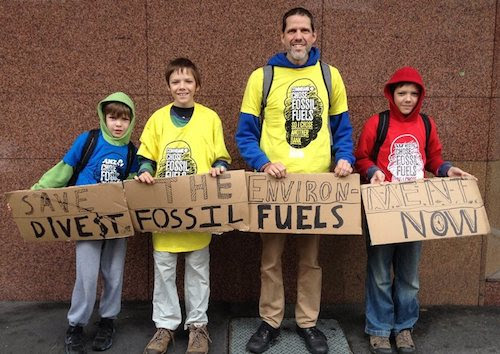
    Hundreds of Australians – grandmothers, farmers, children, business-owners, doctors, musicians and more – turned an ordinary week into an extraordinary display of courage, compassion and determination to move Australia beyond fossil fuels to a just and sustainable energy future.

    Today, we want to celebrate those extraordinary acts….

    Let’s start with Maules Creek where, in the wee small hours of Saturday morning, a group of doctors from around Australia responded to a medical emergency.

    Despite busy schedules, little sleep and risks to their professional careers, these doctors blocked construction of Australia’s largest new coal mine to protect current and future generations from a future of fossil-fuel driven ill health.

    “I believe this is an emergency in health and I believe that, as doctors, we need to face this emergency like we would any other emergency.”  – Lin Wang, 23 (pictured above)

    And while doctors put their bodies on the line in the dead of night, in the light of day, hundreds of Australians turned out at Big 4 Bank branches around the country as part of 350.org and Market Forces first and largest national day of divestment action. Together, people from all walks of life used their consumer power to start building a better future.

    There were folks like 96-year old Nance from Brisbane…

    Families...

    Doctors….

     Mothers… 

    Some were motivated by concern for their children, some about the impact of fossil fuels on their land, others the financial risks of stranded fossil assets on their hard-earned savings. Whatever the motivation, together we put fossil fuel risks firmly on the Big 4’s agenda and, together, moved over $200 million out of the Big 4 Banks since last October alone!

    Watch and share this Divestment Day highlights video…

    Who would have thought that we’d see doctors locking on to coal-mines whilst grandmothers, farmers and local business owners cut up their credit cards?

    The movement we’re building is a growing force to be reckoned with. Through our actions we are starting to change the system…

    Who would have thought that the world’s largest fund manager – BlackRock – would team up with London’s FTSE group to build fossil-free stock market indexes, or that the world’s largest Sovereign Wealth Fund would consider divesting from the fossil fuel’s upon which it’s wealth was built, or that UniSuper, one of Australia’s largest super funds, would divest fossil fuels from one of its portfolios? Or that mining interests would be afraid of an ice-cream company?

    These changes are thanks to people like you, taking action, inspiring others and showing our power-holders that climate change is an issue that knows no borders, respects no fences, cities, towns, nobody’s children, retirements or bank savings.

    It’s thanks to you that this campaign was last week referred to, in the Australian Financial Review, as “brilliantly organised” and “the best organized campaign I’ve seen in 50 years.”

    Together, we’re taking matters into our own hands, inspiring a movement of ordinary people to do extraordinary things.

    Thank you for moving mountains with us last week. Let’s go move some more.

    With huge thanks,

    Charlie, Blair, Aaron, Josh, Simon, Phil and the whole 350.org Australia team

    —-

    For more about Divestment Day:

    For more about the doctors at Maules Creek:


    350.org is building a global climate movement.

  • Tidal power wikipedia

    Tidal power

    From Wikipedia, the free encyclopedia
    Renewable energy
    Sustainable energy
    Wind turbines near Vendsyssel, Denmark (2004)
    Energy conservation
    Renewable energy
    Sustainable transport

    Tidal power, also called tidal energy, is a form of hydropower that converts the energy of tides into useful forms of power, mainly electricity.

    Although not yet widely used, tidal power has potential for future electricity generation. Tides are more predictable than wind energy and solar power. Among sources of renewable energy, tidal power has traditionally suffered from relatively high cost and limited availability of sites with sufficiently high tidal ranges or flow velocities, thus constricting its total availability. However, many recent technological developments and improvements, both in design (e.g. dynamic tidal power, tidal lagoons) and turbine technology (e.g. new axial turbines, cross flow turbines), indicate that the total availability of tidal power may be much higher than previously assumed, and that economic and environmental costs may be brought down to competitive levels.

    Historically, tide mills have been used, both in Europe and on the Atlantic coast of North America. The incoming water was contained in large storage ponds, and as the tide went out, it turned waterwheels that used the mechanical power it produced to mill grain.[1] The earliest occurrences date from the Middle Ages, or even from Roman times.[2][3] It was only in the 19th century that the process of using falling water and spinning turbines to create electricity was introduced in the U.S. and Europe.[4]

    The world’s first large-scale tidal power plant is the Rance Tidal Power Station in France, which became operational in 1966.

    Generation of tidal energy

    Variation of tides over a day

    Main articles: Tide and Tidal acceleration

    Tidal power is taken from the Earth’s oceanic tides; tidal forces are periodic variations in gravitational attraction exerted by celestial bodies. These forces create corresponding motions or currents in the world’s oceans. Due to the strong attraction to the oceans, a bulge in the water level is created, causing a temporary increase in sea level. When the sea level is raised, water from the middle of the ocean is forced to move toward the shorelines, creating a tide. This occurrence takes place in an unfailing manner, due to the consistent pattern of the moon’s orbit around the earth.[5] The magnitude and character of this motion reflects the changing positions of the Moon and Sun relative to the Earth, the effects of Earth’s rotation, and local geography of the sea floor and coastlines.

    Tidal power is the only technology that draws on energy inherent in the orbital characteristics of the EarthMoon system, and to a lesser extent in the Earth–Sun system. Other natural energies exploited by human technology originate directly or indirectly with the Sun, including fossil fuel, conventional hydroelectric, wind, biofuel, wave and solar energy. Nuclear energy makes use of Earth’s mineral deposits of fissionable elements, while geothermal power taps the Earth’s internal heat, which comes from a combination of residual heat from planetary accretion (about 20%) and heat produced through radioactive decay (80%).[6]

    A tidal generator converts the energy of tidal flows into electricity. Greater tidal variation and higher tidal current velocities can dramatically increase the potential of a site for tidal electricity generation.

    Because the Earth’s tides are ultimately due to gravitational interaction with the Moon and Sun and the Earth’s rotation, tidal power is practically inexhaustible and classified as a renewable energy resource. Movement of tides causes a loss of mechanical energy in the Earth–Moon system: this is a result of pumping of water through natural restrictions around coastlines and consequent viscous dissipation at the seabed and in turbulence. This loss of energy has caused the rotation of the Earth to slow in the 4.5 billion years since its formation. During the last 620 million years the period of rotation of the earth (length of a day) has increased from 21.9 hours to 24 hours;[7] in this period the Earth has lost 17% of its rotational energy. While tidal power will take additional energy from the system, the effect[clarification needed] is negligible and would only be noticed over millions of years.[citation needed]

    Generating methods

    The world’s first commercial-scale and grid-connected tidal stream generator – SeaGen – in Strangford Lough.[8] The strong wake shows the power in the tidal current.

    Top-down view of a DTP dam. Blue and dark red colors indicate low and high tides, respectively.

    Tidal power can be classified into three generating methods:

    Tidal stream generator

    Tidal stream generators (or TSGs) make use of the kinetic energy of moving water to power turbines, in a similar way to wind turbines that use wind to power turbines. Some tidal generators can be built into the structures of existing bridges, involving virtually no aesthetic problems.

    Tidal barrage

    Main article: Tidal barrage

    Tidal barrages make use of the potential energy in the difference in height (or head) between high and low tides. When using tidal barrages to generate power, the potential energy from a tide is seized through strategic placement of specialized dams. When the sea level rises and the tide begins to come in, the temporary increase in tidal power is channeled into a large basin behind the dam, holding a large amount of potential energy. With the receding tide, this energy is then converted into mechanical energy as the water is released through large turbines that create electrical power through the use of generators.[9] Barrages are essentially dams across the full width of a tidal estuary.

    Dynamic tidal power

    Main article: Dynamic tidal power

    Dynamic tidal power (or DTP) is an untried but promising technology that would exploit an interaction between potential and kinetic energies in tidal flows. It proposes that very long dams (for example: 30–50 km length) be built from coasts straight out into the sea or ocean, without enclosing an area. Tidal phase differences are introduced across the dam, leading to a significant water-level differential in shallow coastal seas – featuring strong coast-parallel oscillating tidal currents such as found in the UK, China, and Korea.

    US and Canadian studies in the twentieth century

    The first study of large scale tidal power plants was by the US Federal Power Commission in 1924 which if built would have been located in the northern border area of the US state of Maine and the south eastern border area of the Canadian province of New Brunswick, with various dams, powerhouses, and ship locks enclosing the Bay of Fundy and Passamaquoddy Bay (note: see map in reference). Nothing came of the study and it is unknown whether Canada had been approached about the study by the US Federal Power Commission.[10]

    There was also a report on the international commission in April 1961 entitled ” Investigation of the International Passamaquoddy Tidal Power Project” produced by both the US and Canadian Federal Governments. According to benefit to costs ratios, the project was beneficial to the US but not to Canada. A highway system along the top of the dams was envisioned as well.

    A study was commissioned by the Canadian, Nova Scotian and New Brunswick Governments (Reassessment of Fundy Tidal Power) to determine the potential for tidal barrages at Chignecto Bay and Minas Basin – at the end of the Fundy Bay estuary. There were three sites determined to be financially feasible: Shepody Bay (1550 MW), Cumberline Basin (1085 MW), and Cobequid Bay (3800 MW). These were never built despite their apparent feasibility in 1977.[11]

    Current and future tidal power schemes

    • The first tidal power station was the Rance tidal power plant built over a period of 6 years from 1960 to 1966 at La Rance, France.[12] It has 240 MW installed capacity.
    • 254 MW Sihwa Lake Tidal Power Plant in South Korea is the largest tidal power installation in the world. Construction was completed in 2011.[13][14]
    • The first tidal power site in North America is the Annapolis Royal Generating Station, Annapolis Royal, Nova Scotia, which opened in 1984 on an inlet of the Bay of Fundy.[15] It has 20 MW installed capacity.
    • The Jiangxia Tidal Power Station, south of Hangzhou in China has been operational since 1985, with current installed capacity of 3.2 MW. More tidal power is planned near the mouth of the Yalu River.[16]
    • The first in-stream tidal current generator in North America (Race Rocks Tidal Power Demonstration Project) was installed at Race Rocks on southern Vancouver Island in September 2006.[17][18] The next phase in the development of this tidal current generator will be in Nova Scotia (Bay of Fundy).[19]
    • A small project was built by the Soviet Union at Kislaya Guba on the Barents Sea. It has 0.4 MW installed capacity. In 2006 it was upgraded with a 1.2MW experimental advanced orthogonal turbine.
    • Jindo Uldolmok Tidal Power Plant in South Korea is a tidal stream generation scheme planned to be expanded progressively to 90 MW of capacity by 2013. The first 1 MW was installed in May 2009.[20]
    • A 1.2 MW SeaGen system became operational in late 2008 on Strangford Lough in Northern Ireland.[21]
    • The contract for an 812 MW tidal barrage near Ganghwa Island (South Korea) north-west of Incheon has been signed by Daewoo. Completion is planned for 2015.[13]
    • A 1,320 MW barrage built around islands west of Incheon is proposed by the South Korean government, with projected construction starting in 2017.[22]
    • The Scottish Government has approved plans for a 10MW array of tidal stream generators near Islay, Scotland, costing 40 million pounds, and consisting of 10 turbines – enough to power over 5,000 homes. The first turbine is expected to be in operation by 2013.[23]
    • The Indian state of Gujarat is planning to host South Asia’s first commercial-scale tidal power station. The company Atlantis Resources planned to install a 50MW tidal farm in the Gulf of Kutch on India’s west coast, with construction starting early in 2012.[24]
    • Ocean Renewable Power Corporation was the first company to deliver tidal power to the US grid in September, 2012 when its pilot TidGen system was successfully deployed in Cobscook Bay, near Eastport.[25]
    • In New York City, 30 tidal turbines will be installed by Verdant Power in the East River by 2015 with a capacity of 1.05MW.[26]
    • Construction of a 240 MW tidal power plant in the city of Swansea in the UK, estimated to begin in Spring 2015. Once completed, it will generate over 400GWh of electricity per year, enough to power roughly 121,000 homes. Completion is scheduled for 2017, and the project has a projected 120 year lifespan.[27]

    T

  • WAVE POWER

    18 Jun 2009
    Home  »  Energy Matters   »   WAVE POWER

    WAVE POWER

    Posted in Energy Matters By admin On June 18, 2009


    This type of power generation is not a widely employed technology, with only a few experimental sites in existence. The market potential for hydrokinetic energy is vast, ranging from small-scale distributed generation applications to large-scale power plants.

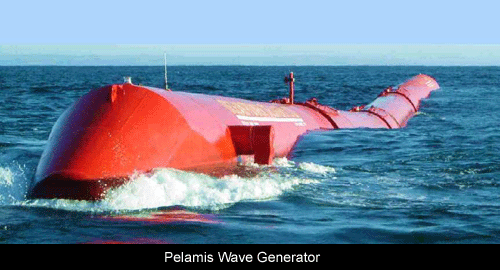
    Pelamis wave

    In general, large breakers are more powerful. Specifically, power is determined by height, speed, wavelength, and water density. The size is determined by wind speed and fetch (the distance over which the wind excites the water) and by the depth and topography of the seafloor (which can focus or disperse the energy). A given wind speed has a matching practical limit over which time or distance will not produce larger waves. This limit is called a “fully developed sea.”

    This power source could yield much more energy than tidal power. Tidal dissipation (friction, measured by the slowing of the lunar orbit) is 2.5 terawatts. The energy potential is certainly greater, and the power of the sea in this form could be exploited in many more locations. Countries with large coastlines and strong prevailing winds (notably, Ireland and the UK) could produce five percent or more of their electricity from this source of power. Excess capacity (a problem common with intermittent energy sources) could be used to produce hydrogen or smelt aluminum.


    A floating buoy, submerged system or an offshore platform placed many kilometers from land is not likely to have much visual impact. Onshore facilities and offshore platforms in shallow water could, however, change the visual landscape from one of natural scenery to industrial. These are considerations, but ultimately we need to balance the need for sustainable energy against visual impact. Which would you choose between?

    During September 2008 the Pelamis technology pictured above became the world’s first commercial sea power plant converting waves into electricity. Situated off Portugal’s coast the project is expected to expand nearly 10-fold in the coming years.

    Generating a total of 2.25 megawatts, the power is enough to supply 1,500 households the project cost is reported to be around 8.5 million Euros (US$12.55 million).

    Although the price is not currently competitive, the project was possible due to the feed-in tariff in Portugal.


  • Daily update: Consumers big winners in solar/storage revolution

    1 of 1
    Why this ad?
    Solar power 3kw $3199www.spacesolar.com.au – Electricity Prices continue to Rise Get a Solar Now and Save Money!

    Daily update: Consumers big winners in solar/storage revolution

    Inbox
    x

    Renew Economy editor@reneweconomy.com.au via mail3.wdc01.mcdlv.net

    3:29 PM (40 minutes ago)

    to me
    Consumers to be big winners in solar/strorage revolution, Why utilities face their Kodak moment,   How Australia’s climate policy stacks up, Coal: Australia’s major problem with power sector emissions, Demand and emissions and wholesale prices still going down, Clean energy is offensive because it works, Feds say U.S can double hydropower, Round-the-clock solar power station wins major award, And the winner is..Passive House!
    Is this email not displaying correctly?
    View it in your browser.
    RenewEconomy Daily News
    The Parkinson Report
    The solar-inspired transformation of Australia’s energy market is likely to happen quicker than anyone thinks, says PwC. This includes the decline of retailers, the emergence of “crown funded” energy companies within 3 years – and lower bills and greater control for consumers.
    Electricity market changing so quickly that traditional utilities are facing their Kodak moment. Either they change quickly or they will lose their “right to survive”.
    A comparison of speeches from the US Ambassador to Australia and federal environment minister Greg Hunt illustrate a huge divide in climate policy approach.
    BNEF analyst says Australia faces a ‘major problem’ with power sector emissions without effective government policy to drive coal out of the mix.
    Coal fired generation at record low in Australia, as wind generation hits record high of 4.6 per cent. Emissions and costs also fall.
    The offense felt by Joe Hockey towards wind farms isn’t shared by most Australians. But the issue of aesthetics is real, and needs to be considered carefully.
    A new U.S. Department of Energy report shows that the Grand Canyon and other major gorges and rivers across the U.S may be ideal for hydropower development.
    The Gemasolar plant near Seville in Spain can store enough heat to operate for 18 hours at full capacity without any additional power from the sun.
    In northern Europe, demand for heat makes up around 40 percent of total energy demand. Passive House architecture can nearly wipe out
  • Geology.com News – 7 Topics

    Why this ad?
    TAFE Courses Onlinewww.opencolleges.edu.au – Study From Home At Your Own Pace Download A Course Guide Today.

    Geology.com News – 7 Topics

    Inbox
    x

    Geology News fb@geology.com via google.com

    7:11 PM (47 minutes ago)

    to me

    Geology.com News – 7 Topics

    Link to Geology News

    Geothermal in Utah

    Posted: 03 May 2014 07:03 AM PDT

    “A recent industry report by the Geothermal Energy Association shows 13 potential geothermal projects in varying stages of development in the state, mostly concentrated in a central Utah cluster.” Quoted from the Deseret News article.

    Element 117

    Posted: 03 May 2014 06:57 AM PDT

    A team of chemists and physicists created and briefly observed four atoms of Element 117 – which transformed into daughter isotopes. It was first created in 2010 and the current experiment was confirmation.

    2000 Dead in Afghan Landslide

    Posted: 03 May 2014 06:29 AM PDT

    A Reuters article reports that at least 2000 people died in the recent landslide in Afghanistan. Many survivors and people evacuated from dangerous nearby areas now are without shelter.

    Afghanistan Landslide in Loess?

    Posted: 03 May 2014 06:19 AM PDT

    The Landslide Blog has photos and commentary on the recent landslide in Afghanistan that has killed at least hundreds of people. The slide occurred in very fine material with no boulders that may have been loess.

    Recent Landslides in Baltimore

    Posted: 03 May 2014 05:14 AM PDT

    The Landslide Blog has several photos and videos of recent landslides in Baltimore, Maryland.

    Streambed Sediments Near Oil and Gas Development

    Posted: 03 May 2014 05:00 AM PDT

    “During 2011–13, the U.S. Geological Survey, in cooperation with the San Antonio River Authority and the Guadalupe-Blanco River Authority, analyzed surface-water and streambed-sediment samples collected from 10 sites in the San Antonio River Basin to provide data for a broad range of constituents that might be associated with hydraulic fracturing and the produced waters that are a consequence of hydraulic fracturing.” Quoted from the USGS publication release.

    Join America’s PrepareAthon!

    Posted: 03 May 2014 04:52 AM PDT

    “America’s PrepareAthon! is a campaign encouraging people across the nation to practice preparedness actions before a disaster or emergency strikes.” Quoted from the USGS press release.

  • Forbes magazine ( a bastion of the USA establishment) cheering solar-power. The World’s First Baseload (24/7) Solar Power Plant

    Solar Power Plant

    Forbes magazine ( a bastion of the USA establishment) cheering solar-power. The World’s First Baseload (24/7) Solar Power Plant

    Posted in Energy Matters By admin On July 22, 2012


    THIS IS A REAL BREAKTHROUGH.


    G’day Neville,
    Forbes magazine ( a bastion of the USA establishment) cheering solar-power.
    The World’s First Baseload (24/7) Solar Power Plant
    http://www.forbes.com/sites/tonyseba/2011/06/21/the-worlds-first-baseload-247-solar-power-plant/