Author: Neville

  • Delhi’s homeless struggle in near-freezing temperatures as cold spell sweeps India

    Delhi’s homeless struggle in near-freezing temperatures as cold spell sweeps India

    By India Correspondent Stephanie March

    Updated 54 minutes ago

    At least 100 people have been killed in a cold spell sweeping across India, and near freezing temperatures in the capital are making life almost impossible for people living on the streets.

    But as Stephanie March discovers, helping the city’s homeless isn’t a straightforward task.

    Sitting on a tarpaulin and covered in blankets, 12-year-old Gobind massages his sick mother’s arms as she shivers in the cold.

    Since coming from the impoverished north-Indian state of Uttar Pradesh a year-and-a-half ago, he and his family have been sleeping on the footpath outside the AIIMS hospital in South Delhi because of his mother’s medical condition.

    “My mother has a respiratory problem,” he said.

    “Even in the winter we have to stay here near the hospital.”

    While Gobind watches over his mother, his aunt begins making her bed for the night.

    She unfolds several cardboard boxes and lays down on top of them, pulling up two thin blankets to cover her.

    Around her people have pulled their blankets up over their faces and heads.

    The pavement is littered with brightly-coloured, mummified bodies.

    Most of them have come from interstate for medical treatment, but are unable to afford accommodation in the city.

    While it’s impossible to know how many people are living on the street in the Indian capital, charity groups say the number is probably around 100,000.

    Charity groups say about 100 people have died of exposure in India’s north in the last week.

    Bus shelters

    In a desperate move to protect the city’s homeless people from the bitterly cold winter the Delhi Government has started using abandoned buses as temporary shelters.

    The first of 200 buses to be deployed across the city have been placed outside the AIIMS hospital, 50 metres from Gobind and his family.

    He says he tried to get his family on one of buses earlier in the night.

    “There is no place to stay there today, they are all filled up,” he said.

    Over at the bus an elderly man with a patch over one eye looks longingly through the back passenger door, he moves to walk up the stairs, but the social workers catch him.

    “Sorry uncle, it is full,” they tell him.

    Ram Shri is one of the lucky ones and has been allocated a spot on the bus.

    Until tonight she and her ill brother had been sleeping on the pavement.

    “At least in here we are safe from the morning dew,” he said.

    “In here, my brother is more relaxed.”

    Aid groups have praised the initiative, urging the government to move quickly to mobilise the other available buses.

    “It is a very good idea because it is a medium we can provide them a home, a shelter where they can survive in such chilly winds,” said Anam Qayium, a social worker with the NGO, Prerna.

    ‘Professional beggars’

    Helping the homeless in Delhi isn’t always straightforward.

    With the buses full, armed with a pile of blankets Anam Qayium and her team head to a nearby traffic island beneath an underpass where a dozen people are sleeping.

    They try to convince them to come to stay in their permanent shelter; most refuse, but they happily take the blankets.

    Away from the group Anam spots another lump covered in cloth and expects to find a person sleeping underneath, but instead she discovers something else – a pile of brand new, neatly folded blankets – probably given to the beggars by other charities or the government.

    Anam says they will probably go and sell them at the market – that they are ‘professional beggars’.

    “It is just a medium for them to earn money and they are just misusing what we are giving to them,” she said.

    “They are not appreciating it – they are not, you know, thankful to us for what we are doing but they are just taking and taking.”

    It’s hard to know in Delhi who is truly needy and who is not, but in this extremely cold weather social workers like Anam are leaving nothing to chance.

    She and her team head off with their pile of blankets to find the next group of homeless.


  • What is Permafrost

    Cold soil in the groove

    26 Dec

    Soil polygons in the Tundra. Photo by Sebastian Zubrzycki. Click to see the original image at Imaggeo.

    Often, soils from cold regions, such as Arctic soils, show polygonal forms in their surface. These polygons are formed because of the freeze-thaw cycle, characteristic of permafrost.

    What is permafrost?

    Permafrost is a subsurface soil layer which stays permanently frozen (below 0 oC) during long periods of time, usually more than two consecutive years.

    Circum-Arctic Map of Permafrost and Ground Ice Conditions. Credit: J. Brown, O.J. Ferrians Jr., J.A. Heginbottom and E.S. Melnikov. Click to see the original image at Wikimedia Commons.

    Most extensive permafrost areas can be found in circumpolar areas from North America (Canada and Alaska), Asia (Siberia), Europe (Norwich), cold continental areas (Tibet) and some islands (South Georgia and the Sandwich Islands, in the Atlantic Ocean). And on Mars!

    Phoenix landing-day image near north pole of Mars showing flat terrain, containing what appears to be a polygonal pattern, stretching from the foreground to the horizon. Credit: NASA/Jet Propulsion Lab/University of Arizona. Click to see the original image at Wikimedia Commons.

    The soil layer above the permafrost (known as the active layer) is the part of soil that thaws during the warm season and freezes again at the beginning of the cold season, because the influence of air temperature is greater in the first centimeters of soil. Commonly, the thickness of the active layer may vary between 10 and 100 cm depending on the season, aspect, vegetation, soil texture and proximity to water bodies.

    Permafrost landscape. Photo by Reinhard Pienitz. Click to see the original image at Imaggeo.


    How do polygons form?

    Cryoturbation is one of the main processes in the soil active layer. As a consequence, the soil surface in these cold areas often show polygons, circles, steps and stripes formed by stones and fine sediments.

    Stone rings on Spitsbergen. Photo by Hannes Grobe. Click to see the original image at Wikimedia Commons.

    Repeated groundwater freezing/thawing cycles causes contraction/expansion of soil material, that forces the displacement of coarse gravels and stones over the soil surface. Areas with fine sediments (with low porosity) show larger water contents than those areas where coarse fragments accumulate.

    Polygon ponds in Arctic tundra soils. Photo by Reinhard Pienitz. Click to see the original image at Imaggeo.

    As a result, water-saturated, finely-textured soil expands and contracts more easily during freezing/thawing cycles than coarsely textured stony areas. In the long term, stone polygons and other patterns may appear on the soil surface. Fine sediments in the center of polygons usually form ponds and small bogs.

    Thawing permafrost in Siberia. Photo by Guido Grosse. Click to see the original image at Imaggeo.

    Know more

    Christensen, P.R. 2006. Water at the poles and in permafrost regions of Mars. Elements 2, 151-155. DOI: 10.2113/gselements.2.3.151.

    Dobinski, W. 2011. Permafrost. Earth-Science Reviews 108, 158-169. DOI: 10.1016/j.earscirev.2011.06.007.

    Gruber, S. 2012. Derivation and analysis of a high-resolution estimate of global permafrost zonation. The Cryosphere 6, 221-233. DOI: 10.5194/tc-6-221-2012.

    Guglielmin, M. 2012. Advances in permafrost and periglacial research in Antarctica: A review. Geomorphology 155-156, 1-6. DOI: 10.1016/j.geomorph.2011.12.008.

    Haeberli, W. 2013. Mountain permafrost – research frontiers and a special long-term challenge. Cold Regions Science and Technology 96, 71-76. DOI: 10.1016/j.coldregions.2013.02.004.

    Haeberli, W., Noetzli, J., Arenson, L.b Delaloye, R., Gärtner-Roer, I., Gruber, S., Isaksen, K., Kneisel, C., Krautblatter, M., Phillips, M. 2011. Mountain permafrost: Development and challenges of a young research field. Journal of Glaciology 56, 1043-1058. DOI: 10.3189/002214311796406121.

    Langer, M., Westermann, S., Muster, S., Piel, K., Boike, J. 2011. The surface energy balance of a polygonal tundra site in northern Siberia – Part 1: Spring to fall. The Cryosphere 5, 67, 79. DOI: 10.5194/tc-5-151-2011.

    Langer, M., Westermann, S., Muster, S., Piel, K., Boike, J. 2011. The surface energy balance of a polygonal tundra site in northern Siberia – Part 2: Winter. The Cryosphere 5, 509-524. DOI: 10.5194/tc-5-509-2011.

    Lin, Z.H., Zhang, Y.H. 2013. The general review of permafrost temperature research methods. Applied Mechanics and Materials 405-408, 158-161. DOI: 10.4028/www.scientific.net/AMM.405-408.158.

    McClymont, A.F., Hayashi, M., Bentley, L.R., Christensen, B.S. 2013. Geophysical imaging and thermal modeling of subsurface morphology and thaw evolution of discontinuous permafrost. Journal of Geophysical Research F: Earth Surface 118, 1826-1837. DOI: 10.1002/jgrf.20114.

    Wade F.A., De Wys, J.N. 1968. Permafrost features on the martian surface. Icarus 9, 175-185. DOI: 10.1016/0019-1035(68)90011-0.

    Xie, s., Qu, J., Zu, R., Zhang, K., Han, Q., Niu, Q. 2013. Effect of sandy sediments produced by the mechanical control of sand deposition on the thermal regime of underlying permafrost along the Qinghai-Tibet railway: Land Degradation and Development 25, 453-462. DOI: 10.1002/ldr.1141.

    Zhao, L., Jin, H. , Li, C., Cui, Z., Chang, X., Marchenko, S.S., Vandenberghe, J., Zhang, T., Luo, D., Guo, D., Liu, G., Yi, C. 2013. The extent of permafrost in China during the local Last Glacial Maximum (LLGM). Boreas. In press. DOI: 10.1111/bor.12049.

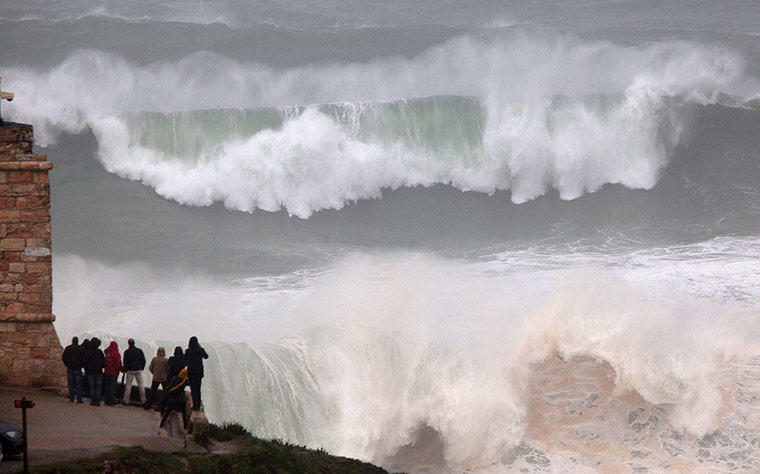
  • Stormy weather batters Europe’s Atlantic coast – in pictures

    Stormy weather batters Europe’s Atlantic coast – in pictures

    It’s not just the UK and US that have been having extreme weather, as these spectacular images from Portugal to Ireland attest
    • Previous image
    • 1 / 13
    • Next image
    People watch waves near Praia do Norte in Nazare, Portugal. Photograph: Pablo Blazquez Dominguez/Getty Images
  • Scott Morrison said yes!

    This clearly shows what people power can achieve. Groups such as GET-UP and CHANGE_ORG are organising petitions over issues that
    people are concerned about and are achieving amazing results.
    They should be fully supported. This is proof that numbers power will work.

    Scott Morrison said yes!

    Inbox
    x
    Paul Toner via GetUp!
    6:21 PM (33 minutes ago)

    to me
    We thought you’d appreciate this quick email from GetUp member, Paul Toner, about a campaign he just won on CommunityRun. Paul is a computer programmer from Ipswich who became the unlikely champion of a campaign to stop the deportation of a man he had never met. Your personal details have not been shared with Paul or anyone else.

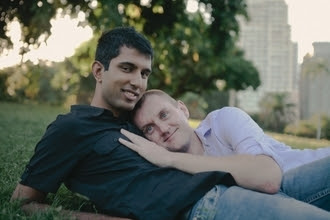
    Ali Choudhry and Matthew Hynd
    Ali Choudhry and Dr Matthew Hynd

    Dear NEVILLE,

    With the support of 140,000 people around the world, I just won my campaign on CommunityRun to stop the deportation of Ali Choudhry and give Ali and his partner Matt their lives back.

    Last Friday, Ali and Matt were facing an uncertain future. I believe that Ali is in a committed, long-term relationship with an Australian man, but he faced the terrifying possibility of being deported to Pakistan – a country where he has never lived as an adult, where he can’t read or write the language and a country where homosexuality is punishable as a criminal offence.

    I could never have imagined how big this campaign would get when I started it just six days ago. My wife heard about Ali and Matt’s story on the radio driving to work and once she told me about it, we both agreed we should do something. I believe that people deserve a chance to be happy, but it seemed to me like Ali and Matt weren’t getting a fair go.

    I did a bit of research online about Ali and Matt’s story and ended up starting a petition on CommunityRun. I posted it on my Facebook wall and thought if it went well, the petition might get a few hundred signatures.

    But in just six days this little petition took on a life of it’s own and helped change Ali and Matt’s lives. Now the ABC has reported that the Department of Immigration have confirmed Ali’s bridging visa. With a bridging visa, Ali and Matt can stay together while they wait for the Migration Review Tribunal to hear Ali’s case.

    This campaign was the biggest and fastest growing CommunityRun petition ever. Together, campaign supporters put pressure on the Minister with over 140,000 signatures, a public delivery to the Immigration Minister, tweets and emails to his office and loads of media stories. That pressure forced the Department to do what they had failed to for months: confirm a bridging visa for Ali allowing him to remain in Australia.

    It still won’t be easy for Ali and Matt. On a bridging visa, Ali can’t work in Australia and the outcome of his appeal is still uncertain. But together we helped prevent Ali’s deportation and gave the couple a chance to be happy.

    CommunityRun exists so that any GetUp member, like you, can start a campaign, just like I did, and change something in their street, their town or across the country. If you see something that isn’t fair or needs to change, you can change it. Through CommunityRun you can start a campaign, connect with people who feel the same way you do and take action together to change things for the better.

    In the past, I’ve signed a CommunityRun petition to stand up for regional journalism and stop jobs being offshored from the Newcastle Herald, the local paper in the town where I grew up. I also signed a petition for a successful campaign to save the Barrett Adolescent Centre. That campaign locked in State government funding for a critical adolescent mental health facility that provides support to hundreds of vulnerable teenagers each year in my local area. Every day, people are using CommunityRun to create fantastic campaigns.

    So what campaign will you run?

    http://www.communityrun.org

    Thanks a lot,

    Paul Toner.


    GetUp is an independent, not-for-profit community campaigning group. We use new technology to empower Australians to have their say on important national issues. We receive no political party or government funding, and every campaign we run is entirely supported by voluntary donations. If you’d like to contribute to help fund GetUp’s work, please donate now! If you have trouble with any links in this email, please go directly to www.getup.org.au. GetUp has recently updated our Privacy Policy, to read the policy go to: www.getup.org.au/about/privacy-policy. .

  • A dose of reality for Australian energy cost estimates Giles Parkinson

    Government economic advisor radically adjusts its energy cost forecasts, with solar and wind costs revised downwards in a big way. It admits that it got the cost of nuclear hopelessly wrong (but still has not recognised the interest, insurance and decommissioning costs).
    Clean Energy Regulator says Australia now has 2 million small scale renewable energy systems – enough to power Perth, Hobart, Darwin and Canberra.
    Yingli, world’s largest solar manufacturer, teams up with coal and nuclear giants as China accelerates push into distributed solar generation.
    Consumption of electricity within the National Electricity Market has fallen for the 5th consecutive calendar year – and fell 2.8 per cent in 2013.
    It’s now officially a requirement in Lancaster, California – all new single-family homes have to come with solar power thanks to Republican mayor Max Parris.
    Electric cars are only as good as their juice.  In coal dominated China, India and Australia, they simply move emissions around the supply chain.

  • Here’s What These Record Low Temperatures Say About Global Warming


    Here’s What These Record Low Temperatures Say About Global Warming

    The Huffington Post  |  By Posted: 01/06/2014 6:20 pm EST  |  Updated: 01/06/2014 7:23 pm EST

    4,939
    408
    202
    1966
    Get Green Newsletters:

    As the frigid polar vortex makes itself at home over a giant swath of the country, it’s also serving as fodder for all those equally unwelcome climate change deniers. Despite the fact that 97 percent of scientists agree that man-made climate change is happening, the likes of Donald Trump say many of these record lows are the perfect proof to show that, no, the planet is not warming. Scientific right?

    So, does this extreme winter weather prove that our planet is just as cold as it’s always been? No, not at all. But it does say this.

    TK gifs
    Dear Mr. Trump: Winter is always cold. And sometimes that means unimaginably cold.

    Despite wind chills nearing -60 degrees Fahrenheit in Chicago and temperatures that left some parts of Canada colder than Mars, Arctic sea ice is still melting, atmospheric CO2 concentrations are still climbing and climate change is predicted to pose a far greater threat to the planet than many scientists thought.

    Winters have become increasingly warmer over the past century, and despite the recent bout of subzero temps, global warming can make extreme weather events like the polar vortex even worse. In layman’s terms, as the planet warms and Arctic sea ice melts, the northern polar region equalizes a bit with temperatures farther south, causing the jet stream that forms a circular band around the northern latitudes to slow down.

    This jet stream usually holds the far colder Arctic air in place with winds in excess of 100 mph, but pockets of cold can escape at times when the stream slows down, according to Time. That’s exactly what’s happened this time around, except the amount of cold that’s leaked past the seal is much larger than usual and has pushed farther south (take a look at this interactive graphic from the Guardian for a better visual).

    Plain and simple, climate change can’t be proven or disproven by a single weather event. Period. Long-term trends have shown that climate change is happening and the IPCC has said it’s “extremely likely” humans are the dominant cause.

    So, although it’s counterintuitive, the current frostbitten state of the country may be further proof that yes, the planet is warming — and climate change is here with a vengeance.

    Related on HuffPost:

    Loading Slideshow...
    • The Chicago Skyline sits as a backdrop as fog drifts across Monroe Harbor with temperatures well below zero and wind chills expected to reach 40 to 50 below, Monday, Jan. 6, 2014, in Chicago. A whirlpool of frigid, dense air known as a “polar vortex” descended Monday into much of the U.S. (AP Photo/Charles Rex Arbogast)
    • A Delta plane is deiced at Chicago Midway International Airport Monday, Jan. 6, 2014, in Chicago. The bitter weather comes after a heavy snowstorm hit much of the region last week. More than 400 flights were cancelled at Chicago’s airports Monday.(AP Photo/Kiichiro Sato)
    • In this Sunday, Jan. 5, 2014 photo provided by the Chicago Zoological Society, Anana, a polar bear at Brookfield Zoo in Brookfield, Ill., seems to be enjoy the snow and frigid temperature blowing through the Chicago area. The zoo was closed Monday, Jan . 6 due to the snowstorm and sub-zero temperatures and plans to reopen Tuesday. It was only the fourth time in Brookfield Zoo’s history dating back to 1934 that it has closed due to severe weather conditions. (AP Photo/Chicago Zoological Society, Jim Schulz)
    • Ice covers rocks and brush on the break wall at Edgewater Park in Cleveland Tuesday, Jan. 7, 2014. An official low of -11 degrees broke the 130-year-old record for the date as cold polar air spread from the Midwest to southern and eastern parts of the U.S. and eastern Canada. (AP Photo/Mark Duncan)
    • Winter Weather KY

      Frost patterns are formed on the ground next to a sewer drain Tuesday, Jan. 7, 2014, in Paducah, Ky. Temperatures were expected to rise into the teens Tuesday during the daylight hours, providing Kentucky with a slight warming trend as brutally cold air still gripped the state for a second day. (AP Photo/Stephen Lance Dennee)

    • People bundle up against the cold, Tuesday, Jan. 7, 2014, in New York. Frigid air that snapped decades-old records will make venturing outside dangerous in southern and eastern parts of the U.S. (AP Photo/Mark Lennihan)
    • Deep Freeze

      A man walks past a snow encrusted bicycle with wind chills nearing minus 30 Fahrenheit on Tuesday, Jan. 7, 2014, in downtown Chicago. Dangerously cold polar air snapped decades-old records as it spread Tuesday from the Midwest to southern and eastern parts of the U.S. and eastern Canada, making it hazardous to venture outside and keeping many schools and businesses closed. (AP Photo/Andrew A. Nelles)

    • Deep Freeze

      Commuters depart from Union Station with wind chills nearing minus 30 Fahrenheit on Tuesday, Jan. 7, 2014, in downtown Chicago. Dangerously cold polar air snapped decades-old records as it spread Tuesday from the Midwest to southern and eastern parts of the U.S. and eastern Canada, making it hazardous to venture outside and keeping many schools and businesses closed. (AP Photo/Andrew A. Nelles)

    • Deep Freeze

      A commuter departs from Union Station with wind chills nearing minus 30 Fahrenheit on Tuesday, Jan. 7, 2014, in downtown Chicago. Dangerously cold polar air snapped decades-old records as it spread Tuesday from the Midwest to southern and eastern parts of the U.S. and eastern Canada, making it hazardous to venture outside and keeping many schools and businesses closed. (AP Photo/Andrew A. Nelles)

    • US-WEATHER-COLD

      A homeless man in a wheelchair sleeps in an alley as temperatures dipped into the single digits Fahrenheit and minus degrees with the wind chill on January 7, 2014 in Washington, DC. A blast of bone-chilling cold reaching lows not seen in two decades gripped the United States early Tuesday, snarling air travel, closing schools and prompting calls for people to stay inside. Superlatives of cold-talk abounded, even in midwestern states used to chest-high snow and bitter cold, as the National Weather Service said the deep freeze was making its way east. AFP PHOTO / Karen BLEIER (Photo credit should read KAREN BLEIER/AFP/Getty Images)

    • US-WEATHER-COLD

      A woman bundled against the cold walks past a homeless man in McPherson Square as temperatures dipped into the single digits Fahrenheit and minus degrees with the wind chill on January 7, 2014 in Washington, DC. A blast of bone-chilling cold reaching lows not seen in two decades gripped the United States early Tuesday, snarling air travel, closing schools and prompting calls for people to stay inside. Superlatives of cold-talk abounded, even in midwestern states used to chest-high snow and bitter cold, as the National Weather Service said the deep freeze was making its way east. AFP PHOTO / Karen BLEIER (Photo credit should read KAREN BLEIER/AFP/Getty Images)

    • Polar Vortex Weather System Brings Artic Temperatures Across Wide Swath Of U.S.

      NEW YORK, NY – JANUARY 07: A woman tries to stay warm against the frigid cold while waiting for a bus in Coney Island in Brooklyn on January 7, 2014 in New York, United States. A Òpolar vortexÓ carrying Arctic air and wind gusts of up to 50 mph has engulfed New York City and much of the Northeast making for life threatening weather conditions. (Photo by Spencer Platt/Getty Images)

    • Steam rises from the tops of buildings in the Chicago skyline Monday, Jan. 6, 2014, as a whirlpool of frigid, dense air known as a “polar vortex” descended on the city. Much of the U.S. has been hit with a dangerous cold that could break decades-old records with wind chill warnings stretching from Montana to Alabama. (AP Photo/Teresa Crawford)
    • Workers clear sidewalks of snow on Fifth Avenue, Friday, Jan. 3, 2014, in New York. New York City public schools were closed Friday after up to 7 inches of snow fell by morning in the first snowstorm of the winter. (AP Photo/John Minchillo)
    • A light dusting of snow from an overnight storm covers the statutes at the Korean War Memorial in Washington early Friday morning Jan. 3, 2014. After a storm blew through the Washington region overnight, roads are being cleared and many schools systems are closed. The federal government and the District of Columbia government will be open Friday, but workers have the option to take leave or telework. (AP Photo/J. David Ake)
    • Snowmen sit in front of the Capitol in Washington, Friday, Jan. 3, 2014, after a winter snow storm in the nation’s capital. After a storm blew through the Washington region overnight, roads are being cleared and many schools systems are closed. The federal government and the District of Columbia government will be open Friday, but workers have the option to take leave or telework. (AP Photo/ Evan Vucci)
    • Bill de Blasio

      New York City Mayor Bill de Blasio talks to reporters while shoveling the sidewalk in front of his house in New York, Friday, Jan. 3, 2014. New York City public schools were closed Friday after up to 7 inches of snow fell by morning in the first snowstorm of the winter – and the first test of new Mayor Bill de Blasio hours after he was sworn in. (AP Photo/Seth Wenig)

    • Men stand in the middle of a snowy street in New York, Friday, Jan. 3, 2014. New York City public schools were closed Friday after up to 7 inches of snow fell by morning in the first snowstorm of the winter – and the first test of new Mayor Bill de Blasio hours after he was sworn in. (AP Photo/Seth Wenig)
    • A man clears snow from a vehicle on Friday, Jan. 3, 2014, in Albany, N.Y. A winter storm slammed into the U.S. Northeast with howling winds and frigid cold, dumping nearly two feet (60 centimeters) of snow in some parts and whipping up blizzard-like conditions Friday. (AP Photo/Mike Groll)
    • Pedestrians brave wind and snow as they cross Fifth Avenue, Friday, Jan. 3, 2014, in New York. New York City public schools were closed Friday after up to 7 inches of snow fell by morning in the first snowstorm of the winter. A winter storm slammed into the U.S. Northeast with howling winds and frigid cold, dumping nearly 2 feet (60 centimeters) of snow in some parts and whipping up blizzard-like conditions Friday. (AP Photo/John Minchillo)
    • Bruce Penland pulls a sled carrying his daughter Jordan on an ice-covered Back Street in Accomac, Va. on Friday, Jan. 3, 2014. The Eastern Shore of Virginia woke to a dusting of snow with icy roads and below freezing temperatures. (AP Photo/Eastern Shore News, Jay Diem) NO SALES
    • A man clears a path in his driveway in Norwell, Mass., Friday, Jan. 3, 2014. A winter storm slammed into the U.S. Northeast with howling winds and frigid cold, dumping nearly 2 feet (60 centimeters) of snow in some parts and whipping up blizzard-like conditions Friday. (AP Photo/Michael Dwyer)
    • Brooke Dolan clears snow on her property in Boxford, Mass. Friday, Jan. 3, 2014, where snow totals of 23 inches were reported. A winter storm that dropped nearly 2 feet of snow just north of Boston, temporarily shut down major highways in New York and Pennsylvania and forced airlines to cancel thousands of flights nationwide menaced the Northeast on Friday with howling winds and dangerously cold temperatures. (AP Photo/Elise Amendola)
    • Danny Kim

      US Postal Service letter carrier Danny Kim clears snow and ice as he climbs on the hood of his mail delivery truck in the parking lot at the U.S. Post Office in Bethesda, Md., Friday, Jan. 3, 2014. Kim said that despite the storm resulting in many closing of local school systems, he and his colleagues were working on an unchanged schedule. A winter storm that swept across the Midwest this week blew through the Northeast and its biggest cities on Friday, producing more than a foot of snow in spots, giving rise to wind gusts that threatened trees and power lines, and leaving bone-chilling cold in its wake. (AP Photo/Charles Dharapak)

    • blizzard

      A man clears a sidewalk in blizzard conditions in Halifax, Nova Scotia, Friday, Jan. 3, 2014. The region is in the grip of unseasonably cold temperatures with heavy snow and high winds. (AP Photo/The Canadian Press,Andrew Vaughan)

    • Wipers, lifted off windshields ahead of the snow storm, protrude from snow covered cars at a car dealership in Bethesda, Md., Friday, Jan. 3, 2014. A winter storm that swept across the Midwest this week blew through the Northeast and its biggest cities on Friday, producing more than a foot of snow in spots, giving rise to wind gusts that threatened trees and power lines, and leaving bone-chilling cold in its wake. (AP Photo/Charles Dharapak)
    • A pedestrians braves the blizzard conditions in Halifax, Nova Scotia, Friday, Jan. 3, 2014. The region is in the grip of unseasonably cold temperatures with heavy snow and high winds. (AP Photo/The Canadian Press, Andrew Vaughan)
    • Cars are covered by snow in rental car parking lot at O’Hare International Airport in Chicago, Thursday, Jan. 2, 2014. Another one to three inches of snow could fall across the Chicago metro area today with even more falling in the southern part of the region, according to the National Weather Service. (AP Photo/Nam Y. Huh)
    • Michelle Kottke

      Michelle Kottke shovels snow with the help of her dog Harlee in Barrington, Ill., Thursday, Jan. 2, 2014. The New Year’s Day snow storm stretched into Thursday for parts of Illinois, bringing double-digit snow totals to the suburbs of Chicago. (AP Photo/Daily Herald, Bob Chwedyk)

    • David Paluch

      David Paluch brushes off snow from his truck in front of his home in Barrington, Ill., Thursday, Jan. 2, 2014. The New Year’s Day snow storm stretched into Thursday for parts of Illinois, bringing double-digit snow totals to the suburbs of Chicago. (AP Photo/Daily Herald, Bob Chwedyk)

    • Mary Davis

      Mary Davis clears snow from her sidewalk in Arlington Heights, Ill., Thursday, Jan. 2, 2014. The New Year’s Day snow storm stretched into Thursday for parts of Illinois, bringing double-digit snow totals to the suburbs of Chicago. (AP Photo/Daily Herald, Bob Chwedyk)

    • A man uses a front end loader to pile up snow at Fullersburg Woods in Oak Brook, Ill., Thursday, Jan. 2, 2014. The New Year’s Day snow storm stretched into Thursday for parts of Illinois, bringing double-digit snow totals to the suburbs of Chicago. (AP Photo/Daily Herald, Bob Chwedyk)
    • A man uses a snowblower to clear his driveway in North Andover, Mass. Thursday, Jan. 2, 2014, as snow continues to fall into the evening. Forecasters have predicted 18-24 inches of snow for some areas north of Boston. (AP Photo/Elise Amendola)
    • Sanitation trucks mounted with snow plows are parked on the west side of Manhattan in New York, Thursday, Jan. 2, 2014. The National Weather Service is forecasting 4 to 8 inches of snow overnight in the city. (AP Photo/Peter Morgan)
    • Snow falls in the Cultural District of downtown Pittsburgh during evening rush hour on Thursday, Jan. 2, 2014. A storm expected to bring more than a foot of snow, stiff winds and punishing cold pushed into the Northeast on Thursday, extending Christmas break for some students while posing the first test for New York’s new mayor and perhaps the last challenge for Boston’s outgoing one. (AP Photo/Gene J. Puskar)
    • Kevin Pokorny

      Kevin Pokorny works on his third house clearing snow for neighbors in Barrington, Ill., Thursday, Jan. 2, 2014. The New Year’s Day snow storm stretched into Thursday for parts of Illinois, bringing double-digit snow totals to the suburbs of Chicago. (AP Photo/Daily Herald, Bob Chwedyk)

    • Jessica Tomasiewicz, Kevin Tomasiewicz

      Jessica Tomasiewicz, left, and her husband Kevin jog in the snow in Mount Prospect, Ill., Thursday, Jan. 2, 2014. The New Year’s Day snow storm stretched into Thursday for parts of Illinois, bringing double-digit snow totals to the suburbs of Chicago. (AP Photo/Daily Herald, Joe Lewnard)

    • Bill Murray

      Bill Murray shovels snow from the sidewalk in front of his wife’s vision care center in Mount Prospect, Ill., Thursday, Jan. 2, 2014. The New Year’s Day snow storm stretched into Thursday for parts of Illinois, bringing double-digit snow totals to the suburbs of Chicago. (AP Photo/Daily Herald, Joe Lewnard)

    • Drivers navigate a snow covered roadway in Lisle, Ill., Thursday, Jan. 2, 2014. The New Year’s Day snow storm stretched into Thursday for parts of Illinois, bringing double-digit snow totals to the suburbs of Chicago. (AP Photo/Daily Herald, Bev Horne)
    • People walk through a cold and snowy Washington Park on Thursday, Jan. 2, 2014, in Albany, N.Y. Up to 5 inches of snow already had fallen in eastern New York by Thursday morning, but the National Weather Service said some areas from Buffalo to Albany could get a total of up to 14 inches by the time the coastal storm moved out Friday morning. (AP Photo/Mike Groll)
    • A commuter stops his car on the snowy road as he checks his wiper blades in Chicago, Thursday, Jan. 2, 2014. Another one to three inches of snow could fall across the Chicago metro area Thursday with even more falling in the southern part of the region, according to the National Weather Service. (AP Photo/Nam Y. Huh)