|
Why this ad?
 Landscape Garden Edging – www.kwikkerb.net.au/Garden-Edging – Make Your Garden Look Amazing. Call Us For Free Onsite Quote!
|
“totally wrong” — Mick Fanning
|
Inbox
|
x |

|
11:53 AM (3 hours ago)
|
|
||
|
||||
 |
|||||||||||||||||||||||||||||||||||||||||||||||||||||||||
|
|||||||||||||||||||||||||||||||||||||||||||||||||||||||||
|
|||||||||||||||||||||||||||||||||||||||||||||||||||||||||
|
|||||||||||||||||||||||||||||||||||||||||||||||||||||||||
|
|||||||||||||||||||||||||||||||||||||||||||||||||||||||||
|
|||||||||||||||||||||||||||||||||||||||||||||||||||||||||
|
|||||||||||||||||||||||||||||||||||||||||||||||||||||||||
|
|||||||||||||||||||||||||||||||||||||||||||||||||||||||||
|
|||||||||||||||||||||||||||||||||||||||||||||||||||||||||
|
|||||||||||||||||||||||||||||||||||||||||||||||||||||||||
|
Why this ad?
Landscape Garden Edging – www.kwikkerb.net.au/Garden-Edging – Make Your Garden Look Amazing. Call Us For Free Onsite Quote!
|
|
Inbox
|
x |
|
11:53 AM (3 hours ago)
|
|
||
|
||||
|
|||||||||||||||||||||||||||||||||||||||||||||||||||||||||
|
|||||||||||||||||||||||||||||||||||||||||||||||||||||||||
|
|||||||||||||||||||||||||||||||||||||||||||||||||||||||||
|
|||||||||||||||||||||||||||||||||||||||||||||||||||||||||
|
|||||||||||||||||||||||||||||||||||||||||||||||||||||||||
|
|||||||||||||||||||||||||||||||||||||||||||||||||||||||||
|
|||||||||||||||||||||||||||||||||||||||||||||||||||||||||
|
|||||||||||||||||||||||||||||||||||||||||||||||||||||||||
|
|||||||||||||||||||||||||||||||||||||||||||||||||||||||||
|
|||||||||||||||||||||||||||||||||||||||||||||||||||||||||
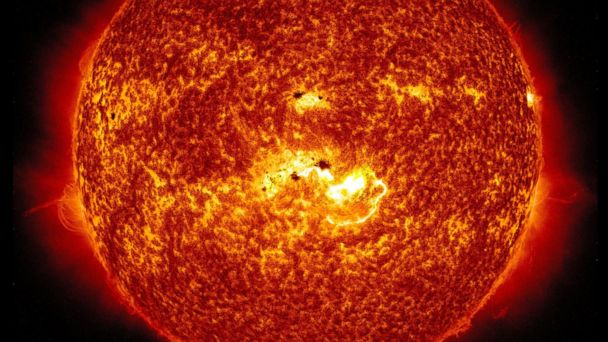
ABC’s Gina Sunseri and Clayton Sandell report:
The solar storm that’s been hurtling a billion tons of material toward our planet at two million miles per hour is now slamming into Earth’s atmosphere, NOAA’s Space Weather Prediction Center tells ABC News.
For the next 24 hours forecasters say a “strong” geomagnetic storm could cause navigation and communication problems for satellites, radio dropouts for ships and planes in polar regions, and might affect GPS navigation systems and satellite radio. Airlines are already avoiding polar routes to keep passengers and crew from elevated levels of radiation.
“It’s significant, but it’s not the mother of all storms,” said NOAA space scientist Joe Kunches. “The good news is that people with GPS in their cars probably won’t see much of an effect.”
Kunches says the aurora will also be seen further south than normal. You can check the map here: http://helios.swpc.noaa.gov/ovation/
Geomagnetic and solar radiation storms are rated like hurricanes, and the geomagnetic storm hitting now is considered an “S-3″, in the middle of the scale, with 5 being the most extreme.
Our planet isn’t out of the woods yet. The area of the Sun where this storm originated 48 hours ago will still be a threat for about another week until it rotates away from Earth, said Kunches.
Polar regions are especially affected. Kunches says that if this storm had occurred during last week’s rescue attempt of researchers stuck in ice near Antarctica, communications would have likely been severely impacted.
05.12.2013
 Click to enlarge. Courtesy: NOAA.
By Jennifer Chu, MIT News
For the past three decades, as the climate has warmed, the massive plates of sea ice in the Arctic Ocean have shrunk: In 2007, scientists observed nearly 50 percent less summer ice than had been seen in 1980.
Dramatic changes in ice cover have, in turn, altered the Arctic ecosystem — particularly in summer months, when ice recedes and sunlight penetrates surface waters, spurring life to grow. Satellite images have captured large blooms of phytoplankton in Arctic regions that were once relatively unproductive. When these organisms die, a small portion of their carbon sinks to the deep ocean, creating a sink, or reservoir, of carbon.
Now researchers at MIT have found that with the loss of sea ice, the Arctic Ocean is becoming more of a carbon sink. The team modeled changes in Arctic sea ice, temperatures, currents, and flow of carbon from 1996 to 2007, and found that the amount of carbon taken up by the Arctic increased by 1 megaton each year.
But the group also observed a somewhat paradoxical effect: A few Arctic regions where waters were warmest were actually less able to store carbon. Instead, these regions — such as the Barents Sea, near Greenland — were a carbon source, emitting carbon dioxide to the atmosphere.
While the Arctic Ocean as a whole remains a carbon sink, MIT principal research scientist Stephanie Dutkiewicz says places like the Barents Sea paint a more complex picture of how the Arctic is changing with global warming.
“People have suggested that the Arctic is having higher productivity, and therefore higher uptake of carbon,” Dutkiewicz says. “What’s nice about this study is, it says that’s not the whole story. We’ve begun to pull apart the actual bits and pieces that are going on.”
A paper by Dutkiewicz and co-authors Mick Follows and Christopher Hill of MIT, Manfredi Manizza of the Scripps Institute of Oceanography, and Dimitris Menemenlis of NASA’s Jet Propulsion Laboratory is published in the journal Global Biogeochemical Cycles.
The cycling of carbon in the oceans is relatively straightforward: As organisms like phytoplankton grow in surface waters, they absorb sunlight and carbon dioxide from the atmosphere. Through photosynthesis, carbon dioxide builds cell walls and other structures; when organisms die, some portion of the plankton sink as organic carbon to the deep ocean. Over time, bacteria eat away at the detritus, converting it back into carbon dioxide that, when stirred up by ocean currents, can escape into the atmosphere. The MIT group developed a model to trace the flow of carbon in the Arctic, looking at conditions in which carbon was either stored or released from the ocean. To do this, the researchers combined three models: a physical model that integrates temperature and salinity data, along with the direction of currents in a region; a sea ice model that estimates ice growth and shrinkage from year to year; and a biogeochemistry model, which simulates the flow of nutrients and carbon, given the parameters of the other two models. The researchers modeled the changing Arctic between 1996 and 2007 and found that the ocean stored, on average, about 58 megatons of carbon each year — a figure that increased by an average of 1 megaton annually over this time period. These numbers, Dutkiewicz says, are not surprising, as the Arctic has long been known to be a carbon sink. The group’s results confirm a widely held theory: With less sea ice, more organisms grow, eventually creating a bigger carbon sink.
However, one finding from the group muddies this seemingly linear relationship. Manizza found a discrepancy between 2005 and 2007, the most severe periods of sea ice shrinkage. While the Arctic lost more ice cover in 2007 than in 2005, less carbon was taken up by the ocean in 2007 — an unexpected finding, in light of the theory that less sea ice leads to more carbon stored. Manizza traced the discrepancy to the Greenland and Barents seas, regions of the Arctic Ocean that take in warmer waters from the Atlantic. (In warmer environments, carbon is less soluble in seawater.) Manizza observed this scenario in the Barents Sea in 2007, when warmer temperatures caused more carbon dioxide to be released than stored. The results point to a subtle balance: An ocean’s carbon flow depends on both water temperature and biological activity. In warmer waters, carbon is more likely to be expelled into the atmosphere; in waters with more biological growth — for example, due to less sea ice — carbon is more likely to be stored in ocean organisms. In short, while the Arctic Ocean as a whole seems to be storing more carbon than in previous years, the increase in the carbon sink may not be as large as scientists had previously thought.“The Arctic is special in that it’s certainly a place where we see changes happening faster than anywhere else,” Dutkiewicz says. “Because of that, there are bigger changes in the sea ice and biology, and therefore possibly to the carbon sink.”Manizza adds that while the remoteness of the Arctic makes it difficult for scientists to obtain accurate measurements, more data from this region “can both inform us about the change in the polar area and make our models highly reliable for policymaking decisions.” This research was supported by the National Science Foundation and the National Oceanic and Atmospheric Administration.
The rapid recent decline of Arctic Ocean sea ice area increases the flux of solar radiation available for primary production and the area of open water for air-sea gas exchange. We use a regional physical-biogeochemical model of the Arctic Ocean, forced by the National Centers for Environmental Prediction/National Center for Atmospheric Research atmospheric reanalysis, to evaluate the mean present-day CO2 sink and its temporal evolution. During the 1996–2007 period, the model suggests that the Arctic average sea surface temperature warmed by 0.04°C a−1, that sea ice area decreased by ∼0.1 × 10⁶ km2 a−1, and that the biological drawdown of dissolved inorganic carbon increased. The simulated 1996–2007 time-mean Arctic Ocean CO2 sink is 58 ± 6 Tg C a−1. The increase in ice-free ocean area and consequent carbon drawdown during this period enhances the CO2 sink by ∼1.4 Tg C a−1, consistent with estimates based on extrapolations of sparse data. A regional analysis suggests that during the 1996–2007 period, the shelf regions of the Laptev, East Siberian, Chukchi, and Beaufort Seas experienced an increase in the efficiency of their biological pump due to decreased sea ice area, especially during the 2004–2007 period, consistent with independently published estimates of primary production. In contrast, the CO2 sink in the Barents Sea is reduced during the 2004–2007 period due to a dominant control by warming and decreasing solubility. Thus, the effect of decreasing sea ice area and increasing sea surface temperature partially cancel, though the former is dominant.
“Changes in the Arctic Ocean CO2 sink (1996–2007): A regional model analysis” by M. Manizza, M. J. Follows, S. Dutkiewicz, D. Menemenlis, C. N. Hill R. M. Key published in Global Biogeochemical Cycles
DOI: 10.1002/2012GB004491
Read abstract and get paper here.
This report based on a story from MIT News here.
|
Why this ad?
Antarctica From AU$4,700 – chimuadventures.com – Early Bird Specials Available Now. Book Now And Get Up To 25% Off!
|
|
Inbox
|
x |
|
10:15 AM (3 minutes ago)
|
|
||
|
||||
New post on The Tally Room |
 |
 |
Elections in 2014 – South Australia and beyondby Ben Raue |
After the Christmas break, the Tally Room is back – and starting the new year by covering the South Australian state election, to be held in March.
I have started work on the Tally Room guide to the SA election, with profiles of sixteen key electorates now posted. Click on the links below to click through to the electorate profiles.
You can also click on the most recent electorate profiles in the box on the right-hand side of the website, as well as going through to the full lists of electorates.
I’ll be featuring one electorate on the front page of the website (as well as on the Tally Room’s Facebook and Twitter channels) starting next Monday.
If you’re interested, please go through and start reading now. The first ten comments have already been posted on various electorate pages.
I will also be covering the Griffith federal by-election, due to be held on February 8, and the Redcliffe state by-election whenever that is held. The conversation will continue on both of those by-election profiles.
The Tasmanian state election is expected to be held at the same time as the South Australian election on March 15, and I will be doing a full guide to that election as well.
We are expecting a statewide Senate by-election in Western Australia later this year, if the Court of Disputed Returns throw out the result of that state’s 2013 half-Senate election.
Also this year we are expecting a general election in New Zealand later this year, a state election in Victoria in November, and elections for two seats in the Tasmanian Legislative Council in May, and I plan to cover all three.
I hope you’ll join me for the ride.
|
Why this ad?
Charitable Donations – www.caritas.org.au/donate – Help end poverty so the world’s poor don’t need to rely on charity.
|
|
Inbox
|
x |
|
8:08 AM (1 hour ago)
|
|
||
|
||||
|
Dear Friend,
Since you’re the type of person who believes no child should be left without an education, we’re writing to you with an important update on the crisis of Syrian refugee children. Back in September, A World at School delivered a petition at the United Nations calling on world leaders to provide education for nearly 400,000 Syrian children exiled in Lebanon.
Since then, leaders have developed a plan to deliver education in the worst refugee crisis since World War II. The plan is now ready to go and on Wednesday, major international donors will be asked to pledge their support for humanitarian relief to help victims of the Syrian conflict.
Now we need you to send a message to the international donor community to make the plan reality and get these children back to school.
Join our Thunderclap this Tuesday to call for swift action.
It can be done. Public support has put the issue on the table and pressure is growing for immediate action. We need you to remind the world’s leaders why they have to do something NOW.
We cannot let up. More than 5,000 young people are fleeing the conflict each week into Lebanon alone. Without education they face becoming a lost generation.
Click here and help make A World at School a reality for Syrian children.
PS: Join the Youth Education Crisis Committee Google Hangout this January 15 to learn more about how to create
And it means no to the silly idea I saw recently of amalgamating and reducing the number of Councils in Melbourne or Sydney. Larger Councils have increased the distance between Councillors and ratepayers, and even larger Councils will only increase the distance still further, leading to ever-more alienated and dis-satisfied citizens.