Author: Neville

  • Geoengineering could bring severe drought to the tropics, research shows

    Geoengineering could bring severe drought to the tropics, research shows

    Study models impact on global rainfall when artificial volcanic eruptions are created in a bid to reverse climate change
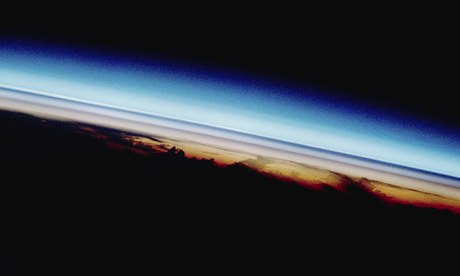
    Layers of Volcanic Dust in the Earth's Atmosphere following eruption of Mount Pinatubo, Philippines

    A view from the space shuttle Atlantis of three layers of volcanic dust in the Earth’s atmosphere, following the 1991 eruption of Mount Pinatubo in the Philippines. Photograph: ISS/NASA/Corbis

    Reversing climate change via huge artificial volcanic eruptions could bring severe droughts to large regions of the tropics, according to new scientific research.

    The controversial idea of geoengineering – deliberately changing the Earth’s climate – is being seriously discussed as a last-ditch way of avoiding dangerous global warming if efforts to slash greenhouse gas emissions fail.

    But the new work shows that a leading contender – pumping sulphate particles into the stratosphere to block sunlight – could have side-effects just as serious as the effects of warming itself. Furthermore, the impacts would be different around the world, raising the prospect of conflicts between nations that might benefit and those suffering more damage.

    “There are a lot of issues regarding governance – who controls the thermostat – because the impacts of geoengineering will not be uniform everywhere,” said Dr Andrew Charlton-Perez, at the University of Reading and a member of the research team.

    The study, published in the journal Environmental Research Letters, is the first to convincingly model what happens to rainfall if sulphates were deployed on a huge scale.

    While the computer models showed that big temperature rises could be completely avoided, it also showed cuts in rain of up to one-third in South America, Asia and Africa. The consequent droughts would affect billions of people and also fragile tropical rainforests that act as a major store of carbon. “We would see changes happening so quickly that there would be little time for people to adapt,” said Charlton-Perez.

    Another member of the research team, Professor Ellie Highwood, said: “On the evidence of this research, stratospheric aerosol geoengineering is not providing world leaders with any easy answers to the problem of climate change.”

    The study considered what would happen if carbon dioxide levels quadrupled in the atmosphere – the sort of extreme situation in which geoengineering might be seriously considered. Without intervention, temperatures rose by 4C, far above the 2C level considered dangerous by the world’s governments.

    But the temperature rise was reduced to zero if a massive geoengineering effort took place. The 60m tonnes of sulphur dioxide pumped into the stratosphere each year in the simulation is equivalent to five volcanic eruptions, each on the scale of Mount Pinatubo, the huge 1991 eruption in the Philippines that cut global temperatures by about 0.5C in the following year or two.

    The sulphate particles in the model not only reflected incoming sunlight, cutting temperatures, but also absorbed heat rising up from the Earth’s surface. This reduced the temperature difference between the lower and upper atmosphere, which is the engine that drives cloud formation and rainfall. The reduction in rainfall seen in the geoengineering model was as big as the increase in rainfall projected if global warming was unabated.

    Dr Matthew Watson, a researcher at the University of Bristol and advocate of further research into geoengineering, said: “The researchers chose an extreme climate scenario so we should not be surprised if that, and any geoengineering attempt to counter it, had severe and uneven impacts.”

    He added: “It remains the case that our only guaranteed way forward is to reduce the record levels of greenhouse gases we continue to pump into the atmosphere. It’s vital that scientists continue researching geoengineering; but no government serious about climate change should should see this as a quick fix

  • We desperately need to predict what climate change is doing to UK rainfall Recent floods can’t be directly attributed to global warming but it’s still vital we refine our projections of what the future holds Share Tweet this Email The River Wye broke its banks in Byfleet in Surrey after heavy rainfall in December. The River Wye broke its banks in Byfleet in Surrey after heavy rainfall in December. Photograph: FACUNDO ARRIZABALAGA/EPA The devastation caused by intense rainfall events and associated flooding of properties over Christmas and the new year must have been dreadful for those affected. So the very last thing that needs to be heard at the moment is a set of pompous statements implying this might be due to manmade climate change. What would this achieve? Nobody wants to hear the message “it’s your fault”, and it is almost certainly not completely true anyway. At the same time, we do know that the composition of the atmosphere is changing, and predominantly with a ramping-up of carbon dioxide. The resulting warming will adjust the patterns of surface temperatures of the oceans, and change the yearly extent of sea-ice nearer the Earth’s poles. Many detailed simulations are starting to confirm that this then affects storm directions and rainfall patterns in the UK. It is correct to state, almost as a mantra, that no single period of storm events can be attributed to climate change. There always have been extreme intense rainfall occurrences and there always have been floods. What the meteorological research community is working hard to determine is the amount to which their frequency is changing. To answer this, there is continuous assessment of all available archived weather measurements. In parallel, an additional analysis is made using the best available weather forecast models, but artificially driving these computer models with different prescribed atmospheric carbon dioxide levels. What patterns then emerge from such a set of computer simulations when forced with past carbon dioxide concentrations? Do they tally with measurements? Once we see agreement for decades past, we can trust the same models far more to predict the future, corresponding to higher carbon dioxide measurements than present. Surprisingly, there is reason to believe that for some parts of the world, extreme events are starting to occur less often. There is real hope in the UK that the combination of the advanced Met Office climate models, assessed in collaboration with our research centres and key university departments, are starting to make rigorous assessments of expected change. In particular, by supplying refined estimates for how the probabilities of major storm events happening might change over the coming decades. That information will be critical for adaptation planning, including how to make our infrastructure more robust. Hence there is a pressure too on those who undertake ‘impacts calculations’ – for a given rainfall strength and duration, what are the consequences for safety, property and transport? Can we further improve estimates of soil moisture, river flow response and risk of landslides? There is a compelling argument that even should expected frequency changes be relatively small, there is still a duty to protect society as best as possible from the impacts of peaks in rainfall. With population growth and much more travel by society, inevitably larger numbers of people will be affected by extreme weather. It feels as if these days, people now just switch off when hearing any discussion of climate change and its implications. There are many reasons for this, and some are no doubt very valid. There was a period of time when even researchers working in this scientific area felt there was an over-emphasis on the concern, and to which a backlash would occur. But it is still worth remembering that even with the current “lull” in warming, averaged at the decadal timescale, the last decade has been the warmest on record. Unfortunately there is compelling evidence such warming will start to climb again and most likely will change the hydrological cycle. Hence there remains a desperate need for refinement of projections as to how rainfall patterns might evolve in to the future. It is this knowledge that will enable society to have a calm and considered discussion, allowing the UK and elsewhere to plan ahead. Such planning will need to optimise available adaptation funds, in a way to maximise safety and resilience should the weather events witnessed over recent weeks become more commonplace. • Dr Chris Huntingford is a climate modeller at the UK Centre for Ecology and Hydrology

    We d

    We desperately need to predict what climate change is doing to UK rainfall

    Recent floods can’t be directly attributed to global warming but it’s still vital we refine our projections of what the future holds

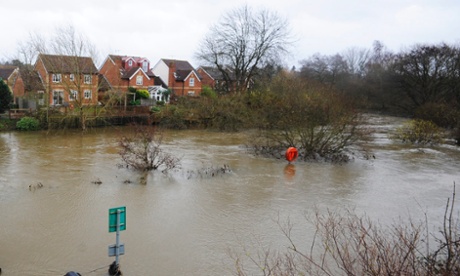
    The River Wye broke its banks in Byfleet in Surrey after heavy rainfall in December.
    The River Wye broke its banks in Byfleet in Surrey after heavy rainfall in December. Photograph: FACUNDO ARRIZABALAGA/EPA

    The devastation caused by intense rainfall events and associated flooding of properties over Christmas and the new year must have been dreadful for those affected.

    So the very last thing that needs to be heard at the moment is a set of pompous statements implying this might be due to manmade climate change. What would this achieve? Nobody wants to hear the message “it’s your fault”, and it is almost certainly not completely true anyway.

    At the same time, we do know that the composition of the atmosphere is changing, and predominantly with a ramping-up of carbon dioxide. The resulting warming will adjust the patterns of surface temperatures of the oceans, and change the yearly extent of sea-ice nearer the Earth’s poles. Many detailed simulations are starting to confirm that this then affects storm directions and rainfall patterns in the UK.

    It is correct to state, almost as a mantra, that no single period of storm events can be attributed to climate change. There always have been extreme intense rainfall occurrences and there always have been floods.

    What the meteorological research community is working hard to determine is the amount to which their frequency is changing. To answer this, there is continuous assessment of all available archived weather measurements. In parallel, an additional analysis is made using the best available weather forecast models, but artificially driving these computer models with different prescribed atmospheric carbon dioxide levels.

    What patterns then emerge from such a set of computer simulations when forced with past carbon dioxide concentrations? Do they tally with measurements? Once we see agreement for decades past, we can trust the same models far more to predict the future, corresponding to higher carbon dioxide measurements than present. Surprisingly, there is reason to believe that for some parts of the world, extreme events are starting to occur less often.

    There is real hope in the UK that the combination of the advanced Met Office climate models, assessed in collaboration with our research centres and key university departments, are starting to make rigorous assessments of expected change. In particular, by supplying refined estimates for how the probabilities of major storm events happening might change over the coming decades. That information will be critical for adaptation planning, including how to make our infrastructure more robust.

    Hence there is a pressure too on those who undertake ‘impacts calculations’ – for a given rainfall strength and duration, what are the consequences for safety, property and transport? Can we further improve estimates of soil moisture, river flow response and risk of landslides? There is a compelling argument that even should expected frequency changes be relatively small, there is still a duty to protect society as best as possible from the impacts of peaks in rainfall. With population growth and much more travel by society, inevitably larger numbers of people will be affected by extreme weather.

    It feels as if these days, people now just switch off when hearing any discussion of climate change and its implications. There are many reasons for this, and some are no doubt very valid.

    There was a period of time when even researchers working in this scientific area felt there was an over-emphasis on the concern, and to which a backlash would occur. But it is still worth remembering that even with the current “lull” in warming, averaged at the decadal timescale, the last decade has been the warmest on record.

    Unfortunately there is compelling evidence such warming will start to climb again and most likely will change the hydrological cycle. Hence there remains a desperate need for refinement of projections as to how rainfall patterns might evolve in to the future.

    It is this knowledge that will enable society to have a calm and considered discussion, allowing the UK and elsewhere to plan ahead. Such planning will need to optimise available adaptation funds, in a way to maximise safety and resilience should the weather events witnessed over recent weeks become more commonplace.

    • Dr Chris Huntingford is a climate modeller at the UK Centre for Ecology and Hydrology

    Recent floods can’t be directly attributed to global warming but it’s still vital we refine our projections of what the future holds

    The River Wye broke its banks in Byfleet in Surrey after heavy rainfall in December.
    The River Wye broke its banks in Byfleet in Surrey after heavy rainfall in December. Photograph: FACUNDO ARRIZABALAGA/EPA

    The devastation caused by intense rainfall events and associated flooding of properties over Christmas and the new year must have been dreadful for those affected.

    So the very last thing that needs to be heard at the moment is a set of pompous statements implying this might be due to manmade climate change. What would this achieve? Nobody wants to hear the message “it’s your fault”, and it is almost certainly not completely true anyway.

    At the same time, we do know that the composition of the atmosphere is changing, and predominantly with a ramping-up of carbon dioxide. The resulting warming will adjust the patterns of surface temperatures of the oceans, and change the yearly extent of sea-ice nearer the Earth’s poles. Many detailed simulations are starting to confirm that this then affects storm directions and rainfall patterns in the UK.

    It is correct to state, almost as a mantra, that no single period of storm events can be attributed to climate change. There always have been extreme intense rainfall occurrences and there always have been floods.

    What the meteorological research community is working hard to determine is the amount to which their frequency is changing. To answer this, there is continuous assessment of all available archived weather measurements. In parallel, an additional analysis is made using the best available weather forecast models, but artificially driving these computer models with different prescribed atmospheric carbon dioxide levels.

    What patterns then emerge from such a set of computer simulations when forced with past carbon dioxide concentrations? Do they tally with measurements? Once we see agreement for decades past, we can trust the same models far more to predict the future, corresponding to higher carbon dioxide measurements than present. Surprisingly, there is reason to believe that for some parts of the world, extreme events are starting to occur less often.

    There is real hope in the UK that the combination of the advanced Met Office climate models, assessed in collaboration with our research centres and key university departments, are starting to make rigorous assessments of expected change. In particular, by supplying refined estimates for how the probabilities of major storm events happening might change over the coming decades. That information will be critical for adaptation planning, including how to make our infrastructure more robust.

    Hence there is a pressure too on those who undertake ‘impacts calculations’ – for a given rainfall strength and duration, what are the consequences for safety, property and transport? Can we further improve estimates of soil moisture, river flow response and risk of landslides? There is a compelling argument that even should expected frequency changes be relatively small, there is still a duty to protect society as best as possible from the impacts of peaks in rainfall. With population growth and much more travel by society, inevitably larger numbers of people will be affected by extreme weather.

    It feels as if these days, people now just switch off when hearing any discussion of climate change and its implications. There are many reasons for this, and some are no doubt very valid.

    There was a period of time when even researchers working in this scientific area felt there was an over-emphasis on the concern, and to which a backlash would occur. But it is still worth remembering that even with the current “lull” in warming, averaged at the decadal timescale, the last decade has been the warmest on record.

    Unfortunately there is compelling evidence such warming will start to climb again and most likely will change the hydrological cycle. Hence there remains a desperate need for refinement of projections as to how rainfall patterns might evolve in to the future.

    It is this knowledge that will enable society to have a calm and considered discussion, allowing the UK and elsewhere to plan ahead. Such planning will need to optimise available adaptation funds, in a way to maximise safety and resilience should the weather events witnessed over recent weeks become more commonplace.

    • Dr Chris Huntingford is a climate modeller at the UK Centre for Ecology and Hydrology

  • Two-millionth small-scale renewable unit installed

    Two-millionth small-scale renewable unit installed

    By a staff reporter

    Australians have now installed more than two million small-scale renewable energy systems, the Clean Energy Regulator has confirmed.

    The regulator said that small-scale systems, assisted by falling system costs and coupled with financial incentives derived from the Renewable Energy Target, had become “more and more affordable” for everyday Australians

    “This comes only eight months after reaching one million rooftop solar installations, providing a strong indication that investment in small-scale renewable energy continues to flourish in Australia,” the regulator said.

    The regulator estimates the two million small-scale installations have a capacity to generate or displace approximately 6882 gigawatt hours of electricity annually, with 4182 gigawatt hours generated from small-scale solar, wind and hydro installations and a further 2700 gigawatt hours displaced by solar hot water systems and air source heat pumps.

    This equates to the amount of electricity required to power approximately 1.04 million Australian homes for a year, the CER said, enough to power all Perth, Hobart, Darwin and Canberra households combined.

  • Organic Mega Flow Battery Promises Breakthrough for Renewable Energy

    Science News

    … from universities, journals, and other research organizations

    Organic Mega Flow Battery Promises Breakthrough for Renewable Energy

    Jan. 8, 2014 — A team of Harvard scientists and engineers has demonstrated a new type of battery that could fundamentally transform the way electricity is stored on the grid, making power from renewable energy sources such as wind and solar far more economical and reliable.


    Share This:

    The novel battery technology is reported in a paper published in Nature on January 9. Under the OPEN 2012 program, the Harvard team received funding from the U.S. Department of Energy’s Advanced Research Projects Agency-Energy (ARPA-E) to develop the innovative grid-scale battery and plans to work with ARPA-E to catalyze further technological and market breakthroughs over the next several years.

    The paper reports a metal-free flow battery that relies on the electrochemistry of naturally abundant, inexpensive, small organic (carbon-based) molecules called quinones, which are similar to molecules that store energy in plants and animals.

    The mismatch between the availability of intermittent wind or sunshine and the variability of demand is the biggest obstacle to getting a large fraction of our electricity from renewable sources. A cost-effective means of storing large amounts of electrical energy could solve this problem.

    The battery was designed, built, and tested in the laboratory of Michael J. Aziz, Gene and Tracy Sykes Professor of Materials and Energy Technologies at the Harvard School of Engineering and Applied Sciences (SEAS). Roy G. Gordon, Thomas Dudley Cabot Professor of Chemistry and Professor of Materials Science, led the work on the synthesis and chemical screening of molecules. Alán Aspuru-Guzik, Professor of Chemistry and Chemical Biology, used his pioneering high-throughput molecular screening methods to calculate the properties of more than 10,000 quinone molecules in search of the best candidates for the battery.

    Flow batteries store energy in chemical fluids contained in external tanks — as with fuel cells — instead of within the battery container itself. The two main components — the electrochemical conversion hardware through which the fluids are flowed (which sets the peak power capacity), and the chemical storage tanks (which set the energy capacity) — may be independently sized. Thus the amount of energy that can be stored is limited only by the size of the tanks. The design permits larger amounts of energy to be stored at lower cost than with traditional batteries.

    By contrast, in solid-electrode batteries, such as those commonly found in cars and mobile devices, the power conversion hardware and energy capacity are packaged together in one unit and cannot be decoupled. Consequently they can maintain peak discharge power for less than an hour before being drained, and are therefore ill suited to store intermittent renewables.

    “Our studies indicate that one to two days’ worth of storage is required for making solar and wind dispatchable through the electrical grid,” said Aziz.

    To store 50 hours of energy from a 1-megawatt power capacity wind turbine (50 megawatt-hours), for example, a possible solution would be to buy traditional batteries with 50 megawatt-hours of energy storage, but they’d come with 50 megawatts of power capacity. Paying for 50 megawatts of power capacity when only 1 megawatt is necessary makes little economic sense.

    For this reason, a growing number of engineers have focused their attention on flow battery technology. But until now, flow batteries have relied on chemicals that are expensive or difficult to maintain, driving up the energy storage costs.

    The active components of electrolytes in most flow batteries have been metals. Vanadium is used in the most commercially advanced flow battery technology now in development, but its cost sets a rather high floor on the cost per kilowatt-hour at any scale. Other flow batteries contain precious metal electrocatalysts such as the platinum used in fuel cells.

    The new flow battery developed by the Harvard team already performs as well as vanadium flow batteries, with chemicals that are significantly less expensive, and with no precious metal electrocatalyst.

    “The whole world of electricity storage has been using metal ions in various charge states but there is a limited number that you can put into solution and use to store energy, and none of them can economically store massive amounts of renewable energy,” Gordon said. “With organic molecules, we introduce a vast new set of possibilities. Some of them will be terrible and some will be really good. With these quinones we have the first ones that look really good.”

    Aspuru-Guzik noted that the project is very well aligned with the White House Materials Genome Initiative. “This project illustrates what the synergy of high-throughput quantum chemistry and experimental insight can do,” he said. “In a very quick time period, our team honed in to the right molecule. Computational screening, together with experimentation, can lead to discovery of new materials in many application domains.”

    Quinones are abundant in crude oil as well as in green plants. The molecule that the Harvard team used in its first quinone-based flow battery is almost identical to one found in rhubarb. The quinones are dissolved in water, which prevents them from catching fire.

    To back up a commercial wind turbine, a large storage tank would be needed, possibly located in a below-grade basement, said co-lead author Michael Marshak, a postdoctoral fellow at SEAS and in the Department of Chemistry and Chemical Biology. Or if you had a whole field of turbines or large solar farm, you could imagine a few very large storage tanks.

    The same technology could also have applications at the consumer level, Marshak said. “Imagine a device the size of a home heating oil tank sitting in your basement. It would store a day’s worth of sunshine from the solar panels on the roof of your house, potentially providing enough to power your household from late afternoon, through the night, into the next morning, without burning any fossil fuels.”

    “The Harvard team’s results published in Nature demonstrate an early, yet important technical achievement that could be critical in furthering the development of grid-scale batteries,” said ARPA-E Program Director John Lemmon. “The project team’s result is an excellent example of how a small amount of catalytic funding from ARPA-E can help build the foundation to hopefully turn scientific discoveries into low-cost, early-stage energy technologies.”

    Team leader Aziz said the next steps in the project will be to further test and optimize the system that has been demonstrated on the bench top and bring it toward a commercial scale. “So far, we’ve seen no sign of degradation after more than 100 cycles, but commercial applications require thousands of cycles,” he said. He also expects to achieve significant improvements in the underlying chemistry of the battery system. “I think the chemistry we have right now might be the best that’s out there for stationary storage and quite possibly cheap enough to make it in the marketplace,” he said. “But we have ideas that could lead to huge improvements.”

    By the end of the three-year development period, Connecticut-based Sustainable Innovations, LLC, a collaborator on the project, expects to deploy demonstration versions of the organic flow battery contained in a unit the size of a horse trailer. The portable, scaled-up storage system could be hooked up to solar panels on the roof of a commercial building, and electricity from the solar panels could either directly supply the needs of the building or go into storage and come out of storage when there’s a need. Sustainable Innovations anticipates playing a key role in the product’s commercialization by leveraging its ultra-low cost electrochemical cell design and system architecture already under development for energy storage applications.

    “You could theoretically put this on any node on the grid,” Aziz said. “If the market price fluctuates enough, you could put a storage device there and buy electricity to store it when the price is low and then sell it back when the price is high. In addition, you might be able to avoid the permitting and gas supply problems of having to build a gas-fired power plant just to meet the occasional needs of a growing peak demand.”

    This technology could also provide very useful backup for off-grid rooftop solar panels — an important advantage considering some 20 percent of the world’s population does not have access to a power distribution network.

    William Hogan, Raymond Plank Professor of Global Energy Policy at Harvard Kennedy School, and one of the world’s foremost experts on electricity markets, is helping the team explore the economic drivers for the technology.

    Trent M. Molter, President and CEO of Sustainable Innovations, LLC, provides expertise on implementing the Harvard team’s technology into commercial electrochemical systems.

    “The intermittent renewables storage problem is the biggest barrier to getting most of our power from the sun and the wind,” Aziz said. “A safe and economical flow battery could play a huge role in our transition off fossil fuels to renewable electricity. I’m excited that we have a good shot at it.”

    In addition to Aziz, Marshak, Aspuru-Guzik, and Gordon, the co-lead author of the Nature paper was Brian Huskinson, a graduate student with Aziz; coauthors included research associate Changwon Suh and postdoctoral researcher Süleyman Er in Aspuru-Guzik’s group; Michael Gerhardt, a graduate student with Aziz; Cooper Galvin, a Pomona College undergraduate; and Xudong Chen, a postdoctoral fellow in Gordon’s group.

    This work was supported in part by the U.S. Department of Energy’s Advanced Research Project Agency-Energy (ARPA-E), the Harvard School of Engineering and Applied Sciences, the National Science Foundation (NSF) Extreme Science and Engineering Discovery Environment (OCI-1053575), an NSF Graduate Research Fellowship, and the Fellowships for Young Energy Scientists program of the Foundation for Fundamental Research on Matter, which is part of the Netherlands Organization for Scientific Research (NWO).

    S

  • Jumping Snails Left Grounded in Future Oceans

    Science News

    … from universities, journals, and other research organizations

    Jumping Snails Left Grounded in Future Oceans

    Jan. 7, 2014 — Sea snails that leap to escape their predators may soon lose their extraordinary jumping ability because of rising human carbon dioxide emissions, a team of international scientists has discovered.


    Share This:

    Lead author of the study published today, Dr Sue-Ann Watson from the ARC Centre of Excellence for Coral Reef Studies (Coral CoE) and James Cook University observed that the conch snail, which uses a strong foot to leap away from approaching predators, either stops jumping, or takes longer to jump, when exposed to the levels of carbon dioxide projected for the end of this century.

    Dr Watson explains that increased carbon dioxide and ocean acidification levels disrupt a particular neurotransmitter receptor in the snail’s nervous system, delaying vital decision-making on escape. This leaves the snail more vulnerable to the poisonous dart of its slow-moving nemesis, the marbled cone shell.

    The effects may be quite profound. “Altered behaviours between predators and prey have the potential to disrupt ocean food webs,” Dr Watson said.

    While this study shows that disrupted decision-making with elevated carbon dioxide levels can occur in marine invertebrates, scientists have also observed similar effects before, in fish.

    Co-author Professor Göran Nilsson, from the University of Oslo, explains, “this neurotransmitter receptor is common in many animals and evolved quite early in the animal kingdom. So what this study suggests is that human carbon dioxide emissions directly alter the behaviour of many marine animals, including much of the seafood that is part of the human diet.”

    Professor Philip Munday, from the Coral CoE, says past studies on the effects of ocean acidification on animals mostly focused on what would happen to the shells of marine snails and other calcifying animals — how could shells be built and maintained in a more acidic environment? This study shows that they actually face the dual threat of both weaker shells and impaired behaviour.

    Professor Munday says it is critical to study and understand more about the extent of these behavioural disturbances. The big question now, he adds, is whether sea creatures can adapt fast enough to keep up with the rapid pace of rising carbon dioxide levels and ocean acidification.

    The article Marine mollusc predator-escape behaviour altered by near-future carbon dioxide levels by Sue-Ann Watson, Sjannie Lefevre, Mark I. McCormick, Paolo Domenici, Göran E. Nilsson and Philip L. Munday appears in Proceedings of the Royal Society B: Biological Sciences.


  • Weather Bureau launches heatwave forecast

    Weather Bureau launches heatwave forecast

    Updated 2 hours 46 minutes ago

    The Bureau of Meteorology hopes a new heatwave forecast service will help people better plan for the impacts of extreme heat events.

    The heatwave forecast will map areas across Australia that are expected to have unusually hot conditions over a period of four days.

    It will define three grades of heatwave, with severe and extreme heatwave posing the most serious risk to people and infrastructure.

    Assistant director of the Bureau’s weather services Alasdair Hainsworth says the pilot service will compliment current forecasts and help reduce the human and economic impact of heatwaves.

    “The heatwave service provides a measure of the build-up of ‘excess’ heat and will provide a more advanced indicator than temperature alone in anticipating the impact of heat stress,” he says.

    “The pilot service uses a heatwave intensity index that assesses the build up of heat over a period of time, taking into account the long-term climate of a location and the maximum and minimum temperatures leading up to a heatwave event.”


    Dangers of heatwaves


    Heatwaves are described by emergency agencies as the ‘silent killer’ as they can adversely affect the health of vulnerable people.

    The Bureau of Meteorology says severe and extreme heatwaves have taken more Australian lives than any other natural hazard in the last 200 years.

    Agencies advise people to check on the young and elderly during heatwaves, as the extreme temperatures can cause significant stress and aggravate existing conditions.

    Outdoor workers, athletes and the homeless are also considered to be particularly vulnerable during heatwaves.

    Defining heatwaves

    The service’s launch is the first time the Bureau has provided a national definition of a heatwave.

    A heatwave is now defined by three days or more of high maximum and minimum temperatures that is unusual for a location.

    At the conclusion of summer, the Bureau of Meteorology will evaluate the accuracy of the heatwave forecast maps and work with the health and emergency services sector on developing a heatwave warning system.

    More about Heatwaves