Author: Neville

  • Stop the dolphin massacre AVAAZ

    Stop the dolphin massacre

    Inbox
    x
    Zoe Massey – with Avaaz
    3:33 PM (4 hours ago)

    to me
    Dear friends in the Avaaz Community,

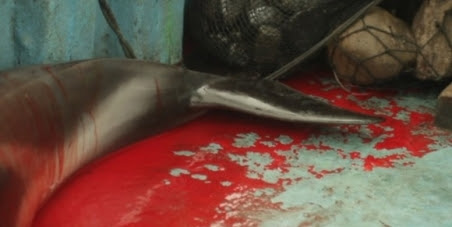
    Up to 15,000 dolphins are being killed every year in Peru’s waters — for bait to catch endangered sharks. A new report has forced the government to respond but they’re not taking enough action yet and meanwhile the dolphins and the sharks are being killed. We can stop the massacre by threatening Peru’s international reputation as a tourism destination. Sign now and share: 

    SIGN THE PETITION

    I just saw a report on the news in Peru showing how fishermen are slaughtering up to 15,000 dolphins every year — for bait to catch endangered sharks. The entire story made me sick — and now I’m fighting to end this nightmare. Will you join me?

    My government is starting to react, but they’re not taking enough action yet. Dolphin hunting is already illegal and punishable with several years in prison, but authorities are turning a blind eye — allowing thousands of dolphins and sharks to be butchered. The government cares a lot about Peru’s international reputation, especially for tourism, and if we can make them feel embarrassed with a massive global campaign, I’m sure they’ll start taking action to end the massacre.

    Once I deliver a million signatures from all over the world to the government of Peru, Avaaz will place ads in tourism magazines in countries where most of our tourists come from and the government won’t be able to ignore us! Help me stop the brutal slaughter by signing now:

    http://www.avaaz.org/en/dolphin_hunt_peru/?bhPqncb&v=33625

    When I saw this horrific hunt I realised I needed to do something about it before our dolphins and sharks are gone forever. So I decided to set up a petition and shared it with my friends and in less than 24 hours over 10,000 people had signed it!

    Our oceans are under attack. Sharks and dolphins already face threats from pollution, climate change and entanglement in fishing gear. They play an important role as ocean predators and need to be protected — not butchered. Many marine ecosystems are on the verge of collapse from which they won’t recover and they will not wait while our politicians dither around making empty statements.

    Tourism is Peru’s third largest industry, growing faster than any other South American country. Visitors are coming to see our pristine wilderness and eco-tourism is very important. We can create a serious threat by taking out hard-hitting ads in key countries where most visitors are coming from. Our government will realise people not only love our country because of the Machu Picchu and local gastronomy but also because they love our oceans and wildlife. Sign now and share this with everyone:

    http://www.avaaz.org/en/dolphin_hunt_peru/?bhPqncb&v=33625

    As an Avaaz member I’ve been truly amazed at our ability to help protect our oceans. At first, I wanted to get 15,000 signatures to represent the 15,000 dolphins that are killed every year but together we can represent all the dolphins and the sharks that can be saved in Peru’s waters!

    With hope and excitement,

    Zoe — together with the Avaaz Community Petitions Team

    This petition was started on the Avaaz Community Petitions Site. It’s quick and easy to start a petition on any issue you care about, click here: http://avaaz.org/en/petition/start_a_petition/?30311

    MORE INFORMATION:

    Dolphins killed for shark bait in Peru (CNN)
    http://edition.cnn.com/2013/10/22/world/americas/dolphins-killed-peru/

    Dolphin Slaughter Fueled by Illegal Shark Trade (National Geographic)
    http://newswatch.nationalgeographic.com/2013/10/24/dolphin-slaughter-fueled-by-illegal-shark-trade/

    Revealed: brutal reality of world’s ‘biggest dolphin hunt’ (The Ecologist)
    http://www.theecologist.org/News/news_analysis/2122747/revealed_brutal_reality_of_worlds_biggest_dolphin_hunt


    Avaaz.org is a 32-million-person global campaign network
    that works to ensure that the views and values of the world’s people shape global decision-making. (“Avaaz” means “voice” or “song” in many languages.) Avaaz members live in every nation of the world; our team is spread across 18 countries on 6 continents and operates in 17 languages. Learn about some of Avaaz’s biggest campaigns here, or follow us on Facebook or Twitter.

    You are getting this message because you signed “Save our dying planet!” on 2011-12-08 using the email address nevilleg729@gmail.com.
    To ensure that Avaaz messages reach your inbox, please add avaaz@avaaz.org to your address book. To change your email address, language settings, or other personal information, contact us, or simply go here to unsubscribe.

    To contact Avaaz, please do not reply to this email. Instead, write to us at www.avaaz.org/en/contact or call us at +1-888-922-8229 (US).

    Click here to Reply or Forward
    Zoe Massey – with Avaaz
    3:33 PM (4 hours ago)

    to me
    Dear friends in the Avaaz Community,

    Up to 15,000 dolphins are being killed every year in Peru’s waters — for bait to catch endangered sharks. A new report has forced the government to respond but they’re not taking enough action yet and meanwhile the dolphins and the sharks are being killed. We can stop the massacre by threatening Peru’s international reputation as a tourism destination. Sign now and share: 

    SIGN THE PETITION

    I just saw a report on the news in Peru showing how fishermen are slaughtering up to 15,000 dolphins every year — for bait to catch endangered sharks. The entire story made me sick — and now I’m fighting to end this nightmare. Will you join me?

    My government is starting to react, but they’re not taking enough action yet. Dolphin hunting is already illegal and punishable with several years in prison, but authorities are turning a blind eye — allowing thousands of dolphins and sharks to be butchered. The government cares a lot about Peru’s international reputation, especially for tourism, and if we can make them feel embarrassed with a massive global campaign, I’m sure they’ll start taking action to end the massacre.

    Once I deliver a million signatures from all over the world to the government of Peru, Avaaz will place ads in tourism magazines in countries where most of our tourists come from and the government won’t be able to ignore us! Help me stop the brutal slaughter by signing now:

    http://www.avaaz.org/en/dolphin_hunt_peru/?bhPqncb&v=33625

    When I saw this horrific hunt I realised I needed to do something about it before our dolphins and sharks are gone forever. So I decided to set up a petition and shared it with my friends and in less than 24 hours over 10,000 people had signed it!

    Our oceans are under attack. Sharks and dolphins already face threats from pollution, climate change and entanglement in fishing gear. They play an important role as ocean predators and need to be protected — not butchered. Many marine ecosystems are on the verge of collapse from which they won’t recover and they will not wait while our politicians dither around making empty statements.

    Tourism is Peru’s third largest industry, growing faster than any other South American country. Visitors are coming to see our pristine wilderness and eco-tourism is very important. We can create a serious threat by taking out hard-hitting ads in key countries where most visitors are coming from. Our government will realise people not only love our country because of the Machu Picchu and local gastronomy but also because they love our oceans and wildlife. Sign now and share this with everyone:

    http://www.avaaz.org/en/dolphin_hunt_peru/?bhPqncb&v=33625

    As an Avaaz member I’ve been truly amazed at our ability to help protect our oceans. At first, I wanted to get 15,000 signatures to represent the 15,000 dolphins that are killed every year but together we can represent all the dolphins and the sharks that can be saved in Peru’s waters!

    With hope and excitement,

    Zoe — together with the Avaaz Community Petitions Team

    This petition was started on the Avaaz Community Petitions Site. It’s quick and easy to start a petition on any issue you care about, click here: http://avaaz.org/en/petition/start_a_petition/?30311

    MORE INFORMATION:

    Dolphins killed for shark bait in Peru (CNN)
    http://edition.cnn.com/2013/10/22/world/americas/dolphins-killed-peru/

    Dolphin Slaughter Fueled by Illegal Shark Trade (National Geographic)
    http://newswatch.nationalgeographic.com/2013/10/24/dolphin-slaughter-fueled-by-illegal-shark-trade/

    Revealed: brutal reality of world’s ‘biggest dolphin hunt’ (The Ecologist)
    http://www.theecologist.org/News/news_analysis/2122747/revealed_brutal_reality_of_worlds_biggest_dolphin_hunt


    Avaaz.org is a 32-million-person global campaign network
    that works to ensure that the views and values of the world’s people shape global decision-making. (“Avaaz” means “voice” or “song” in many languages.) Avaaz members live in every nation of the world; our team is spread across 18 countries on 6 continents and operates in 17 languages. Learn about some of Avaaz’s biggest campaigns here, or follow us on Facebook or Twitter.

    You are getting this message because you signed “Save our dying planet!” on 2011-12-08 using the email address nevilleg729@gmail.com.
    To ensure that Avaaz messages reach your inbox, please add avaaz@avaaz.org to your address book. To change your email address, language settings, or other personal information, contact us, or simply go here to unsubscribe.

    To contact Avaaz, please do not reply to this email. Instead, write to us at www.avaaz.org/en/contact or call us at +1-888-922-8229 (US).

    Click here to Reply or Forward
  • Major Reductions in Seafloor Marine Life from Climate Change by 2100

    Science News

    … from universities, journals, and other research organizations

    Science News

    … from universities, journals, and other research organizations

    Major Reductions in Seafloor Marine Life from Climate Change by 2100

    Dec. 31, 2013 — A new study quantifies for the first time future losses in deep-sea marine life, using advanced climate models. Results show that even the most remote deep-sea ecosystems are not safe from the impacts of climate change.


    Share This:

    An international team of scientists predict seafloor dwelling marine life will decline by up to 38 per cent in the North Atlantic and over five per cent globally over the next century. These changes will be driven by a reduction in the plants and animals that live at the surface of the oceans that feed deep-sea communities. As a result, ecosystem services such as fishing will be threatened.

    In the study, led by the National Oceanography Centre, the team used the latest suite of climate models to predict changes in food supply throughout the world oceans. They then applied a relationship between food supply and biomass calculated from a huge global database of marine life.

    The results of the study are published this week in the scientific journal Global Change Biology.

    These changes in seafloor communities are expected despite living on average four kilometres under the surface of the ocean. This is because their food source, the remains of surface ocean marine life that sink to the seafloor, will dwindle because of a decline in nutrient availability. Nutrient supplies will suffer because of climate impacts such as a slowing of the global ocean circulation, as well as increased separation between water masses — known as ‘stratification’ — as a result of warmer and rainier weather.

    Lead author Dr Daniel Jones says: “There has been some speculation about climate change impacts on the seafloor, but we wanted to try and make numerical projections for these changes and estimate specifically where they would occur.

    “We were expecting some negative changes around the world, but the extent of changes, particularly in the North Atlantic, were staggering. Globally we are talking about losses of marine life weighing more than every person on the planet put together.”

    The projected changes in marine life are not consistent across the world, but most areas will experience negative change. Over 80 per cent of all identified key habitats — such as cold-water coral reefs, seamounts and canyons — will suffer losses in total biomass. The analysis also predicts that animals will get smaller. Smaller animals tend to use energy less efficiently, thereby impacting seabed fisheries and exacerbating the effects of the overall declines in available food.

    The study was funded by the Natural Environment Research Council (NERC) as part of the Marine Environmental Mapping Programme (MAREMAP), and involved researchers from the National Oceanography Centre, the Memorial University of Newfoundland, Canada, the University of Tasmania, and the Laboratoire des Sciences du Climat et de l’Environnement, France.

    S

    Dec. 31, 2013 — A new study quantifies for the first time future losses in deep-sea marine life, using advanced climate models. Results show that even the most remote deep-sea ecosystems are not safe from the impacts of climate change.


    Share This:

    An international team of scientists predict seafloor dwelling marine life will decline by up to 38 per cent in the North Atlantic and over five per cent globally over the next century. These changes will be driven by a reduction in the plants and animals that live at the surface of the oceans that feed deep-sea communities. As a result, ecosystem services such as fishing will be threatened.

    In the study, led by the National Oceanography Centre, the team used the latest suite of climate models to predict changes in food supply throughout the world oceans. They then applied a relationship between food supply and biomass calculated from a huge global database of marine life.

    The results of the study are published this week in the scientific journal Global Change Biology.

    These changes in seafloor communities are expected despite living on average four kilometres under the surface of the ocean. This is because their food source, the remains of surface ocean marine life that sink to the seafloor, will dwindle because of a decline in nutrient availability. Nutrient supplies will suffer because of climate impacts such as a slowing of the global ocean circulation, as well as increased separation between water masses — known as ‘stratification’ — as a result of warmer and rainier weather.

    Lead author Dr Daniel Jones says: “There has been some speculation about climate change impacts on the seafloor, but we wanted to try and make numerical projections for these changes and estimate specifically where they would occur.

    “We were expecting some negative changes around the world, but the extent of changes, particularly in the North Atlantic, were staggering. Globally we are talking about losses of marine life weighing more than every person on the planet put together.”

    The projected changes in marine life are not consistent across the world, but most areas will experience negative change. Over 80 per cent of all identified key habitats — such as cold-water coral reefs, seamounts and canyons — will suffer losses in total biomass. The analysis also predicts that animals will get smaller. Smaller animals tend to use energy less efficiently, thereby impacting seabed fisheries and exacerbating the effects of the overall declines in available food.

    The study was funded by the Natural Environment Research Council (NERC) as part of the Marine Environmental Mapping Programme (MAREMAP), and involved researchers from the National Oceanography Centre, the Memorial University of Newfoundland, Canada, the University of Tasmania, and the Laboratoire des Sciences du Climat et de l’Environnement, France.

    S

  • Warming climate may cut cloud cover, push temperatures even higher

    Warming climate may cut cloud cover, push temperatures even higher

    One of the great unknowns of climate science is what effect clouds have in accelerating or slowing warming. A new study sheds a disturbing light on their possible impact.

    By Tim Radford, via Climate News Network

    Australian and French scientists believe they have cracked one of the great puzzles of climate change and arrived at a more accurate prediction of future temperatures.

    The news is not good, according to Steven Sherwood of Australia’s Centre for Excellence for Climate System Science at the University of New South Wales. If carbon emissions are not reduced, then by 2100 the world will have warmed by 4°C.

    This figure does not, at first, sound high: researchers have been warning for 20 years on the basis of computer models that under the notorious business-as-usual scenario in which everybody goes on burning coal and oil, then as carbon dioxide levels double, global temperatures could rise by between 1.5°C and 4.5°C.

    Pessimists could cite one extreme, optimists the other: the range of uncertainty was a recognition that there were still some big unknowns in the machinery of climate, and one of those unknowns was the behaviour of the clouds in a warmer world.

    More warmth means more evaporation, more vapour could mean more clouds. Low-level clouds reflect sunlight back into space, and help cool the climate a bit. This is what engineers call negative feedback. 

    Drying the clouds

    But if more water vapour actually led to less cloud, then more sunlight would reach the surface and the world would warm even more: positive feedback would be in play. Climate models cater for such possibilities, but cannot choose between them.

    What Sherwood and his colleagues from Pierre and Marie Curie University in Paris did was to start with some real-world observations of what happens when water vapour gets into the atmosphere.

    They report in Nature that updraughts of water vapour can rise 15 kms to form high clouds that produce heavy rains, or the vapour can rise just a few kilometers before coming back to the surface without forming rain clouds.

    When this happens the process actually reduces the overall cloud cover because it dessicates the clouds above: it draws away water vapour from the higher regions in a process called convective mixing.

    Climate models in the past have tended to predict high cloud formation that damps warming. What Sherwood and his colleagues have done is demonstrate that the world may not work like that.

    Profound effects in prospect

    So the next step was to feed the new understanding into computer simulations. These then showed that climate cycles could develop that would take vapour to a wider range of heights in the atmosphere, with the consequence that fewer clouds would form as climate warms.

    If so – and other climate scientists will have their own arguments with the findings – then as carbon dioxide levels double, which they will do in the next 50 years or so, the average planetary temperatures will increase by a colossal 4°C.

    Governments have expressed the wish – but not so far taken the necessary action – to contain planetary temperatures to a rise of no more than 2°C. If Sherwood and colleagues are right, they will not get their wish. And the process will go on. The temperatures will continue to soar beyond 2100, to reach an additional 8°C by 2200.

    “Climate skeptics like to criticise climate models for getting things wrong, and we are the first to admit they are not perfect, but what we are finding is that the mistakes are being made by those models that predict less warming, not those that predict more”, said Professor Sherwood.

    “Rises in global average temperatures of this magnitude will have profound impacts on the world and the economies of many countries if we don’t urgently curb our emissions.”

    RELATED STORIES

  • New comment on the Tally Room

    1 of 29
    Why this ad?
    8 Myths of Golf Swing?squaretosquaremethod.com – Pros Called Him “Straight Arrow” Learn His Swing Secrets Here Free!

    [New comment] Numbers point to WA Senate by-election

    Inbox
    x
    The Tally Room <donotreply@wordpress.com>
    2:36 PM (1 hour ago)

    to me

    New comment on The Tally Room

    Ben Raue commented on Numbers point to WA Senate by-election.

    in response to Ben Raue:

    Update: The result today saw Scott Ludlam (GRN) and Wayne Dropulich (Sports Party) elected instead of the PUP and ALP candidates who had won in the first count. The margin at the key point is 12 votes, a net turn-around of 26 votes. The case seems set to head to the Court of Disputed Returns. […]

    The dates for the by-elections haven’t been announced.

    The earliest possible date for Griffith is February 8, if the by-election is called in the next week.

    There has been speculation that Redcliffe will go on the same date, although it isn’t required. I don’t think as much time is required for the Redcliffe by-election.

    The WA Senate by-election cannot begin until the Court of Disputed Returns considers the matter. Unlikely to be in February

  • Tracking Abbott’s wreckage – The full list

    Tracking Abbott’s wreckage – The full list

    Tony Abbott has been in power since 7 September 2013. From that moment, he and his government have broken promises and hurt Australians.

    This post will be regularly updated to keep track of the Abbott Government’s broken promises and everything his Government does to hurt Australians.

    Each separate item will have a link to a source. Broken promises appear in bold and in a separate list at the end.

    The List 

    72. Refuses to support jobs at SPC at the cost of hundreds of jobs – 27 December 2013 

    71. Appoints Tim Wilson, a Liberal Party member and Policy Director of a right-wing think tank to the position of Commissioner at the Human Rights Commission even though this think tank argued for the Commission to be abolished – 23 December 2013 

    70. Approves private health fund premium increases of an average 6.2% a year – 23 December 2013

    69. Fails to provide the promised customs vessel to monitor whaling operations in the Southern Ocean – 23 December 2013 

    68. Requests the delisting of World Heritage status for Tasmanian forests – 21 December 2013 

    67. Scraps the Home Energy Saver Scheme which helps struggling low income households cut their electricity bills – 17 December 2013

    66. Defunds the Public Interest Advocacy Centre whose objectives are to work for a fair, just and democratic society by taking up legal cases public interest issues – 17 December 2013

    65. Defunds the Environmental Defenders Office which is a network of community legal centres providing free advice on environmental law – 17 December 2013

    64. Axes funding for animal welfare – 17 December 2013

    63. Abolishes the AusAID graduate program costing 38 jobs – 17 December 2013

    62. Cuts Indigenous legal services by $13.4 million – 17 December 2013

    61. Abolishes the position of co-ordinator-general for remote indigenous services – 17 December 2013

    60. Changes name of  NDIS “launch sites” to “trial sites” and flags cuts to funding – 17 December 2013 

    59. Abolishes the National Office for Live Music along with the live music ambassadors – 17 December 2013

    58. Weakened the ministerial code of conduct to let ministers keep shares in companies – 16 December 2013

    57. Disbands the independent Immigration Health Advisory Group for asylum seekers – 16 December 2013 

    56. Backs Qantas bosses over the workers as 1000s local jobs threatened – 14 December 2013 

    55. Starts dismantling Australia’s world leading marine protection system – 13 December 2013 

    54. Scraps the COAG Standing Council on Environment and Water – 13 December 2013 

    53. Breaks its NBN election promise of giving all Australians access to 25 megabits per second download speeds by 2016 – 12 December 2013  

    52. Overturns the “critically endangered” listing of the Murray Darling Basin – 11 December 2013

    51. Dares Holden to leave Australia. Holden announces closure which costs Australian workers 50 000 jobs – 11 December 2013 

    50. Approves Clive Palmer’s mega coal mine in the Galilee Basin, turning the Great Barrier Reef into a dumping ground for dredge spoil and a shipping super highway – 11 December 2013

    49. Demands that the few childcare workers who got pay rises “hand them back” – 10 December 2013 

    48. Approves the largest coal port in the world in the Great Barrier Reef World Heritage Area – 10 December 2013  

    47. Removes the community’s right to challenge decisions where the government has ignored expert advice on threatened species impacts – 9 December 2013 

    46. Downgrades national environment laws by giving approval powers to state premiers – 9 December 2013  

    45. Undermines Australia’s democracy by signing a free trade agreement with South Korea allowing corporations to sue the Australian Government – 6 December 2013 

    44. Damages our diplomatic relationship with our nearest neighbour East Timor – 5 December 2013 

    43. Repeals the pokie reform legislation achieved in the last parliament to combat problem gambling – 4 December 2013 

    42. Suspends the Wage Connect program, despite it being proven to deliver good outcomes for unemployed people – 3 December 2013 

    41. Axes funding to the Alcohol and Other Drugs Council of Australia, forcing the 46 year old organisation to close – 27 November 2013  

    40. Back-flips twice on Gonski, reversing a commitment to a ‘unity ticket’ and failing to deliver equitable education funding – 25 November 2013  

    39. Shifts Australia’s position at the UN on Israeli settlements – 25 November 2013

    38. Damages our diplomatic relationship with the Indonesian Government by refusing to apologise for tapping the phones of their President, his wife and senior Government officials – 23 November 2013 

    37. Converts crucial Start-Up Scholarships into loans, increasing the debt of 80,000 higher education students by $1.2 billion – 21 November 2013 

    36. Gifts two navy patrol boats to the Sri Lankan government to stop asylum seekers fleeing the Sri Lankan government – 17 November 2013

    35. Introduces a Bill to impose on workers who are elected to unpaid committees in their union huge financial penalties and jail terms for breeches of new compliance obligations – 14 November 2013 

    34. Condones torture by foreign governments by saying “sometimes in difficult circumstances, difficult things happen” – 14 November 2013 

    33. Hides information from the Parliament and the people about the government’s treatment of asylum seekers – 13 November 2013

    32. Separates a refugee mother from her newborn baby – 10 November 2013 

    31. Cuts 600 jobs at the CSIRO – 8 November 2013

    30. Abolishes Insurance Reform Advisory Group which provided a forum for industry and consumer bodies to discuss insurance industry reform – 8 November 2013

    29. Abolishes the Maritime Workforce Development Forum which was an industry body working to build a sustainable skills base for the maritime industry – 8 November 2013

    28. Abolishes the High Speed Rail Advisory Group whose job it was to advise Governments on the next steps on implementing high speed rail for eastern Australia – 8 November 2013

    27. Abolishes the Advisory Panel on the Marketing in Australia of Infant Formula which for 21 years monitored compliance of industry to agreements on marketing infant formula – 8 November 2013 

    26. Abolishes the Antarctic Animal Ethics Committee who ensured research on animals in the Antarctic complies with Australian standards – 8 November 2013

    25. Abolished the National Steering Committee on Corporate Wrongdoing that for 21 years worked to make sure the law was effectively enforced on corporate criminals – 8 November 2013

    24. Abolishes the National Inter-country Adoption Advisory Council which provided expert advice on overseas adoption – 8 November 2013

    23. Abolishes International Legal Services Advisory Council which was responsible for working to improve the international performance of Australia’s legal services – 8 November 2013

    22. Abolishes the Commonwealth Firearms Advisory Council a group of experts in gun crime and firearms which was set up after the Port Arthur massacre – 8 November 2013

    21. Abolishes Australian Animals Welfare Advisory Committee – 8 November 2013

    20. Abolishes the National Housing Supply Council which provided data and expert advice on housing demand, supply and affordability – 8 November 2013

    19. Abolishes the  Advisory Panel on Positive Ageing, established to help address the challenges the country faces as the number of older Australians grows – 8 November 2013 

    18. Refuses to offer support to manufacturing in  Tasmania, despite requests and warnings. Caterpillar announces the move of 200 jobs from Burnie to Thailand, costing around 1000 local jobs – 5 November 2013

    17. Provides $2.2 million legal aid for farmers and miners to fight native title claims – 1 November 2013

    16. Abolishes the 40 year old AusAID costing hundreds of jobs – 1 November 2013

    15. Launches a successful High Court  which strikes down the ACT Marriage Equality laws invalidating the marriages of many people and ensuring discrimination against same-sex couples continues – 23 October 2013 

    14. Denies there is a link between climate change and more severe bush fires and accuses a senior UN official was “talking through their hat”  – 23 October 2013 

    13. Appoints the head of the Business Council of Australia to a “Commission of Audit” to recommend cuts to public spending – 22 October 2013  

    12. Instructs public servants and detention centre staff to call asylum seekers “illegals” – 20 October 2013

    11. Appoints Howard era Australian Building & Construction Commission (ABCC) Director to help reinstate the ABCC with all its previous oppressive powers over construction workers – 17 October 2013 

    10. Axes the Major Cities Unit a Government agency with 10 staff which provided expert advice on urban issues in our 18 biggest cities – 24 September 2013

    9. Fails to “stop the boats”.  Hides the boats instead – 23 September 2013  

    8. Scraps the Social Inclusion Board, which had been established to guide policy on the reduction of poverty in Australia – 19 September 2013 

    7. Abolishes the Climate Commission – 19 September 2013 

    6. Appoints himself Minister for Women – 16 September 2013 

    5. Appoints only one woman into his cabinet and blames the women for his decision, saying he appoints “on merit”– 16 September 2013 

    4. Abolishes key ministerial positions of climate change and science – 16 September 2013 

    3. Breaks his promise to spend his first week with an Aboriginal community – 14 September 2013 

    2. Takes away pay rises for childcare workers – 13 September 2013 

    1. Takes away pay rises from aged care workers – 13 September 2013 

    Thanks to @thefinnigans for this image

    Thanks to @thefinnigans for this image

    The Broken Promise Count

    1. Breaks his promise to spend his first week with an Aboriginal community – 14 September 2013.  This promise was made in front of indigenous elders and participates at the Garma Festival on 10 August 2013, this is a live recording the promise is made at 21:30

    2. Fails to “stop the boats”.  Hides the boats instead – 23 September 2013.   This promise was repeated so many times I can’t count. Here’s Abbott’s 2013 campaign launch speech.

    3. Back-flips twice on Gonski, reversing a commitment to a ‘unity ticket’ and failing to deliver equitable education funding – 25 November 2013  See paragraph two from Christopher Pyne on 29 August 2013 

    4. Breaks its NBN election promise of giving all Australians access to 25 megabits per second download speeds by 2016 – 12 December 2013   This was the Coalition’s policy they took to the election first announced 9 April 2013.

    5. Changes name of  NDIS “launch sites” to “trial sites” and flags cuts to funding – 17 December 2013  The promise to deliver the NDIS in full was made 20 August 2013 and is in the policies they took to the election

    6. Fails to provide the promised customs vessel to monitor whaling operations in the Southern Ocean – 23 December 2013 Promise made by Greg Hunt 9 April 2013

    Thanks to David Olive

    Thanks to David Olive for this image.

    Thanks to The Greens whose research in 100 days, 40 failures: A Preview of secretive, cruel

  • Big things afoot. 350.ORG

    Why this ad?
    Caritas Australiawww.caritas.org.au/End-Poverty – Help end poverty so the world’s poor don’t need to rely on charity.

    Big things afoot.

    Inbox
    x
    May Boeve – 350.org <350@350.org>
    11:12 AM (6 hours ago)

    to me

    Friends,

    Here is one of the trickiest things about fighting climate change: whenever you do good work, you find that there is even more work to be done.

    In 2013, 350.org’s global network did such good work — and that means we have set ourselves up for an even bigger 2014. We have got ambitious plans for next year, and it will take some money to make them happen.

    If you can spare anything as the year draws to a close, please make a secure online donation to support the climate movement in 2014. Any amount helps, and our savvy staff will put it to good use.

    Big things are afoot, and they are only going to get bigger.

    With gratitude,

    May

    P.S. If you are on the fence about donating, our team put together this list of reasons to just go for it:

    Top 10 Reasons to Donate to 350.org

    (If you cannot see the pictures below, make sure to turn on images in your email program. Click here to learn how.)

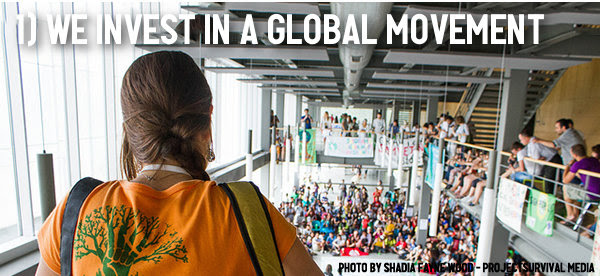
    1) We invest in a global movement.

    We think a lot about scale at 350.org, and know that we need a global grassroots groundswell to rise to this planetary crisis. So we organized “Global Power Shift”, an unprecedented convergence that brought together more than 600 people from 135 countries to Istanbul learn, train, and spark a wave of climate action around the world. After leaving Turkey, these leaders went back to their own countries to organize “National Power Shifts” to catalyze powerful movements in their home countries: from Vietnam to India, Ukraine to Argentina.

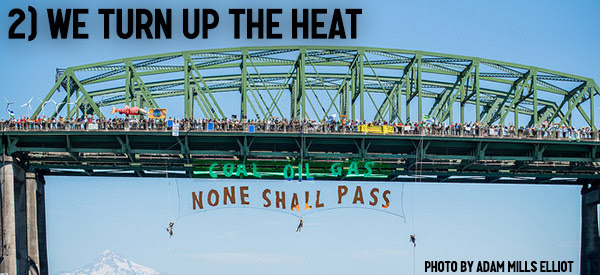
    2)We turn up the heat.

    Over the summer, we worked with partners across the USA to coordinate a series of bold direct actions. We called it “Summer Heat”, and from coast to coast, we joined with local activists to confront the fossil fuel industry and stand up for our future. As we said then: “as temperatures rise, so do we.” Right now, as summer comes to Australia, we are making plans and turning up the heat there as well.

    3) We help make history.

    In February, we joined with our allies and converged in Washington, DC for “Forward on Climate”: the largest climate rally in United States history. Over 40,000 people braved the frigid temperatures to tell President Obama to reject the Keystone Pipeline and become a climate leader.

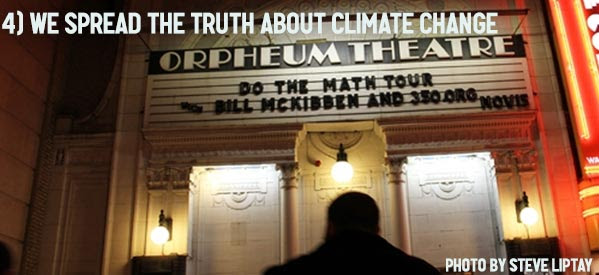
    4)We spread the truth about climate change.

    This year, we launched the “Do the Maths” movie to spread the new arithmetic of climate change. There have been thousands of local screenings around the globe, and hundreds of thousands of additional views online — getting a crucial climate message to people outside of the proverbial choir. We also organized successful “Do The Maths” tours across Australia, New Zealand, and Europe.

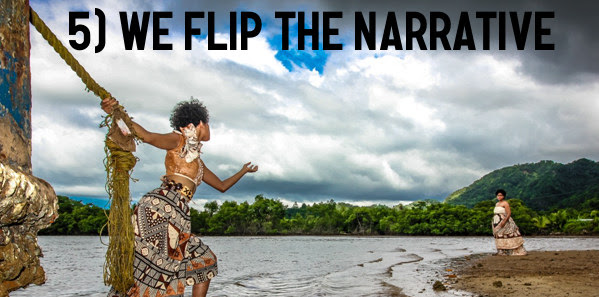
    5) We flip the narrative.

    Across the world, we are challenging narratives that keep us on the course of climate inaction and disaster. On the Pacific Islands, people are fighting the frame that paints them as climate victims. Activists in the region are rejecting that sea level rise will mean the loss of their islands and cultures, and that nothing can be done about it. Through cultural expression they are reclaiming their narrative and their destiny. They are not victims. They are proud warriors facing the climate crisis head on.

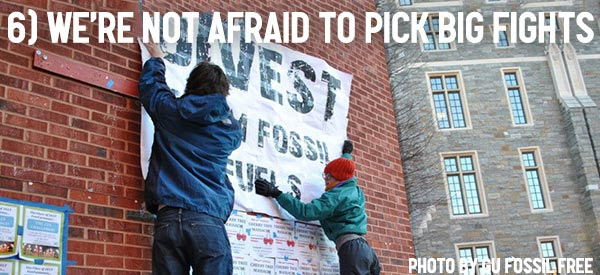
    6) We’re not afraid to pick a fight.

    When we joined with partners to launch the “Fossil Free” campaign to divest from fossil fuel companies, we directly targeted the two things that corporate polluters care about most: their reputation and their money. In barely a year, that campaign has spread like wildfire — from campuses to churches to communities. A new study out of Oxford University has found “The outcome of the stigmatisation process, which the fossil fuel divestment campaign has now triggered, poses the most far-reaching threat to fossil fuel companies.” Fossil Free has taken off in USA, Canada, Australia, New Zealand, and across Europe.

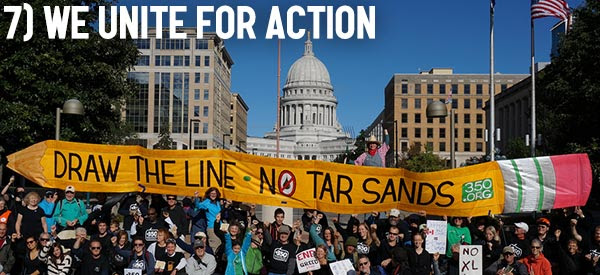
    7)We unite for action.

    At 350, we love “days of action” — movement moments when people everywhere come together in their communities for a local event. There are few things as powerful as people taking action together while transcending boundaries of geography, language, and class. In April, we joined together to “Do the Maths” with Bill McKibben in thousands of living rooms and theaters around the world. In September, we united at hundreds of events to “Draw the Line” on the Keystone XL pipeline. And in November, we solemnly gathered for vigils around the world to tell the Philippines that “#WeStandWithYou”.

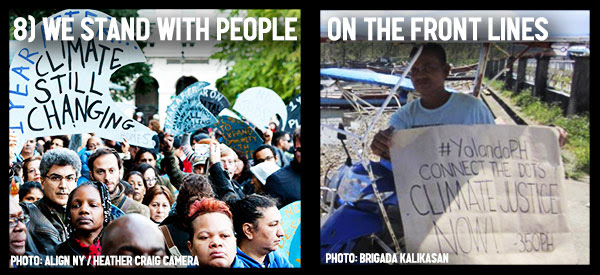
    8) We stand with people on the front lines.

    When Typhoon Haiyan ravaged the Philippines, our team sprung into action: we raised money for direct relief efforts, supported our local team in the Philippines to supply aid to those in need, and helped coordinate vigils to stand in solidarity with the people hit hardest by the storm. And a year after Hurricane Sandy hit the USA, we joined with community, labor, social and environmental justice groups to call for a fair recovery and clean energy for everyone.

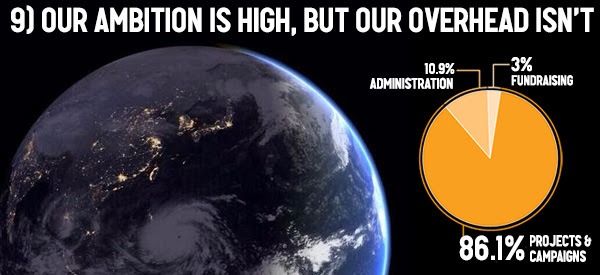
    9) Our ambition is high, but our overhead isn't.

    We are taking on the world’s biggest challenge, and doing it all over the planet. Our staff has grown to keep up with this growing movement, but we are lean and frugal, and strive to make every dollar count.

    10) We don’t give up.

    Whether we are fighting a single dirty pipeline or campaigning for global solutions, we know that this fight takes stamina, perseverance, and hope. We are in it to win it — and are so grateful to stand together with all of you in the fight of our lives.