Author: Neville

  • American Holocaust, Millions Of Untimely American Deaths And $40 Trillion Cost Of Israel To Americans

    American Holocaust, Millions Of Untimely American Deaths And $40 Trillion Cost Of Israel To Americans

    By Dr Gideon Polya

    27 August, 2013
    Countercurrents.org

    The horrendous financial cost of Israel to Americans has now reached a gigantic $40 trillion in today’s dollars. However the human cost involves the preventable deaths of millions of Americans – passive mass murder of Americans  in an American Holocaust inflicted by the fiscal perversion of traitorous Neocon American and Zionist Imperialist One Percenters committing $8-10 trillion to ethnic cleansing and active and passive mass murder of Muslims abroad in support of Apartheid Israel instead of keeping Americans  alive at home.    Zionist-subverted American Government support for Apartheid Israel in circa 2008 dollars totals about $40 trillion, the breakdown being  (1) $3 trillion (1948-2003), (2) $4-6 trillion (Zionist-promoted Iraq and Afghan Wars), (3) $0.7 trillion (Value of a Statistical Life- or VSL-based cost of  88,000 US veteran suicides since September 2001) and (4) about $30 trillion (one quarter of the VSL-based cost of 15.6 million preventable American deaths since September 2001). This is an under-estimate because it does not consider the millions of preventable American deaths before 9-11 linked to Zionist subversion and perversion of America .

    1. $3 trillion cost of Israel to America, 1948-2003.

    In 2003 Dr. Thomas R. Stauffer (1935-2005; a respected energy analyst, author, educator, consultant, and graduate of 144-Nobel-Laureate Harvard University’s Center for Middle Eastern Studies (CMES)), estimated that the 1948-2003 cost of Israel to the US was over $3 trillion in 2002 dollars: “Conflicts in the Middle East have been very costly to the U.S., as well as to the rest of the world. An estimate of the total cost to the U.S. alone of instability and conflict in the region—which emanates from the core, Israeli-Palestinian conflict—amounts to close to $3 trillion, measured in 2002 dollars. This is an amount almost four times greater than the cost of the Vietnam war, also reckoned in 2002 dollars… Total identifiable costs come to almost $3 trillion. About 60 percent, well over half, of those costs—about $1.7 trillion—arose from the U.S. defense of Israel , where most of that amount has been incurred since 1973.” [2].

    2. $4-6 trillion cost to America of the Zionist-promoted Iraq and Afghan Wars.

    The Zionist-promoted  illegal invasion of Iraq ,  the Iraq War, and the  Afghan War have been associated with a huge ongoing cost commitment of $4-6 trillion.  Thus Professor Joseph Stiglitz (professor of economics at 98-Nobel-Laureate Columbia University, chairman of President Bill Clinton’s Council of Economic Advisers and winner of the Nobel Prize in economics in 2001) and Dr. Linda J. Bilmes ( Daniel Patrick Moynihan senior lecturer in public policy at 144-Nobel-Laureate Harvard University) estimated a long-term cost of the Iraq war at $3 trillion in their 2008 book “The Three Trillion Dollar War: The True Cost of the Iraq Conflict” [3].

    However in 2010 Professors Stiglitz and Bilmes revised this estimate upwards: “Writing in these pages in early 2008, we put the total cost to the United States of the Iraq war at $3 trillion. This price tag dwarfed previous estimates, including the Bush administration’s 2003 projections of a $50 billion to $60 billion war. But today, as the United States ends combat in Iraq , it appears that our $3 trillion estimate (which accounted for both government expenses and the war’s broader impact on the U.S. economy) was, if anything, too low… There is no question that the Iraq war added substantially to the federal debt. This was the first time in American history that the government cut taxes as it went to war. The result: a war completely funded by borrowing. U.S. debt soared from $6.4 trillion in March 2003 to $10 trillion in 2008 (before the financial crisis); at least a quarter of that increase is directly attributable to the war. And that doesn’t include future health care and disability payments for veterans, which will add another half-trillion dollars to the debt.” [4].

    Professor Michael Intriligator ( a senior fellow at the US Milken Institute and professor emeritus of economics, political science and public policy at the 13-Nobel-Laureate University of California at Los Angeles , UCLA ) has indicated a long-term cost of $1.5 to 2.0 trillion for the war in Afghanistan [5].

    Dr Linda Bilmes (2013): “The Iraq and Afghanistan conflicts, taken together, will be the most expensive wars in US history – totaling somewhere between $4 to $6 trillion. This includes long-term medical care and disability compensation for service members, veterans and families, military replenishment and social and economic costs. The largest portion of that bill is yet to be paid. Since 2001, the US has expanded the quality, quantity, availability and eligibility of benefits for military personnel and veterans. This has led to unprecedented growth in the Department of Veterans Affairs and the Department of Defense budgets. These benefits will increase further over the next 40 years. Additional funds are committed to replacing large quantities of basic equipment used in the wars and to support ongoing diplomatic presence and military assistance in the Iraq and Afghanistan region. The large sums borrowed to finance operations in Iraq and Afghanistan will also impose substantial long-term debt servicing costs. As a consequence of these wartime spending choices, the United States will face constraints in funding investments in personnel and diplomacy, research and development and new military initiatives. The legacy of decisions taken during the Iraq and Afghanistan wars will dominate future federal budgets for decades to come.” [6].

    Pamela Olsen ( a President’s Scholar at 54-Nobel-Laureate Stanford University 1998-2002 with a major in Physics, a minor in Political Science, lived and worked in the Palestinian West Bank, worked as a researcher in Moscow, Siberia, and China ,  research analyst at the Institute for Defense Analysis, and the author of “ Fast Times in Palestine” ) has recently commented critically on the huge cost of Israel to the US (2013): “Israel’s cost to American taxpayers has remained high since Stauffer’s 2003 study. The US currently gives Israel an average of $3 billion a year in military aid, under an agreement signed by the Bush administration to transfer $30 billion to Israel over ten years, starting in 2009… And if, as many experts believe, the US would not have invaded Iraq without intense and sustained pressure from Washington insiders who advocate actively on behalf of Israel, this adds yet another dimension of staggering cost to the equation… The Israel lobby and partisans are currently gunning for a war with Iran with the same zeal they showed in the run-up to the 2003 invasion of Iraq . By all estimates, the costs of a war with Iran will be much higher than the Iraq war. In addition to the loss of life, analysts predict, for example, that if Iran ‘s oil production were taken out of the world market, gas prices would rise 25-70 percent… So now we are back to the question of why America continues to pour money into a state that commits daily human rights violations, defies US strategic interests, provokes rage and resentment among billions of people, competes with and crowds out US interests using technology subsidized by US taxpayers, and sells America ‘s military secrets to its enemies. The answer is simple and summed up well by professors Stephen Walt and John Mearsheimer in their ground-breaking article in the London Review of Books , “The Israel Lobby” and their book “The Israel Lobby and US Foreign Policy”… AIPAC, the American Israel Public Affairs Committee, is consistently ranked in the top two most powerful lobbies in Washington . And it is only one arm of the much larger, multi-faceted, and well-financed Israel lobby” [7].

    3.  $0.7 trillion VSL-based costing of 88,000 US veteran suicides since September 11, 2001 in the era of the Zionist-promoted War on Terror.

    There is growing concern over the high rate of US veteran suicides that constitute about 20% of the 30,000 annual suicides in the US [8].  Over the last dozen years, there have been roughly 20 US veteran suicides every day .i.e. 365.25 x 20 = 7,305 per year and about 88,000 since the start of the Zionist-promoted War on Terror in September  2001 [9]. This horrendous death toll of 88,000 dead US veterans linked to traitorous and racist Zionist-promoted  wars for the benefit of Apartheid Israel is about 3,000 times greater than the 34 US servicemen deliberately  murdered by Apartheid Israel in its1967 attack on the USS Liberty [7, 10].

    It is impossible to value a life but one crude approach is through the Value of a Statistical Life (VSL) which can be defined as the value placed on changes to the likelihood of death [11].   The US Environment  Protection Authority  (EPA) has recently estimated the Value of a Statistical Life (VSL) at $8 million, this indicating the average social investment in hospitals, security, workplace safety  etc to keep a person safe. The VSL can be seen, for example,  as an accounting estimate of  the cost of life-saving government regulations i.e. a risk-avoidance-based cost of preserving a human life in a given group [12]. On this measure the assumed war-related suicide of 88,000 US veterans obviates a social expenditure of $8 million per person x 0.088 million persons  = $0.7 trillion.

    4. A $125 trillion cost associated with 15.6 million preventable American deaths since September 2001, of which about $30 trillion can be attributed  to US fiscal perversion supporting Apartheid Israel .

    About 1.3 million Americans die preventably each year, the breakdown being as follows: 15,000 Americans are violently murdered annually;  21,000 avoidable under-5 year old US infant deaths annually; 21,000 US opiate drug-related deaths annually from US restoration and protection of the Taliban-destroyed Afghan opium industry; 30,000 Americans suicide annually, with 1 in 5 being US veterans; 31,000 gun-related US deaths annually; 33,000Americans killed by motor vehicles each year; 45,000 US deaths annually  from lack of medical insurance; 70,000 Americans die annually from air pollution (e.g. from coal burning, vehicle exhaust, carbon burning in general);  75,000 American alcohol-related deaths annually; 225,000 deaths per year in the US from iatrogenic (medical personnel-related) causes ; 300,000 Americans die from obesity-related causes; and 443,000 Americans die from smoking-related causes (roughly 1 in 5 of all deaths and 49,000 or about 10% from passive smoking) [13, 14].  Some qualifications can be offered e.g. it should be noted that some of these areas overlap e.g. homicides and suicides overlap with gun-related deaths, and smoking-related deaths would take a long time  to stop after nationally legislated cessation of smoking.

    This huge carnage of 15.6 million preventable American deaths since September 2001 must be seen in the context of a fiscal perversion outlined in section #1-3 above in which $8-10 trillion in roughly today’s dollars has been committed in this period by the Neocon American and Zionist Imperialist One Percenter American Establishment to the strategic interests of nuclear terrorist, democracy-by-genocide Apartheid Israel. The World Health Organization (WHO) informs us that in 2011 the total US health expenditure was 17.9% of the GDP [15] and the US GDP in 2011 was $14.4 trillion [16] i.e. the 2011 annual total health expenditure of the US was 0.179 x $14.4 trillion = $2.6 trillion. Thus the upper estimate of a $10 trillion cost of Apartheid Israel to America is equivalent to about 4 years of the post- September 2001 total health expenditure of America. Alternatively, this $10 trillion fiscal perversion could have otherwise been used to increase the total American  health expenditure  since September  2001 from about $30 trillion to $40 trillion.

    The estimate of 1.3 million preventable American deaths  per year means 12 x 1.3 million = 15.6 million preventable deaths since September  2001. Applying a VSL of $8 million person yields a notional cost of 15.6 million x $8 million = $125 trillion. If we accept the estimate that 25% of these preventable deaths can be attributed to 25% less US health funding (i.e.  the total American  health expenditure  being $30 trillion since September  2001 rather than  $40 trillion due to the pro-Zionist, pro-Apartheid Israel fiscal perversion) then we can add a further $125/4 or  about $30 trillion to the cost of  Apartheid Israel to America .

    Conclusions

    Zionist-subverted American Government support for Apartheid Israel in circa 2008 dollars totals about $40 trillion, the breakdown being  (1) $3 trillion (1948-2003), (2) $4-6 trillion (Zionist-promoted Iraq and Afghan Wars), (3) $0.7 trillion (the VSL-based cost of  88,000 US veteran suicides since September 2001) and (4) about $30 trillion (one quarter of the VSL-based cost of 15.6 million preventable American deaths since September 2001).

    Like the other Western democracies,  the United States is a Murdochcracy, Lobbyocracy and Corporatocracy in which Big Money buys people, politicians, policies, parties, public perception of reality, votes and political power. Lying Mainstream media simply won’t report the 2 million Palestinian deaths since 1936 in the  Palestinian Genocide from violence (0.1 million) and violently-imposed derivation (1.9 million) [17], the 12 million Muslims who have been killed through violence (3.5 million ) or war-imposed deprivation (8.9 million) in the post-1990, Zionist-promoted US War on Muslims  [18] , or the 10 million  Muslims who have died  from violence (3 million)  or from war-imposed deprivation (7 million) since the US Government (with likely Zionist and Israeli involvement) almost certainly committed the 9-11 atrocity against the American people (see “Experts: US did 9-11”, [19])  – indeed the larger the crime, the more assiduous the Mainstream media censorship and Mainstream media lying [20-27].

    The US has invaded 70 countries since 1776 [28] and is now evidently getting ready to war criminally invade and devastate Syria after several years of supplying one side of the civil war. However US hegemony over the world has come at a huge price. Thus each year about 18 million people die avoidably from deprivation on Spaceship Earth with the US in charge of the flight deck. Indeed it is estimated that 1.3 billion people have died from deprivation since 1950, this including  1.2 billion non-Europeans and 0.6 billion Muslims,  the latter Muslim Holocaust being 100 times greater in death toll  than in the WW2 Jewish Holocaust (5-6 million killed, 1 in 6 dying from deprivation) or the “forgotten” WW2 Bengal Holocaust in which the British with Australian complicity deliberately starved 6-7 million Indians to death for strategic reasons [29-31].

    The horrendous human cost to America of support for Apartheid Israel by the Neocon American and Zionist Imperialist  One Percenters can be quantified in terms of a $40 trillion committed financial cost  in circa 2008 dollars since 1948 and some 4 million preventable American deaths in this century alone – a Zionist-imposed  American  Holocaust that goes unreported because of  Neocon American and Zionist Imperialist-perverted Mainstream media, politicians and academics. 99% of Congress are pro-Zionists and 20% are Jewish Zionists  (although the Jewish population  of America is only about 2% of the total). In contrast, about 80% of African American males in Chicago (a city with a Jewish Zionist  mayor, the son of an Irgun Zionist terrorist involved in the ethnic cleansing of Palestine)  [32]  and 27.4 % of African Americans live and die in poverty [33].

    What can decent people do? Decent people are obliged to speak out against all  human rights abuse and the horrendous, genocidal  crimes of Apartheid Israel and its US Alliance supporters in particular (see “Jews Against Racist Zionism” [34], “Non-Jews Against Racist Zionism” [35] and “Boycott Apartheid Israel” [36]).  Decent, patriotic Americans, and indeed all decent people who care for ordinary  Americans and their fellow human beings in general, should inform everyone they can about the Zionist-imposed American Holocaust  and Zionist perversion of an America in which 1.3 million Americans die preventably each year linked to the Neocon American and Zionist Imperialist One Percenter fiscal perversion of committing trillions of dollars to killing Muslims abroad rather than saving American lives at home. Americans must wake up to the deadly perversion of their society by the traitorous and genocidally racist  Zionists and their neocon supporters. The traitorous, genocidally racist Zionists and their neoconservative  supporters should be exposed and sidelined from public life as have been like racists such as the Nazis, neo-Nazis, Apartheiders and KKK. Please tell everyone you can.

     References.

    [1]. Dr John Gault, “Dr. Thomas R. Stauffer, 1935-2005: some personal reflections”, Harvard University Center for Middle Eastern Studies, 16 February 2006: http://cmes.hmdc.harvard.edu/ecmes/alumni/stauffer .

    [2]. Thomas R. Stauffer, “The costs to the American taxpayers id the Israeli-Palestinian conflict: $3 trillion”, Washington Report on Middle East Affairs, June 2003, pages 20-23 : http://www.wrmea.org/wrmea-archives/251-washington-report-archives-2000-2005/june-2003/4641-the-costs-to-american-taxpayers-of-the-israeli-palestinian-conflict-3-trillion.ht m l .

    [3]. Joseph Stiglitz and Linda Bilmes, “The Three Trillion Dollar War: The True Cost of the Iraq Conflict” (W.W. Norton, 2008).

    [4]. Joseph Stiglitz and Linda Bilmes, “The true cost of the Iraq war: $3 trillion and beyond”, Washington Post, 5 September 2010: http://www.washingtonpost.com/wp-dyn/content/article/2010/09/03/AR2010090302200.html .

    [5]. Eli Clifton, “Bill for Afghan War could run into trillions”, Information Clearing House, 18 May 2010 : http://www.informationclearinghouse.info/article25479.h t m .

    [6].  Linda Bilmes, “The Financial Legacy of Iraq and Afghanistan : How Wartime Spending Decisions Will Constrain Future National Security Budgets”,  Harvard John F. Kennedy School of Government Faculty Research Working Paper Series RWP13-006, March 2013: https://research.hks.harvard.edu/publications/workingpapers/citation.aspx?PubId=8956&type=WPN .

    [7]. Pamela Olsen, “The staggering cost of Israel to Americans”, Information Clearing House, 2 April 2013: http://www.informationclearinghouse.info/article34485.htm .

    [8]. Rob Hotakainen, “Concern grows over “epidemic” veteran suicide rate”, The Tribune, 26 May 2011: http://www.thenewstribune.com/2011/05/26/1680716/concern-grows-over-epidemic-veteran.html .

    [9]. Dr Janet Kemp and Dr Robert Bossarte, “Suicide data report, 2012”, Department of Veterans Affairs, Mental Health Services, Suicide Prevention Program, especially Figure 3: http://www.va.gov/opa/docs/Suicide-Data-Report-2012-final.pdf .

    [10]. “USS Liberty incident”, Wikipedia: http://en.wikipedia.org/wiki/USS_Liberty_incident .

    [11]. “Value of Life”, Wikipedia” http://en.wikipedia.org/wiki/Value_of_life .

    [12]. Gabriel Nelson, “EPA plans to visit a touchy topic – the value of saved lives”, New York Times, 18 January 2011: http://www.nytimes.com/gwire/2011/01/18/18greenwire-epa-plans-to-revisit-a-touchy-topic-the-value-75301.html?pagewanted=all .

    [13]. Gideon Polya, “ One Million Americans Die Preventably Annually In USA ”, Countercurrents, 18 February 2012: http://www.countercurrents.org/polya180212.htm .

    [14]. Barbara Starfield, “Medical errors – a leading cause of death”, Journal of the American Medical Association (JAMA), vol. 284, no. 4, 26 July 2000: http://www.cancure.org/medical_errors.htm .

    [15]. “World Health Organization”, USA data: http://www.who.int/countries/usa/en/ .

    [16]. US GDP: http://www.tradingeconomics.com/united-states/gdp .

    [17]. “Palestinian Genocide”: https://sites.google.com/site/palestiniangenocide/ .

    [18]. “Muslim Holocaust Muslim Genocide”: https://sites.google.com/site/muslimholocaustmuslimgenocide/ .

    [19]. “Experts: US did 9-11”: https://sites.google.com/site/expertsusdid911/ .

    [20]. “Boycott Murdoch media”: https://sites.google.com/site/boycottmurdochmedia/  .

    [21]. “Censorship by The Conversation”: https://sites.google.com/site/mainstreammediacensorship/censorship-by .

    [22]. “Mainstream media censorship”: https://sites.google.com/site/mainstreammediacensorship/home  .

    [23]. “Mainstream media lying”: https://sites.google.com/site/mainstreammedialying/  .

    [24]. “Censorship by The Age”: https://sites.google.com/site/mainstreammediacensorship/censorship-by-the-age .

    [25]. “Censorship by ABC Late Night Live”: https://sites.google.com/site/censorshipbyabclatenightlive/  .

    [26].   “Censorship by ABC Saturday Extra”: https://sites.google.com/site/censorshipbyabclatenightlive/censorship-by-abc-sat .

    [27].  “Censorship by the BBC”: https://sites.google.com/site/censorshipbythebbc/ .

    [28]. Gideon Polya, “US has invaded 70 nations. Make 4 July Independence from America Day”, MWC News, 5 July 2013: http://mwcnews.net/focus/politics/28254-us-has-invaded-70-nations.html .

    [29]. Gideon Polya, “Body Count. Global avoidable mortality since 1950”, now available for free perusal on the web: http://globalbodycount.blogspot.com/  .

    [30]. Gideon Polya, “Jane Austen and the Black Hole of British History”, now available for free perusal on the web: http://janeaustenand.blogspot.com/  .

    [31]. Gideon Polya, “ Bengal Famine. How Australia & UK killed 6-7 million Indians in WW2”, MWC News, 27 September 2011: http://mwcnews.net/focus/editorial/13742-bengal-famine.html .

    [32]. Michelle Alexander, “The New Jim Crow.  Mass incarceration in an age of color blindness”.

    [33]. Trymaine Lee, “Number of Americans living in poverty hits 52-year high, 27.4 percent of Blacks under the poverty line”, Huffington Post, Black Voices: http://www.huffingtonpost.com/2011/09/13/number-of-americans-livin_n_960345.html .

    [34]. “Jews Against Racist Zionism”: https://sites.google.com/site/jewsagainstracistzionism/ .

    [35]. “Non-Jews Against Racist Zionism”: https://sites.google.com/site/nonjewsagainstracistzionism/ .

    [36]. “Boycott Apartheid Israel ”: https://sites.google.com/site/boycottapartheidisrael/ .

    Dr Gideon Polya has been teaching science students at a major Australian university for 4 decades. He published some 130 works in a 5 decade scientific career, most recently a huge pharmacological reference text “Biochemical Targets of Plant Bioactive Compounds” (CRC Press/Taylor & Francis, New York & London , 2003). He has published “Body Count. Global avoidable mortality since 1950” (G.M. Polya, Melbourne, 2007: http://globalbodycount.blogspot.com/ ); see also his contributions “Australian complicity in Iraq mass mortality” in “Lies, Deep Fries & Statistics” (edited by Robyn Williams, ABC Books, Sydney, 2007: http://www.abc.net.au/rn/science/ockham/stories/s1445960.htm ) and “Ongoing Palestinian Genocide” in “The Plight of the Palestinians (edited by William Cook, Palgrave Macmillan, London, 2010: http://mwcnews.net/focus/analysis/4047-the-plight-of-the-palestinians.html ). He has published a revised and updated 2008 version of his 1998 book “Jane Austen and the Black Hole of British History” (see: http://janeaustenand.blogspot.com/ ) as biofuel-, globalization- and climate-driven global food price increases threaten a greater famine catastrophe than the man-made famine in British-ruled India that killed 6-7 million Indians in the “forgotten” World War 2 Bengal Famine (see recent BBC broadcast involving Dr Polya, Economics Nobel Laureate Professor Amartya Sen and others: http://www.open.edu/openlearn/history-the-arts/history/social-economic-history/listen-the-bengal-famine ). When words fail one can say it in pictures – for images of Gideon Polya’s huge paintings for the Planet, Peace, Mother and Child see: http://sites.google.com/site/artforpeaceplanetmotherchild/ and http://www.flickr.com/photos/gideonpolya/ .

  • What is the Coalition’s direct action climate change policy?

    What is the Coalition’s direct action climate change policy?

    Updated 38 minutes ago

    Environment Minister Greg Hunt has released the Government’s Green Paper for its direct action climate change policy.

    The paper released today is open for consultation until February, after which time a White Paper will be developed.

    The Government wants to replace Labor’s carbon tax with its direct action plan, which would provide financial incentives for polluters to reduce emissions.

    The Green Paper details how the Coalition’s Emissions Reduction Fund will operate.

    The scheme is budgeted to cost $300 million, $500 million and $750 million over three years, starting on July 1, 2014.


    Mr Hunt says new figures show Australia needs to to reduce its emissions by less than thought to achieve the targetted cut of 5 per cent by 2020.

    “It’s going to be easier to achieve that figure now because of changes in Australian manufacturing,” he said.

    “That’s not a desirable cause, but it’s a reality.

    “We’ve seen a number of coal mines and a number of manufacturing businesses either not proceed or close down.”

    Take a look at our explainer below on how the Coalition’s climate change policy works.

    Direct action policy explained

    The Coalition Government’s big policy plank has been to remove carbon pricing legislation and replace it with its own “direct action” package.

    While both Labor and the Coalition agree on reducing emissions to 5 per cent below 2000 levels by 2020, they disagree on the mechanism.

    Under Labor’s carbon pricing, the country’s biggest polluters pay for the amount of pollution they produce, giving them an incentive to reduce emissions.

    Compensation is paid to taxpayers to help mitigate any price increases, such as the cost of electricity, that have been passed on.

    Coalition policy key points

    • Keep the 5 per cent emission reduction target
    • Keep the 20 per cent renewable energy target
    • Scrap the price on carbon and associated corporations
    • Establish a $3 billion fund to pay businesses for emission reduction projects
    • Create a 15,000 strong Green Army to conduct conservation work


    But under the Coalition, businesses will compete to win tenders and be paid to undertake emission reduction projects.

    The Government argues that this is the cheapest method to reduce emissions and is better for the economy than a nationwide “electricity tax”.

    There are four key pillars that the Government has outlined as part of its environment policy:

    • Clean air – Emissions Reduction Fund
    • Clean land – Green Army, Landcare reform and simplified environmental assessments and approvals
    • Clean water – Commitment to long-term planning for new dams and support for the Murray-Darling Basin Plan
    • Heritage protection – New programs focusing on community and heritage landmarks

    How does the Emissions Reduction Fund work?

    The main feature of the direct action policy is the creation of an Emissions Reduction Fund, which will cost $3 billion over four years.

    The fund will call for businesses to submit tenders for projects that will either lower emissions or offset them.

    It will operate as a reverse auction, where businesses compete and undercut each other to win a contract and with it, the Government’s money.

    The Government says the scheme will ensure a reduction of emissions for the best possible price.

    The reverse auction method mirrors the existing National Water Market, which conducts water buybacks to increase river flows.

    Emission reductions will be achieved through a range of projects, such as cleaning up power stations, capturing landfill gas, reforesting marginal lands or improving soil carbon.

    A project needs to meet two criteria to win a contract from the fund:

    • The emission reductions must be additional measures and not just business-as-usual
    • The reduction estimates must be credible and verified

    Measures that are already required to be carried out by businesses under government regulations cannot be used as projects for the fund.

    Only the projects with the lowest cost per amount of abatement will be taken on by the reduction fund.

    The fund is capped and Prime Minster Tony Abbott has previously indicated it will not be increased if the 2020 emission reduction target is not being reached.

    Green Army

    The Coalition aims to build an environmental workforce made up of 15,000 young people to undertake conservation projects.

    The “Green Army” will carry out projects such as re-vegetating sand dunes, cleaning up riverbanks, weed control and regenerating local parks.

    The workforce will work with and complement local groups such as Landcare, catchment authorities and councils.

    Projects will be tailored to local environmental priorities.

    Participants in the Green Army (initially only 17-24 year olds) will be paid a training allowance and the Government expects young people to gain valuable work skills from the group.

    The training received will count towards the requirements for a Certificate 1 or 2 in land management, park management, landscaping or horticulture.

    Full-time projects will run for up to 26 weeks in groups of 10 – nine participants and a supervisor.

    Teams will be given money to pay for equipment and materials needed to undertake a project.

    The program will begin in 2014-15 with 250 projects, which will be scaled up to 1,500 projects and a 15,000 strong workforce in 2018-19.

    It is expected to cost $50 million in its first year and then $300 million over a four-year period.

    What is the emission reduction target?

    The Government is committed to reducing greenhouse gas emissions to 5 per cent below 2000 levels by 2020.

    Environment Minister Greg Hunt said in December 2013 that the carbon dioxide abatement needed to reach the target by 2020 is 431 million tonnes.

    There is some debate over whether the target is ambitious enough to keep up with action by other countries.

    In October 2013, the Labor-initiated independent climate policy advisor, the Climate Change Authority, said the target was inadequate.

    The authority, which is to be scrapped under the Coalition Government, said in a report that a higher target would mean Australia would not need to drastically catch up later to fulfil its fair international role.

    It recommended either a 15 or 25 per cent reduction by 2020.

    But the Government says its target will not be modified until it sees the outcome of the 2015 Climate Summit in Paris.

    What is the Renewable Energy Target?

    The Coalition supports the Renewable Energy Target (RET) of 20 per cent by 2020, which is required by legislation to be reviewed every two years.

    The target is also supported by Labor.

    However, the Coalition has committed to axing the $10 billion green loans bank, the Clean Energy Finance Corporation, which invests in clean energy projects by co-financing with the private sector.

    Solar panel rebates will be given to low-income households under the Coalition, with a cap on 100,000 rebates a year.

  • 2013 in review: a year of fracking, wacky weather and soaring CO2

    2013 in review: a year of fracking, wacky weather and soaring CO2

    Last updated on 19 December 2013, 9:21 am

    The RTCC team reflect on a year which broke records, stunned climate experts and left Russell Brand steaming

    Dawn rising at the Mauna Loa observatory in Hawaii, where CO2 levels are recorded by US scientists (Pic: NOAA)

    Dawn rising at the Mauna Loa observatory in Hawaii, where CO2 levels are recorded by US scientists (Pic: NOAA)

    By Ed King

    One number marks 2013 out as a unique year in human history.

    On May 11 levels of carbon dioxide broke the 400 parts per million barrier. The last time it was that high was three to five million years ago.

    The last 12 months witnessed our obsession with fracking hit new heights, while extreme weather events continued to alarm scientists and economists alike.

    It also offered signs of hope. China’s choking smog forced the government to scale back its investment in coal, while US President Barack Obama released a new climate action plan.

    The world’s largest solar and wind farms opened, a plane powered by the sun flew across America, and leading development banks cut funding for fossil fuels.

    Here’s our month-by-month review of 2013.

    January
    Severe drought forced the US Army to dredge the Mississippi, amid fears it could dry up. NOAA revealed 2012 was the USA’s warmest year on record, but Chevron’s CEO John Watson said he wasn’t too bothered about climate change. As a heatwave scorched Australia, Greenpeace warned 14 major oil and gas projects could set off a ‘carbon bomb’. New US Secretary of State John Kerry promised the climate would be a ‘priority’ on his appointment, while the World Economic Forum was told $5 trillion was needed to ‘green investment’.

    (Pic: Flickr/JeffFran)

    (Pic: Flickr/JeffFran)

    February
    Pope Benedict decided he’d had enough of being number one, but we saluted him for being the ‘First Green Pope’. After a series of disasters and lost ships Shell suspended Arctic drilling, and the news got worse – HSBC said oil and gas firms could lose 60% of their value if countries took quick action to avoid global warming. Pakistan launched its national climate strategy, Saudi Arabia released a solar roadmap, China proposed a carbon tax. All necessary according to US Generals, who warned in February of an “imminent threat” from climate related conflict.

    March
    Ferrari and McLaren launched their new hybrid supercars at the Geneva motorshow, while Formula One revealed it had reduced its emissions by 9%. Masdar opened a 100MW solar thermal plant in Abu Dhabi, Obama presented a $2bn clean energy investment package, and South Africa promised a carbon tax by 2015. Venezuela President Hugo Chavez died; the country’s climate chief said a UN deal would ‘honour his memory’. Scientists reported Antarctica’s ice sheet was melting rapidly, not that this appeared to bother UK Prime Minister David Cameron. RTCC revealed he had blocked climate change from the G8 agenda.

    Ferrari_466

    April
    Former UK Prime Minister Margaret Thatcher died, and was praised by Ban Ki-moon for her commitment to climate change in the late 1980s. The world’s poorest countries said they were ready to make legally binding emission cuts, and Afghanistan became the latest state to join the Kyoto Protocol. A report from the UN warned 168 countries were at risk from land degradation, the UK opened the world’s largest offshore windfarm, and opposition leader Tony Abbott promised to scrap the country’s carbon tax. April also saw the launch of one of the most important reports of the year – by the Carbon Tracker Initiative. It warned fossil fuel investments of $674bn would blow the 2C warming target.

    May
    The EU’s beleaguered carbon market looked out for the count at the start of May, with supporters calling for urgent reform. Data from the WMO revealed the world was continuing to warm, despite claims of a ‘hiatus’ in global temperatures. On May 11 the Mauna Loa observatory in Hawaii recorded the concentration of CO2 in the atmosphere had broken 400 parts per million, a level not seen for 3-5 million years. Veteran campaigner Bill McKibben described it as a “grim landmark”. Melting ice forced Russia to evacuate its Arctic research station, China said it would cap emissions by 2016, and Prince Charles let rip at climate sceptics holding back green investments.

    keeling curve apr 2013 credit Scripps 466px

    June
    New York Mayor Mike Bloomberg made waves at the start of the month with a $20billion plan to make the city climate resilient, a vital step post Hurricane Sandy. Smoke from Indonesia’s burning rainforests turned Singapore’s skies black in a month where the IEA said the world would warm by 3.6C. UK climate experts met to discuss the ‘unusual weather’, concluding it was indeed unusual. High tides swamped the Marshall Islands capital Majuro, and experts warned China’s production of HFC gases was (another) climate ‘bomb’. The month ended on a high, with the release of President Obama’s National Climate Action Plan and a commitment from the World Bank to stop funding coal.

    July
    Fracking stole the headlines in the UK with a wave of protests against shale gas drilling across the country, notably in Balcombe. It was a month where plans for a giant solar power plant in North Africa were ditched, a senior Saudi Prince said oil markets were in decline, and Alberta’s tar sands sprung an unstoppable leak. BMW launched its electric i3 range to great acclaim, Coke announced a 25% carbon reduction target and RTCC investigated a new phenomenon – flying wind farms. Clean energy companies also gained a massive boost with China’s announcement of $294 billion investment up to 2020.

    The Yasuni region in Ecuador is home to rare insects, including the Spiny Katydid (Pic: Geoff Gallis)

    The Yasuni region in Ecuador is home to rare insects, including the Spiny Katydid (Pic: Geoff Gallis)

    August
    Fund managers worth $14 trillion kicked off August advising investors to take climate change into account when assessing the value of companies. In a sign of the levels of finance now at stake in the carbon markets, Interpol warned $176bn was at risk from fraudsters. Ecuador binned its project to protect the Yasuni national park, blaming foreign investors, while UK farmers reported an increase in extreme weather events affecting food production. Former IPCC chief Bob Watson told RTCC a forthcoming UN science report needed to deal with the ‘temperature slowdown’, while campaign group 350.org called for tropical storms to be named after prominent climate deniers.

    September
    The UN’s much awaited IPCC climate science study was published in September. Key messages included increased confidence of scientists that climate change is happening and being caused by people, sea levels are rising, the oceans are becoming more acidic, and that continued releases of CO2 will cause ‘sustained warming’. Australia’s new PM ignored these messages, embarking on cuts to climate departments and policies. But there was movement in the Pacific, where leaders of 13 island nations adopted the Majuro Declaration on Climate Change. Greenpeace efforts to stop oil and gas drilling in the Arctic were ended by Russia, which boarded their Arctic Sunrise ship and arrested the 30-strong crew at gunpoint.

    October
    Saudi efforts to weaken the IPCC climate science report were revealed by RTCC, although it seems they were consistently ignored. India’s solar capacity smashed the 2GW mark, VW proposed plans for 100% green energy cars, Walmart topped US solar rankings and Google announced its latest investment in a $103m solar plant. UN climate summit hosts Poland recorded an early #fail, publishing a series of blogs saying that a melting Arctic would mean “more pirates and terrorists”. Leaked government documents revealed Japan planned to reduce its climate targets, while comedian Russell Brand eviscerated politicians for their “indifferent attitude” to climate change.  And perhaps in a sign of times to come, a man from Kiribati arrived in New Zealand as a ‘climate change refugee’.

    November
    Published at the start of the month, the annual UNEP ‘emissions gap’ report said efforts to avoid 2C warming could be doomed to fail by 2020 unless greater efforts to cut greenhouse gas levels were made. UN climate talks in Warsaw kicked off under the cloud of Typhoon Haiyan, a tropical storm that devastated parts of the Philippines leaving thousands dead. The country’s lead negotiator Yeb Sano delivered an emotional speech to delegates, calling on them to deliver the emission cuts needed to stabilise the climate. Did the summit deliver? Climate change economics expert Lord Stern wasn’t impressed, and green groups walked out protesting at a lack of progress, but here are five reasons we feel it was a success.

    December
    Nelson Mandela’s death dominated the news in December; we looked at what his legacy to climate activists was. China released its new climate adaptation strategy, while the World Bank told India it could be a solar leader [if it sorted out a few issues]. The UN’s Green Climate Fund opened its doors for business [it’s still skint] with hopes it can be running by late 2014.

    Ban Ki-moon warned world leaders he wants them to arrive at his New York climate meeting next September with solutions, while the UN’s REDD project resolved a long-running dispute with Panama forest tribes. And most importantly, with two big years ahead of the UN climate summit in Paris, RTCC learnt that Sauron’s fires are responsible for changing Middle Earth’s climate, along with deforestation caused by orcs and hobbits.


  • Sea level rise, storm surges, not factored in to NRC’s nuclear waste policy

    Sea level rise, storm surges, not factored in to NRC’s nuclear waste policy

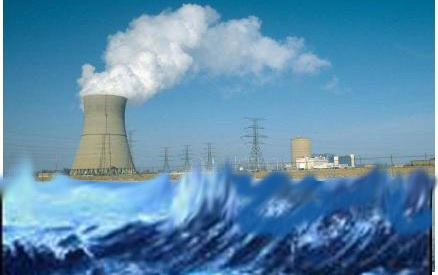
    nuke-&-seaLCCCL also argued that the discussion of sea level rise was insufficient.  The DGEIS relied on dated sources that did not account for uncertainty in sea level rise projections and may underestimate risk.  Also, the DGEIS merely looks at static sea level rise, which ignores risks due to more frequent and severe flooding.  CCCL pointed to data showing that a number of coastal nuclear power plants potentially subject to sea level rise and storm surge, are located in highly populated areas of the country

    Center For Climate Change Law December 19th, 2013 by Ethan Strell   The Columbia Center for Climate Change Law (CCCL) submitted comments today on the United States Nuclear Regulatory Commission’s “Waste Confidence Draft Generic Environmental Impact Statement” (DGEIS), which concerns the storage of highly radioactive spent nuclear fuel at individual power plants beyond the duration of each plant’s operating license.  CCCL’s comments focus on the DGEIS’s lack of analysis of how future climate conditions could affect the safety of these high level nuclear waste storage facilities.

    Waste-Confidence-Rule“Waste Confidence” refers to the Commission’s confidence that permanent disposal of nuclear waste can be accomplished when it is needed.

    Currently, spent nuclear fuel is stored on-site at nuclear reactors beyond the duration of plants’ operating licenses.  The Waste Confidence Rule stems from a 1976 petition by NRDC to halt the licensing of nuclear plants until the Commission could guarantee the permanent, safe disposal of spent nuclear fuel.

    In denying NRDC’s petition, the Commission stated that “it is neither necessary nor reasonable for the Commission to insist on proof that a means of permanent waste disposal is on hand at the time reactor operation begins, so long as the Commission can be reasonably confident that permanent disposal (as distinguished from continued storage under surveillance) can be accomplished safely when it is likely to become necessary.”  42 Fed. Reg. 128, 34391, July 5, 1977……..

    As part of the authorization process for on-site waste storage, the Commission periodically updates its Waste Confidence Rule.  In June of 2012, the DC Circuit appellate court invalidated the Commission’s 2010 Waste Confidence Decision Update, and directed that the Commission comply with the National Environmental Policy Act (NEPA) by completing an environmental impact statement or a finding of no significant impact. New York v. Nuclear Regulatory Commission, 681 F.3d 471 (D.C. Cir. 2012).

    CCCL commented on two aspects of the DGEIS’s analysis of the effects of future climate change on the storage of spent nuclear fuel: (1) the NRC’s limitation of its analysis to only the “short-term timeframe” of 60 years, and (2) the sea level rise projections used in the DGEIS.

    CCCL argued that limiting the analysis to just the short-term timeframe does not satisfy NEPA because spent nuclear fuel remains dangerously radioactive well beyond 60 years and the prospects of a completed and operational permanent waste repository for spent nuclear fuel within 60 years are speculative.

    CCCL also argued that the discussion of sea level rise was insufficient.  The DGEIS relied on dated sources that did not account for uncertainty in sea level rise projections and may underestimate risk.  Also, the DGEIS merely looks at static sea level rise, which ignores risks due to more frequent and severe flooding.  CCCL pointed to data showing that a number of coastal nuclear power plants potentially subject to sea level rise and storm surge, are located in highly populated areas of the country. http://blogs.law.columbia.edu/climatechange/2013/12/19/nuclear-regulatory-commission-downplays-risk-of-sea-level-rise-in-waste-storage-eis/

  • Thank yourself! 350 ORG.

    1 of 42
    Why this ad?
    Cape York 4WD Adventuresoutbackspirittours.com.au/CapeYork – Small Grp Tours with Outback Spirit Save $1000 Per Couple Ends 31 Dec

    Thank yourself!

    Inbox
    x
    Charlie Wood – 350.org Australia <charlie@350.org>
    2:58 PM (3 hours ago)

    to me

    Dear friends,

    Campaign email writing 101: “always ask something of your members.” Today, because it’s almost Christmas, we’d love you to do something for yourself. For just a moment, stop, reflect and thank yourself for what you’ve done, this year, to bring the vision of a safe climate closer to reality.

    Although 2013 has seen political leadership on climate reach some of the lowest of lows, these depths have birthed a spectacular groundswell of compassion, courage and fire in the belly activism.

    Rather than deferring to our political leaders to lead, we’re empowering, inspiring and gearing up to take the fight to a new level. We’re also focusing our campaigning might squarely on the biggest blockers of them all – the fossil fuel industry and their supporters.

    Take, for example, this past fortnight in which we’ve witnessed decisions that might well compel the most hardened campaigner to hang up their hat. We’ve seen our government approve two massive coal terminals which could cook the climate and wreck the Reef. Despite dwindling demand for coal, we’ve seen Australia’s largest commercial bank – ANZ – renew its loan for a massive open-cut coal-mine in Leard State forest.

    But we haven’t buried our heads in the sand. We haven’t succumbed to apathy or depression. We’ve stood up and we’ve turned out in a new and exciting way. Check out this video of highlights:

    Over the weekend, dozens of ANZ customers showed up at bank branches across the country to close their accounts in protest over the Bank’s lending to fossil fuels (check out the SBS coverage here). Last month, over 100 Commonwealth customers did the same and dozens more ANZ customers before that. In 2014, we’ll continue to support bank customers and super fund members, fund managers, and public institutions to join this growing movement of change-makers. We’ll fight city-by-city, account-by-account, dollar-by-dollar, for as long as it takes to win.

    And while folk turned out in cities over the weekend, more than 100 Australians – grandfathers, teenagers, mothers and more – made the journey to Maules Creek, risking arrest to block construction of a coal mine which will destroy a forest and commit our children to a grim and unimaginable future.

    In the same fortnight, dozens of people attended AGMs of the Big Four Banks – the managers of our savings, mortgages, and our kids’ future finances – who are fuelling a future that no parent would wish upon their child. Last Friday, you helped us and Market Forces deliver a 3000-strong message to Westpac. On Wednesday, dozens of concerned Australians put climate change front and centre of ANZ’s AGM, prompting the chairman to plea: “no more questions on coal!” (checkout this piece from ACF’s Ian Lowe.).

    And that was just two weeks in 2013. Think of what we can achieve together in the 52 to come next year.

    The climate stakes are high, rising higher by the day. But so too are we rising – arming ourselves with the financial literacy, political power and stalwart resilience needed to wage this fight – the biggest we’ll ever face – and win.

    So, as the year draws to a close, thank yourself, reflect on this moment in which we began to overcome our inner enemies to fight the real enemies and win back the brilliant future that’s ours if we want it.

    Have a wonderful xmas, get re-charged, and see you in 2014.

    With fire in the belly and xmas cheer,

    Charlie, Blair, Aaron, Simon and Josh


  • More than 40% of Scotland’s energy demand is now met by renewables

    More than 40% of Scotland’s energy demand is now met by renewables

    Scotland’s renewable electricity output has reached record-high levels, according to official statistics released today.

    The figures, released by the Department of Energy and Climate Change, show that renewables met a record-breaking 40.3 per cent of gross electricity consumption in 2012, confirming that Scotland is on track to meet its interim target of 50% by 2015. This is important progress towards the Government’s 2020 target of the equivalent of 100 per cent of Scotland’s electricity needs met from renewable electricity, as well as more from other sources.

    Scottish renewable electricity made up 36 per cent of the UK’s renewable energy generation in 2012. Scotland continues to be a net exporter of electricity, exporting over 26 per cent of generation in 2012.

    Also, quarterly data up to Q3 2013 shows that renewable generation in 2013 is on track to beat the record year set in 2012.

    Energy Minister Fergus Ewing said: “These figures show that renewable electricity in Scotland is going from strength to strength, confirming that 2012 was a record year for generation in Scotland and that 2013 looks set to be even better. We can already see from the first 9 months of 2013 that generation is 4 per cent higher compared to the same period in 2012.

    “The Scottish Government’s target is to generate the equivalent of 100% of Scotland’s gross annual electricity consumption from renewable sources by 2020, as part of a wider, balanced, low carbon energy mix. These figures show that renewable generation in Scotland was at a record high last year, meeting around 40 per cent of our electricity demand, and helping keep the lights on across these islands at a time when Ofgem are warning of the ever tightening gap between peak electricity demand and electricity supply.

    “Our support for renewable generation, combined with energy efficiency measures, will help protect Scotland’s consumers by keeping energy prices down in the long term.”

    Commenting on the publication of an update to the Scottish Government Routemap for Renewable Energy for Scotland, Mr Ewing said: “Today, our publication clearly show the progress that has been made in the last year and the further steps that are being taken to help Scotland achieve the equivalent of 100 per cent from renewable sources by 2020. This is an ambitious target, but achievable as we are already on track to meet our 2015 interim target.”

    Also commenting on the UK Government’s Electricity Market Reform Delivery Plan, he said: “The UK Government continues to ignore the need for different levels of support across the three main island groups – a need that the UK’s own research identified. I have announced plans to convene a summit in early 2014 bringing all interested parties together to assess whether anything further can be done to help deliver a positive outcome for each island group. Island renewables could provide up to 5% of total GB electricity demand by 2030 and support tens of thousands of jobs – an opportunity which we can’t afford to put at risk.

    “Despite a very modest increase, the UK continues to display a lack of ambition for offshore wind. This could yet cast doubt over some of the projects planned for Scotland, and jeopardise our opportunity to secure thousands of jobs as well as manufacturing and supply chain investment. In addition, potential investors in the offshore wind and marine renewables sectors have no market signals nor any commitment beyond 2020. The UK Government must take serious and considered steps to address these issues.”

    WWF Scotland director Lang Banks added: “It’s great news that Scotland’s renewable energy capacity and output both continue to grow, and this year looks like being another record breaker. Most importantly, Scotland is further along the track to meeting its 2020 target than we thought, which means ever greater amounts of climate change emissions are being avoided every day.

    “However, in order to remain on target Scotland will need to deploy significant amounts of offshore wind in the near future. It’s therefore vital that the UK Government gives a stronger signal of
    its ambition on the growth of offshore wind in Scotland’s seas, as well as the necessary support needed to deliver that growth. We also need to see a quick resolution to outstanding issues over transmission charges and the harnessing of renewable energy from Scotland’s islands.

    “While the rest of the UK has become distracted by gas fracking and new nuclear power, Scotland has quietly got on with the business of deploying renewables at scale. It’s clear from these figures that renewables are already ensuring the lights stay on, creating jobs, and cutting emissions.

    “By combining Scotland’s superb renewable energy resource with greater energy efficiency and investment in the grid Scotland, can continue to avoid the need for polluting forms of energy.”