Author: Neville

  • Global warming since 1997 more than twice as fast as previously estimated, new study shows

    Global warming since 1997 more than twice as fast as previously estimated, new study shows

    A new study fills in the gaps missed by the Met Office, and finds the warming ‘pause’ is barely a speed bump
    Arctic iceberg

    The Met Office and Hadley Center don’t include Arctic temperatures, where global warming is happening fastest. Photograph: Jenny E Ross/Corbis

    A new paper published in The Quarterly Journal of the Royal Meteorological Society fills in the gaps in the UK Met Office HadCRUT4 surface temperature data set, and finds that the global surface warming since 1997 has happened more than twice as fast as the HadCRUT4 estimate. This short video abstract summarizes the study’s approach and results.

    The study, authored by Kevin Cowtan from the University of York and Robert Way from the University of Ottawa (who both also contribute to the climate science website Skeptical Science), notes that the Met Office data set only covers about 84 percent of the Earth’s surface. There are large gaps in its coverage, mainly in the Arctic, Antarctica, and Africa, where temperature monitoring stations are relatively scarce. These are shown in white in the Met Office figure below. Note the rapid warming trend (red) in the Arctic in the Cowtan & Way version, missing from the Met Office data set.
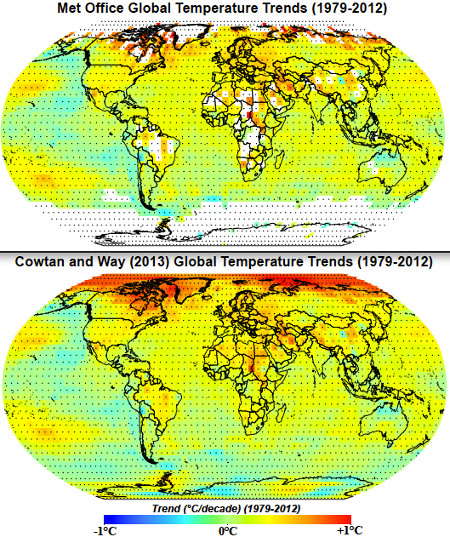
    Met Office vs. Cowtan & Way (2013) surface temperature coverage and trends Met Office vs. Cowtan & Way (2013) surface temperature coverage and trendsNASA’s GISTEMP surface temperature record tries to address the coverage gap by extrapolating temperatures in unmeasured regions based on the nearest measurements. However, the NASA data fails to include corrections for a change in the way sea surface temperatures are measured – a challenging problem that has so far only been addressed by the Met Office.

    The Berkeley Earth Surface Temperature (BEST) project used a similar approach as NASA, but with a statistical method known as “kriging” to fill in the gaps by interpolating and extrapolating with existing measurements. However, BEST only applied this method to temperatures over land, not oceans.

    Dr. Cowtan is an interdisciplinary computational scientist who recognized some potential solutions to this temperature coverage gap problem.

    “Like many scientists, I’m an obsessive problem solver. Sometimes you see a problem and think ‘That’s mine, I can make a contribution here’”

    In their paper, Cowtan & Way apply a kriging approach to fill in the gaps between surface measurements, but they do so for both land and oceans. In a second approach, they also take advantage of the near-global coverage of satellite observations, combining the University of Alabama at Huntsville (UAH) satellite temperature measurements with the available surface data to fill in the gaps with a ‘hybrid’ temperature data set. They found that the kriging method works best to estimate temperatures over the oceans, while the hybrid method works best over land and most importantly sea ice, which accounts for much of the unobserved region.

    Both of their new surface temperature data sets show significantly more warming over the past 16 years than HadCRUT4. This is mainly due to HadCRUT4 missing accelerated Arctic warming, especially since 1997.

    Cowtan & Way investigate the claim of a global surface warming ‘pause’ over the past 16 years by examining the trends from 1997 through 2012. While HadCRUT4 only estimates the surface warming trend at 0.046°C per decade during that time, and NASA puts it at 0.080°C per decade, the new kriging and hybrid data sets estimate the trend during this time at 0.11 and 0.12°C per decade, respectively.

    These results indicate that the slowed warming of average global surface temperature is not as significant as previously believed. Surface warming has slowed somewhat, in large part due to more overall global warming being transferred to the oceans over the past decade. However, these sorts of temporary surface warming slowdowns (and speed-ups) occur on a regular basis due to short-term natural influences.

    The results of this study also have bearing on some recent research. For example, correcting for the recent cool bias indicates that global surface temperatures are not as far from the average of climate model projections as we previously thought, and certainly fall within the range of individual climate model temperature simulations. Recent studies that concluded the global climate is a bit less sensitive to the increased greenhouse effect than previously believed may also have somewhat underestimated the actual climate sensitivity.

    This is of course just one study, as Dr. Cowtan is quick to note.

    “No difficult scientific problem is ever solved in a single paper. I don’t expect our paper to be the last word on this, but I hope we have advanced the discussion.”

    The perceived recent slowdown of global surface temperatures remains an interesting scientific question. It appears to be due to some combination of internal factors (more global warming going into the oceans), external factors (relatively low solar activity and high volcanic activity), and an underestimate of the actual global surface warming.

    How much each factor is contributing is being investigated by extensive scientific research, but the Cowtan & Way paper suggests the latter explanation is a significant contributor. The temporary slowing of global surface warming appears to be smaller than we currently believe.

    Green light

    close

    Sign up for the Green light email

    The most important environment stories each week including data, opinion pieces and guides.

    Sign up for the Green light email

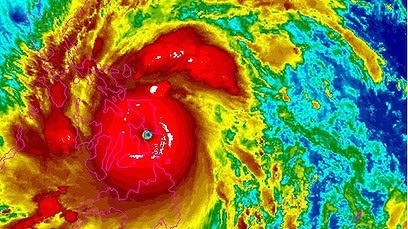
  • Last week, Typhoon Haiyan hit the Philippines — and left a path of destruction and tragedy in its wake. More than 10,000 people are feared dead.

    Bill McKibben – 350.org <350@350.org>
    10:02 AM (21 minutes ago)

    to me

    Friends,

    Last week, Typhoon Haiyan hit the Philippines — and left a path of destruction and tragedy in its wake. More than 10,000 people are feared dead.

    Lines of communication are in still in chaos, but we managed to get in touch with Zeph, our amazing 350 Southeast Asia Coordinator in the Philippines. Here’s what she just emailed to our team:

    “This lends urgency to our work. I think we need to be twice as strong as Typhoon Haiyan.”

    If we need to be twice as strong, let’s do two things immediately:

    1) Raise some money for direct relief to those in need.

    These are our brothers and sisters in this movement. Below this email are some pictures from 350 actions across the islands over the years. This storm is a blow to a place already reeling from the effects of climate change. Metro Manila has seen repeated flooding from milder storms; there’s been a severe outbreak of dengue fever this year in the Philippines.

    Among the pictures below you’ll see a group of volunteer 350 activists from Tacloban, one of the cities most ravaged by Haiyan. We don’t know the fate of all of our friends there, but we do know they need serious help now — so please do send what you can through direct relief organizations by clicking here.

    2) Raise our voices.

    Governments are meeting in Warsaw the next two weeks for the annual UN climate negotiations. This ritual has dragged on for years without conclusion, largely because the great powers have done so little. On days like these, their inaction amounts to mockery. So we’ve setup a page where you can add your name to a petition that our staff will hand-deliver to negotiators at the UN climate summit. In short, we need to let world leaders know that their inaction is wrecking the world, and the time is long past for mere talk — we need action, and we need it now.

    Last Monday at the UN climate summit, Mr. Yeb Sano, the lead negotiator of the Philippines, urged his fellow negotiators to take a bold stance. During the opening session of the summit, he committed to fast throughout the two weeks of the talks until countries make real commitments around climate finance and reducing emissions.

    Sano said, “let Poland, let Warsaw, be remembered as the place where we truly cared to stop this madness. Can humanity rise to this occasion? I still believe we can.”

    I still believe we can too. Please sign on and donate whatever you can to the relief effort.

    Many thanks,

    Bill McKibben for 350.org

    P.S. Typhoon Haiyan is a stark reminder of why the movement for bold climate action more important than ever — so please do get involved in the National Day of Climate Action this Sunday in Australia.


    More Info and Links

    Pictures of 350 Actions in The Philippines

    (If you can’t see the images below, make sure to click “Turn on Images” in your email program. Here are some instructions if you’re not sure how. Or, just click here to view the images in your web browser.)

    Philippines 350 Actions


    350.org is building a global movement to solve the climate crisis. Connect with us on Facebook and Twitter, and sign up for email alerts. You can help power our work by getting involved locally, sharing your story, and donating here. To change your email address or update your contact info, click here.

    To stop receiving emails from 350.org, click here.

  • Climate change makes super typhoons worse, says UN meteorological agency

    Climate change makes super typhoons worse, says UN meteorological agency

    By Europe correspondent Mary Gearin

    Updated 4 minutes ago

    The United Nations meteorological agency has found the effects of climate change are making the impact of severe storms like Typhoon Haiyan worse.

    The World Meteorological Organisation’s Michel Jarraud says Australia’s record-breaking summer helped push average global temperatures higher this year, and rising sea levels worsened the situation in the Philippines.

    “The impact of this cyclone was definitely significantly more than what it would have been 100 years ago because of the simple mechanical fact that the sea level is higher,” Mr Jarraud said.

    “Storm surges have a much more devastating effect than they would have had decades ago.

    “The same typhoon 50 years ago would have had less impact because the sea level was lower,” he said.

    The agency released an early analysis of this year’s global weather, so that scientists could discuss the data at the UN climate change conference in Poland.


    Australia received special mention, top-scoring with the world’s biggest increase in average temperatures last summer.

    Mr Jarraud says 2013 is likely to be one of the top 10 warmest years since records began.

    “Interestingly, what we call cold years in this last 10 years would have been seen as record warm years even 16, 17 years ago.”

    But when asked why, Mr Jarraud was careful not to get burnt by the political heat surrounding climate change.

    “The fact that the trend of higher and higher is compatible with what we expect from climate change. But the attribution, you know scientists are very careful people,” he said.

    The agency says the frequency of heat waves and extreme rain is rising.

    They are also warning that tropical cyclones will become more intense.

    Once in a lifetime typhoons are now happening once a year: UN

    Jerry Velasquez from the UN’s office for disaster risk reduction is on his way to the Philippines and he says when it comes to the weather, we need to re-think what is normal.

    “What we’re seeing is that the hazards, the typhoons, are getting stronger,” Mr Velasquez said.

    Storm surges have a much more devastating effect than they would have had decades ago.

    World Meteorological Organisation’s Michel Jarraud


    “The once-in-a-lifetime typhoons are now happening once a year. So the question for us, is this the new normal for us? And if this is then what should we do to prepare?”

    Countries worldwide are now trying to figure out what to do when faced with such questions.

    “There’s a lot that could be done. I think what this typhoon could really do is to allow us to rethink how we do disaster risk management, not only in this region but globally,” Mr Velasquez said.

    Mr Velasquez says attention also needs to turn to preventing the enormous economic cost of such disasters, especially in already poor regions.

    “For the last three years, for the first time in history, we’re seeing catastrophic disasters that have been more than $2 billion in losses,” Mr Velasquez said.

  • Vegetation clearing rules to be eased in fire-prone parts of NSW

    Vegetation clearing rules to be eased in fire-prone parts of NSW

    The aftermath of the fires on Yellow Rock Rd, Yellow Rock where many homes were destroyed in the Blue Mountains.Yellow Rock in the Blue Mountains was hard hit in last month’s fires. Photo: Dallas Kilponen

    The NSW government plans to loosen planning rules to give residents in bushfire-prone regions more freedom to clear vegetation around their homes without a permit.

    The new rules, to be introduced next year in the next session of Parliament, would allow homeowners in designated areas to fell trees within 10 metres of their homes and clear shrubs and other vegetation out to 50 metres on their own land without requiring planning permission.

    The proposal comes weeks after early-season bushfires in the Blue Mountains and elsewhere destroyed more than 200 homes and damaged 120 more.

    RFS volunteers assist in a hazard-reduction burn in Scheyville National Park in Sydney's north west.RFS volunteers at a hazard-reduction burn in Scheyville National Park in Sydney’s north west. Photo: Nick Moir

    “Residents in designated bushfire prone areas will not need to seek permission to sensibly clear vegetation from around their property that is posing a fire risk,” Premier Barry O’Farrell said in a statement.

    Advertisement

    “This will need to be done in an environmentally responsible manner.”

    Homeowners will be encouraged to “responsibly manage fire risks on their own properties”, Mr O’Farrell said.

    “Our changes will ensure the rules regarding hazard reduction are based on protecting lives and property – and not satisfying a narrow Green agenda that seeks to put trees before people.”

    While the clearing rules won’t go before the Parliament this year, the government will this week introduce laws giving the Rural Fire Service Commissioner the power to carry out hazard reduction burning on private land without consent of the owner if “reasonable attempts to contact the landowner have failed”, the statement said.

    The RFS Commissioner will also have the power to direct a Bush Fire Management Committee to amend its Bush Fire Risk Management Plan if it is considered to be inadequate, the statement said.

    “We need to ensure the community is as prepared as it possibly can be for future bushfires and that authorities have the powers they need to conduct essential hazard reduction work,” Mr O’Farrell said.

    Not broken?

    Pepe Clarke, chief executive of the Nature Conservation Council, environmental groups support hazard reduction efforts and cautioned against hasty changes to existing rules.

    ‘‘The current system works well and any changes need to be carefully considered,’’ Mr Clarke said. ‘‘Will the changes actually reduce risk to life and property and result in unnecessary environmental harm?’’

    He said the RFS is ‘‘embedded’’ in the present bushfire risk management of local districts, and to exclude their role in providing advice to households could be detrimental.

    ‘‘It means people don’t have direct access to the RFS and their advice on what measures will have the most impact in hazard reduction,’’ Mr Clarke said.

    Council view

    Jennifer Anderson, mayor of Ku-ring-gai council on Sydney’s northern fringe, welcomed the proposed changes.

    ‘‘I place a high priority on the safety of our residents, and if it’s going to be improved through these initiatives, then I think they’re very worthwhile,’’ Ms Anderson said.

    At present, tree preservation orders require residents to apply for tree removal, which can be a lengthy procees. ’’If there are a lot of requests then it can take several months,’’ she said. ‘‘If there’s an emergency imperative, that process can be too lengthy.’’

    ‘‘I’d certainly support (permission to clear land around houses) in an emergency situation.’’

    Care, though, must be taken where endangered species are involved, with state and federal laws protecting such areas, Ms Anderson said.

    Risks

    Research conducted for the previous Labor government by Risk Frontiers in 2010 found the distance of houses from the bushland boundary to be the most important factor in determining vulnerability to fire.

    Based on major blazes in the past, houses within 200 metres of at least half a hectare of bush are at-risk properties, the research found.

    By that gauge, about 37,893 addresses in the Blue Mountains local government area were vulnerable, the most exposed of any region in NSW, Risk Frontiers found.

    The research group, based at Macquarie University, found that, in significant blazes in the past, the probability of loss in the first 50 metres of the bush was about 60 per cent.

    In the 2009 Black Saturday fires in Victoria, “60 per cent of losses occurred within 10 metres of bushland”.

    Separate laws will also include two new offences for littering involving cigarettes and matches. Police and enforcement officers will be able to issue penalty notices for such littering on days when a total fire ban is in place.

    Fines will be $330 and $660 for an aggravated offence, the government said.

    Read more: http://www.smh.com.au/environment/conservation/vegetation-clearing-rules-to-be-eased-in-fireprone-parts-of-nsw-20131113-2xf7t.html#ixzz2kUdeKm43

  • How British and American aid subsidises Palestinian terrorism

    How British and American aid subsidises Palestinian terrorism

    US and UK taxpayers fund the Palestinian Authority, which in turn funds prisoners in Israeli jails. It’s dangerously dysfunctional
    Palestinian student from Bir Ziet university, throws a fire bomb during a clash with Israeli soldiers next to the Israeli military prison Ofer. The clashes occurred during a protest in support of Palestinian prisoners Jailed in Israeli prison.

    Palestinian student from Bir Zeit university during clashes over a protest in support of Palestinian prisoners jailed in Israeli prison, 2013. Photograph: Atef Safadi/EPA

    On both sides of the pond, in London and Washington, policymakers are struggling to weather their budget crises. Therefore, it may astound American and British taxpayers that the precious dollars and pounds they deploy in Israel and the Occupied Territories fungibly funds terrorism.

    The instrument of this funding is US and UK programs of aid paid to the Palestinian Authority. This astonishing financial dynamic is known to most Israeli leaders and western journalists in Israel. But it is still a shock to most in Congress and many in Britain’s Parliament, who are unaware that money going to the Palestinian Authority is regularly diverted to a program that systematically rewards convicted prisoners with generous salaries. These transactions in fact violate American and British laws that prohibit US funding from benefiting terrorists. More than that, they could be seen as incentivizing murder and terror against innocent civilians.

    Here’s how the system works. When a Palestinian is convicted of an act of terror against the Israeli government or innocent civilians, such as a bombing or a murder, that convicted terrorist automatically receives a generous salary from the Palestinian Authority. The salary is specified by the Palestinian “law of the prisoner” and administered by the PA’s Ministry of Prisoner Affairs. A Palestinian watchdog group, the Prisoners Club, ensures the PA’s compliance with the law and pushes for payments as a prioritized expenditure. This means that even during frequent budget shortfalls and financial crisis, the PA PA pays the prisoners’ salaries first and foremost – before other fiscal obligations.

    The law of the prisoner narrowly delineates just who is entitled to receive an official salary. In a recent interview, Ministry of Prisoners spokesman Amr Nasser read aloud that definition:

    A detainee is each and every person who is in an Occupation prison based on his or her participation in the resistance to Occupation.

    This means crimes against Israel or Israelis. Nasser was careful to explain:

    It does not include common-law thieves and burglars. They are not included and are not part of the mandate of the ministry.

    Under a sliding scale, carefully articulated in the law of the prisoner, the more serious the act of terrorism, the longer the prison sentence, and consequently, the higher the salary. Incarceration for up to three years fetches a salary of almost $400 per month. Prisoners behind bars for between three and five years will be paid about $560 monthly – a compensation level already higher than that for many ordinary West Bank jobs. Sentences of ten to 15 years fetch salaries of about $1,690 per month. Still worse acts of terrorism against civilians, punished with sentences between 15 and 20 years, earn almost $2,000 per month.

    These are the best salaries in the Palestinian territories. The Arabic word ratib, meaning “salary”, is the official term for this compensation. The law ensures the greatest financial reward for the most egregious acts of terrorism.

    In the Palestinian community, the salaries are no secret; they are publicly hailed in public speeches and special TV reports. The New York Times and the Times of Israel have both mentioned the mechanism in passing. Only British and American legislators seem to be uninformed about the payments.

    From time to time, the salaries are augmented with special additional financial incentives. For example, in 2009, a $150-per-prisoner bonus was approved to mark the religious holiday of Eid al-Adha. President Mahmoud Abbas also directed that an extra $190 “be added to the stipends given to Palestinians affiliated with PLO factions in Israeli prisons this month”. Reporting on the additional emolument, the Palestinian news service Ma’an explained:

    Each PLO-affiliated prisoner [already] receives [a special allocation of] $238 per month, plus an extra $71 if they are married, and an extra $12 for each child. The stipend is paid by the Palestine Liberation Organization (PLO) each month.

    About 6% of the Palestinian budget is diverted to prisoner salaries. All this money comes from so-called “donor countries” such as the United States, Great Britain, Norway, and Denmark. Palestinian officials have reacted with defiance to any foreign governmental effort to end the salaries. Deputy Minister of Prisoners Affairs Ziyad Abu Ein declared to satellite TV network Hona Al-Quds:

    If the financial assistance and support to the PA are stopped, the [payment of] salaries (Rawatib) and allowances (Mukhassasat) to Palestinian prisoners will not be stopped, whatever the cost may be. The prisoners are our joy. We will sacrifice everything for them and continue to provide for their families.

    Many believe foreign aid is an investment in peace between the warring parties in Israel and disputed lands. That investment might have a greater chance for success if terrorism did not pay as well as it does – with taxpayers footing the bill.

    • Comments on this article will be open for 24 hours and may be closed overnight

  • Typhoon Haiyan and climate change: connecting the dots Climate Code Red

    climate code red


    Typhoon Haiyan and climate change: connecting the dots

    Posted: 11 Nov 2013 04:15 PM PST

    Yeb Sano, head of Philippines  delegation to the UN climate talks:
    “What my country is going through as a result of this extreme climate event is madness… The climate crisis is madness. We can stop this madness. Right here in Warsaw. Typhoons such as Haiyan and its impacts represent a sobering reminder to the international community that we cannot afford to procrastinate on climate action… Science tells us that simply, climate change will mean more intense tropical storms. As the Earth warms up, that would include the oceans. The energy that is stored in the waters off the Philippines will increase the intensity of typhoons and the trend we now see is that more destructive storms will be the new norm.”
    http://www.theguardian.com/environment/2013/nov/11/typhoon-haiyan-philippines-climate-talks

    MunichRe statement 11 November 2013
    “Eastern Asia has been hard hit by weather-related loss events in the past three decades. Their number has increased by more than a factor of four, causing overall losses from weather-related events of some US$ 700bn during this period. The insured losses of US$ 76bn amounted to only around 10% of overall losses, with 62% of these attributable to Japan. Floods caused 56% of the overall losses in Eastern Asia, but only 30% of insured losses. The number of floods has increased strongly and is expected to increase further in the coming decades. With insured losses of US$ 16bn, the 2011 Thailand floods caused the biggest-ever weather-related insured loss in the region. After floods, it is typhoons that cause the greatest weather-related losses. New analyses indicate a clear cycle of activity for typhoons, and increased typhoon activity is expected over the coming years. .”
    http://www.munichre.com/en/media_relations/press_releases/2013/2013_11_11_press_release.aspx

    Download report summary

    Reinsurance giant, MunichRe:
    “Nowhere in the world are weather risks changing faster than in Eastern Asia”
    http://www.munichre.com/en/reinsurance/magazine/publications/knowledge-series/natural-hazards/severe-weather-asia.aspx
    “As a result of climate change… the intensity of typhoons will increase” in Eastern Asia
    http://www.munichre.com/app_pages/www/@res/pdf/downloads/severe-weather-in-eastern-asia-executive-summary-en.pdf

    Increasing frequency of extreme typhoons
    “Excluding super typhoon Haiyan, five of the 10 deadliest cyclones in the Philippines occurred in the past decade: Winnie in 2004, Durian in 2006, Fengshen in 2008, Washi in 2011 and Bopha in 2012.’
    “Six of the 10 costliest typhoons in the Philippines, typically in hundreds of millions of dollars, also occurred in the past decade (Fengshen/ 2008, Parma and Ketsana/ 2009, Megi/ 2010, Nesat/2011 and Bopha/2012). Notice the yearly succession.”
    http://thisiscomplicated.net/2013/11/09/haiyan-aftermath-feelings/

    Now is the time to implement the bold, deep
    and necessary emissions cuts our world so
    desperately needs to avoid further tragedies

    Nature journal: “Did climate change cause Typhoon Haiyan?
    “There is limited evidence that warming oceans could make superstorms more likely.”
    “Was Haiyan the strongest storm ever measured? Apparently, yes. With sustained wind speeds of more than 310 kilometres per hour, Haiyan was the most powerful tropical cyclone to make landfall in recorded history. The previous record was held by Hurricane Camille, which in 1969 hit the state of Mississippi with wind speeds of just over 300 km/h.”
    http://www.nature.com/news/did-climate-change-cause-typhoon-haiyan-1.14139 

    New research on  “Pacific Ocean Heat Content During the Past 10,000 Years”
    The recent oceanic warming is happening at a historically unprecedented rate: “rate of change in ocean heat content is 15 times greater now than it’s been in the last 7,000 or 8,000 years”
    http://www.sciencemag.org/content/342/6158/617.full
    http://grist.org/climate-energy/the-pacific-ocean-is-now-warming-15-times-faster/

    Philippines prepares climate change plans for worse to come
    Mary Ann Lucille Sering, head of the Philippine government’s climate change commission, warned earlier this year that her country faced a deepening crisis that it could ill afford financially and in human terms. Typhoon-related costs in 2009, the year the commission was created, amounted to 2.9% of GDP, she said, and have been rising each year since.
    “Extreme weather is becoming more frequent, you could even call it the new normal,” Sering said. “Last year one typhoon [Bopha] hurt us very much. If this continues we are looking at a big drain on resources.” Human activity-related “slow-onset impacts” included over-fishing, over-dependence on certain crops, over-extraction of ground water, and an expanding population (the Philippines has about 95 million people and a median age of 23).
    http://www.theguardian.com/world/2013/nov/11/typhoon-haiyan-philippines-climate-change-plan

    Typhoon Haiyan influenced by climate change, scientists say:
    “Once [cyclones] do form, they get most of their energy from the surface waters of the ocean,” Professor Steffen said. “We know sea-surface temperatures are warming pretty much around the planet, so that’s a pretty direct influence of climate change on the nature of the storm.”
    Data compiled from the US National Oceanic and Atmospheric Administration shows sea temperatures were about 0.5 to 1 degree above normal in the waters to the east of the Philippines as Haiyan began forming. The waters cooled in the storm’s wake, an indication of how the storm sucked up energy.
    http://www.smh.com.au/environment/climate-change/typhoon-haiyan-influenced-by-climate-change-scientists-say-20131111-2xb35.html

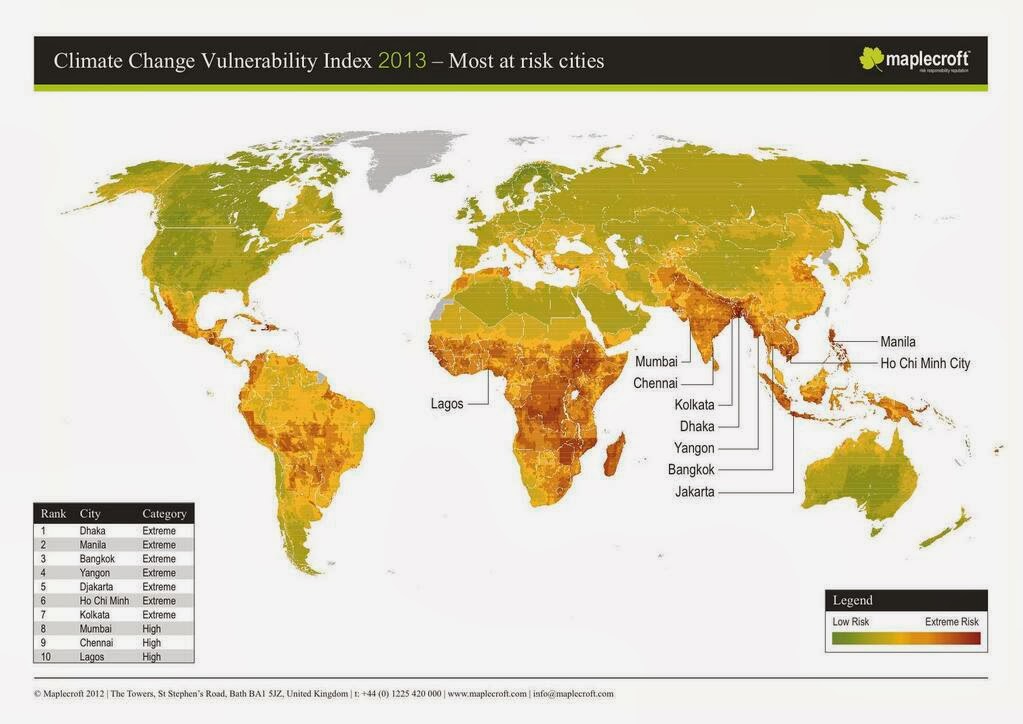
    Extreme risk
    Manila, Philippines, now 2nd most at risk city to climate change, in “extreme” category
    https://twitter.com/yebsano/status/314939005324124160/photo/1

    Research paper: Tropical cyclones and climate change:
    “future projections based on theory and high-resolution dynamical models consistently indicate that greenhouse warming will cause the globally averaged intensity of tropical cyclones to shift towards stronger storms, with intensity increases of 2–11% by 2100….  higher resolution modelling studies typically project substantial increases in the frequency of the most intense cyclones, and increases of the order of 20% in the precipitation rate within 100 km of the storm centre.
    http://www.nature.com/ngeo/journal/v3/n3/abs/ngeo779.html

    You are subscribed to email updates from Climate Code Red
    To stop receiving these emails, you may unsubscribe now.
    Email delivery powered by Google
    Google Inc., 20 West Kinzie, Chicago IL USA 60610