Author: Neville

  • Case for climate change is overwhelming, say scientists

    Case for climate change is overwhelming, say scientists

    Eleven days before the IPCC publishes its latest report, a group of eminent scientists says there is massive evidence of human responsibility

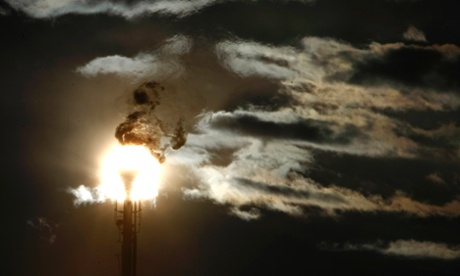
    A flare stack emitting fire is silhouetted against the sun at an oil refinery in Melbourne June 24, 2009. A senator crucial to Australia's plans for carbon trading said on Wednesday he did not believe climate change was real, delivering what could be a fatal blow to government plans to slash industrial gas emissions. REUTERS/Mick Tsikas (AUSTRALIA POLITICS ENERGY ENVIRONMENT BUSINESS IMAGES OF THE DAY) :rel:d:bm:GF2E56O0NFZ01

    Scientists say that if humans continue with business as usual, using fossil fuels and pumping out excessive amounts of greenhouse gases, the world will be on track for a planet that is 4C warmer by the end of this century Photograph: Mick Tsikas/Reuters
    With the IPCC report not yet published, there is already heated debate about what it will say, and about the implications of its findings for human development.

    The scientists’ statement is unequivocal, and is not based on whatever the IPCC may publish. They say: “The body of evidence indicating that our civilisation has already caused significant global warming is overwhelming.”

    The statement comes from 12 members of the recently established Earth League, which describes itself as “a voluntary alliance of leading scientists and institutions dealing with planetary processes and sustainability issues”.

    They say that if humans continue with business as usual, using fossil fuels and pumping out excessive amounts of greenhouse gases, the world will be on track for a planet that is 4C warmer by the end of this century, or even earlier.

    The group says assertions that there has been no warming this century are simply wrong. “Regardless of the… (erroneous) claim that global warming has already stopped, evidence is that once well-known impacts from El Niño, volcanic aerosols and solar variability are removed from the observations, the warming trend of the ocean-atmosphere system is unbroken; and that it will continue (potentially towards 4°C) unless serious mitigation action is taken.

    “That global warming continues unabated over the last decade is confirmed by ocean measurements. Ninety per cent of the additional heat that the Earth system absorbs due to the increase in greenhouse gases is stored in the oceans, and the global array of thousands of scientific measurement robots in the oceans proves that they keep heating up at a steady pace. Meanwhile satellites show that sea levels also keep rising steadily.”

    The statement says a 4°C rise would drastically change the Earth. Some coastlines and entire islands would be submerged by rising sea levels, and more extreme heat waves would cause crop failures and loss of life.

    It says powerful feedback processes that would very probably raise the warming even higher could be triggered, and might prove irreversible: “Four degrees of planetary warming means some 8°C change close to the Arctic, which will cause even larger impacts on the Eurasian and North American land mass and the surrounding seas.”

    “…our societies seem to be willing to impose immense risks on future generations.”

    Already, it says, there is persuasive evidence that immense changes may be under way: “The last two decades were… punctuated by devastating floods (like the Pakistan deluge in 2010) that may be related to an incipient restructuring of the atmospheric circulation.

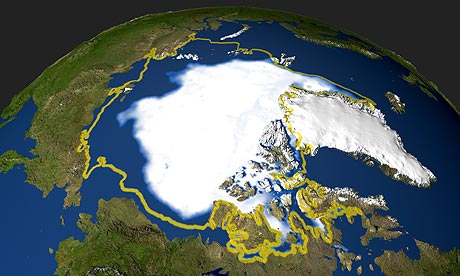
    “The signs on the climate wall as expressed by the accelerated melting of Arctic sea ice and by the retreat of the overwhelming majority of glaciers worldwide are there for all to see. Yet this is just the beginning.”

    The scientists say: “Although climate science only tells us what might happen and not what to do about it, we feel that inaction is an unacceptable prospect.

    “Nations go to war, implement mass vaccinations of their populations and organise expensive insurance and security systems (such as anti-terror measures) to address much fainter threats. However, our societies seem to be willing to impose immense risks on future generations.”

    The 12 signatories recognise that some people believe it is impossible for human activities to produce a 4°C temperature rise. Others, they say, are already acknowledging defeat by maintaining that the international policy goal of limiting warming to less than 2°C is a lost case.

    They write that there is “ample evidence” that the world can hold a 2°C line, and say technology shows that global sustainability is attainable. But they add: “… the evidence demonstrates that the time frame to achieve this is rapidly shrinking.”

    The signatories of the statement include Professor Hans Joachim Schellnhuber, of the Potsdam Institute for Climate Impact Research, Germany, and Professor Sir Brian Hoskins, Director of the Grantham Institute for Climate Change at Imperial College London. The link above lists all 12 signatories.


  • The 5 stages of climate denial are on display ahead of the IPCC report

  • Canadian scientists protest against government censorship

    Canadian scientists protest against government censorship

    Rules bar government researchers from talking about their own work with journalists and even fellow researchers

    Canadian scientists have been banned to talk about snowflakes

    Canadian scientists have been banned from discussing their research into a growing list of subjects including snowflakes. Photograph: David Parsons/Getty Images

    The Canadian government in recent years has banned government scientists from talking about a growing list of research topics including: snowflakes, the ozone layer, salmon, and previously published work about a 13,000-year-old flood.

    Now it seems the scientists are talking back.

    Researchers in 16 Canadian cities have called protests on Monday against science policies introduced under the government of Stephen Harper, which include rules barring government researchers from talking about their own work with journalists and, in some cases, even fellow researchers.

    “There a lot of concern in Canada right now about government scientists not being allowed to speak about their research to the public because of the new communications policies being put into place,” said Katie Gibbs, director of a new group, Evidence for Democracy, which is organising the protests.

    The rallies, on university campuses and central locations in Toronto, Ottawa and Vancouver as well as other cities, will be the second set of protests in a year by government scientists against the Harper government’s science policies.

    Like last year, protesters have been asked to wear white lab coats on Monday.

    The clashes with the government have been building for some time, as basic science budgets are cut back to divert more funds towards industry-focussed research.

    Last May, the government announced it was re-focusing the mission of the country’s premier scientific agency, the National Research Council, into a series of “industry-themed entry points”.

    Other government research centres, such as the high Arctic research station, or the Experimental Lakes, were completely defunded, but had some funds restored after public protests.

    Meanwhile, the country’s sole Green party MP last week accused the Harper government of allocating $100m in Environment Canada research funds for a project advantageous to a pipeline project that has yet to win approval.

    But it is arguably the government’s new information policies that seem to have produced the greatest sense of outrage.

    Critics say the policies run counter to the open access policies in place for government scientists in America and Europe.

    “It isn’t the way science is supposed to be. It’s not the way science used to be, the way I remember it in the federal government,” said John Stone, a retired Environment Canada scientist now working as a vice-chair of Intergovernmental Panel on Climate Change.

    This year, Canada’s department of fisheries and oceans released a new set of rules barring scientists from discussing their findings with the public or publishing in academic journals.

    The new guidelines required all scientists to submit papers to a departmental manager for review – even after they had been accepted for publication by an academic journal.

    The proposed rules became public earlier this year after American scientists on a joint US-Canadian project in the eastern Arctic took exception at the new conditions.

    In 2012, National Research Council scientists were barred from discussing their work with Nasa on snowflakes with journalists. Other government scientists have been barred from giving interviews on work published in leading academic journals.

    In other instances, the federal government has been accused of burying or delaying publication of government science reports thought to contain politically damaging data.

    The government was accused this month of delaying its annual report on greenhouse gas emissions – usually released in mid-summer – because it was universally expected to show a double-digit rise in carbon pollution.

    The finding could hurt Canada’s efforts to persuade Barack Obama to approve the Keystone XL pipeline from the Alberta tar sands.

  • Is climate change already dangerous? (1)

    16 September 2013

    Is climate change already dangerous? (1)

    by David Spratt

    First in a series

    Download full report

    … the (climate) disruption and its impacts are now growing much more rapidly than almost anybody expected even a few years ago. The result of that, in my view, is that the world is already experiencing ‘dangerous anthropogenic interference in the climate system’… The question now is whether we can avoid catastrophic human interference in the climate system.
    — John Holdren, senior advisor to President Barack Obama 
on science and technology issues, 2008

    The stated purpose of international climate negotiations is to avoid “dangerous” climate change or, more formally, to prevent “dangerous anthropogenic interference with the climate system”. Most of the climate action movement and most NGOs identify with this goal.

    But if climate change is already “dangerous”, what then is our purpose?

    • To return the planet to a safe climate (Holocene conditions)?
    • To accept that climate change is already irretrievably dangerous state of affairs? In which case the purpose instead becomes …
    • To prevent a plunge into an even worse “catastrophic” breakdown of human society and planetary and climate system elements?

    And if conditions existing today for some elements of the climate system and the existing greenhouse gas levels and radiative forcing are already sufficient to push more climate system elements past their tipping points and create “catastrophic” breakdown without any further emissions, what then is our purpose?

    This paper sets out the evidence that dangerous climate change has already occurred and canvasses possible responses.

    1. “DANGEROUS” METRICS

    1a. Safe boundary

    A landmark research paper by Rockstrom, Steffen et al. in 2009 established that “human activities have reached a level that could damage the systems that keep Earth in the desirable Holocene state… The result could be irreversible and, in some cases, abrupt environmental change, leading to a state less conducive to human development…” They observed that 
“a new era has arisen, the Anthropocene, in which human actions have become the main driver of global environmental change”.

    To meet the challenge of maintaining the Holocene state, the authors proposed a framework based on “planetary boundaries” which “define the safe operating space for humanity with respect to the Earth system and are associated with the planet’s biophysical subsystems or processes”. The boundaries are “values for control variables that are either at a ‘safe’ distance from thresholds — for processes with evidence of threshold behaviour — or at dangerous levels — for processes without evidence of thresholds”.

    The authors proposed nine boundaries, including a climate boundary that “human changes to atmospheric carbon dioxide (CO2) concentrations should not exceed 350 parts per million (ppm) by volume, and that radiative forcing should not exceed 1 watt per square metre (W/m2) above pre-industrial levels”.

    But CO2 concentrations now exceed 400 ppm by volume, and the 2007 IPCC report estimated greenhouse gas forcings of 3 (2.5–3.5) W/m2 above pre-industrial levels.  By this metric, climate change is now clearly dangerous, exceeding the safe boundary by wide margins: more than 50 ppm CO2 (equivalent to +0.5ºC of warming) and by more than 1-2 W/m2.

    1b. “Burning embers”: five concerns

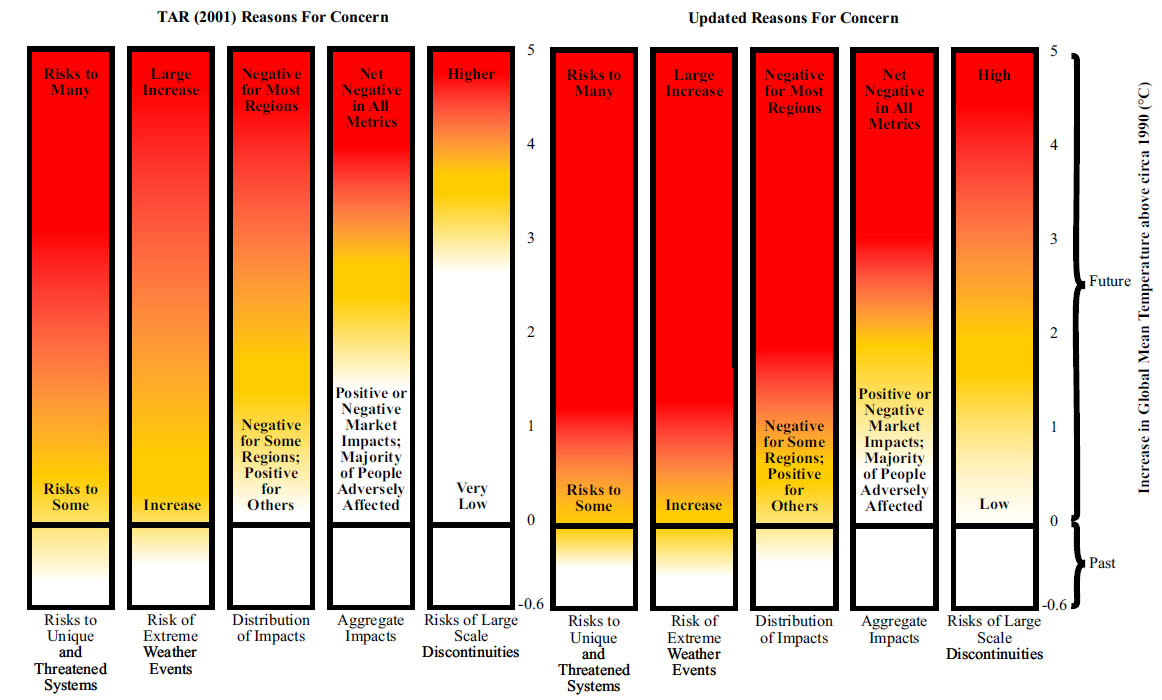
    Figure 1: The updated “reasons for concern”

    The “burning embers” diagram of the third IPCC report in 2001 was revised and updated by Smith, Schneider et al. in 2009, and will be updated again in the new 2014 IPCC report to include the colour purple to indicate worsening climate risks.  It provides five “reasons for concern”:

    1. Risk to unique and threatened systems;
    2. Risk of extreme weather events;
    3. Distribution of impacts;
    4. Aggregate (total economic and ecological) impacts; and
    5. Risk of large-scale discontinuities (abrupt transitions, “tipping points”).

    A tipping point is a step change, or passing of a critical threshold, in a major earth-climate system component, where a small push or change unleashes a bigger change in the component through positive feedbacks, which amplify the change.  The classic case in global warming is the ice–albedo feedback, where decreases in the ice cover area change surface reflectivity, trapping more heat and producing a temperature rise and further ice loss.  A discussion of tipping points and the limitations of current tipping point science may be found a future post in this series.

    This overview focuses on Arctic tipping points (concern 1. above).  It is beyond this paper’s scope to provide comprehensive and robust evidence for all five concerns, but one can note in passing that recent climate-change impacted extreme weather events, such as Superstorm Sandy, would reasonably fall within the definitions of concerns 2. and 4.  The disproportionate and sizeable impacts of climate change on poor and developing nations, which have already been documented by UN agencies and aid organisations, constitute reasonable evidence for concern 3.  The imminent loss of most of the world’s coral reef systems clearly qualifies under 1., and so on.

     Next post: Case studies on dangerous climate change for Arctic sea

  • INTERACTIVE: Population growth across the central west

    Monday September 16, 2013
    Larger / SmallerNight Mode

    INTERACTIVE: Population growth across the central west

    By KATE BURKE

    Sept. 16, 2013, 3:03 p.m.

    • Bathurst  is expected to have one of the highest population gains in regional NSW, with figures showing a population of 52,500 by 2031.Bathurst is expected to have one of the highest population gains in regional NSW, with figures showing a population of 52,500 by 2031.

    BATHURST is expected to have one of the highest population gains in regional NSW, with figures showing a population of 52,500 by 2031.

    According to figures released by the NSW Department of Planning and Infrastructure, Bathurst is expected to be in the top five population growth areas in regional NSW, outside of the Lower Hunter, Illawarra and the Central Coast.

    Over the next 18 years Bathurst’s population is expected to grow by 31.5 per cent (12,600 people), while Orange will increase by 16 per cent (6,350) and Dubbo by 12.2 per cent (4,900).

    Over the same time period Cabonne is predicted to grow by 41.3 per cent (5,450), Blayney by 21.1 per cent (1,500) and the Mid-Western Region (Mudgee) will increase by 13.5 per cent (3,100).

    Western Research Institute CEO Danielle Ranshaw said the Department of Planning and Infrastructure had indicated that a healthy birth rate and net migration were key factors for population growth in the region.

    She said while the population projections for Bathurst were in line with population growth between the 2006 and 2011 census, the projections for Orange were not.

    “The projections for Orange appear less in line with the growth that has occurred there between 2006 and 2011,” she said.

    “Cabonne, which surrounds Orange, is forecast to experience strong population growth, it may be absorbing some of Orange’s population growth.”

    “If you look at Cabonne’s population growth between 2006 and 2011, it was very minimal and isn’t in line with the high population growth predicted.”

    INTERACTIVE MAP: The population in areas marked red is predicted to decline, while areas marked in green are predicted to increase in population. The darker the shading, the greater the increase or decrease in population.

    According to the figures released, significant age changes will also occur across the region, with the number of those aged 65 and over predicted to rise significantly.

    A 92.6 per cent increase is predicted to occur in Bathurst, followed by 81.2 per cent increase in Cabonne, 74.8 per cent in Dubbo and a 68.5 per cent rise in Lithgow.

    While Australia’s ageing population will benefit some regions, it is predicted to lead to population decline in others.

    Cowra’s population is predicted to drop by 6.9 per cent (850 people), while Wellington will drop 4 per cent (350 people) and Forbes 2.8 per cent (250).

    Ms Ranshaw said the Department of Planning and Infrastructure had outlined the ageing population and net migration out of the region as factors contributing to population decline.

    “This is a difficult situation that smaller regional communities and their local councils face,” she said.

    “The concentration of health services in some of the larger regional centres is likely to be a factor in population movement within the central west.”

    Ms Ranshaw said there were plenty of opportunities in the central west but the region needed the infrastructure to support them.

    The projections, which are based on data from the Australian Bureau of Statics, the Department of Immigration and Citizenship and NSW Health, are expected to be updated next year following the release of revised ABS data and other statistics.

    Save today
    • 1.5kW Solar System

      (6 panels)

      Save up to $1,147.

      with solar incentives.

    • 3.0kW Solar System

      (12 panels)

      Save up to $2,294.

      with solar incentives.

    • 5.0kW Solar System

      (20 panels)

      Save up to $3,811.

      with solar incentives.

    Featured News

  • Tony Abbott unveils new ministry: Mathias Cormann promoted, Julie Bishop sole woman in Cabinet

    Updated 8 minutes ago

    Prime Minister-elect Tony Abbott has unveiled his new ministry, saying it is one of the most experienced incoming ministries in Australian history.

    In a major endorsement, West Australian Senator Mathias Cormann was promoted into Cabinet as Finance Minister.

    Arthur Sinodinos, who had been tipped to take the finance portfolio, was instead promoted into the junior ministry.

    Andrew Robb, who was the Coalition’s spokesman for finance in opposition, was named as Trade Minister.

    Traditionally the trade portfolio is awarded to the Nationals when the Coalition is in government, but incoming Deputy Prime Minister Warren Truss will instead be responsible for infrastructure and regional development.

    Julie Bishop, as Foreign Affairs Minister, is the only woman in the Cabinet but Mr Abbott has promoted a number of women to the outer ministry.

    Mr Abbott said he was “disappointed that there are not at least two women in the Cabinet”.

    “Nevertheless, there are some very good and talented women knocking on the door of the Cabinet and there are lots of good and talented women knocking on the door of the ministry,” he said.

    “So I think you can expect to see, as time goes by, more women in both the Cabinet and the ministry.”

    Barnaby Joyce, who on Friday was elected as deputy Nationals leader, will take the portfolio of agriculture.

    It is understood the new ministry could be sworn in as early as tomorrow.

    Mirabella, Gambaro, Macdonald no longer on frontbench

    Mr Abbott has had to replace Sophie Mirabella, who ruled herself out of contention for a portfolio as she battled to retain her Victorian seat of Indi.

    This morning, independent Cathy McGowan was ahead of Ms Mirabella by 515 votes with 91.9 per cent counted.

    Those demoted from their roles in opposition include Senator Ian Macdonald and Brisbane MP Teresa Gambaro.

    Ms Gambaro said in a statement she was “honoured” to have served as a shadow parliamentary secretary and was looking forward to representing her electorate in the parliament.

    But Senator Macdonald was not impressed, saying “what should have been one of the proudest days of my life has turned into one of the worst” following his phone call from Mr Abbott.


    Other positions include Joe Hockey as treasurer, Malcolm Turnbull as communications minister, Peter Dutton as health minister, Christopher Pyne as education minister, Scott Morrison as minister for immigration and border protection, and Greg Hunt as environment minister.

    Mr Abbott has also nominated Liberal Party stalwart Bronwyn Bishop to become Speaker of the new parliament.

    He says Philip Ruddock, who holds the title of father of the house as the oldest member, will be chief government whip.

    “I can think of no better person to act as tutor-in-chief to our new members than Philip Ruddock, the father of the house, a man of unrivalled experience, knowledge, insight, judgment and character,” he said.

    Abbott attempting to avoid ‘grandiose’ titles

    When announcing his new ministry, Mr Abbott said he wanted to avoid “title inflation”.

    “You may notice that one of the things that I have attempted to do with this new ministry is avoid the proliferation of titles, the sometimes grandiose titles of the former government where it sometimes seemed that ministers needed an extra large business card to contain all of their various titles,” he said.

    “Thankfully I think we’ve got some title deflation as a result of this ministry.

    “I am trying to avoid a situation where unless something is specifically mentioned in someone’s title it is unimportant.

    “There are some things that are so important that in a sense every minister should be concerned about them.”

    Labor criticises removed portfolios, lack of women


    Acting Labor leader Chris Bowen says Mr Abbott has left out the portfolios of disability care, tourism and resources.

    He also says Mr Abbott’s taken Australia backwards by including only one woman in Cabinet.

    “The fact that the new Prime Minister could only find, out of his entire party room, one female member of parliament that he regards as being meritorious enough to serve in his Cabinet is a sad indictment,” he said.

    “The cabinet of Afghanistan now has more women in it than the Cabinet of Australia.”

    More on this story