Author: Neville

  • Why Methane could soon become more controversial than fracking

    Why methane hydrate could soon become more controversial than fracking
    Natural gas buried in Arctic permafrost could be an economic boon — but it could also drastically accelerate climate change
    By Carmel Lobello  | July 29, 2013


    inShare
    A drilling rig on Alaska's North Slope tests a method for extracting natural gas from methane hydrate.
    A drilling rig on Alaska’s North Slope tests a method for extracting natural gas from methane hydrate.
    AP Photo/ConocoPhillips Alaska Inc., Garth Hannum
    A

    sia’s seemingly unquenchable thirst for energy — lead by China’s industrial expansion and Japan’s quest to replace nuclear — has scientists constantly rooting around for new sources. Now, the region is zeroing in on methane hydrate, a crystalline form of natural gas buried in Arctic permafrost and at the bottom of the ocean.

    In theory, there’s enough methane hydrate to put all of Asia’s energy worries to rest. An estimated 700,000 trillion cubic feet of the stuff is scattered around the Earth, which constitutes more energy than all the world’s known gas and oil resources combined. But accessing it in a way that makes economic and environmental sense poses all kinds of challenges.

    To start with, the cost of developing any new energy is sky-high. The current cost of methane hydrate is estimated to be $30 to $60 per million British thermal units, compared to $4 per million BTUs for natural gas in the U.S. But Japan claims it can bring the new energy mainstream in the next 10 years, under the assumption that as the cost of production comes down, methane hydrate could generate the kind of economic boom fracking has reaped in North America.

    But environmentalists say the potential cost of methane development extends way beyond extraction. Methane traps heat up to 20 times more effectively than carbon dioxide, though it remains in the atmosphere for a shorter time. And it’s highly volatile — oil companies, when installing rigs, usually try to avoid tapping methane hydrate deposits. Scientists warn a leak of methane could be catastrophic to the environment.

    Methane hydrate is already a threat, regardless of whether energy companies begin drilling for it. A paper published earlier this month in the journal Nature said a release of a 50-gigatonne reservoir of methane under the East Siberian Sea could accelerate climate change and cost the global economy up to $60 trillion. And that could happen solely due to warming temperatures in the Arctic. Reuters reports:

    Methane is a greenhouse gas usually trapped as methane hydrate in sediment beneath the seabed. As temperatures rise, the hydrate breaks down and methane is released from the seabed, mostly dissolving into the seawater.

    But if trapped methane were to break the sea surface and escape into the atmosphere, it could “speed up sea-ice retreat, reduce the reflection of solar energy and accelerate the melting of the Greenland ice sheet,” the study said.

    It said that could bring forward the date at which the global mean temperature rise exceeds 2 degrees Celsius by between 15 and 35 years — to 2035 if no action is taken to curb emissions and to 2040 if enough action is taken to have a 50 percent chance of keeping the rise below 2 degrees. [Reuters]

    “All told it is clearly a climate disaster in the making, on top of, well, you know, the catastrophic climate disaster already proceeding full steam ahead,” says Vice‘s Mat McDermott, after Japan successfully tapped a methane hydrate reserve for a test in March. “Regardless — and this point should be in all italics, bold, and with several exclamation points — if methane hydrates begin to get tapped en masse, our shrinking hopes of curbing climate change are gone.”

  • City retrofit saves enough power to run small town

    (Many lights left on after staff have gone home, should be turned off wherever possible)


    City retrofit saves enough power to run small town

    Tuesday, June 11th, 2013

    Electricity use in the City of Sydney’s buildings has dropped significantly with new figures revealing savings of as much as 50 per cent from power and water efficiency retrofits.

    City of Sydney electricity use data shows large savings are being made across 45 buildings, from measures as simple as installing movement sensors on vending machines that switch off lights when they are not in use, to adjusting the voltage of an entire building.

    The savings have been made under a $6.9 million contract with Origin Energy to cut electricity use in the City’s buildings by 6.4 million kilowatt hours a year – enough power to supply 870 households for one year. This will save the City an estimated $880,000 in annual power bills.

    “These figures show what a major difference can be made by retrofitting buildings. As cities are the greatest emitters of greenhouse gas, we need to make our buildings more energy efficient,” Lord Mayor Clover Moore said.

    “New buildings are designed with energy efficiency in mind. We need to retrofit older buildings if we are going to make a real difference.

    “Reducing our environmental footprint this way makes good business sense. I am delighted we are setting a good example with our property portfolio.”

    The City has a target to cut its own energy and water consumption overall by 20 per cent compared to 2006 levels. These latest figures confirm it is well on track to achieving this. Power reductions at City facilities include:

    • 68 per cent at the recycling depot
    • 52 per cent at Alexandria Childcare Centre
    • 39 per cent at Glebe Library
    • 32 per cent at Goulburn Street Car Park
    • 28 per cent at Customs House
    • 22 per cent at Paddington Town Hall
    • 21 per cent at Ian Thorpe Aquatic Centre
    • 17 per cent at King George V Recreation Centre
    • 5 per cent at Newtown Library

    Some of the savings involved changes to the building’s engineering. Air-conditioning at the City’s swimming pools and large buildings has been improved by installing variable speed drives to pumps and by using refrigerant additives to optimise the system.

    At the City’s recycling depot, induction lighting that produces instantaneous and concentrated floodlight has been installed and switches on and off with a movement sensor.

    Across the whole portfolio, the City has introduced a relatively new practice of voltage power optimisation and is upgrading the power management system on personal computers. Other retrofit changes include efficient lighting retrofits, waterless urinals, water flow controls, and water recycling and recovery systems.

    The overhaul is part of the City’s target to reduce carbon emissions by 70 per cent, compared to 2006 levels, by the year 2030 – the most ambitious of any Australian government.

    The City is also Australia’s first officially carbon neutral government.

    For more information, visit: sydney2030.com.au

    For media enquiries or images, contact City of Sydney Media Specialist Matthew Moore.

    Phone 0431 050 963 or email mmoore@cityofsydney.nsw.gov.au

    For interviews with Lord Mayor Clover Moore, contact Shehana Teixeira.

    Phone 0418 238 373 or email steixeira@cityofsydney.nsw.gov.au


    Tags: , , , , ,

  • New renewable energy planning rules unveiled

    New renewable energy planning rules unveiled

    Guidance aims to help local authorities weigh up renewable energy projects against other environmental concerns

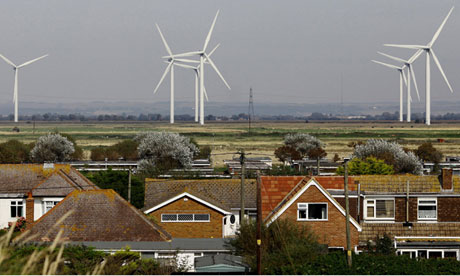
     Cheyne Court Wind Farm on Romney Marsh, Kent.

    A general view from Camber Sands in East Sussex of the Cheyne Court windfarm on Romney Marsh, Kent. Photograph: Gareth Fuller/PA

    The renewable energy industry has welcomed new planning guidance designed to help local authorities weigh up the need for renewable energy projects against other environmental concerns.

    The Department for Communities and Local Government (DCLG) today issued new planning guidance, which stressed that the need for renewable energy “does not automatically override environmental protections and the planning concerns of local communities”.

    The guidance is designed to help officials interpret the National Planning Policy Framework (NPPF), published last year, which encourages the development of renewable energy projects to meet a national target for 15 per cent of the UK’s energy to come from renewable sources by 2020.

    Announcing the new guidelines today, Communities Minister Baroness Hanham said some communities have “genuine concerns” that planning officers are failing to give enough weight to local environmental considerations like the impact on landscape, heritage sites, and “local amenity”, when considering planning applications for wind turbines or solar arrays.

    “Our new planning practice guidance will help decisions on green energy get the environmental balance right in line with the framework,” she said. “Meeting our energy goals should not be used to justify the wrong development in the wrong location.”

    The guidance was welcomed by trade association RenewableUK, which noted that the new document would not only provide greater policy certainty for developers but would also block proposed “buffer zones” around properties.

    Maf Smith, deputy chief executive of RenewableUK, said the guidance highlighted the need to balance a range of environmental concerns when planning a new development.

    “Following a long debate about onshore wind costs and benefits, we trust that this period of uncertainty for the industry is now at an end, and that we will see planning policy and guidance producing robust, objective planning decisions,” he said.

    But Friends of the Earth’s planning campaigner Naomi Luhde-Thompson slammed the government for diluting the requirement for councils to consider their responsibility for delivering renewable energy capacity when considering planning applications.

    “It’s staggering that the minister has refused to insist on councils playing their part in developing renewable energy goals – unless everyone takes urgent action, the UK will fail to meet its targets for slashing emissions,” she said.

  • FEDERAL ADVISORY COMMITTEE DRAFT CLIMATE ASSESSMENT

    FEDERAL ADVISORY COMMITTEE DRAFT CLIMATE ASSESSMENT

    The public review period is now closed; over 4,000 public comments were received and are being addressed by the authors. The National Academy review is complete and can be read here. The public review draft remains available below while the report is revised by the author teams. Thank you for your interest in the National Climate Assessment.

    A 60-person Federal Advisory Committee (The “National Climate Assessment and Development Advisory Committee” or NCADAC) has overseen the development of this draft climate report.

    The NCADAC, whose members are available here (and in the report), was established under the Department of Commerce in December 2010 and is supported through the National Oceanic and Atmospheric Administration (NOAA). It is a federal advisory committee established as per the Federal Advisory Committee Act of 1972. The Committee serves to oversee the activities of the National Climate Assessment. Its members are diverse in background, expertise, geography and sector of employment. A formal record of the committee can be found at the NOAA NCADAC website.

    The NCADAC has engaged more than 240 authors in the creation of the report. The authors are acknowledged at the beginning of the chapters they co-authored.

    Following extensive review by the National Academies of Sciences and by the public, this report will be revised by the NCADAC and, after additional review, will then be submitted to the Federal Government for consideration in the Third National Climate Assessment (NCA) Report.  For more information on the NCA process and background, previous assessments and other NCA information, please explore the NCA web-pages. The NCA is being conducted under the auspices of the Global Change Research Act of 1990 and is being organized and administered by the Global Change Research Program.

    To simply access and read the draft report, please download the chapters below. However, if you would like to submit comments on the report as part of the public process, you will need to enter the “review and comment system” and register with your name and e-mail address and agree to the terms.  All comments must be submitted through the review and comment system.

    In addition to the draft report below, you may also be interested in the following documents which provided input to the NCA:

    Download Chapters of the NCADAC Draft

    Climate Assessment Report! 

    Provide Comments on the Report!
     

    Download the Full Report* (warning, 147Mb. Very large file)

    Between chapters, there are some page numbers that are not used. This is intentional and does not reflect missing pages.


    or download each chapter separately:

    Cover page*

    Introduction: Letter to the American People

    1. Executive Summary

    2. Our Changing Climate

    Introduction to Sectors

    3. Water Resources

    4. Energy Supply and Use

    5. Transportation

    6. Agriculture

    7. Forestry

    8. Ecosystems, Biodiversity, and Ecosystem Services

    9. Human Health

    10. Water, Energy, and Land Use

    11. Urban Systems, Infrastructure, and Vulnerability

    12. Impacts of Climate Change on Tribal, Indigenous, and Native Lands and Resources

    13. Land Use and Land Cover Change

    14. Rural Communities

    15. Interactions of Climate Change and Biogeochemical Cycles

    Introduction to Regions

    16. Northeast

    17. Southeast and Caribbean

    18. Midwest

    19. Great Plains

    20. Southwest*

    21. Northwest

    22. Alaska and the Arctic

    23. Hawaii and the U.S. Affiliated Pacific Islands

    24. Oceans and Marine Resources

    25. Coastal Zone Development and Ecosystems

    Introduction to Response Strategies

    26. Decision Support: Supporting Policy, Planning, and Resource Management Decisions in a Climate Change Context

    27. Mitigation

    28. Adaptation

    29. Research Agenda for Climate Change Science

    30. The NCA Long-Term Process: Vision and Future Development

    Appendix I: NCA Climate Science – Addressing Commonly Asked Questions from A to Z

    Appendix II: The Science of Climate Change

    * These files were changed on Monday, Jan 14 to correct the color coding on Figure 20.3 in the Southwest chapter and to correct the affiliation for one of the NCADAC committee members. The correct versions of the files were available on the Review and Comment system when it went live at 9am EST, January 14.

    Between January 14th and April 12th only: Please go to the Review and Comment System to provide comments on the draft.


    You must register and accept the terms in the Review and Comment System in order to review this document. Comments will only be accepted through this system.

    NOTE: You will not be allowed to create an account in the system prior to 9am ET January 14th, 2013, and the comment period ends at 5pm ET on April 12th, 2013


    Between chapters, there are some page numbers that are not used. This is intentional and does not reflect missing pages.

  • Sequenced pPalm oil genome paves the way for sustainable plantations

    Sequenced palm oil genome paves the way for sustainable plantations

    Researchers pinpoint a gene that could be used to boost yields and reduce competition between forests and oil palms

    Palm oil View larger picture

    Researchers have just sequenced the palm oil genome. Photograph: Oliver Balch

    Few environmentalists feel any fondness for the oil palm, with its connections to deforestation in the tropics. But the waxy orange pods the tree sprouts in vivid bunches generate 45 percent of the globe’s edible oil, and consuming this incredibly versatile product is almost unavoidable, for it goes into everything from chocolate and peanut butter, to biscuits and cereal. The debate over how to turn palm oil into a sustainable crop has consequently been a priority for some time.

    Now, a duo of papers just published in Nature moves a step in that direction, suggesting that breeders could further boost oil palm yields, and in that way significantly reduce the competition between rainforests and palm oil plantations around the world.

    In one of the two papers, the research team has made a fully sequenced palm oil genome available to the public for the very first time. But it’s the second, linked, paper that has sparked the most interest with its more specific discovery of a gene, called SHELL, that gives rise to the most productive and commercially valuable kinds of oil palm fruits.

    Environmental concern motivated the research, says Rajinder Singh, an author on the paper and leader of the genomics group for the Malaysian Palm Oil Board (MPOB), the government entity that oversees the industry in Malaysia and which funded the research. “The first thing was to try and produce more oil palms with existing land,” he says. “The idea is not to encroach in new areas.”

    Singh explains that the discovery equips farmers in the tropics with the ability to identify and plant only the most productive seeds, in turn reducing the pressure to expand into virgin rainforest. “It has implications in three continents.”

    The African oil palm is the primary source of palm oil globally, and its domestication in Southeast Asia, South America, and West Africa now drives the industry. The trees produce three kinds of fruit—dura, pisifera, and tenera, the latter being the perfect hybrid of the other two, because it yields the most oil.

    These plump ochre rounds are a farmer’s gold, producing 30 percent more oil than other types. Breeders try to control the output of tenera-yielding seeds by manually cross-pollinating the most suitable dura and pisifera plants. But getting a field that teems with tenera is still a challenge, because natural pollinators intervene.

    Wind, birds, and insects can result in uncontrolled ‘contamination’—which just means that a dura plant’s pollen gets crossed with another dura for instance, and gives rise to plants that won’t produce the much sought-after tenera fruits. So while manual crossover works for the most part, “there’s an error rate associated with it that varies a lot, but it’s pretty high,’ says Robert Martienssen, a plant geneticist and author on the paper, who lectures at Cold Spring Harbor Laboratory in New York.

    Usually, farmers have to wait upwards of five years until palm oil plants bear fruiting bunches to figure out if they’re going to yield the desired tenera pods. Knowing the SHELL gene that triggers the production of these fruits, however, gives breeders a way to test things first.

    “If you screen at the nursery stage you can select what you want to field plant,” Singh explains. Screening would work much the same way as a genetic test on a human. “Immediately with our tools you can check which are the seeds of the type you want,” adds Ravigadevi Sambanthamurthi, head of the Advanced Biotechnology and Breeding Center at the MPOB.

    palm oil fruit genome These fruits of the oil palm shows the Dura fruit on the left and the Tenera fruit on the right. Tenera fruits yield 30 percent more oil per fruit than Dura fruits. Photograph: Malaysian Palm Oil BoardThat puts years back on the clock, and gives farmers a sure way to increase production. “Now with proper quality control we might have contamination of less than ten percent,” Sambanthamurthi says. Currently, plantations in Malaysia yield four tons of oil per hectare per year. The research could go some way toward achieving the goal of six tons by 2020.

    But talk of palm oil expansion raises hackles. Many people hear the phrase and mentally switch to the iconic orangutan, and for good reason, since forest clearance for plantations in Indonesia especially has resulted in death and displacement in orangutan populations.

    Palm oil has become synonymous with illegal logging, and slash and burn tactics that leave virgin forest devastated. There are also allegations of worker abuse on plantations, and the destruction of indigenous peoples’ livelihoods.

    Viewing the entire palm oil industry as one ungoverned force, however, springs from “misinformation,” says Choo Yuen May, the director general of the MPOB. In Malaysia “more than 50 percent of the land is [still] under forest cover,” she says. The government there has held a pledge since 1992 to maintain that 50 percent, and plantations are only supposed to expand onto land that had previously been cleared for crops like cocoa or rubber.

    Plantations also generate income for thousands of workers. “It’s an avenue for poverty reduction…we cannot forget that there are people out there who are hungry,” Sambanthamurthi argues.

    And ultimately, palm oil crops only use up five percent of total land area farmed for oil crops globally—yet they produce almost half of the world’s edible oil. But when they do infringe on natural habitat, it happens to be tropical rainforest, symbolic of the globe’s diversity and a plethora of charismatic species.

    Palm oil remains contentious, yet its advance is inevitable. And mapping the genome is not going to solve the problem absolutely. “Our ultimate goal was to reduce the rainforest footprint; the damage that is done by these plantations,” says Martienssen. “But biology can only do so much. Policy has to be a big part of the equation.”

    Speaking from the World Resources Institute (WRI) in a statement via email, Nigel Sizer, the Institute’s Global Forest Initiative director, said, “Increasing the productivity of existing oil palm plantations through better plants is promising, but the real issue is that we need better protections for forests and better alternatives for producers to grow their businesses.” Future standards should require that palm oil plantations only expand onto land that is already degraded instead of into untouched forest, he went on to say.

    For Martienssen, the solution lies in tightening regulations, but also in motivating farmers with the practical solutions that this new research affords.

    In the future, governments “will be able to offer farmers, and especially small holders, seeds that have much more predictable yields. The way I think about that is that that would be a strong incentive for those farmers to obey the law,” he says. “As much as possible you want the farmer to voluntarily take up those policies.”

  • production following permafrost thaw

    Article preview View full access options

    Nature Climate Change | Letter

    • Print
    • Email
    • Share/bookmark

    Long-term CO2 production following permafrost thaw

    Nature Climate Change
    (2013)
    doi:10.1038/nclimate1955
    Received
    21 August 2012
    Accepted
    17 June 2013
    Published online
    28 July 2013

    Thawing permafrost represents a poorly understood feedback mechanism of climate change in the Arctic, but with a potential impact owing to stored carbon being mobilized1, 2, 3, 4, 5. We have quantified the long-term loss of carbon (C) from thawing permafrost in Northeast Greenland from 1996 to 2008 by combining repeated sediment sampling to assess changes in C stock and >12 years of CO2 production in incubated permafrost samples. Field observations show that the active-layer thickness has increased by >1 cm yr−1 but thawing has not resulted in a detectable decline in C stocks. Laboratory mineralization rates at 5 °C resulted in a C loss between 9 and 75%, depending on drainage, highlighting the potential of fast mobilization of permafrost C under aerobic conditions, but also that C at near-saturated conditions may remain largely immobilized over decades. This is confirmed by a three-pool C dynamics model that projects a potential C loss between 13 and 77% for 50 years of incubation at 5 °C.

    At a glance

    Figures

    First | 1-1 of 3 | Last

    left

    1. Trends in permafrost thawing and soil organic C content.
      Figure 1
    2. C loss during a 12-year-long incubation at 5[thinsp][deg]C.
      Figure 2
    3. C loss during a three-year-long incubation based on five sites
      Figure 3

    right

    Read the full article

    References

    1. Tarnocai, C. et al. Soil organic carbon pools in the northern circumpolar permafrost region. Glob. Biogeochem. Cycle 23, GB2023 (2009).
    2. Schuur, E. A. G. et al. The effect of permafrost thaw on old carbon release and net carbon exchange from tundra. Nature 459, 556–559 (2009).
    3. Schuur, E. A. G. et al. Vulnerability of permafrost carbon to climate change: Implications for the global carbon cycle. BioScience 58, 701–714 (2008).
    4. Hollesen, J., Elberling, B. & Jansson, P. E. Future active layer dynamics and CO2 production from thawing permafrost layers in Northeast Greenland. Glob. Change Biol. 17, 911–926 (2011).
    5. Elberling, B., Christiansen, H. H. & Hansen, B. U. High nitrous oxide production from thawing permafrost. Nature Geosci. 3, 332–335 (2010).
    6. Knoblauch, C. et al. Predicting long-term carbon mineralization and trace gas production from thawing permafrost of Northeast Siberia. Glob. Change Biol. 19, 1160–1172 (2013).
    7. Christiansen, H. H. et al. Permafrost and periglacial geomorphology at Zackenberg. Adv. Environ. Res. 40, 151–174 (2008).
    8. Elberling, B. et al. Soil and plant community-characteristics and dynamics at Zackenberg. Adv. Environ. Res. 40, 223–248 (2008).
    9. Christiansen, H. H. et al. Holocene environmental reconstruction from deltaic deposits in northeast Greenland. J. Quat. Sci. 17, 145–160 (2002).
    10. Christiansen, H. H. Nivation forms and processes in unconsolidated sediments, NE Greenland. Earth Surf. Process. Landf. 23, 751–760 (1998).

      3.0.CO;2-A&rft_id=info:pmid/{pubmed}&rft_val_fmt=info:ofi/fmt:kev:mtx:journal&rft.genre=article&rft.aulast=Christiansen&rft.aufirst=H. H.&rft.jtitle=Earth Surf. Process. Landf.&rft.volume=23&rft.spage=751&rft.epage=760&rft.date=1998&rft.atitle=Nivation forms and processes in unconsolidated sediments, NE Greenland&rfr_id=info:sid/nature.com:Nature.com&id=doi:10.1002/(SICI)1096-9837(199808)23:8<751::AID-ESP886>3.0.CO;2-A&id=pmid:{pubmed}&genre=article&aulast=Christiansen&aufirst=H. H.&title=Earth Surf. Process. Landf.&volume=23&spage=751&epage=760&date=1998&atitle=Nivation forms and processes in unconsolidated sediments, NE Greenland&sid=nature:Nature”>

    11. Cornelissen, J. H. C. et al. Global negative vegetation feedback to climate warming responses of leaf litter decomposition rates in cold biomes. Ecol. Lett. 10, 619–627 (2007).
    12. Turetsky, M. R. et al. The disappearance of relict permafrost in boreal North America: Effects on peatland carbon storage and fluxes. Glob. Change Biol. 13, 1922–1934 (2007).
    13. Lee, H. et al. The rate of permafrost carbon release under aerobic and anaerobic conditions and its potential effects on climate. Glob. Change Biol. 18, 515–527 (2012).
    14. Schädel, C. et al. Separating soil CO2 efflux into C-pool-specific decay rates via inverse analysis of soil incubation data. Oecologia 171, 721–732 (2013).
    15. Fang, C. & Moncrieff, J. B. The dependence of soil CO2 efflux on temperature. Soil Biol. Biochem. 33, 155–165 (2001).

    Download references

    Author information

    Affiliations

    1. Center for Permafrost (CENPERM), Department of Geosciences and Natural Resource Management, University of Copenhagen, DK-1350 Copenhagen, Denmark

      • Bo Elberling,
      • Anders Michelsen,
      • Hanne H. Christiansen,
      • Louise Berg &
      • Charlotte Sigsgaard
    2. Geology Department, The University Centre in Svalbard, UNIS, N-9171 Longyearbyen, Norway

      • Bo Elberling &
      • Hanne H. Christiansen
    3. Department of Biology, University of Copenhagen, DK-2100 Copenhagen, Denmark

      • Anders Michelsen
    4. Department of Biology, University of Florida, Gainesville, Florida 32611, USA

      • Christina Schädel &
      • Edward A. G. Schuur
    5. Department of Biosciences, Aarhus University, DK-4000, Roskilde, Denmark

      • Mikkel P. Tamstorf

    Contributions

    B.E. initiated the experimental work in 1996 and compiled data and wrote most of the paper; A.M. carried out most of the chemistry analyses, C.S and E.A.G.S. made the C dynamics model; B.E. and H.H.C. carried out the 2008 permafrost coring, L.B. was involved in the 2008 sampling and data analyses, H.H.C. initiated the 1996 ZEROCALM monitoring as part of the GeoBasis programme and M.P.T. and C.S. were responsible for CALM measurements as part of the GeoBasis programme. All co-authors contributed to the writing.

    Competing financial interests

    The authors declare no competing financial interests.

    Corresponding author

    Correspondence to:

    Supplementary information