Author: Neville

  • Cost and severity of natural disasters is mounting

    Cost and severity of natural disasters is mounting

    Vancouver Sun July 6, 2013 2:08 AM

    Cautious scientists observe that one event cannot be definitive proof of a trend and that coincidence is not evidence of causality – the so-called smoking gun so often demanded or presented by conspiracy theorists of various stripes – yet a sequence of events certainly lends the indisputable weight of probability to the possibility that a trend may be developing.

    So, while citing the recent devastating floods in Calgary as evidence of global warming remains in the realm of conjecture and opinion, its context is clearly embedded in a compelling sequence of catastrophic flooding events around the world. This context strengthens the credibility of climate change models which consistently predict increased frequency for extreme weather as a consequence of rising planetary temperatures which inject more energy into atmospheric systems.

    Similar floods have in the last decade wreaked havoc in Australia, Asia, Europe, North America, South America, Central America, the Caribbean and the South Pacific. A quick survey of the U.S. Department of Commerce’s National Oceanic and Atmospheric Administration database compiling extreme weather events worldwide shows a clear trend of increasing frequency. There were four such events in 2004, for example, then six the following year, eight the year after that, then 10, then 20 in 2008. There were 15 events in 2009, then 17, then 19 in 2011. We got a respite in 2012 when they fell back to four. But the five-year average has increased from seven per year to 15 per year.

    To date, 144 weather and climate-related disasters – including droughts, blizzards and storms as well as floods – have cost the U.S. economy more than $1 trillion since 1980. Germany, the Balkans, China, Pakistan, Australia, Russia, the U.S., Brazil, India, Canada, Afghanistan, Egypt, Burundi, England, Italy, Cuba, Malaysia, Sudan, Israel, Fiji, Sri Lanka, Vietnam, Kenya, Greece, Mozambique, South Africa, Algeria – Mother Nature on the rampage is no respecter of religion, creed, economic status or political persuasion or stability, although obviously rich, stable countries have larger financial cushions with which to respond.

    Thus, Germany is able to absorb the estimated $16 billion cost of recent floods relatively easily but Greece is threatened with serious fiscal instability as a result of flash floods in Athens.

    And a discussion paper produced by the Swiss Reinsurance Company in collaboration with the Institute for Catastrophic Loss Reduction in 2010 finds similar trends for flooding events in Canada.

    If those models prove accurate in predicting trends, then we may expect more floods of the kind that recently traumatized one of Canada’s most advanced cities and more firestorms like the one causing such tragedy in Arizona, where an entire elite firefighting crew was killed.

    This means we can also expect deeper cold spells, hotter heat waves, heavier precipitation events in the form of snow and rain, prolonged droughts, more intense storms, much less predictable seasonal weather patterns and all the headaches for agriculture, forestry, fisheries, transportation and domestic life – financial and otherwise – that come with them.

    Wildfires, for example, have cost B.C. more than $1.7 billion over the past decade. The mountain pine beetle, enabled by milder winters, has now infested $4.2-billion worth of timber across the province. An unprecedented coast-to-coast drought in 2001-02 caused Canada’s GDP to fall by $5.8 billion and 41,000 jobs were lost.

    Calgary’s cost in terms of infrastructure and other physical damage from the flooding is currently estimated at

    $256 million but is expected to eventually total somewhere closer to $1 billion. Floods in Manitoba in 2011 pushed that province’s budget into a near $1-billion deficit – with costs associated with the disaster expected to total about $815 million. And, of course, there are the less tangible costs of lost productivity, foregone revenue from interrupted commerce, tourism losses during the event, public psychological stress and so on.

    As The Vancouver Sun pointed out in June of 2007 when a heavier than normal winter snowpack and a sudden hot spell put the Fraser River perilously close to overflowing, significant portions of the Fraser Valley remain vulnerable to a catastrophic flood, a system of protective dikes notwithstanding. Then there was another moment in 2012 when the river rose more than six metres and crested close enough to the top of dikes to once again worry disaster experts. Only four times in the past century has the river crested above seven metres – 99 years ago it reached eight metres and flooded a vast expanse of the valley – and three of those events have occurred since 1948.

    The Swiss Reinsurance study notes that unlike 1894, more than 300,000 people now live and work in the flood plain along with extensive railway, airport, dock and highway infrastructure. A simultaneous combination of extreme winter snowfall, a severe rain event and a sudden hot spell might conceivably create conditions that in the future could overwhelm present dyking structures intended to mitigate potential flooding. And that would, indeed, be a catastrophic financial event for Metro and the province.

    The study estimates, for example, that while the infamous 1948 flood was smaller in magnitude than the 1894 event, it caused far more damage (close to $200 million in 2009 dollars) because development was more extensive.

    Today, with even more extensive development, the cost of a similar inundation of the Fraser River floodplain – or possibly worse, given the trend for extreme weather – might reach $10 billion for a one-in-500-year event. This would amount to just under one-quarter of all the provincial government’s spending projected for 2013.

    Clearly, if there are lessons to be learned from Calgary, they are that while previous development on floodplains cannot be undone, comprehensive strategic climate-related disaster mitigation and response planning on a regional, provincial and national scale is both prudent and wise.

    Debate over climate change and what could or should be done in response is important and deserves to be taken seriously, not mocked, dismissed or ignored by any faction. But equally important is awareness of the unassailable reality of that change, what its consequences can be and what can pragmatically be done to mitigate the financial burdens taxpayers everywhere must inevitably face if the process deepens and accelerates as it certainly appears to be doing.

    Read more: http://www.vancouversun.com/news/Cost+severity+natural+disasters+mounting/8625116/story.html#ixzz2YGK4Mqz5

  • 2C climate target is half of what is needed, say scientists

    2C climate target is half of what is needed, say scientists

    Restricting global warming to a rise of 2C may be the wrong target, according to Swiss scientists

    Africa climate change

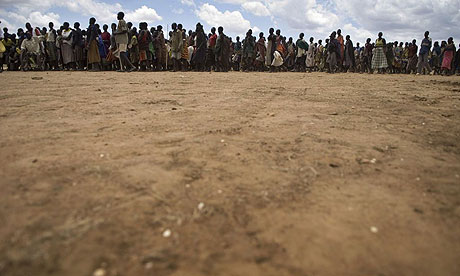
    To keep the planet habitable, governments have also committed themselves to save biodiversity and at the same time to deliver food security for the 10 billion citizens who may populate the Earth later this century. Photograph: Walter Astrada/AFP/Getty

    Governments that agreed to try to restrict global warming to a rise of no more than 2°C may have set themselves the wrong target, according to Swiss scientists.

    Marco Steinacher from the University of Bern and colleagues report in Nature that the cuts in carbon dioxide emissions necessary to achieve this limit to rising temperatures won’t stop sea level rise, won’t halt the acidification of the oceans and won’t repair the losses in agricultural productivity.

    They argue that a simple notch on the mercury thermometer 2°C above the pre-industrial average is not ambitious enough. The climate system involves more than just global mean atmospheric temperature: it also depends on the atmosphere’s interactions with the hydrosphere, the biosphere and the geosphere.

    To keep the planet habitable, governments have also committed themselves to save biodiversity and at the same time to deliver food security for the 10 billion citizens who may populate the Earth later this century. All these targets will together require much deeper cuts in emissions.

    “Therefore, temperature targets alone are unable to comprehensively limit the risks from anthropogenic emissions”, they warn bluntly.

    “When we consider all targets jointly, CO2 emissions have to be cut twice as much as if we only want to meet the two degree target”

    The argument is a complex one: essentially they are questioning cuts that governments have yet to actually make, and fit the logic of these cuts into a global climate system that is so far not completely understood.

    The scientists used computer models to calculate the extent of carbon dioxide emission reductions needed to meet the proposed targets. They employed a model of the climate machinery developed at the university – they call it the Bern earth system model – and in a few weeks made the 65,000 simulations necessary to complete their study and deliver probabilities of meeting specific climate targets.

    “We can now show which total CO2 emissions would be tolerable in the coming decades in order to meet each and every one of the additional climate targets – for example stable production on agricultural land and limitation of ocean acidification”, said Steinacher.

    “When we consider all targets jointly, CO2 emissions have to be cut twice as much as if we only want to meet the two degree target.”

  • Scientist welcomes huge water buyback

    Scientist welcomes huge water buyback

    Laurissa Smith

    Updated Fri Jul 5, 2013 4:21pm AEST

    The Commonwealth has approved what’s believed to be the largest land and water buyback in the Murray-Darling Basin.

    It’s offered $180 million for 173 gigalitres of water and 84,000 hectares on the Nimmie Caira floodplain in southern NSW.

    Professor Richard Kingsford, director of the Australian Wetlands, Rivers and Landscapes Centre at the University of NSW, says this deal brings some big opportunities for wetlands to be managed sustainably.

    “You know, undoubtedly that system down there is one of the most important in the Murray-Darling,” he said.

    “I remember first seeing all the flooding and the waterbirds and the incredible biodiversity in the mid-1980s, and at that time some people used to call it little Kakadu because it was an incredible place.”

    NSW Primary Industries Minister Katrina Hodgkinson says while the deal reduces the pressure for water buybacks in the Murrumbidgee, it won’t mean NSW will sign the agreement with the Commonwealth to implement the Basin Plan.

    “Look, there is still some way to go, although this puts a significant dent in that figure,” she said.

    “We are still not in a place where I can be recommending the Premier signs the Inter-Governmental Agreement on the Murray-Darling Basin Plan. There are several outstanding issues.”

    Michael Spinks, at the lower end of the Nimmie Caira floodplain, north-east of Balranald, is the spokesperson for the group of 11 landholders involved in the deal.

    Despite the windfall, he says he’s not planning on retiring just yet.

    “Most of us fellers are in that 50 to 60-year age group, we’ve still got a few years left in us, so we won’t be retiring.”

    Topics: water-management, environmental-management, rivers, murray-darling-basin, irrigation, hay-2711, balranald-2715

    First posted Fri Jul 5, 2013 1:22pm AEST

  • WHO links rise in Pacific diseases to climate change

    WHO links rise in Pacific diseases to climate change

    Pacific correspondent Sean Dorney

    Updated Fri Jul 5, 2013 8:12pm AEST

    The World Health Organisation (WHO) says there is a clear correlation between climate change and a rise in cases of disease in the Pacific.

    The WHO has added an extra eight conditions to its list of threats because of new evidence that has emerged in the past decade through research on the health impacts of climate change.

    Malaria was on the original list, but now dengue fever has been added.

    Dr Colin Tukuitonga, the director of the Public Health Division in the Secretariat of the Pacific Community (SPC), says the prevalence of disease reaches from the top of Australia and throughout the Pacific.

    “This year alone we had dengue from Papua New Guinea, Fiji, New Caledonia, Solomons, French Polynesia and even northern Queensland,” he said.

    “With the changes that come about with the result of climate change we’re concerned dengue will continue to spread.”

    Dr Tukuitonga says the spread of dengue into island countries where it was not such a threat before is a major concern.

    “When you have more people in the population that haven’t been exposed, obviously it takes off,” he said.

    Chikungunya, or “chik”, another equally debilitating disease carried by the same mosquito as dengue, is also on the rise.

    Dr Tukuitonga says it was reported for the first time in New Caledonia this year and the conditions are there for chik to spread even further.

    There has been some success recently in the fight against malaria in the Pacific, especially in Solomon Islands, thanks in part to treated mosquito nets.

    But the mosquito carrying dengue and chikungunya bites during daylight hours, not at dusk and dawn.

    The WHO is encouraging Pacific island countries to develop their own health sector action plans to monitor and respond to climate-sensitive diseases.

    Topics: diseases-and-disorders, malaria, climate-change, environmental-impact, environmental-health, pacific, papua-new-guinea, fiji, solomon-islands, new-caledonia, french-polynesia

    First posted Fri Jul 5, 2013 8:05pm AEST

  • Make room – our population is soaring

    Make room – our population is soaring

    Friday, 05 July 2013 08:56
    Michael Yardney

    The Big Australia vs Small Australia debate was all the rage a few years ago, but that argument now seems to have gone by the wayside.

    In fact, we’re growing faster than any other developed country.

    The Australian Bureau of Statistics (ABS) recently released demographic data for December 2012 showing Australia’s population grew by 394,200 people or 1.8% during 2012, well above its long-term average of 1.4%.

    This is good for our economy and good for our property markets.

    Of course a rising population on its own isn’t enough to push up property values, but a nation full of wealthy workers who all want to live in the same few capital cities is.

    But I’m getting ahead of myself…

    What’s happening state by state?

    Population at end Dec qtr 2012

    Change over previous year

    Change over previous year

    PRELIMINARY DATA

    ‘000

    ‘000

    %


    New South Wales

    7 348.9

    90.4

    1.2

    Victoria

    5 679.6

    99.5

    1.8

    Queensland

    4 610.9

    92.5

    2.0

    South Australia

    1 662.2

    15.6

    0.9

    Western Australia

    2 472.7

    83.0

    3.5

    Tasmania

    512.4

    0.4

    0.1

    Northern Territory

    236.9

    4.2

    1.8

    Australian Capital Territory

    379.6

    8.6

    2.3

    Australia(a)

    22 906.4

    394.2

    1.8


    (a) Includes Other Territories comprising Jervis Bay Territory, Christmas Island and the Cocos (Keeling) Islands.

    At the state level, population growth has three components: natural increase, net overseas migration and net interstate migration.

    And as you can see, growth varies considerably between the various states with population growth the strongest in WA.

    While it’s interesting to see the percentage growth in each state, it’s also important to look at the absolute numbers.

    In some states such as Tasmania (+400), Northern Territory (+4200) ACT (+8600) and South Australia (+15,600) the actual number of people moving in is quite small and this is unlikely to change much in the future.

    The lack of depth in these particular markets is one of the reasons I avoid investing in them.

    On the other hand, take a look how many people are moving into our four major capital cities.

    The population of WA is booming with an increase of 3.5% last year or 83,000 people. It’s little wonder the Perth property market is performing well.

    Victoria’s once again had the biggest population growth (+99,500) and this is one of the reasons its property market has confounded pundits and performed better than many expected.

    And in Queensland (+92,500) and New South Wales (+90,400) the population growth continues apace. 

    Strong migration holds the key

    Australia’s firm population growth has mainly been driven by a doubling in net migration over the last few years. Back in 2005, annual net migration was around 120,000. Today, that figure is close to 240,000.


    Source: CommBank


    But dwelling construction isn’t keeping pace

    As you can see from the following graph from CommBank, our robust population growth has occurred against a backdrop of modest dwelling construction.


    Source: CommBank

    CommBank estimates our population growth would require 170,000 new dwellings this year, but as you can see, we’re not building many more houses than we were one or two decades ago.As always, some of the new apartments are being built in the wrong place – where there isn’t sufficient demand leading to an oversupply on the Gold Coast, in the Melbourne CBD and in Melbourne’s new outer suburbs.

    But the overall mismatch explains some of the issues that support house prices.

    What’s ahead?

    The economists at the CBA expect annual population growth will be in the 350,000 to 400,000 range over the next few years with a relatively firm birth rate and strong immigration.

    That means our three big capital cities could add close to one million inhabitants each over the next 15 years.

    Many of our new migrants will take up the new jobs being created, while others will replace the ageing Baby Boomers moving out of the workforce.

    Of course the majority will move to our big four capital cities and many will want to live in the same suburbs; those inner and middle ring suburbs where the action and the jobs are.

    And our old friend, the supply and demand ratio will support the property markets in these areas.

    Some final thoughts

    I can’t see the population debate being a factor in the upcoming election, but it’s likely our high rate of population growth will provide some debate in the future due to the potential problems of environmental impacts, increased need for housing, infrastructure investment and demand for essential services.

    On the other hand, increases in population, particularly skilled working age population growth, increases the tax base and helps boost revenues for all levels of government. It also increases demand for goods and services across the economy.

    Population growth is a balancing act; let’s hope our future governments get it right.

    In the meantime, move over and make room!

    Michael Yardney is a director of Metropole Property Strategists, who create wealth for their clients through independent, unbiased property advice and advocacy. Subscribe to his Property Update blog.

  • New UN report details “unprecedented climate extremes” over past decade

    New UN report details “unprecedented climate extremes” over past decade

    Posted on: 9:19 am, July 4, 2013, by and , updated on: 09:21am, July 4, 2013

    5
    Pinterest
    1
    Share
    8
    Twitter
    2
    Email

    Please upgrade your browser to view HTML 5 content

    RICHMOND, Va. (WTVR) – After days of record hot weather and extreme heat across the Southwestern U.S. (caused by a stationary high pressure system over a region already experiencing recent years of drought), some scientists are pointing to this event as an example of the kinds of extreme weather events that are becoming more common.

    The United Nations released a report Wednesday, July 3 saying the Earth saw “unprecedented high-impact climate extremes” between 2001 and 2010, with every spot on the globe affected in some way. More nations broke temperature records during that decade than in any other decade on record. Almost half the nations on Earth broke 50-year-old records for high temperatures. The report went on to say this is the warmest decade (globally) we’ve seen over the past century.

    Global temperatures have been rising so steeply since the 1980s that Arctic sea ice is now melting twice as fast as it once did. The Arctic is warming faster than any other part of the world.


    “Rising concentrations of heat-trapping greenhouse gases are changing our climate, with far-reaching implications for our environment and our oceans, which are absorbing both carbon dioxide and heat,” said Michel Jarraud, the Secretary-General of the World Meteorological Organization (WMO), which produced the report.

    The report opens with scientists pointing to human-induced changes. “The rapid changes that have occurred since the middle of the past century, however, have been caused largely by humanity’s emissions of greenhouse gases into the atmosphere. Other human activities also affect the climate system, including emissions of pollutants and other aerosols, and changes to the land surface, such as urbanization and deforestation.”

    Greenhouse gases are quickly honed in as the biggest contributor to climate change in this report. “According to the WMO Greenhouse Gas Bulletin, global-average atmospheric concentrations of carbon dioxide rose to 389 ppm in 2010 (an increase of 39 per cent compared to pre-industrial times), methane to 808.0 ppb (158 per cent) and nitrous oxide to 323.2 ppb (20 per cent). This changing composition of the atmosphere is causing the global average temperature to rise, which, in turn, exerts a significant influence on the hydrological cycle and leads to other changes in climate and weather patterns.”

    CLICK HERE to read the full United Nations report.

    UNtempReport

    The report explains that other climate variables like El Nino and La Nina do show a fingerprint on the record.

    UNensoplot

    And as important as it is to look at the long-term trends for the “big picture,” you may often wonder why your local, daily experienced temperatures may not seem to “fit” with what is happening globally. Not every day is going to be an “extreme weather day” in your neighborhood. We have to remember that natural climate variability is still happening in the midst of the long-term warming pattern.
    The UN report says, though, “Human influence has probably increased the maximum temperatures of the most extreme hot nights and days and the minimum temperatures of cold nights and cold days. It is also more likely than not that human-induced climate change has increased the risk of heatwaves.”
    What about tropical cyclones? The UN report concludes that more research is needed to determine how long-term global warming is impacting tropical systems. “No clear trend has been found in tropical cyclones and extra-tropical storms at the global level. More complete datasets will be needed in order to perform robust analyses of trends in the frequency and intensity of these hazards.” There is also no clear picture yet of how other extreme severe weather events like tornadoes and severe thunderstorms are linked to a warming planet. The best scientific knowledge about the link between climate change and extreme events are for events like heat waves, cold waves, precipitation trends, floods, and droughts.


    Meteorologist Carrie Rose
    “Like” Carrie on Facebook
    Follow Carrie on Twitter