Author: Neville

  • Tide of humanity, as well as rising seas, lap at Kiribati’s future

    Tide of humanity, as well as rising seas, lap at Kiribati’s future

    June 13, 2013|David Gray | Reuters
      •   
      •  
    (DAVID GRAY, REUTERS)
    SOUTH TARAWA, Kiribati (Reuters) – The ocean laps against a protective seawall outside the maternity ward at Kiribati’s Nawerewere Hospital, marshalling itself for another assault with the next king tide.

    Inside, a basic clinic is crowded with young mothers and newborn babies, the latest additions to a population boom that has risen as relentlessly as the sea in a deeply Christian outpost where family planning is still viewed with skepticism.

    It is a boom that threatens to overwhelm the tiny atoll of South Tarawa as quickly as the rising seas. Some 50,000 people, about half of Kiribati’s total population, are already crammed onto a sand and coral strip measuring 16 sq km (6 sq miles).

    “Climate change is a definite long-term threat to Kiribati, there’s no doubt whatsoever about that,” says Simon Donner, a climate scientist at the University of British Columbia who has been visiting South Tarawa since 2005.

    “But that doesn’t mean it’s the biggest problem right now … Any first-time visitor to Tarawa is not struck by the impacts of sea level rise, they’re struck by how crowded it is.”

    Low-lying South Pacific island nations such as Kiribati (pronounced Kee-ree-bahs) and Tuvalu, about halfway between northeast Australia and Hawaii, have long been the cause célèbre for climate change and rising sea levels.

    Straddling the equator and spread over 3.5 million sq km (2 million sq miles) of otherwise empty ocean, Kiribati’s 32 atolls and one raised coral island have an average height above sea level of just two meters (6-1/2 feet).

    Studies show surrounding sea levels rising at about 2.9 mm a year, well above the global average of 1 – 2 mm a year.

    Kiribati President Anote Tong has grimly predicted his country will likely become uninhabitable in 30-60 years because of inundation and contamination of its fresh water supplies.

    OVERCROWDING “A MENACE”

    While climate change poses a serious longer-term threat, many people, including Tong, recognize that breakneck population growth is a more immediate problem. South Tarawa’ population density of more than 3,000 per sq km is comparable to Los Angeles or parts of London – without the high rises.

    The government fears South Tarawa’s population could double to more than 100,000 by 2030 unless the birth rate and internal migration slows.

    Rudimentary huts of little more than timber sleeping platforms and palm thatch roofs line a single dusty road running the length of the atoll. Dotted among them are pig pens, chicken coops, overcrowded grave sites and the blasted relics from one of the bloodiest battles of World War Two.

    Bwabwa Oten, Kiribati’s director of hospital services, says current annual population growth in Kiribati is close to 6 percent, with overcrowding a major contributor to disease and an infant mortality rate among the highest in the region.

    The church plays an integral role in the South Pacific and efforts to limit birth rates have run into resistance. Large families are also traditional in the region, which has one of the world’s highest rates of teen pregnancy.

    Describing the population surge as “a menace”, Tong has called on churches to help curb growth by allowing their members to use birth control.

    “Religion is incredibly powerful in the Pacific and there is quite an overt suspicion that, when we are talking about family planning, it in fact means family stopping,” said Bronwyn Hale of New Zealand-based Family Planning International, which is working to promote sexual and reproductive health in Kiribati.

    Progress is being made, with clinic visitor numbers up and a growing acceptance of the threat of over-population.

    “Right now, population is the major issue, the number one issue we should face,” said Peter Itibita, a member of the Mormon Church in South Tarawa.

    Many health problems also stem from a lack of clean water as rising salinity and pollution affect underground water, with diarrhea outbreaks caused by contamination from human and animal waste and other pollutants.

    Nawerewere Hospital also has problems, with new mothers spilling from overcrowded wards onto verandas and into corridors.

    “Sometimes with the new babies, we don’t have the water to wash them,” says Rina Tabi, a maternity ward nurse.

    Plans are underway for solar-powered energy and desalination plants but the cost of building and maintaining them is a challenge for cash-strapped Kiribati, which relies on aid and royalties from foreign fishing fleets.

    COPING MECHANISMS “OVERWHELMED”

    The complexities of sea level change are becoming more apparent and there is little doubt that nations like Kiribati will be among the most affected. But it is equally clear that vulnerable states like Kiribati are responsible for less than 0.1 percent of global emissions of greenhouse gases from burning fossil fuels.

  • Study of Oceans’ Past Raises Worries About Their Future

    Study of Oceans’ Past Raises Worries About Their Future

    June 14, 2013 — The ocean the Titanic sailed through just over 100 years ago was very different from the one we swim in today. Global warming is increasing ocean temperatures and harming marine food webs. Nitrogen run-off from fertilizers is causing coastal dead zones. A McGill-led international research team has now completed the first global study of changes that occurred in a crucial component of ocean chemistry, the nitrogen cycle, at the end of the last ice age. The results of their study confirm that oceans are good at balancing the nitrogen cycle on a global scale. But the data also shows that it is a slow process that may take many centuries, or even millennia, raising worries about the effects of the scale and speed of current changes in the ocean.


    Share This:

    “For the first time we can quantify how oceans responded to slow, natural climate warming as the world emerged from the last ice age,” says Prof. Eric Galbraith from McGill University’s Department of Earth and Oceanic Sciences, who led the study. “And what is clear is that there is a strong climate sensitivity in the ocean nitrogen cycle.”

    The nitrogen cycle is a key component of the global ocean metabolism. Like the proteins that are essential to human health, nitrogen is crucial to the health of oceans. And just as proteins are carried by the blood and circulate through the body, the nitrogen in the ocean is kept in balance by marine bacteria through a complicated cycle that keeps the ocean healthy. The phytoplankton (microscopic organisms at the base of the food chain) ‘fix’ nitrogen in the shallow, sunlit waters of the ocean, and then as they die and sink, nitrogen is eliminated (a process known as ‘denitrification’) in dark, oxygen-poor pockets of the ocean depths.

    Using sediment gathered from the ocean floor in different areas of the world, the researchers were able to confirm that as the ice sheets started melting and the climate warmed up at the end of the last ice age, 18,000 years ago, the marine nitrogen cycle started to accelerate. The ocean had stabilized itself in its new, warmer state, in which the overall nitrogen cycle was running faster, by about 8,000 years ago. Given the current dramatic rate of change in the ocean nitrogen cycle the researchers are not sure how long it will take for marine ecosystems to adapt.

    “We are changing the planet in ways we are not even aware of,” says Galbraith. “You wouldn’t think that putting carbon dioxide into the atmosphere would change the amount of nitrogen available to fish in the ocean, but it clearly does. It is important to realize just how interconnected everything is.”

    This research was funded by: the Canadian Institute for Advanced Research (CIFAR) through the Earth System Evolution Program

    Share this story on Facebook, Twitter, and Google:
  • How climate change climbed up the business agenda

    How climate change climbed up the business agenda

    The problem is not just an issue for activists, as extreme weather events put sustainability centre stage for business

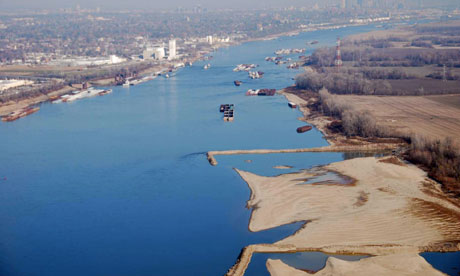
    Drought-hit areas of the Mississippi river

    At its peak last summer, the North American drought crippled commerce along the Mississippi river. Photograph: Colby Buchanan/AP

    Climate change, deforestation, sustainable sourcing. Voices of concern over these issues – and more – aren’t only those of activists or the environmental community. Increasingly, disparate stakeholders and investors are chiming in. What was once a murmur is now a chorus, often built into business plans and integrated into corporate agendas.

    In a recent preview of the 2013 proxy season, Ernst & Young reported that 45% of shareholder proposals focus on environmental and social topics. Interestingly, nearly one third of climate change and other sustainability proposals were withdrawn, indicating dialogue between corporations and shareholders on these issues that has satisfied both parties.

    Shareholder expectations have historically pushed the corporate agenda, but why the growing interest in greener topics? Environmental and social issues – in other words sustainability issues – interest shareholders because they are strategic risk-management issues. Leading companies are taking their cue accordingly, renewing their focus on the need for resource efficiency and scenario planning. This response spans large industrial sectors including oil and gas, agriculture, food and beverage, manufacturing and utilities.

    What other trends are solidifying a new sustainability minded business reality? A recent survey by Ernst & Young and GreenBiz queried sustainability executives (annual revenues of $1bn plus) representing 17 industries. More than 50% expect natural resources to affect their company’s core business.

    Water-related risks gained the greatest notoriety in the corporate sphere, and for good reason. A full 76% of respondents ranked water as the top cause for concern among resources “most at risk”. At its peak last summer, the North American drought crippled commerce along the Mississippi river, almost forcing closure of the largest continental shipping lane in the US. Munich Re cited the drought as “the single most important cause of losses in 2012.”

    More broadly, extreme weather events around the world accentuate the need to focus on climate change from an operational perspective. Addressing and planning for potential supply chain disruptions are requisite.

    Deforestation and biodiversity are also affecting suppliers of commodities from basic metals to those linked to the production and delivery of agricultural products. Across the board, risks to natural resources, extreme weather events and other factors are helping businesses realise the connection between risk-management and sustainability.

    Investors aren’t alone in being interested in sustainability issues. The C-suite follows suit: 36% of survey respondents reported full engagement from the CEO and board of directors. This engagement in turn drives interest – and action – throughout organisations, even taking root in overarching policy. Close to three-quarters of survey respondents reported that sustainability issues were included in their organisation’s mission statement.

    As business leaders emphasise and base actions upon sustainability issues, contemporaries will likely do the same. While a focus on profit and the competition remains constant, more and more businesses are realising the benefits that come from integrating sustainability into operations. Beyond “doing the right thing”, sustainable operations drive revenue and help businesses lead. What executive wouldn’t see sustainability’s alignment with the core business aims of profit and market leadership?

    The study also revealed executives’ perception of customers’ influence and interest in sustainability – 61% of respondents saw its customers, both individual consumers and businesses, as drivers of sustainability agendas. That viewpoint makes sense: today’s younger consumers have grown up with recycling and conservation ingrained into daily life. As they enter the working world and exert a stronger influence in the marketplace, they expect the same. As this population ages, their economic influence and purchasing power will grow proportionately.

    Across corporate America, we’re witnessing sustainability – once relegated to the backdrop of business – approach centre stage on the corporate agenda. Its inextricable connection to risk management is accentuated by today’s limited availability of and access to natural resources, matters compounded by the proliferation of extreme weather.

    Seeing the financial implications, a broader base of investors and shareholders are taking both notice and action. One and the same, customers and employees have new sustainability expectations that carry over from the marketplace to the workplace. All of these factors have helped bring other environmental and social issues to the table. It’s clear too, that the growing integration of sustainability into the corporate agenda is much more than a trend. It is an accepted acknowledgement of how business is and how it must operate for long-term success.

    Brendan LeBlanc executive director climate change and sustainability services, Ernst & Young LLP

    This content is brought to you by Guardian Professional. Become GSB member to get more stories like this direct to your inbox

  • Explainer: how much carbon can the world’s forests absorb?

    11 June 2013, 2.35pm EST

    Explainer: how much carbon can the world’s forests absorb?

    You are walking through the bush when you see an enormous tree trunk, tens of metres long, lying across the forest floor. Imagine you and several dozen friends lifting it by hand. Now you’ve literally grasped the significance of trees and forests when it comes to carbon sequestration – trees are heavy…

    W7g8m7b8-1370229613
    If deforestation is cut down, the world’s forests could act as a large net sink for carbon emissions. Flickr/sobriquet.net

    You are walking through the bush when you see an enormous tree trunk, tens of metres long, lying across the forest floor. Imagine you and several dozen friends lifting it by hand. Now you’ve literally grasped the significance of trees and forests when it comes to carbon sequestration – trees are heavy, and carbon accounts for almost half their dry weight, or biomass.

    The world’s forests are a net carbon “sink”. Each year they remove more carbon from the atmosphere by photosynthesis than they return via their own respiration, decomposition of dead roots, trunks and leaves, and by forest fires.

    That is how the growth and re-growth of forests around the world has slowed climate change in the past century. It has been estimated that between one-third and one-fourth of the total carbon dioxide (CO2) emissions from burning coal, gas and petrol has been turned into wood and other plant parts through this process. Without that incredible ecosystem service, climate change would be much more extreme today than it already is.

    Despite advances in satellite remote sensing and ground inventories, our estimate of the area covered by forests globally is surprisingly shaky. We are unsure how much the trunks of all those trees weigh, nor can we know for certain the weight of their roots. It is even harder to figure out how much the total global forest biomass grows from one year to the next – a key figure that tells us how much of our annual CO2 pollution has been scrubbed out of the air by forests.

    Forest ecologists like a challenge however, and there have been several attempts at estimating the forest carbon “sink”. Perhaps the most internationally comprehensive approach was an assessment of forest carbon stocks and fluxes across the globe between 1990 and 2007. They assessed the carbon content of live biomass, dead wood, litter, oil organic matter and harvested wood products in tropical, temperate and boreal forests, and examined how these stocks changed over roughly two decades.

    According to this analysis, intact forests and those re-growing after disturbance (like harvesting or windthrow) sequestered around 4 billion tonnes of carbon per year over the measurement period — equivalent to almost 60% of emissions from fossil fuel burning and cement production combined.

    This news is not as good as it seems. During the time measured, tropical deforestation resulted in the release of almost 3 billion tonnes per year. Thus, globally, the net forest carbon sink amounted to just 1.1 billion tonnes per year or one-seventh of average emissions from fossil fuel burning and cement production over the period measured.

    These numbers suggest that forests, and tropical forests in particular, could play a key role in slowing the rise of atmospheric CO2 in the decades to come.

    In the tropics, growth and re-growth of forests generated a colossal carbon sink of 2.8 billion tonnes of carbon per year. This largely, but not entirely, counterbalanced the equally colossal carbon emissions associated with deforestation of other tropical forests. As a result, the tropics served as a relatively small net source of carbon to the atmosphere since 1990.

    If deforestation continues unabated, and droughts and forest fires become more common, as is expected, then tropical forests could become a large net source of carbon to the atmosphere, heating up the pace of climate change. Disturbances to temperate and boreal forests from climate change-induced droughts, wildfires and windstorms could make the situation even worse.

    Conversely, if deforestation was to slow in comparison to continued growth of recovering and intact forests, tropical forests could serve as a large net sink of carbon in the future and make the United Nation’s Reducing Emissions from Deforestation and Forest Degradation (REDD) programme a meaningful contributor to offsetting emissions.

    Our best estimates of global forest carbon sinks and sources demonstrate the ongoing importance of forests to the global carbon cycle. Unfortunately, however, they do not provide a road map to the future.

    If forest “scrubbing of CO2” declines while release of CO2 remains stable or grows, the “braking” effect of the world’s forests on the pace of climate change will grow weaker, perhaps disappearing entirely. That would be truly bad news for the global climate and those who depend on it.

    And unfortunately, that is not just a lot of hot air.

  • Colorado is burning as climate change extends wildfire season

    The same could be said for Australia

    Colorado is burning as climate change extends wildfire season

    By John Upton

    Colorado burning
    Phillip Stewart
    Smoke from the Black Forest Fire.

    Hellish wildfires are ravaging parts of Colorado. Thousands of people have been evacuated and at least 360 homes have been destroyed by the Black Forest Fire, currently burning northeast of Colorado Springs. It’s just one of many blazes being battled by firefighters in the state and across the West.

    Hot and Bothered - small x  200
    Susie Cagle

    This year’s Western fire season began early with blazes in Southern California — a phenomenon that California Gov. Jerry Brown (D) blamed on climate change. Last week, the head of the U.S. Forest Service warned Congress that climate change is prolonging the annual wildfire season.

    The Associated Press reports that the Black fire is “the most destructive in state history” — and it’s still raging.

    Fueled by hot temperatures, changing gusts, and thick, bone-dry forests, the Black Forest Fire earlier prompted evacuation orders and pre-evacuation notices to more than 9,000 people and to about 3,500 homes and businesses, sheriff’s officials said. …

    The fire was among several that surged rapidly Tuesday along Colorado’s Front Range. Wildfires also were burning in New Mexico, Oregon and California, where a smokejumper was killed fighting one of dozens of lightning-sparked fires.

    The Black Forest Fire is expected to worsen, The Denver Post reported this morning:

    Thursday’s forecast called for shifting, gusty winds, even hotter temperatures and a threat of dry lightning.

    “The potential for this fire to spread is extreme,” [El Paso County Sheriff Terry] Maketa said. “We’re throwing everything at this we possibly can.”

    Even one of the evacuation centers, New Life Church, had to be evacuated Wednesday because of thick, acrid smoke.

    Nearly 500 firefighters were supported by Chinook helicopters and air tankers spreading slurry over Black Forest, north of Colorado Springs. Army, National Guard and Air Force units also pitched in.

    The Guardian reported last week on the Forest Service chief’s warnings:

    America’s wildfire season lasts two months longer than it did 40 years ago and burns up twice as much land as it did in those earlier days because of the hotter, drier conditions produced by climate change, the country’s forest service chief told Congress on Tuesday. …

    “Hotter, drier, a longer fire season, and lot more homes that we have to deal with,” Tidwell told the Guardian following his appearance. “We are going to continue to have large wildfires.”

    Even as climate change makes the fire season more deadly, the federal government is having to battle the blazes with fewer firefighters and less equipment than in previous years — the result of sequester spending cuts ordered by Congress.

    John Upton is a science fan and green news boffin who tweets, posts articles to Facebook, and blogs about ecology. He welcomes reader questions, tips, and incoherent rants: johnupton@gmail.com.

  • Weird weather might just wake feeble politicians up to climate change

    Weird weather might just wake feeble politicians up to climate change

    Meteorologists are debating our role in bizarre weather events. We have the technology for change, but not the political will

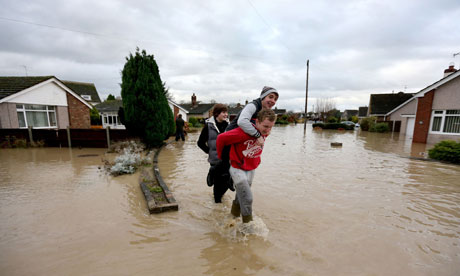
    Residents of St. Asaph, Denbighshire, North Wales make their way through flood waters

    Residents of St. Asaph, north Wales, make their way through flood waters. Photograph: Dave Thompson/PA

    On Monday, Amory Lovins, physicist, environmentalist, and unassuming colossus of the green movement, appeared in London to talk about energy use. I mention this in the context of the Guardian’s story that meteorologists are due to meet next week to discuss whether our bizarre weather is climate change-related (moreover, anthropogenic climate change-related) or just represents natural variation.

    I have got into the habit of mentally and often literally shutting my eyes when I see a story like that; ditto, when I see the phrase “400 parts per million”. What else do you do about a looming disaster that politics refuses to address? How is it possible to stay hopeful, when the G8 is meeting and climate change isn’t even on its agenda? What’s the point of international politics if not to address this?

    But then I heard Lovins talk about his negawatt revolution, and it cheered me right up.

    He said the solutions are already there; we know how to make cars out of materials that make them so much lighter they could be powered on hugely reduced fuel. We know how to build houses with solar bricks so that they don’t need heating (he grows bananas in his house, while it’s snowing outside and without heating it. This blew my mind). We also already know how to make renewable energy work: Austria gets a quarter of its inland energy consumption from renewables; Sweden a third; Latvia more than a third.

    What we lack is not expertise, but will. We’re living with politicians so feeble that they see wind energy as a local planning issue and they’re afraid to talk about saving energy for fear that it might sound expensive. Faced with a scientific consensus on carbon use that is as close as humanity will ever get to unanimous, their response is to find more carbon.

    The discoveries we need to make are not technological; they are human. How do we imbue the political cycle with some long-term thinking, some altruism, some care for future generations?

    What this situation needs is actual bad weather, actual negative events, that we can all see, that we can agree on the significance of, to spur us into action. In the meantime the answers are sitting there, waiting to happen.