Author: Neville

  • What’s new on ice sheet melt?

    What’s new on ice sheet melt?

    • 05 Jun 2013, 18:30
    • Freya Roberts
     Sourced under creative commons

    A major review of the latest research on ice sheets is published today in Nature, updating what scientists know about the world’s two biggest bodies of ice – Greenland and Antarctica.

    Since the last major climate science report, published by the Intergovernmental Panel on Climate Change (IPCC) in 2007, there have been some big advances in modelling and monitoring ice sheets. That monitoring process is important, because when ice on land melts it drains into the ocean, causing sea levels to rise.

    Over the last six years, satellite techniques used to observe changes in ice sheets have improved, allowing scientists to refine estimates of how much ice sheets are contributing to sea level rise. But what do the new and improved modelling techniques tell us about the ice sheets?

    Greenland in decline

    In Greenland, loss of ice is adding about 0.7 mm to sea levels each year. Surface melting reached record levels in the past few years, but Greenland is also losing chunks of solid ice too. Glaciers and ice flows are transporting more ice from the heart of the ice sheet out to sea where it floats, displacing water and forcing sea levels up.

    It’s likely the Greenland ice sheet will drive more sea level rise in the future too, the article says. Although climate models predict more snow will fall over Greenland, those gains are likely to be outpaced by losses from melting and shedding.

    The article highlights processes which might amplify ice loss from the ice sheet. For example, both the loss of nearby Arctic sea ice and melting on the surface of the ice sheet reduce the amount of sunlight reflected. Instead, that heat is absorbed, raising surface temperatures.

    Antarctica’s mixed picture

    At the other end of the planet, the picture is a little less clear. But overall, data indicate the Antarctic ice sheet is losing mass. The review suggests Antarctica is adding a more modest 0.2 mm per year to sea levels.

    But different parts of the ice sheet are changing in different ways. The Antarctic Peninsula and West Antarctica is losing solid ice, as huge bodies of ice acting as buttresses to ice flows break up under rising temperatures. But the picture in East Antarctica is somewhat different – here the ice sheet is growing thanks to an increase in snowfall.

    As co-author of the paper, Dr Ben Smith from the Polar Science Centre in Washington tells us, there’s still uncertainty about changes in Antarctica, despite the technological advances. One reason is that satellites can only collect data over a small area of the ice, so errors come from scaling up their estimates to cover the entire ice sheet.

    Measuring the height of the ice is further complicated by the fact the land beneath the ice is itself changing height, the article notes.

    For now at least, the losses outweigh the gains. But scientists aren’t  sure what will happen in the future.

    A bigger contribution to sea levels

    Despite remaining uncertainties, scientists still have a better idea now of how much ice sheets are raising sea levels compared to a few years ago.

    At the time of the last IPCC report (AR4) there was only about 10 years worth of reliable sea level data, from 1993 and 2003. It suggested Greenland and Antarctica were together raising sea levels by about 0.42 mm per year – that’s about 15 per cent of total sea level rise. According to the review, over the next ten years that contribution doubled to about 0.82mm per year:

    Smith tells us that increase is down to two things:

    “First, we now know better what’s going on in the two ice sheets […] Second, and more importantly, the ice sheets are changing faster than they were in the years leading up to AR4.”

    Lead author of the article, Edward Hanna, a Professor at the University of Sheffield adds:

    “The main increase [in sea level contribution] has been from the Greenland Ice Sheet due to significant warming, leading to increased melting and discharge of ice over the last 5-10 years whereas Antarctic ice sheet losses seem to be much more modest”

    It’s worth bearing in mind these are still quite short time periods, which means natural climate cycles could be affecting what’s driving sea levels. Together with the uncertainties over the data, scientists are still treating these estimates with caution.

    But overall, the figures demonstrate what scientists have learned from the last few years of scientific advances – that Antarctica and Greenland are losing mass and driving up sea levels, increasingly fast as time goes on.

    Hanna et al. (2013) Ice sheet mass balance and climate change. Nature. DOI:10.1038/nature12238
  • Canberra’s Bonner is Australia’s top dwelling approvals and population growth hotspot: HIA

    Canberra’s Bonner is Australia’s top dwelling approvals and population growth hotspot: HIA

    By Larry Schlesinger
    Thursday, 06 June 2013

    The Canberra suburb of Bonner was Australia’s top building and population hotspot in 2011/12, according to the latest HIA Population and Residential Building Hotspots report.

    The report gives an indication of which locations are likely to experience a strong rise in residential construction activity over the coming years.

    There is a $171 million worth of residential building work approved in Bonner, which has a population growth rate of 100%, reflecting the relatively new history of this area.

    Bonner is in the district of Gungahlin, about 16 kilometres north of Canberra, named after Senator Neville Bonner, Australia’s first Indigenous parliamentarian.

    The second-placed hotspot was Forrestdale-Harrisdale-Piara Waters (about 30 kilometres south east of Perth) with $143 million worth of residential building work approved and a population growth rate of 23.5%.

    Yanchep (56 kilometres north of Perth) ranked third where in 2011/12 the value of residential building work approved was over $102 million and the population growth rate was 18.8 %.

    The top five list was rounded out by Baldivis (46 kilometres south of Perth), followed by Tarneit (25 km west of Melbourne).

    The HIA defines a ‘hotspot as a local area where population growth exceeds the national rate (which was 1.6% in the year to June 2012) and where the value of residential building work approved is in excess of $100 million.

    Click to enlarge

    Source: Housing Industry Association

    For the second consecutive year, Victoria dominated the hotspots rankings with the state accounting for 10 of the national top 20.

    Western Australia also had a strong year with the state represented four times in the national top 20 ranking.

    The ACT punched well above its weight, providing two hotspots to the national top 20.

    New South Wales also had two hotspots in the national top 20, following no entries in last year’s list, while Queensland and the Northern Territory each made one contribution.

    “Residential building activity is in decline in Victoria and the ACT, but is heading south from record levels. It is no surprise these two regions still feature prominently in the top 20 list. WA, meanwhile, is seeing a recovery in new home building this year and four spots in the top 20 list provide an indication of the potential in the west,” said HIA chief economist, Dr Harley Dale.

    “In total there are 68 hotspots identified and many more areas where population growth is relatively fast or where the value of approvals for new homes or larger alterations and additions is quite healthy,” Dale said.

    “There is clearly considerable potential for residential construction work in Australia – for a start, six of Australia’s eight states and territories feature in the national top 20 hotspots list.”


    Did you like this article?

    Sign up to the Property Observer Newsletter to receive a daily news wrap-up straight to your inbox AND a free eBook!

    Please enter a valid email address. For example fred@domain.com .

  • Australia has huge deposits of shale gas – but it won’t come cheap

    Australia has huge deposits of shale gas – but it won’t come cheap

    Australians could be sitting on more than 1,000tn cubic feet of untapped gas, study finds, but lack infrastructure to exploit it

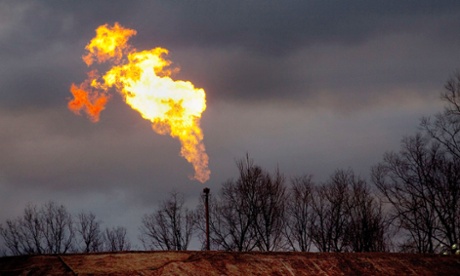
    Shale gas extraction in the US
    Shale gas extraction in the US. Photograph: LES STONE/REUTERS

    Australia could be sitting on more than 1,000tn cubic feet of untapped shale gas, but effective environmental regulations and a fall in costs are needed before this resource can be fully exploited, according to a new report.

    The Australian Council of Learned Academies study found that while Australia had huge deposits of gas, it would “not be cheap gas in most circumstances” and would have a slightly higher rate of carbon emissions than standard gas, albeit significantly less than coal-fired power.

    The report states that shale gas infrastructure costs in Australia will be double that of the US, where the industry is relatively mature, and will require a high price to make it profitable.

    Around $500m will be spent by businesses over the next two years on shale gas exploration, the report predicts, with resources company Santos already working on an initial well in Queensland.

    Shale gas extraction is similar to coal seam gas in that both processes gather methane for energy use. However, shale gas involves drilling at far greater depths than coal seam gas.

    The report is sanguine on the environmental impact of coal seam gas, with some caveats.

    “A large number of impacts are possible, but the likelihood of many of them occurring is low and where they do occur, other than in the case of some biodiversity impacts, there are generally remedial steps that can be taken,” it states.

    “Nonetheless it is important that the shale gas industry takes full account of possible adverse impacts on the landscape, soils, flora and fauna, groundwater and surface water, the atmosphere and on human health in order to address people’s concerns.”

    Prof Peter Cook, co-author of the report, told Guardian Australia that rigorous background work would need to be done on shale gas for it to avoid the controversy that has dogged the coal seam gas industry.

    “You need a regulatory regime that is transparent,” he said. “One problem with coal seam gas is that people didn’t do the work needed before they started. You need to know what the impact is going to be, rather than rely on a high degree of speculation. That has caused angst around coal seam gas.

    “Groundwater clearly needs to be safeguarded and used in careful way to ensure it doesn’t get contaminated. Fragmentation of landscapes through roads and drilling is another thing you need to be careful of.”

    He added: “We won’t see a shale gas boom here as we have in North America. It will be more modest growth, but what might really push it along is the oil associated with the gas.

    “Oil is what is driving the industry in North America. Gas is almost a byproduct. Things will move very quickly if they find oil amongst the shale gas here, because Australia doesn’t have much oil. But we just don’t know what’s down there yet.”

  • Union raises fears that Telstra communication pits contain banned pesticide dieldrin

    Union raises fears that Telstra communication pits contain banned pesticide dieldrin

    By science and technology correspondent Jake Sturmer

    Updated 53 minutes ago

    A new threat has emerged for contract workers digging-up communication pits owned by Telstra, with the pits found to possibly contain the deadly banned pesticide dieldrin.

    The Communications Workers Union in Victoria has raised concerns workers could have been exposed to dieldrin that Telstra sprayed on its cables to stop termites.

    The dieldrin link was flagged after recent reports about the disturbance of asbestos in the pits caused widespread concern about the rollout of the National Broadband Network (NBN).

    Dieldrin is banned in most countries and was phased out in Australia in the early 1990s.

    After once being widely used in agriculture and timber products, the toxic chemical has been linked with Parkinson’s disease and can trigger comas.

    The union says it raised concerns about both asbestos and dieldrin with NBN Co at a meeting in August 2010.

    A spokeswoman for Telstra confirmed dieldrin had been used but says it had stopped using the chemical well before the 1990s.

    Experts say dieldrin exposure in telecommunications pits is unlikely to be as harmful as asbestos but they still urge action.

    Professor Malcolm Sim said there could still be a concern about insecticides in the soil.

    “They’re very persistent and as I said they can accumulate in the body and that was the main reason they were phased out,” he said.

    A spokesman for NBN Co referred the ABC back to Telstra and was trying to track down more information.

    Topics: information-and-communication, wireless-communication, occupational-health-and-safety, vic

    First posted 2 hours 19 minutes ago

  • How to destroy the future

    How to destroy the future

    From the Cuban missile crisis to a fossil fuels frenzy, the US is intent on winning the race to disaster

    JFK on the Cuban missile crisis

    ‘What happened in the missile crisis in October 1962 has been prettified to make it look as if acts of courage and thoughtfulness abounded.’ Photograph: Ralph Crane/Time & Life Pictures/Getty Image

    What is the future likely to bring? A reasonable stance might be to try to look at the human species from the outside. So imagine that you’re an extraterrestrial observer who is trying to figure out what’s happening here or, for that matter, imagine you’re an historian 100 years from now – assuming there are any historians 100 years from now, which is not obvious – and you’re looking back at what’s happening today. You’d see something quite remarkable.

    For the first time in the history of the human species, we have clearly developed the capacity to destroy ourselves. That’s been true since 1945. It’s now being finally recognized that there are more long-term processes like environmental destruction leading in the same direction, maybe not to total destruction, but at least to the destruction of the capacity for a decent existence.

    And there are other dangers like pandemics, which have to do with globalization and interaction. So there are processes underway and institutions right in place, like nuclear weapons systems, which could lead to a serious blow to, or maybe the termination of, an organized existence.

    The question is: What are people doing about it? None of this is a secret. It’s all perfectly open. In fact, you have to make an effort not to see it.

    There have been a range of reactions. There are those who are trying hard to do something about these threats, and others who are acting to escalate them. If you look at who they are, this future historian or extraterrestrial observer would see something strange indeed. Trying to mitigate or overcome these threats are the least developed societies, the indigenous populations, or the remnants of them, tribal societies and first nations in Canada. They’re not talking about nuclear war but environmental disaster, and they’re really trying to do something about it.

    In fact, all over the world – Australia, India, South America – there are battles going on, sometimes wars. In India, it’s a major war over direct environmental destruction, with tribal societies trying to resist resource extraction operations that are extremely harmful locally, but also in their general consequences. In societies where indigenous populations have an influence, many are taking a strong stand. The strongest of any country with regard to global warming is in Bolivia, which has an indigenous majority and constitutional requirements that protect the “rights of nature.”

    Ecuador, which also has a large indigenous population, is the only oil exporter I know of where the government is seeking aid to help keep that oil in the ground, instead of producing and exporting it – and the ground is where it ought to be.

    Venezuelan President Hugo Chavez, who died recently and was the object of mockery, insult, and hatred throughout the Western world, attended a session of the U.N. General Assembly a few years ago where he elicited all sorts of ridicule for calling George W. Bush a devil. He also gave a speech there that was quite interesting. Of course, Venezuela is a major oil producer. Oil is practically their whole gross domestic product. In that speech, he warned of the dangers of the overuse of fossil fuels and urged producer and consumer countries to get together and try to work out ways to reduce fossil fuel use. That was pretty amazing on the part of an oil producer. You know, he was part Indian, of indigenous background. Unlike the funny things he did, this aspect of his actions at the U.N. was never even reported.

    So, at one extreme you have indigenous, tribal societies trying to stem the race to disaster. At the other extreme, the richest, most powerful societies in world history, like the United States and Canada, are racing full-speed ahead to destroy the environment as quickly as possible. Unlike Ecuador, and indigenous societies throughout the world, they want to extract every drop of hydrocarbons from the ground with all possible speed.

    Both political parties, President Obama, the media, and the international press seem to be looking forward with great enthusiasm to what they call “a century of energy independence” for the United States. Energy independence is an almost meaningless concept, but put that aside. What they mean is: we’ll have a century in which to maximize the use of fossil fuels and contribute to destroying the world.

    And that’s pretty much the case everywhere. Admittedly, when it comes to alternative energy development, Europe is doing something. Meanwhile, the United States, the richest and most powerful country in world history, is the only nation among perhaps 100 relevant ones that doesn’t have a national policy for restricting the use of fossil fuels, that doesn’t even have renewable energy targets. It’s not because the population doesn’t want it. Americans are pretty close to the international norm in their concern about global warming. It’s institutional structures that block change. Business interests don’t want it and they’re overwhelmingly powerful in determining policy, so you get a big gap between opinion and policy on lots of issues, including this one.

    So that’s what the future historian – if there is one – would see. He might also read today’s scientific journals. Just about every one you open has a more dire prediction than the last.

    The other issue is nuclear war. It’s been known for a long time that if there were to be a first strike by a major power, even with no retaliation, it would probably destroy civilization just because of the nuclear-winter consequences that would follow. You can read about it in the Bulletin of Atomic Scientists. It’s well understood. So the danger has always been a lot worse than we thought it was.

    We’ve just passed the 50th anniversary of the Cuban Missile Crisis, which was called “the most dangerous moment in history” by historian Arthur Schlesinger, President John F. Kennedy’s advisor. Which it was. It was a very close call, and not the only time either. In some ways, however, the worst aspect of these grim events is that the lessons haven’t been learned.

    What happened in the missile crisis in October 1962 has been prettified to make it look as if acts of courage and thoughtfulness abounded. The truth is that the whole episode was almost insane. There was a point, as the missile crisis was reaching its peak, when Soviet Premier Nikita Khrushchev wrote to Kennedy offering to settle it by a public announcement of a withdrawal of Russian missiles from Cuba and U.S. missiles from Turkey. Actually, Kennedy hadn’t even known that the U.S. had missiles in Turkey at the time. They were being withdrawn anyway, because they were being replaced by more lethal Polaris nuclear submarines, which were invulnerable.

    So that was the offer. Kennedy and his advisors considered it – and rejected it. At the time, Kennedy himself was estimating the likelihood of nuclear war at a third to a half. So Kennedy was willing to accept a very high risk of massive destruction in order to establish the principle that we – and only we – have the right to offensive missiles beyond our borders, in fact anywhere we like, no matter what the risk to others – and to ourselves, if matters fall out of control. We have that right, but no one else does.

    Kennedy did, however, accept a secret agreement to withdraw the missiles the U.S. was already withdrawing, as long as it was never made public. Khrushchev, in other words, had to openly withdraw the Russian missiles while the US secretly withdrew its obsolete ones; that is, Khrushchev had to be humiliated and Kennedy had to maintain his macho image. He’s greatly praised for this: courage and coolness under threat, and so on. The horror of his decisions is not even mentioned – try to find it on the record.

    And to add a little more, a couple of months before the crisis blew up the United States had sent missiles with nuclear warheads to Okinawa. These were aimed at China during a period of great regional tension.

    Well, who cares? We have the right to do anything we want anywhere in the world. That was one grim lesson from that era, but there were others to come.

    Ten years after that, in 1973, Secretary of State Henry Kissinger called a high-level nuclear alert. It was his way of warning the Russians not to interfere in the ongoing Israel-Arab war and, in particular, not to interfere after he had informed the Israelis that they could violate a ceasefire the U.S. and Russia had just agreed upon. Fortunately, nothing happened.

    Ten years later, President Ronald Reagan was in office. Soon after he entered the White House, he and his advisors had the Air Force start penetrating Russian air space to try to elicit information about Russian warning systems, Operation Able Archer. Essentially, these were mock attacks. The Russians were uncertain, some high-level officials fearing that this was a step towards a real first strike. Fortunately, they didn’t react, though it was a close call. And it goes on like that.

    At the moment, the nuclear issue is regularly on front pages in the cases of North Korea and Iran. There are ways to deal with these ongoing crises. Maybe they wouldn’t work, but at least you could try. They are, however, not even being considered, not even reported.

    Take the case of Iran, which is considered in the West – not in the Arab world, not in Asia – the gravest threat to world peace. It’s a Western obsession, and it’s interesting to look into the reasons for it, but I’ll put that aside here. Is there a way to deal with the supposed gravest threat to world peace? Actually there are quite a few. One way, a pretty sensible one, was proposed a couple of months ago at a meeting of the non-aligned countries in Tehran. In fact, they were just reiterating a proposal that’s been around for decades, pressed particularly by Egypt, and has been approved by the U.N. General Assembly.

    The proposal is to move toward establishing a nuclear-weapons-free zone in the region. That wouldn’t be the answer to everything, but it would be a pretty significant step forward. And there were ways to proceed. Under U.N. auspices, there was to be an international conference in Finland last December to try to implement plans to move toward this. What happened?

    You won’t read about it in the newspapers because it wasn’t reported – only in specialist journals. In early November, Iran agreed to attend the meeting. A couple of days later Obama cancelled the meeting, saying the time wasn’t right. The European Parliament issued a statement calling for it to continue, as did the Arab states. Nothing resulted. So we’ll move toward ever-harsher sanctions against the Iranian population – it doesn’t hurt the regime – and maybe war. Who knows what will happen?

    In Northeast Asia, it’s the same sort of thing. North Korea may be the craziest country in the world. It’s certainly a good competitor for that title. But it does make sense to try to figure out what’s in the minds of people when they’re acting in crazy ways. Why would they behave the way they do? Just imagine ourselves in their situation. Imagine what it meant in the Korean War years of the early 1950s for your country to be totally leveled, everything destroyed by a huge superpower, which furthermore was gloating about what it was doing. Imagine the imprint that would leave behind.

    Bear in mind that the North Korean leadership is likely to have read the public military journals of this superpower at that time explaining that, since everything else in North Korea had been destroyed, the air force was sent to destroy North Korea’s dams, huge dams that controlled the water supply – a war crime, by the way, for which people were hanged in Nuremberg. And these official journals were talking excitedly about how wonderful it was to see the water pouring down, digging out the valleys, and the Asians scurrying around trying to survive. The journals were exulting in what this meant to those “Asians,” horrors beyond our imagination. It meant the destruction of their rice crop, which in turn meant starvation and death. How magnificent! It’s not in our memory, but it’s in their memory.

    Let’s turn to the present. There’s an interesting recent history. In 1993, Israel and North Korea were moving towards an agreement in which North Korea would stop sending any missiles or military technology to the Middle East and Israel would recognize that country. President Clinton intervened and blocked it. Shortly after that, in retaliation, North Korea carried out a minor missile test. The U.S. and North Korea did then reach a framework agreement in 1994 that halted its nuclear work and was more or less honored by both sides. When George W. Bush came into office, North Korea had maybe one nuclear weapon and verifiably wasn’t producing any more.

    Bush immediately launched his aggressive militarism, threatening North Korea – “axis of evil” and all that – so North Korea got back to work on its nuclear program. By the time Bush left office, they had eight to 10 nuclear weapons and a missile system, another great neocon achievement. In between, other things happened. In 2005, the U.S. and North Korea actually reached an agreement in which North Korea was to end all nuclear weapons and missile development. In return, the West, but mainly the United States, was to provide a light-water reactor for its medical needs and end aggressive statements. They would then form a nonaggression pact and move toward accommodation.

    It was pretty promising, but almost immediately Bush undermined it. He withdrew the offer of the light-water reactor and initiated programs to compel banks to stop handling any North Korean transactions, even perfectly legal ones. The North Koreans reacted by reviving their nuclear weapons program. And that’s the way it’s been going.

    It’s well known. You can read it in straight, mainstream American scholarship. What they say is: it’s a pretty crazy regime, but it’s also following a kind of tit-for-tat policy. You make a hostile gesture and we’ll respond with some crazy gesture of our own. You make an accommodating gesture and we’ll reciprocate in some way.

    Lately, for instance, there have been South Korean-U.S. military exercises on the Korean peninsula which, from the North’s point of view, have got to look threatening. We’d think they were threatening if they were going on in Canada and aimed at us. In the course of these, the most advanced bombers in history, Stealth B-2s and B-52s, are carrying out simulated nuclear bombing attacks right on North Korea’s borders.

    This surely sets off alarm bells from the past. They remember that past, so they’re reacting in a very aggressive, extreme way. Well, what comes to the West from all this is how crazy and how awful the North Korean leaders are. Yes, they are. But that’s hardly the whole story, and this is the way the world is going.

    It’s not that there are no alternatives. The alternatives just aren’t being taken. That’s dangerous. So if you ask what the world is going to look like, it’s not a pretty picture. Unless people do something about it. We always can.

  • ANNOUNCING​: Go Fossil Free Australia 350 org

    ANNOUNCING​: Go Fossil Free Australia

    Inbox
    x
    Aaron Packard – 350.org Australia <aaron@350.org>
    6:18 PM (11 minutes ago)

    to me

    Dear Friend,

    Last night in Sydney we not only did the maths with Bill McKibben to a packed out Seymour Centre, but we began something tremendously important.

    We launched Go Fossil Free Australia – a campaign to divest Australia’s economy from fossil fuels. Check out the campaign by visiting gofossilfree.org/australia

    It’s time to move our money out of fossil fuels and into the clean energy economy. As members, beneficiaries, and customers of super funds, banks, governments, educational and religious institutions, each of us can play a powerful role in divesting Australia’s economy from fossil fuels.

    On Monday night, sitting on the QandA panel with Bill McKibben, both Senator Cory Bernadi and the editor of the Australian Financial Review, Michael Stutchbury called the divestment campaign “Madness”. But yesterday 150 investors and fund managers, hosted at Goldman Sachs listened as Bill laid out our plans for divestment. The mood there was not adversarial, but it was constructive and curious – many investors want to be part of the solution, not the problem. And already there are local groups formed to push local institutions to divest from the fossil fuel industry – the likes of Fossil Free ANU, and Lock the Campus.

    In short, the time for gofossilfree.org/australia is right. There are tools on there to get you started in taking personal action, and joining together with the movement into action. Over the coming months we’ll be adding more tools and resources – but the effectiveness of this campaign is down to you and the people around you. Together we can bring forward a safer climate and a brighter, more renewable future for Australia.

    And now we go onwards with the tour – with a big night in Canberra tonight!

    Onwards!


    Aaron, Charlie, Blair, Tim and everyone else involved.

    PS – Bill says a big HI!


    350.org is building a global movement to solve the climate crisis. Connect with us on Facebook and Twitter, and sign up for email alerts. You can help power our work by getting involved locally, sharing your story, and donating here.To stop receiving emails from 350.org, click here.