|
Web Clip
About Today – Summer Swimsuit Guide: 12 Hot Trends to Try
|
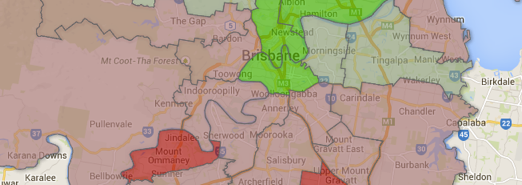
[New post] Brisbane City – redrawing the wards

|
|||||||||||||||||||||||||||||||||||||||||||||||||||
Managing director of Ebono Institute and major sponsor of The Generator, Geoff Ebbs, is running against Kevin Rudd in the seat of Griffith at the next Federal election. By the expression on their faces in this candid shot it looks like a pretty dull campaign. Read on
|
Web Clip
About Today – Summer Swimsuit Guide: 12 Hot Trends to Try
|
[New post] Brisbane City – redrawing the wards
|
|||||||||||||||||||||||||||||||||||||||||||||||||||


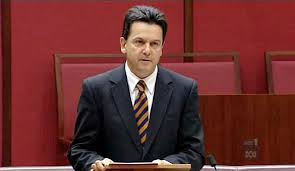
Senator Nick Xenophon has brought back a carbon trading scheme to Australia and nobody seems to have noticed. Quietly tucked behind the headlines from the Palmer United Party and the government was the mention of Senator Xenophon inserting a ‘Safeguard Mechanism’ into the Direct Action legislation.
The mechanism creates the framework for a baseline and credit system which is similar to a cap-and-trade system in that both are market based methods to arrive at a price for carbon. While the specific details of the Safeguard Mechanism have yet to be determined, conceptually any company who currently emits more than 100,000 tonnes of CO2 annually will be required from 1 July 2016 to keep their emissions below a predetermined baseline level or face penalties.
Before proceeding further it is important to understand the mechanics of the government’s Direct Action plan. The central part of the plan is the Emission Reduction Fund (ERF). Initially seeded with $2.55 billion over 10 years, it will be used to help pay for projects that seek to abate carbon emissions.
To be eligible to receive payments from the ERF, a project must first be submitted to the regulator who will vet the project and then issue it Australian Carbon Credit Units (ACCU). Holders of ACCUs can then bid their project into the ERF and receive a fixed payment from the government for their ACCUs or they can offer these credits into a secondary market.
This secondary market is for either projects that had previously agreed to deliver ACCUs into the ERF but for whatever reason fell short (like a wind farm not producing enough power) or for companies that fall under the safeguard mechanism and have exceeded their emissions cap.
The bidding of projects into the ERF and a functioning secondary market for ACCU is expected to allow market forces to determine the price of carbon. While all this sound good in principle we see a number of issues with the plan:
The carbon price will become a political construct not an economic exercise
The regulator has made it clear that it will accept offers to sell credits to it up to a maximum price. For example, a wind farm might generate a certain number of credits annually and then offer these credits to the ERF at $10 each. Another wind farm might offer the same credits for $11 and so forth but ultimately the regulator will accept offers up to a certain price.
The regulator is apparently under tremendous pressure to release what is the price ceiling so potential projects can determine whether it is worth bidding. This is not really a market determined price because the regulator has already set the price. It should also be noted here that the consensus view is the $2.55 billion in the ERF will be awarded on a first-come-best-dressed basis such that once the funds are spent, there will be no further auctions. Also, since the regulator is setting the maximum price, the price of carbon is looking more like a political exercise than an economic process.
The market looks to become flooded with ACCUs
The regulator is seeking as many projects as possible and is actively promoting its flexibility when considering applications. What has caught our attention are energy efficiency projects which include lighting upgrades, heating, ventilation and cooling system upgrades, boiler upgrades, and variable speed drive installations. As long as the project cuts emissions by 5%, it is considered an eligible project. As we have maintained encouraging energy efficiency is an important pillar of energy policy but in this instance many of these projects are economic today without financial assistance and would probably have been performed by a company with or without the existence of the ERF.
When you consider that switching to LEDs will cut power consumption (and by extension emissions) by up to 90%, or the installation of an AC motor drive will cut power usage between 20-50%, the potential for any company or property owner to aggregate these upgrades into large blocks of ACCUs will put significant down pressure on carbon prices. The regulator will even accept commercial building efficiency upgrades based on NABERS ratings as being capable of creating ACCUs. While promoting the breadth of the regulators efforts to curb emissions is well intentioned, it seems likely to us that the price of carbon will remain low for an extended period of time.
ERF could be empty after the first auction
There is speculation that coal-fired power plants will bid their closure as a form of abatement given the excess power capacity in the market. For example, Loy Yang A produces just over 20 million tonnes of CO2 per year. Assuming it bids at the current European carbon price of $10, it could capture $1.4 billion of the fund itself (20 million tonnes x $10 x 7 years – the longest contract period under the ERF). Throw in Bayswater and the entire fund will have been consumed! Admittedly taking out 16% of Australia’s power production overnight is not going to happen but this highlights how closing smaller coal-fired plants could consume large portions of the fund very quickly.
Putting the cynical view aside, we ask whether on balance the ERF is worth it? The coal example above is indicative of what the ERF will achieve. Shutting down both Loy Yang A and Bayswater would cause an immediate 6% reduction in our national emissions, a good start. If all that generating capacity is replaced with lower emission technologies then the ERF could be on track to achieve a reduction in emissions, but where is the follow-through plan? While the safeguard mechanism could, in theory, provide the follow-through to drive structural change, the abundance of ACCUs threatens the economic incentive to make these changes and the lack of detail of the mechanism itself means we need to trust Prime Minister Abbott to do the right thing.
The final rules around the safeguard mechanism are thus the key structural drivers we need to reduce the emissions intensity of Australia
We would like to see the safeguard mechanism include the following principles:
We thank Senator Xenophon for keeping Australia relevant in the fight against climate change but we suspect the real battle is still to come.
Nathan Lim is Portfolio Manager at Australian Ethical Investment.
|
Web Clip
|
The Grinch that Stole Xmas?

Dear friend, With Xmas around the corner, our Government is trying to fast-track plans to construct the world’s largest coal port on the Great Barrier Reef. If they get their way, approvals could be given as early as Xmas eve and construction could start on the 2nd of January! The Abbot Point Coal Terminal would provide a gateway for coal companies to unlock nine mega coal mines in the Galilee. These mines would cook the climate and wreck the Reef. We have a tiny window of time to tell the Government what we think of these disastrous plans. Environment Minister Greg Hunt has given Australians just ten days to comment on over 2300 pages of material about the construction plans and the submission deadline is 5pm tomorrow! Don’t let Greg Hunt be the Grinch that stole Xmas – click here to tell him what you think about these plans to dredge the Reef and open the floodgates to massive new coal mine expansion. These plans are insane in so many ways — ripping up the Great Barrier Reef to exploit what would be the world’s largest carbon bomb at a time when coal prices are plummeting, renewables are punching above their weight, public opposition is skyrocketing and financiers are backing away en masse. What’s more, to construct the Port, Reef sea floor would be dug up and dumped into the internationally significant Caley Valley Wetlands, home to 40,000 water birds including rare and threatened species. As we head into holiday season, let’s not allow these disastrous plans slip through whilst we aren’t watching – click here to voice your opposition today. Wishing you a very happy, safe and coal-free xmas, Charlie and the whole 350.org Australia team PS: Click here to read our blog about the 10 reasons why the Galilee Basin is insane. |
|||||||||||
|
Web Clip
Entertainment News Headlines — Yahoo! News – Nightclub company Hakkasan to buy The Light Group – 4 hours ago
|
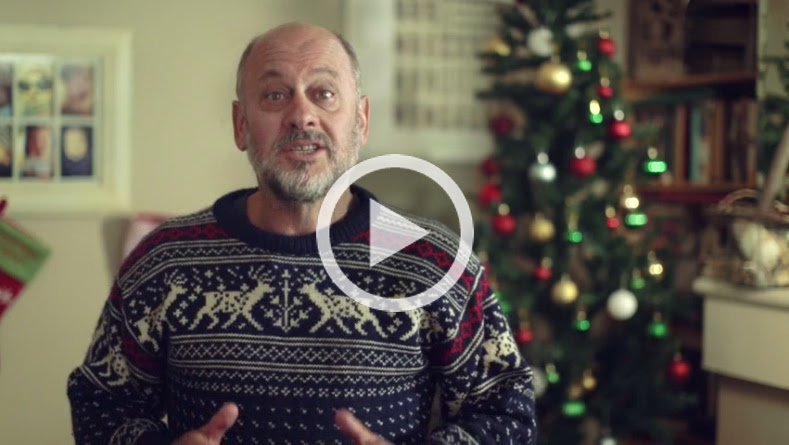
Video: Christmas message from Tim Flannery

Dear Inga,
I thought my professional training and experience had prepared me for almost anything, but wearing an ugly jumper in a Christmas video message to to thousands of Australians frankly wasn’t one of them! It’s a small token of how much I appreciate all our supporters, as well as a testament to just how persuasive my staff can be.
Before we break for the year, I wanted to take time out to communicate back to you, our supporters, about what we’ve achieved, where we’re headed – and most importantly, to say thanks. We’re shaping the conversation each and every day, keeping climate change on the agenda and forging a way ahead despite well-funded opposition from vested interests and obstruction from those who should know better. In our first year since the Abbott Government sacked us, probably in the hope that we’d quietly slink away, we’ve instead published 31 pieces of communication, done media interviews for 13,000 stories and reached a cumulative total of 170 million people with our information. And we know we’re making a difference. New public opinion polling out this week shows a huge jump in belief that climate change and extreme weather are related. We’ve been the only group continuously communicating the link between climate change and extreme weather through a strong media campaign all year. In spite of every challenge we’ve faced, I actually believe this year has been a breakthrough. But we can’t afford to sit back now and hope for the best. As the rallying cry goes, to change everything, we need everyone. From all of us here at the Climate Council, thank you for being with us. Your support means everything. Onwards Tim Flannery |
|||||||||||
Did anyone notice that Australia now has a carbon trading scheme? http://shar.es/13KgPl via @renew_economy
|
Web Clip
|
Video: Christmas message from Tim Flannery
Dear Inga,
I thought my professional training and experience had prepared me for almost anything, but wearing an ugly jumper in a Christmas video message to to thousands of Australians frankly wasn’t one of them! It’s a small token of how much I appreciate all our supporters, as well as a testament to just how persuasive my staff can be.
Before we break for the year, I wanted to take time out to communicate back to you, our supporters, about what we’ve achieved, where we’re headed – and most importantly, to say thanks. We’re shaping the conversation each and every day, keeping climate change on the agenda and forging a way ahead despite well-funded opposition from vested interests and obstruction from those who should know better. In our first year since the Abbott Government sacked us, probably in the hope that we’d quietly slink away, we’ve instead published 31 pieces of communication, done media interviews for 13,000 stories and reached a cumulative total of 170 million people with our information. And we know we’re making a difference. New public opinion polling out this week shows a huge jump in belief that climate change and extreme weather are related. We’ve been the only group continuously communicating the link between climate change and extreme weather through a strong media campaign all year. In spite of every challenge we’ve faced, I actually believe this year has been a breakthrough. But we can’t afford to sit back now and hope for the best. As the rallying cry goes, to change everything, we need everyone. From all of us here at the Climate Council, thank you for being with us. Your support means everything. Onwards Tim Flannery |
|||||||||||