
Category: Sustainable Settlement and Agriculture

The Generator is founded on the simple premise that we should leave the world in better condition than we found it. The news items in this category outline the attempts people have made to do this. They are mainly concerned with our food supply and settlement patterns. The impact that the human race has on the planet.

  • ORIC puts land ownership back in the hands of the people

    ORIC puts land ownership back in the hands of the people

    ORIC puts land back in the hands of the people
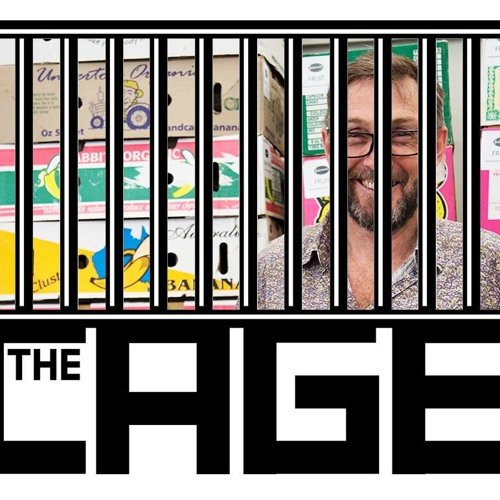
    Robert Pekin in the Cage to discuss ORIC

    Hot on the heels of the announcement of new laws allowing start up companies to seek investment via crowdsourcing an investment vehicle for organic agriculture has been launched.

    The Organic and Restorative Investment Coop, known as ORIC, will be launched in Melbourne next month.

    The aim of the Coop is to facilitate investment into agriculture that offers a fair price to farmers and nurtures the ecology that supports us all. The new crowd-sourced equity funding laws allow individual investors to put up to $10,000 into a company raising less than $5 million.

    A full interview with board member Robert Pekin is available on Soundcloud. Fundamentally, Robert tells Geoff that ORIC is a method for putting land ownership back in the hands of the people, thereby reversing the current trend of denuding the landscape of people and destroying community and human scale agriculture.


  • French government threatens the Autonomous Zone

    French government threatens the Autonomous Zone

    ZAD protestors
    ZAD protesters have successfully fought off 1,000 militarised gendarmes

    In the lead up to the French Presidential election, the French government has promised to destroy a rebellious community of 2000 activists that have squatted for eight years on the site of a proposed airport in Nantes. Known as ZAD, the Zone to Defend, the movement has inspired a range of protests against useless development across Europe. ZAD has its own farms, bakery and radio station and is home to 200 permanent residents and houses up to 2,000 people. It survived 2012 eviction attempt mounted by 1,000 armed police with helicopters and military equipment. With renewed threats to their existence, the Zadistes have begun publishing internationally in an appeal for broad support.


    The ZAD: An Autonomous Zone in the Heart of France

    It all started decades ago with the local resistance against the construction of a second airport near the city of Nantes in western France. Eight years ago, this resistance culminated in the establishment of a self-organized autonomous zone, commonly known as the ZAD

    http://www.truth-out.org/news/item/39531-the-zad-an-autonomous-zone-in-the-heart-of-france

    https://en.squat.net/2016/09/02/notre-dame-des-landes-france-defend-the-zad-a-call-for-international-solidarity/#more-17604

    https://newint.org/blog/2016/10/21/after-calais-france-to-evict-europe-biggest-anti-airport-protest/


  • UK reels from climate induced food rationing

    UK reels from climate induced food rationing

    Empty UK supermarket shelves
    Empty UK supermarket shelves have business and policy makers worried

    Fresh vegetables were rationed across the UK this month due to climate chaos in Southern Europe. Lettuces, zucchinis and broccoli were rationed and prices rose to four times their normal level. The shortage was exacerbated by uncertain trading arrangements due to Brexit. UK supermarkets have embarked on a program of culling fruit and vegetables that are increasingly difficult to grow in areas with ongoing water shortages. The events have revealed the multiple challenges to global trade from water shortages, climate chaos and protectionism reinforcing the need to support local produce. Australia is extremely vulnerable to such events. The nation has been a net importer of fresh fruit and vegetables since 2003, a fact masked by our large grain and meat exports.

    Will we still be able to feed ourselves as the climate get hotter? Australia is a net importer of fresh food – The supermarket food gamble may be finished 

    In the past 40 years, a whole supermarket system has been built on the seductive illusion of Permanent Global Summer Time. A cornucopia of perpetual harvest is one of the key selling points that big stores have over rival retailers. But when you take into account climate change, the shortages in the UK look more like a taste of things to come than just a blip.

    https://www.theguardian.com/commentisfree/2017/feb/20/supermarket-food-gamble-brexit-climate-migrant

    http://www.independent.co.uk/life-style/food-and-drink/courgette-shortage-uk-vegetable-shortage-cold-weather-ispain-italy-europe-continent-a7533236.html

    http://www.telegraph.co.uk/business/2017/02/03/causing-2017-vegetable-shortage-does-mean-consumers/

    Strange fruit

    The rapid rise of the farmers’ markets, home-delivery vegetable boxes and the resurgence of farm shops.

    https://www.theguardian.com/lifeandstyle/2002/sep/07/foodanddrink.shopping

    http://www.smh.com.au//breaking-news-national/australia-a-net-importer-of-food-20101027-173kl.html

    http://www.growcom.com.au/horticultures-vulnerability-must-be-acknowledged-by-government/


  • Philippines expands crackdown on polluting mines

    Philippines expands crackdown on polluting mines

    Regina Lopez is applying the heat to miners who pollute water
    Regina Lopez is applying the heat to miners who pollute water

    Philippines environment secretary, Regina Lopez, last week cancelled one third of new mining contracts on environmental grounds. She also rejected calls to reverse her earlier decision to close 23 of the existing 41 mines in the Philippines on the grounds they are polluting drinking water. “You kill the watershed, you kill life” she told media last week. Despite the threat of legal action from international business, the environment secretary has the full backing of President Duterte. This is the second time he has publicly supported her actions since appointing her last June.

    Philippine Environment Minister Continues Mining Crackdown

    The Philippines’ environment minister stepped up a crackdown on mining on Tuesday, cancelling almost a third of the country’s contracts for undeveloped mines and rejecting any challenges to earlier orders to shut more than half of all operating pits.

    http://www.telesurtv.net/english/news/Philippine-Environment-Minister-Continues-Mining-Crackdown-20170214-0014.html 

    https://dailybrief.oxan.com/Analysis/DB212888/Philippines-mining-sector-outlook-bleak-under-Duterte

  • Dangerous toxins accumulate in deep-sea trenches

    Dangerous toxins accumulate in deep-sea trenches

    Bobtail Aquid
    A Bobtail Squid from the Mariana Trench in the mid-Pacific

    Incredible levels of toxic organic compounds have been discovered in the Mariana and the Kermadex Trench in the mid Pacific. The toxins were found in crustraceans collected between 8,000 and 10,000 metres below sea level at levels higher than the most polluted mines in Australia, Japan and the Philippines. Their use is banned in most developed nations.

    The deepest trenches in the world are rarely explored and researched and the scientists were studying the overall ecology of the region, rather than specifically examining the impact of pollution.

    The organic compounds concentrate in the oily tissue of animals and do not exist naturally.  Separate research has revealed that it takes less than 100 days for pollutants to reach the trenches from the surface of the ocean.

    http://www.nature.com/articles/s41559-016-0051

    https://www.theguardian.com/environment/2017/feb/13/extraordinary-levels-of-toxic-pollution-found-in-10km-deep-mariana-trench

    http://www.businessinsider.com/banned-chemicals-have-been-found-in-the-mariana-trench-2017-2?IR=T

  • Japanese youth lose interest in sex

    Japanese youth lose interest in sex

    The Japan Times reports that Japanese youth are disinterested in sex and romance contributing to an ongoing decline in the population of Japan. A survey by marriage-counseling firm, O-Net, reveals that only one in four 20 year olds are involved in a romantic relationship. A study by the Japan Family Planning Association revealed that one in five 20 year olds have no interest in sex and a Cabinet Office study revealed that 2 in five Japanese in their 20s are not looking for a relationship. A focus on economic survival and career advancement is one driver, a preference for hobbies and entertainment is another. Lack of confidence is common among young men while young women seem more determined to avoid damaging their careers.

    http://www.japantimes.co.jp/news/2016/01/05/national/social-issues/many-young-japanese-marriage-sex-low-priorities/#.WKnK3vl9600

    Why have young people in Japan stopped having sex? 

    Its population of 126 million, which has been shrinking for the past decade, is projected to plunge a further one-third by 2060. Aoyama believes the country is experiencing “a flight from human intimacy” – and it’s partly the government’s fault.a third of people under 30 had never dated at all.

    https://www.theguardian.com/world/2013/oct/20/young-people-japan-stopped-having-sex