


Category: News

Add your news
You can add news from your networks or groups through the website by becoming an author. Simply register as a member of the Generator, and then email Giovanni asking to become an author. He will then work with you to integrate your content into the site as effectively as possible.
Listen to the Generator News online

 
The Generator news service publishes articles on sustainable development, agriculture and energy as well as observations on current affairs. The news service is used on the weekly radio show, The Generator, as well as by a number of monthly and quarterly magazines. A podcast of the Generator news is also available.
As well as Giovanni’s articles it picks up the most pertinent articles from a range of other news services. You can publish the news feed on your website using RSS, free of charge.
 

Antarctica may heat up dramatically as ozone hole repairs, warn scientists

admin /1 December, 2009

Antarctica may heat up dramatically as ozone hole repairs, warn scientists

As blanket of ozone over southern pole seals up, temperatures on continent could soar by 3C, increasing sea level rise by 1.4 mtrs

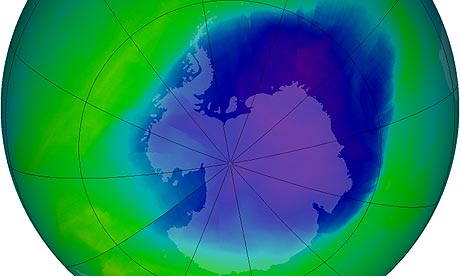
Ozone hole over Antarctica

Nasa graphic showing the extent of the ozone hole over Antarctica


The hole in the Earth’s ozone layer has shielded Antarctica from the worst effects of global warming until now, according to the most comprehensive review to date of the state of the Antarctic climate. But scientists warned that as the hole closes up in the next few decades, temperatures on the continent could rise by around 3C on average, with melting ice contributing to a global sea-level increases of up to 1.4m.


The western Antarctic peninsula has seen rapid ice loss as the world has warmed, but other parts of the continent have paradoxically been cooling, with a 10% increase in ice in the seas around the region in recent decades. Many climate change sceptics have used the Antarctic cooling as evidence against global warming.

Feed-in tariffs in danger of being watered down

admin /1 December, 2009

Feed-in tariffs in danger of being watered down Ecologist 30th November, 2009 Campaigners say the Government is underestimating the potential of small-scale renewable electricity generation in the UK The UK could generate 6 per cent of its electricity from feed-in tariffs with minimal additional cost to household energy bills, say campaigners. According to the Government’s Continue Reading →

Copenhagen climate conference: Emission impossible

admin /30 November, 2009

Copenhagen climate conference: Emission impossible

Two of the top thinkers on climate change explain why the most important political gathering of our time will succeed or fail

Climate change coference in Copenhagen COP15:  Sea Level Rise and People in Sundarbans

Shukdev Das, who lost his home on Ghoramara island, India, when sea levels rose. Photograph: Peter Caton/Greenpeace

Nicholas Stern

The two defining challenges of our century are managing climate change and overcoming poverty. And if we fail on one we will fail on the other. So the world faces a stark choice at the United Nations climate change conference in Copenhagen.

Do we collaborate and act to reach a strong political agreement that both decisively cuts the devastating risks posed by climate change, and rapidly opens up the opportunities offered by low-carbon economic growth? Do we in that way set ourselves to overcome poverty and promote prosperity? Or, do we give way to narrow, short-term interests, quarrelling, lack of ambition and delay, thus allowing the risks to the climate to grow to dangerous levels which will derail development in both rich and poor countries?

Carbon trading could be worth twice that of oil in next decade

admin /30 November, 2009

Carbon trading could be worth twice that of oil in next decade

Market could be worth $3tn a year but enthusiasm to place it at heart of Copenhagen is matched by growing criticism of concept


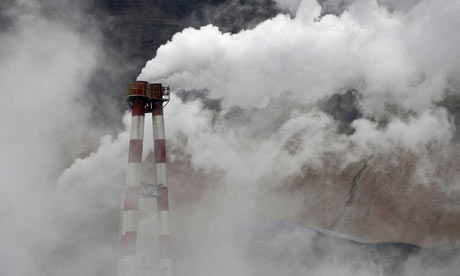
Climate change and pollution at Copenhagen: chimneys at steel and iron plant Shanxi province, China

The speed in which the market for carbon trading grows will depend on whether the Copenhagen summit gives a go-ahead to a low-carbon economy, say traders. Photograph: Stringer /Reuters

The carbon market could become double the size of the vast oil market, according to the new breed of City players who trade greenhouse gas emissions through the EU’s emissions trading scheme.

Western lifestyle unsustainable, says climate expert Rajenda Pachauri

admin /29 November, 2009

Western lifestyle unsustainable, says climate expert Rajendra Pachauri

Ahead of the Copenhagen summit, leading scientist and IPCC chair Rajendra Pachauri warns of radical charges and regulation if global disaster is to be avoided


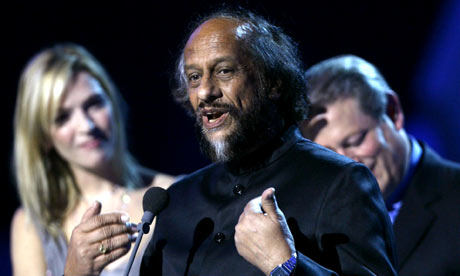
Rajendra Pachauri

Rajendra Pachauri accepts the Nobel prize on behalf of the IPCC in 2007. Photograph: AFP/Getty Images


Hotel guests should have their electricity monitored; hefty aviation taxes should be introduced to deter people from flying; and iced water in restaurants should be curtailed, the world’s leading climate scientist has told the Observer.

Rajendra Pachauri, the chair of the Intergovernmental Panel on Climate Change (IPCC), warned that western society must undergo a radical value shift if the worst effects of climate change were to be avoided. A new value system of “sustainable consumption” was now urgently required, he said.

Searching for a miracle

admin /29 November, 2009

Perhaps the most significant limit to future energy supplies is the “net energy” factor—the requirement that energy systems yield more energy than is invested in their construction and operation.

Searching for a Miracle

‘Net Energy’ Limits & the Fate of Industrial Society

Post Carbon Institute & International Forum on Globalization – September 2009

Read the full report:
»  Download the PDF (2.61 MB)

Overview

THIS REPORT IS INTENDED as a non-technical examination of a basic question: Can any combination of known energy sources successfully supply society’s energy needs at least up to the year 2100? In the end, we are left with the disturbing conclusion that all known energy sources are subject to strict limits of one kind or another. Conventional energy sources such as oil, gas, coal, and nuclear are either at or nearing the limits of their ability to grow in annual supply, and will dwindle as the decades proceed—but in any case they are unacceptably hazardous to the environment. And contrary to the hopes of many, there is no clear practical scenario by which we can replace the energy from today’s conventional sources with sufficient energy from alternative sources to sustain industrial society at its present scale of operations. To achieve such a transition would require (1) a vast financial investment beyond society’s practical abilities, (2) a very long time—too long in practical terms—for build-out, and (3) significant sacrifices in terms of energy quality and reliability.