Category: Uncategorized

  • Relentless Melt

    Relentless Melt

    by Robert Hunziker / September 22nd, 2013

    Greenland, July 2012

    Remarkably, from July 8, when 40% of the melt had already occurred, to July 12, four days later, 97% of the island’s surface ice had thawed into slush. Most of the thaw occurred in a scant four days time! Son Nghiem of NASA’s Jet Propulsion Laboratory in Pasadena, CA explained, “This was so extraordinary that at first I questioned the result: Was this real or was it due to a data error?1

    Meanwhile, as of September 2013, the International Panel on Climate Change (IPCC) is readying their 5th Assessment Report (AR5), but regardless of what it says about whether global warming is increasing, decreasing, or staying about the same, the entire planet is involved in a common phenomenon – relentless ice melt, which continues increasing year-after-year-after-year. The ice is melting, and the evidence is everywhere to see.

    Ice melt is happening all across the planet from Antarctica, to the Andes, to Alaska, to the Arctic (loss of 40% of mass, so far), to Siberia, to the Alps, to the Tibetan Plateau and on it goes around the world as it melts like there is no tomorrow, and there may not be a tomorrow for coastal cities like Miami, as well as for billions of people who depend upon glaciers for crop irrigation (like China 80% and India 60%), drinking water, and commercial waterways, like the Rhone River. This, of course, ignores the fate of Alpine skiing, which is a separate topic from the survival of humanity.

    Speaking of which, the iconic Chacaltaya Ski Resort in Peru (Est. 1938), the world’s highest ski area at 17,785 ft. and higher than the Mt. Everest base camp, is permanently closed. The glacier is gone.

    Similarly, the enormous glacier immediately below Mt. Everest that George Mallory photographed in 1921 has completely disappeared. It is gone forever.

    Ice is melting faster and faster (the rate of melt is speeding up almost every year) across the world, and it threatens the survival of civilization. The worst-case consequences, other than a huge abrupt rise in sea level as the result of a “tipping point,” would most likely result in food panic, political unrest, and ground wars.

    The culprit behind this threat is the burning of fossil fuels to power the world’s economy. But, in the final analysis, with a disharmonious outcome, the world’s economy may change in a big way by reverting to a Paleolithic economy like the hunter-gatherer societies around 500,000 B.C. This is what happens when convenience stores run out of food.

    This would not be likely if not for the burning of fossil fuels, and of course, there are disparate theories about the causes behind global warming, but common sense science points the accusing finger at humans. Here’s the reason why: The ice melt and increasing levels of carbon dioxide (CO2) in the atmosphere (caused by burning fossil fuels) are working in tandem. Today, CO2 levels at 400 ppm are the highest in millions of years whilst scooting ever-upwards in concert with similar loss of ice mass, which, as well, has accelerated over the past few decades. The two are on a parallel pathway of one increasing as the other decreases.

    South American Water Supplies Threatened

    In the high altitudes of South America 1,600 years of ice formation melts in 25 years according to a recent scientific study, which found extraordinarily large portions of the Quelccaya Ice Cap melting away in just 25 years. Quelccaya is the world’s largest tropical ice sheet and located in the Peruvian Andes.2

    Meredith A. Kelly, glacial geomorphologist, Dartmouth College calculates the current melting at Quelccaya at least as fast, if not faster, than anything in the geological record books since the end of the last ice age.

    “Throughout the Andes, glaciers are now melting so rapidly that scientists have grown deeply concerned about water supplies for the people living there.”3

    Alaskan Water Supply Challenged

    Moreover, researchers at the University of Alaska Southeast are currently investigating an ancient forest (more than 1,000 years old), which was suddenly exposed under the melting Mendenhall Glacier, which flows into a lake near Juneau. The Mendenhall Glacier is retreating at an average rate of 170 feet per year, ever since 2005.

    As well, authorities in Alaska have expressed concern as Anchorage, the state’s most populated city, relies entirely upon the retreating Eklutna Glacier for drinking water. According to a USGS study: “… the Eklutna Glacier has retreated dramatically over the last 50 years… already altered the density-driven stratification of the lake with implications for water treatment and reservoir volume.”4

    Who would’ve ever guessed a city in Alaska (Yes, Alaska!) the land of ice, snow, and the great outdoors, would succumb to concerns over water sources?

    Switzerland: Land of Glaciers

    “The glaciers are kind of a direct signal of climate change,” claims Samuel Nussbaumer, a scientist with the World Glacier Monitoring Service at University of Zurich in an article.5

    According to a study by the European Topic Centre on Air Pollution and Climate Change Mitigation, from 2000 to 2010, the Alpine glaciers on average lost more than 3.25 feet of thickness per year. Nussbaumer says the rate of shrinkage is increasing by the year, and he says rising temperatures are the main explanation. “These ice giants could disappear literally in the space of a human lifetime, or even less,” according to Sergio Savoia of the WWF’s Alpine office.

    The Alpine glaciers serve as Europe’s water tower, similar to how the Tibetan Plateau, the “Third Pole,” serves as the water tower for India and China and neighboring countries (Chinese scientists report significant measured glacial melting over the past 30 years). As well, the glaciers feed our big, commercial rivers like the Rhone, Po, and the Danube.

    The famous Morteratsch Glacier is one of Switzerland’s tourists’ attractions. Ursula Reis, a 73-year-old from Zurich, has been visiting the big glacier every year since 1953, and she says: “I have seen the shrinkage. It’s amazing and frightening at the same time.”

    Antarctica: 85% of the World’s Ice

    Pine Island Glacier, Antarctica is of utmost interest to the world of climate scientists because it has a greater net contribution of ice to the sea than any other ice drainage basin in the world.

    For decades, Pine Island Glacier was considered too dangerous and too remote to explore, but a resolute team of scientists finally accomplished this task in 2012-13. The glacier is the biggest source of uncertainty in global sea level projections, according to Martin Truffer, professor of physics, University of Alaska, Fairbanks, “I think it is fair to say that the largest potential sea level rise signal in the next century is going to come from this area.”

    Pine Island Glacier research, as of September 2013, has now detailed ice melt below the massive Pine Island Glacier, conducted by the Naval Postgraduate School (NPS), Department of Oceanography, Monterey, California. NPS worked in tandem with Penn State University, NASA, the British Antarctic Survey, and New York University to understand what is happening beneath the gigantic glacier, a 37-mile long ice tongue.

    For the first time ever, scientists now have detailed analysis, published in the journal of Science on September 13, 2013: “This is the first observation of the actual melt rate underneath the ice shelf,” according to Timothy Stanton, oceanographer at NPS, “…these are actual in situ measurements.”

    The measured melt rate is as high as 2.36 inches per day or about 72 feet per year in the middle of the channels. Additionally, the scientists calculate that the melting at the “grounding line” doubles to approximately 144 feet per year.

    The researchers used hot-water drills to penetrate the 1,460-foot thick ice shelf and lowered oceanographic instruments. They discovered warm ocean water is eating away at the underside of the ice shelf.

    Along these lines, over 3,000 Argo Floats in the ocean around the world measure the ocean’s portion of the total heat content of the planet. Remarkably, the ocean has been absorbing 90% of Earth’s heat content over the past few decades.

    In turn, a warming ocean leads to a thinning of the ice shelf. The question remains, how long will the Pine Island Glacier remain relatively stable, but if it does not, one day in the distant future, coastal cities will need to build dykes.

    U.S. Position on Climate Change

    It is a fair statement that only the world’s major governments have the muscle to do something about the threat of climate change because Tuvalu (9 square miles), Seychelles (107 sq. miles), and Malta (122 sq. miles) combined couldn’t round up enough muscle to do any more than a colony of ants attempting to tackle Mount Everest, but they’ll be the first to suffer the consequences of no action. As such, the U.S. and the EU are the logical leaders to do something constructive to help prevent global warming’s relentless melt.

    Yet, unless your living in a cave, you must be aware of the right-wing politicized effort in America to disparage any efforts to arrest human-caused climate change. Ruthlessly, the denial crowd goes after anybody who stands out in favor of fixing the broken climate. And, this, therefore, begs the big question of: Why?

    Seemingly, the answer is very simple. It’s a matter of money and fossil fuel interests. But, maybe the rationale goes deeper than that.

    In this regard, by opposing mandatory cuts to greenhouse gas emissions, all stripes of conservatives can agree, uniting social conservatives, moderate conservatives, plain conservatives, libertarians, and tea partiers. As such, even though the maxim “ agree to disagree” may define the art of politics, this solid base of opposition to fixing climate change is a common issue that glues together the functionality of their political party apparatus.

    For example, libertarians tend to have a lot of differences with conservatives on issues like immigration and war, but when it comes to climate change, if there are differences, they are not nearly as pronounced. Thus, the rallying cry around denial of human-caused climate change binds together the roughshod elements.

    Along these lines, denial of human-caused climate change serves to hold together otherwise disparate elements, but still, there must be more substance behind the right wing’s overt hatred of environmentalists.

    Another answer is found psychologically, where there is a case to be made that ‘strength’ has always been a proxy for the ability to defend or acquire resources. Along these lines, researchers at Aarhus University, Denmark studied data on bicep size, upper-body strength and political views in America, Argentina, and in Denmark. Results: Weaker men support welfare causes whereas in all three countries the strong men support self-interests over welfare programs. As such, caring for the climate is altruistic behavior, and maybe this helps explain why so many climate change deniers look like deniers.

    And, at the risk stepping into a minefield of controversy, academics in Canada conducted analyses, published in Psychological Science, of more than 15,000 people and found that right-wing views make the less intelligent feel safe (think about the enormous very large constituency at hand.) The authors claim that conservative politics are part of a complex relationship that leads people to prejudices, and they feel safe with the status quo as represented by conservative views. Therefore, by extension, denying the advocates of climate change solidifies the party faithful (voters) similar to how it cements together the disparate elements of the party officeholders.

    Thus, from the voters in the streets to the legislators in Congress, denial of human-caused climate change serves to cement together the entire Republican Party apparatus. Therefore, even though moneyed interests is at the core of the climate change issue, the very survival of many disparate political elements, conjoined under the Republican umbrella, is more a function of a common enemy that threatens to change America than anything else. And, as mentioned previously, people of a certain intelligence quotient are prone to buy into the politics of resisting change. And, the biggest, loudest common denominator they fight is the outcry by “naïve, baited environmentalists” who want to change from fossil fuels to renewables. That’s one big change!

    As such, the battle lines have been rigidly formed regardless of how much ice melts around the world and no matter how ‘milquetoast’ the upcoming IPCC AR5 report is characterized by the right wing. The public outcry of greens versus the stealth of dirty fossil fuel money is deadlocked in a relentless battle until the waters either overwhelm NYC or recede for good.

    As such, based upon simple observation, and if the glaciers and the ice sheets are the odds-makers, then the odds are 100-to-1 that NYC should start planning to build dykes.

    1. Source: National Geographic News, July 25, 2012. []
    2. Source: L.G.Thompson, et al., Annually Resolved Ice Core Records of Tropical Climate Variability Over the Past ~ 1800 Years, Science, Vol. 340, no. 6135, May 24, 2013. []
    3. Justin Gillis, In Sign of Warming, 1,600 Years of Ice in Andes Melted in 25 Years, New York Times, April 4, 2013. []
    4. The Diminishing Role of Glacier Runoff into Eklutna Lake; Potential Impacts of Hydropower and Water Supply for the Municipality of Anchorage, State Water Resources Research Institute Program, Alaska, Principal Investigator: Michael Gregg Loso, 20092010. []
    5. Nina Larson, Trail of Melting Swiss Glacier Shows Climate Change in Action, Phys.Org, September 20, 2013. []

    Robert Hunziker (MA in economic history at DePaul University, Chicago) is a former hedge fund manager and now a professional independent negotiator for worldwide commodity actual transactions and a freelance writer for progressive publications as well as business journals. He can be contacted at: rlhunziker@gmail.com. Read other articles by Robert.

    This article was posted on Sunday, September 22nd, 2013 at 7:43am and is filed under Capitalism, Climate Change, Kalaallit Nunaat/Greenland, Libertarianism, Oil, Gas, Coal, Pipelines, Right Wing Jerks, South Ixachilan (America), Switzerland, Water.


    2

    0 26


    All content © 20

  • Cleaner air from tackling climate change ‘would save millions of lives’

    Cleaner air from tackling climate change ‘would save millions of lives’

    The benefits of a reduction in air pollution alone justify action on climate change, say the authors of a new report

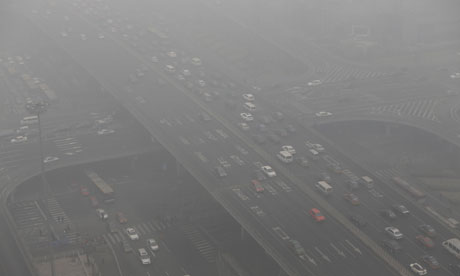
     Heavy haze day in Beijing's central business district due to air pollution in China

    Researchers found that 300,000-700,000 premature deaths a year could be avoided in 2030, 800,000 – 1.8 million in 2050 and 1.4 million to 3 million in 2100. Photograph: Jason Lee/Reuters

    Tackling climate change would save millions of lives a year by the end of the century purely as a result of the decrease in air pollution, according to a new study.

    The study is published as scientists from around the globe gather in Stockholm to thrash out final details of a landmark assessment of climate science. Their final report is due to be released on Friday 27 September and will set out projections of wide-ranging impacts of global warming from droughts to floods to sea-level rise.

    The research suggests that the benefits of cuts to air pollution from curbing fossil-fuel use justify action alone – even without other climate impacts such as more extreme weather and sea-level rise.

    “It is pretty striking that you can make an argument purely on health grounds to control climate change,” said Jason West, at the University of North Carolina at Chapel Hill, whose work is published in Nature Climate Change.

    West’s team compared two futures, one in which climate change is stabilised by aggressive cuts in greenhouse gas emissions and one in which emissions are not curbed. The scientists then modelled how this affected air pollutants and the consequent effects on health.

    They found that 300,000-700,000 premature deaths a year would be avoided in 2030, 800,000 – 1.8 million in 2050 and 1.4 million to 3 million in 2100. By mid-century, the world’s population is expected to peak at around 9 to 10 billion.

    A key finding was that the value of the health benefits delivered by cutting a tonne of CO2 emissions was $50-$380, greater than the projected cost of cutting carbon in the next few decades. The benefits do not accrue from reductions in CO2 per se but because of associated pollutants released from burning fossil fuels.

    It is possible to reduce pollutants in fossil fuel emissions more cheaply without switching to low carbon sources of power – for example with scrubbers on coal plants that remove NOx and SOx; or by cars switching from diesel to petrol – but the authors say it is striking that the value of health benefits outweigh the costs of cutting carbon.

    The benefits were particularly great in China and east Asia, where the value of health improvements was between 10 and 70 times greater than the cost of reducing emissions. “The benefits in north America and Europe are still pretty high, but in east Asia you have a very high population exposed to very bad air pollution, so there are lots of opportunities for improvement there,” said West.

    The research analysed how cutting emissions from coal-fired power plants, cars and other sources reduced levels of small pollution particles (PM2.5) which increase heart attacks, strokes and lung cancer and of ozone, which causes respiratory illnesses.

    Unlike previous studies, which have tended to focus on specific countries or regions, the new study took a global perspective. “Air pollution does not stop at the border,” said West. “If China reduces pollution, people outside of China benefit as some pollution travels across the Pacific or the other way into south-east Asia.”

    Another key difference of the new work was including future population increases and the rising longevity of people, which means they are more likely to be affected by cardiovascular diseases, rather than dying young from infectious diseases. The ranges in the estimates of premature deaths avoided and the economic benefits arise from the relative uncertainty of how people’s health responds to air pollution and the range of valuations used for lives, with the US Environmental Protection Agency using a value of $7m per life, while the European Union uses $2m per life.

    The wider assessment from the Intergovernmental Panel on Climate Change due on 27 September, its first since 2007, will play a crucial role in the international negotiations towards a global deal to tackle global warming in 2015. West said: “Climate change is a long-term problem and the benefits of any action taken by one country are shared out among all: both of these things make reaching and an agreement difficult. But the air pollution co-benefits are local, tangible and near term, with air quality improving within weeks. That strengthens the argument for taking action.”

    Green light

    close

    Sign up for the Green light email

    The most important environment stories each week

  • Is climate change already dangerous? (3) Consequences from current greenhouse gas levels

    climate code red


    Posted: 21 Sep 2013 08:23 PM PDT

    by David Spratt

    Third in a series

    Danger from implied temperature increase


    The current level of atmospheric CO2 only is sufficient to increase the global temperature at equilibrium by +1.5°C, based on the standard assumption of near-term climate sensitivity of 3°C for doubled CO2.

    If all current greenhouse gases are taken into account, then:

    The observed increase in the concentration of greenhouse gases (GHGs) since the pre-industrial era has most likely committed the world to a warming of 2.4°C (within a range of +1.4°C to +4.3°C) above the pre-industrial surface temperatures. (Ramanthan and Feng)

    And the 2007 IPCC Synthesis report (Table 5.1 on emission scenarios) also shows that for levels of greenhouse gases that have already been achieved (CO2 in the range of 350–400 ppm, CO2e in the range 445–490 ppm) and peaking by 2015, the likely temperature rise is in the range of 2–2.4°C.

    These scenarios include short-lived gases such as methane, which degrades out of the atmosphere in a decade, and also nitrous oxide, which has an atmospheric lifetime of around a century. On the other hand, the fact that temperatures are not already much higher than they are today is due principally to the large-scale emission of very short-lived (10 days) aerosols such as soot and exhausts from burning fossil fuels, industrial pollution and dust storms, which are providing temporary cooling. The effect is known popularly as “global dimming”, because the overall aerosol impact is to reduce, or dim, the sun’s radiation, thus masking some of the heating effect of greenhouse gases. The aerosol impact is not precisely known, but Ramanthan and Feng estimate it as high as ~1°C. As the world moves to low-emission technologies, most of the aerosols and their temporary cooling will be lost. Recent research finds that quickly eliminating all greenhouse gas emissions (and necessarily the associated aerosols) would produce warming of between 0.25 and 0.5 °C over the decade immediately following (Matthews and Zickfield; Hansen, Sato et al.).

    A practical consideration of “dangerous” can include the question as to whether there are tipping points or “concerns” activated for the elevated temperatures that we are generally considered to be already committed to: conservatively in the range say +1.5 to 2°C and, more pragmatically, in the range of 2 to 2.4°C if all current greenhouse gases are considered. A related question is whether the +1.5°C goal advocated by the small island states and surveyed recently by Climate Action Network Europe and Climate Analytics would avoid “dangerous” climate change and significant tipping points.

    This is a broad topic, but four recent important research findings on impacts for the current committed warming are arresting:

    Greenland Ice Sheet tipping point

    The tipping point for GIS has been revised down by Robinson, Calov et al. to +1.6ºC (uncertainty range of +0.8-+3.2ºC) above pre-industrial, just as regional temperatures are increasing at three-to-four times faster than the global average, and the increased heat trapped in the Arctic due to the loss of reflective sea ice ensures an acceleration in the Greenland melt rate.  If the lower Greenland boundary in the uncertainty range turned out to be right, then with current warming of +0.8ºC over pre-industrial we have already reached Greenland’s tipping point.  And, with temperature rises in the pipeline, the upward trajectory of annual greenhouse gas emissions, the projected future increases in fossil fuel use, and the continuing political impasse in international climate negotiations, we are very likely to hit the best estimate of +1.6ºC within a decade or two at most.

    Coral reefs

    Frieler, Meinshausen et al. show that “preserving more than 10 per cent of coral reefs worldwide would require limiting warming to below +1.5°C (atmosphere–ocean general circulation models (AOGCMs) range: 1.3–1.8°C) relative to pre-industrial levels”.  Obviously at less than 10 per cent, the reefs would be remnant, and reef systems as we know them today would be a historical footnote.  Already, the data suggests that the global area of reef systems has already been reduced by half. A sober discussion of coral reef prospects can be found in Roger Bradbury’s “A World Without Coral Reefs”  and Gary Pearce’s “Zombie reefs as a harbinger for catastrophic future”.  The opening of Bradbury’s article is to the point:

    It’s past time to tell the truth about the state of the world’s coral reefs, the nurseries of tropical coastal fish stocks.  They have become zombie ecosystems, neither dead nor truly alive in any functional sense, and on a trajectory to collapse within a human generation.  There will be remnants here and there, but the global coral reef ecosystem — with its storehouse of biodiversity and fisheries supporting millions of the world’s poor — will cease to be.

    3c. Arctic carbon stores

    As Climate Progress recently noted: “We’ve known for a while that ‘permafrost’ was a misnomer” because thawing permafrost feedback will turn the Arctic from a net carbon sink to a net source in the 2020s and defrosting permafrost will likely add up to 1ºC to total global warming by 2100.   A 2012 UNEP report on Policy implications of warming permafrost says the recent observations “indicate that large-scale thawing of permafrost may have already started.”  In February 2013, scientists using radiometric dating techniques on Russian cave formations to measure historic melting rates warned that a +1.5ºC global rise in temperature compared to pre-industrial was enough to start a general permafrost melt.  Vaks, Gutareva et al. found that “global climates only slightly warmer than today are sufficient to thaw extensive regions of permafrost.” Vaks says that: “1.5ºC appears to be something of a tipping point”.

    Previously a study of East Siberian permafrost by Khvorostyanov, Ciais et al.  found that once mobilised, the process would be self-maintaining due to “deep respiration and methanogenesis” (formation of methane by microbes).  In other words, the microbial action that produces methane as the carbon stores melt would produce sufficient heat to maintain the process: “once active layer deepening in response to atmospheric warming is enough to trigger deep-soil respiration, and soil microorganisms are activated to produce enough heat, the mobilization of soil carbon can be very strong and self-sustainable”.

    A sharp scientific debate has started on the stability of large methane clathrate stores just below the ocean floor on the shallow East Siberian Sea, following the publication in July 2013 of research by Whiteman, Hope and Wadhams which said that the release of a single giant “pulse” of methane from thawing Arctic permafrost beneath the East Siberian sea could come with a $60 trillion global price tag. Wadhams says “the loss of sea ice leads to seabed warming, which leads to offshore permafrost melt , which leads to methane release, which leads to enhanced warming, which leads to even more rapid uncovering of seabed”, and this is not “a low probability event”.

    Multiple targets reduce allowable warming

    Steinacher, Joos et al. explore the interaction of targets in emissions reductions, focussing on the 2ºC temperature goal. They find that when multiple climate targets are set (such as food production capacity, ocean acidity, atmospheric temperature), “allowable cumulative emissions are greatly reduced from those inferred from the temperature target alone”. In fact, “When we consider all targets jointly, CO2 emissions have to be cut twice as much as if we only want to meet the 2ºC target.”

    Lessons from climate history

    Another fruitful line of inquiry on whether climate change is already “dangerous” is to look at the paleo-climate (climate history) record for circumstances analogous to present conditions to learn what planetary and climate conditions were like at that time.  With current CO2 levels at 400 ppm, a useful comparison is the Pliocene (3–5 million years ago).  The research body is large and growing in this area, but here are some examples:

    Sea-levels

    Rohling, Grant et al.  find that during the mid-Pliocene, when greenhouse gases were similar to today, sea levels were more than 20 metres higher than today “we estimate sea level for the Middle Pliocene epoch (3.0–3.5 Myr ago) – a period with near-modern CO2 levels – at 25±5 metres above present, which is validated by independent sea-level data”. Likewise Hansen, Sato et al. find that “during the middle-Pliocene… we find sea level fluctuations of 20-40 metres associated with global temperature variations between today’s temperature and +3°C”.

    Speed of sea-level rise

    The speed of sea-level rise may far exceed the current, rather reticent estimates that are used for policy purposes.  Blancon, Eisenhauer et al. examined the paleo-climate record and showed a sea-level rises of 3 metres in 50 years due to the rapid melting of ice sheets 123,000 years ago in the Eemian, when the energy imbalance in the climate system was less than at present.

    Polar feedbacks

    Hansen, Sato et al. find that current temperatures are at least as high as the Holocene Maximum (i.e., as high as they have been over the last 10,000 years).  They sum up:

    Earth at peak Holocene temperature is poised such that additional warming instigates large amplifying high-latitude feedbacks.  Mechanisms on the verge of being instigated include loss of Arctic sea ice, shrinkage of the Greenland ice sheet, loss of Antarctic ice shelves, and shrinkage of the Antarctic ice sheets.  These are not runaway feedbacks, but together they strongly amplify the impacts in polar regions of a positive (warming) climate forcing…  Augmentation of peak Holocene temperature by even +1ºC would be sufficient to trigger powerful amplifying polar feedbacks, leading to a planet at least as warm as in the Eemian and Holsteinian periods, making ice sheet disintegration and large sea level rise inevitable.

    [It is relevant here to note that warming in the pipeline due to thermal inertia, plus warming associated with the loss of aerosols, is greater than +1ºC.]

    And during the Pliocene, with atmospheric greenhouse levels similar to today, the northern hemisphere was free of glaciers and ice sheets and beech trees grew in the Transantarctic Mountains. There are also strong indications that permanent El Nino conditions prevailed.

    4d. Arctic carbon stores

    As discussed above, scientists using radiometric dating techniques on Russian cave formations to measure historic melting rates going back 500,000 years conclude that a +1.5ºC global rise in temperature compared to pre-industrial is enough to initiate widespread permafrost melt.

    In May this year, Brigham-Grette, Melles et al. published evidence from Lake El’gygytgyn, in north-east Arctic Russia, showing that 3.6–3.4 million years ago, summer mid-Pliocene temperatures locally were ~8°C warmer than today, when CO2 was ~400 ppm.  This is highly significant because researchers including Celia Bitz and Philippe Ciais have previously found that the tipping point for the large-scale loss of permafrost carbon is around +8ºC  to 10ºC regional temperature increase.  Caias told the March 2009 Copenhagen climate science conference that: “A global average increase in air temperatures of +2ºC and a few unusually hot years could see permafrost soil temperatures reach the +8ºC threshold for releasing billions of tonnes of carbon dioxide and methane”. So, if the current level of greenhouse gases is enough to produce Arctic regional warming of ~+8°C and that is a likely tipping point for large-scale permafrost loss, we have reached a disturbing milestone.

    Even more disturbing is new research from Ballantyne, Axford et al. which says that during the Pliocene epoch, when CO2 levels were ~400 ppm, Arctic surface temperatures were 15-20°C warmer than today’s surface temperatures. They suggest that much of the surface warming likely was due to ice-free conditions in the Arctic. Compared to the estimated tipping point for the large-scale loss of permafrost carbon of +8º– 10ºC regional warming, this research confirms both that the current level of greenhouse gases is sufficient to both create a sea-ice free Arctic, and Arctic warming more than sufficient to trigger large-scale loss of permafrost carbon.

    Next post: Climate safety and the emissions reduction challenge

  • A look at global population trends

    A look at global population trends

    Too many people is a big problem, but too few is a concern as well.

    By , Staff writer / September 21, 2013

    Aline Burasa (holding child) lives in Goma, Congo, with her six children. Her husband is a park ranger. Sub-Saharan Africa has the world’s highest birthrate.

    Mary Knox Merrill/The Christian Science Monitor/File

    Enlarge

    The story of the 21st century has been one of falling birthrates, rising standards of living, and a revolution in food production. But the global picture is uneven: As populations decline in wealthier nations, in other countries – particularly in Africa, says a new report – they are rising at rates that may mire their people in poverty.

    Q: What countries are growing the fastest?

    The 10 countries with the highest fertility rates are all in Africa, led by Niger, where women give birth to an average of 7.6 children. Burkina Faso, with a fertility rate of 6 children per woman, is the slowest growing of the 10, all of which are among the world’s poorest countries as well. Recent research by the Population Reference Bureau in Washington projects that Africa’s population will more than double by 2050, from 1.1 billion people today to 2.4 billion. Nigeria, already the most populous nation on the continent with 174 million people, is projected to be the third most populous in the world by 2050, with 440 million, after China and India.

    Q: What countries are growing the slowest?

    The surprising leader is Bosnia-Herzegovina, with just 1.2 children per woman. The others in the top 10 least-fertile countries all average 1.3 children per woman and include three Asian countries: Taiwan, Singapore, and South Korea. The others are in Europe: Moldova, Poland, Portugal, Spain, Slovakia, and Hungary. The fertility rate in the United States is 1.9 children per woman, which implies a declining population. But America is expected to grow in the coming decades because of immigration.

    The average global fertility rate is now 2.5 children per woman, down from almost 5 in 1960.

    Q: So does that mean Africa is in trouble and everyone else is not?

    Not necessarily. While there are major concerns that population growth will outstrip economic growth in many African countries, many other countries are deeply worried about the possibility of declining populations, which undercut economic growth and leave fewer and fewer workers to provide for systems that will burgeon with retirees.

    Even China is worried about the effect of a declining population 35 years after instituting its draconian “one child” policy. China was concerned that it wouldn’t be able to feed its people when it made it illegal for couples to have more than one child and engaged in forced sterilizations and abortions to cut population growth. China’s population, now at 1.35 billion, is expected to drop by 2050.

    Q: What are the solutions?

    There aren’t any easy ones when it comes to the African countries whose population growth rates are so high. Rising income and education levels lead to lower fertility rates, but accomplishing those first two things is challenging – even more so when a poor country’s limited educational resources are swamped by a vast number of children.

    Consider Niger, which the Population Reference Bureau compares to the Netherlands, since both countries have roughly 17 million people today. At the moment, 50 percent of Niger’s population is younger than age 15, compared with 17 percent of the Netherlands’. And given Niger’s extremely low standard of living, parents in Niger have an unfortunate incentive to bear more children: The bureau estimates that 43,000 infants died in Niger last year. In the Netherlands, by contrast, the figure was 650.

    Q: Which countries are expected to have the largest populations in 2050?

    India, which has 1.3 billion people today, is expected to supplant China in the top spot by then with a projected population of 1.65 billion. The US, though still growing, will fall from its current No. 3 position, with 316 million, even though it will rise to a projected 400 million. That will put it at No. 4, behind Nigeria, which is about one-tenth the size of the US in area.

    Ethiopia and Congo are expected to join the top 10 by 2050, pushing out Japan and Russia. Congo‘s population is projected to rise from 71 million today to 182 million, and Ethiopia’s from 89 million now to 178 million.

  • Mother Nature and the Middle Class

    The New York Times
    Op-Ed Columnist

    Mother Nature and the Middle Class

    By
    Published: September 21, 2013 2 Comments

    IF you fell asleep 30 years ago, woke up last week and quickly scanned the headlines in Iran and Egypt you could be excused for saying, “I didn’t miss a thing.” The military and the Muslim Brotherhood are still slugging it out along the Nile, and Iranian pragmatists and ideologues are still locked in a duel for control of their Islamic Revolution.

    Josh Haner/The New York Times

    Thomas L. Friedman

    Readers’ Comments

    So go back to sleep? Not so fast. I can guarantee that the next 30 years will not be the same old, same old. Two huge new forces have muscled their way into the center of both Egyptian and Iranian politics, and they will bust open their old tired duopolies.

    The first newcomer is Mother Nature. Do not mess with Mother Nature. Iran’s population in 1979 when the Islamic Revolution occurred was 37 million; today it’s 75 million. Egypt’s was 40 million; today it’s 85 million. The stresses from more people, climate change and decades of environmental abuse in both countries can no longer be ignored or bought off.

    On July 9, Iran’s former agriculture minister, Issa Kalantari, an adviser to Iran’s new president, Hassan Rouhani, spoke to this reality in the Ghanoon newspaper: “Our main problem that threatens us, that is more dangerous than Israel, America or political fighting, is the issue of living in Iran,” said Kalantari. “It is that the Iranian plateau is becoming uninhabitable. … Groundwater has decreased and a negative water balance is widespread, and no one is thinking about this.”

    He continued: “I am deeply worried about the future generations. … If this situation is not reformed, in 30 years Iran will be a ghost town. Even if there is precipitation in the desert, there will be no yield, because the area for groundwater will be dried and water will remain at ground level and evaporate.” Kalantari added: “All the bodies of natural water in Iran are drying up: Lake Urumieh, Bakhtegan, Tashak, Parishan and others.” Kalantari concluded that the “deserts in Iran are spreading, and I am warning you that South Alborz and East Zagros will be uninhabitable and people will have to migrate. But where? Easily I can say that of the 75 million people in Iran, 45 million will have uncertain circumstances. … If we start this very day to address this, it will take 12 to 15 years to balance.”

    In Egypt, soil compaction and rising sea levels have already led to saltwater intrusion in the Nile Delta; overfishing and overdevelopment are threatening the Red Sea ecosystem, and unregulated and unsustainable agricultural practices in poorer districts, plus more extreme temperatures, are contributing to erosion and desertification. The World Bank estimates that environmental degradation is costing Egypt 5 percent of gross domestic product annually.

    But just as Mother Nature is demanding better governance from above in both countries, an emergent and empowered middle class, which first reared its head with the 2009 Green revolution in Iran and the 2011 Tahrir revolution in Egypt, is doing so from below. A government that just provides “order” alone in either country simply won’t cut it anymore. Order, drift and decay were tolerable when populations were smaller, the environment not so degraded, the climate less volatile, and citizens less technologically empowered and connected.

    Both countries today need “order-plus” — an order that enables dynamism and resilience, and that can be built only on the rule of law, innovation, political and religious pluralism, and greater freedoms. It requires political and economic institutions that are inclusive and “sustainable,” in both senses of that word. Neither country can afford the old line that Hosni Mubarak used for so many years when addressing American leaders: “After me comes the flood, so you’d better put up with my stale, plodding but stable leadership, otherwise you’ll get the Muslim Brotherhood.”

    That is so 1970s. As Karim Sadjadpour, an Iran expert at the Carnegie Endowment, puts it: In the Middle East today “it’s no longer ‘After me, the flood’ — Après moi, le déluge — but ‘After me, the drought.’ ” Syria’s revolution came on the heels of the worst drought in its modern history, to which the government failed to respond.

    Iran’s Islamic leadership seems to realize that it cannot keep asking its people to put up with crushing economic sanctions to preserve a nuclear weapons option. Mother Nature and Iran’s emergent middle classes require much better governance, integrated with the world. That’s why Iran is seeking a nuclear deal now with Washington.

    And that’s why two of the most interesting leaders to watch today are President Rouhani of Iran and Egypt’s new military strongman, Gen. Abdul Fattah el-Sisi. Both men rose up in the old order, but both men were brought into the top leadership by the will of their emergent middle classes and newly empowered citizens, and neither man will be able to maintain order without reforming the systems that produced them — making them more sustainable and inclusive. They have no choice: too many people, too little oil, too little soil.

    And pay attention: What Mother Nature and these newly empowered citizens have in common is that they can both set off a wave — a tsunami — that can overwhelm them and they will never see it coming.


  • Is global warming in a hiatus? Not if you measure global heat content

    climate code red


    Posted: 20 Sep 2013 05:11 PM PDT

    by Prof. Andy Pitman, via The Conversation

    Prof. Any Pitman, Univ. of NSW

    On September 27 2013 the 5th Assessment Report by the Intergovernmental Panel on Climate Change (IPCC) will be released.

    One part of this report will address the so-called “warming hiatus”. This is the argument that warming has stopped, with the further assertion in some quarters that we therefore have nothing to worry about in the future.

    It is a fact, based on observations of air temperature, that the rate of global warming measured as surface air temperature has slowed over the past 15 years. The last decade is still the warmest in the past 150 years.

    If you measure global heat content then global warming has not slowed. If you measure other indices including sea level rise or ocean temperatures or sea ice cover global warming has not slowed.

    However, the warming trend in air temperatures has slowed over the last 15 years. There is a great deal of interest in this “hiatus” in the sense of whether it points to some fundamental error in climate science.

    The 5th Assessment Report by the IPCC explains the slowing in the rate of global warming in roughly equal terms as the consequence of reduced radiative forcing (the difference between radiative energy that hits the earth and energy radiated back to space), increased heat uptake by the oceans and natural variability.

    The reduced radiative forcing (the amount of energy available to drive the climate system) is due to the recent solar minimum (a period of low solar activity), and volcanic and anthropogenic aerosols (these are particles such as sulphur and soot, which block some radiation from hitting the earth).

    The slowing in the rate of warming over the last 15 years is not in the least surprising. We have seen a combination of the solar minimum, anthropogenic aerosol emissions and back-to-back La Niñas.

    What is surprising – and what is deeply concerning to me and almost entirely missed in the media commentary – is that we have not cooled dramatically over the last 15 years.
    Below is the global surface temperature graph – this comes from a NASA site but any other reputable temperature reconstruction makes similar points. Note that there were periods through the 20th century where combinations of aerosols from volcanoes and human sources, solar variability and natural variability led to very significant cooling.

    Figure 1: Global surface temperature. NASA

    Between about 1880 and 1890, temperatures cooled by about 0.4C. Between 1900 and 1910 temperatures cooled close to 0.3C. Between 1945 and 1950 temperatures cooled about 0.35C. Between 1962 and 1965 temperatures cooled about 0.3C. There are other examples, but these were decade-scale cooling of 0.3C to 0.4C.

    The most recent period of similar relevance starts with the extremely hot year, 1998. Since 1998, through to 2012, the temperatures cooled by 0.03C. However you choose to view the figure you simply have to conclude that natural variability, aerosols and solar variability have caused global cooling in the past of a scale that dwarfs anything that has occurred in the last 15 years.

    So, here is what I think we should be genuinely concerned about.

    Given the double-dip La Niña, coupled with the solar minimum and coupled with the high aerosol output from some developing nations, the question in the minds of some climate scientists is not “why has it cooled?”, because it has not cooled in any significant sense and the climatologically significant trends (calculated over 30 years) remain upwards.
    Indeed, despite a suite of forcings that should have led to cooling, we still had the warmest decade in the observational record.

    So, the question is, given it did cool several times in the historical period under broadly parallel circumstances in terms of the forcing, why has it not cooled since 1998 by 0.3C or 0.4C, and how come we broke the records for the warmest decade?

    There has been time (its 15 years while previous cooling occurred in 10 years) for cooling of 0.3C or 0.4C to have occurred. There really is a case to argue that we should have cooled to close to the values measured in around 1990 and definitely not broken the record for the warmest decade on record.

    A plausible answer is that we have underestimated the climate sensitivity.

    We know, for certain, that aerosols, natural variability and solar variability have cooled the climate in the past. This time, they have not.

    One way that this makes sense is if climate scientists have underestimated how dominant CO2 and other greenhouse gases are in warming the climate. In other words, CO2 and other greenhouse gases are countering the cooling effects of natural variability by much more than we anticipated.

    If correct, this means that the capacity of CO2 and other greenhouse gases to accelerate warming – once natural variability, solar variability and aerosols decline in influence – has been underestimated.

    A second possible explanation is that the warming by CO2 has led to a sufficiently different climate system that natural variability now functions differently. This seems extremely unlikely but is certainly anything but comforting.

    If you see the slowing of warming over the last 15 years as a hint that climate scientists might have been wrong and that global warming is less of a problem than predicted, you are very likely being lulled into a false sense of security.

    The lack of cooling of 0.3C or 0.4C since 1998 is most easily explained by the effect of increasing CO2 and other greenhouse gases masking the cooling that would otherwise have occurred.

    It follows that when we next see an El Niño, and the solar cycle is more average, or if developing countries clean up their aerosol emissions, we will see an acceleration of warming rates observed prior to 1998.

    In short, the slowing of warming rates since 1998 is not a good news story. It is very likely a hint that climate scientists have underestimated the sensitivity of climate to increasing CO2 and the slowing of warming is lulling us into a very false sense of security.