Category: Uncategorized

  • Our planet’s blue heart: The interrelationships among human activity, oceans, seafood, and the public’s health

    Our planet’s blue heart: The interrelationships among human activity, oceans, seafood, and the public’s health

    Published 4 September 2013 Meetings , Presentations , Science Leave a Comment

    Tuesday 5 November 5 2013: 4:30 PM – 6:00 PM, 141st American Public Health Association Annual Meeting, Boston, MA
    Water covers 70% of the Earth’s surface and billions of people rely on oceans and other water bodies for food. There are two ways seafood gets to our plates: harvesting wild populations and aquaculture, or farmed seafood, and both methods are intimately linked to ocean pollution and public health. Over the past century, global human activity has resulted in overfishing, water pollution, and climate change, which have affected oceans and the food that comes from them in potentially irreparable ways. This session will cover a few of the most pressing ocean and human health issues: i) impacts of ocean acidification on aquaculture; ii) seafood contamination through anthropogenic pollution; and iii) ecological and health concerns associated with open ocean aquaculture. Two examples of human activity affecting oceans and seafood include difficulties associated with producing farmed seafood in increasingly acidic waters and the human origins of methylmercury contamination in wild caught seafood. Oceans absorb 33% of carbon dioxide released from burning fossil fuels, and shellfish farming in some regions of the world is threatened by the resulting ocean acidification. Also, methylmercury from fossil fuel emissions deposit into oceans, and pregnant women and children are advised to avoid eating certain fish due to health risks. Using large nets or pens in the ocean to produce fish can lead to significant pollution from fish waste, uneaten food, and chemicals or drugs; disease transfer to wild fish; and escapes of nonnative species. In addition, farmed fish are commonly fed diets high in wild fish, which contributes to overfishing. Research has focused on creating alternative feeds for aquaculture, with a focus on crop-based feed, but industrial crop production causes significant ocean pollution, for example contributing to the dead-zone in the Gulf of Mexico, thus impacting wild seafood populations, aquaculture production, and public health in the region. Human activity leads to contaminated food and polluted oceans and local waterways, and this impacts human health. How food from the ocean is affected by ocean pollution or contributes to it is important for consumers, dietitians, researchers, and decision-makers to consider.


    Session Objectives: 1. Explain the effects of global climate change and ocean acidification on local aquaculture production. 2. Describe the connections between global methylmercury pollution and safety of consuming wild caught seafood. 3. List three main ecological threats associated with large-scale, open ocean aquaculture that affect oceans and public health. 4. Explain the potential environmental and public health impacts of significantly expanding crop-based fish feed for aquaculture production. 5. Identify three policy decisions that could reduce ocean pollution/acidification, make seafood safer to eat, and/or reduce the environmental footprint of aquaculture.
    Moderator:
    David Love, PhD, MSPH
    Organizer:
    Jillian Fry, PhD MPH
    5:30pm

    Environmental public health impacts of increasing crop production for aquaculture feed
    Jillian Fry, PhD MPH

    American Public Health Association. More information.

    Rate this:

    Rate This

    Share this post!

    0 Responses to “Our planet’s blue heart: The interrelationships among human activity, oceans, seafood, and the public’s health”

    1. Leave a Comment

    Leave a Reply

    Subscribe to the RSS feed

    Powered by FeedBurner

    Follow AnneMarin on Twitter

    Blog Stats

    • 664,577 hits

    OA-ICC Partners

    OUP book

    Tags

    abundance adaptation algae annelids Antarctic Arctic Arctic Ocean bacteria Baltic Baltic Sea biodiversity biogeochemistry biological response BRcommunity bryozoa calcification chemistry Cnidaria community community composition corals crustaceans discussion dissolution diversity echinoderms field fish fisheries global growth Indian ocean laboratory light Mediterranean mesocosms metabolism methods mitigation modeling molecular biology mollusks morphology morphometry mortality multiple factors multiple stressors nitrogen fixation North Atlantic North Pacific

  • The Coalition Has Misled The People On Climate

    5 Sep 2013

    The Coalition Has Misled The People On Climate

    By Ben Eltham

    Tony Abbott admits his Direct Action policy won’t work and wants a mandate to scrap the carbon tax. Looking for a difference between the major parties? Here it is, writes Ben Eltham

    It’s taken until very late in the campaign, but the Coalition’s climate policy fig leaf has finally fallen off.

    For years now, the Coalition has tried to convince voters that its “Direct Action” policy would be able to achieve a 5 per cent reduction in carbon emissions – the same environmental outcome as Labor’s carbon tax, but without the dreaded tax.

    Of course, Direct Action was always basically bullshit, in the very specific meaning of that term advanced by philosopher Harry Frankfurt. Frankfurt’s point was that a lie is a conscious intention to deceive. Bullshit, on the other hand, is not really about truth or falsehood, but about providing cover while advancing some particular interest.

    Direct Action is a perfect example of this. The goal of the policy wasn’t to fool voters into believing the Coalition could deliver meaningful action on climate change. After all, many Coalition voters don’t believe in climate change in the first place. Its real aim was to obfuscate and misdirect, in order to provide an intellectual smokescreen for the Coalition’s relentless assault on Labor’s carbon tax. That’s why the dubious and untested science of soil carbon, which lies at the centre of Direct Action, was so useful. Soil carbon could work. Or maybe it won’t. I don’t think Greg Hunt and Tony Abbott really care.

    It’s basically impossible to find an independent analyst who believes Direct Action can work. On the other hand, as Labor’s Mark Butler has noted, there is an avalanche of evidence that shows it will fail. If we take just the example of soil carbon, the University of Western Australia estimates it will cost farmers something like $80 per tonne of sequestered carbon to implement. The CSIRO’s Michael Battaglia has made a similar argument – that carbon farming is highly sensitive to carbon prices, as well as interest rates and the stability of future carbon legislation.

    Independent modelling by SKM–MMA – a firm best known for its work for the fossil fuel industry – suggests that Direct Action will most likely result in a 9 per cent increase in carbon emissions, and still cost billions more than the Coalition has budgeted.

    Now we know the Coalition doesn’t really believe in Direct Action either. On Monday Tony Abbott revealed he wouldn’t be too concerned about whether Australia met its 5 per cent emissions reduction target by 2020. Speaking at the National Press Club, Abbott dropped any pretence of concern about the long-term consequences of climate change. Instead, he railed against the “almost unimaginable” economic impacts of a carbon price, and told journalists bluntly that the Coalition will be spending no more than it has budgeted on reducing carbon. If that doesn’t produce a 5 per cent reduction, so be it.

    “The bottom line is we will spend as much as we have budgeted, no more and and no less. We will get as much environmental improvement, as much emission reduction as we can for the spending we have budgeted,” Abbott said at the National Press Club. “We are very confident we can achieve the 5 per cent target … but in the end we have told you the money we will spend – and we won’t spend any more,” he said.

    That’s a massive backflip by any standards. Direct Action can’t work, and Abbott has now admitted it. Really, it reveals that the Coalition has been misleading voters all along on climate. In a close campaign, such an admission might have been devastating.

    The Coalition is so far ahead in the polls, and many sections of the media are so biased against the current government, that the stunning backflip generated little more than a ruffle from certain sections of the online media – led by Lenore Taylor at the Guardian and Tristan Edis at Climate Spectator. It was mentioned only in passing elsewhere.

    Indeed, so confident is the Coalition of victory, Abbott has flicked the switch to incumbency this week, defining his own election mandate before even getting elected. On Tuesday he was telling the media that this election is a “referendum on the carbon tax”, and that if he did win, “the last thing the Labor Party will do is commit political suicide twice by continuing to support this absolutely toxic tax”. On Lateline last night, the Coalition’s climate spokesman Greg Hunt was backing him up, again threatening a double dissolution election if Labor did not wave through the Coalition’s plans to repeal the carbon tax.

    Mandates are always a slippery concept in representative democracies, in which voters delegate governance to politicians and then trust them to do the things that they said they would. Both Labor and the Coalition went to the 2007 election, for instance, promising emissions trading schemes. That didn’t stop the Liberals from dumping Malcolm Turnbull, installing Abbott, and then frustrating Labor’s attempts to legislate exactly that policy. A bipartisan mandate meant nothing when it came to attacking Labor in government.

    For a political animal like Tony Abbott, the significance of the m-word is not so much in winning Saturday’s poll – Coalition strategists appear to believe they’ve got it in the bag – but in putting down markers for future battles. The Coalition would dearly love to use carbon as a club to beat Labor with mercilessly once in office. Claiming a mandate on carbon is a handy tactic that will allow Abbott and his cheerleaders in the Murdoch tabloids to argue that the question of carbon pricing has been settled, and that Labor is on the wrong side of history.

    In fact, precisely the opposite is true. Carbon policy is not settled, and Labor is right to claim it will stick to its guns in opposition. Climate change is real and worsening, with the IPCC’s Rajendra Pachauri recently telling the world we are at “five minutes to midnight” when it comes to saving the planet. An Australian government that walked away from its binding 5 per cent target on reducing emissions would be a huge symbolic blow to international action. In the meantime, the sophisticated infrastructure that Labor has painstakingly built on carbon – the Climate Commission, the Australian Renewable Energy Agency, the Climate Change Authority, the Clean Energy Finance Corporation, even the Department of Climate Change itself –  will be dismantled. The war against carbon will even spill over into academia, with reports today that the Coalition would start vetting Australian Research Council grants to make sure they weren’t wasted on research on public art and climate change, to take one very specific example.

    As Fairfax’s Ben Cubby observes today, for all its carbon contortions, Labor eventually teamed with the Greens and independents to put in place a policy framework that had the ability to reduce Australia’s carbon emissions. After the wrecking ball of an Abbott government moves through, Cubby writes, “in all likelihood, this policy infrastructure will have to be rebuilt from the ground up in three or six years’ time.”

    We constantly hear reports of how disengaged voters can’t see the difference between the Coalition and Labor. On climate policy, there is a clear difference. The difference is not just over the narrow issue of the carbon tax. It is now about which party will actually reduce emissions. More broadly, it is about whether Australia will play its part in helping to stabilise the climate, or turn up the burners on a cooking planet.

    Discuss this article

    To control your subscriptions to discussions you participate in go to your Account Settings preferences and click the Subscriptions tab.

    Enter your comments here

    Michael_Wilbur-Ham
    Posted Thursday, September 5, 2013 – 13:17

    Labor and Ben are also bullshitting.

    Under Labor our domestic emissions excluding land clearing will in 2020 be 43% higher than they were in 1990.

    And under Labor we could export enough coal to provide 30% of the carbon needed to take the world to 2 degree warming.

    Of course Abbott will be worse than Labor. But as Labor have Australia leading the western world in taking us to 4 degree or greater warming, Labor are not much better than Abbott.

    If you care about climate change don’t be fooled by Ben or Labor – vote 1 Green.

    markz
    Posted Thursday, September 5, 2013 – 13:34

    Coalition may have misled — but did it ever state that climate change was the greatest moral challenge of our times?  Neither’s policy will do much good — but at least you can get a good laugh out of the absurdity of Direct Action actually being championed by a future PM

    andersand
    Posted Thursday, September 5, 2013 – 13:51

    I’m voting Green too but the choice for government for most people is currently between Labor and the LNP. And Labor has at least headed down the road to cutting emissions. They haven’t gone very far but god knows it took enough effort from all of us (including Labor and the Greens) to get the jalopy that is Australia this far. Abbott wants to pretend the road doesn’t exist and we will all have to go back to square one. So calling this article bullshit on behalf of the Greens is just silly. Especially when this is one of the few journalists writing in an informed way on this issue. There is a real difference between the LNP and Labor on this issue.

    I’m frankly tired of the Greens and Labor attacking each other like this. It’s something that’s left the field to Abbott and his ilk. And I bet they love it. It would be much more powerful for Labor and the Greens to work together—oh wait, they have been for the past 6 years. Let’s keep going .. I know .. Labor is difficult on this at times, but we need to build bridges from both sides.

    Michael_Wilbur-Ham
    Posted Thursday, September 5, 2013 – 14:02

    I think it was a big mistake for the Greens to sell the ‘look what we achieved’ message when the diffrences between what the Greens want and what Labor did are so huge.

    Labor’s inaction on climate change is so huge that it doesn’t make much difference whether Abbott gets in. Yes, Labor really are that bad.

    I’ll be voting Labor ahead of Liberal. But I won’t be fooling myself that a Labor victory is a vote for the environment.

    After all, is there any other western country which is increasing its domestic emissions (excluding land clearing) by 43%? Is there any other western country wanting to export enough coal to take us 30% of the way to 2 degrees?

    Labor has been more a continuation of Howard than a party of the left. I see that Labor has more in common with Abbott than with the Greens. And this is why I’m a passionate Green voter.


    RossC
    Posted Thursday, September 5, 2013 – 14:12

    Unfortunately Ben, your article, and others of its ilk will fall on deaf ears – the average Australian just doesn’t care about what may happen to the whole earth and society in ‘the future’. They want confidence that their personal daily consumables will be cheaper tomorrow. That’s what they are voting for, and that’s all they care about. The future well-being of humanity can look after itself….. probably.

    Science – they don’t appreciate it’s value to our lives, don’t understand it’s philosophy, and are suspicious of those who do.

    Abbott fits this definition nearly perfectly. And he knows that not enough people care to matter – he’s going to get voted in anyway.

    Of course, before too long, the average Australian will be very concerned about Climate Change, but only because rampant warming collapses a food-chain, burns down a few suburbs, cyclonically decimates a city, or floods a sea-front, rendering previously valuable land worthless. Even then, it will only concern those directly impacted – the rest will continue to look the other way.

    It’s pretty much the same rationalisation and denial smokers use to keep smoking despite the demonstrated strong possibility of long-term health risks.

    It’s the ‘tragedy of the commons’, and the reason why the global environment is no doubt doomed to massive damage.

    Greg O
    Posted Thursday, September 5, 2013 – 14:12

    It has always been strange that the party allegedly of the free market advocated direct action and the social democratic party eschewed government intervention in favour of a market mechanism, but there is a real difference between the majors on climate change. But in they are not the only players with the Senate being vital. Obviously there are the Greens there, but at the other end of “difference”, there is Family First. Preferenced by the Climate Sceptic party and a gaggle of Christian, conservative and right-wing parties, they have managed a Senator in the past, and where I live (SA) they have two state MPs and an outside chance of taking the last Senate seat. So on climate change it is worth reporting (direct quotes from their website):

    • Claims that ‘there is a scientific consensus’ and ‘the science is settled’ are not true
    • Carbon dioxide is not a pollutant, it is plant food. The more crops can get of it the better they grow.
    • Carbon dioxide has had no discernible influence on the world’s climate in the past and there is no reason to believe it should in the future.

    So presumably it won’t matter if Tony Abbott’s direct action won’t work. And I guess if we stuff up this planet, God can always make us another one. But it is cold comfort for those of us who believe in science not religion.

    guywire
    Posted Thursday, September 5, 2013 – 14:19

    This year for the first time in my life I am handing out HTV cards for the Greens.

    Dont get me wrong I dont believe that they are Fantastic but it seems to me that Abbott… nay the Liberals are aware of their own deceptions. Kevin has ousted the best of his potential team and is quite possibly the most electable nutter in Labor. At this moment the Greens are the most Honest and electable If only Bob was still around. Given what the Climate scientists are saying we need to live a much less consumerist life or the s*it will hit the fan much much faster.

    So I too will be voting 1 Greens In the insecure hope that it will make some difference. After all what is the use of a ‘better life’ if all those bushfires join up and wipe usall out. I just want to live a simple life. Its really just a survival strategy.


    Spero
    Posted Thursday, September 5, 2013 – 14:24

    Ben, why is it so difficult to understand that in order to do something about climate change on has to put the infrastructure in place. Labor has done that. If they win we wil be going to an ETS.

    When necessary adjustments within that framework can be made, in fact must be made urgently now, in order to succeed in reducing pollution and accelerating the introduction of renewables.

    All that effort will be for nought if the Murdoch and Fairfax supported Mob gets its hand on the tiller of government.

    We find out soon if we are a “stupid” society or not!

    Hello citizens,

    Have the IPA and their club members (Murdoch, Rinehart, Abbott, Pell, Jones,LNP,MSM,ABC etc) made up your mind how to vote?

    cloa513
    Posted Thursday, September 5, 2013 – 14:29

    Direct Action could work- the only way is improve the efficiency of our coal fired power stations- easily give us 20% and lower bills- such power stations are restricted by greenie actions and limited investment (its just the actual policy that’s garbage) A favourable nuclear energy environment would also help over the long term. I wonder if greenies ever notice that we aren’t the biggest consumers and producers of coal- that’s China by a long way- biggest exporter means nothing. Renewable energy is worse than totally ineffective for CO2 reduction- for reliable power system you produce more CO2.

    Bazzio101
    Posted Thursday, September 5, 2013 – 14:56

    I very much fear that, in 2013, Australia is about to enter “The Barry MacKenzie” era of political achievement and diplomacy.

  • Gorgeous Black-And-White Storm Photos Will Make You Feel Really, Really Small

    Edition: U.S.

    Posted: 08/31/13 EDT

    Gorgeous Black-And-White Storm Photos Will Make You Feel Really, Really Small

    521
    159
    59
    19
    Get Green Newsletters:

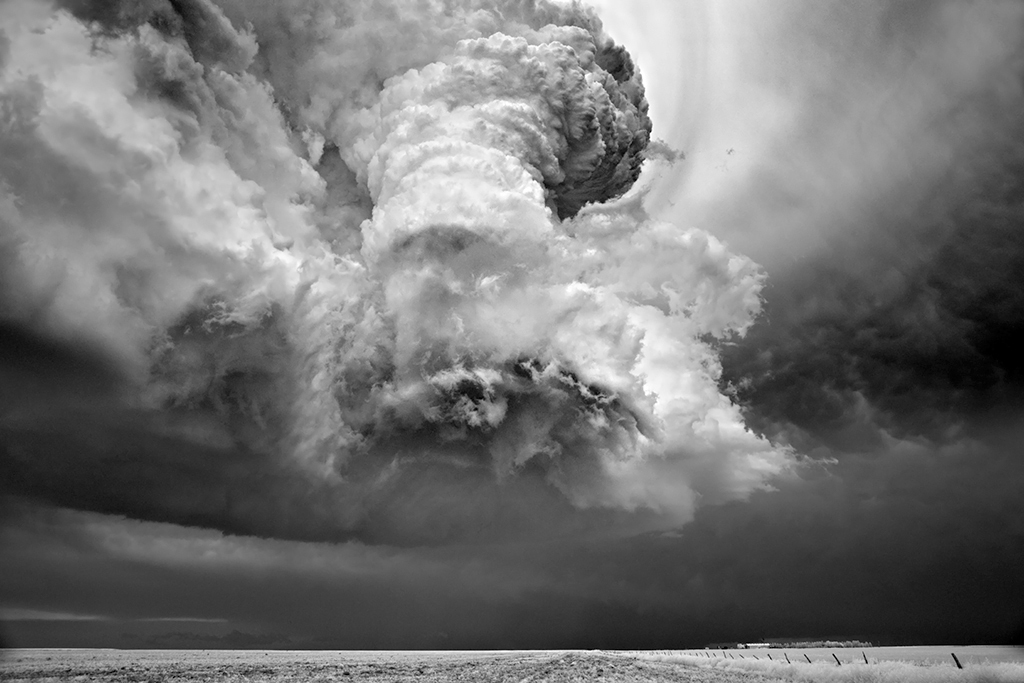
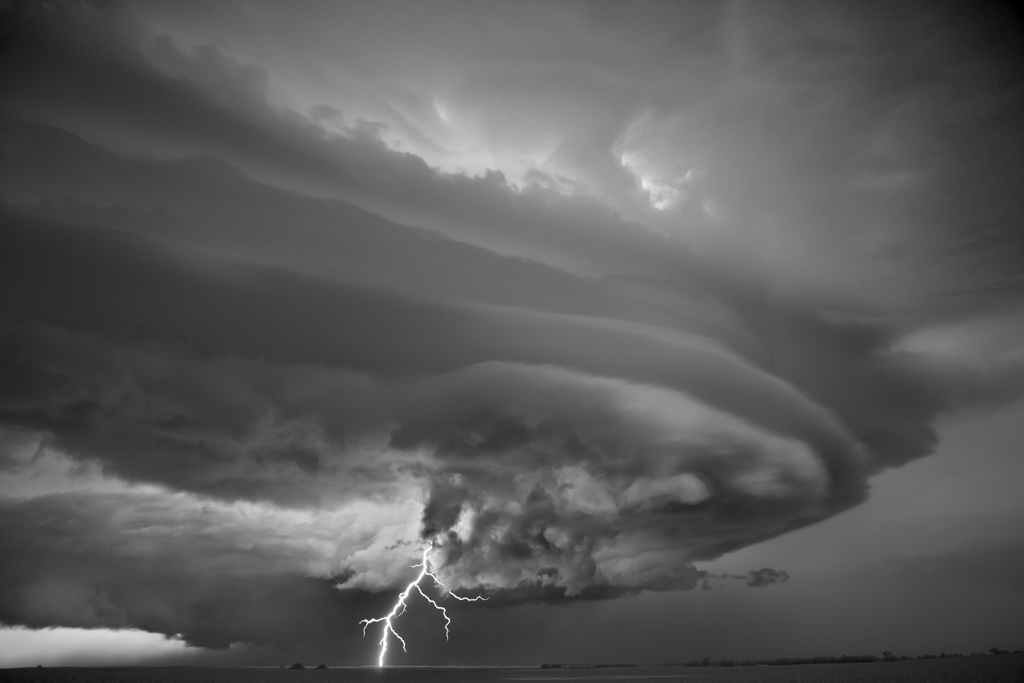
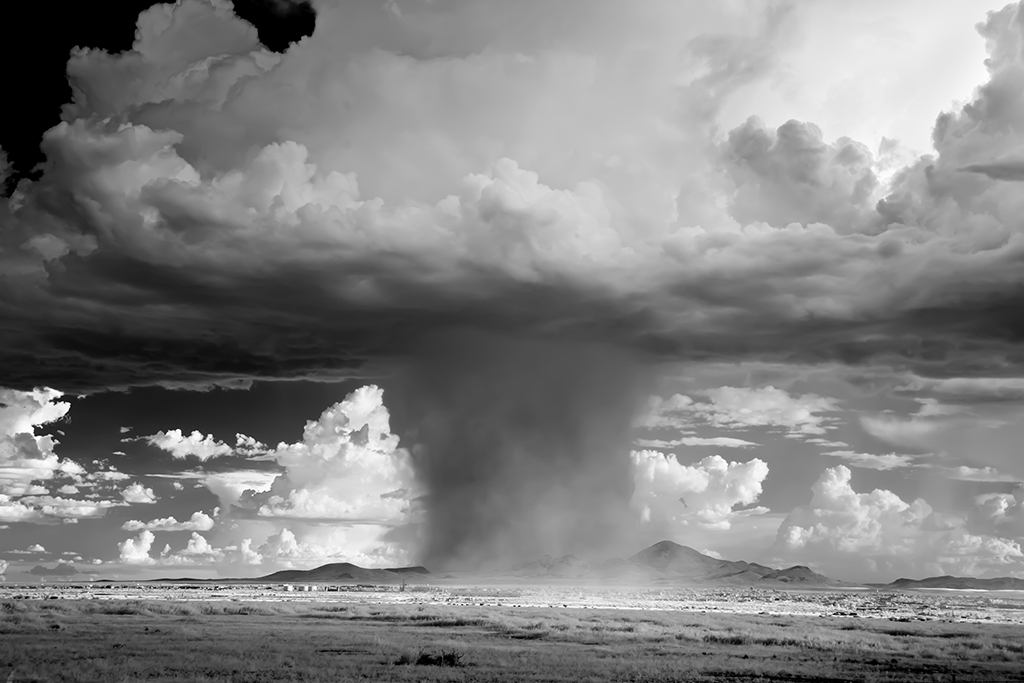
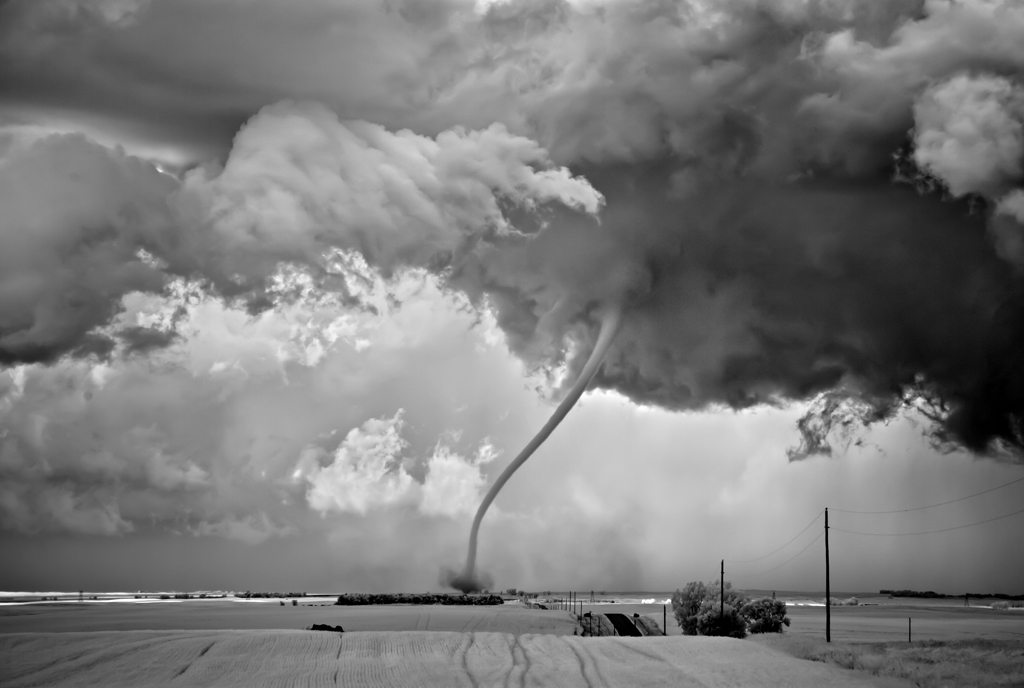
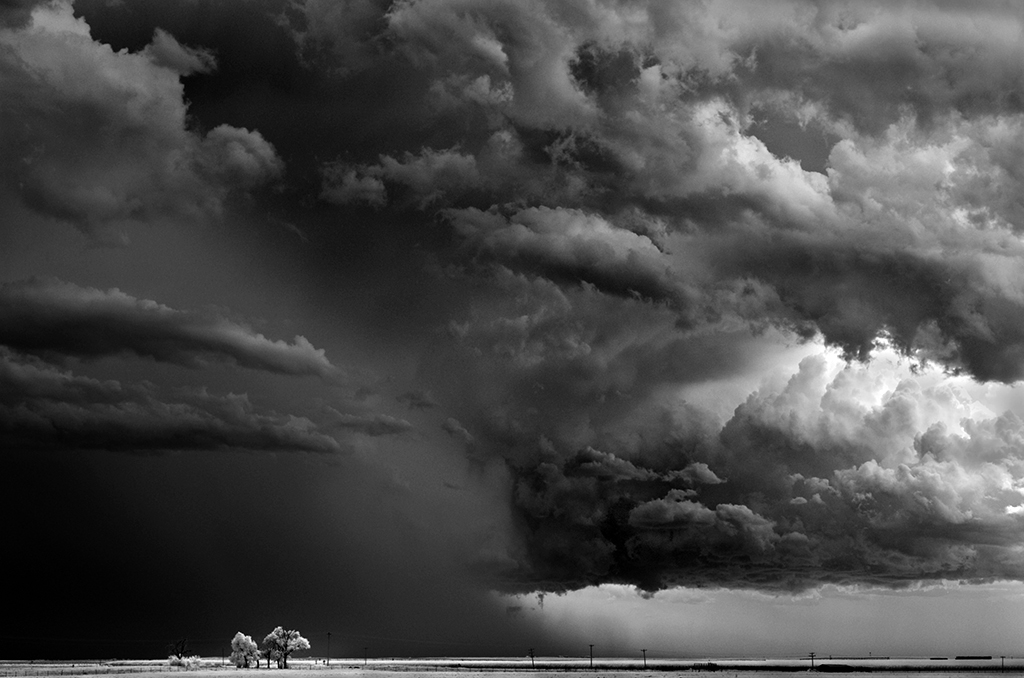
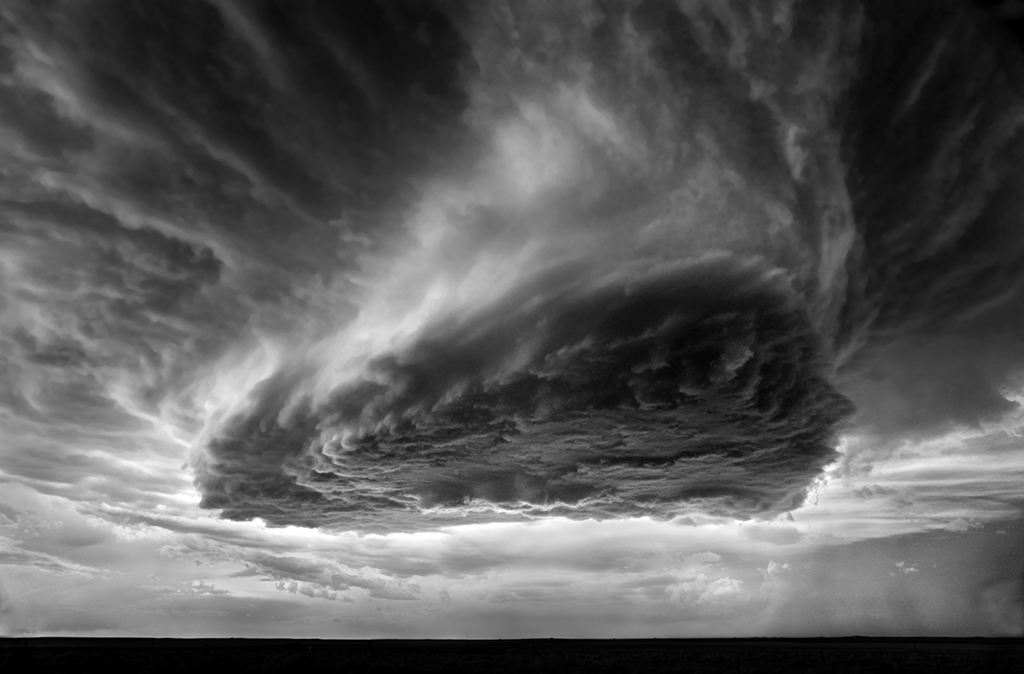
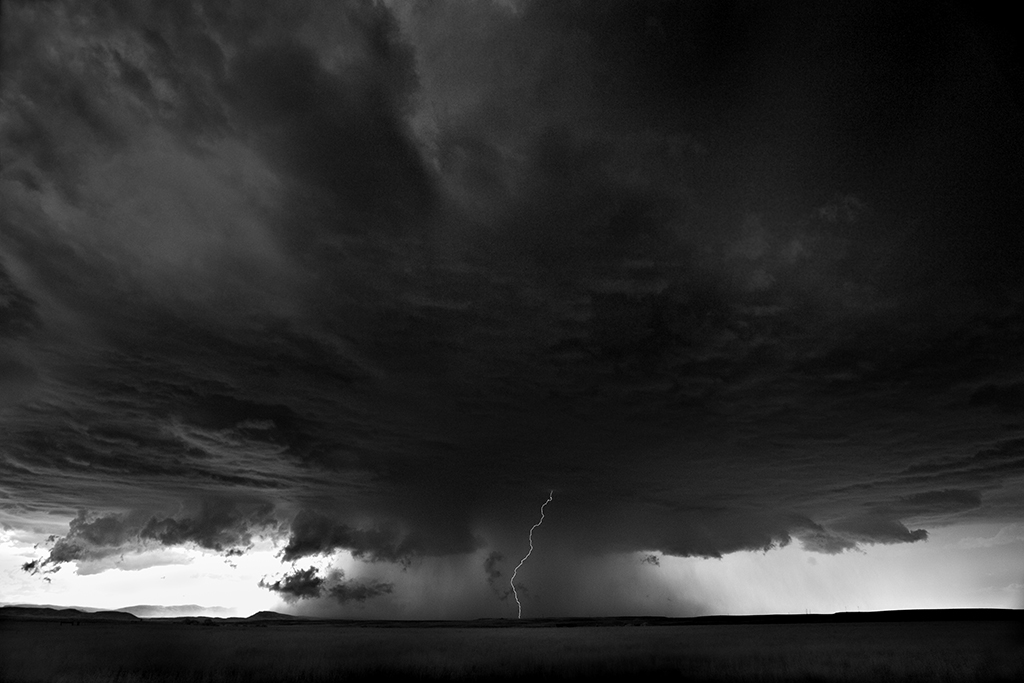
    There’s nothing quite like gazing up at a turbulent sky to make you realize how small and powerless you really are. In case you don’t have a real storm brewing in your neighborhood, we recommend turning to Mitch Dobrowner‘s stunning black-and-white photography for that shattering and humbling sensation.

    2013-08-29-MitchDobrowner_ArmofGod.jpg

    Dobrowner’s photos, made in a dry/digital darkroom, capture a magnitude and force beyond human comprehension. Impossible to measure or describe, the beastly skies take up both the foreground and background of Dobrowner’s skyscapes, and all we can do is stare.

    2013-08-29-MitchDobrowner_BearsClaw.jpg

    “When taking photographs, time and space seem hard for me to measure,” Dobrowner writes in his artist statement. “Whenever I shoot a ‘quality’ image, I know it. At those moments things are quiet, seem simple again – and I obtain a respect and reverence for the world that is hard to communicate through words. For me those moments happen when the exterior environment and my interior world combine.”

    2013-08-29-MitchDobrowner_FunnelCornfield.jpg

    Through Dobrowner’s sharp-eyed lens, tornado swirls, storm clouds and lightning bolts gain an almost otherworldly power, reminding us of the majesty emanating from Renaissance portraits of a heavenly sphere. Although there is no divine reference in Dobrowner’s work, he surely points to a different breed of unknowable forces at work right above us.

    See Dobrowner’s stormy skies below and let us know your thoughts in the comments.

    2013-08-29-MitchDobrowner_Jupiter.jpg

    2013-08-29-MitchDobrowner_Monsoon.jpg

    2013-08-29-MitchDobrowner_Road.jpg

    2013-08-29-MitchDobrowner_RopeOut.jpg

    2013-08-29-MitchDobrowner_TreesClouds.jpg

    2013-08-29-MitchDobrowner_VaporCloud.jpg

    2013-08-29-MitchDobrowner_WallCloud.jpg

    Dobrowner’s “Storms” will go on view from September 7 until October 26 at Kopeikin Gallery in Los Angeles.

  • The great election sideshow: Labor v the Coalition on the environment

    The great election sideshow: Labor v the Coalition on the environment

    The campaign has finally seen a flurry of announcements covering Australia’s vast and complex environmental challenges

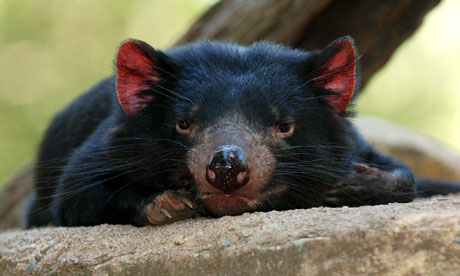
    Tasmanian Devil

    The Tasmanian devil, one of Australia’s most recognisable endangered species. Photograph: Dave Hunt/EPA

    Environmental policy in Australia covers vast areas, from saving the Tasmanian devil to the reliability of renewable energy for baseload power. This election has reduced these complex challenges to something of a sideshow, even when referenced during the never-ending debate over the cost of living.

    However, the past week has seen a flurry of last-ditch environmental policy announcements by Labor and the Coalition that manage to diverge a little from the narrow prism of energy bills and cutting so-called “green tape”.

    Both major parties have made commitments to the health of the Great Barrier Reef, while the Coalition has raised the idea of a threatened species commissioner and a G20-leading role in protecting the world’s rainforests, should it win power.

    Here is where the parties stand on the main environmental issues facing Australia.

    Climate change

    Kevin Rudd called climate change the “grandaddy” of all policy issues during the second leaders’ debate. He followed that up on Tuesday by claiming that Tony Abbott, who famously once called the science behind climate change “crap”, isn’t “fair dinkum” on the issue.

    But Rudd’s critics argue that he has now fudged the issue twice: first when he dropped the emissions trading scheme in his initial term in power and, more recently, by abolishing the fixed price on carbon.

    Rudd’s move to “terminate” the carbon tax will see the price of emissions drop to $6 a tonne if, as planned, the system moves to a floating mechanism next year.

    The knock-on result will be a reduction in costs for households but has also involved the gutting of important environmental programs such as the Biodiversity Fund and a reprieve for brown coal generators – the most carbon-intensive energy source in Australia.

    The Coalition remains implacably opposed to a carbon price – either fixed or floating – and has vowed to dismantle the scheme on pain of a double-dissolution election if necessary. Abbott said on Monday that the costs of an emissions trading scheme, which was once put forward by John Howard, were “almost unimaginable”.

    Its alternative Direct Action plan, which combines a “green army” of tree-planters, soil sequestering, and incentives for firms to reduce emissions, will probably fail to reduce Australia’s emissions by the bipartisan target of 5% by 2020 without billions of extra dollars, according to two separate recent studies.

    When pressed on this issue, Abbott said he wouldn’t provide the extra funds to reach the 5% emissions reduction. But he insists Direct Action will enable the agreed cut.

    Delegation of power to the states
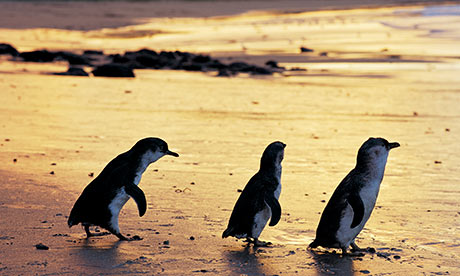
    phillip island penguins Phillip Island penguins could be under threat if the Victorian government presses ahead with plans to develop the port of Hastings. Photograph: AAP/Phillip Island Nature ParksThe shadow environment minister, Greg Hunt’s electorate of Flinders encompasses Philip Island, where tourists regularly huddle in a stiff breeze to watch the world’s smallest penguins waddle to shore.

    These penguins could be in line for a soaking of oil from shipping accidents, according to research conducted for the Victorian National Parks Association, if the Victorian government presses ahead with plans to develop the port of Hastings.

    The plans are the latest in a string of state government decisions seen as environmentally reckless by furious conservation groups. For example, last month a court ruled that the Western Australian government had relied on flawed advice to permit the controversial James Price Point gas hub on the Kimberley coast.

    The Coalition wants to pare back federal environmental assessments of developments by creating a “one-stop shop”, overseen by the states.

    Hunt has said that the plan would speed up a sluggish assessments process, give businesses greater certainty and reduce unnecessary bureaucracy.

    Critics claim it will give the under-resourced states licence to trash the environment for short-term gain, with the federal government unable to wield its Environmental Protection and Biodiversity Conservation Act powers to stop mines, ports and agriculture deemed harmful to ecosystems.

    Labor has pledged to retain federal oversight of major developments, with Mark Butler, the environment minister, on Tuesday criticising the Coalition-run states’ handling of their natural assets.

    Great Barrier Reef
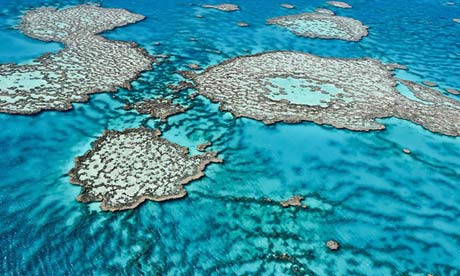
    Great Barrier Reef Both parties have committed funds for the rescue of the Great Barrier Reef. Photograph: AFP/Getty ImagesWhichever party wins power on Saturday will be on notice over the prized Great Barrier Reef. In June, Unesco’s world heritage committee said that the reef would be listed as being “in danger” next year unless substantial safeguards were put in place to ensure its wellbeing.

    The vast ecosystem, which is home to more than 1,500 species of fish, has lost half of its coral cover over the past 30 years, with chemical run-off from agriculture, a plague of crown-of-thorns starfish, cyclones and bleaching from the warming oceans blamed for the decline.

    This week, Labor announced a further $12.6m for its $200m Reef Rescue program, which works with farmers to reduce run-off and funds ways to kill off the coral-eating starfish.

    The Coalition, meanwhile, has unveiled its Reef 2050 plan, which involves a $40m reef “trust fund” and $2m for the Australian Crime Commission to investigate the illegal capture of and sale of dugongs.

    Conservationists have welcomed the competing plans, although both have glaring omissions – primarily in terms of a response to the world heritage committee’s main stipulation that no new ports be built along the reef and that existing ports are not radically expanded.

    The Coalition has told Guardian Australia that it would “prefer” consolidation within existing ports, although much of the responsibility would fall to the Queensland government, which has been described as being “in the coal business” by the premier, Campbell Newman.

    Both parties have also been largely silent on the vexed issue of dredging and dumping within the Great Barrier Reef marine park. Butler has deferred a decision over whether to allow dredging at the Abbot Point port until after the election. Environmentalists claim dredging is deadly for dugongs, dolphins, sea turtles and other sea creatures, although the shipping industry has said the impact is minimal.

    On the broader issue of marine conservation, the Coalition has vowed to reassess the government’s decision to create the world’s largest string of marine reserves, arguing that the process shuts out the fishing industry.

    Forests and rivers

    Labor voted down a proposal to include national parks in federal environmental law in June but now appears to have done a minor U-turn on the issue, promising to consider the matter if re-elected.

    The government senses there are voters who are dismayed with the way Coalition-run state governments have handled national parks, citing the prospect of shooting ranges in New South Wales, hotels in Victoria, and logging in Queensland.

    The Coalition plans to leave national parks, like most environmental matters, to the states. It has pledged to wind back a world heritage listing for part of Tasmania’s rainforests, while simultaneously advocating a global deal on rainforest protection.

    The Murray-Darling basin plan, which finally came to fruition under Labor, has its critics among farmers and environmentalists but is unlikely to be revisited by either party.

    The Coalition has also pushed for Wild Rivers designation, which protects waterways from development, to only apply if there is support from traditional owners for a listing. Both Labor and the Coalition have touched upon sweeping proposals to develop northern Australia, which conservationists fret may involve harmful damming of the region’s rivers.

    Energy

    Ian Macfarlane, the shadow resources minister, this week underlined the main energy priorities of the Coalition: scrap the carbon tax, kill off the mining tax and introduce an exploration development incentive to bolster the resources industry.

    Labor has also striven to be seen as pro-mining, even approving a mine in the Tarkine region in Tasmania without properly considering its impact on the endangered Tasmanian devil.

    Renewable energy continues to make progress in Australia, mainly driven by the strong take-up of rooftop solar and also wind – the Clean Energy Council has reported that records were set in South Australia, Victoria, Tasmania and NSW in August for wind power generation.

    The Coalition has promised to abolish everything associated with the carbon price, including the Clean Energy Finance Corporation, which funds renewable projects. It has, however, affirmed its support for the 20% renewable energy target.

    Rudd has promoted the benefits of diversifying the economy in the wake of the mining boom, although critics claim that neither Labor nor the Coalition has effectively confronted the Climate Commission’s point that most of Australia’s coal needs to remain in the ground if dangerous levels of global warming are to be avoided.

    On the controversial topic of coal seam gas, Labor would retain its ability to assess “fracking” projects that could impact water tables. The Coalition has vowed to bypass the federal consideration of water when assessing coal and gas extraction.

    Threatened species

    Hunt has been vocal on the topic of threatened species, calling for a more business-like approach to Australia’s poor record of species extinction.

    The Coalition wants to introduce a threatened species commissioner to plan and implement strategies to halt the decline of animals such as the Tasmanian devil, Leadbeater’s possum and spotted quoll.

    Labor promises to expand the use of strategic assessment powers if re-elected, but has come under fire for cutting $257m from the Biodiversity Fund, which combats threats faced by native animals, such as pests and weeds.

    A recent Senate committee report handed down more than 40 recommendations to improve the co-ordination of threatened species work. Conservation groups contend that neither Labor nor the Coalition has a comprehensive, joined-up strategy to help the 1,500 threatened or vulnerable plants and animals in Australia.


    Daily Email

    close

    Get the Guardian’s daily Australia email

    Our editors’ picks for the day’s top news and commentary delivered to your inbox every weekday.

    Sign up for the daily email

  • LITHOSPHERE.

    Home / CAUSES / Lithosphere

    c

    Posted by: Global Warming in CAUSES June 6, 2013 1 Comment 1 Views

    Global Warming Web

    Lithosphere


    Lithosphere besides compositional classification, the Earth is separated into layers based on mechanical properties. The topmost layer is called the lithosphere, composed of tectonic plates that float on top of another layer known as the asthenosphere. The term lithosphere is derived from the Greek words lithos, meaning rock, and sfaira, or sphere. The rigid, brittle lithosphere extends about 70 kilometers and is made up of Earth’s crust and the upper part of the mantle underneath. It is broken into a mosaic of rigid plates that move parallel across the Earth’s surface relative to each other lithosphere.


    The lithosphere rests on a relatively ductile, partially molten layer known as the asthenosphere, which derives its name from the Greek word asthenes, meaning “without strength.” The asthenosphere extends to a depth of about 400 kilometers in the mantle, over which the lithospheric plates slide along. Slow convection currents within the mantle, generated by radioactive decay of minerals, are the fundamental heat energy source that causes the lateral movements of the plates on top of the asthenosphere. According to the plate tectonic theory, there are approximately twenty lithospheric plates, each composed of a layer of continental crust or oceanic crust.

    Lithosphere

    These plates are separated by three types of plate boundaries. At divergent boundaries, tensional forces dominate the interaction between the lithospheric plates, and they move apart and new crust is created. At convergent boundaries, compression of lithospheric plate material dominates, and the plates move toward each other where crust is either destroyed by subduction or uplifted to form mountain chains. Lateral movements due to shearing forces between two lithospheric plates create transform fault boundaries. The lithosphere earthquakes and volcanic activities are mostly the result of lithosphere plate movement and are concentrated at the plate boundaries.


    The lithosphere´s plates move at a rate of about 3 centimeters per year. The distribution and relative movement of the oceanic and continental plates across the latitude also have profoundly affected the global climate. The major contributing factors are differences in surface albedo, land area at high latitudes, the transfer of latent heat, restrictions on ocean currents, and the thermal inertia of continents and oceans. Lithosphere according to the present configuration of oceans and continents, the lithosphere low latitudes have a greater influence on surface albedo because the lower latitudes receive a greater amount of solar radiation than the higher latitudes.

  • U.N researchers: Global warming clock is at ‘five minutes to midnight’

    U.N researchers: Global warming clock is at ‘five minutes to midnight’

    By Agence France-Presse
    Monday, September 2, 2013 21:30 EDT
    Chairman of the UN Intergovernmental Panel on Climate Change (IPCC), Rajendra Pachauri, speaks on June 6, 2011 in Oslo. [AFP]
    •  13

    Humanity has pushed the world’s climate system to the brink, leaving itself only scant time to act, the head of the UN’s group of climate scientists said on Monday.

    “We have five minutes before midnight,” warned Rajendra Pachauri, whose organisation will this month release the first volume of a new assessment of global warming and its impacts.

    “We may utilise the gifts of nature just as we choose, but in our books the debits are always equal to the credits,” Pachauri told a conference marking the 20th anniversary of the environmental organisation Green Cross International, quoting fellow Indian Mahatma Gandhi.

    “May I submit that humanity has completely ignored, disregarded and been totally indifferent to the debits?

    “Today we have the knowledge to be able to map out the debits and to understand what we have done to the condition of this planet,” Pachauri said.

    The IPCC is made up of several hundred scientists worldwide.

    It is due to release the first volume of its long-awaited Fifth Assessment Report on September 27.

    The first tome will look at the scientific evidence for climate change; two more follow next year, focussing on the impacts and the options for tackling the problem.

    A leaked draft two weeks ago said that human activity is almost certainly the cause of climate change.

    The draft also forecast that sea levels could rise by 90 centimetres (three feet) by the end of the century, and all but dismissed recent claims of a slowdown in the pace of warming which climate-change sceptics have seized upon.

    In its previous reports, the IPCC has warned that unbraked warming will drive many species to extinction and hike the frequency or intensity of droughts, heatwaves and floods, affecting food security and water supplies for many millions.

    “We cannot isolate ourselves from anything that happens in any part of this planet. It will affect all of us in some way or the other,” Pachauri said.

    Reining in greenhouse-gas emissions was still possible if countries, including in the developing world, rethought their approach to economic growth, he said.

    That would boost energy security, cut pollution and improve health, and also offer new job opportunities, he added.