Category: Uncategorized

  • The 20 big questions in science

    The 20 big questions in science

    From the nature of the universe (that’s if there is only one) to the purpose of dreams, there are lots of things we still don’t know – but we might do soon. A new book seeks some answers

    Black hole

    What’s at the bottom of a black hole? See question 17. Photograph: Alamy

    1 What is the universe made of?

    Astronomers face an embarrassing conundrum: they don’t know what 95% of the universe is made of. Atoms, which form everything we see around us, only account for a measly 5%. Over the past 80 years it has become clear that the substantial remainder is comprised of two shadowy entities – dark matter and dark energy. The former, first discovered in 1933, acts as an invisible glue, binding galaxies and galaxy clusters together. Unveiled in 1998, the latter is pushing the universe’s expansion to ever greater speeds. Astronomers are closing in on the true identities of these unseen interlopers.

    2 How did life begin?

    Four billion years ago, something started stirring in the primordial soup. A few simple chemicals got together and made biology – the first molecules capable of replicating themselves appeared. We humans are linked by evolution to those early biological molecules. But how did the basic chemicals present on early Earth spontaneously arrange themselves into something resembling life? How did we get DNA? What did the first cells look like? More than half a century after the chemist Stanley Miller proposed his “primordial soup” theory, we still can’t agree about what happened. Some say life began in hot pools near volcanoes, others that it was kick-started by meteorites hitting the sea.

    3 Are we alone in the universe?
    science 3Perhaps not. Astronomers have been scouring the universe for places where water worlds might have given rise to life, from Europa and Mars in our solar system to planets many light years away. Radio telescopes have been eavesdropping on the heavens and in 1977 a signal bearing the potential hallmarks of an alien message was heard. Astronomers are now able to scan the atmospheres of alien worlds for oxygen and water. The next few decades will be an exciting time to be an alien hunter with up to 60bn potentially habitable planets in our Milky Way alone.

    4 What makes us human?

    science 4Just looking at your DNA won’t tell you – the human genome is 99% identical to a chimpanzee’s and, for that matter, 50% to a banana’s. We do, however, have bigger brains than most animals – not the biggest, but packed with three times as many neurons as a gorilla (86bn to be exact). A lot of the things we once thought distinguishing about us – language, tool-use, recognising yourself in the mirror – are seen in other animals. Perhaps it’s our culture – and its subsequent effect on our genes (and vice versa) – that makes the difference. Scientists think that cooking and our mastery of fire may have helped us gain big brains. But it’s possible that our capacity for co-operation and skills trade is what really makes this a planet of humans and not apes.

    5 What is consciousness?

    We’re still not really sure. We do know that it’s to do with different brain regions networked together rather than a single part of the brain. The thinking goes that if we figure out which bits of the brain are involved and how the neural circuitry works, we’ll figure out how consciousness emerges, something that artificial intelligence and attempts to build a brain neuron by neuron may help with. The harder, more philosophical, question is why anything should be conscious in the first place. A good suggestion is that by integrating and processing lots of information, as well as focusing and blocking out rather than reacting to the sensory inputs bombarding us, we can distinguish between what’s real and what’s not and imagine multiple future scenarios that help us adapt and survive.

    6 Why do we dream?

    We spend around a third of our lives sleeping. Considering how much time we spend doing it, you might think we’d know everything about it. But scientists are still searching for a complete explanation of why we sleep and dream. Subscribers to Sigmund Freud’s views believed dreams were expressions of unfulfilled wishes – often sexual – while others wonder whether dreams are anything but the random firings of a sleeping brain. Animal studies and advances in brain imaging have led us to a more complex understanding that suggests dreaming could play a role in memory, learning and emotions. Rats, for example, have been shown to replay their waking experiences in dreams, apparently helping them to solve complex tasks such as navigating mazes.

    7 Why is there stuff?
    science 7You really shouldn’t be here. The “stuff” you’re made of is matter, which has a counterpart called antimatter differing only in electrical charge. When they meet, both disappear in a flash of energy. Our best theories suggest that the big bang created equal amounts of the two, meaning all matter should have since encountered its antimatter counterpart, scuppering them both and leaving the universe awash with only energy. Clearly nature has a subtle bias for matter otherwise you wouldn’t exist. Researchers are sifting data from experiments like the Large Hadron Collider trying to understand why, with supersymmetry and neutrinos the two leading contenders.

    8 Are there other universes?

    Our universe is a very unlikely place. Alter some of its settings even slightly and life as we know it becomes impossible. In an attempt to unravel this “fine-tuning” problem, physicists are increasingly turning to the notion of other universes. If there is an infinite number of them in a “multiverse” then every combination of settings would be played out somewhere and, of course, you find yourself in the universe where you are able to exist. It may sound crazy, but evidence from cosmology and quantum physics is pointing in that direction.

    9 Where do we put all the carbon?

    For the past couple of hundred years, we’ve been filling the atmosphere with carbon dioxide – unleashing it by burning fossil fuels that once locked away carbon below the Earth’s surface. Now we have to put all that carbon back, or risk the consequences of a warming climate. But how do we do it? One idea is to bury it in old oil and gas fields. Another is to hide it away at the bottom of the sea. But we don’t know how long it will stay there, or what the risks might be. Meanwhile, we have to protect natural, long-lasting stores of carbon, such as forests and peat bogs, and start making energy in a way that doesn’t belch out even more.

    10 How do we get more energy from the sun?
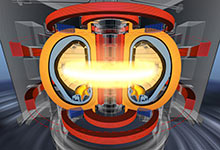
    science 10Dwindling supplies of fossil fuels mean we’re in need of a new way to power our planet. Our nearest star offers more than one possible solution. We’re already harnessing the sun’s energy to produce solar power. Another idea is to use the energy in sunlight to split water into its component parts: oxygen, and hydrogen, which could provide a clean fuel for cars of the future. Scientists are also working on an energy solution that depends on recreating the processes going on inside stars themselves – they’re building a nuclear fusion machine. The hope is that these solutions can meet our energy needs.

    11 What’s so weird about prime numbers?

    The fact you can shop safely on the internet is thanks to prime numbers – those digits that can only be divided by themselves and one. Public key encryption – the heartbeat of internet commerce – uses prime numbers to fashion keys capable of locking away your sensitive information from prying eyes. And yet, despite their fundamental importance to our everyday lives, the primes remain an enigma. An apparent pattern within them – the Riemann hypothesis – has tantalised some of the brightest minds in mathematics for centuries. However, as yet, no one has been able to tame their weirdness. Doing so might just break the internet.

    12 How do we beat bacteria?

    science 12Antibiotics are one of the miracles of modern medicine. Sir Alexander Fleming’s Nobel prize-winning discovery led to medicines that fought some of the deadliest diseases and made surgery, transplants and chemotherapy possible. Yet this legacy is in danger – in Europe around 25,000 people die each year of multidrug-resistant bacteria. Our drug pipeline has been sputtering for decades and we’ve been making the problem worse through overprescription and misuse of antibiotics – an estimated 80% of US antibiotics goes to boosting farm animal growth. Thankfully, the advent of DNA sequencing is helping us discover antibiotics we never knew bacteria could produce. Alongside innovative, if gross-sounding, methods such as transplanting “good” bacteria from fecal matter, and the search for new bacteria deep in the oceans, we may yet keep abreast in this arms race with organisms 3bn years our senior.

    13 Can computers keep getting faster?

    Our tablets and smartphones are mini-computers that contain more computing power than astronauts took to the moon in 1969. But if we want to keep on increasing the amount of computing power we carry around in our pockets, how are we going to do it? There are only so many components you can cram on to a computer chip. Has the limit been reached, or is there another way to make a computer? Scientists are considering new materials, such as atomically thin carbon – graphene – as well as new systems, such as quantum computing.

    14 Will we ever cure cancer?

    science 14The short answer is no. Not a single disease, but a loose group of many hundreds of diseases, cancer has been around since the dinosaurs and, being caused by haywire genes, the risk is hardwired into all of us. The longer we live, the more likely something might go wrong, in any number of ways. For cancer is a living thing – ever-evolving to survive. Yet though incredibly complicated, through genetics we’re learning more and more about what causes it, how it spreads and getting better at treating and preventing it. And know this: up to half of all cancers – 3.7m a year – are preventable; quit smoking, drink and eat moderately, stay active, and avoid prolonged exposure to the midday sun.

    15 When can I have a robot butler?

    science 15Robots can already serve drinks and carry suitcases. Modern robotics can offer us a “staff” of individually specialised robots: they ready your Amazon orders for delivery, milk your cows, sort your email and ferry you between airport terminals. But a truly “intelligent” robot requires us to crack artificial intelligence. The real question is whether you’d leave a robotic butler alone in the house with your granny. And with Japan aiming to have robotic aides caring for its elderly by 2025, we’re thinking hard about it now.

    16 What’s at the bottom of the ocean?

    Ninety-five per cent of the ocean is unexplored. What’s down there? In 1960, Don Walsh and Jacques Piccard travelled seven miles down, to the deepest part of the ocean, in search of answers. Their voyage pushed the boundaries of human endeavour but gave them only a glimpse of life on the seafloor. It’s so difficult getting to the bottom of the ocean that for the most part we have to resort to sending unmanned vehicles as scouts. The discoveries we’ve made so far – from bizarre fish such as the barreleye, with its transparent head, to a potential treatment for Alzheimer’s made by crustaceans – are a tiny fraction of the strange world hidden below the waves.

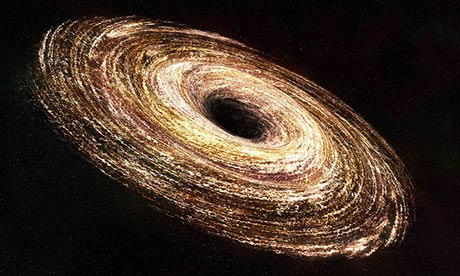
    17 What’s at the bottom of a black hole?

    science 17It’s a question we don’t yet have the tools to answer. Einstein’s general relativity says that when a black hole is created by a dying, collapsing massive star, it continues caving in until it forms an infinitely small, infinitely dense point called a singularity. But on such scales quantum physics probably has something to say too. Except that general relativity and quantum physics have never been the happiest of bedfellows – for decades they have withstood all attempts to unify them. However, a recent idea – called M-Theory – may one day explain the unseen centre of one of the universe’s most extreme creations.

    18 Can we live for ever?

    We live in an amazing time: we’re starting to think of “ageing” not as a fact of life, but a disease that can be treated and possibly prevented, or at least put off for a very long time. Our knowledge of what causes us to age – and what allows some animals to live longer than others – is expanding rapidly. And though we haven’t quite worked out all the details, the clues we are gathering about DNA damage, the balance of ageing, metabolism and reproductive fitness, plus the genes that regulate this, are filling out a bigger picture, potentially leading to drug treatments. But the real question is not how we’re going to live longer but how we are going to live well longer. And since many diseases, such as diabetes and cancer, are diseases of ageing, treating ageing itself could be the key.

    19 How do we solve the population problem?

    science 19The number of people on our planet has doubled to more than 7 billion since the 1960s and it is expected that by 2050 there will be at least 9 billion of us. Where are we all going to live and how are we going to make enough food and fuel for our ever-growing population? Maybe we can ship everyone off to Mars or start building apartment blocks underground. We could even start feeding ourselves with lab-grown meat. These may sound like sci-fi solutions, but we might have to start taking them more seriously.

    20 Is time travel possible?

    Time travellers already walk among us. Thanks to Einstein’s theory of special relativity, astronauts orbiting on the International Space Station experience time ticking more slowly. At that speed the effect is minuscule, but ramp up the velocity and the effect means that one day humans might travel thousands of years into the future. Nature seems to be less fond of people going the other way and returning to the past, however some physicists have concocted an elaborate blueprint for a way to do it using wormholes and spaceships. It could even be used to hand yourself a present on Christmas Day, or answer some of the many questions that surround the universe’s great unknowns.

    The Big Questions in Science: The Quest to Solve the Great Unknowns is published by Andre Deutsch at £14.99 on 12 September. To buy a copy for £11.99 with free UK p&p, go to guardianbookshop.co.uk

  • Australia: Stop the Murdoch media

    1 of 31
    Abbott has already stated that he will privatise the ABC. WHAT DOES THAT
    LEAVE US?  WE NEED INDEPENDENT MEDIA REPORTING-UNBIASED)

    Australia: Stop the Murdoch media

    Inbox
    x
    Oliver MacColl – Avaaz.org
    1:38 PM (17 minutes ago)

    to me

    Dear friends,

    Murdoch’s media is using all its might to influence the Australian election, and unfortunately —  it’s working. His plan is a simple one: create credible newspapers, gain the trust of readers and then bombard them with propaganda that furthers his own agenda. It’s deceptive and it works — but we can make sure it backfires this election.

    Since day one of the election Murdoch’s papers have launched a one-sided campaign, dangerously and intentionally blurring the lines between editorial and reporting content. Front-pages depicting the Prime Minister as a Nazi TV character have in essence turned the papers into Australia’s most widespread political advertisements. And with Murdoch companies owning 65% of all newspapers read in Australia his agenda has become the nation’s agenda.

    But there’s a weakness in his plan — it only works so long as people trust his newspapers. Once people know they’re being manipulated by a billionaire it’ll break his spell and they’ll turn against him. We just need a way to get this message into every home in Australia — and a brilliant new ad from GetUp gives us that opportunity.

    The ad has already been seen by thousands, loosening Murdoch’s grip, but together we can get it in front of hundreds of thousands more and break Murdoch’s spell. Watch the ad here, and donate to ensure every Australian has the opportunity to make up their own mind this election:

    Click to watch the ad
    https://secure.avaaz.org/en/murdoch_fr_nd/?bhPqncb&v=28692

    Murdoch papers have the ability to change the outcome of the election. In Brisbane, which has the most marginal seats in the entire country, his paper The Courier Mail is the only daily state-wide paper available. Together with his other mouthpieces he’s using it to push his own agenda knowing the voting public have few places to turn to hear a different point of view. Even the Australian Press Council, a body funded by the media that’s typically very timid, has been driven to speak out, saying “a paper’s editorial viewpoints and its advocacy of them must be kept separate from its news columns.”

    News Corp papers have talented journalists doing great work, which Murdoch undermines every time his attack dog editors use his front pages as election pamphlets. His bullying is legendary — most who have tried to stand up to him have failed. But we’re a movement, not a politician dependent on his praise, which gives us a unique ability to fight back.

    This ad by GetUp tells the story of his bias in an accessible way that connects with everyday Australians. It’s an ad that everyone needs to see if we’re going to defeat Murdoch’s plan to decide this election for us. Click to see the ad and donate now to help put it on the air and ensure we have a fairer media in general:

    https://secure.avaaz.org/en/murdoch_fr_nd/?bhPqncb&v=28692

    The Avaaz community has campaigned tirelessly for media reforms that will limit Murdoch’s power and restore a fair and honest media. We won a government media inquiry that was a crucial first step and helped provide the public support for brave politicians to speak out against Murdoch’s abuses. Now Murdoch is fighting back, but if we stick together and work hard we’ll see our papers to return to fearless journalism, not fear-mongering campaigning.

    With hope,

    Oli, Ben, Emily, Ari, Moj and the rest of the Avaaz team.

    MORE INFORMATION

    Murdoch’s election coverage ‘insult to Australians’ (The Age)
    http://www.theage.com.au/federal-politics/federal-election-2013/murdochs-election-coverage-insult-to-australians-20130825-2sjz8.html

    Australian press watchdog chides Murdoch media (Reuters)
    http://www.reuters.com/article/2013/08/27/us-australia-election-murdoch-idUSBRE97Q0CK20130827

    Murdoch row amid Australia election campaign (BBC)
    http://www.bbc.co.uk/news/world-asia-23598223

    Murdoch media accused of bias in Australian election coverage (RTE News)
    http://www.rte.ie/news/2013/0827/470568-australia-election-murdoch/


    Avaaz.org is a 25-million-person global campaign network
    that works to ensure that the views and values of the world’s people shape global decision-making. (“Avaaz” means “voice” or “song” in many languages.) Avaaz members live in every nation of the world; our team is spread across 18 countries on 6 continents and operates in 17 languages. Learn about some of Avaaz’s biggest campaigns here, or follow us on Facebook or Twitter.

    You are getting this message because you signed “Save our dying planet!” on 2011-12-08 using the email address nevilleg729@gmail.com.
    To ensure that Avaaz messages reach your inbox, please add avaaz@avaaz.org to your address book. To change your email address, language settings, or other personal information, contact us, or simply go here to unsubscribe.

    To contact Avaaz, please do not reply to this email. Instead, write to us at www.avaaz.org/en/contact or call us

  • Voting Below the Line in the Senate

    « 2013 Senate Calculators | Main | ABC Election Map »

    August 27, 2013

    Voting Below the Line in the Senate

    So you don’t want to risk voting above the line for a party in the Senate and find your preferences sent somewhere you don’t expect?

    A sensible problem to be concerned about, so what are your options?

    Here’s my suggested solutions.

    You could consult the preference tickets at http://www.abc.net.au/news/federal-election-2013/guide/gtv/, but let me assure you, unless you really know who the Senate’s voting system works, this could be more mis-leading than helpful. It is also incredibly time consuming.

    It is probably quicker and certainly more fulfilling to vote below the line, to make up your own mind on who you want to give preferences to.

    The team who run the ABC website had been preparing a tool that allowed you to decide who you wanted to vote for below the line. We’ve decided we have too many other things to do, and instead we’ll recommend two other sites which allow you to do exactly this.

    Compose your own below the line vote at one of the two following website.

    https://www.clueyvoter.com/, or

    http://www.belowtheline.org.au/

    In both cases it guides you through the various options on ordering parties and then allows you to print a preference list that you can take along to help you fill in the ballot paper.

    Remember, you still have to fill in the ballot paper. You can’t lodge your print out, you have to transcribe it on to the ballot paper.

    Give either site a go, but direct questions about the sites to them, not back to me.

    Now some advice from me on what to do with your preferences.

    I often get asked all sorts of questions about strategic voting and how to do it in the Senate.

    My advice, don’t even try unless you have perfect knowledge of the order that various parties will finish. Don’t try and withhold your ballot paper from a certain candidate until a certain point because you won’t have enough knowledge of the order candidates and parties will finish.

    My advice is to list the parties in the order you would like to see them elected. It is the only sensible way to vote unless you have perfect knoweldge of the order parties will finish.

    Another piece of advice, don’t split a party’s ticket. Vote for all candidates of a party with consecutive numbers in whatever order you like, but don’t split preferences between tickets unless you really know what you are doing. Splitting preferences between parties can have consequences you can’t predict without perfect knowledge of the order candidates will finish.

    The instructions say you must fill in every square, but the savings provision of the act require that only 90% of the squares be filled in, and will allow a maximum of three sequencing errors. A sequencing error is any doubling up of numbers and any break in the number sequence.

    If you want to be ultra safe, fill in below the line and the fill in one of the above the line squares. The below the line vote takes priority, but if proves to be informal, the ballot paper will revert to the above the line option.

    My advice is fill in every square and don’t muck around working out what 90% of the squares is, and try not to break your sequence. Vote a formal vote rather than try and get fiddly with the meaning of formality.

    Which is why the two site above come in useful.

    Above all, always order candidate and parties in the order you would want to see them elected. If you’ve numbered half the ballot and there’s another 50 you’ve never heard of still to go, you can consider going random, or left to right, or right to left, or even boustrophedon.

    (Boustrophedon is a fancy old Greek word meaning as the ox plows, down the field, then back, then down again etc)

    And don’t, under any circumstances, vote for a party with an unknown but interesting name above the line. You will never know where your ballot paper will end up.

    Posted by on August 27, 2013 at 08:11 PM in Federal Politics and Governments,

  • Portable Solar Batteries

    (We are seeing new gadgetry being devised, much to our benefit.)

    Portable Solar Batteries

    inShare

    Portable with thin film solar. THORNTON, Colorado. Ascent Solar Technologies, Inc. (NASDAQ:ASTI), a manufacturer of consumer and off-grid products integrated with state-of-the-art, flexible thin-film photovoltaic modules, announced the release of the newest product in the company’s EnerPlexTMJumprTM line of portable batteries, the Jumpr Stack.

    solar batteries

    The Jumpr Stack is offered in a family pack of three 1600mAh batteries with a master power base. Each battery has the footprint of a standard credit card and is no thicker than a standard USB port. The Jumpr Stack batteries are capable of boosting uptime for most smartphones by 50-80% percent. What truly sets the Jumpr Stack’s batteries apart is their ability to be charged by simply stacking the batteries on top of each other, without the need of any cable connection while resting on the master power base.

    The Jumpr Stack is immediately available for purchase via Ascent’s retail locations in the Denver area, as well as online at www.goenerplex.com.

    Ascent Solar’s Manager of Branding & Marketing, Justin Jacobs, stated “The Jumpr Stack’s revolutionary magnetic and cordless charging capability makes the product perfect for family members to easily take them with them while on the go. Unlike other batteries, the Jumpr Stack enables consumers to take exactly the right amount of power with them, rather than carrying more capacity than they actually need.”

    About Ascent Solar Technologies:

    Ascent Solar Technologies, Inc. is a developer of thin-film photovoltaic modules with substrate materials that are more flexible, versatile and rugged than traditional solar panels. Ascent Solar modules can be directly integrated into consumer products and off-grid applications, as well as aerospace and building integrated applications. Ascent Solar is headquartered in Thornton, Colorado. For more information, go to www.ascentsolar.com.

    About EnerPlex:

    The EnerPlex brand represents Ascent’s line of consumer products. These products, many of which are integrated with Ascent’s transformational CIGS technology, provide consumers with the ability to integrate solar into their everyday lives, while enabling them to free themselves and their electronics from the outlet. For more information on the EnerPlex brand and to see the product line, please visit goenerplex.com.

    Forward Looking Statements

    Statements in this press release that are not statements of historical or current fact constitute “forward-looking statements.” Such forward-looking statements involve known and unknown risks, uncertainties and other unknown factors that could cause the Company’s actual operating results to be materially different from any historical results or from any future results expressed or implied by such forward-looking statements. In addition to statements that explicitly describe these risks and uncertainties, readers are urged to consider statements that contain terms such as “believes,” “belief,” “expects,” “expect,” “intends,” “intend,” “anticipate,” “anticipates,” “plans,” “plan,” to be uncertain and forward-looking. The forward-looking statements contained herein are also subject generally to other risks and uncertainties that are described from time to time in the Company’s filings with the Securities and Exchange

  • What are our options in Syria?

    What are our options in Syria?

    Posted Fri 30 Aug 2013, 2:28pm AEST

    The West can step up its response to the continuing suffering in Syria without launching another in a string of legally dubious military interventions, writes Donald K Anton.

    The drums of military intervention are beating once again, and the question of what to do about the civil war in Syria has taken on urgency.

    What are our options? We’ve heard a lot about military intervention, but from a legal point of view, as I will demonstrate, this has no place on the table.

    However there are a number of other paths we can take including support for humanitarian relief, condemnation, sanctions and other action by the General Assembly under the Uniting for Peace resolution, and referral to the International Criminal Court.

    Military intervention

    Military intervention as an option to stem the violence in Syria looms large following reports that the Assad regime once again used chemical weapons in an attack on August 21.

    It is claimed that more than 1,300 people were killed in the attack outside Damascus, many of them women and children. The use of force as an option, however, does not appear to be legally available.

    Military intervention would require UN Security Council (SC) authorisation or action in self-defence in order to be legal under the UN Charter. SC authorisation will not be forthcoming because Russia and China feel betrayed by the military intervention in Libya that they voted to authorise. They believe that the Libya resolution authorising military force to protect civilians was transformed into an instrument for the pursuit of regime change and will not support such a resolution for Syria.

    Some commentators claim that states could use force under the doctrine of “responsibility to protect” in Syria outside of the UN framework. These folks seem to forget, however, that 2005 World Summit outcome document, subsequently approved by SC Resolution 1674, requires that action to protect populations take place “through the Security Council, in accordance with the Charter”.

    In terms of self-defence, unless the international community is now prepared to embrace the highly controversial doctrine of anticipatory self-defence put forward by George W Bush it has previously rejected, there are no grounds upon which it can be based. No imminent attack on another state by Syria is on the horizon that would justify the use of force in self-defence.

    That leaves so-called humanitarian intervention. However, the right to intervene on humanitarian grounds – not to mention the scope of the right – outside of the framework of the UN Charter is contentious, persistently denied, and, as such, lacks the force of international law as a lawful ground for the unilateral use of force.

    Even the UK, for many years, strenuously challenged the unilateral right of humanitarian intervention. In 1986, the British Foreign Office wrote that “the overwhelming majority of contemporary legal opinion comes down against the existence of a right of humanitarian intervention”. Nothing in state practice, including Kosovo, has changed this conclusion since.

    Humanitarian assistance

    It is beyond doubt that the best way that outside parties can help alleviate the suffering and misery caused by the ongoing civil war in Syria is through increased support for the delivery of humanitarian assistance.

    In June, the UN estimated that 6.8 million people required humanitarian aid in Syria, including 4.25 million internally displaced. Outside of Syria, over 1.5 million refugees need humanitarian aid and nearly 1 million are children under the age of 18.

    Unfortunately, the international community is not meeting current commitments. It was recently reported that donors have only funded 36 per cent of the $4.4 billion they have pledge under the UN’s two main appeals, the Syria Humanitarian Response Plan (Sharp), which targets needs within Syria, and the Regional Refugee Response Plan (RRP), which focuses on refugees from Syria in neighbouring Jordan, Lebanon, Turkey, Iraq and Egypt.

    Together, the two appeals have received less than $1.6 billion, leaving a nearly $3 billion deficit. Clearly, states should immediately fund unmet requirements so that food, decent shelter, medical care, and educational programs for children reach people affected by the ongoing conflict.

    In addition to this, though, humanitarian aid commitments should also be given to independent relief agencies like the Red Crescent and Red Cross to allow them to address immediate needs.

    Condemnation

    Condemnation is the most readily available course of action open to the international community. Repeated condemnation by the General Assembly expressing “outrage” has been normatively significant.

    More recently, the statement by ambassador María Cristina Perceval (Argentina), the SC president for August, that “all Council members agree that any use of chemical weapons by any side, under any circumstances, is a violation of international law” is important in establishing the illegality of acts in Syria.

    Hopefully, Australia can build on this as president of the SC this month and put forward a resolution that would have the SC formally condemn the all use of chemical weapons.

    Although condemnation (collective and individual) has been employed for nearly two years without the desired result of ending the violence, this does not mean it is not important. Indeed, from a legal point of view, strong and universal condemnation of the use of chemical weapons remains essential.

    Some are worried that failing to act militarily in Syria somehow means that the treaty law and customary international law banning the use of chemical weapons will fail and the use of chemical weapons will become commonplace. The view is wrong, but universal condemnation, including through the UN General Assembly, will help ensure the strong normative prohibition on their use.

    More generally, shaming states and playing upon their reputation is not a zero-sum game.  When stretched over time, it has helped to bring many states to the negotiating table.

    Sanctions

    Sanctions are another option that may be available. Russia and China, for the reasons given above, are not likely to support collective sanctions imposed by the SC under Chapter VI of the UN Charter.

    However, it is open to the General Assembly acting under the 1950 Uniting for Peace Resolution to make “appropriate recommendations … for collective measures”.

    Ordinarily, this provision has been used for deployment of peacekeeping forces with the consent of the host state. However, so long as the SC is not effectively exercising its functions over the violence in Syria, it is arguable that the General Assembly has the power to recommend proportionate sanctions aimed at stopping the violence.

    The problem here is both Russia and China have already vetoed three SC resolutions on Syria (October 2011, February 2012 and July 2012). These vetoes would make a sanctions recommendation by the General Assembly contentious.

    It may be that the use of proportionate unilateral “smart” or “targeted” sanctions is a more viable option. States acting on their own volition, but in concert, could make greater use of economic asset freezes and travel bans on key individuals and organisations.

    Referral to the ICC

    Fifty-seven states have urged that the situation in Syria be referred by the SC to the International Criminal Court (ICC) for investigation. A referral by the SC is necessary because Syria is not party to the ICC treaty.

    Again, however, the SC veto means there is little prospect of this happening in the way the referral was made in the Libyan situation. Even if it were possible, the referral would suffer the same jurisdictional limitations as in Libya because the ICC could not investigate the actions of non-states parties. This raised serious concerns about the legitimacy of the exercise in Libya.

    Conclusion

    Of the options available, three seem most promising. First, we should ramp up support for the delivery of humanitarian assistance through the UN and Red Crescent and Red Cross. Second, condemnation and sanctions, to the extent possible, should be strengthened. Finally, we should be working toward a SC referral of the situation to the International Criminal Court.

    While these things will do little to stop the violence in Syria in the near term, they are probably the best options in a very bad situation.

    Donald K Anton is Associate Professor of Law and co-director of International Programs & Exchanges at the Australian National University College of Law. View his full profile here.


  • Could climate change be added to the civil rights agenda?

    Should climate change be added to the civil rights agenda?

    This week, tens of thousands of people from across America streamed into the nation’s capital to observe the 50th anniversary of the 1963 March on Washington — and Green for All was among them

    Martin Luther King Jr. at March on Washington

    Fighting global warming – the right way – will get us closer to achieving the dream Martin Luther King Jr. spoke about on that day in Washington 50 years ago. Photograph: Hulton-Deutsch Collection/CORB

    We marched against the recent attack on voting rights. We demanded justice in the face of Stand Your Ground laws and racial profiling. We marched to raise awareness on unemployment, poverty, gun violence, immigration, and gay rights. And we called for action on climate change.

    Chances are, when you think about civil rights, environmental issues aren’t on the radar screen. But stop and think about it. Remember Hurricane Katrina?

    The hurricane that leveled New Orleans showed that severe weather in low-income neighborhoods and communities of colour is a matter of life and death. The images from the storm are hard to forget: bodies floating in water for days and thousands of people stranded without shelter, waiting for help that was too slow to come.

    It’s not difficult to see how injustice and inequality played out during Hurricane Katrina. Thousands of people were subjected to needless loss, suffering, even death — just because they didn’t have the resources to prepare and escape the storm.

    What’s harder to see is the imminent threat that severe weather — occurring with increased frequency and voracity — poses to our communities. We should never again witness the kind of devastation and preventable suffering we saw during Katrina. That’s why we have to add climate change to our retooled list of what the civil rights movement stands for.

    Climate change isn’t just an environmental issue; it’s about keeping our communities safe. It’s a matter of justice. Because when it comes to disasters — from extreme temperatures to storms like Katrina — people of colour are consistently hit first and worst.

    African-Americans living in L.A. are more than twice as likely to die in a heat wave as other residents in the city, thanks to an abundance of pavement and lack of shade, cars, and air conditioning in neighborhoods with the fewest resources. Factor in a steady rise in temperature — last year was the hottest year on record in the U.S. — and we’re looking at an urgent problem.

    Meanwhile, our communities are at the tip of the spear when it comes to pollution. Fumes from coal plants don’t just accelerate climate change — they cause asthma, heart disease and cancer, leading to 13,000 premature deaths a year. And people of colour are once again most vulnerable; 68% of African-Americans live within 30 miles of a toxic coal plant. That might help explain why one out of six black kids suffers from asthma, compared with one in 10 nationwide.

    But that’s not the only reason we should pay attention. Fighting global warming – the right way – will get us closer to achieving the dream Martin Luther King Jr. spoke about on that day in Washington 50 years ago.

    The solutions to climate change won’t just make us safer and healthier — they are one of the best chances we’ve had in a long time to cultivate economic justice in our communities. Clean energy, green infrastructure, and sustainable industries are already creating jobs and opportunity. There’s a cleantech boom unfolding right now that is on par with the tech boom that made Silicon Valley. And this time, we don’t want to miss the boat.

    If we do this right, we can make sure the steps we take to fight pollution also build pathways into the middle class for folks who have been locked out and left behind. These green jobs are real — 3.1 million Americans already have them. And because they pay more (13% above the median wage) while requiring less formal education, they are exactly what’s needed to eradicate poverty in our communities.

    We have work to do to make sure more people of color have access to the opportunities created by responding to climate change. But if we are successful, we will help create a world where our kids can breathe clean air and drink clean water; where we’re safe and resilient in the face of storms; where more of us share in the nation’s prosperity.

    This is Dr. King’s dream reborn. And fighting climate change helps get us there.

    So, even as we confront the pressing dangers and injustices that cry for an immediate response — like attacks on our right to vote or racial profiling — we can’t lose sight of the future. We need to respond to climate change today to ensure safe, healthy, prosperous lives for our kids tomorrow.